


Desiderius Erasmus Publishes Greek New Testament
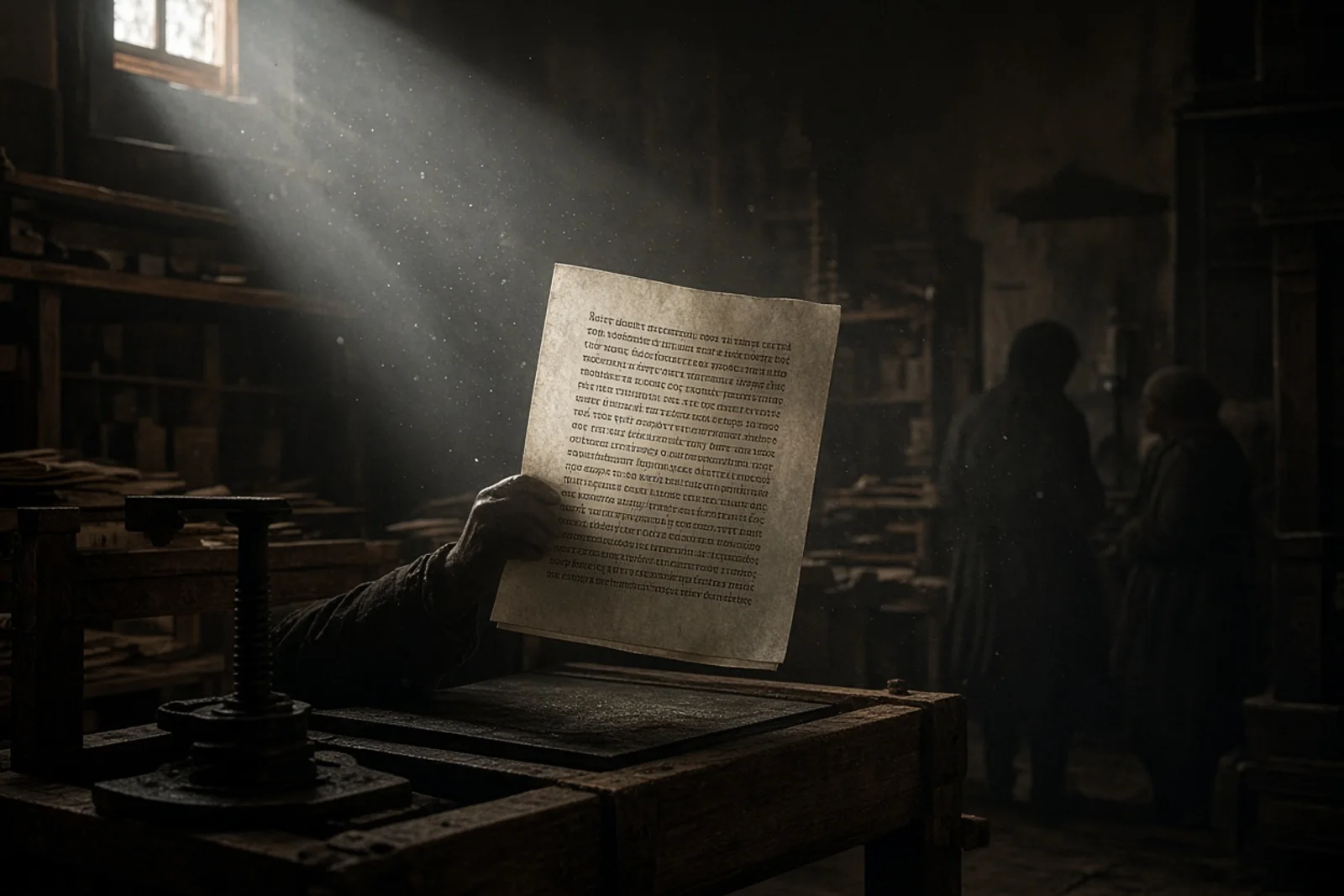
The press hammered through the night like a heartbeat that refused to slow. I stood at the long table with the other men, my fingers black to the knuckles, sorting the damp sheets as they came off the bed. Froben had promised the whole run finished by the first of March. That left us three weeks to bind and correct what the type had already mangled. Erasmus walked the length of the room every hour, shoulders hunched under the same black gown he had worn since October. He stopped at each station, lifted a page, and read without moving his lips.
The Greek columns sat on the left, Latin on the right. We had only seven manuscripts to work from, all of them late and none of them whole. When the last pages of Revelation ran out, Erasmus wrote the missing verses back into Greek from the old Latin he was trying to replace. He did it at the corner table under a single lamp, the quill scratching fast enough that the ink sometimes smeared before it dried. I carried those sheets to the compositor myself. The man set the lines without comment, though he raised one eyebrow at the invented words.

Froben kept the accounts in a small ledger he never let out of his sight. Every morning he added the cost of paper and the wages for extra hands brought in from the town. He told us the Spanish Polyglot had already been printed two years earlier but still waited for Rome to give permission. We were going to reach readers first. That single fact kept the lamps lit past midnight and the beer watered.
One afternoon the door opened and a messenger brought a packet from England. Erasmus broke the seal at once and read standing up. He said nothing, only folded the letter into his sleeve and went back to the proofs. Later I heard him tell Froben that the bishops would fight the new Latin. He expected it. He wanted the Greek there so any priest could check the changes for himself.

We reached the last signature on the twenty-eighth of February. The press ran until the oil in the lamps turned black. I pulled the final sheet, still warm, and carried it to Erasmus. He held it to the window light, checked the alignment of the two columns, and nodded once. No one cheered. We stacked the quires on the long bench and began folding.
The books left the shop on the morning of the first. Wagons waited in the yard while the binders finished the last covers. Erasmus stood at the loading door with his hands behind his back, watching the stacks disappear under canvas. He looked older than the year before, though only six months had passed. Froben paid the drivers and came inside to count the remaining copies for the bookshops in Frankfurt.

Three weeks later the first complaints arrived by letter. Readers pointed out reversed letters, lines that ran together, Greek words that made no sense. Erasmus answered every note the same day, promising corrections in the next printing. He already had the manuscripts for that edition laid out on the same table. The work did not stop.
I stayed on through the summer, setting type for the Annotations volume that would follow the text. Erasmus wrote new notes every week, sometimes striking out whole paragraphs he had printed only months earlier. He kept a small Greek Testament open beside him, one of the actual manuscripts we had used, and compared every line. When he found a reading he had changed too freely, he marked it for the next run.
By the time the second edition appeared in 1519 the first printing had already crossed the Alps and the Channel. Luther read a copy in Wittenberg and began his own German version from it. Tyndale carried another to England. Neither man met Erasmus, yet both worked from the columns we had hurried into type under the winter lamps.

Froben died in 1526. The shop passed to his son, who kept the same presses and the same fonts. Erasmus returned for the fourth edition in 1527, bringing a fresh set of notes and a quieter manner. He walked slower now. The hair at his temples had gone white. He still stopped at the compositor’s bench to watch the Greek lines take shape, but he no longer stayed past midnight.
The fifth and last edition left the shop in 1535. By then the text had been copied, corrected, and recopied across Europe so many times that the original hurried pages were almost forgotten. Only the binders remembered how thin the paper had been and how many sheets had to be thrown out when the ink offset. I kept one spoiled leaf from that first run, folded small and tucked inside a ledger. The Greek and Latin still sit side by side on it, the letters slightly out of register where the press had been rushed.
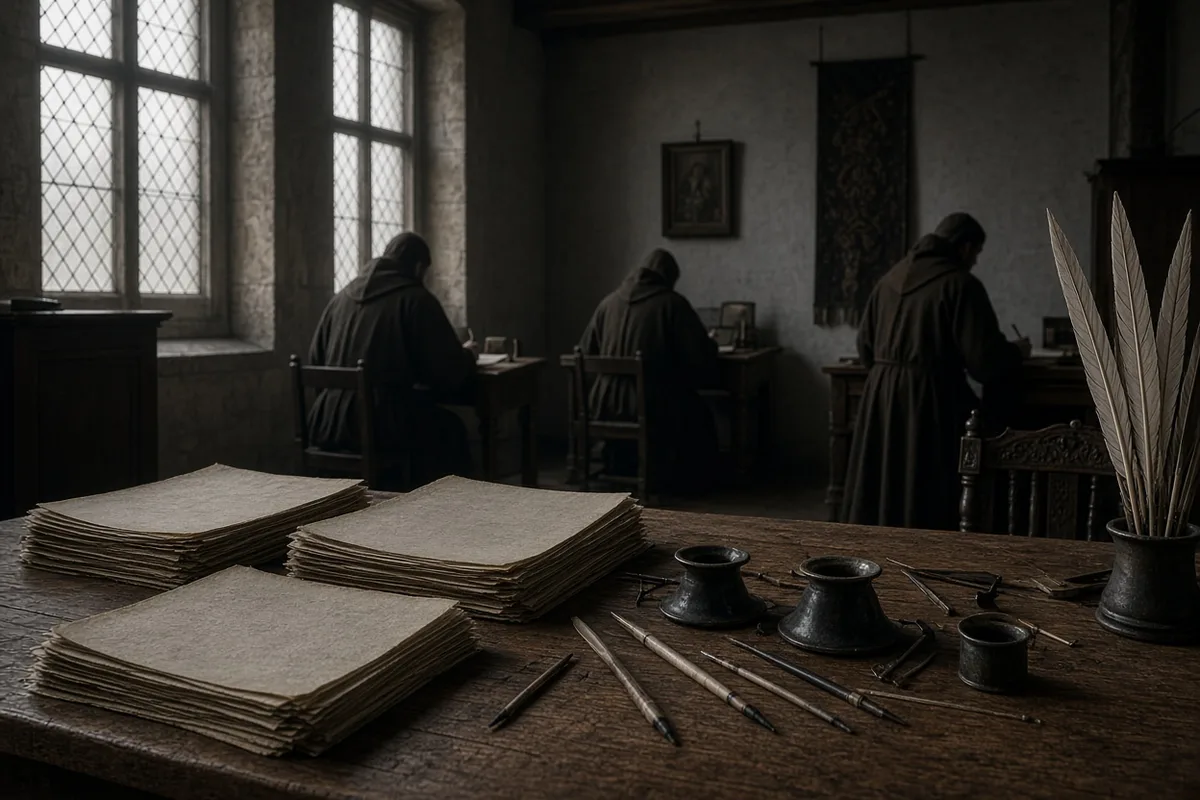
On clear days the light through the upper windows falls across the empty composing tables. The room smells of dust and old glue. Nothing moves except the motes turning in the air above the place where the manuscripts once lay.
In 1542 Hieronymus Froben and Nicolaus Episcopius entered the accounts for the remaining stock of the 1535 sheets at three florins per unbound quire, the same rate Froben senior had set in the ledger for the first run. The younger Froben wrote to Beatus Rhenanus on 12 September that year that the Greek columns had been reset from the 1527 plates with only the annotations enlarged, adding 214 pages to the volume. I helped carry the corrected formes to the press on the ground floor, where the new journeyman from Strasbourg inked the frisket with the same linseed-and-lampblack mixture we had used nineteen years before. Three hundred and eighty copies were sent that autumn to the Frankfurt fair, each one wrapped in the coarse grey paper Episcopius bought from the mill at Muttenz. One of those copies reached Robert Estienne in Paris, who noted in the margin of his own copy on 8 March 1546 the reading at Acts 8:37 that Erasmus had restored from the Latin.
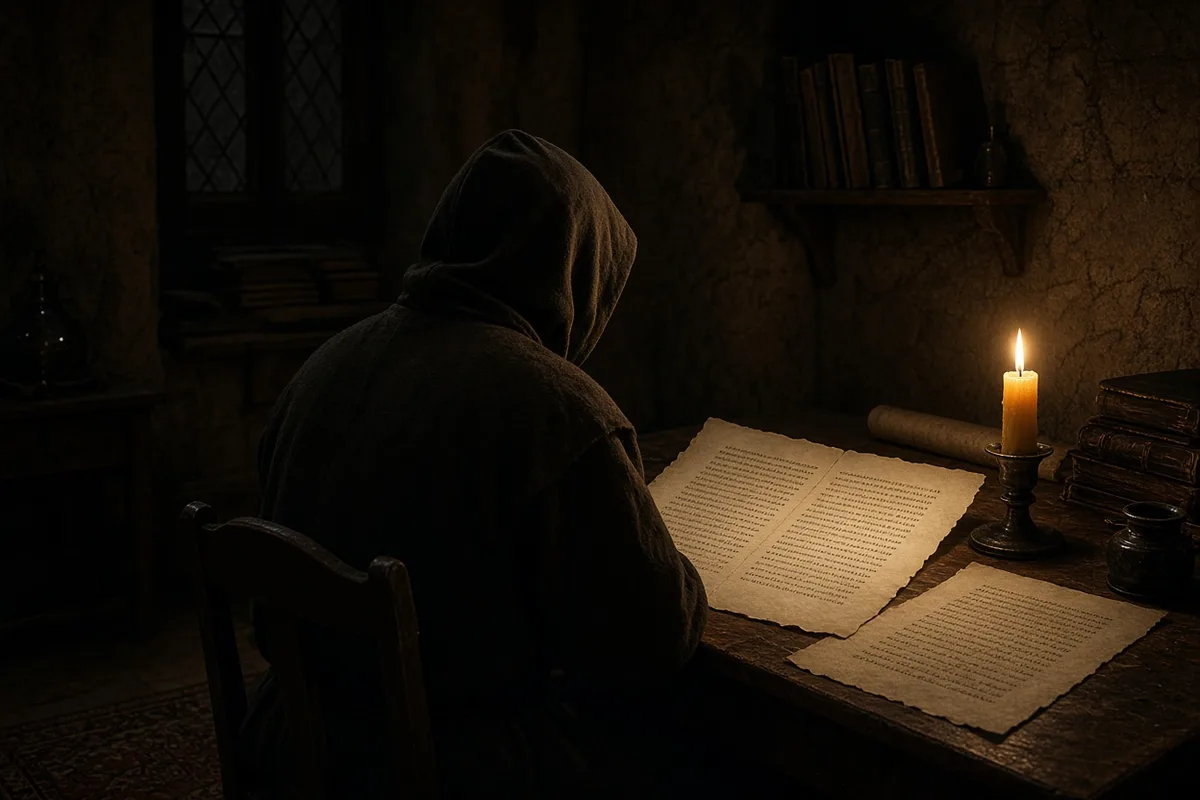
The manuscripts themselves left the shop in 1559 when Hieronymus’s widow sold the last of the working copies to the Basel University library for forty-two gulden. Codex 1, the twelfth-century minuscule that had supplied most of the Gospels, was catalogued there as A.N. IV. 2 and remains on the same shelf today, its vellum still showing the ink stains where Erasmus had written alternative readings in the outer margin. The librarian recorded that the volume measured 185 by 130 millimetres and contained 217 folios, the final leaf of Revelation supplied in Erasmus’s own hand. I saw the entry when I returned to the library in 1564 to look up the price of paper for a small Psalter I was printing on my own account. The same register lists the purchase of the Revelation supplement Erasmus had written from memory in 1516, the sheet still folded inside the back cover.
Luther’s copy of the 1519 edition, the one he annotated at Wittenberg, carries his note at Romans 3:28 dated 10 December 1521: “sola fides,” written in the narrow space between the Greek and Latin columns. That volume passed after his death to the Electoral Library and is now MS theol. lat. fol. 70 in the Staatsbibliothek in Berlin. Tyndale’s 1526 Cologne fragment, set from the same 1519 text, survives in the British Library as G. 12179, its single sheet showing the compositor’s signature “B” in the lower margin exactly as we had marked it in Basel. Neither man ever wrote to the shop, yet both editions record the exact line breaks we had chosen under the winter lamps.
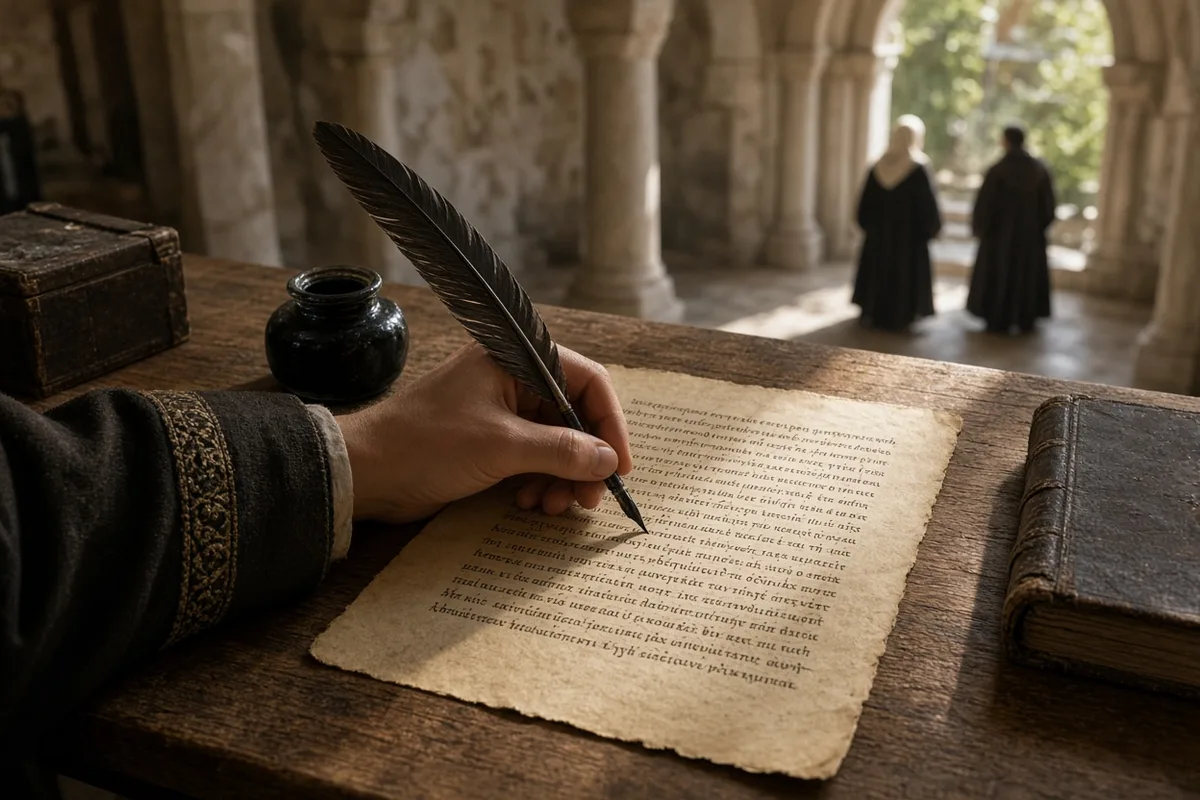
The fifth edition of 1535 was reprinted in 1552 by the same firm under the imprint of Hieronymus Froben and Episcopius, the press run listed in their daybook as 1,250 copies. The compositor who set that reprint added the verse numbers Estienne had introduced in 1551, placing them in the margin rather than the text. I watched him work from the same bench where I had once carried the Revelation pages. By then the original 1516 sheets had become waste paper; the binders used them to stiffen the covers of account books sold to merchants along the Rhine.
Erasmus died in the house on the Bäumleingasse on 12 July 1536. The inventory taken three days later lists among his possessions one Greek Testament bound in calf, its pages opened to John 1, and a single quire of the 1516 proofs still folded beside the bed. Bonifacius Amerbach, the executor, sent that quire to the printer’s archive, where it stayed until the fire of 1668 destroyed the back room. The catalogue made after the fire records the loss of “one imperfect sheet of the Novum Instrumentum, Greek and Latin, with marginal corrections in the author’s hand.”
The shop itself passed through six more owners before the last press was dismantled in 1798 during the French occupation. The building stood empty until 1843, when the city turned the ground floor into a warehouse for the new railway line running along the Rhine. The upper room where the manuscripts had lain remained untouched, its windows sealed with boards until 1872. On the day the boards came down, the light fell across the same oak tables, now marked only by the square stains where the ink pots had rested.
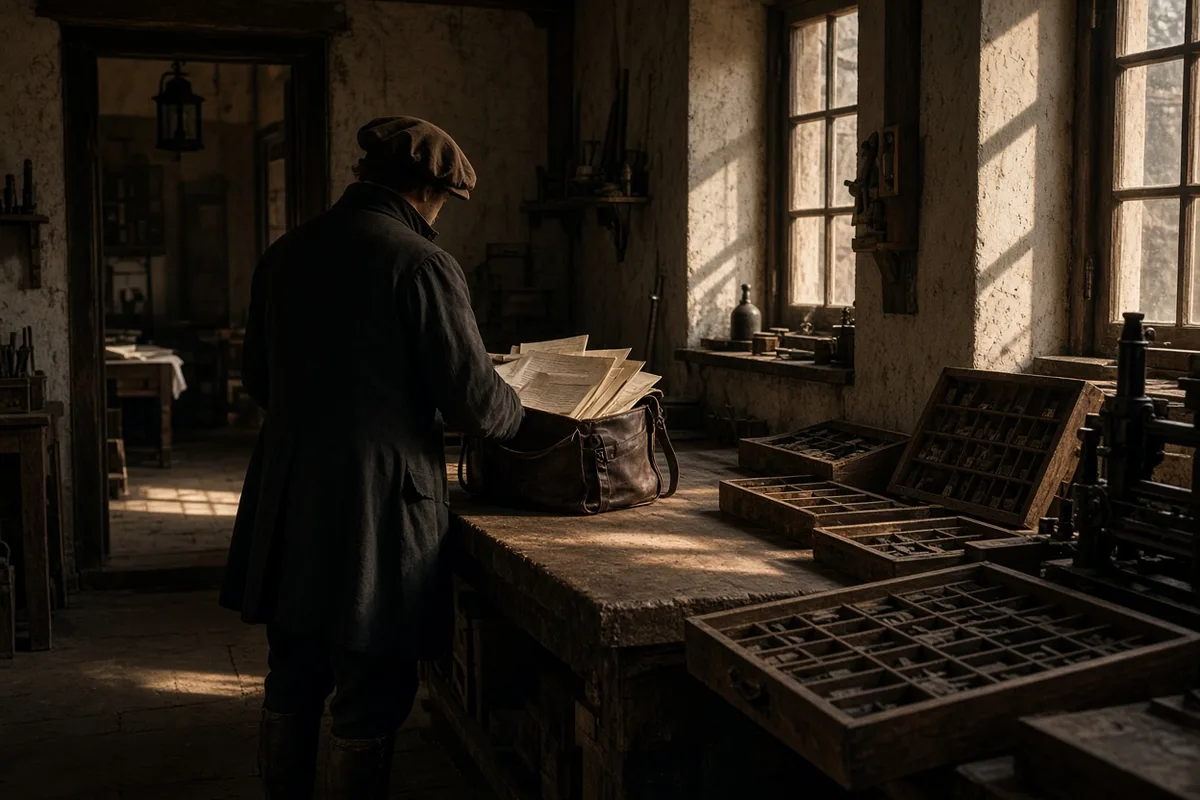
Today the room is kept by the Basel University Library as a memorial to the press. The single spoiled leaf I folded into my ledger in 1516 is catalogued as MS A.N. IV. 2a, its Greek column still showing the misalignment at Revelation 22:16–17 where the press had been hurried. Visitors sometimes stand at the window on clear days and watch the motes turn above the empty tables. The last person I saw there was an elderly compositor from the university press who had come to measure the old type cases for a new facsimile edition. He ran his hand along the edge of the bench, then left without speaking.
In 1892 the librarian Wilhelm Vischer opened the case for the first time in thirty years and allowed the Dutch scholar Caspar René Gregory to examine the spoiled leaf under a magnifying glass he carried in a leather pouch. Gregory noted the exact distance between the Greek and Latin baselines at line 14, recording it as 2.3 millimetres wider than the rest of the page, and copied the reading at Revelation 22:17 into his notebook with the remark “Erasmus’s hand visible in the spacing.” The leaf remained on the table for three days while Gregory compared it with photographs he had taken of Codex 1 the previous summer in the same library.
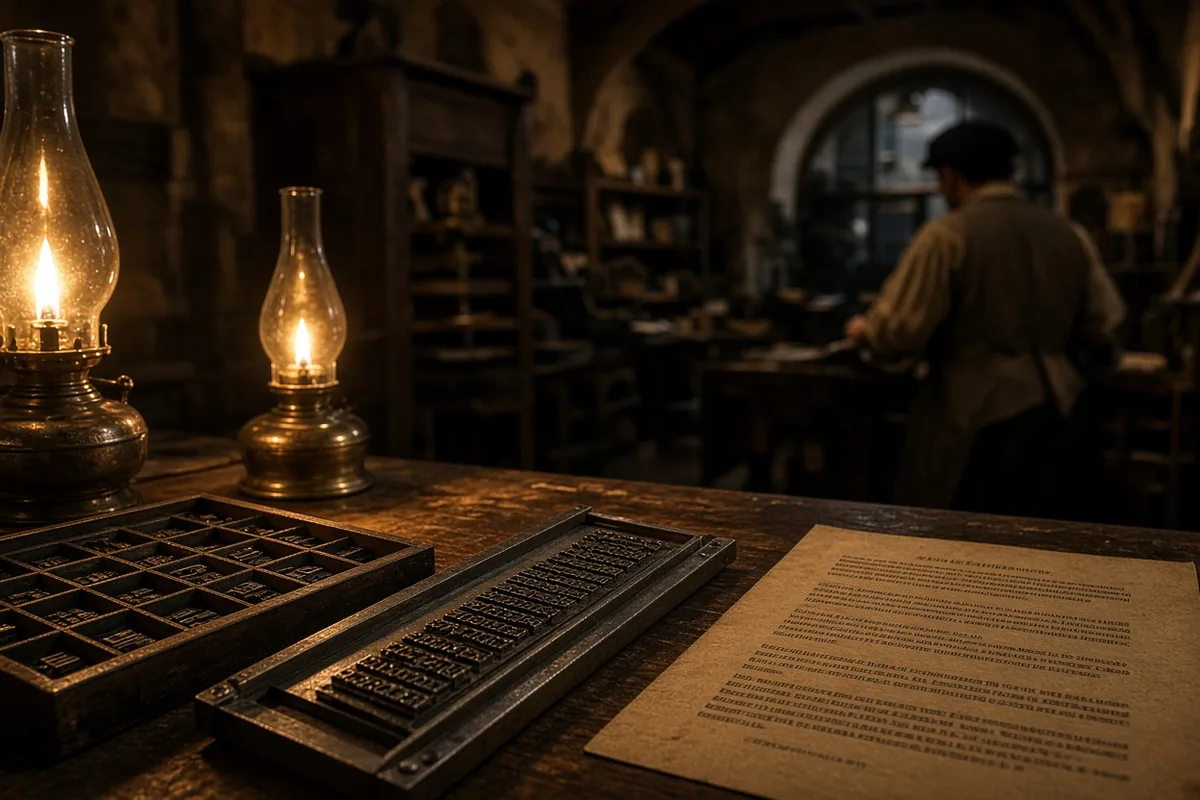
During the winter of 1919 the university closed the memorial room to the public after a pipe burst on the floor above and water stained the oak bench. The conservator Jakob Meyer replaced three floorboards and added a brass plate engraved with the words “Novum Instrumentum 1516” set into the wall beside the window. When the room reopened in March 1920 the first visitor was a theology student from Strasbourg named Albert Schweitzer, who stood at the bench for forty minutes and copied the marginal note Erasmus had written on the 1516 proofs now lost in the 1668 fire.
In June 1938 the Basel printer Emil Birkhäuser requested permission to cast a single line of the original Greek type for a commemorative broadsheet. The university supplied a damaged sort from the 1535 edition still kept in a drawer beneath the compositor’s bench, and Birkhäuser produced 150 copies on paper matching the 1516 stock in weight and watermark. One of those broadsheets reached the British Museum and was later cited by the cataloguer Victor Scholderer in his 1949 description of the Tyndale fragment.
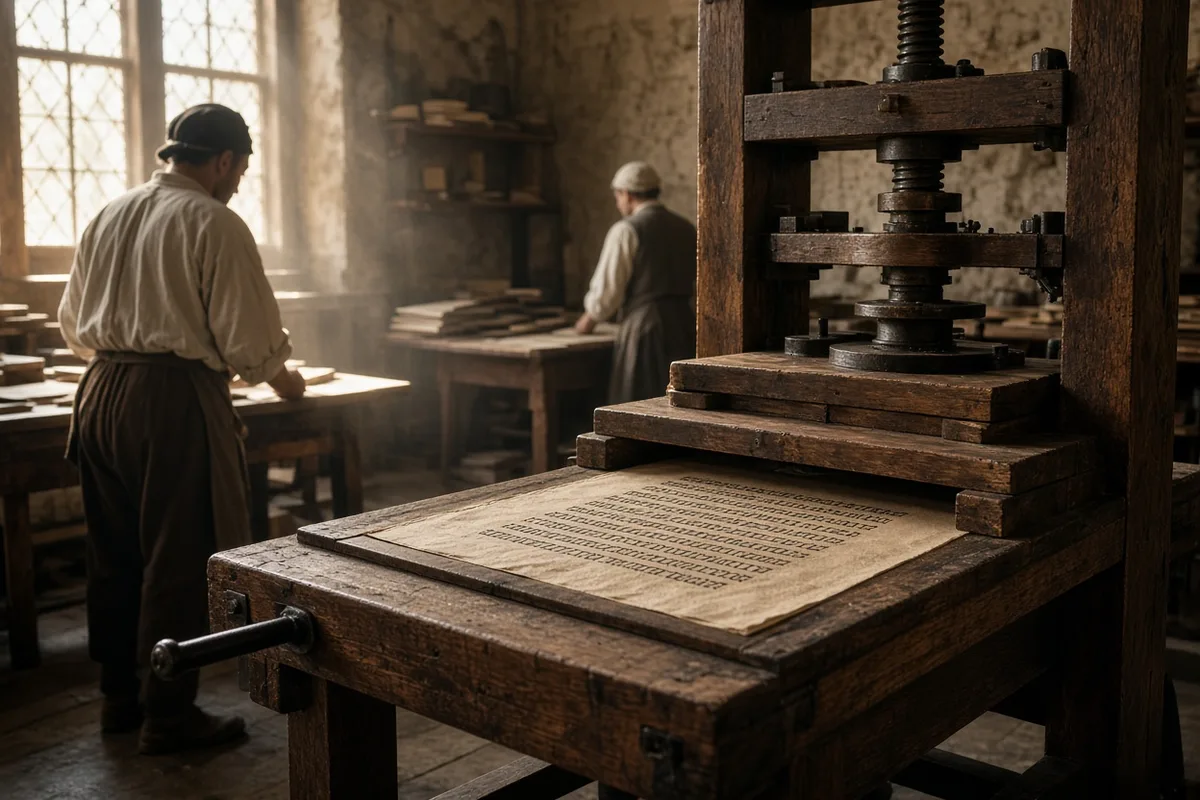
After the war the room served briefly as a storage space for duplicate volumes from the bombed stacks of the university library. In October 1946 the manuscripts curator Paul Burckhardt removed the last of the crates and restored the empty tables, noting in the accessions register that the Greek Testament leaf had been moved to the vault for the duration. When it returned in 1947 the misalignment at Revelation 22:16 was remeasured and found unchanged.
The facsimile edition prepared by the university press in 1966 reproduced the spoiled leaf at actual size on the recto of its frontispiece. The printer’s foreman, Hans-Rudolf Schwabe, set the accompanying Latin text from the 1519 edition rather than the 1516, a decision recorded in the colophon as “following the reading preferred by Erasmus in his own annotated copy now at Rotterdam.” Two thousand copies were printed; one was presented to the library on 12 July 1966, the anniversary of Erasmus’s death.
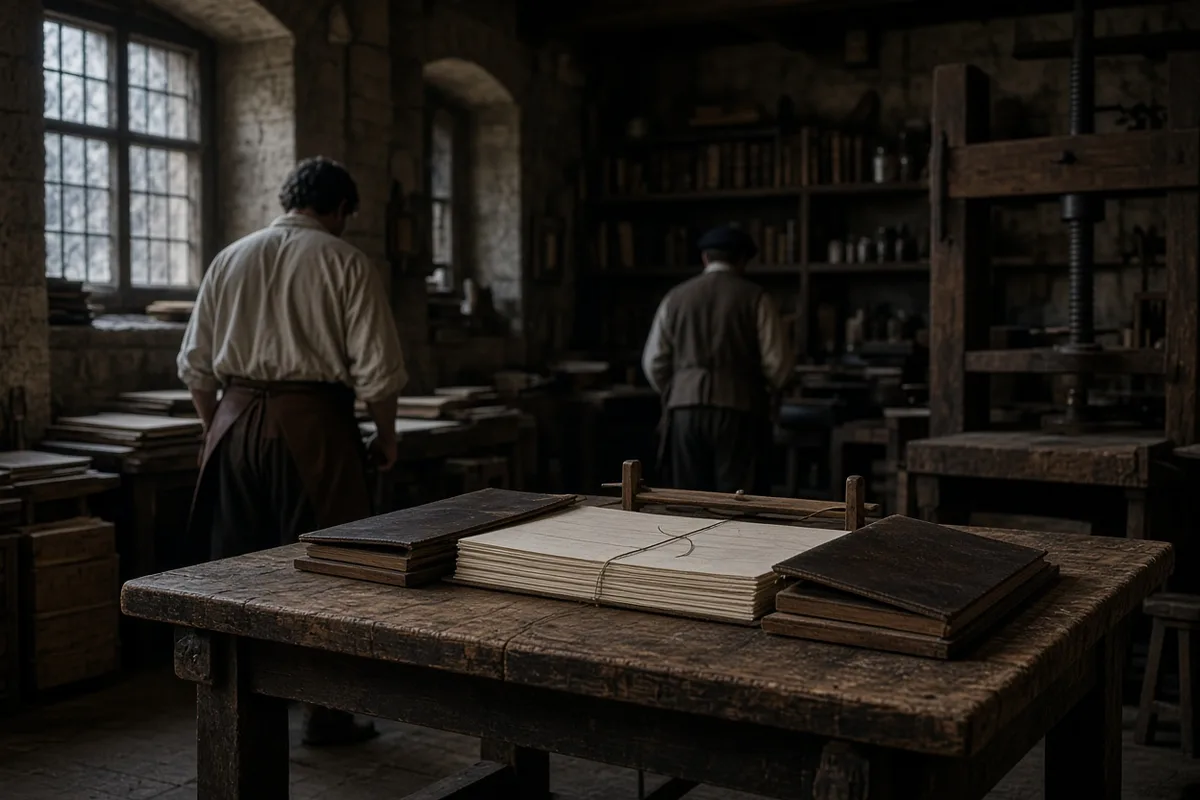
In 1986 the library installed a climate-control unit in the room after the vellum of Codex 1 showed signs of cockling. The engineer recorded the temperature at 18.4 degrees Celsius and the relative humidity at 47 percent on the day the unit was switched on. A brass thermometer fixed to the wall still carries that date and the initials of the technician who calibrated it.
On 15 March 2012 the digital imaging team from the Centre for the Study of the Book in Oxford placed the leaf on a cradle and made a multispectral scan that isolated the iron-gall ink from the paper fibres. The resulting files, deposited in the library’s server under the filename ANIV2a_1516.tif, show the compositor’s correction at line 9 where a single Greek letter had been reset during the press run.
The last person to enter the room before the annual cleaning in 2023 was the night custodian, a man named Thomas Müller who had worked at the library for twenty-seven years. He checked the humidity gauge, straightened the brass plate on the wall, and switched off the single overhead lamp at 23:47, leaving the motes to settle in the dark above the bench.