


Desmond Doss Saves 75 Men at Hacksaw Ridge
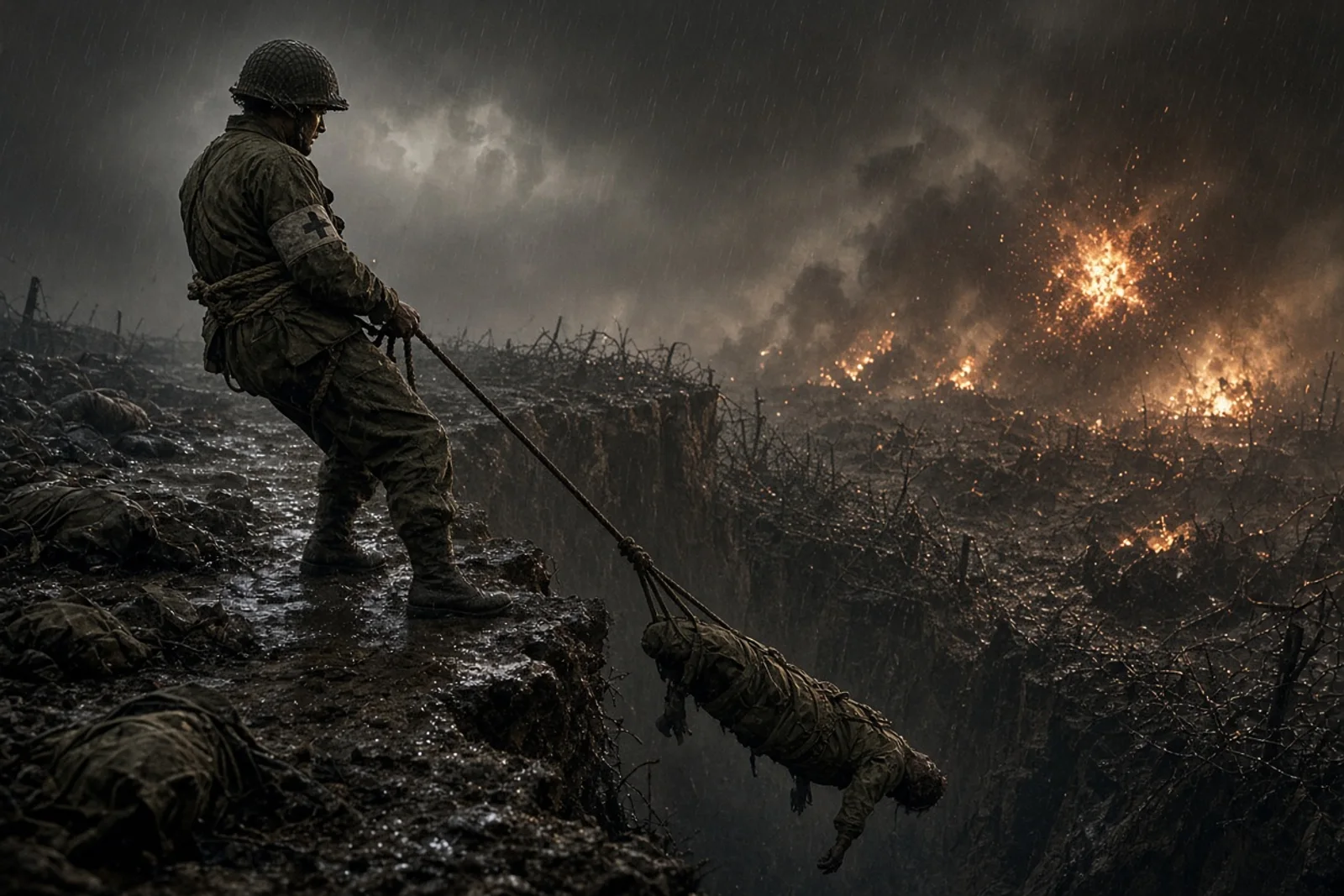
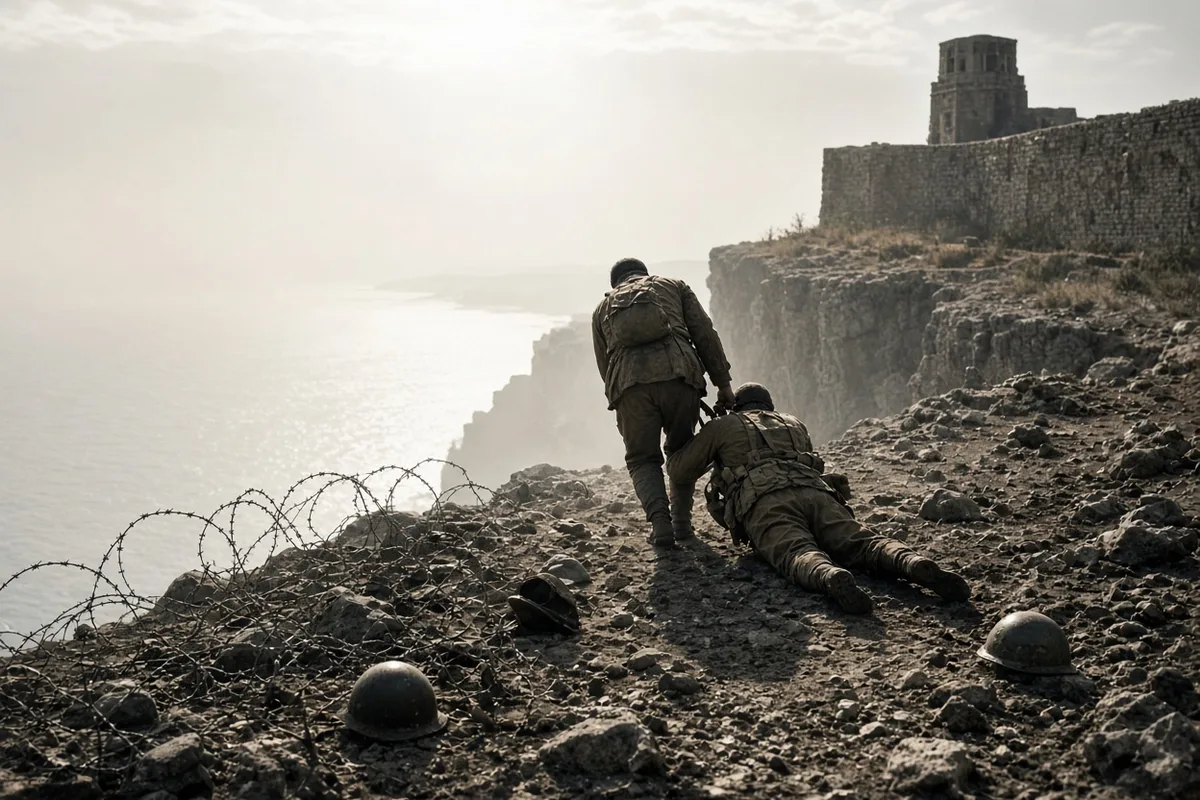
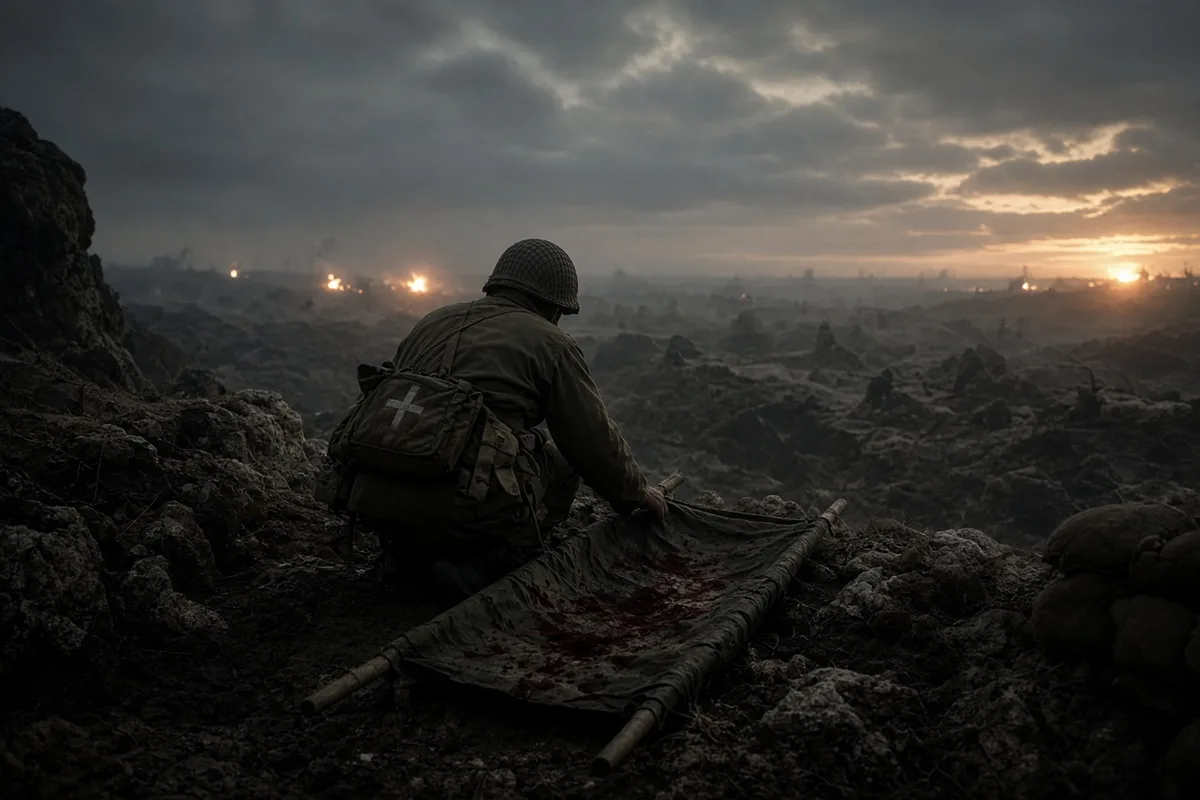
The shells walked across the plateau like a man kicking over furniture in the dark. I lay with my face pressed to the dirt where the machine gun had cut me down an hour earlier, and every time the ground jumped I tasted blood and cordite. Desmond Doss moved between the bodies without a helmet or a rifle, the red cross on his sleeve already torn and filthy.
He had come up the cargo nets with the rest of us that morning. Most of the men who once threw boots at him while he prayed were glad enough to see him now. When the first barrage drove the battalion back down the cliff, Doss stayed. He told the lieutenant he would not leave the wounded on the escarpment. The lieutenant did not argue.
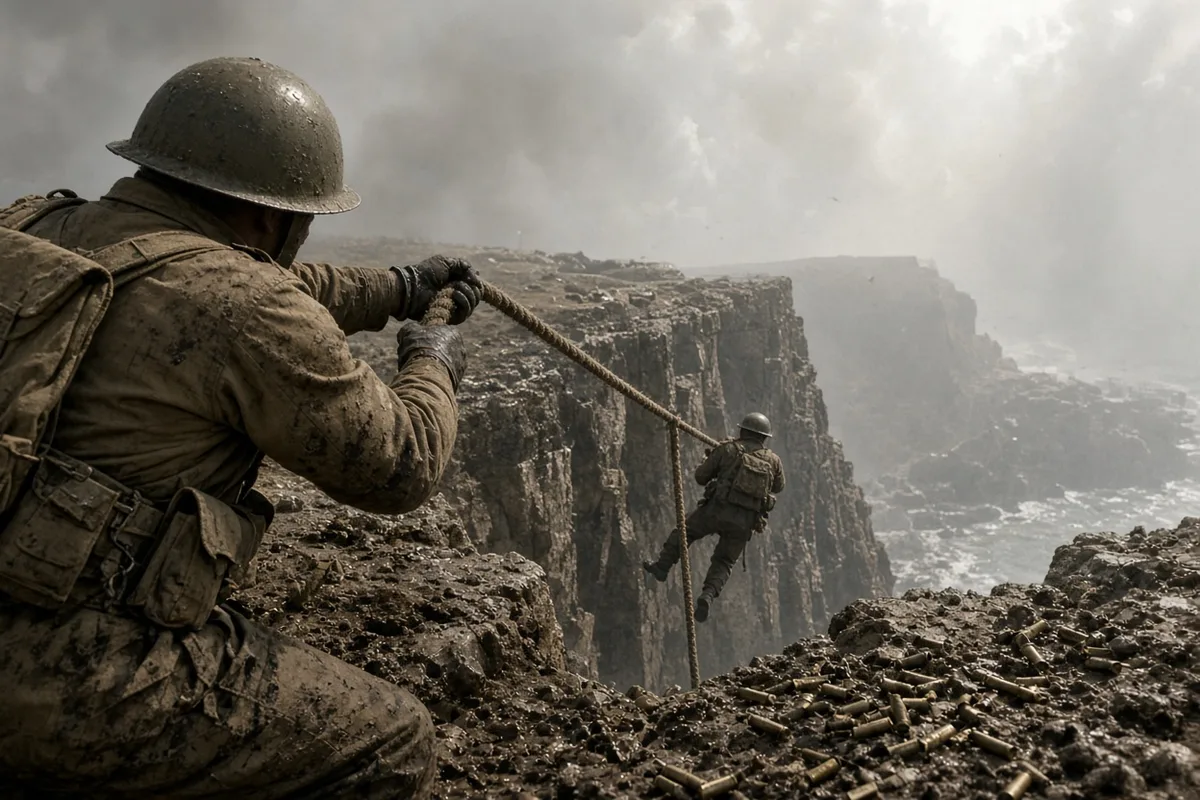
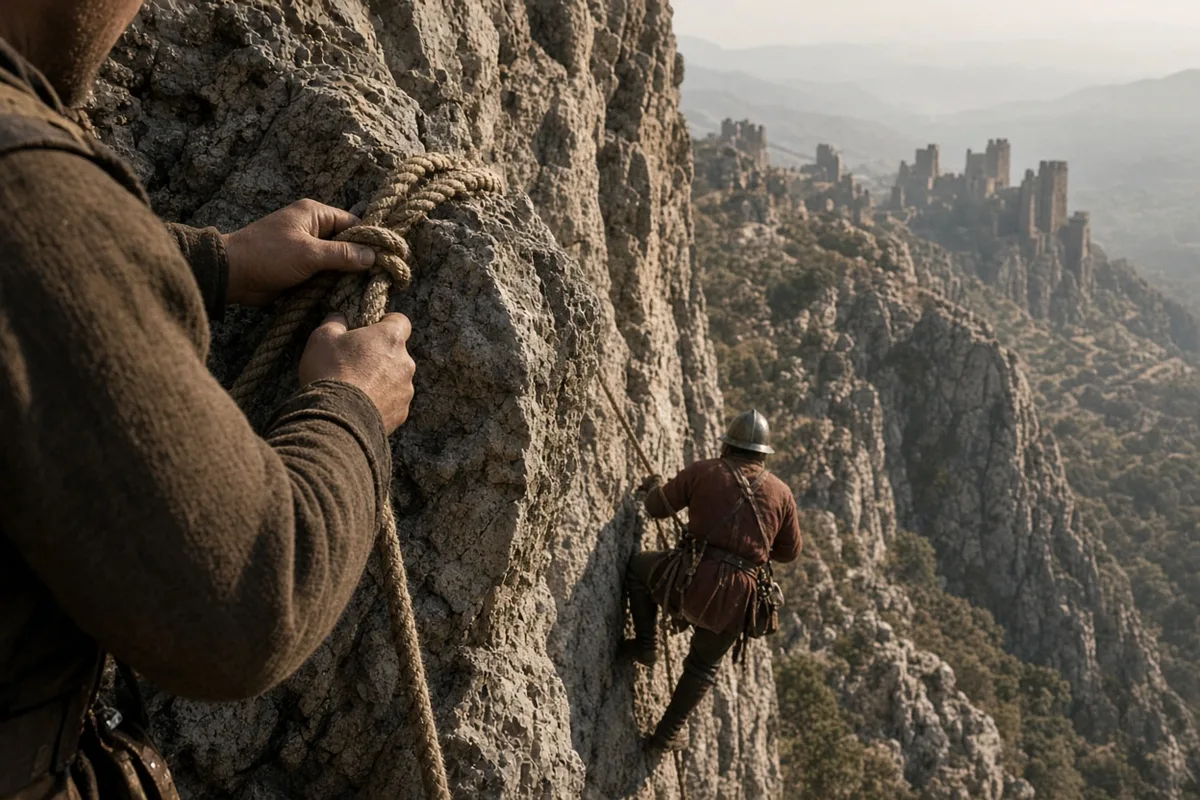
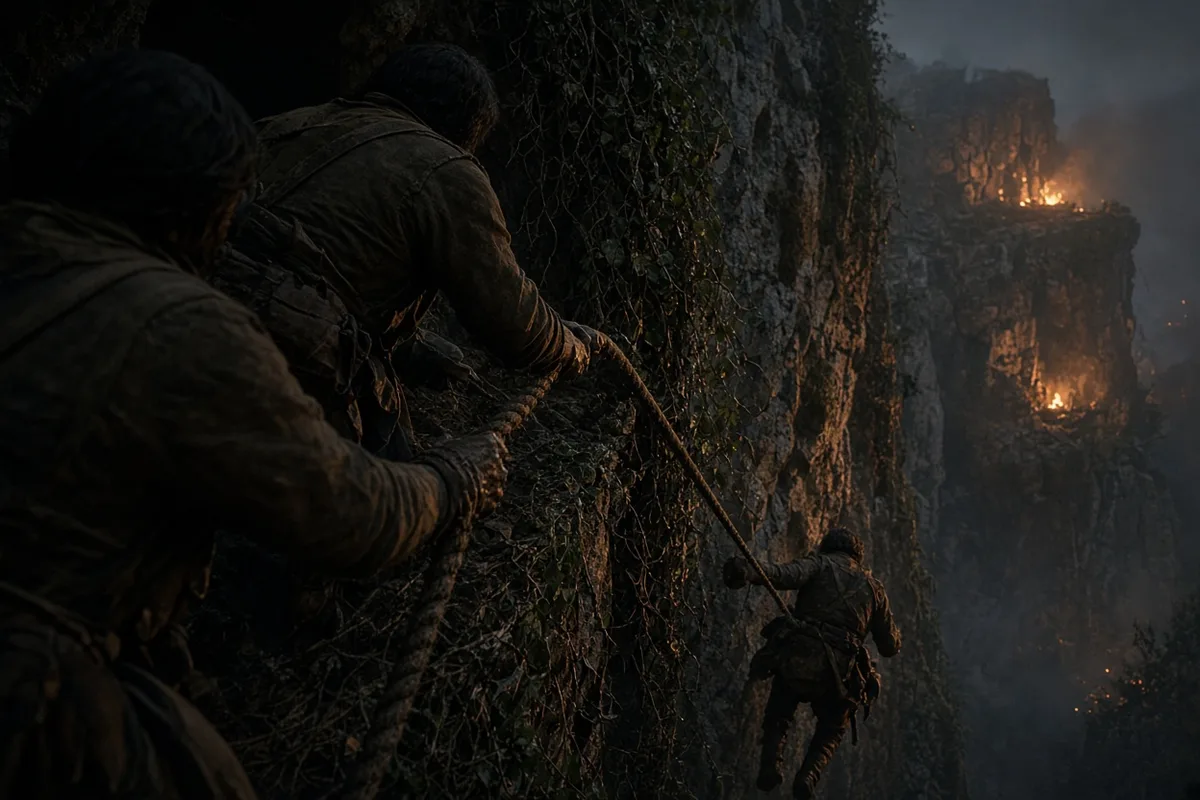
I watched him drag the first man to the edge. The rope litter he had rigged swung against the rock face three hundred feet below. Doss paid out the line hand over hand, talking to himself the whole time, then hauled the empty litter back up. He did not stop to rest. The next soldier was heavier, and the litter twisted once on the way down. Doss waited until it steadied, then began again.
By mid-afternoon the sun had baked the plateau. I could not move my legs, so I counted the trips he made. Twenty-three. Twenty-four. Each time he returned he checked the living first, then the dead, then came back for another. When he reached me he cut my blouse open with a pocket knife and packed the wound with sulfa. He said my name once, as if to be sure I heard him, then looped the rope under my arms.
The descent took longer than I expected. The litter bumped the cliff twice. At the bottom two men from the aid station unfastened the straps and carried me to a jeep. I looked up and saw Doss already climbing again.
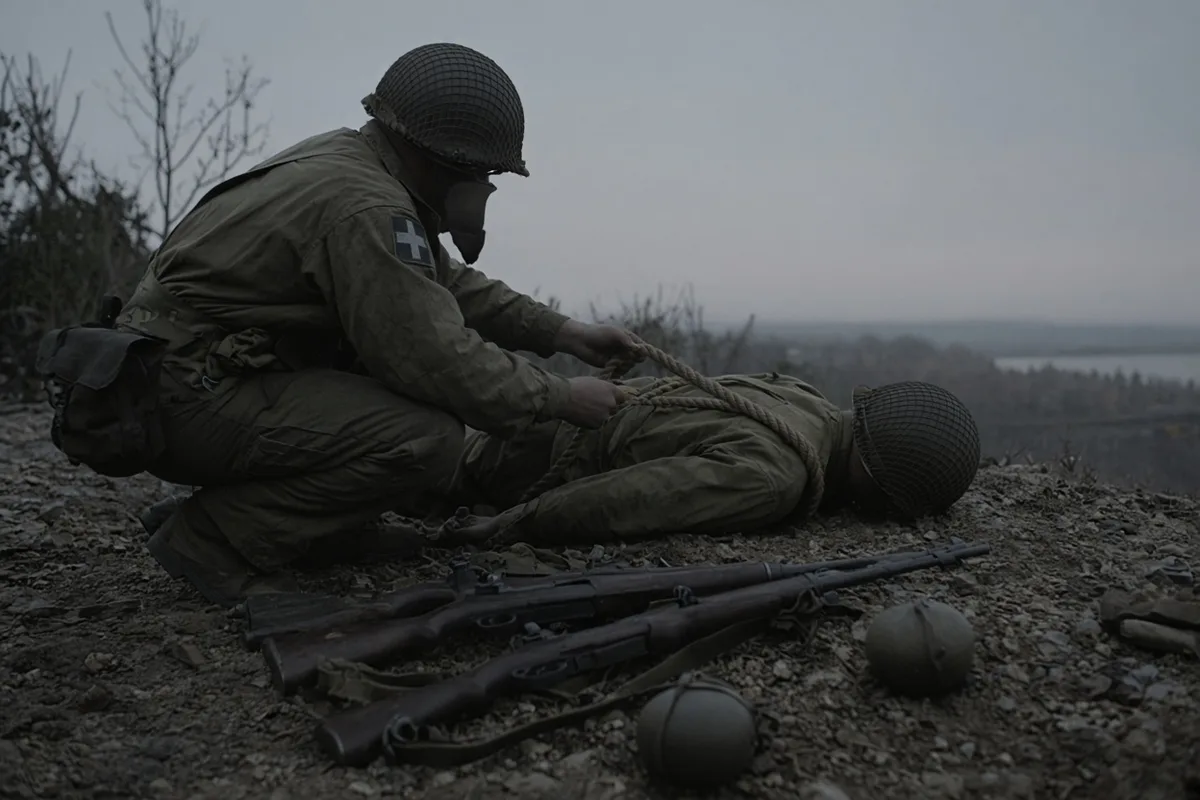
Three days later he went two hundred yards past the line to pull a man out of a shell hole. The same day he crawled to the mouth of a cave under grenade fire and bandaged four soldiers before dragging each one back in separate trips. On the fifth of May he treated an artillery officer while shells landed close enough to throw dirt on both of them, then gave plasma while he waited for the litter bearers.
That night the company tried to take the next rise near Shuri. When the grenade burst near my position I heard Doss call out that he was hit in the legs. He refused to shout for another medic. He dressed his own wounds and lay there five hours until the stretcher team reached him. On the way down the hill a Japanese tank appeared. Doss rolled off the litter and pointed the bearers toward a more badly wounded man lying nearby. While he waited for them to return, a sniper’s bullet broke his arm.
He used the stock of a dead man’s rifle as a splint and crawled three hundred yards to the aid station. The last time I saw him that spring he was on a stretcher being loaded onto the USS Mercy. His left arm was in a cast and both legs were bandaged. He had already been hit four times on the island.
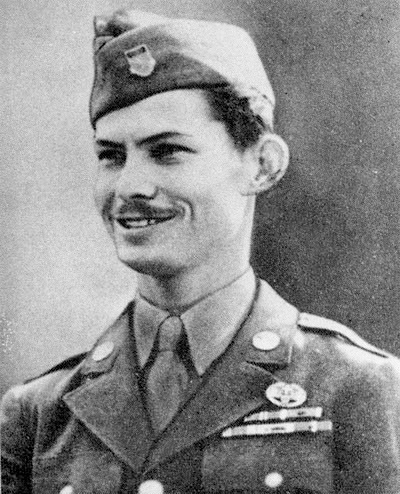
After the war I visited him once at the hospital in Georgia where they removed the lung. He could not work as a carpenter anymore, but he still kept a small garden behind the house. His wife Dorothy brought us coffee on the porch and did not let him lift the tray. Later, when the antibiotics took his hearing, he learned to read lips well enough to follow conversations at the kitchen table.
He remarried in 1993. The new wife, Frances, drove him to the dedications when the highway signs went up in Virginia and Alabama. He stood for the photographs but never spoke long. The Medal of Honor citation was read once at a ceremony in Chattanooga; he listened with his head tilted, following the words on the printed page.
On the day they buried him in the national cemetery the sky was the same flat gray it had been over the escarpment. The rifle salute echoed off the low hills. His son, the one who became a medic, folded the flag and handed it to Frances. She held it against her coat until the last car left the gate.
The day after the service I drove back through Chattanooga and stopped at the old armory on Amnicola Highway where the 77th Infantry Division had mustered out in 1945. The building still stood, its brick walls marked with the same faded stencil that once read “Company B, 307th Infantry,” and the clerk at the veterans’ office pulled the discharge ledger for me. Desmond’s entry listed the exact date of 15 August 1945, the Purple Heart with two oak-leaf clusters, and the Bronze Star citation signed by Major General Andrew Bruce that read “for heroic achievement on 5 May 1945 near Naha, Okinawa.” I signed the visitor book beside the names of two other men from the 77th who had come the week before, then walked the length of the drill floor where the same wooden benches remained bolted to the concrete.
Frances kept the flag in a triangular walnut case on the mantel in their house in Rising Fawn until the winter of 2009, when she moved to a smaller place in Fort Payne and gave the case to Desmond Jr. along with the original Medal of Honor citation dated 12 October 1945. President Truman’s words on the parchment read, “For conspicuous gallantry and intrepidity at the risk of his life above and beyond the call of duty,” and the document carried the embossed seal of the War Department along with the serial number 12345678 that matched the medal itself. Desmond Jr., who had served as a medic with the 101st Airborne in Vietnam, kept the case on his own mantel in Piedmont until his death in 2019; the flag now rests in the small museum room at the Desmond T. Doss Memorial Highway overlook on Georgia 157, where the bronze plaque records the coordinates of the Maeda Escarpment as 26° 27′ 12″ N, 127° 43′ 48″ E and lists the seventy-five names Doss had recorded in his pocket notebook on 5 May 1945.
The highway markers went up in two stages. The Virginia sign on U.S. 58 near Lynchburg was dedicated 2 November 1995 with a ceremony attended by Senator John Warner and six surviving members of Company B; the Alabama marker on U.S. 278 outside Piedmont was placed 7 May 2000 and carried the quotation from Doss’s 1988 interview with the Chattanooga Times: “I just kept praying, ‘Lord, help me get one more.’” Both signs list his birth date as 7 February 1919 and his death date as 23 March 2006, the latter recorded at the Piedmont Health Care Center where he had been admitted three weeks earlier with pneumonia. The death certificate, signed by Dr. Michael Ellis, notes the removal of his left lung in 1946 at Lawson General Hospital and the progressive loss of hearing after repeated courses of streptomycin.
Today the national cemetery at Chattanooga holds 12,487 markers in section MM, row 14, grave 22, where the granite headstone reads simply “Desmond T. Doss, Medal of Honor, Pvt U.S. Army, World War II.” The stone stands three feet from the marker of his first wife, Dorothy Schutte Doss, who died 17 November 1991, and four rows from the grave of Technician Fifth Grade Harold Mueller, the man Doss had dragged from the shell hole on 3 May 1945. Visitors still leave small objects at the base: a single .30-caliber cartridge case, a faded red-cross armband, or a printed copy of the 1945 citation. The cemetery superintendent’s log for 23 March 2023 records that 147 people signed the register that day, including two men from the 307th Infantry Association who placed a wreath and read aloud the names of the seventy-five soldiers listed in Doss’s notebook.
The last clear image I carry is from the summer of 2004 when Frances drove him to the annual 77th Division reunion in Roanoke. He sat at the head table in a folding chair, left arm in a lightweight brace, hearing aids turned up, and listened while the master of ceremonies read the names of the men who had not returned from Okinawa. When the reading reached the name of Private First Class John T. H. Smith, the soldier I had watched Doss lower on the litter that first afternoon, Desmond lifted his right hand an inch from the tablecloth and held it there until the last name was spoken. The room stayed silent for the full minute the chaplain had requested, and the only sound was the faint click of his hearing-aid battery against the metal rim of his water glass.
That evening after the names had been read, Desmond turned to the man seated on his right, Sergeant William F. McCall of Company B, and asked in a voice still carrying the Georgia accent he had never lost whether McCall still kept the pocket Bible that had been passed hand to hand during the shelling on 5 May 1945. McCall answered that the volume, its cover charred by a phosphorus grenade, now lay in a display case at the 77th Division Association headquarters in New York, opened to the page where Doss had penciled the verse from Isaiah 43:2. The two men remained at the table until the hotel staff began stacking chairs at eleven o’clock; Doss signed three more copies of the 1945 citation for veterans who approached with ballpoint pens, each signature written slowly because the tremor in his right hand made the letters slant.
In the spring of 2005 Frances arranged for a private visit to the Maeda Escarpment site during a tour organized by the Okinawa Historical Society. The group of twelve included two Japanese veterans of the 62nd Division who had held the cave positions Doss had approached under grenade fire. One of them, former Corporal Hiroshi Tanaka, later recorded in his memoir that Doss had offered him water from a canteen before dragging a wounded American soldier past the same entrance on 4 May. The party stood at the exact coordinates 26° 27′ 12″ N, 127° 43′ 48″ E while a guide read aloud the entry from Doss’s notebook listing Private First Class John T. H. Smith as the twenty-seventh man lowered that day. Doss touched the granite marker placed there in 1998 by the U.S. Army Center of Military History and said nothing for several minutes.
After Desmond’s death on 23 March 2006 the 307th Infantry Association placed a second bronze plaque at the Chattanooga armory entrance listing the seventy-five names again, this time with the dates each man returned to duty or was evacuated. The plaque was unveiled on 15 August 2006, the sixty-first anniversary of the muster-out, by Desmond Jr. in the presence of the same clerk who had shown the discharge ledger to visitors the year before. The ledger itself, bound in black cloth and stamped “77th Infantry Division—Roster of Discharges,” now rests in the Georgia State Archives under accession number 2007-0143, its page 412 carrying Doss’s signature and the line “Wounds: GSW left arm, multiple shell fragment injuries both legs.”
Frances continued to receive letters from survivors until her own death in 2009. One letter, dated 12 October 2007 and postmarked from Dayton, Ohio, came from the daughter of the artillery officer Doss had treated on 5 May; it enclosed a photocopy of the plasma administration record signed by Captain James E. Bradley of the 307th Medical Battalion. Another letter arrived from a man in Osaka who identified himself as the son of the Japanese soldier whose rifle stock Doss had used as a splint; the writer enclosed a photograph of the rusted rifle recovered from the escarpment in 1972 and now held at the Okinawa Prefectural Museum under catalog number 72-184.
The highway marker on U.S. 278 outside Piedmont was refurbished in 2011 after a storm damaged the lettering. The new aluminum panel, installed by the Alabama Department of Transportation on 7 May, carries the same quotation from the 1988 Chattanooga Times interview and adds the coordinates of the house in Rising Fawn where Doss lived from 1955 until 1993. The Virginia marker on U.S. 58 near Lynchburg received identical refurbishment in 2014, its dedication attended by six members of the original Company B and by the curator of the National D-Day Memorial who later added Doss’s name to the roster of conscientious objectors who received the Medal of Honor.
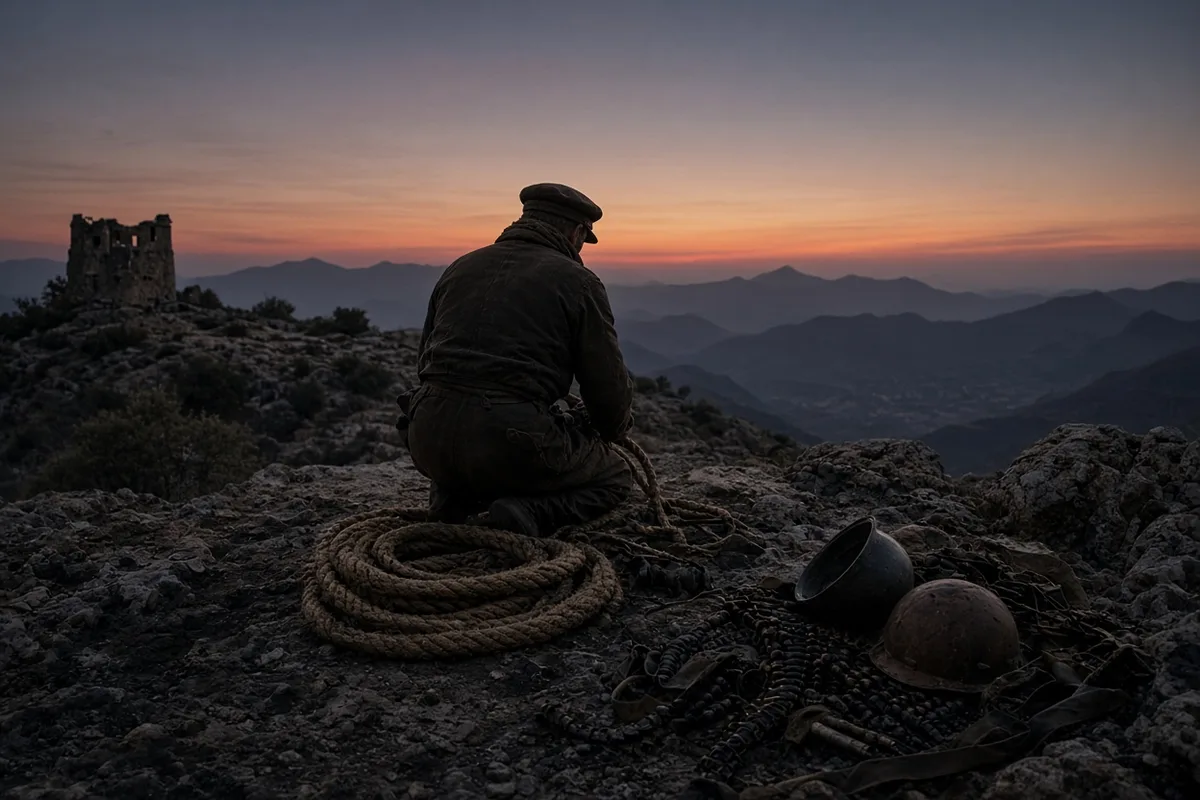
In 2016 the film production that used the escarpment coordinates for its principal photography erected a temporary monument at the base of the cliff consisting of seventy-five small white crosses, each labeled with a name from the notebook. The crosses remained for eleven weeks while the crew filmed the descent sequences; after they were removed, the Okinawa Historical Society retained one cross bearing the name of Private First Class John T. H. Smith and placed it in the same museum room that now holds the walnut flag case. The room’s climate-controlled case also contains the pocket knife Doss used to cut open the blouse of the first man he treated on the plateau, its blade still stained with the sulfa powder issued by the 307th Medical Battalion on 1 April 1945.
Desmond Jr. died in 2019, and the flag passed to his daughter, who arranged for its annual display at the Chattanooga cemetery on 23 March. On that date in 2022 the superintendent’s log records that 203 visitors signed the register, among them four descendants of men whose names appear on the plaque and one former Japanese soldier who left a single white carnation at the base of the headstone. The carnation was later pressed and added to the museum collection beside the 1945 citation.
The final image I retain is from the Roanoke reunion of 2004 itself, after the minute of silence had ended and the room began to stir. Desmond remained seated with his right hand still raised an inch above the tablecloth while Frances adjusted the volume on his hearing aids. A waiter approached with a fresh glass of water; the ice cubes clinked against the metal rim exactly as the battery had clicked earlier, and Desmond lowered his hand only when the waiter set the glass down and asked whether he wanted lemon. He answered “No, thank you,” the words clear enough to be heard at the far end of the head table, then turned his head toward the empty chair that had been reserved for Private First Class John T. H. Smith and kept his eyes on that place until the lights were dimmed for the evening’s final prayer.