


Desmond Doss Saves 75 Men Without a Weapon
I was the one who threw the boot.
I want that on the record before anything else, because it matters to how the rest of this sits in my chest. Back at Fort Jackson, when Doss knelt by his bunk every night with his eyes closed and his hands folded like the war outside didn't exist for those five minutes, some of us laughed. Some of us pitched shoes at him in the dark. He didn't carry a rifle. He wouldn't touch one, wouldn't drill with one, wouldn't so much as sling one over his shoulder for a photograph. We called him a coward behind his back and sometimes to his face. We tried to get him transferred out of the outfit. One officer wanted him discharged for being unbalanced in the head. Another wanted him court-martialed just for refusing to hold a weapon. None of it worked. He stayed a private first class, medical detachment, 307th Infantry, 77th Division, and by the time we hit Guam in July of '44, most of the mockery had gone quiet, because we'd started noticing that he ran toward the sound of gunfire while we were running the other way.
By Leyte he wasn't a joke to anybody. He crossed open ground under fire more than once to drag men back, and when he came home with a Bronze Star pinned to that same chest he'd never armed with a rifle, nobody in the company had a smart word left to say about his Saturdays.

So when we shipped for Okinawa in the last days of April 1945, I already knew what kind of man was walking beside us. What I didn't know was that I'd spend the rest of my life measuring every other kind of courage against one Saturday in May.
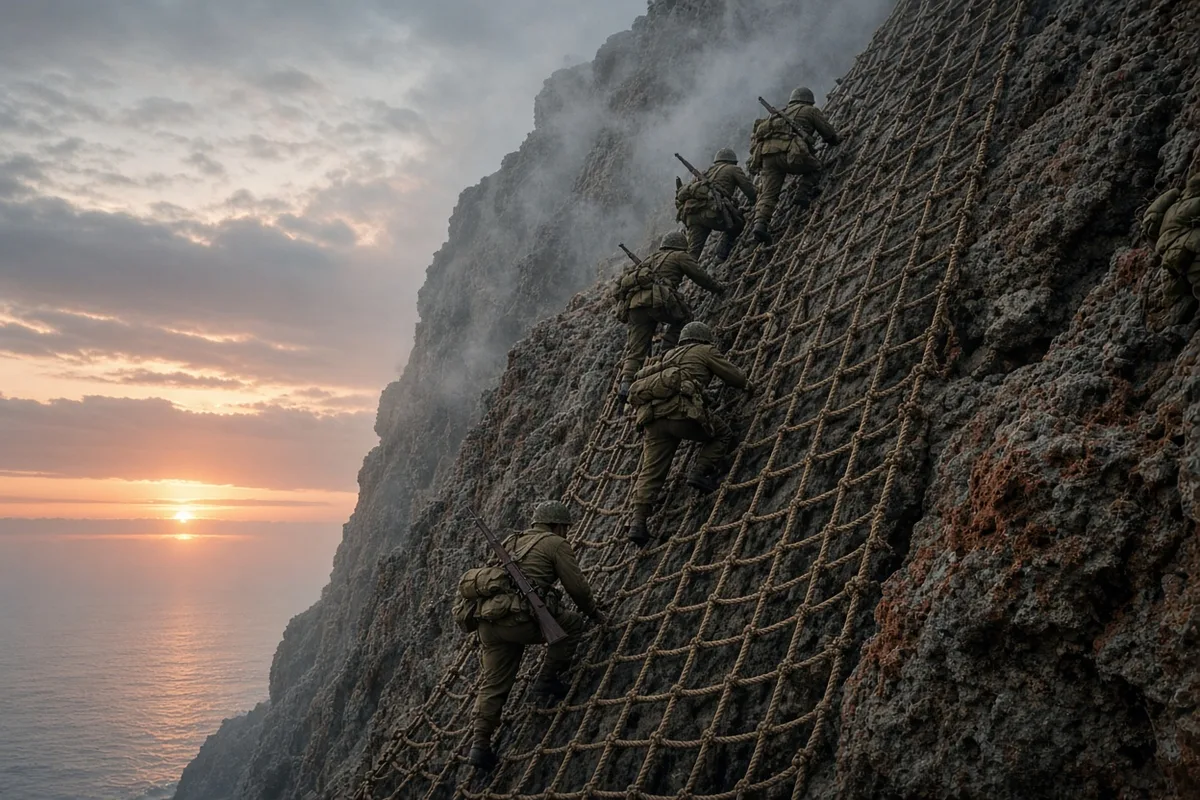
The ridge came up out of the haze like a wall somebody built on purpose to keep men out. Four hundred feet of jagged coral escarpment, and the Japanese had had years to turn its face into a hive — tunnels, spider holes, gun ports cut into rock you couldn't see until they opened up on you. We called it Hacksaw Ridge because that's what it did to whoever tried to climb it. The only way up was cargo netting thrown over the cliff face, and going up that netting in full gear, not knowing what waited on the plateau, was its own kind of prayer, whether you were the praying type or not.
We took the top. We lost men taking it. And for days after, the fighting up there didn't stop so much as it kept eating. Doss moved through all of it without a marking to say he was a medic — he'd stripped anything that might draw a bead on him faster than it already did — and he went from man to man, dressing wounds sometimes not thirty feet from a Japanese position, then hauling the man back before anybody could tell him it was suicide to try.
By the fifth of May the plateau had turned into a killing floor. Our people pushed forward that morning trying to finish what we'd started, and it was Doss's Sabbath, which meant nothing to the artillery crews on the other side of the ridge. They opened up with everything they had — mortars, machine guns, shells walking across the ground like something deciding where to step next. I was far enough back to watch it happen and close enough to feel the concussion of it in my teeth. Men went down everywhere at once. The order came to pull back, to get off that exposed shelf of rock before the whole company was cut to pieces, and the living did what the order said. They went back down over the edge, down the ropes and the netting, back toward the world that didn't have artillery walking through it.
Doss didn't go.
I want to be exact about what that looked like, because from where some of us watched, climbing back down ourselves, it didn't look like heroics. It looked like a man simply not doing the thing everyone else was doing. He stayed up on that fire-swept shelf with the wounded who couldn't move themselves, and he started working, out in the open, no cover, shells still coming in, and he later said it plain — there was no way for those men to get back down on their own, and he was the only medic left up there, so he just kept picking them up.
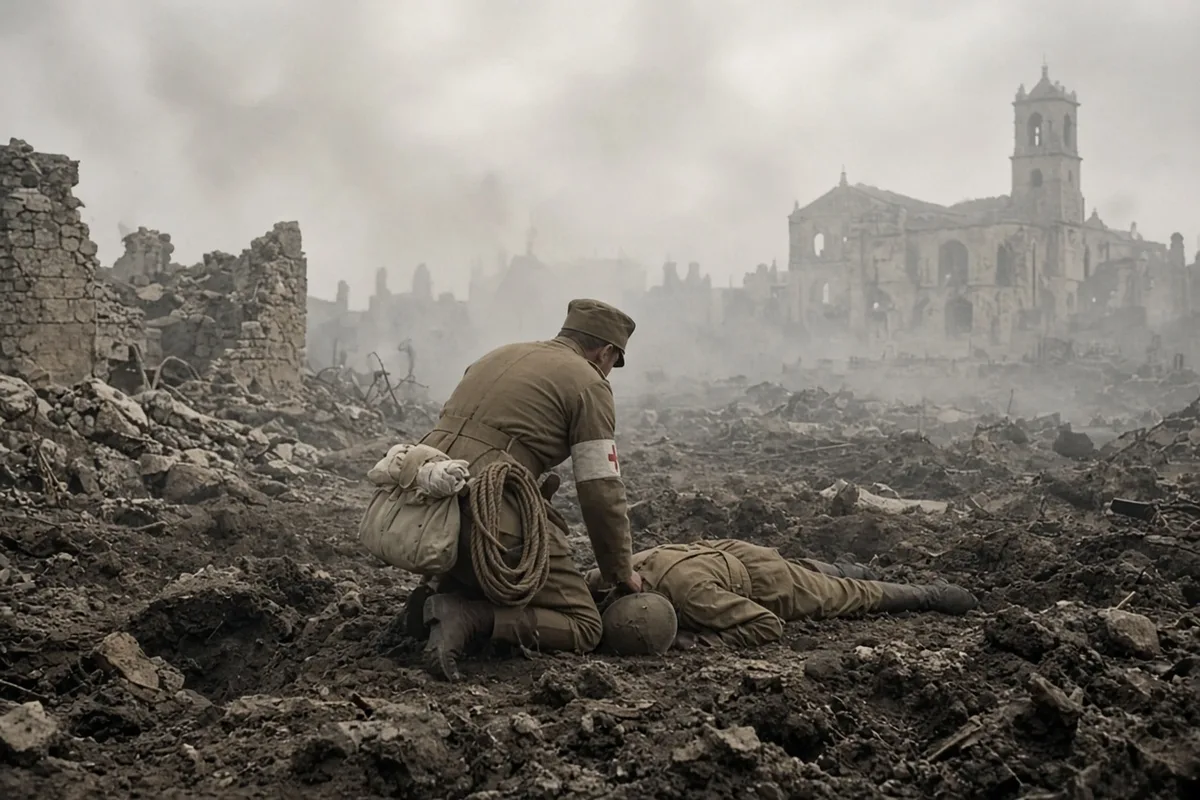
One at a time. That's the thing that still stops my breath when I think it through slowly. Not a stretcher team, not a chain of hands passing a man along. One medic, one body at a time, dragging each wounded soldier across open rock to the lip of the escarpment.
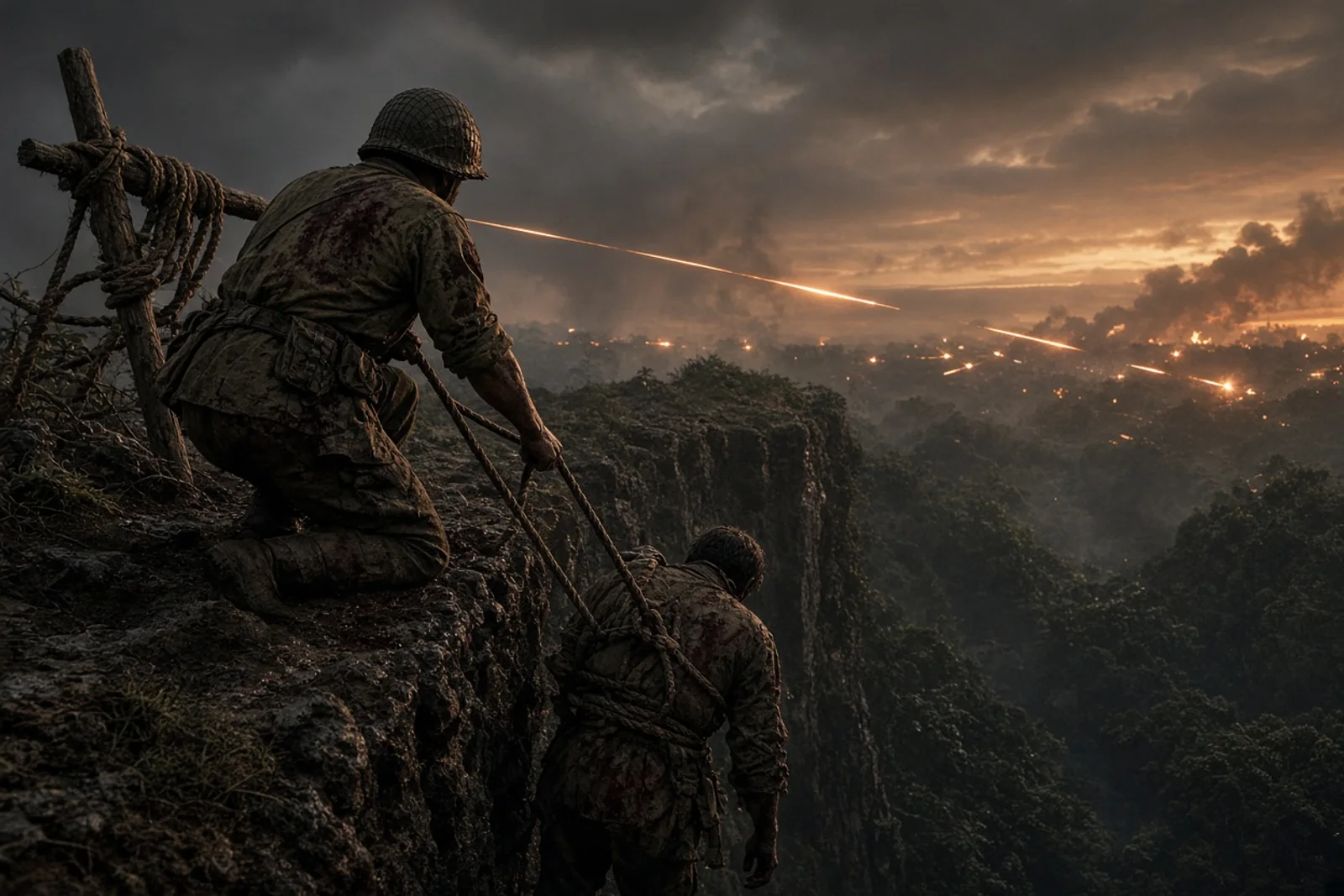
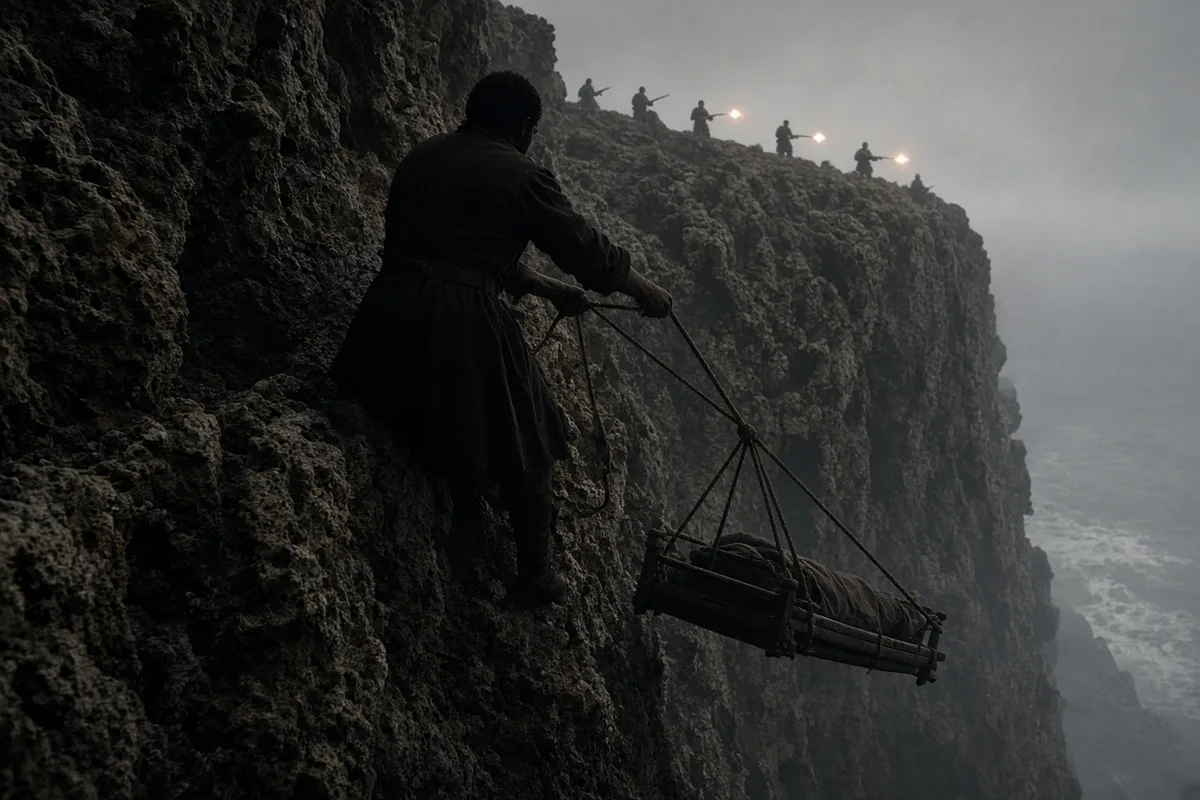
He'd tied a rope into a litter, a kind of sling, and at the edge of that four-hundred-foot drop he'd lower a man down hand over hand to whoever was waiting below to catch him. Then he'd turn around and go back out into the open for the next one. I heard from men who were up there that between each lowering, before he went back for another, he'd say it to himself, quiet, like a man checking his own pulse: Lord, please let me get one more.
Then he'd go get one more.
Hour into hour it went on like that. The light changed. The shelling didn't stop so much as shift, moving off and circling back, and every time it circled back he was still up there, walking through it upright because there wasn't time to belly-crawl to a man who was bleeding out. Word came down the line to whoever would listen — a medic was still on the ridge, still working, and every so often another wounded man would appear at the bottom of a rope, lowered slow and steady into arms that hadn't expected to be catching anybody else that day.
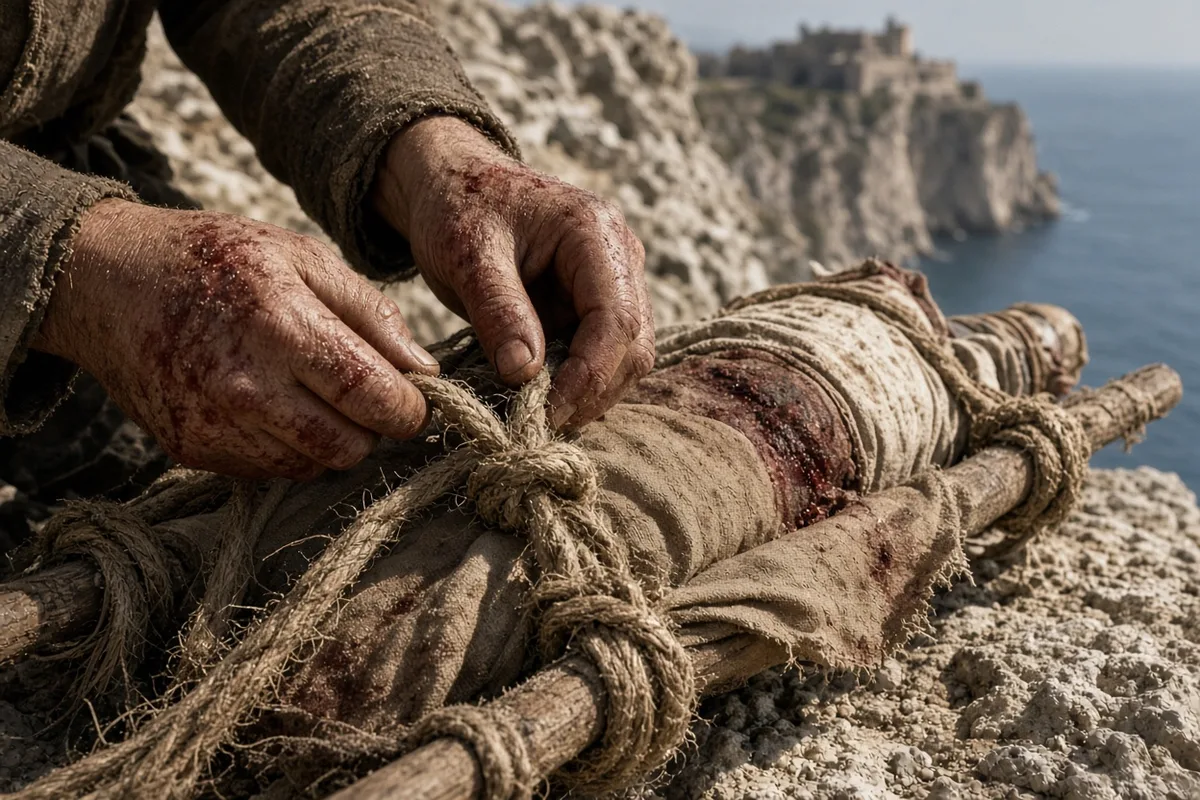
I remember counting for a while and then losing count, because counting felt obscene next to watching. His commanding officer tried afterward to put the number at a hundred. Doss himself argued it down, said he thought it was closer to fifty, and the two of them settled on seventy-five, which is the number that ended up carved into his citation and into every account since. Seventy-five men lowered off that cliff face by one set of hands, by nightfall, on a Saturday he wasn't supposed to be working at all.
Some of those men, I knew personally. Some of them had thrown the shoes.
I think about that more than almost anything else from the whole campaign — that somewhere in that line of wounded going down the rope was a man who'd mocked him at Fort Jackson for kneeling too long, for refusing the rifle, for making the guard schedule complicated with his Sabbath requests. And there was Doss, hauling him hand over hand down a cliff under a sky full of shell fragments, not sorting who deserved it and who didn't, just getting one more, then one more, then one more.
That should have been the end of it, the whole story, the thing they'd tell about him for the rest of his life. It wasn't.
Days later, still on that same murderous stretch of ground, a grenade went off close enough to tear into his leg. Any other man calls for a medic. Doss was the medic, and there wasn't another one handy, so he packed his own wound himself, lying there in the dirt doing surgery on his own body with whatever he had in his kit, and he waited five hours before anyone got him out.
When they finally did get him onto a stretcher and started carrying him back toward the aid station, the fighting caught up with them again — another attack, more wounded going down around them — and Doss made them stop the stretcher. He told the bearers to put him down and give his spot to a man he judged worse off than himself. He climbed off. He started walking on the leg he'd just field-dressed on himself, back toward the rear on foot, because somebody else needed the stretcher more.
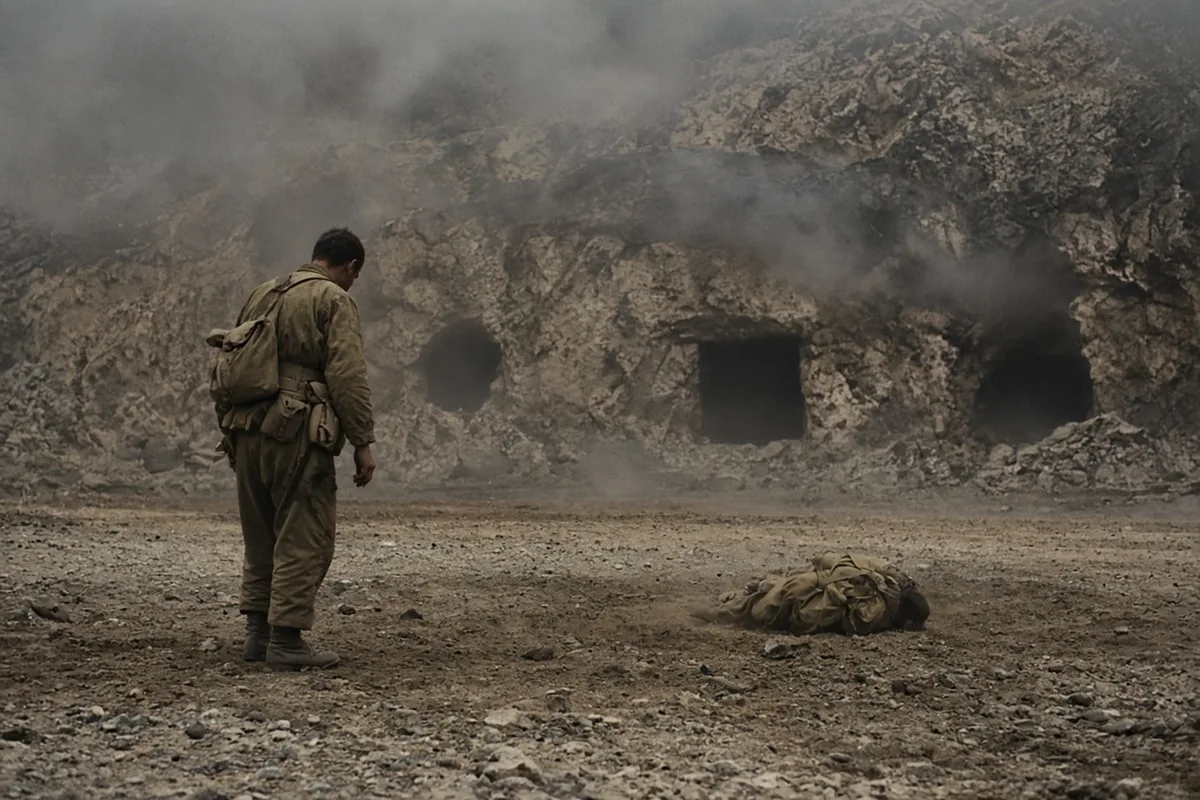
That's when the sniper found him.
The bullet caught him on the way back, shattering his arm, and even then — and I have this secondhand from men who saw it, because by that point I wasn't near enough to watch it happen myself — even then he didn't stop functioning like a medic. He fashioned himself a splint out of a rifle stock, because that was what was on hand, and he crawled the rest of the distance to where he could finally be properly evacuated. A man who wouldn't touch a rifle to fire it, using one at last to hold his own shattered arm together.
They got him off Okinawa eventually, onto a hospital ship, then home, carrying wounds that would trouble him the rest of his life — the arm, the leg, and something else too, a case of tuberculosis he'd picked up in the Pacific that would cost him a lung and years of his health long after the war itself was over.
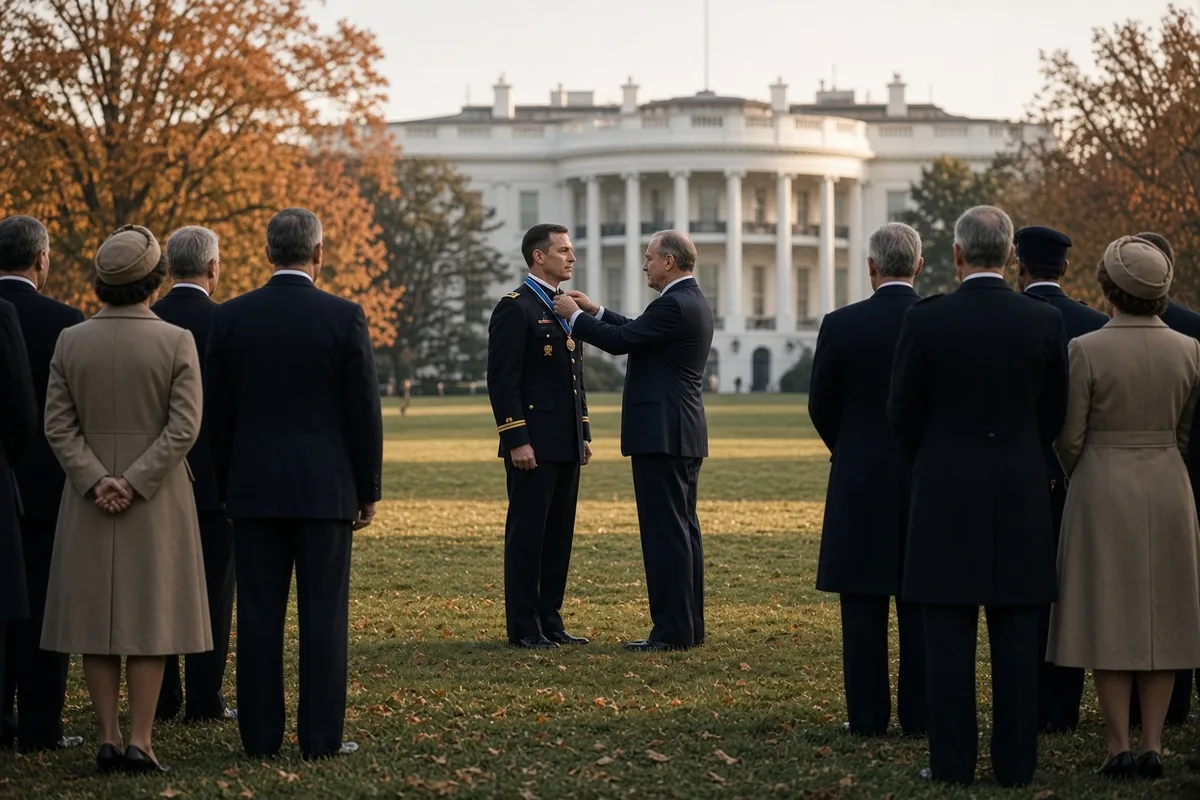
I didn't see him again for a long time after Okinawa. None of us who'd known him at Fort Jackson really did, not the way we had before, shoulder to shoulder in a barracks. But the story followed him home faster than any of us could, and by October of that same year, 1945, President Truman was hanging the Medal of Honor around his neck on the White House lawn, and the country was calling him the first conscientious objector ever to receive it. Somebody out on Okinawa had already started calling him the Wonderman, and that name traveled too, all the way back to Lynchburg, Virginia, where he'd grown up the son of a carpenter and a shoe-factory worker, where he'd been a deacon in his church at twenty-one years old, where none of what he'd become in the Pacific would have surprised anybody who'd actually known him.
He never stopped saying it the same simple way when people asked him to explain himself, and I heard him say some version of it more than once in later years, when reporters or church groups would ask how a man who believed so completely in thou shalt not kill could go running into machine-gun fire for people who did the killing themselves. He said his belief in freedom ran just as deep as his belief in that commandment, and that he owed something to the boys who were out there fighting for it, even if his own hands would never be the ones pulling a trigger. He didn't like the word they'd stamped him with in his enlistment papers. Conscientious objector, they called him, and he always preferred a different pair of words for it — conscientious cooperator — because objector sounded like a man standing to one side with his arms crossed, and that was never what he'd done. He'd stood in the open with his arms full.
I think about the two versions of him that I carried in my own memory for years without reconciling them. The private who knelt by his bunk while boots sailed past his ear, refusing to so much as touch a rifle stock, and the same man on a fire-swept plateau four hundred feet above the beach, hauling grown men across open rock one at a time because there was nobody else up there to do it. It took me a long time to understand those were never two different men at all. It was one man, doing the exact same thing in both places — refusing to leave anybody behind him, whether that meant standing his ground on a Saturday against a barracks full of jeering soldiers, or standing his ground on a ridge against artillery, alone, with a rope and his own two hands, asking for nothing back except one more man to save.
Seventy-five times that Saturday, he got what he asked for.