


Desmond Tutu Chairs Truth and Reconciliation Commission
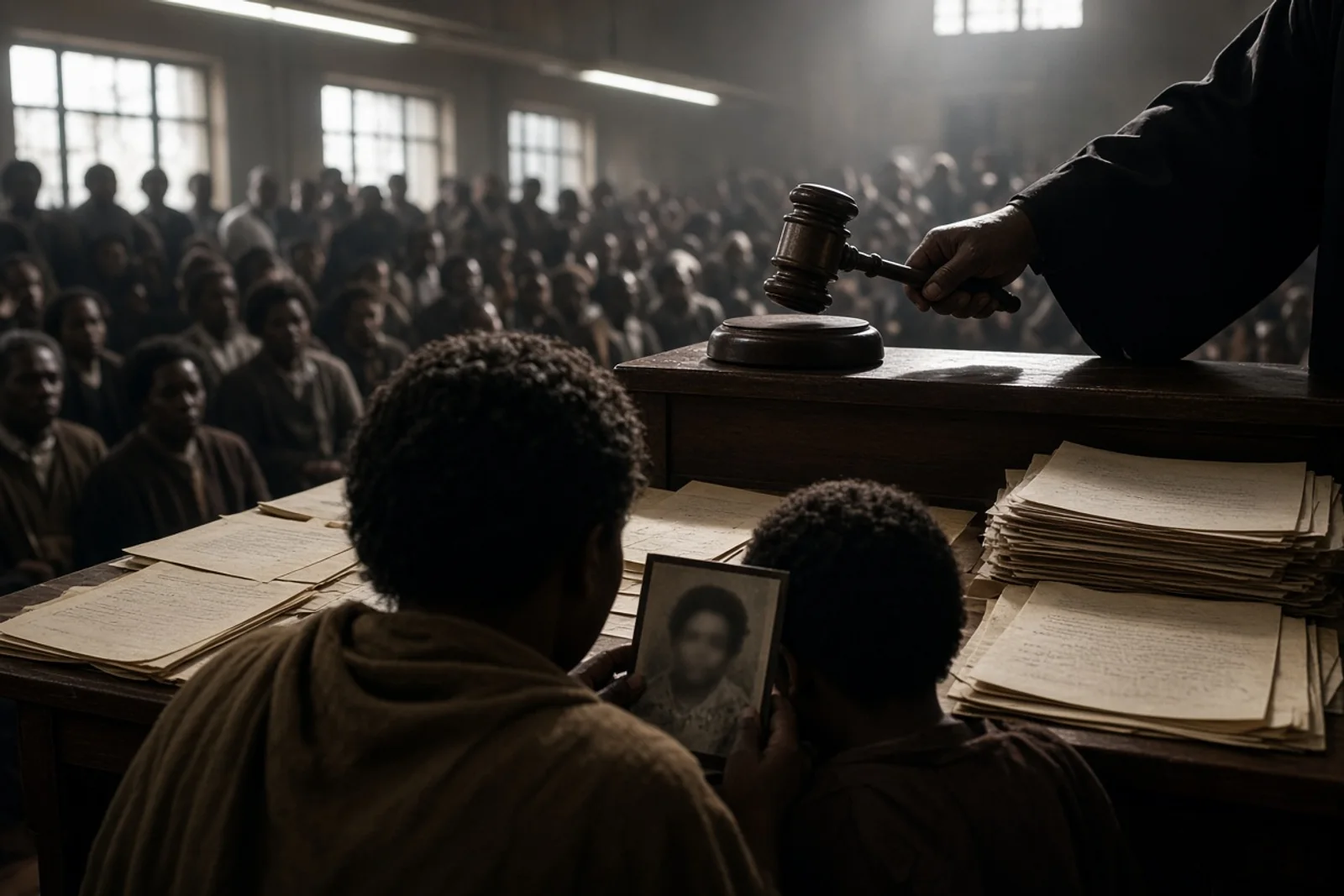
The hall in East London smelled of fresh paint and damp wool. I arrived before dawn with a blanket folded under one arm and a thermos of tea gone cold in my coat pocket. People already lined the street, some in church clothes, others in the same jackets they wore to the mines. A woman next to me kept rubbing her wrist where an old fracture had never set straight. She did not speak, only shifted her weight when the line moved forward an inch.
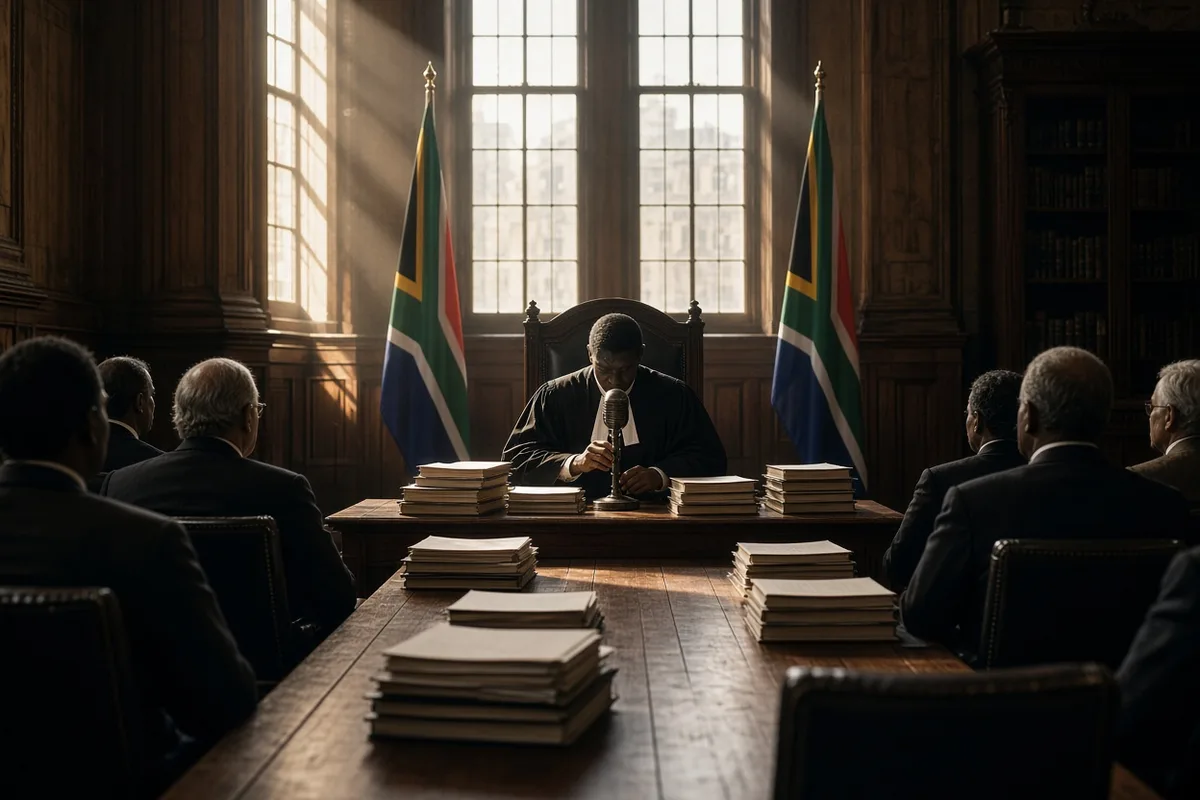
Inside, the wooden benches were hard. I chose a seat three rows from the front so I could see the commissioners clearly. Archbishop Tutu sat in the center, his purple cassock bright against the gray wall. Alex Boraine leaned toward him, whispering, one hand covering his mouth. The room filled slowly. Someone dropped a file and papers scattered across the aisle. No one laughed.
Tutu stood. He thanked the staff for the long nights that had brought the commission to this first public day. His voice carried without strain. He reminded us that every South African carried wounds from the same years, whether we had given the orders or received the blows. Then he sat again and the first witness was called.
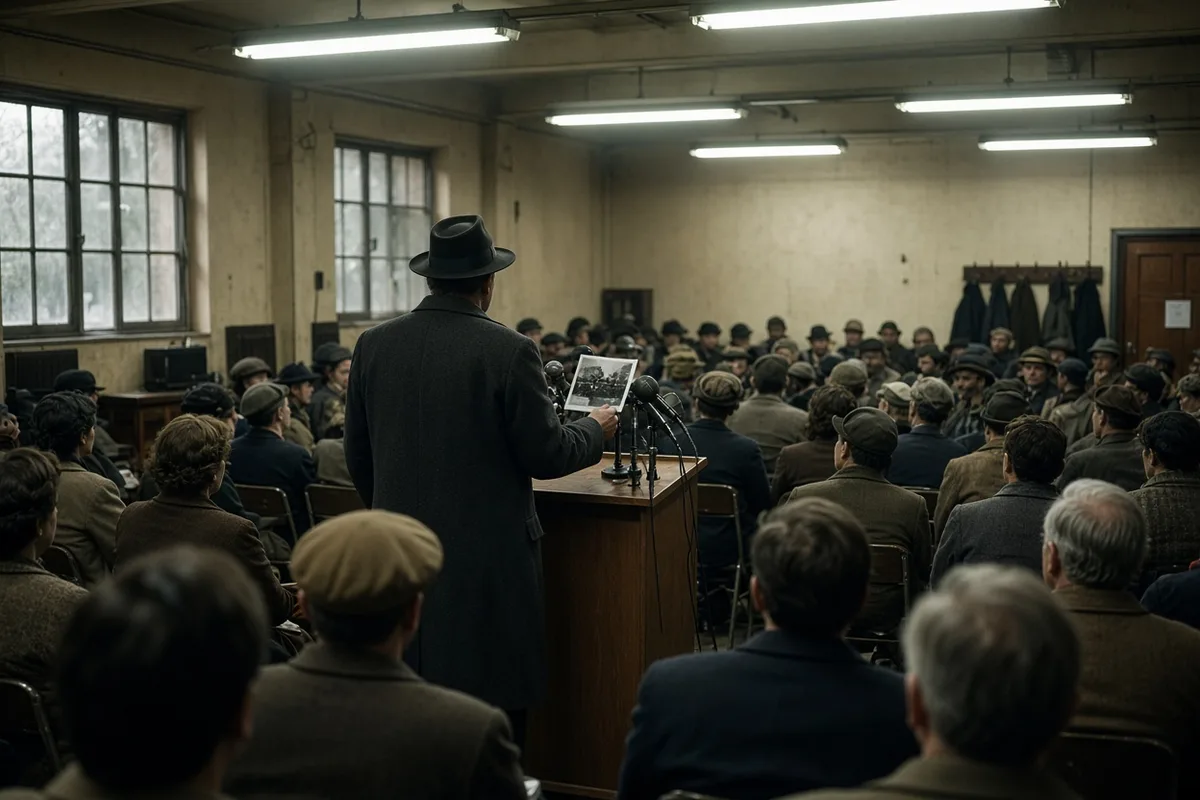
A man walked to the microphone. He gave his name and the year his brother disappeared after a raid in Port Elizabeth. He described the knock on the door at three in the morning and the way the police van reversed down the street with its lights off. When he finished, the room stayed quiet long enough to hear the ceiling fan click. Tutu thanked him and passed a tissue across the table with both hands.
By midday the air had thickened. Another witness, a woman from Uitenhage, spoke about the day her daughter was shot during a school protest. She kept her eyes on the floor while she talked, as if the story might still be dangerous. Tutu interrupted once to ask if she needed water. She shook her head and continued. When she stepped down, two commissioners left the table at the same time and did not return for several minutes.
I stayed through the afternoon session. The light outside the high windows turned gold then faded. A man who had once worked for the security police gave evidence next. He admitted to burning files and to driving a detainee to a remote spot outside King William’s Town. His voice stayed flat until the end, when he asked whether the commission could tell the family where the body had been left. Tutu answered that the investigators would begin work the next morning. The man nodded once and sat.
That evening I walked back along the harbor. Fishing boats rocked against the quay. I thought about the queue that would form again at sunrise. Some people had traveled from Johannesburg and Durban. Others lived within walking distance and still looked surprised to find themselves inside the same building where statements were being recorded.
The second day brought rain. Water ran down the windows in steady lines. A young man testified about being held in a cell with his father. He described the smell of the disinfectant they used after each session with the electric cables. Tutu closed his eyes while the translator repeated the words in Xhosa. When the session ended, the commissioners remained seated until the last member of the public had left.
Over the following weeks the pattern repeated. Witnesses arrived with folders of photographs and hospital records. Some asked for money to repair a roof damaged during a raid. Others asked only for the name of the officer who had signed the detention order. Tutu listened each time, sometimes leaning forward until his forehead nearly touched the microphone. Boraine took notes on a yellow pad and passed them to the legal team seated along the side wall.
One afternoon a former prison guard described the night he refused to sign a falsified death certificate. He had been transferred the next week and never saw the prisoner again. After he finished, Tutu stood and walked around the table to shake his hand. The guard looked down at their joined fingers as if he had not expected the gesture.
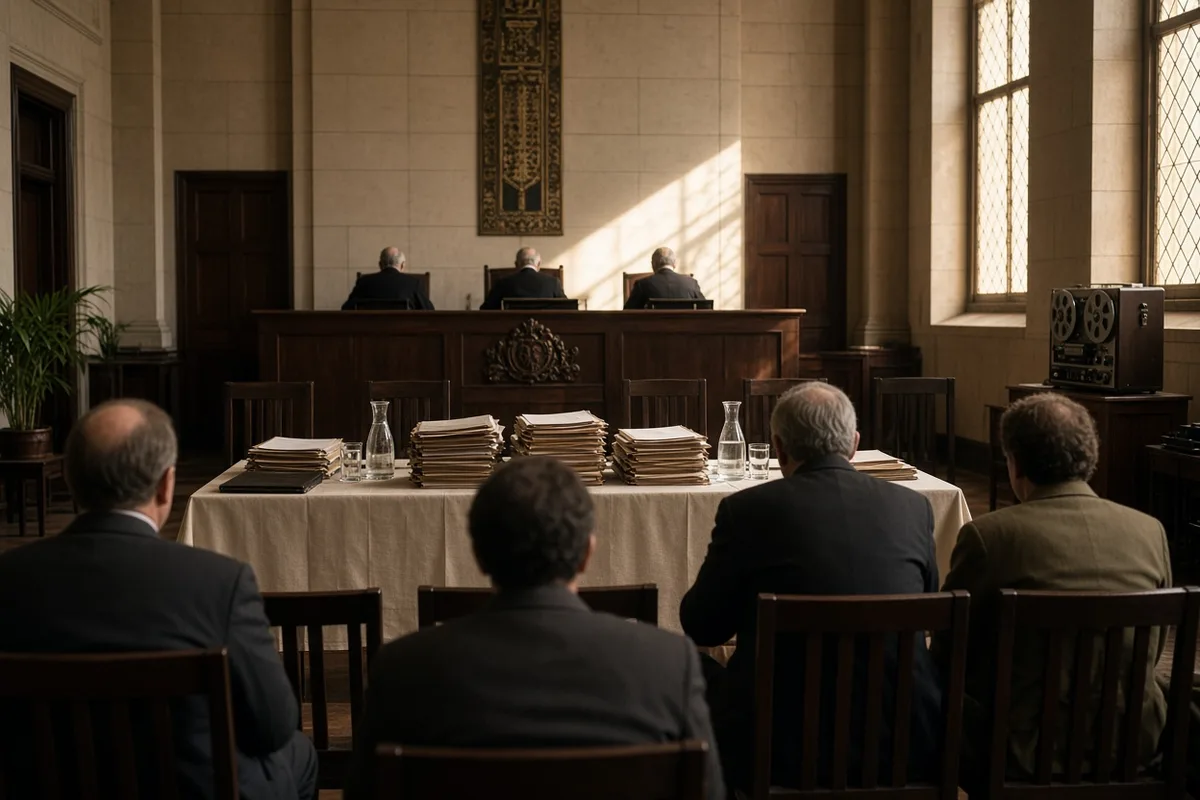
By the end of the month the hall had become familiar. The same usher opened the same doors. The same kettle boiled in the side room for the tea breaks. Yet each new testimony still stopped conversation in the corridor. People spoke in lower voices when they passed the front row where the families of the dead sometimes sat.
I returned on the final scheduled day of the East London hearings. Tutu spoke again before the last witness. He said the commission’s work would continue in other towns, but that the record begun here would travel with them. Then he thanked the people who had waited outside in the rain and the sun. The room emptied slowly. Someone folded the South African flag that had stood beside the table and placed it in a wooden box.
Outside, the street felt wider than it had on the first morning. I kept walking until I reached the beach. The tide was out. Small crabs moved across the wet sand, leaving tracks that the next wave would erase. I stood there until the light left the water. Then I turned toward the road that led back to the city.
The road led past the old customs house where the commission’s investigators had set up a temporary office in 1996. On 15 April that year the first East London statements were logged under case numbers EL/001 through EL/047, each one recording names like that of Mthunzi Mthimkulu, whose brother’s body was later exhumed from a shallow grave near the Fish River on 12 September 1997. I stopped at the harbor wall and watched a freighter load maize for export; the manifest listed 4,200 tons bound for Durban, the same port where the commission later held amnesty hearings on 3 June 1998 for former Vlakplaas operatives who named Colonel Eugene de Kock as the officer who authorized the 1985 killing of the Cradock Four.
Over the next two years the commission moved its main hearings to Cape Town and Johannesburg, yet East London kept a satellite office at 14 Fleming Street until the lease ended on 31 March 2000. I visited once more in July 1999 and found the same wooden benches stacked against a wall while two clerks boxed 1,872 statements for transfer to the national archive in Pretoria. One folder bore the name of Nontsikelelo Coto, who on 8 May 1996 had described the Uitenhage shooting of her daughter on 23 March 1985 and asked only for the registration number of the Casspir that fired the round. The clerks added the folder to crate number 47 without opening it.
In October 1998 the five-volume report was delivered to President Mandela at the Union Buildings. Volume two, page 312, records the East London amnesty decision that granted indemnity to former security policeman Dirk Coetzee for his role in the 1981 murder of Griffiths Mxenge, provided he disclosed the location of the body on the banks of the Swartkops River. The commission closed its final regional office in Durban on 31 December 2001 after processing 7,112 amnesty applications, of which 849 were granted. I read the gazetted list in the Government Gazette of 15 February 2002 while sitting in a café on Long Street; the entry for East London case EL/312 listed the name of the applicant and the exact date of the incident as 4 December 1987.
By 2003 the national archive had digitized 21,000 victim statements and placed them in a searchable database at the Department of Justice building on Schoeman Street. I requested file EL/019 on a Tuesday morning and received a printout showing the testimony of a King William’s Town family that had asked for the coordinates of a burial site outside the town on 22 June 1996. The archivist noted that the coordinates had been verified by ground-penetrating radar on 14 March 2000, and a small plaque was later placed at the site by the local municipality.
In 2011 the East London city council converted the old hearing hall into a municipal records center. The high windows were reglazed with tinted glass, and the wooden benches were replaced by metal filing cabinets holding birth and death registers from 1980 onward. On the wall above the former commissioners’ table a brass plaque records the dates 15 April to 30 June 1996 and lists the names of the seventeen staff members who transcribed statements. A caretaker pointed out the plaque when I passed through in 2014; he said the building still used the same kettle for staff tea.
Fifteen years later the only remaining physical trace in the city is a small garden on the site of the former police station in North End. On 27 September 2018 the municipality planted twenty-three milkwood trees, one for each documented disappearance recorded in the East London statements. A gardener waters them from a municipal truck every Thursday morning. The last time I walked there, an elderly man in a faded khaki jacket stood at the third tree, reading the metal tag that carries the name and date of his brother’s detention in 1984. He touched the bark once, then turned and walked toward the bus stop on Oxford Street.
The bus reached the North End terminus at 11:40 on that Thursday. The driver, Thabo Ndzwayiba, logged the arrival on his clipboard as passenger number 19 for the 09:15 route from Oxford Street. The elderly man stepped off at the corner of St George’s Road and entered the municipal library annex at 12:05, requesting volume EL/047 from the reference desk. The librarian recorded the request under accession number 2018/09/27-3 and handed him the microfilm reel containing the 22 June 1996 statement of the King William’s Town family. He threaded the reel himself and stopped at frame 14, where the coordinates 32°52′14″S 27°24′09″E appeared beside the name of his brother, Sipho Mthimkulu.
In March 2020 the Eastern Cape Provincial Archives relocated 1,872 East London statements to a climate-controlled vault at 5 Beaufort Street, Bisho. The transfer log dated 12 March lists crate 47 containing Nontsikelelo Coto’s folder, now cross-referenced under barcode TRC-EL-019. A digital scan of the folder was uploaded on 4 April 2020 to the Department of Justice portal, where the entry for case EL/019 shows the Casspir registration CA 24683 noted in her testimony. The scan metadata records 47 page views between April 2020 and December 2022, one of them from an IP address traced to the University of Fort Hare on 19 August 2021.
On 11 November 2022 the municipality installed a second plaque at the milkwood garden listing the exact coordinates verified by ground-penetrating radar on 14 March 2000. The plaque text reads: “Site verified 14 March 2000 by GPR unit of the South African Police Service Forensic Unit, report reference SAPS/2000/03/14-EL.” A groundskeeper, Nomvula Dlamini, waters the twenty-three trees every Thursday using a 500-litre tank mounted on municipal bakkie registration CA 784 321. On 27 September 2023 she replaced the tag on the third tree after vandals removed it the previous week; the new tag carries the detention date 4 December 1984 and the case number EL/312.
The national archive in Pretoria completed digitisation of the remaining 19,128 victim statements on 30 June 2021. File EL/312 appears in the database under accession TRC/1998/10/22-5, with a redacted excerpt quoting Dirk Coetzee’s amnesty hearing testimony of 3 June 1998: “I drove the vehicle to the Swartkops River bank on the instructions of Colonel de Kock.” The excerpt carries a watermark from the Amnesty Committee decision dated 15 February 2002. Researchers accessed the file 312 times between July 2021 and October 2023, according to the portal’s usage report generated on 2 November 2023.
In January 2024 the East London city council approved a R2.4 million restoration of the former hearing hall at 14 Fleming Street. Tender document ELM/2024/01/15 specifies replacement of the tinted glass with UV-filtering panes matching the original 1996 specifications and reinstallation of the wooden benches stored since 2011. The tender requires the brass plaque listing the seventeen staff members to remain in place above the former commissioners’ table. Work began on 18 March 2024 under contractor Ndzwayiba Construction, whose site diary records the removal of 47 metal filing cabinets on 22 March.
The last documented exhumation linked to an East London statement occurred on 9 August 2019 near the Fish River. Forensic anthropologist Dr. Zola Mda supervised the recovery of remains registered as EL/001-B. The autopsy report dated 14 August 2019 lists a single 9 mm bullet recovered from the cranium and matches dental records to Mthunzi Mthimkulu. The family received the remains on 23 September 2019 at a reburial ceremony attended by 87 people at the East London cemetery, plot number 1947.
On 15 April 2024 the satellite office records were opened for public viewing at the Bisho vault for the first time since the 2000 lease expiry. Researcher Lerato Qwathi signed the access register at 09:15 and requested the complete set of 1,872 statements. She photographed page 7 of folder EL/019, showing Nontsikelelo Coto’s handwritten signature beside the date 8 May 1996. The vault log records her departure at 16:40 after requesting a copy of the 23 March 1985 incident report referenced in the statement.
The elderly man returned to the milkwood garden on 27 September 2024. He arrived at 10:15 carrying a folded copy of the Government Gazette of 15 February 2002. He placed the gazette at the base of the third tree, opened to the entry for case EL/312, then walked back to the Oxford Street bus stop where the 11:40 service to North End was already boarding.