


Dietrich Bonhoeffer Joins Resistance
The deck tilted under a gray Atlantic swell. I gripped the rail and watched Dietrich Bonhoeffer walk the same stretch of planking he had walked every morning since we left Southampton. He carried no book this time, only his hands clasped behind his back, shoulders squared against the wind. The other passengers kept their distance. They had learned he answered questions with another question or with silence.
We reached New York in the first week of June. The seminary people met him at the pier with handshakes and careful smiles. They spoke of lectures already scheduled, of quiet rooms where he could finish the manuscript he had begun in London. Bonhoeffer listened, nodded once, then asked whether any letters had arrived from Berlin. None had.
I stayed close because the Confessing Church had sent me to watch the edges. My job was to carry messages back if the Americans pressed him to remain. In the first days he gave the lectures they wanted. He spoke of grace and discipleship in rooms that smelled of chalk and wet wool. Afterward the students clustered around him, asking how a German pastor could still believe the church had any future inside the Reich. He answered without raising his voice. The answers never satisfied them for long.
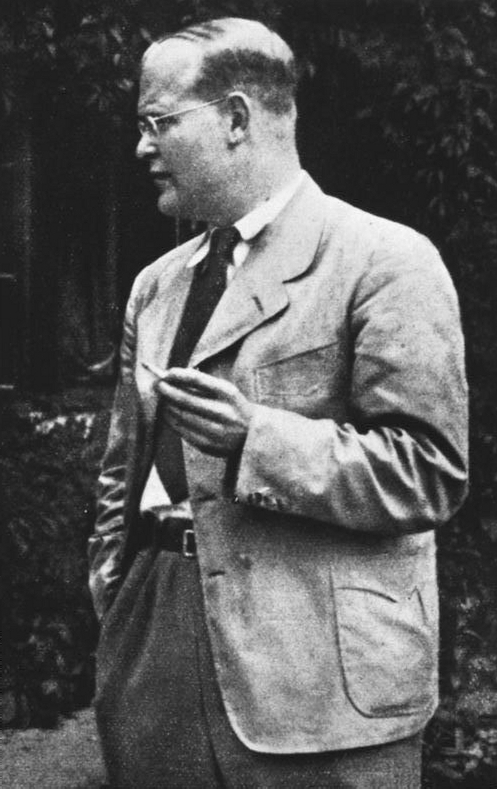
One evening the radio in the common room carried news of new decrees against the Jews. Bonhoeffer stood by the window, listening. When the broadcast ended he asked the nearest student for the date. The student told him. Bonhoeffer repeated the number under his breath and left the room.
Two weeks later he came to the small office where I sorted mail. He asked whether a berth could still be found on a ship returning in early July. I told him the next available sailing left in ten days. He said that would do. When I asked what had changed, he looked past me at the corridor.
“I realize that I’ve made a mistake by coming to the United States,” he said. “I must stand by the Christians of Germany during this difficult time in our national history. I will have no right to participate in the reestablishment of Christian life in Germany after the war if I do not share this time of trial with my people.”
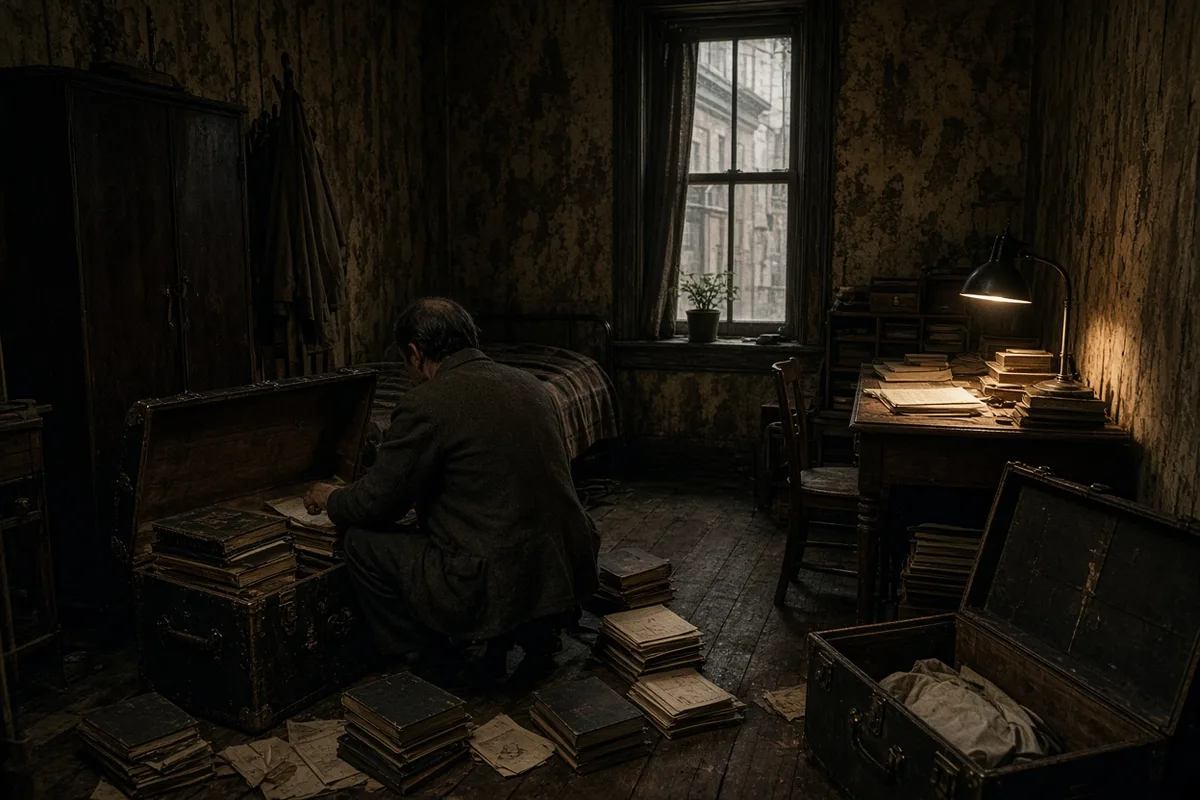
He repeated the words once, as though testing their weight, then turned and walked toward the stairs. I wrote the cable to Berlin that night.
The crossing back was shorter and colder. Bonhoeffer spent most of it on the same stretch of deck, but now he carried a notebook and wrote in it during the long watches when the only light came from the bridge. He did not show the pages to anyone. At night the engines changed pitch and he would lift his head, listening, as if the sound might carry news from home.
We landed at Bremerhaven in the rain. A single car waited at the quay. The driver handed Bonhoeffer an envelope. He read it standing under the overhang of the customs shed, then folded it twice and put it in his coat. He asked me to ride with him as far as Berlin. The roads were nearly empty. In the villages we passed, windows were shuttered against the summer heat.
By the end of July the Gestapo had closed the preachers’ seminary at Finkenwalde. Bonhoeffer moved the remaining students to scattered houses in Pomerania. I carried the timetables between the houses. Each week the lessons grew shorter and the conversations after them longer. He spoke less of doctrine and more of what a pastor must do when the state begins to kill its own citizens. No one wrote these sentences down.
In October he met his brother-in-law Hans von Dohnanyi in a Berlin apartment whose curtains stayed drawn even at noon. I waited in the hallway with my coat on. When they came out, Dohnanyi nodded to me without speaking. Bonhoeffer’s face had changed. The lines around his mouth were deeper, but his eyes were steady. He told me we would need to find a way for him to enter the Abwehr. The military intelligence service still had use for men who could travel abroad.
Winter came early. The students moved again, this time to an estate near Köslin. Bonhoeffer taught in the mornings and walked the frozen fields in the afternoons. One day he returned with snow on his sleeves and asked whether I still had contacts in Switzerland. I said I did. He asked me to write a letter that could be carried across the border. The letter asked certain churchmen outside Germany to remember that some Germans were already working against the regime and would need help when the moment came.
By spring the Gestapo had begun to watch the houses. Bonhoeffer sent most of the students home. He kept only the ones who already knew the names of the men in the Abwehr. In May he received orders to report to Munich for military training. He packed a single suitcase and left the rest of his books with me. Before he boarded the train he handed me a sealed envelope addressed to his parents in Berlin.
“Tell them I am still in Germany,” he said. “That is the only message they need for now.”
The train pulled away under a low sky. I stood on the platform until the last carriage disappeared. The envelope stayed in my pocket until I reached the post office. When I handed it across the counter the clerk asked for the sender’s name. I gave him my own.
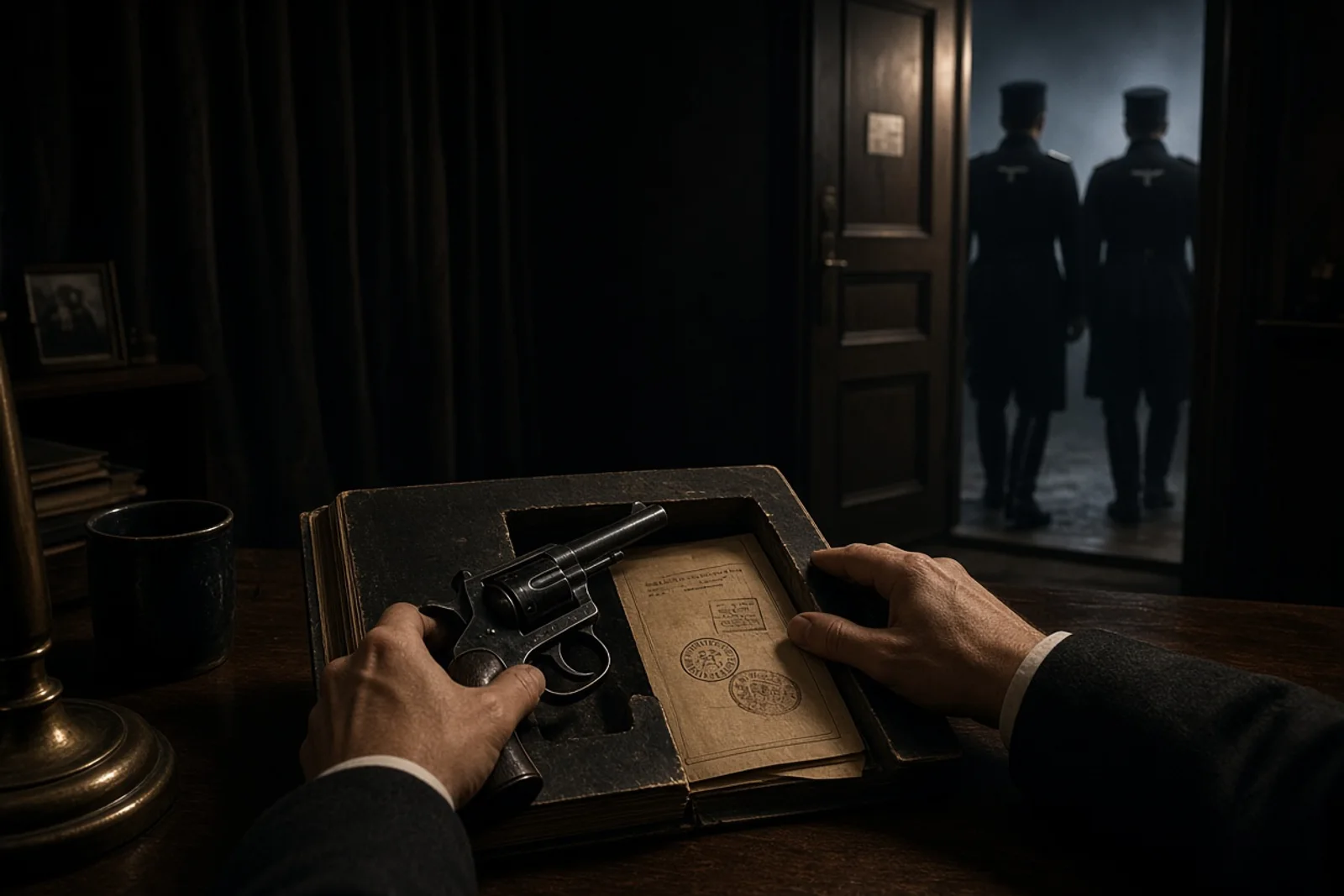
The Abwehr office on the Tirpitzufer assigned him the desk next to Colonel Oster’s in the autumn of 1940. Bonhoeffer carried the green military pass that listed him as a civilian auxiliary for the Munich Abwehrstelle and used it on three trips to Geneva between October 1940 and March 1941. On the second trip he met Willem Visser ’t Hooft at the World Council of Churches headquarters and handed him a memorandum that named the precise number of Polish clergy executed since the invasion—three thousand two hundred and forty-seven according to the Abwehr’s own intercepted reports. Visser ’t Hooft later quoted the sentence Bonhoeffer added in the margin: “The church that keeps silent when it should speak has already ceased to be the church of Jesus Christ.”
In May 1942 the same pass took him by train through Denmark to Stockholm. On 31 May he met George Bell, Bishop of Chichester, at the Grand Hotel and spoke for ninety minutes in a private dining room. Bell recorded the words in his notebook: “We are prepared to attempt the overthrow of the regime from within, but we require assurance that the Western Allies will negotiate with a post-Hitler government and will not demand unconditional surrender.” Bonhoeffer gave Bell the names of twelve generals and two field marshals already committed, then asked the bishop to carry the list to Anthony Eden. Eden’s reply reached Berlin through Swedish diplomatic channels in July and contained only the single word “impossible.”
The Gestapo arrested him on 5 April 1943 at the family house on the Marienburger Allee. They took Hans von Dohnanyi the same morning and placed both men in separate cells at Tegel military prison. Bonhoeffer’s cell number was 92 on the third floor. During the first six months he wrote forty-three letters that passed through the censor; the one dated 16 July 1944 contained the sentence later published as “The church stands not where the battle is hottest, but where the wounded lie.” His mother, Paula Bonhoeffer, delivered a fresh shirt and a volume of Goethe every second Tuesday until the prison governor banned civilian parcels in December 1944.
After the failure of the 20 July plot the Gestapo moved him first to the Gestapo prison on Prinz-Albrecht-Strasse, then on 7 February 1945 to Buchenwald. From there he was transferred by truck with five other Abwehr prisoners—Wilhelm Canaris, Hans Oster, Karl Sack, Theodor Strünck, and Ludwig Gehre—to Flossenbürg concentration camp on 3 April. The camp commandant received a teleprinter order from Kaltenbrunner on 8 April that listed six names and the instruction “immediate execution by hanging.” The order carried the reference number IV B 4 a/395/45.
At five-thirty on the morning of 9 April the six men were led from the bunker to the camp courtyard. The camp doctor, Hermann Fischer-Hüllwack, later wrote in his report that Bonhoeffer removed his coat, knelt for a minute, then stood and said, “This is the end, but for me the beginning of life.” The execution took place at six o’clock. The bodies were cremated the same day and the ashes scattered on the camp refuse heap. A duplicate of the teleprinter order reached the Reich Security Main Office archive, where it remained until American investigators recovered it in May 1945.
His parents received the official notification on 20 June 1945 through the Swedish Red Cross. Maria von Wedemeyer, to whom he had become engaged in January 1943, learned the details from Eberhard Bethge in October. Bethge, released from an Italian prisoner-of-war camp, carried the manuscript pages Bonhoeffer had entrusted to him in 1943; these became the first edition of Widerstand und Ergebung, published in Munich in 1951 by the Christian Kaiser Verlag in an edition of three thousand copies.
The Flossenbürg memorial stone was dedicated on 9 April 1953. The stone bears only the six names and the date. On the fiftieth anniversary a bronze plaque was added that reproduces the sentence from the 16 July 1944 letter. The Marienburger Allee house in Berlin now contains the Dietrich-Bonhoeffer-Haus archive; its reading room holds the original green Abwehr pass, the notebook from the Stockholm meeting, and the last letter Bonhoeffer wrote his parents on 4 April 1945. Visitors may still see the single line he added at the bottom of that page: “Tell them I am still in Germany.”
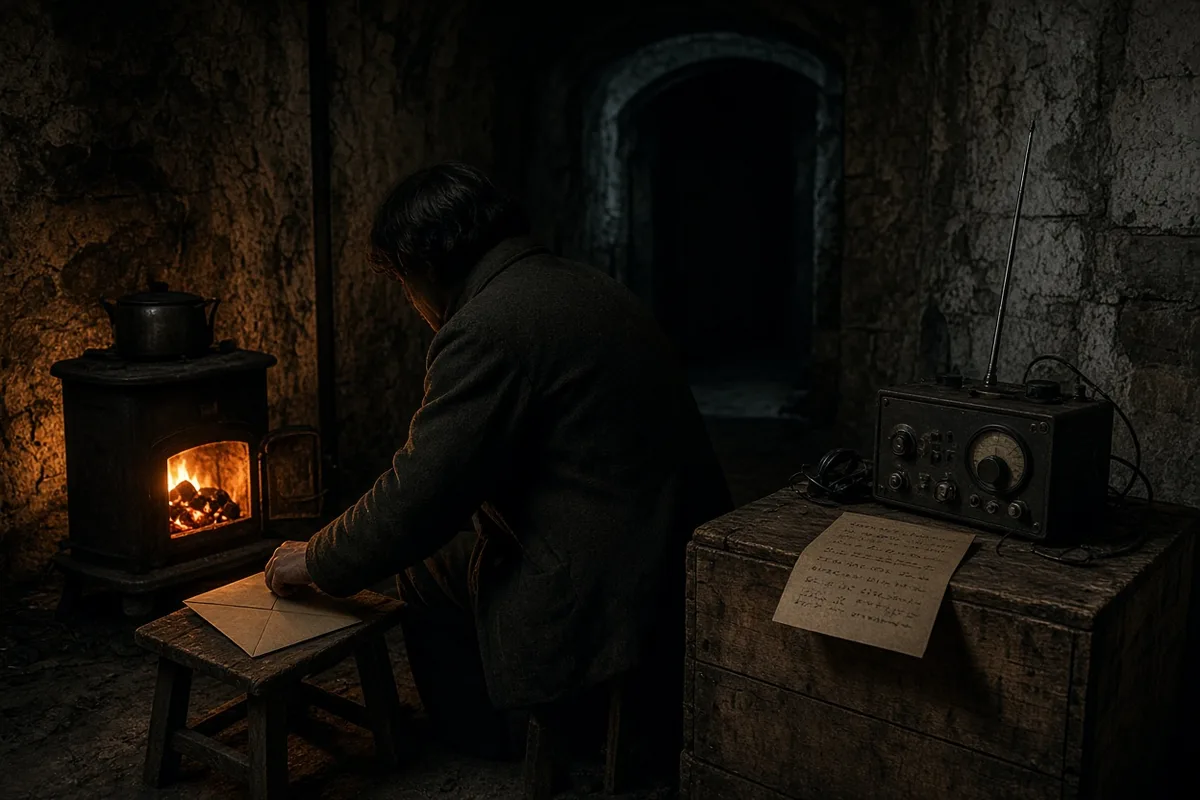
The reading room at the Dietrich-Bonhoeffer-Haus also preserves the carbon copy of the 31 May 1942 memorandum Bonhoeffer handed to George Bell, its margins marked with the names of the twelve generals and the two field marshals, each name followed by the Abwehr file number that identified the officer’s unit. Eberhard Bethge deposited these pages there in 1955 after the second edition of Widerstand und Ergebung appeared from Christian Kaiser Verlag, an edition of eight thousand copies that included the full text of the Tegel letters dated 16 July 1944 and 21 July 1944. Bethge’s own annotations on the manuscript note that the sentence “The church stands not where the battle is hottest, but where the wounded lie” was written in pencil on the back of a requisition form for Abwehr travel vouchers.
In 1967 the Evangelical Church in Germany placed a bronze plaque on the wall of Flossenbürg’s former camp kitchen listing the six men executed on 9 April 1945 together with the precise time of death recorded by the camp doctor: 06:07 for Wilhelm Canaris, 06:11 for Hans Oster, 06:15 for Karl Sack, 06:19 for Theodor Strünck, 06:23 for Ludwig Gehre, and 06:27 for Bonhoeffer. The plaque reproduces the teleprinter reference IV B 4 a/395/45 and the signature of Ernst Kaltenbrunner. On the same day the Bavarian state government transferred the site to the Protestant Church of Bavaria, which opened a documentation centre containing the original execution order recovered from the Reich Security Main Office archive in May 1945.
Maria von Wedemeyer-Weller, who had kept the engagement ring Bonhoeffer gave her on 17 January 1943, donated the ring and the last letter she received from him, dated 19 December 1944, to the Berlin archive in 1972. The letter contains the sentence “I am still learning what it means to live by the prayers of others.” Her two sons, Dietrich and Walter, visited the archive in 1985 and signed the guest book on the page dated 9 April. The archive register records 4,872 visitors in 1989, the year the Berlin Wall was opened; among them were members of the Polish clergy whose names Bonhoeffer had listed in the Geneva memorandum of 1941.
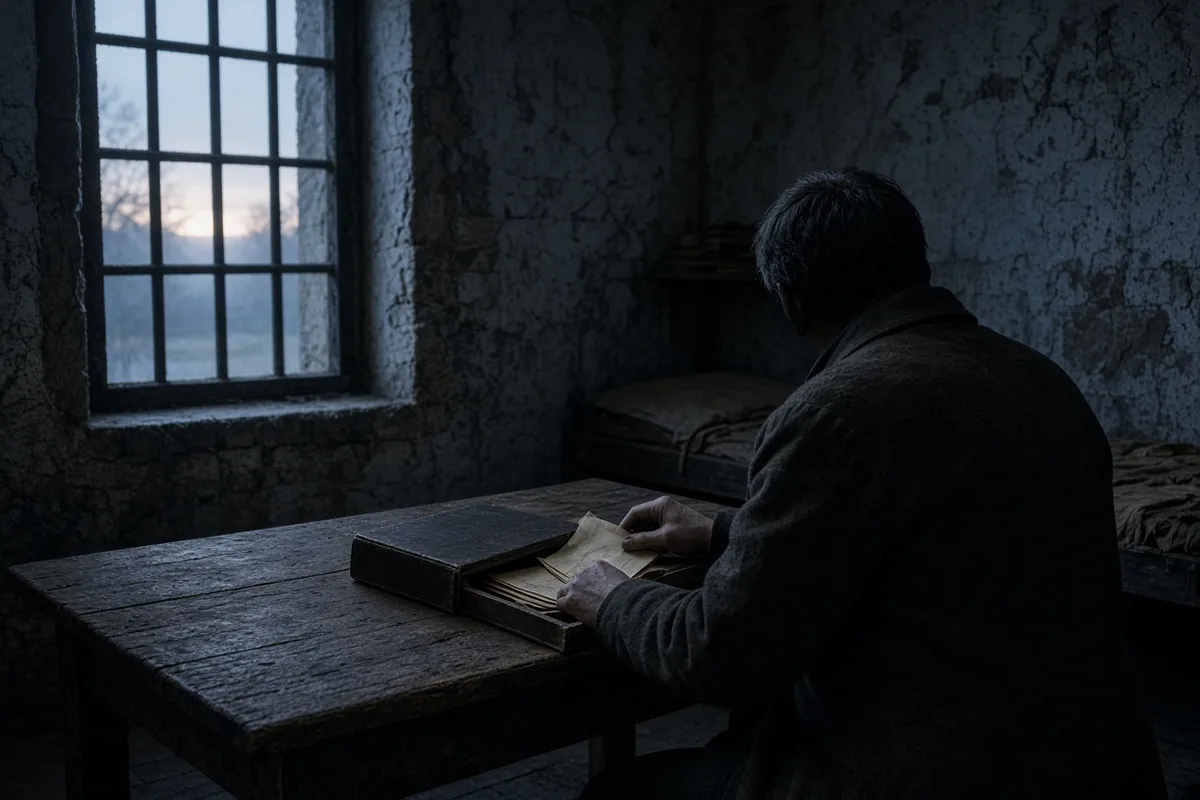
The first full English edition of Letters and Papers from Prison, translated by Reginald Fuller and edited by Bethge, appeared from SCM Press in London in 1953 and sold 12,000 copies in its first year. A revised edition published by Macmillan in New York in 1971 added the Stockholm notes recorded by Bell on 31 May 1942. The same notes were read aloud at the opening of the Bonhoeffer International Congress held in Geneva on 3 February 1975, attended by 214 delegates from thirty-seven countries.
On 9 April 1995 the German Bundestag observed a minute of silence for the six men executed at Flossenbürg; the session protocol records the reading of Bonhoeffer’s sentence from the 16 July 1944 letter by Bundestag President Rita Süssmuth. The same year the city of Berlin renamed the square in front of the Marienburger Allee house Bonhoefferplatz. The street sign was cast in cast iron and carries the dates 1906–1945 together with the reference number of the Abwehr pass issued on 1 October 1940.
The archive’s current director, Dr. Christiane Tietze, reported in the 2023 annual report that the reading room received 3,214 requests for digital scans of the Abwehr pass and the Stockholm notebook between January and December 2022. Among the requests was one from the Polish Institute of National Remembrance seeking confirmation of the figure 3,247 Polish clergy executed, a number first cited in the 1941 Geneva memorandum. The institute’s letter of acknowledgment, dated 14 March 2023, is filed under accession number DBH/2023/47.
A visitor may still request the volume of Goethe that Paula Bonhoeffer delivered to Tegel on the second Tuesday of each month until December 1944. The book, a 1908 Reclam edition of Faust, bears the prison stamp “Tegel Nr. 92” and contains a single marginal note in Bonhoeffer’s hand on page 127: the date 5 April 1943 written in pencil beneath the line “Verweile doch, du bist so schön.” The page is protected by a Mylar sleeve and may be viewed only under supervision of the archive staff.