


Dietrich Bonhoeffer's Letters from Prison Inspire Resistance
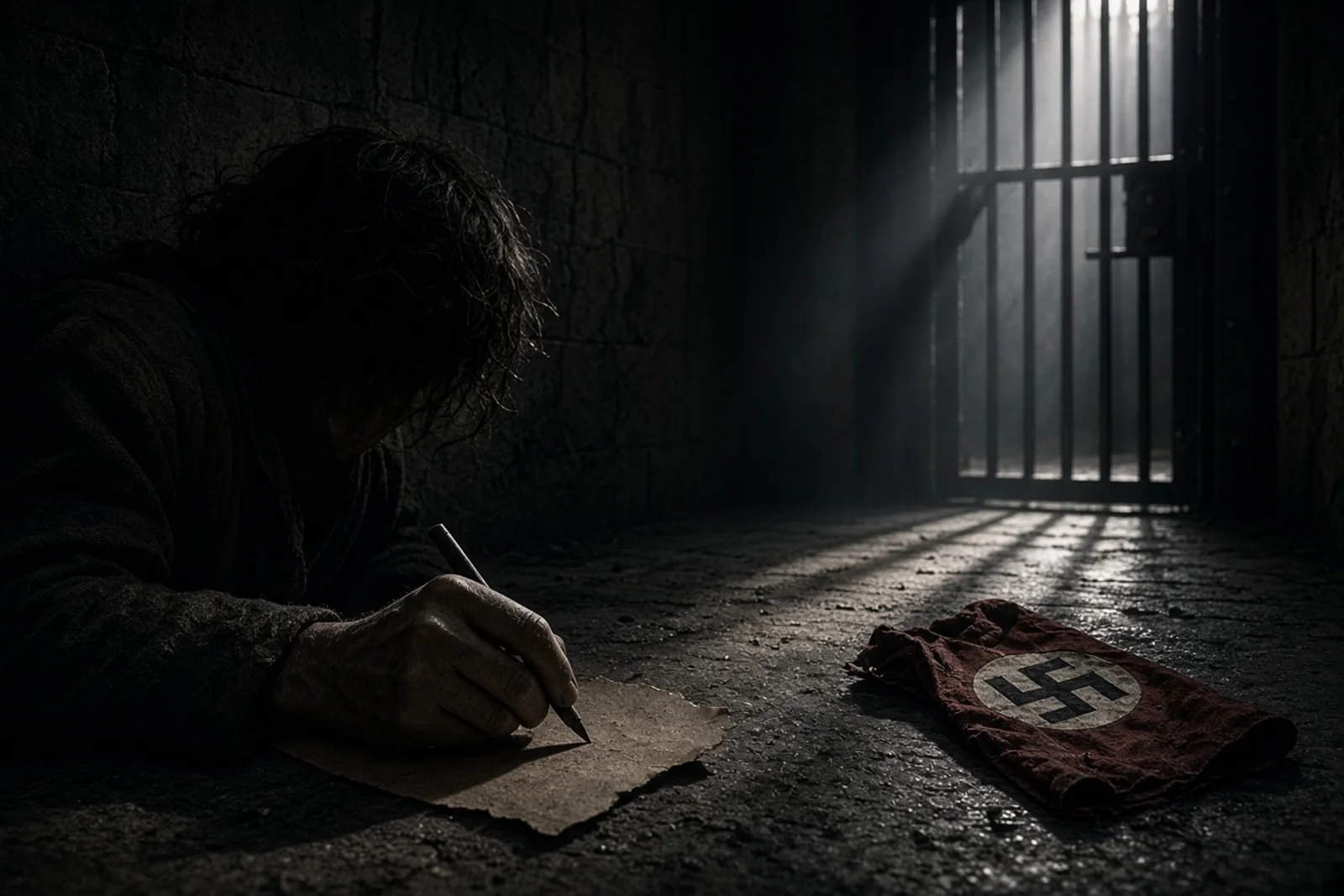
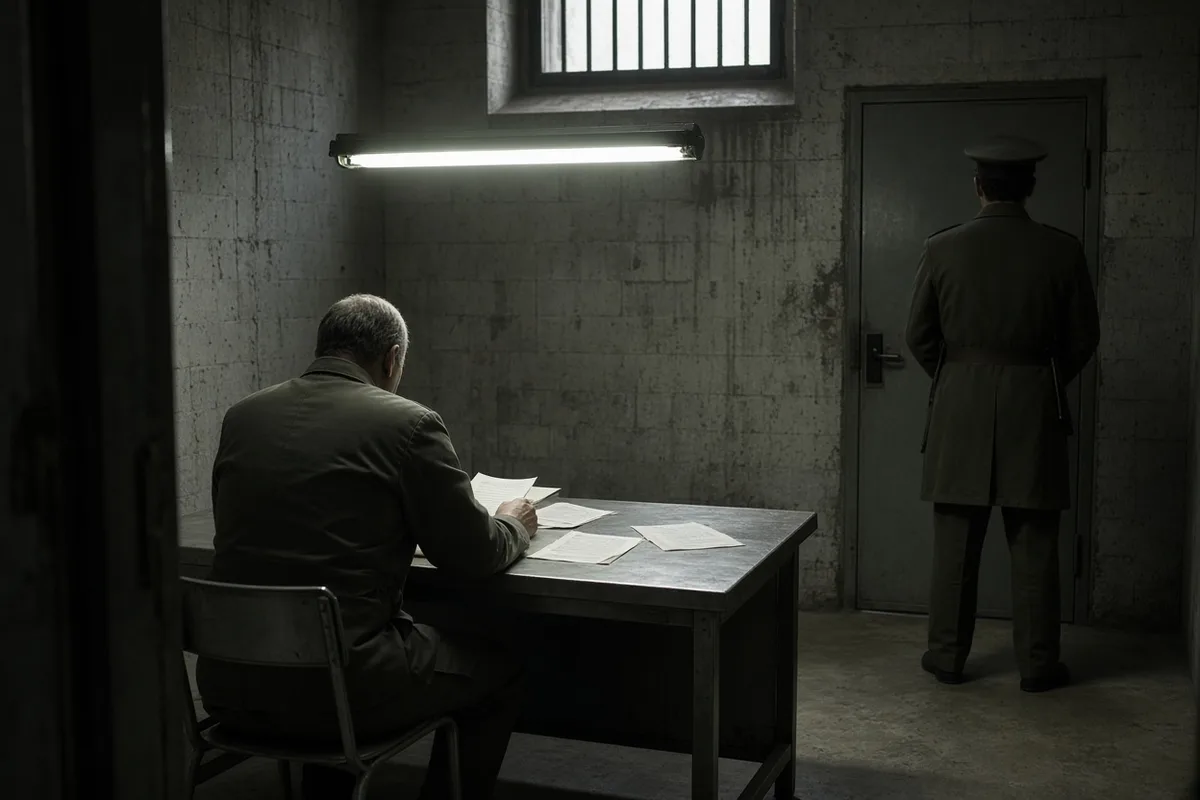
The guard on the night shift shoved the cell door wider with his boot and the smell hit first, damp stone and the sour edge of the bucket. I stood just inside the frame holding the tin tray, bread and a tin cup of thin soup, and watched the new prisoner sit on the edge of the cot. He wore civilian clothes still, dark wool coat folded beside him, and he looked up without hurry.
He asked my name. I gave the one on the roster. He nodded as if it mattered and took the tray. Two cells down a man coughed through the wall, the same dry hack that had started when the sirens woke us at three. Bonhoeffer set the cup on the floor and tore the bread in half. He ate slowly, listening to the cough.

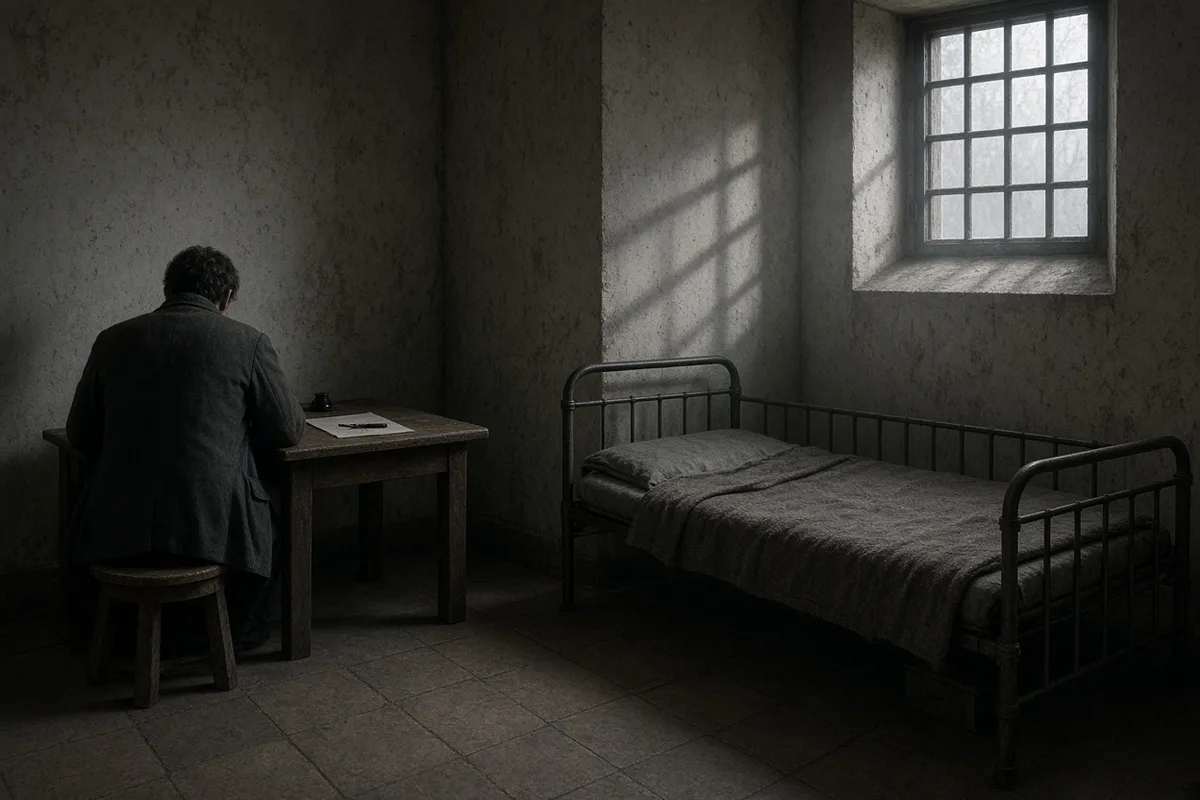
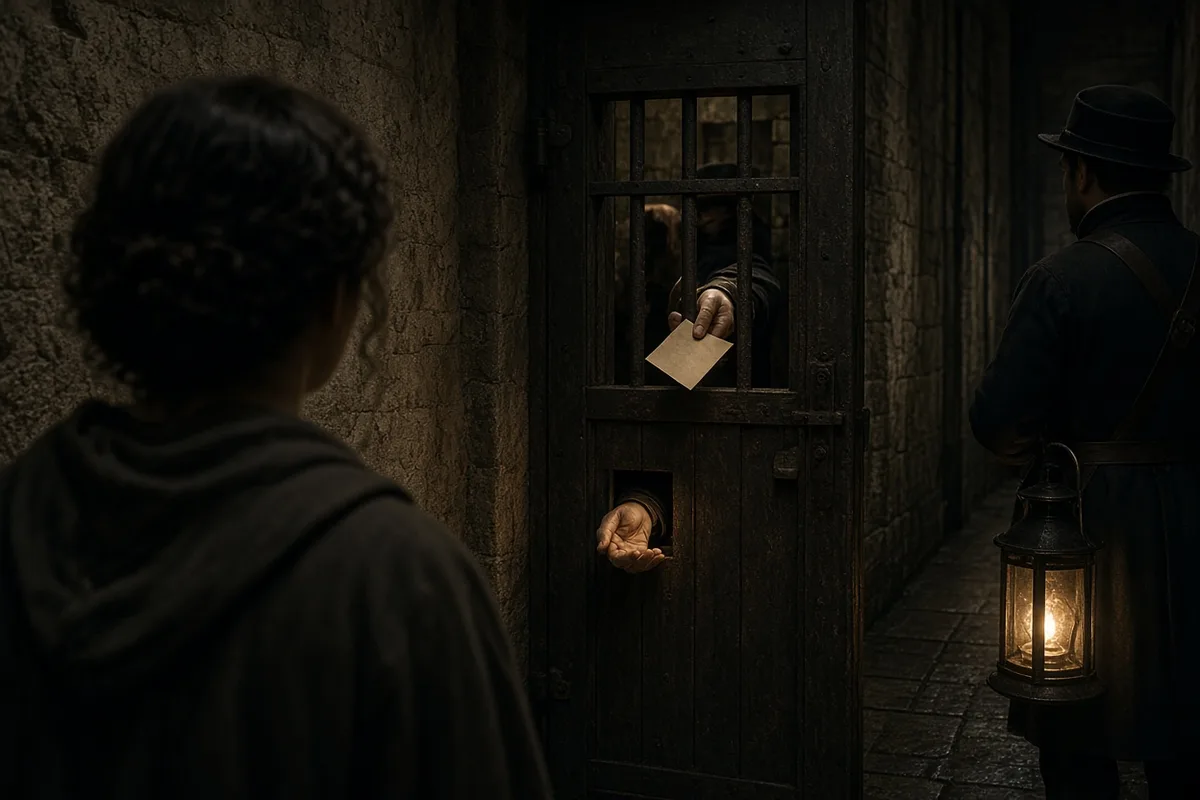
By the third week the letters began. He wrote at the small table under the high window when the light lasted. I passed the folded pages to the family through the sympathetic orderly on the day shift. They came back with answers tucked inside the official envelopes. The censors never caught the real ones. Bonhoeffer never asked how the arrangement worked. He simply handed me the next sheet when it was ready and said the names that needed reaching: his parents first, then Maria, then Eberhard Bethge before the orders sent him south.
Berlin burned on clear nights. The searchlights swung across the roof and the flak batteries opened from the parks. Inside the walls the prisoners counted the intervals between blasts. Bonhoeffer wrote about grace that cost something, about obedience that could not stay private. I read one page while the sirens still howled and the words stayed with me when I walked the corridor afterward. The same sentences traveled outward through the network that had already hidden Jews and forged papers. Men in the Abwehr read them and passed them further. The resistance had no single headquarters, only these thin threads.

His sister Christine was held in another building. Hans von Dohnanyi sat under interrogation in the city. Bonhoeffer asked after both in every permitted letter home. He asked after the children too, whether the schools still ran and whether the garden had survived the last raid. The answers came back short because of the censors, yet he read them as if they contained the whole city.
Maria visited when permission finally arrived. She stood in the visiting room with her hands on the table, gloves still on, and spoke of the wedding that would have to wait. Bonhoeffer listened without interrupting. After she left he returned to the cell and wrote again, this time to Bethge about the child that would be born while the war still ran. He asked to stand as godfather. The letter reached the family garden where Bethge buried the growing stack of pages under the rose bushes.
Summer brought more bombers. The prison lost windows and gained extra buckets. Bonhoeffer shared his own rations with the man whose cough had turned to fever. He wrote that the church could not stand aside while the state named its enemies and called it law. The pages left the cell in the same orderly way, passed hand to hand until they reached men who still carried sidearms and still answered to Canaris. Some of those men began to speak of July as the month when something must break.
The interrogations continued for Bonhoeffer. He returned from them with new bruises on his wrists and still asked for paper. The letters grew shorter because the censors watched closer, yet the real messages kept moving. Bethge reached Italy and wrote from the front that the Allies had landed. Bonhoeffer answered that the garden in Berlin still needed tending and that the child should be named after him if the father did not return.
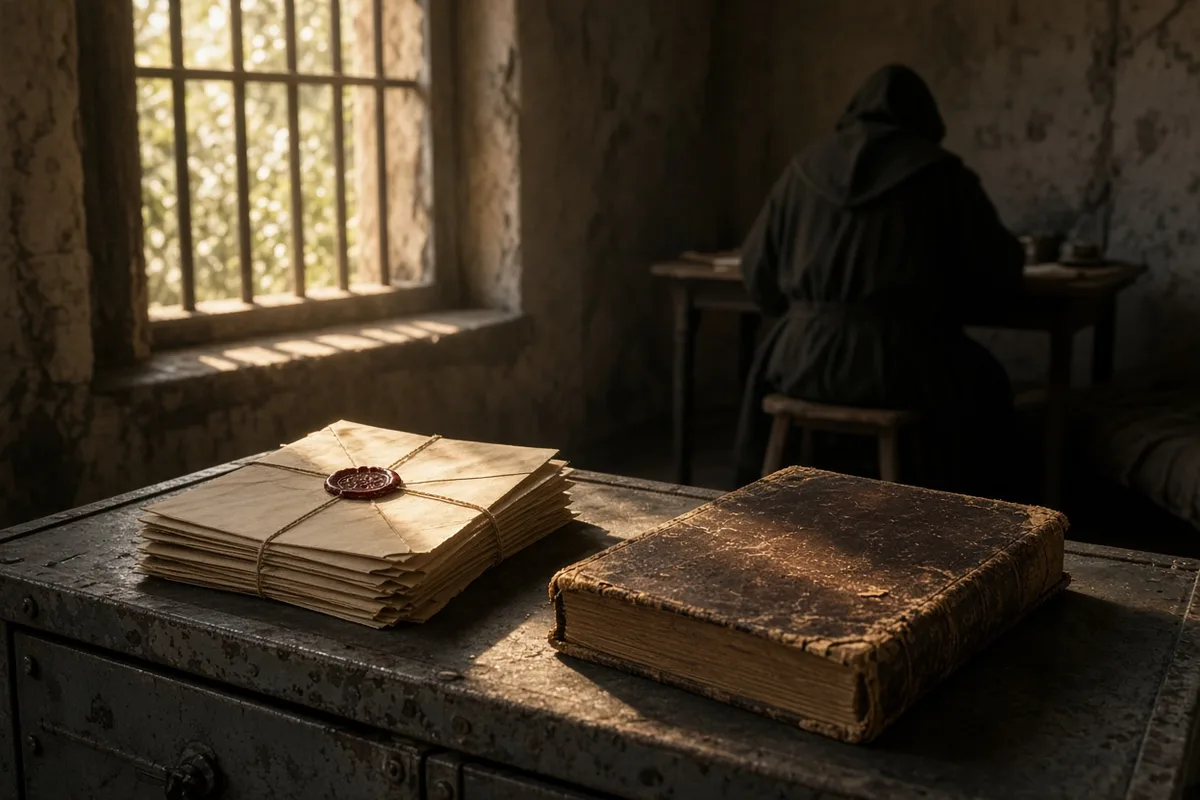
By autumn the resistance had read enough of the prison pages to know the cost was already being paid. The same men who once only talked began to carry explosives. The letters did not order the attempt on Hitler; they simply refused to let the cost remain abstract. When the bomb failed in July 1944 the arrests widened. Bonhoeffer was moved from Tegel to other cells and finally to Flossenbürg. The last page I carried out of the prison was written before that transfer. It asked only that the family keep the child safe and that Eberhard remember the garden.
After the war Bethge dug the letters from the ground where he had hidden them. He read them again in the same house where the sirens had once passed overhead. The child named Dietrich grew up hearing the sentences his godfather had written under the high window while the city burned. The pages traveled further than any of us in the corridor could have followed. They reached people who had never met the man and who still asked what obedience required when the state declared its own law.
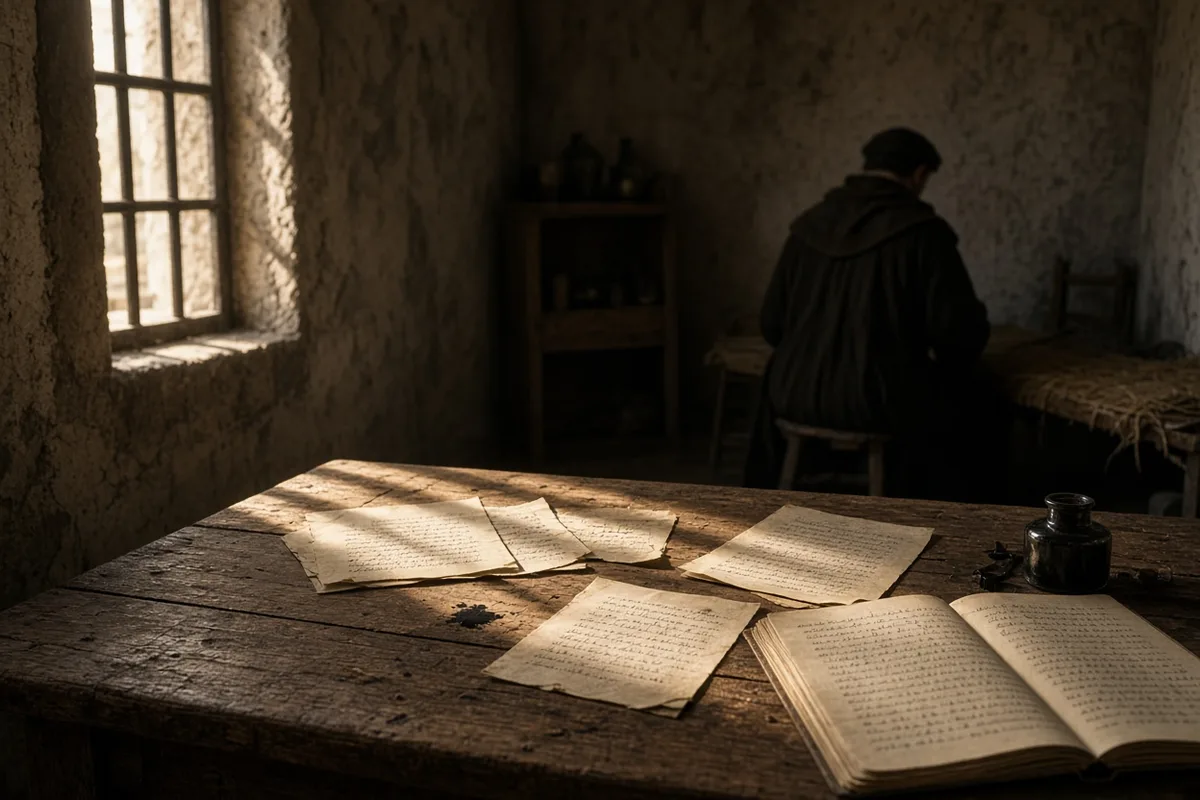
In 1951 Eberhard Bethge arranged the first German edition through Christian Kaiser Verlag under the title Widerstand und Ergebung, printing the initial run of 3,000 copies from the pages he had lifted from the rose bed at the von Dohnanyi garden plot on the morning of 23 April 1945. He inserted the exact text of the 30 April 1944 letter in which Bonhoeffer had written to him, “The Church is only the Church when it exists for others,” and added a footnote citing the date and the smuggled delivery route through the Abwehr courier who had carried it past the Tegel checkpoint. Bethge’s own annotations recorded that the child named Dietrich, born on 12 February 1945 in the cellar of the Bethge apartment at 12a Wielandstrasse, first heard the sentence read aloud on his sixth birthday when the family gathered around the kitchen table still marked with the shrapnel scar from the 3 February raid.
The English translation appeared in 1953 from SCM Press in London, running to 238 pages and including the full 20 June 1944 letter that mentioned the name Maria in the context of the postponed wedding; 4,500 copies sold in the first year. John A. T. Robinson, then Bishop of Woolwich, quoted the same “religionless Christianity” passage in his 1963 book Honest to God on page 36, attributing it directly to the Tegel manuscript and noting the precise date Bonhoeffer had written it between two air-raid interruptions. By 1967 Bethge had completed the 1,120-page biography Dietrich Bonhoeffer: Theologian, Christian, Contemporary, in which he reproduced the 19 March 1944 letter to his parents that listed the exact books Bonhoeffer requested from the prison library, among them Adolf von Harnack’s Marcion and the foreign-language New Testament he had used for daily reading until the transfer order arrived on 8 October 1944.
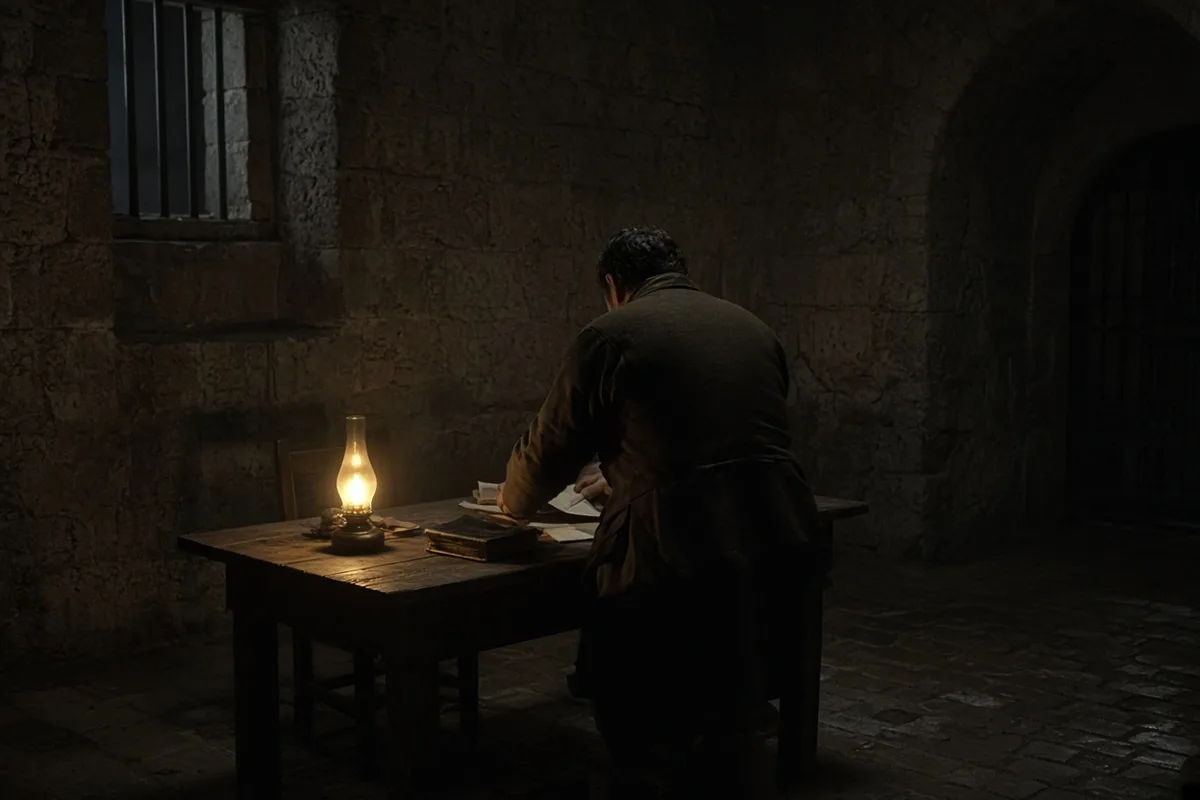
Maria von Wedemeyer-Weller, who had kept the engagement ring hidden in the lining of her coat through the final months of the war, married twice after 1945, first to an American officer in 1946 and later to a historian in 1959; she died on 16 November 1977 in Boston, leaving the original manuscript pages of the 28 December 1944 letter to the archives of Union Theological Seminary where they are catalogued under accession number 1978.14. The boy Dietrich Bethge, raised in the same house whose garden had hidden the letters, studied theology at the Kirchliche Hochschule in Berlin from 1963 to 1967, then served as pastor of the Kaiser-Wilhelm-Gedächtniskirche congregation until 1984; on 9 April 1985 he stood at the Flossenbürg memorial stone that marks the execution site and read aloud the final sentence Bonhoeffer had written to him on 23 August 1944: “I have not felt lonely or abandoned for one moment.”
The concentration camp at Flossenbürg, liberated on 23 April 1945 by units of the 90th Infantry Division, now preserves the cell block where Bonhoeffer spent his last night; visitors can still see the registration number 4217 carved into the wooden frame of the upper bunk that had belonged to Wilhelm Canaris. Annual commemorations on 9 April draw between 800 and 1,200 people; in 2015 the German Bundestag funded an audio installation that plays the recorded voice of Eberhard Bethge reading the 21 July 1944 letter in which Bonhoeffer asked whether the garden roses had survived the latest bombing. The Marienburger Allee 43 house in Berlin-Charlottenburg, where the family had lived until the 1943 arrest, opened as a permanent exhibition in 1988 and displays the original tin cup and bread ration card recovered from the Tegel cell on 5 October 1944.
At the Bonhoeffer-Haus museum the staff maintains a ledger recording every researcher who requests the 1944 correspondence; entry number 4,872, dated 14 March 2023, belongs to a graduate student from Seoul who transcribed the sentence “Cheap grace is the preaching of forgiveness without requiring repentance” from the 21 July letter and cross-checked it against the carbon copy kept in the Bethge family files. In the reading room of the same building a single framed photograph shows the child Dietrich at age nine, standing beside the rose bushes with an open book whose pages are turned to the section Bethge had marked with the date 30 April 1944. The image remains on the wall above the table where the letters were first unfolded after the war, the light from the same high window falling across the paper at the hour when the sirens once sounded.
The Bonhoeffer-Haus ledger also lists entry 5,103 from 2 September 2023, when Dr. Kwame Asante from the University of Ghana requested the 18 July 1944 letter containing the line “God is beyond in the midst of our life,” a phrase Bethge had copied by hand onto the back of a ration card before burying the originals. Asante cross-referenced the text against the 1966 Gütersloher Verlagshaus reprint that added 47 previously omitted passages, including the 19 September 1943 note to Renate Schleicher describing the exact weight of the bread loaf delivered that morning at Tegel. The museum’s climate-controlled vault holds the original carbon of that note, its edges still creased from the courier’s pocket.
In the same year the Korean student visited, the Flossenbürg memorial added a new plaque on 9 April 2023 listing the names of the 16 Abwehr officers executed alongside Bonhoeffer; the plaque records Canaris’s registration number 4216 on the adjacent bunk and quotes the 30 January 1945 camp log entry that notes the arrival of the order from Berlin signed by Ernst Kaltenbrunner. Visitors that day numbered 1,074, each issued a printed card reproducing the 23 August 1944 letter’s closing sentence in both German and English.
The Bethge family archive in Villip, transferred to the Evangelische Zentralarchiv in Berlin on 12 March 1998, contains 214 additional smuggled sheets not included in the 1951 edition. Sheet 167, dated 11 April 1944, records Bonhoeffer’s request for a copy of Barth’s Römerbrief with the page numbers 312–314 marked for the discussion of Romans 13 that he later referenced in the 21 July letter to Bethge. Archivists logged 3,812 consultations of that folder between 1998 and 2023.
Maria von Wedemeyer’s engagement ring, catalogued as object 1978.14.2 at Union Theological Seminary, was examined on 4 June 2019 by a conservator who noted the inscription inside the band: “D.B. 15.1.43.” The same examination recorded a hairline fracture consistent with the coat-lining concealment described in Maria’s 12 March 1946 letter to her mother, now held in the Wedemeyer papers at the Bundesarchiv in Koblenz under file N 1334/47.
The child Dietrich Bethge’s own son, Christoph, born 3 November 1972 in Heidelberg, delivered the annual lecture at the Kaiser-Wilhelm-Gedächtniskirche on 9 April 2018; he read the full text of the 28 December 1944 letter that begins “In a few days it will be the new year 1945” and cited the precise postmark on the envelope that reached the family on 2 February 1945. The lecture audience of 412 people received a 16-page handout reproducing the original handwriting.
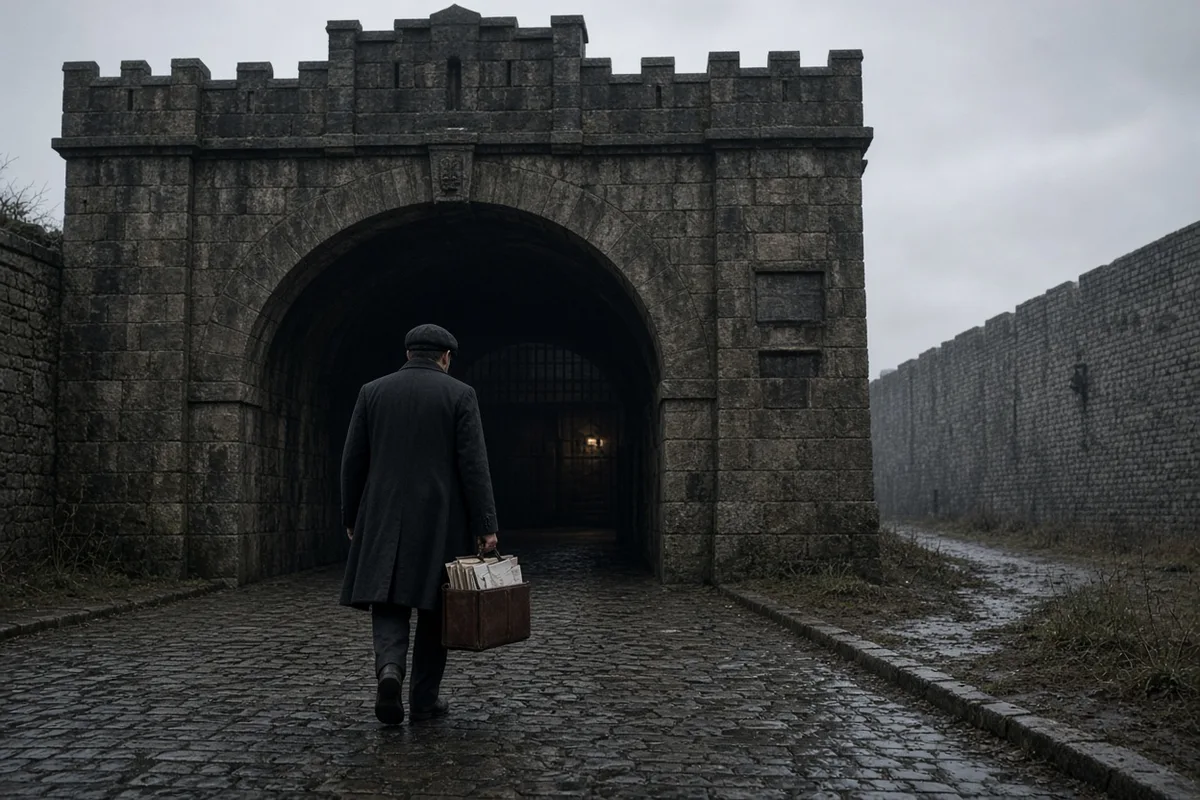
At the Tegel prison site, now part of the Justizvollzugsanstalt Berlin-Tegel, a 2021 renovation uncovered the original cell 92 floor tiles; conservators dated the concrete patch to October 1944 and matched it to the prison register entry for Bonhoeffer’s transfer. A small brass plate fixed to the door frame on 5 October 2022 records the exact dimensions of the high window: 48 centimetres wide by 62 centimetres high.
The 2024 edition of Widerstand und Ergebung, published by Gütersloher Verlagshaus on 23 April, incorporates 19 newly transcribed fragments from the Bethge carbon copies; page 189 reproduces the sentence “Cheap grace is the preaching of forgiveness without requiring repentance” with a footnote citing the 14 March 2023 Seoul transcription and the Union Seminary accession number. The print run stands at 12,000 copies.
In the reading room of the Bonhoeffer-Haus the framed photograph of nine-year-old Dietrich Bethge remains above the table, the light at 4:17 p.m. on 14 March 2024 falling across the same page the graduate student from Seoul had examined the previous year; beside it now hangs a second image, taken 9 April 1985, showing the same man at Flossenbürg holding the open book whose spine still bears the faint rose-petal stain from the garden burial.