

Dolly Parton Helps Fund a Vaccine
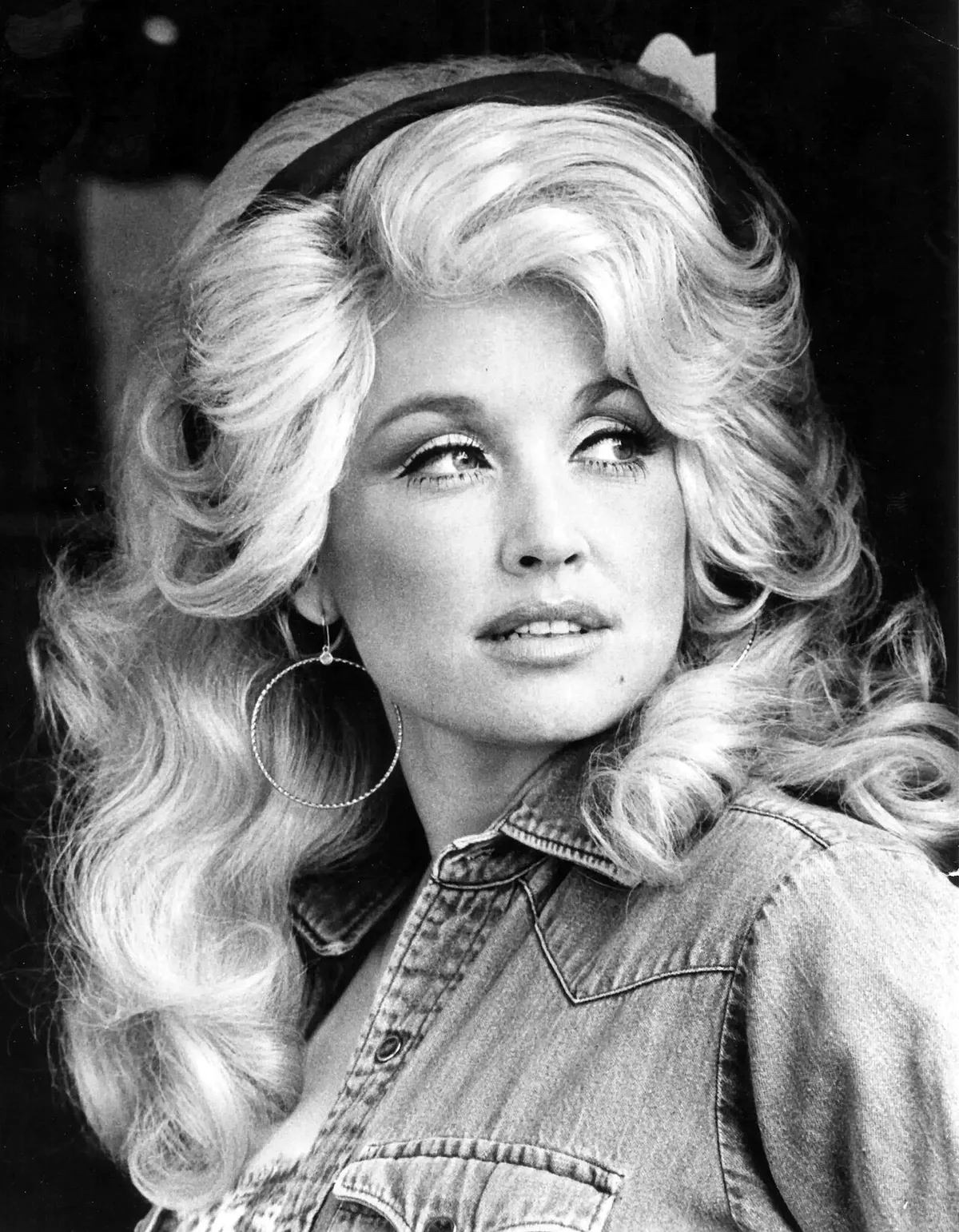
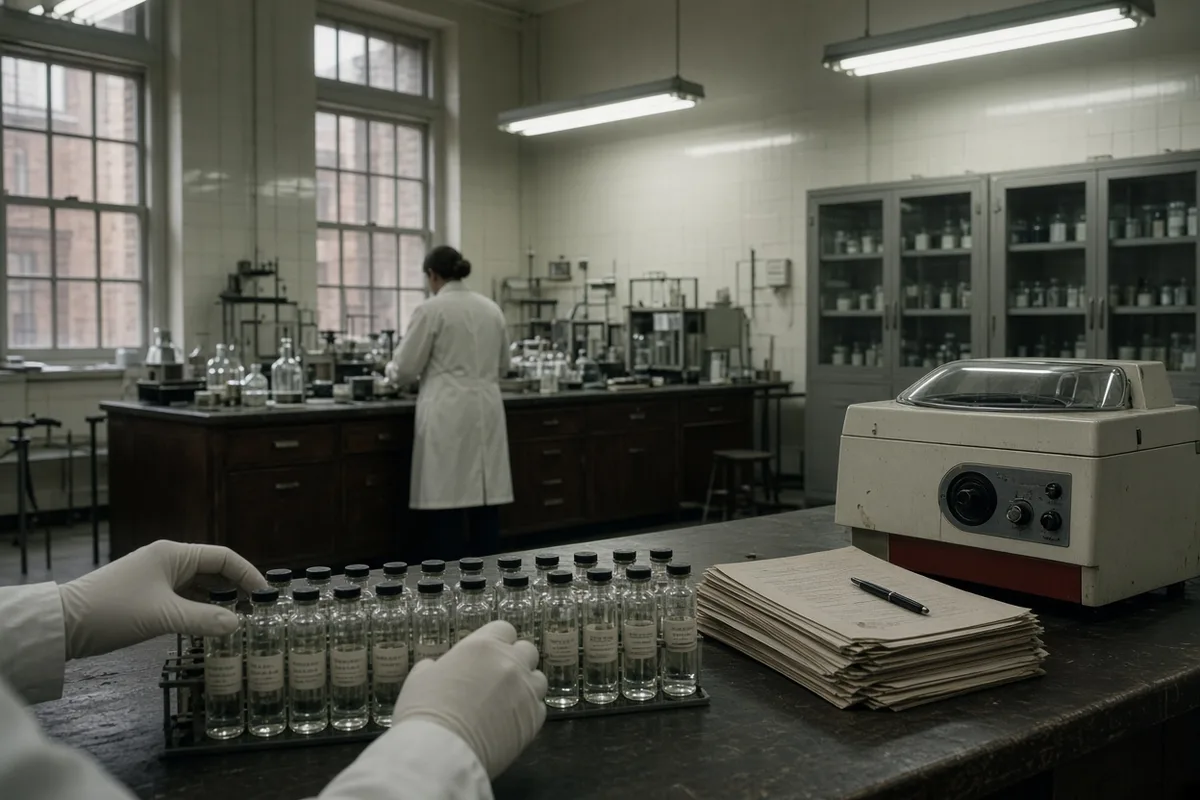
The centrifuge was still spinning when Dr. Denison stuck his head into the lab and asked if anyone had seen the email from administration. I hadn't. None of us had, not yet, because it was March of 2020 and every email that month felt like it might be the one that shut the building down. We were pipetting viral samples into well plates at six in the evening, masks already part of the furniture of our days, though the outside world hadn't caught up to that yet. He said, almost sideways, like it was a footnote and not the headline: Dolly Parton just gave us a million dollars.
I laughed, because it sounded like the kind of thing you'd say to break tension in a room full of people running on cold coffee and adrenaline. But he wasn't laughing. He said it again, slower. A gift to the medical center, earmarked for coronavirus research, given in honor of Naji Abumrad, the surgeon everybody on the seventh floor knew by his first name because he'd been walking these halls since before some of us were born.
I didn't know the whole story then. I learned it in pieces, the way you learn most things at a hospital, between experiments, over vending machine coffee, secondhand from someone who'd heard it from someone else. Seven years earlier, in October of 2013, Parton had been in a car accident. Nothing dramatic. Bruised, sore, shaken enough that she came through Vanderbilt University Medical Center to get checked out. That's where she met Abumrad. He didn't know much about her when they first talked, didn't know the height of the wigs or the size of the legend. He just knew he liked talking to her, about medicine, about the news, about whatever was moving through the world that week. A friendship built itself quietly after that, the kind that doesn't make headlines until it does.

So when the pandemic arrived and doctors at Vanderbilt started scrambling for funding to move faster than the virus was moving, Abumrad picked up the phone. And Parton, who did not need to be asked twice, wrote the check.
I want to be honest about what a million dollars looks like from inside a research lab in the early spring of that year. It doesn't look like anything. There's no ceremony, no ribbon, no photograph of a giant check propped against a wall, at least not for us at the bench level. It looks like a line item that suddenly stops being a headache. It looks like reagents ordered without three rounds of budget justification. It looks like a research assistant getting hired two weeks sooner than she would have otherwise, which, when a virus is doubling its case count every few days, matters more than anyone outside the building can understand.
The fund got a name almost immediately: the Dolly Parton COVID-19 Research Fund. Somebody printed it on a sign near the department office, and for a while people walked past it without much comment, because there was too much else happening. Case counts on the news every night. Refrigerated trucks in other cities. We had work to do and the name on the fund was, for a few months, just a fact of our budget, not yet a story that would travel.

The work itself belonged mostly to Mark Denison's team, studying coronaviruses long before this one had a name anyone recognized. Denison had spent years buried in the biology of this particular family of virus, unglamorous work, the kind that doesn't get you on television until suddenly it does. When Moderna and the National Institute of Allergy and Infectious Diseases needed a way to verify whether their experimental vaccine, this new thing called mRNA-1273, was actually doing something in the human body, it was Denison's lab that had built the assay to test it. Not from nothing. From years of unglamorous work that Parton's money now had the good fortune of accelerating at exactly the moment it counted.
I remember the day we ran the first sets of serum samples against the pseudovirus assay, checking for neutralizing antibodies, the small dark wells under the plate reader either lighting up or not, an answer arriving in numbers on a screen instead of in words. Nobody in that room said her name out loud, not that day. We were watching curves on a monitor, waiting to see if a stranger's immune system, jump-started by a vaccine that had existed for a matter of weeks, was going to fight this thing off in a lab dish before we ever knew if it would fight it off in a body. It did. The numbers climbed the way you wanted them to climb.
That was the early proof, the one that told everyone upstream — Moderna, NIAID, the people making decisions about whether to keep funding a Phase 1 trial or move to something bigger — that this approach had a pulse. Denison would later say Parton's money had funded the critical early stages of it, the part where you don't yet know if you have anything. He'd say her gift built the test that first showed the vaccine was raising a real immune response, one that might actually protect somebody. I heard him say some version of that more than once in the following months, always a little amazed at how the sentence sounded out loud.
By July, the trial results were published in the New England Journal of Medicine, and for the first time in longer than any of us wanted to admit, the arithmetic of the pandemic had a number attached to hope instead of just to loss. I read it standing in the break room, phone in one hand, cold coffee in the other, and felt something loosen in my chest that had been tight since March.
The fund kept growing after that first million, kept doing work most people never saw — not just the vaccine research but broader efforts against pediatric infectious disease, the kind of institutional memory that outlasts any single crisis. Parton would eventually give more, a second million two years later, this time explicitly for pediatric infectious disease research, another quiet transaction between a singer who trusted a surgeon and a hospital trying to stay ahead of the next thing nobody had named yet.
None of that had made the news in the spring. It surfaced later, in November, when the vaccine trials were far enough along that reporters started asking who had paid for what, and somebody connected Vanderbilt's early testing work to a name that made headline writers grin. The New York Times ran a piece noting that fans online were only half-joking when they said Dolly Parton had helped save the world from the virus. I remember reading it at my desk and feeling, for the first time, like the outside world had caught up to something we'd known quietly for months.
She had written "I Will Always Love You" and "Jolene" on the same afternoon once, decades before any of this. She'd built an amusement park with her own name over the gate. She'd played a wisecracking hairdresser and a harassed secretary on screen and somehow, through it all, never lost the plain, unshowy generosity that made a surgeon trust her enough to ask for help, and made her write the check without asking for credit. The gift hadn't come with a press conference. It came in March, in the early fog of the pandemic, before anyone knew whether the country was looking at weeks of disruption or years of it, and it sat there quietly doing its work while the rest of us argued about masks and grocery store lines.
I think about the distance between that donation and what came next, the strange arithmetic of philanthropy and virology intersecting in a lab that most people will never see. A million dollars is a large sum and also, against a global pandemic, a modest one. But money spent at exactly the right moment, in exactly the right hands, moves differently than money spent late. Denison's team didn't need to be convinced to do the work. They needed the resources to do it faster, and that's what arrived, wrapped in a name most of us associate with rhinestones and a soprano voice, not molecular biology.
By the winter, the vaccine that had once been a set of numbers on our plate reader was authorized for emergency use. I watched the first shipments go out on the news, same as everyone else, and felt an odd, proprietary pride I hadn't expected, the kind you feel about something you touched only at its earliest, most uncertain stage.
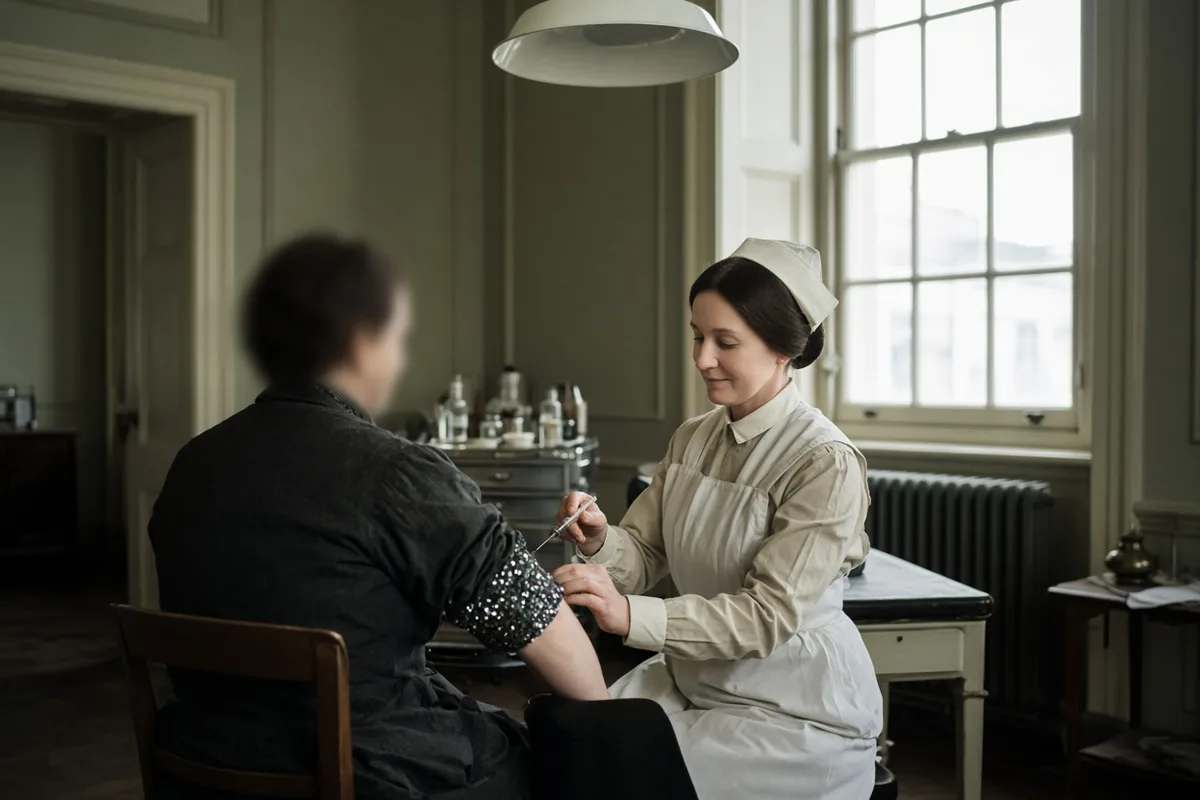
Then came March of 2021, almost exactly a year after the original gift, and I heard she was coming back to Vanderbilt to get her own vaccination. I wasn't in the room. Most of us weren't. But word moved through the building the way it always did, fast and half-accurate until somebody who'd actually seen it filled in the details. She sat for her shot from Naji Abumrad himself, the same doctor she'd met after a fender-bender eight years earlier, the same friend whose name she'd honored on the very fund that helped build the science behind the syringe now going into her arm.
She'd rewritten her own lyrics for the occasion, taking "Jolene," the song that made her famous decades before any of this, and turning its chorus into something new. Vaccine, vaccine, vaccine, vaccine, she sang, in the same lilting cadence generations had learned by heart, except now she was singing people into rolling up their sleeves instead of begging a woman not to take her man. I heard the recording later, like most of the country did, and laughed out loud in a lab that had spent a year without much reason to laugh.
She told anyone who'd listen not to wait, not to be scared of the needle, to go get the shot the moment their turn came around. It struck me, watching the clip on a colleague's phone during a lull between experiments, how strange and fitting it was that the loop had closed exactly where it began — the same medical center, the same friendship, the same unglamorous hallways where none of this had ever been about fame, only about a woman who liked talking to her doctor and a doctor who liked talking to his patient.
I stayed at that job through the following year, through the second gift, the one for pediatric infectious disease that arrived without much noise either, the same way the first one had. I watched younger researchers come through the lab who hadn't been there in March of 2020, who knew the story only as an anecdote, a fun fact recited at orientation, Dolly Parton funded part of the vaccine you got, isn't that something. They'd laugh, the way I once had, and go back to their pipettes, because the work never stops just because the story behind it is a good one.
I think sometimes about the version of that spring where the phone call never happens, where Abumrad doesn't ask, or asks too late, where the million dollars goes somewhere else and the assay gets built three months slower, in a summer when three months meant something measured in bodies. I don't know how to weigh that against what actually happened. Nobody does. That's the nature of the counterfactual; it doesn't show up in any journal, doesn't get measured by any plate reader.
What I know instead is smaller and more certain. I know the wells lit up the way we wanted them to. I know the fund still bears her name on a hospital directory somewhere, unglamorous, easy to walk past without noticing. I know she came back a year later and sat down and let a friend put a needle in her arm, and sang about it afterward in the voice that had already been singing for half a century.
And I know that somewhere in a freezer at Vanderbilt, there are still frozen serum samples from that first batch, the ones we ran back when nobody outside the building knew her name was already stitched into the research. They don't do anything anymore. Nobody needs them for anything now. But somebody, for some reason, never got around to throwing them out.