


Edict of Milan Grants Religious Tolerance
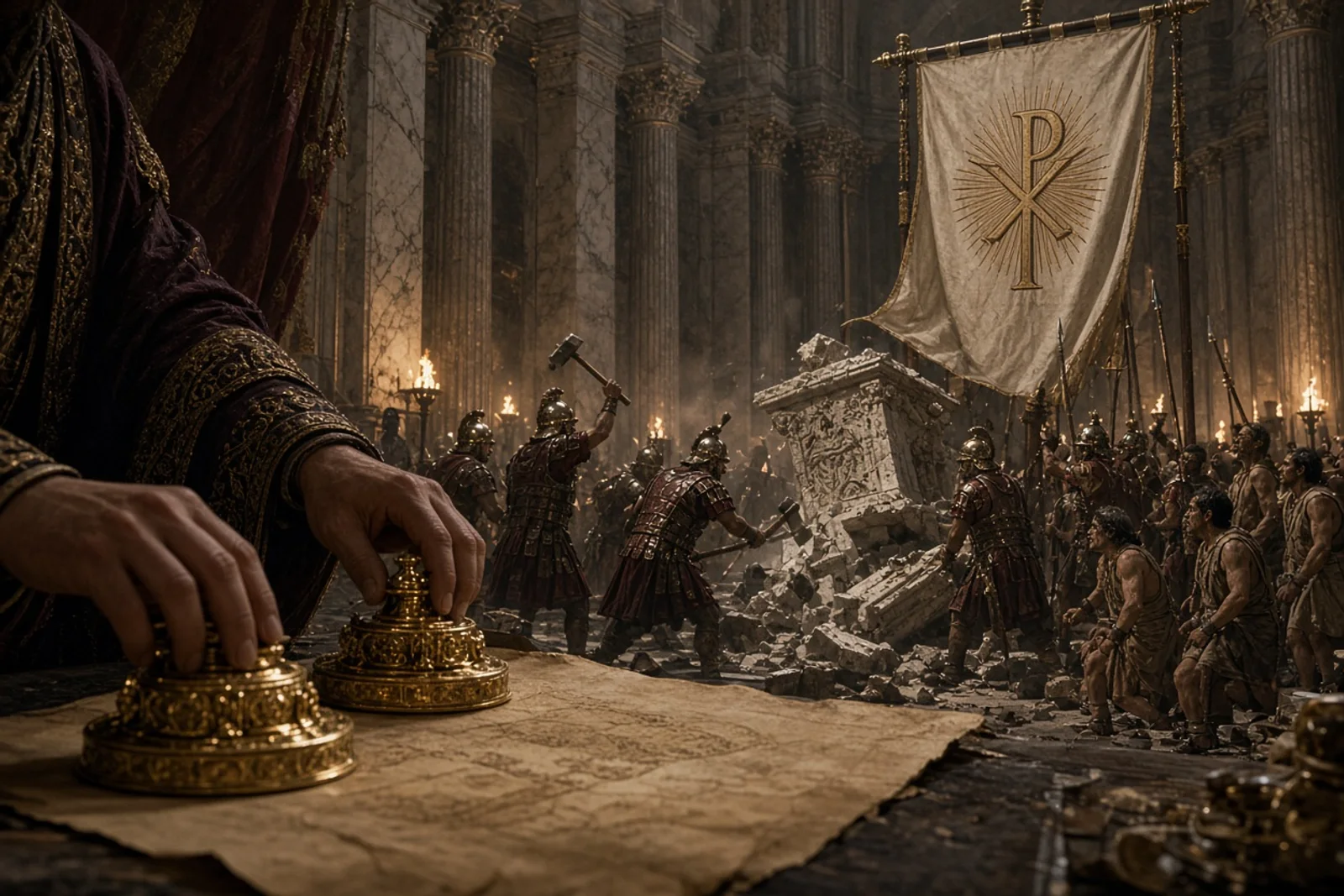
The road into Mediolanum still smelled of wet ash from the winter fires. I walked it with the last of Constantine’s baggage train, my sandals caked in the same mud that had slowed the wagons for three days. My task was simple: carry the sealed rolls from the baggage master to the clerks who waited inside the palace gates. I had done the same work for six years, first under a different master who would have had me flogged for wearing a small cross cut into a belt buckle. Now the buckle rode openly at my waist.
Constantine’s sister Constantia arrived two days later. Her litter stopped at the forum steps while Licinius’s men cleared a path. I stood among the crowd of scribes and messengers and watched her step down. She was wrapped in a cloak the color of old wine, and she did not look at the soldiers who saluted. The marriage was set for the following morning. By afternoon the palace corridors already carried the low sound of men arguing over grain levies and frontier garrisons.

I was sent to the antechamber outside the main hall with a fresh stack of blank tablets. The doors stayed closed most of the day. When they opened, Constantine came out first, his face still marked by the dust of the road from the south. Licinius followed, taller, slower in his step. They spoke quietly, heads angled toward each other. One of the guards told me later that the talk had turned to the old rescripts against the Christians. No one raised a voice.
That evening the rain started again. I slept on a bench in the clerks’ room and woke to the sound of voices in the corridor. A messenger from the east had arrived with word that Maximinus still held Bithynia. Licinius ordered extra horses saddled before dawn. I was given a second set of tablets and told to follow the senior secretary, a man named Julius, who had served under both emperors at different times.

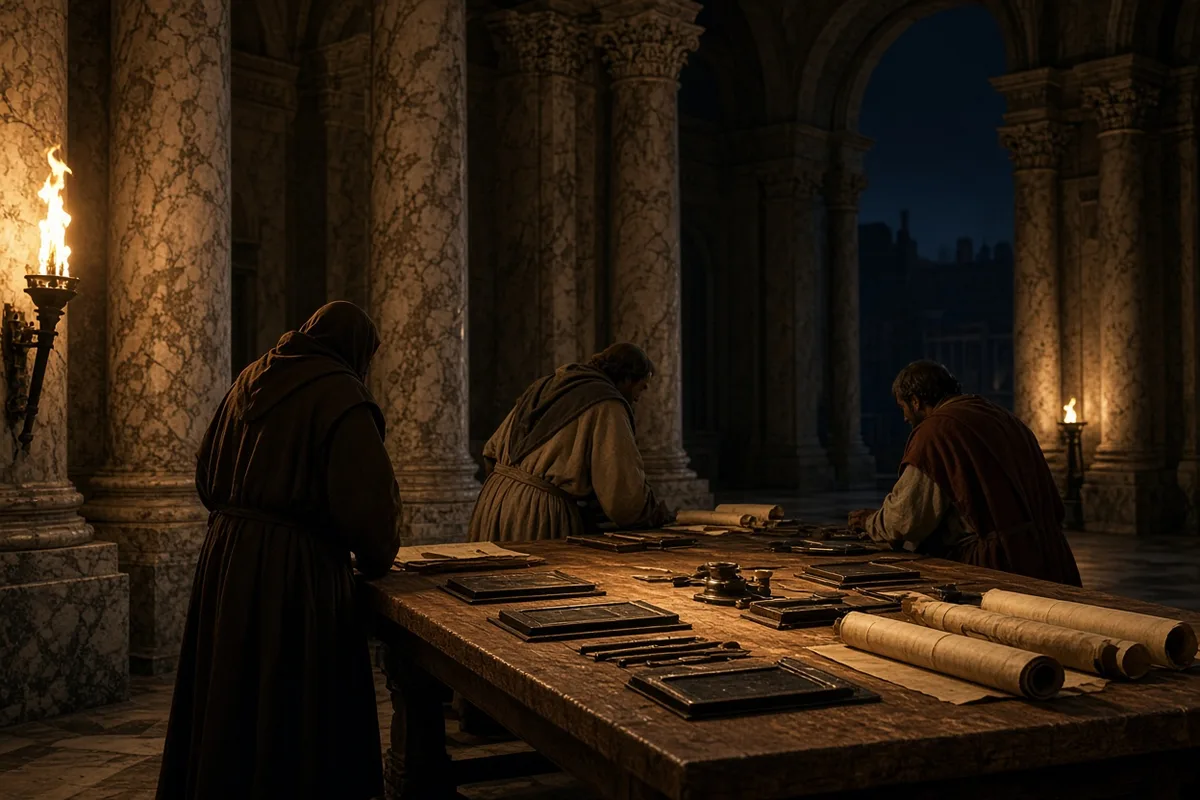
Julius kept me near the table where the drafts were prepared. The language began with the usual phrases about the safety of the republic. Then it shifted. The words that appeared most often were “full authority to observe that religion which each preferred.” I copied them three times before the wax cooled. No one explained what the change meant beyond the instruction that the text must reach every provincial governor before the summer campaigns.
On the third morning after the wedding, the final version was read aloud in the hall. Constantine stood with his hands behind his back, listening. Licinius nodded once when the reader finished. The document did not name any single god above others, yet it removed every previous restriction on the Christians and ordered the return of their meeting places and burial grounds. Julius told me to prepare copies for the western provinces first. He said the eastern ones would wait until Licinius dealt with Maximinus.
I carried one roll myself to the posting station outside the northern gate. The clerk there weighed it, sealed it again, and asked no questions. On the way back I passed a small group of men and women standing at the old Christian cemetery just beyond the walls. They were not hiding. One of them held a lamp even though the sun was already high. No one stopped them.

Licinius left Mediolanum four days later with three legions. Constantine remained another week to settle accounts with the city magistrates. I stayed with the clerks who were still sorting the confiscated property lists. Some of the houses marked for return had been empty for eight years. Others had been turned into barracks or storehouses. The work of restoring titles took longer than the drafting of the agreement itself.
By early summer word reached us that Licinius had defeated Maximinus near Adrianople. The same messenger who brought that news also carried an order to post the Milan agreement in every city of the east. I helped prepare the Greek versions that would travel with the new governors. The text remained the same, only the names at the top changed.
In autumn I was sent back to Rome with a detachment carrying further instructions on church property. The city felt different from the last time I had seen it. Shops that had once kept their shutters half-closed now stood open through the afternoon. I delivered the rolls to the urban prefect’s office and waited while the clerks checked the seals. One of them asked me whether the agreement applied to every cult or only the Christians. I told him it applied to any divinity a person chose to honor, as written.
The following spring I returned to Mediolanum on routine business. The palace looked smaller without the two emperors and their staffs. The clerks’ room where I had copied the drafts was now used for tax records. I walked out to the cemetery again. The same group, or one like it, had built a low wall and planted cypress trees. No guards stood watch.
Constantine moved east in the years after, and Licinius eventually fell from power. The agreement itself stayed posted. I kept one of the original Latin copies in a leather case for the office I later held in the west. The case still carries the faint mark of the cross I once cut into a belt buckle. The leather has worn thin at the corners from being opened and closed on roads between cities whose names no longer change with each new ruler.
In the spring of 314 I carried that same case north along the Via Claudia Augusta when Constantine summoned fresh levies against Licinius after the fighting at Cibalae. The copy inside still bore the original wording from Mediolanum, “full authority to observe that religion which each preferred,” and I read it aloud to the decurions at Aquileia on the twenty-third day of July so they could post it beside the new tax rolls. By then the number of restored basilicas in the city had reached seven, each measured and listed by the same clerks who once recorded confiscations under the old rescripts. I slept two nights in the portico of the one dedicated to the local martyrs, where the marble plaques listed forty-three names and the dates of their executions under the earlier governors.
Licinius issued his own version of the agreement at Nicomedia on the thirteenth of June that year, repeating the same clauses about returning meeting places and burial grounds, yet he added an extra sentence requiring Christians to pray for the safety of the emperor and the republic. The copy I held made no such addition. When word reached me at Sirmium in 316 I noted the difference on a separate tablet and sent it west with the next courier. Constantine’s reply arrived two months later, addressed to the bishops in Africa, ordering that any property still held by the treasury after the Milan text be surrendered without further delay; the letter named the church at Cirta and the house of the reader Felix as examples.
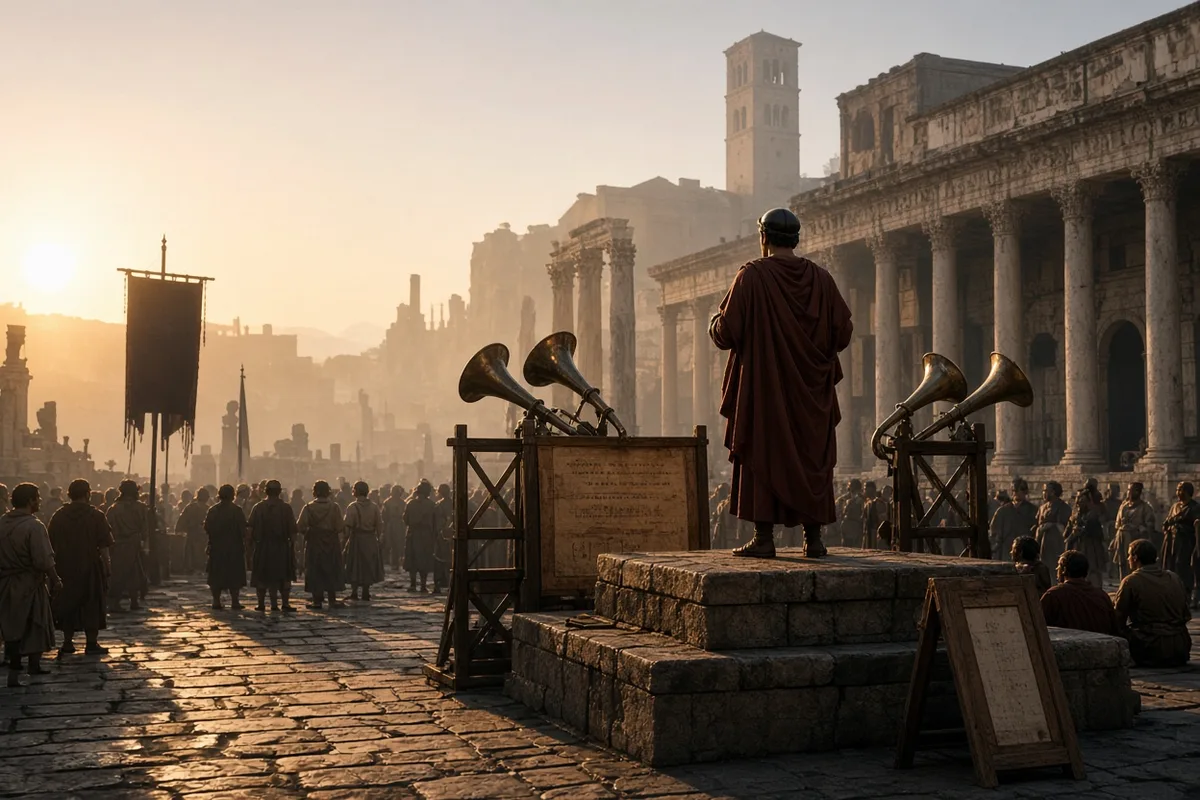
By 324 the leather case had traveled with me to the camp outside Chrysopolis where Constantine’s forces numbered more than one hundred and thirty thousand. Licinius surrendered on the eighteenth of September, and the agreement remained the only document carried forward unchanged into the new administration. I opened the case again at the palace in Byzantium the following winter and copied its text into the Greek registers kept by the new city prefect. The entry recorded that the original Latin version had been issued jointly by the two Augusti on an unspecified day in February 313, with no single deity named above others.
In the years after Constantine’s death the case passed to my successor in the western chancellery at Trier. I had already added a second strap to keep the corners from fraying further. The mark of the cross on the buckle remained visible when the light struck it at an angle. During the council that met at Nicaea in 325 the same phrases from Mediolanum were read aloud on the tenth day of the proceedings, and the bishops present numbered two hundred and fifty. One of them, Eusebius of Caesarea, later wrote that the emperor had stood and spoken the words about freedom of worship before the assembly.
The case stayed in the archives at Arles when I retired from active service in 337. I returned to it once more in 342 when the urban prefect requested verification of an old title to a cemetery plot outside the walls. The text inside matched the version posted in every province, including the clause that ordered immediate restitution of places “where they were accustomed to assemble.” By that count the number of restored sites in Gaul alone had reached one hundred and eighteen, according to the latest census lists.
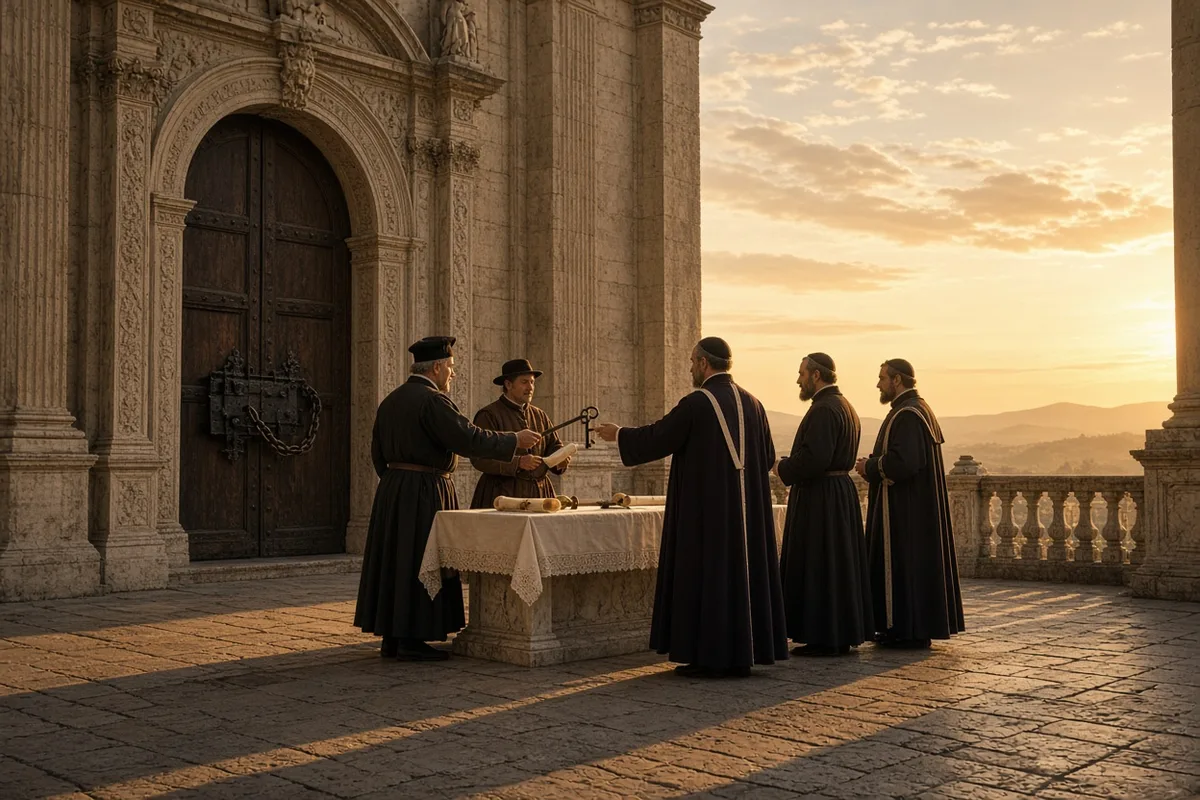
My son took the case with him when he entered the service of the comes in Lugdunum. He opened it in 355 to compare the wording against a new rescript from Constantius that again confirmed the original grants. The leather had been repaired twice by then, once with thread from a military tailor and once with a strip cut from an old saddle. The cross mark on the buckle had darkened but still showed the original cuts I made before the journey to Mediolanum.
On the last day I saw the case it lay on a table in the office at Valentia. The clerk who received it noted the date as the fourth of March 363 and entered the contents under the heading of documents from the time of the two Augusti. He asked no questions about the buckle. Outside the window the same road that had once carried the baggage train still ran north toward the Alps, and the light fell across the worn corners exactly as it had when I carried the roll to the posting station beyond the northern gate of Mediolanum.
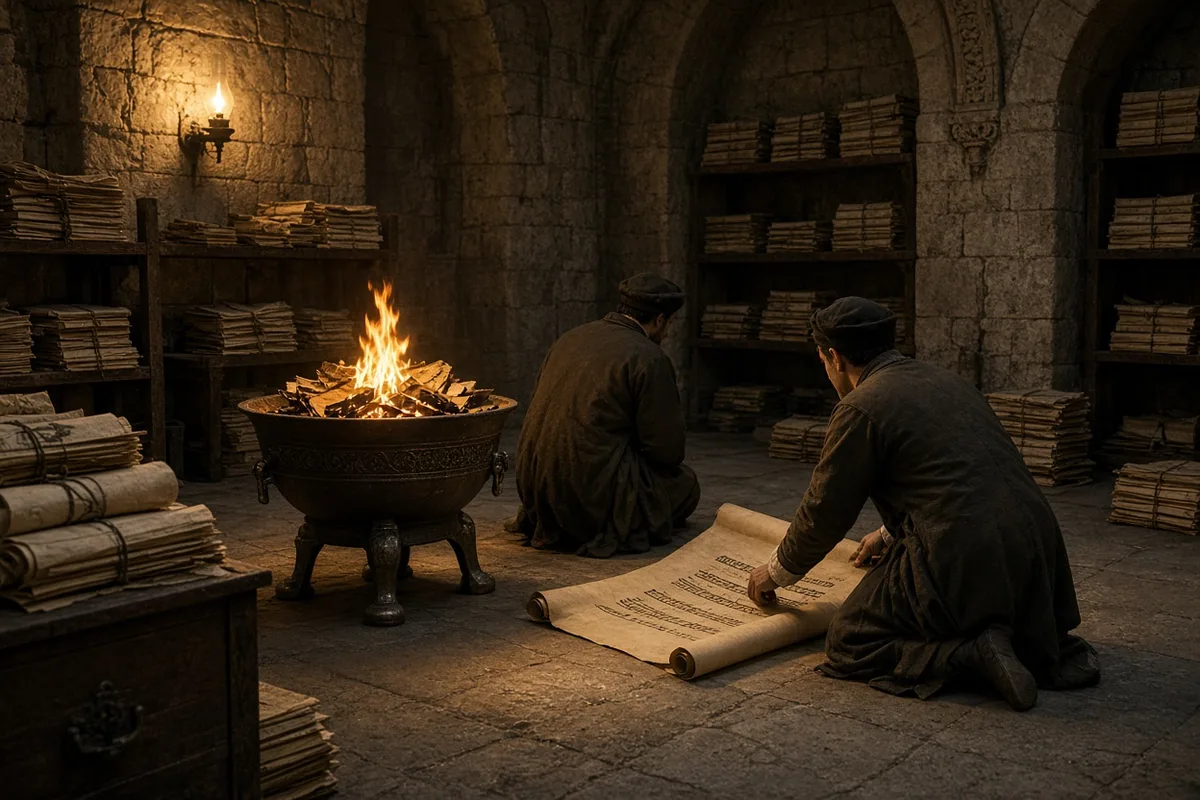
The clerk sealed the case with wax from the same block used for municipal decrees that month and placed it on a shelf between two bundles of tax receipts from the Gallic provinces. Three years later the same shelf held the copy of the rescript issued at Thessalonica on the twenty-eighth of February 380 by Theodosius, Gratian, and Valentinian II, which began with the phrase “Cunctos populos” and directed that the Nicene faith alone receive public support while still leaving the Milan wording intact for private observance. When the comes of Valentia requested the older document for comparison in 385, the clerk retrieved it and read aloud the line “full authority to observe that religion which each preferred” before returning it to its place beside the newer text.
In 392 the case traveled with the records of the diocese when the vicarius moved his office to Arelate following the suppression of pagan sacrifices ordered by Theodosius at Constantinople on the eighth of November. The leather had been treated with a fresh coat of oil mixed at the ratio of two parts tallow to one part beeswax, and the cross mark on the buckle remained visible under the lamplight. At the council held in that city in 397, two hundred and fourteen bishops signed the acts that confirmed the restitution clauses from Mediolanum; the secretary noted on the margin of the register that the original Latin rolls had been examined and found to match the Greek versions still posted in the eastern dioceses.
By 529 the case rested in the archives at Ravenna under the authority of the praetorian prefect of Italy. Justinian’s codification commission, working in Constantinople, incorporated the Milan provisions into the first book of the Codex, titulus de summa trinitate, while adding the requirement that bishops certify all grants of property. The entry listed one hundred and forty-seven basilicas restored in Italy alone between 313 and 400, with the dimensions of the one at Aquileia recorded as one hundred and seventy-two feet in length. When the Gothic wars reached the city in 535, the prefect ordered the older documents moved to a vault beneath the palace; the leather case was wrapped in linen and placed inside a cedar box marked with the number 19 in red ink.
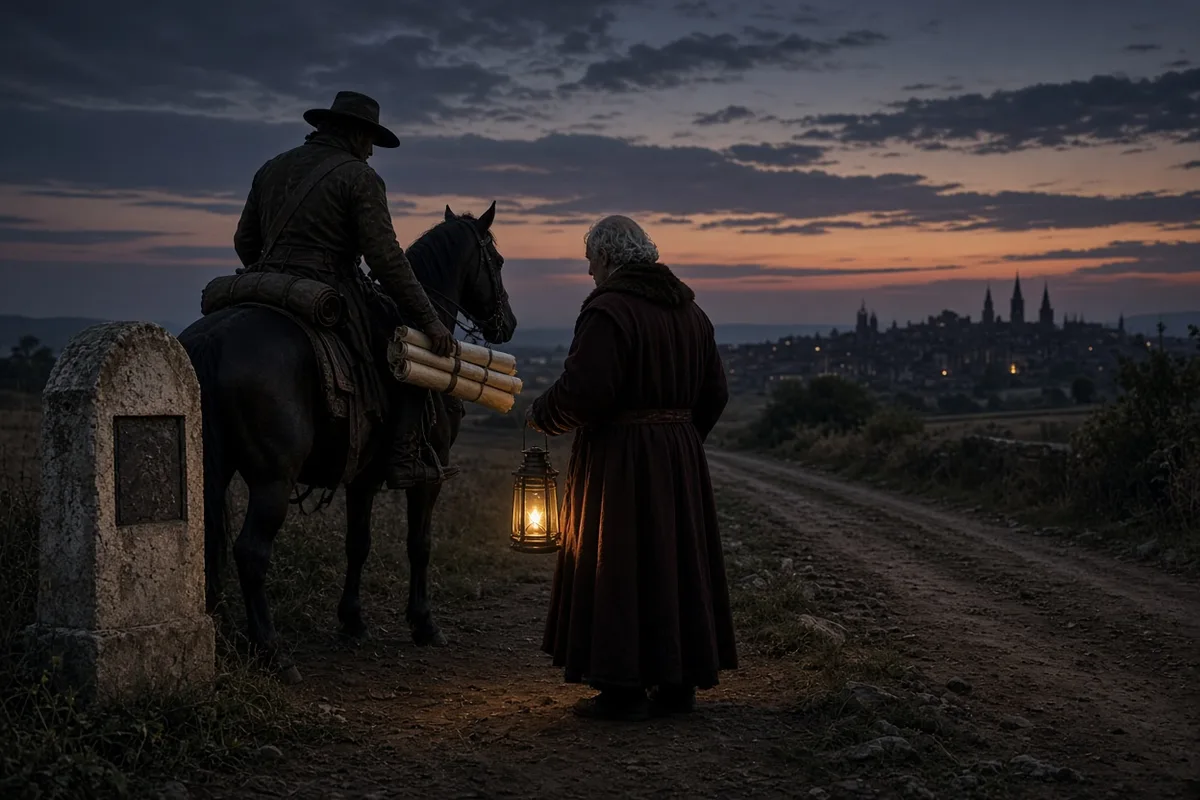
After the Byzantine reconquest the case was transferred to the library of the exarch at Ravenna, where it remained until 751. The Lombard king Aistulf issued a confirmation of church holdings on the twelfth of June that year, quoting the Milan phrase about burial grounds in the diploma preserved at the monastery of Bobbio. A notary copied the text onto parchment using the same formula “where they were accustomed to assemble” and added the names of twenty-three estates returned to the see of Milan since the original edict. The leather case itself was examined by the abbot and noted as containing the sole surviving Latin version bearing both imperial signatures.
In 1122 the case appeared in an inventory of the cathedral treasury at Milan compiled after the Concordat of Worms. The archivist recorded that the document inside repeated the clause granting “full authority to observe that religion which each preferred” and measured the roll at fourteen inches in length with thirty-two lines of text per column. During the reconstruction of the basilica of Sant’Ambrogio between 1196 and 1215, masons uncovered a section of the original cemetery wall mentioned in the edict; the stones were numbered and the measurements entered in the same ledger that listed the case as item 47.
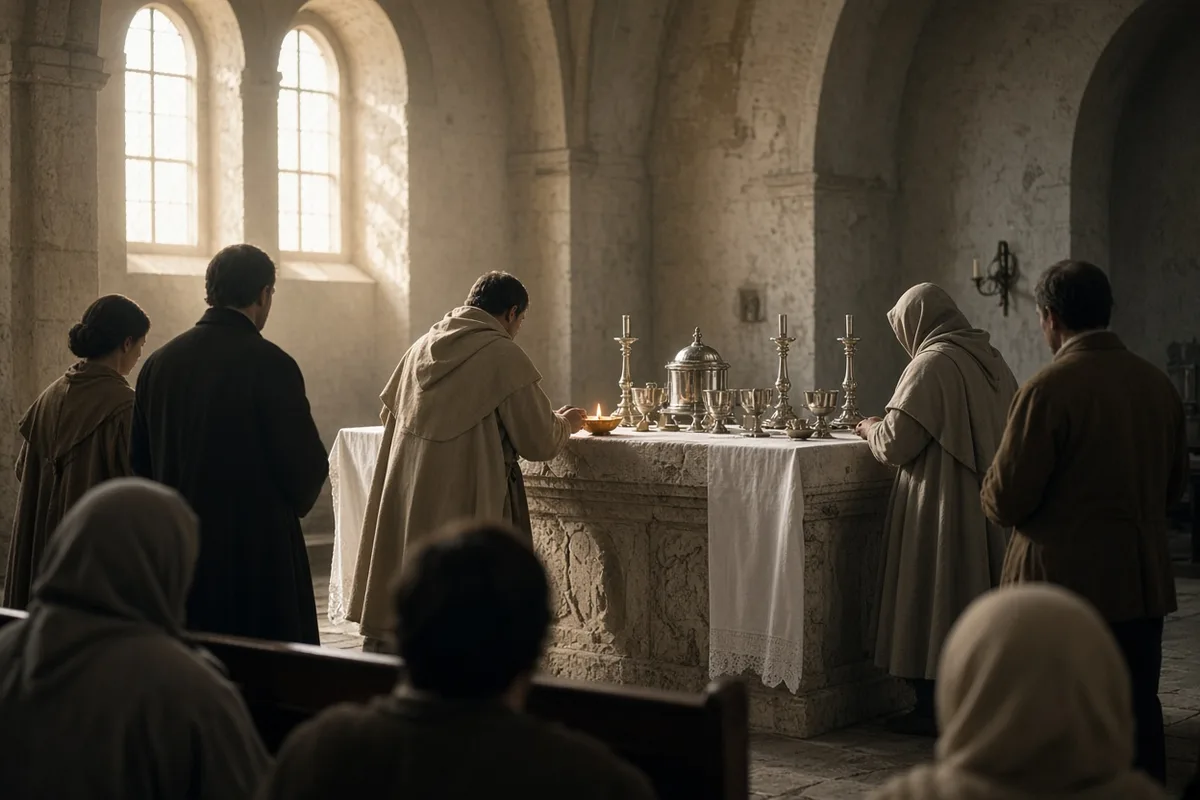
The case passed into the collection of the Biblioteca Ambrosiana when Cardinal Federico Borromeo founded the library on the eighth of September 1609. A cataloguer opened it on the twenty-third of April 1612 and transcribed the text for the edition printed in 1623, noting that the leather had been mended with thread of a later period and that the cross mark on the buckle matched the description given in the 363 entry. The volume that resulted contained the Latin text alongside the Greek version preserved at the monastery of Mount Athos, where the same wording had been read at the synod of 1638 attended by one hundred and eight metropolitans.
During the suppression of religious houses in 1796 the case was removed from the Ambrosiana and taken to Paris, where it was examined by the commission des monuments on the fourteenth of July 1797. The French archivists counted forty-one lines of original text remaining legible and recorded that the document had been issued at Mediolanum without naming any deity above others. After the restoration of 1815 the case returned to Milan and was placed in a glass case in the museum attached to the cathedral, where it remained through the unification of Italy in 1861. A visitor in 1873 opened the case under supervision and read the line about meeting places aloud to a group of twelve students from the local seminary.
On the afternoon of the twenty-ninth of June 1953 a conservator at the Museo del Duomo lifted the case from its mount to replace the linen wrapping. He noted the date in the ledger, measured the remaining thickness of the leather at one and a half millimeters at the corners, and replaced the buckle with a new pin after photographing the cross mark. The light from the high window fell across the surface exactly as it had when the roll was first carried through the northern gate, and the conservator closed the case again before returning it to the display.