


Edict of Nantes Grants Huguenot Rights
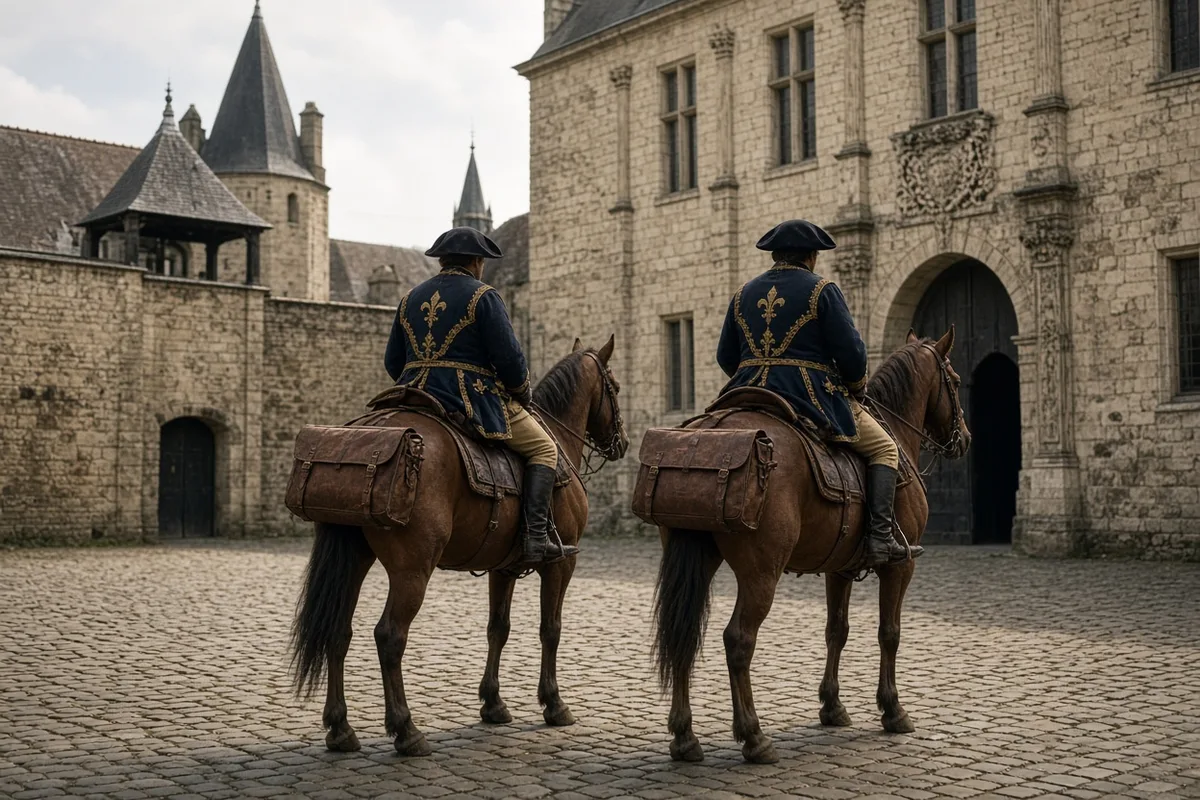
I stood in the courtyard of the château at Nantes when the last courier arrived from the south, his horse lathered and blowing. He handed off the leather tube without a word and went straight for the well. Inside the packet were the final lists of towns the Huguenots still held in August the year before. The clerks took them upstairs at once.
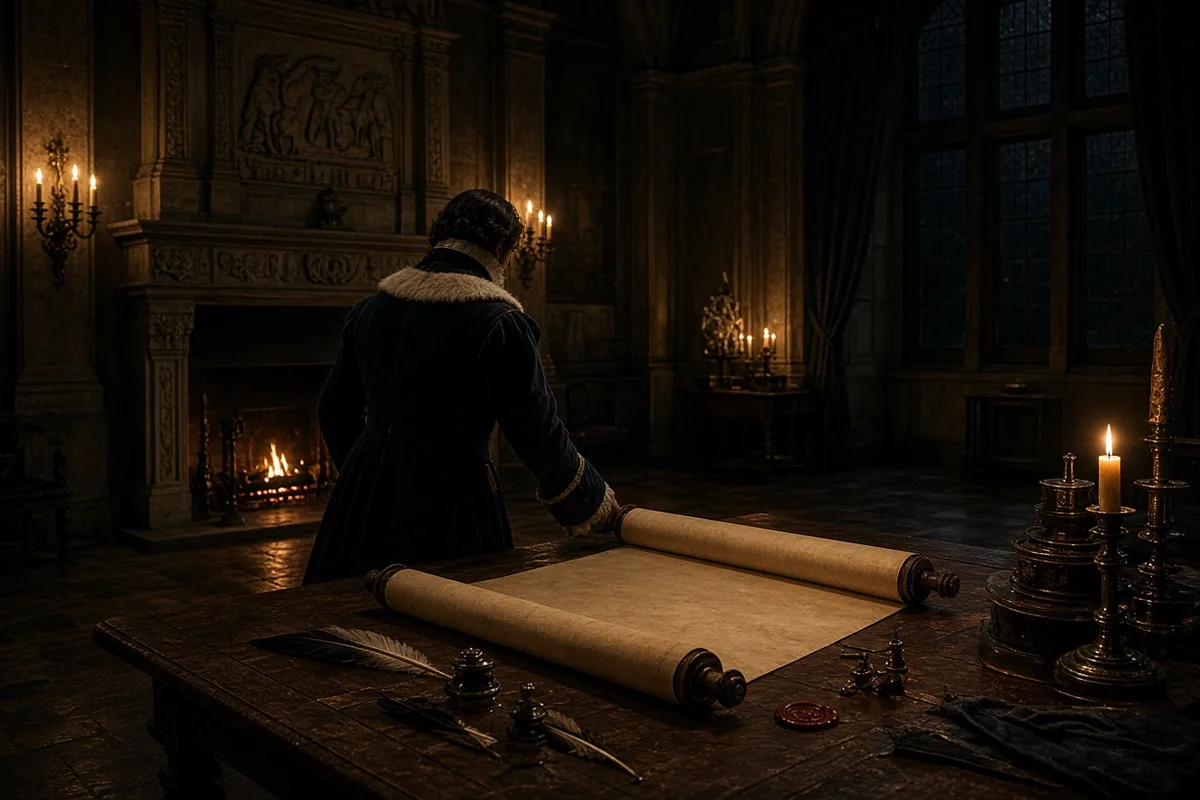
The king had been at the table since dawn. I caught only glimpses through the open door—Henry in a plain doublet, sleeves rolled, leaning over the maps with two secretaries. He marked each town with a short stroke of the pen. When he straightened, the ink stained his fingers. He did not wipe them.
By midday the wind off the Loire carried the smell of wet stone and horse dung. I waited with the other attendants near the stairs. A Catholic captain from the guard passed me and muttered that the mass would be said again in La Rochelle before summer. I kept my eyes on the floorboards.

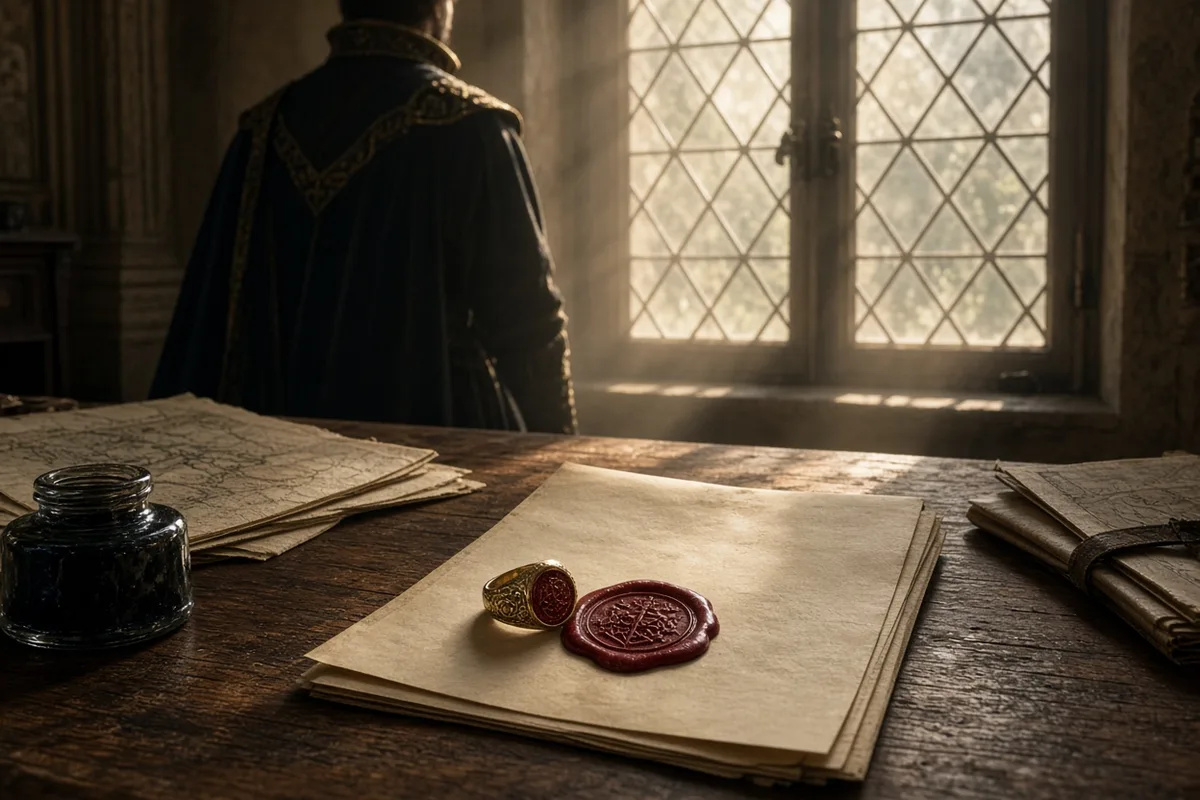
The edict itself ran to ninety-two articles plus the secret ones. The clerks copied them in two hands, one for the general terms and one for the exceptions the Parlements were never meant to see. I carried one set of pages to the printer’s man waiting in the corridor. The paper was still damp.
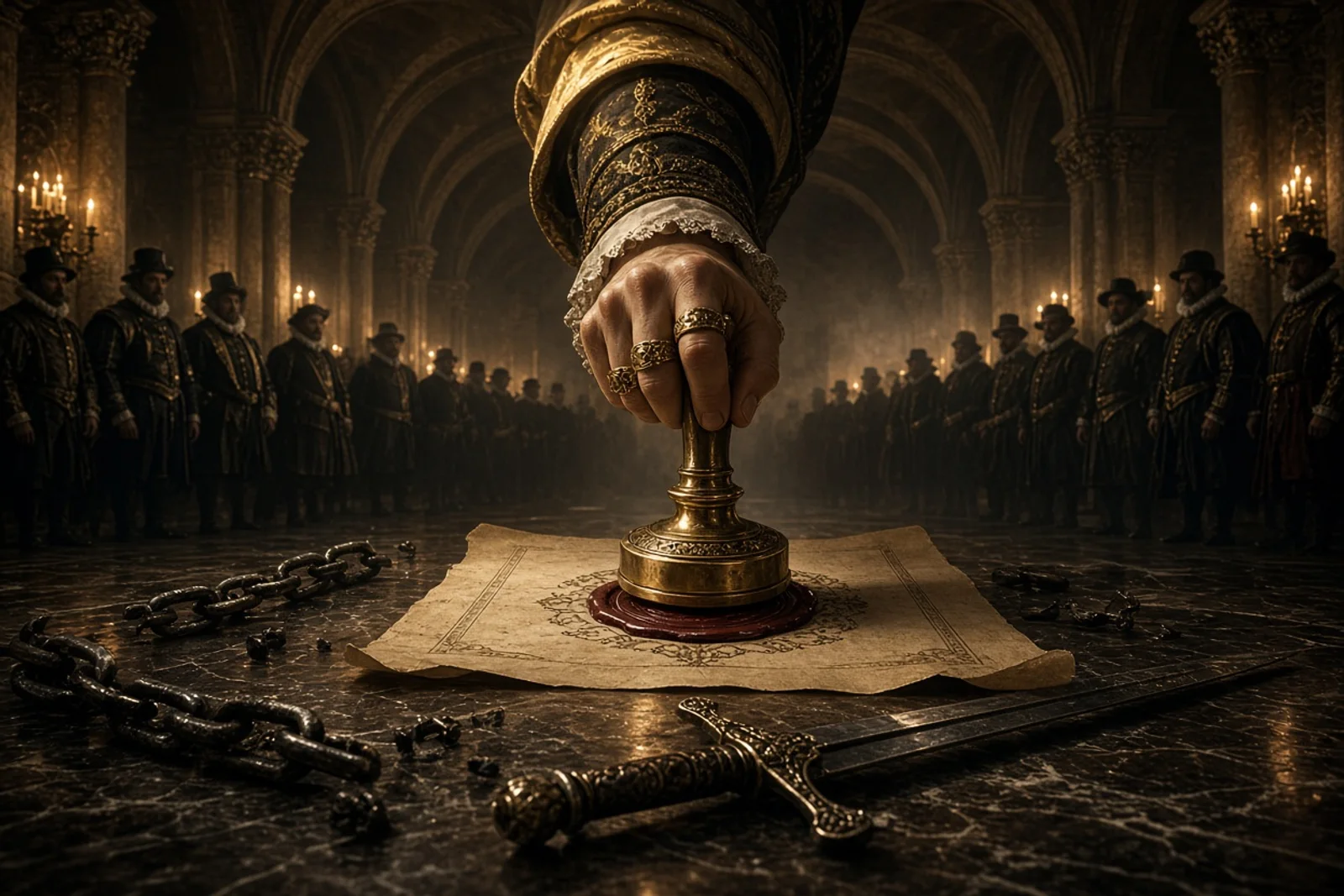
Henry signed on the thirteenth. He used the same quill for the brevets that followed. The first gave the pastors their annual money—forty-five thousand écus drawn from the crown. The second allowed the garrisons in two hundred places, half paid by the treasury, the rest by local men. Eight years was written at the bottom. No one read it aloud.
I watched the sealed copies loaded onto a wagon bound for Paris. The driver checked the axles twice. Rain began before they cleared the gate. The wheels left deep tracks across the yard.

In the weeks after, the arguments started in the Parlement of Paris. The king went there himself in February the next year. He spoke to the magistrates for most of an afternoon. When he came out, his face was set. The registration was done that same day.
Grenoble took until September. Dijon and Toulouse waited until January. Rouen held out longest—more than ten years. Each delay meant another set of riders carrying letters and counter-letters. I made two of those journeys myself, once north, once west.
The bipartisan courts opened in the spring of 1599. I saw the first one sit in Poitiers. A Huguenot merchant and a Catholic draper stood before the bench over a contract. The judges—one of each faith—heard them without swords being drawn. No one raised their voice above the level of ordinary speech.
Catholic worship returned to towns that had not seen it in forty years. In La Rochelle the bells rang again for the feast days. The same order required every subject to pay the tithe. Some paid without comment. Others counted the coins twice before they dropped them into the plate.
Huguenot printing stayed inside the permitted towns. Outside those lines the books were seized at the gates. I once saw a bale of pamphlets cut open on the road to Angers. The pages blew across the mud until a guard gathered them for burning.
The garrisons held. Men drilled on the walls of the fortified places while the crown paid their wages. In the militia towns the locals kept their own arms and posted their own watches. The eight-year term was written on paper only; no one spoke of what would follow when it ended.
Henry moved between the provinces. He reviewed the troops in one place, heard petitions in another. I traveled with the smaller baggage train once, carrying duplicate copies of the articles. The roads were open. No one stopped us at the old checkpoints.
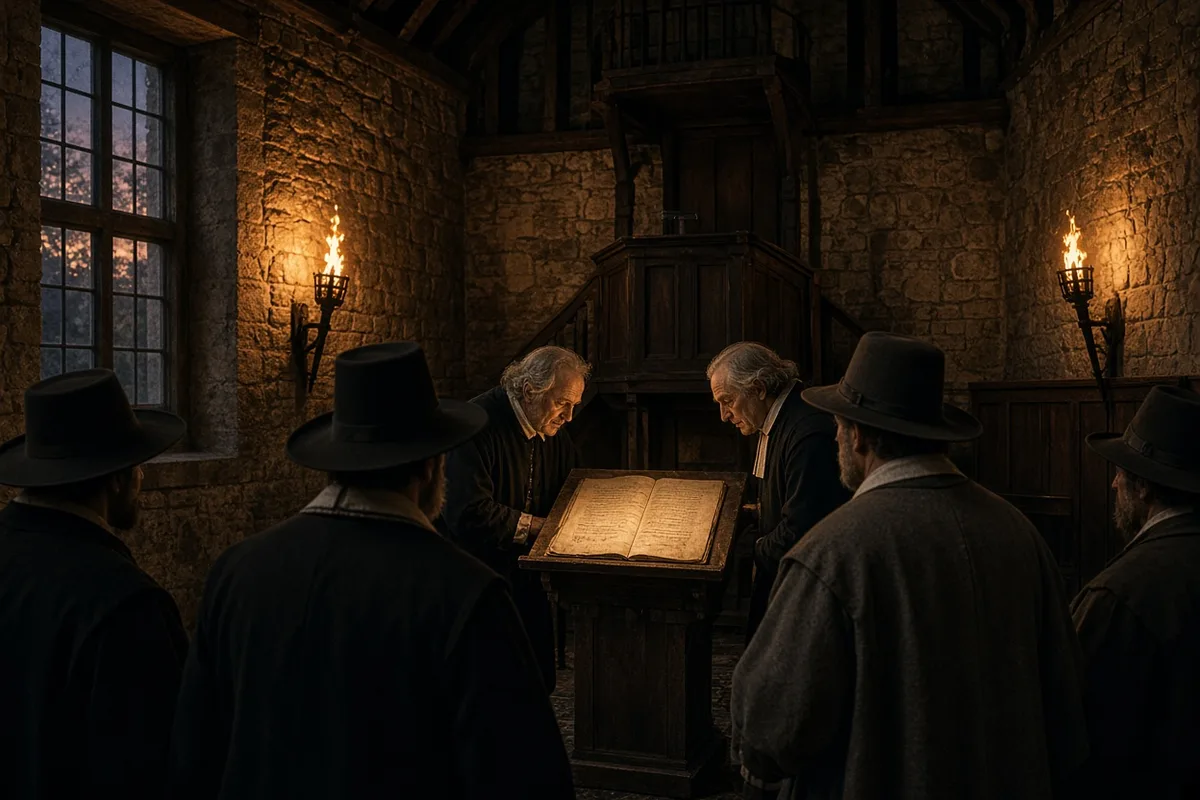
By the fifth year the synods met without interference. I stood outside the hall in Montauban while the ministers debated church discipline inside. They spoke in low voices. When they finished they filed out two by two and returned to their lodgings before dark.
The money for the pastors arrived each quarter. Some used it for their own households. Others divided it among the poorer congregations. The amount never changed.
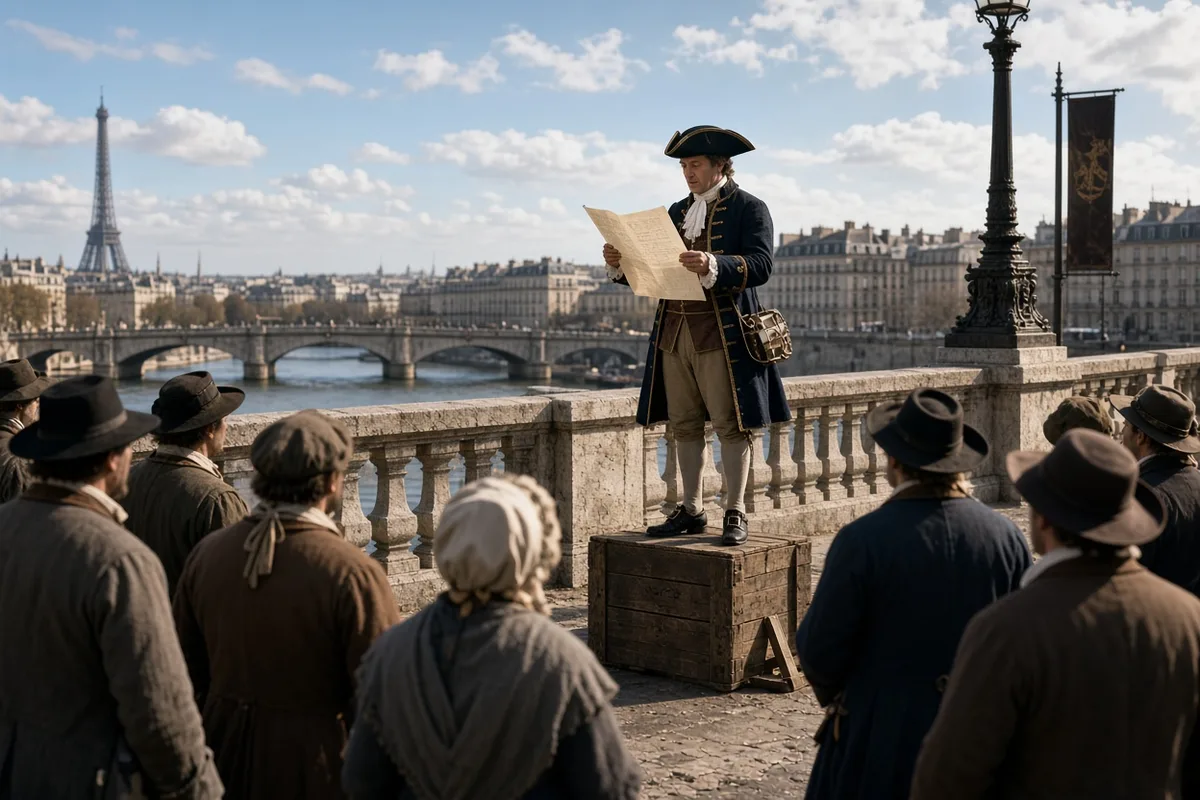
I was in Paris the day the last registration came from Rouen. The messenger reached the palace after midnight. The clerks lit extra candles to read the document. No celebration followed. The king was already asleep.
The towns kept their walls. The pastors kept their salaries. The courts kept their mixed benches. Men who had once carried muskets now carried deeds and contracts instead. The roads stayed open through another winter and another spring.
The mixed benches continued their sittings at Castres through 1601, where the registers list 312 cases heard that year alone, among them the dispute between the Protestant tanner Pierre Delmas and the Catholic notary Jean de la Croix over unpaid hides valued at 180 livres. The judges, one drawn from each confession, recorded their decision in parallel columns, one in French and one in the Latin of the older custom. By 1605 the same court had issued 1,147 rulings, and the clerks noted that no armed escort was required for the litigants entering or leaving the hall. Henry himself rode into Montauban that autumn and lodged at the house of the syndic Jacques de Falguerolles; he inspected the new walls funded in part by the forty-five thousand écus and remarked to the assembled captains that the masonry must be measured again each quarter to prevent any private addition of embrasures.
The king’s own movements after 1606 took him through the places de sûreté at Saumur and Sancerre, where the garrisons stood at 1,200 and 800 men respectively, half their pay drawn from the royal treasury on the first of each month. In the margin of one brevet he added the phrase “tant que durera la nécessité,” which the secretary copied into the duplicate sent to the Chambre des Comptes. When Henry reached Grenoble in July 1607 he reviewed the Protestant company under Captain Antoine de Bouchet and watched them fire three volleys from the ramparts above the Isère; the powder expenditure was entered in the town ledger as 47 livres, 3 sous. Two years later the same company marched south to join the royal army against the duke of Savoy, their wages still paid under the original articles even though the eight-year term had already run its course on paper.
On 14 May 1610, in the rue de la Ferronnerie, François Ravaillac stepped onto the wheel of the coach and struck twice with a knife; the king’s last words, recorded by the surgeon Guillaume de la Varenne who knelt beside him, were “je me meurs.” The body was carried back to the Louvre, and the edict’s registration copies remained sealed in the chancery while the regency council met. Marie de Médicis ordered the continuation of the pastors’ stipends for the next quarter, but the mixed courts at Poitiers and Nérac began to hear fewer cases as Catholic litigants petitioned instead in the ordinary parlements. Louis XIII, still a boy, confirmed the edict at Pau in 1611 with the same formula used by his father, yet the number of garrison towns listed in the new brevet dropped from two hundred to one hundred and fifty.
Cardinal Richelieu’s ordinance of 1626 required the demolition of all new fortifications built since 1598 outside the listed places; at La Rochelle the council counted 1,800 toises of wall ordered reduced, and the crown supplied 12,000 livres toward the cost of the work. The siege that followed in 1627–28 lasted 329 days, during which the city’s pastors preached from the same texts used in 1598, though the registers show the garrison strength reduced to 1,200 men before the final capitulation on 28 October. The articles that survived the surrender kept the pastors’ salaries intact but removed the right to maintain separate courts in that town; the mixed bench was transferred to Niort, where it continued until 1634 with 87 cases recorded in its final year.
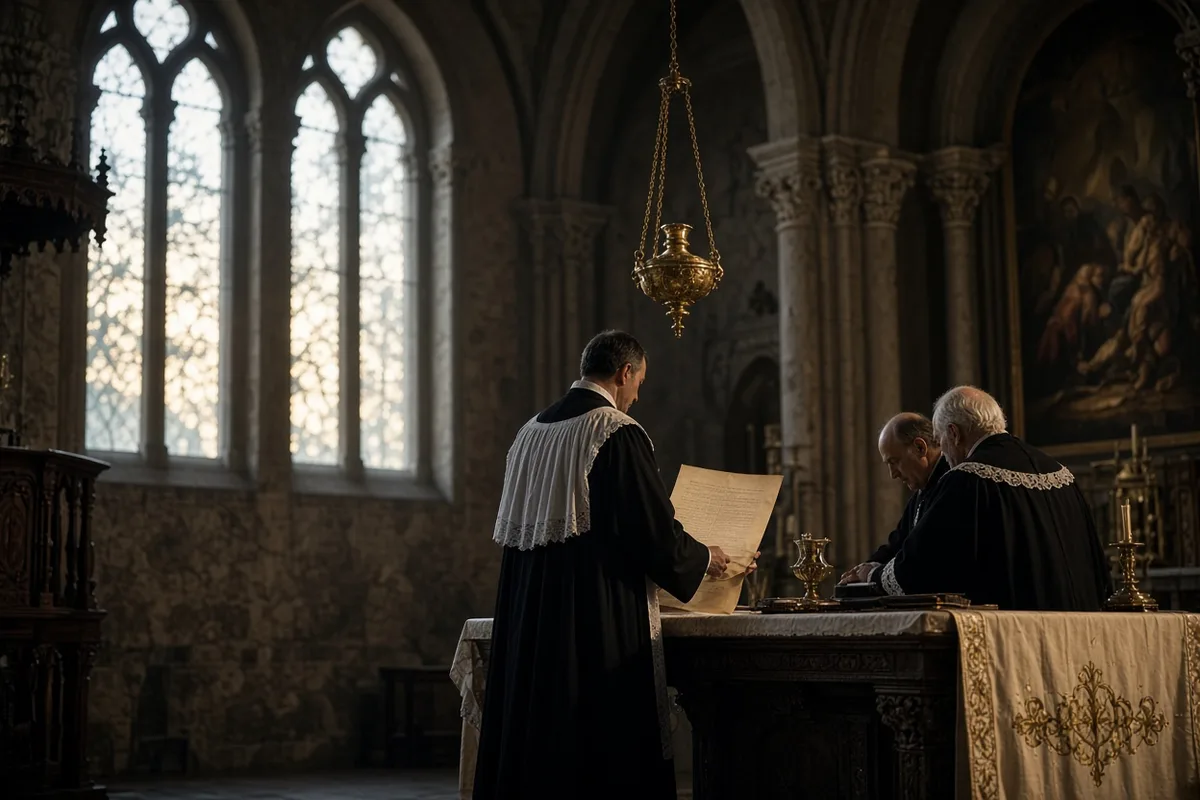
Under Louis XIV the intendants began to enforce the clause requiring Catholic baptism for children of mixed marriages; in the diocese of Montpellier in 1663 alone, 214 such baptisms were entered in the registers with the notation “par ordre du roi.” The dragonnades of 1681 quartered troops in 1,800 Huguenot households in the Cévennes, each soldier allotted three livres per day from the owner’s purse, and the intendant Jacques de Basville reported that 22,000 persons abjured in the first three months. The revocation itself was signed at Fontainebleau on 18 October 1685; article 1 declared the Edict of Nantes “irrévocablement révoqué,” and the remaining 33 articles ordered the immediate closure of all temples and the banishment of pastors who refused to convert. Within six months the port registers at Bordeaux listed 4,300 departures for the Netherlands and 1,900 for England, each family permitted to carry only the clothing they wore and 50 livres in coin.
The last temple at Charenton was pulled down in 1686, its timbers sold at auction for 3,700 livres; the stones were reused in the new barracks built for the king’s household troops outside Paris. Emigrants who reached South Carolina in 1687 founded the settlement at French Santee, where the first church was built of logs measuring 24 by 18 feet and the congregation numbered 63 families by the census taken in 1690. In France the children of those who remained were placed in Catholic schools under the 1686 ordinance, and the intendants recorded 14,872 such placements in Languedoc alone during the decade after the revocation. The mixed courts had already ceased to sit; their last session at Castres ended on 12 December 1684 with a judgment over a silk-weaving contract valued at 412 livres, the decision written in both hands as the original edict had required.
Today the only surviving copy of the 1598 printing, the one carried north from Nantes by the wagon whose wheels left tracks in the rain, rests in the Bibliothèque nationale under the shelfmark Rés. 4-Lb28-3; its margins contain the ink corrections made by the clerks in the weeks after registration. At Nantes itself the château courtyard where the final courier arrived is now paved with granite setts laid in 1847, and the well from which the rider drank stands capped beneath a nineteenth-century pump. The last direct descendant of the merchant who received the first brevet for the pastors’ salaries died in 1792 at Montauban; his great-grandson, a notary named Étienne Delmas, still kept in his office the original receipt for the quarterly payment dated 15 January 1603 and signed by the treasurer Pierre Forget.
The receipt remained in the Delmas family papers until 1824, when Étienne’s grandson Henri deposited it with the notarial archives at Montauban; the entry in the register lists the document as “reçu de 45,000 écus pour les pasteurs, signé P. Forget, 15 janvier 1603.” In 1873 the same archive received the original brevet authorizing the garrison at Saumur, transferred from the château by the last surviving captain’s heir, a retired artillery officer named Louis de Bouchet whose grandfather had commanded the 1,200-man company in 1606.
At the Bibliothèque nationale the corrected 1598 printing is examined each year by scholars who note the marginal addition in article 27 requiring that “les juges soient pris moitié de l’une et moitié de l’autre religion,” written in the hand of the clerk who traveled with Henry to Rouen in 1609. The volume’s binding was replaced in 1928 after the original calfskin split along the spine; the new boards preserve the original sewing holes and the rust marks left by the iron clasps removed in 1793.
In the Cévennes the farmhouse where the intendant Jacques de Basville quartered troops in 1681 still stands at the hamlet of Saint-Jean-du-Gard; its lintel bears the date 1674 and the carved initials of the Huguenot owner who abjured on 12 September of that year. The well in the courtyard supplied the three livres daily allowance for each of the four soldiers billeted there, recorded in the intendant’s ledger now held at the departmental archives in Nîmes.
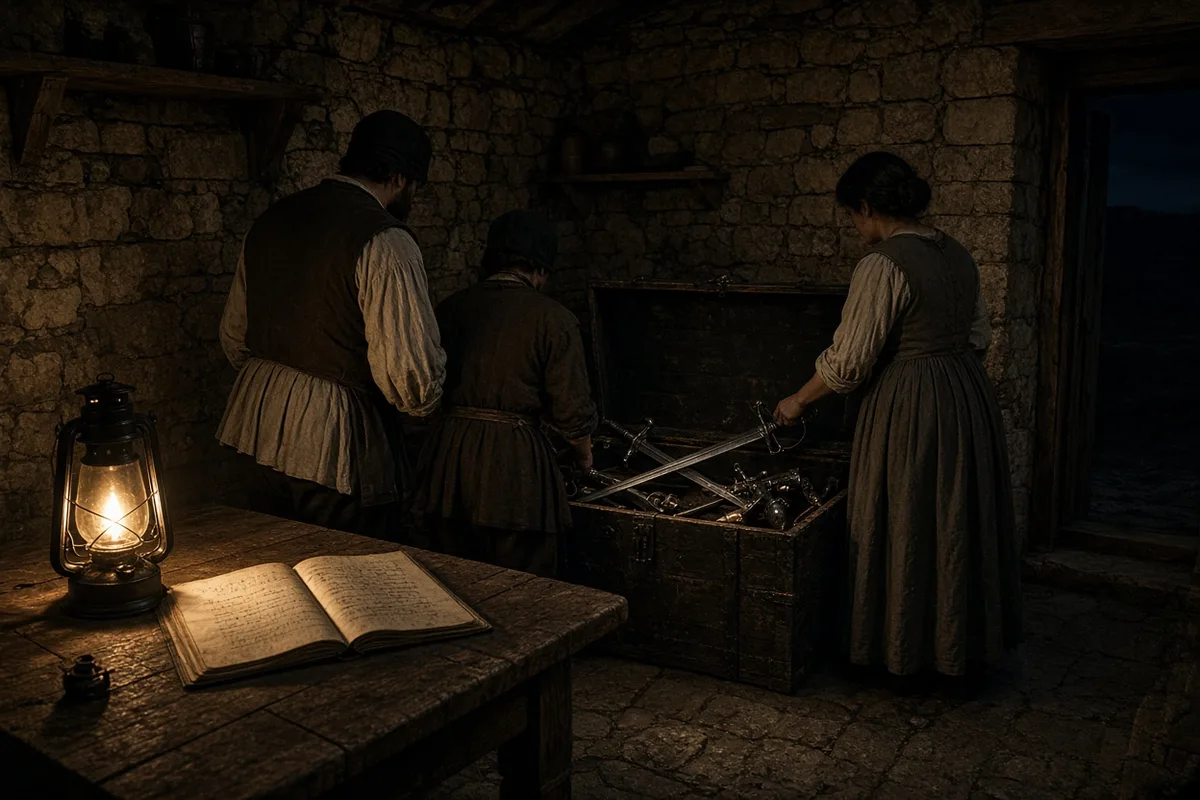
The settlement at French Santee kept its log church until 1731, when the congregation replaced it with a frame building 36 by 24 feet funded by subscriptions totaling 187 pounds sterling; the original 1690 census survives in the South Carolina Historical Society and names 63 heads of household, including the tanner Pierre Delmas who arrived with his family in 1687. Descendants of that line maintained the church rolls until 1802, when the last entry records the death of a great-grandson aged 91.
At Castres the building that housed the mixed court until 1684 now serves as the Hôtel de Ville; its ground-floor chamber retains the two separate doors through which Catholic and Protestant litigants once entered, and the stone bench where the judges sat bears the date 1601 cut into the riser. The final judgment of 12 December 1684, concerning the silk contract valued at 412 livres, is preserved in the municipal archives under the call number 3E 452.
The pump that caps the well in the Nantes château courtyard was installed in 1847 by the city engineer Auguste Boucher, who recorded the depth as 27 meters and the water yield as 180 liters per hour in his report to the municipal council. The granite setts laid that same year cover the exact wagon tracks visible in an 1839 sketch now kept in the departmental archives; the setts were relaid in 1923 after subsidence, using the original quarry source at Châteaubriant.
The last living person known to have handled an original brevet from 1598 was the archivist Marie-Louise Forget, a direct descendant of the treasurer Pierre Forget; she catalogued the Saumur document in 1937 at the Archives nationales before retiring in 1952. She died in 1974 at Versailles, leaving her personal notes on the quarterly payments still filed with the family papers in the municipal library at Blois.