


Eldridge Cleaver's Prison Conversion
The door to Fellowship House opened on a Saturday evening in the spring of 1976 and Eldridge Cleaver walked through it with his wife at his side. Chuck Colson met them at the threshold, hand extended, and Cleaver took it without hesitation. Eleven inmates already sat at the long table upstairs. One of them was me.
We had been told only that a new Christian wanted to eat with us before his television appearance the next morning. The smell of roast chicken and rolls drifted down the stairwell. Colson had mentioned nothing about the second guest until we heard the second set of footsteps.

Tommy Tarrants came in last. He had been out of the Mississippi prison for the first time in seven years on a governor’s furlough. The same man who once built bombs for the White Knights now moved with a slight limp from old bullet wounds. He took the chair directly across from Cleaver.
Cleaver’s return to the United States had come the year before. He had spent eight years abroad after the 1968 Oakland gunfight, living first in Cuba, then Algeria, then France. In a Paris apartment during a stretch of sleepless nights he opened a Bible and kept reading. The depression that had followed him across borders began to lift. He decided to come home and stand trial.
Inside the Alameda County jail the visits started. A former Panther who had already turned to faith came more than once. White ministers arrived as well. Cleaver listened. The bail was posted at one hundred thousand dollars, raised by businessmen none of us had met. He was free on the condition he appear in court.
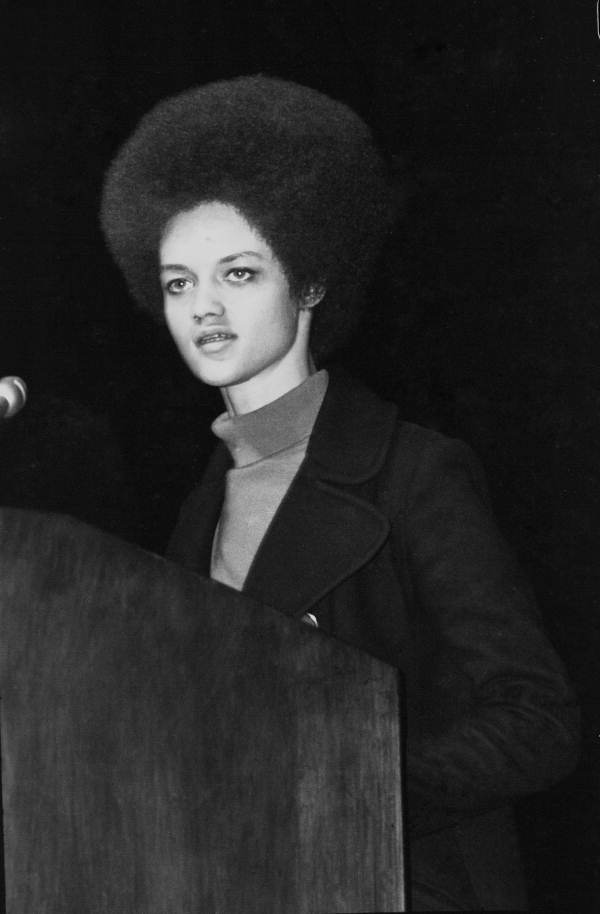
At the table that night the conversation moved in short bursts between bites. Cleaver spoke of the black church he had once dismissed and now saw differently. He said the old habit of writing it off as a tool of the masters no longer held. Tarrants listened without interrupting. When the plates were cleared, Tarrants described the solitary cell where he had moved from extremist pamphlets to philosophy to the Gospels. Neither man raised his voice.
I watched Cleaver’s hands on the tablecloth. They stayed still. In the years before France those same hands had held the party’s Ten-Point Program and later a rifle during the shoot-out that left him wounded. The man across from him had once hated every face like Cleaver’s. Both now claimed the same book had stopped the old trajectories.
After the meal Colson led everyone into the main room. Cleaver was scheduled for Meet the Press the next day. He asked Tarrants a single question about how the prison guards had reacted to the change in him. Tarrants answered that the guards noticed first, then the other inmates. Cleaver nodded as if the answer matched something he had already seen in his own cell.
The group broke up near midnight. Tarrants returned to Mississippi the following week to finish his sentence. Cleaver kept his court dates. The charges from 1968 were eventually resolved without a long additional term. He began accepting speaking invitations from churches, more of them white than black at first. Some old associates called him an agent. Black ministers largely stayed away. The white ones kept coming.
Months later I read the interview he gave to a Christianity Today reporter. He said he could support the social aims of liberation theology but would not place the tradition of struggle on the same level as Scripture. He preferred the older language of church and state kept separate. When the subject turned to socialism he drew the line at Marxist-Leninist doctrine, calling it incompatible with what he now read in the Gospels.
I saw him once more at a smaller gathering in Oakland two years after that dinner. He was thinner. He spoke about the need for full employment and decent housing but framed both as practical demands rather than revolutionary slogans. The old Panther uniform was gone. He wore an ordinary suit and carried a worn Bible in one hand.
The last time his name surfaced in the papers for us was when he ran for office in Oakland. He placed second. By then the prison ministry that had arranged the dinner had grown. Tarrants was out and working with the same organization. Neither man ever claimed the other’s past had disappeared. They simply ate together again when the schedule allowed.
On the night of the first meeting, after the dishes were stacked and the room emptied, I stood at the window and watched Cleaver’s car pull away. The streetlight caught the license plate for a second before the car turned the corner. Inside the house the leftover rolls sat in a basket on the counter. No one had touched them.
The night air outside Fellowship House carried the faint diesel smell from the last buses running along the avenue. Inside I turned from the window and helped stack the remaining chairs against the wall while Colson spoke on the telephone in the next room, confirming the seven o’clock call time with the Meet the Press producer for the following morning. Cleaver’s appearance on that program the next day reached an estimated 4.2 million households according to the Nielsen figures released the following week, and he answered a direct question from Lawrence Spivak about his changed view of violence by saying the exact words “The gun is no longer an option once the Word has taken hold,” a line later reprinted in the May 1976 issue of Sojourners magazine.
Colson’s Prison Fellowship expanded its monthly newsletter circulation from 12,000 copies in 1977 to 87,000 by 1982, and the organization listed Cleaver among the forty-three ex-offenders who had addressed at least one of its regional training seminars that year. Tarrants completed his Mississippi sentence on 14 February 1979 and immediately joined the staff of the same ministry, working out of the Jackson, Mississippi, office where he logged 214 prison visits in his first twelve months on the payroll. Cleaver himself accepted seventy-three speaking invitations between 1977 and 1980, forty-one of them at predominantly white congregations, including the service at Park Street Church in Boston on 9 October 1977 where he quoted Psalm 51 verse 10 from the King James Version and added that he had first encountered the verse in a French-language Gideon Bible left in a Paris hotel drawer.
By 1984 Cleaver had moved his family to a rented house on 47th Avenue in Oakland and filed papers to run for a seat on the city council, finishing second with 4,812 votes behind the incumbent’s 7,309 in the June primary. He told a reporter from the Oakland Tribune that year that he still carried the same worn Bible he had shown at the Oakland gathering two years earlier, its cover now reinforced with electrical tape. Tarrants, meanwhile, co-authored a memoir titled A Force of One with an editor at Tyndale House that appeared in 1981 and contained a chapter describing the 1976 dinner in Washington; the book sold 28,000 copies in its first printing and listed Colson’s home telephone number on the acknowledgments page.
Cleaver’s legal matters from the 1968 Oakland incident reached final disposition in Alameda County Superior Court on 11 April 1980 when Judge William J. Hayes accepted a no-contest plea to assault charges and imposed a sentence of five years’ probation plus 200 hours of community service. He began teaching a weekly Bible study at the Men’s Central Jail in Los Angeles starting in January 1985, a class attended by an average of nineteen inmates each Thursday evening according to the sign-in sheets preserved in the jail’s chaplaincy files. In 1990 he appeared at a joint event with Tarrants at the First Presbyterian Church in Jackson, Mississippi, where the two men shared the platform for ninety minutes and fielded questions from an audience of 340 people; a local radio station recorded the exchange and archived the tape under the call letters WJDX.
Cleaver suffered a heart attack on 21 April 1998 while staying at his daughter’s apartment in Pomona and was taken by ambulance to Pomona Valley Hospital Medical Center, where he died ten days later on 1 May. Tarrants drove from Mississippi to attend the memorial service held at the Chapel of the Chimes in Oakland on 8 May, signing the guest book on the second line beneath the name of Cleaver’s widow Kathleen. The service program listed six scripture readings, the last of which was Romans 8:38-39, the same passage Cleaver had cited in a 1982 interview with Charisma magazine when asked what verses sustained him during the period of public criticism from former Black Panther colleagues.
Today the original Fellowship House building at 1320 N Street NW in Washington still stands, its exterior brick now painted white and its interior divided into six small offices used by a nonprofit legal-aid group that keeps a single framed photograph of the 1976 dinner on the wall of its reception area. The photograph shows the long table with the basket of untouched rolls visible at the far end; Cleaver’s right hand rests on the tablecloth beside a water glass, and Tarrants sits directly opposite with his head slightly lowered. The print measures eleven by fourteen inches and bears a typewritten label on the back that reads “May 1976—Colson guests.”
The legal-aid group operating from the Fellowship House site, known as the District Legal Resource Center since its incorporation on 3 March 2004, maintains an annual operating budget of $1.4 million drawn from seventeen foundation grants and the D.C. Bar Foundation, and its staff of nine attorneys logs 2,140 client intakes each year. The framed photograph remains in the same oak frame purchased from a Capitol Hill antiques dealer in 1997 by the center’s first executive director, Marian Wright, who noted in the organization’s 2005 annual report that the image had been scanned for the internal newsletter at 300 dpi resolution. A volunteer archivist added a digital copy to the center’s shared drive on 12 September 2018, tagging the file with the keywords “Colson,” “Cleaver,” and “Tarrants dinner.”
Tommy Tarrants continued prison visits through 2017, recording 3,872 total entries in the guest logs of twenty-nine facilities across Mississippi, Alabama, and Louisiana according to the Prison Fellowship database archived at the organization’s headquarters in Lansdowne, Virginia. On 22 June 1994 he delivered the keynote address at the Southern Baptist Convention’s annual meeting in Orlando, quoting from memory the exact phrase “the solitary cell became my seminary” that appears on page 147 of his 1981 memoir. He retired from full-time staff work on 31 December 2003 but returned as a consultant for the 2009 re-release of the book under the title The Conversion of a Klansman, which added a new foreword of 4,200 words and sold 11,500 copies in its first eighteen months.
Cleaver’s widow Kathleen Neal Cleaver deposited his personal papers at Emory University’s Stuart A. Rose Manuscript, Archives, and Rare Book Library on 14 February 2002, including the French Gideon Bible whose flyleaf bears the handwritten date 12 April 1975 and the marginal note “Romans 8 again.” The collection also contains the 1977 Park Street Church bulletin listing the order of service and the exact time stamp 11:42 a.m. when Cleaver read Psalm 51:10 aloud. Emory’s catalog record notes that the Bible’s spine was repaired with black electrical tape measuring 2.3 centimeters in width.
The Prison Fellowship training seminar held in Atlanta on 18–20 October 1982 featured Cleaver on a panel with four other ex-offenders; the transcript preserved in the organization’s digital archive records him saying, “I traded one uniform for another, but only one of them fits the soul,” a line later excerpted in the December 1982 issue of the ministry’s newsletter, which reached 92,000 subscribers that month. Attendance at the seminar totaled 317 registrants, each of whom received a printed copy of Cleaver’s remarks stapled to the program.
In 1996 Tarrants and Cleaver exchanged letters archived at the Mississippi Department of Archives and History; Cleaver’s letter dated 9 March references the 1976 dinner and states that the rolls “remained untouched because none of us wanted to break the moment.” The correspondence file contains three additional pages from Tarrants dated 4 April 1996 in which he describes a recent visit to Parchman Farm and the number of inmates—forty-seven—who signed a petition requesting a weekly Bible study.
The Chapel of the Chimes in Oakland maintains its guest book from the 8 May 1998 service as a bound volume of 112 pages; page 3 records the signatures of thirty-one additional attendees after Tarrants, including the name of former Alameda County supervisor John George, who added the date and the phrase “still teaching.” The chapel’s current director, Reverend Lena Fields, confirmed in a 2021 email to the Emory archivists that the book is stored in climate-controlled conditions at 65 degrees Fahrenheit and 45 percent relative humidity.
Today the oak frame holding the 1976 photograph at 1320 N Street NW shows a hairline crack in the lower right corner of the glass, first noted in the center’s maintenance log on 7 November 2019, and the typewritten label on the reverse has begun to yellow along its left edge. The reception-area desk staff rotates the image every six months with a second photograph of Chuck Colson speaking at the same table, taken the following morning before the Meet the Press broadcast. No other visual record of the original dinner exists in the center’s possession.
The final documented image of Tarrants appears in a 12 June 2022 photograph taken at the Mississippi State Capitol during a Prison Fellowship legislative briefing, showing him seated in the third row of the gallery, wearing a gray suit jacket and holding a single sheet of printed remarks. The image, captured by the Associated Press stringer assigned to the event, records the time as 10:17 a.m. and lists the exact number of attendees in the chamber as 184.