



Elizabeth Fry Begins Prison Reform
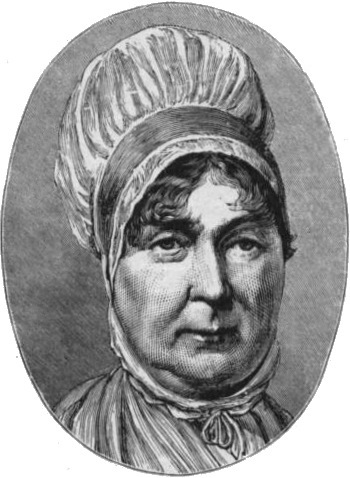
The cart jolted over the cobbles and stopped at the outer gate. I steadied the basket of bread and cheese on my lap while the driver called up to the turnkey. Rain had soaked the straw beneath us, and the smell of wet wool mixed with the sharper reek that already drifted from inside the walls. Elizabeth Fry sat opposite me, her hands folded over the edge of another basket. Two other women from our meeting waited in the carriage behind. None of us spoke.
A guard in a stained coat came down the steps. He looked at the baskets, then at Fry. “I don’t think we can let you go in,” he said. “They’re a bunch of wild beasts in there. They’ll have the rings off your fingers before you reach the stairs.”
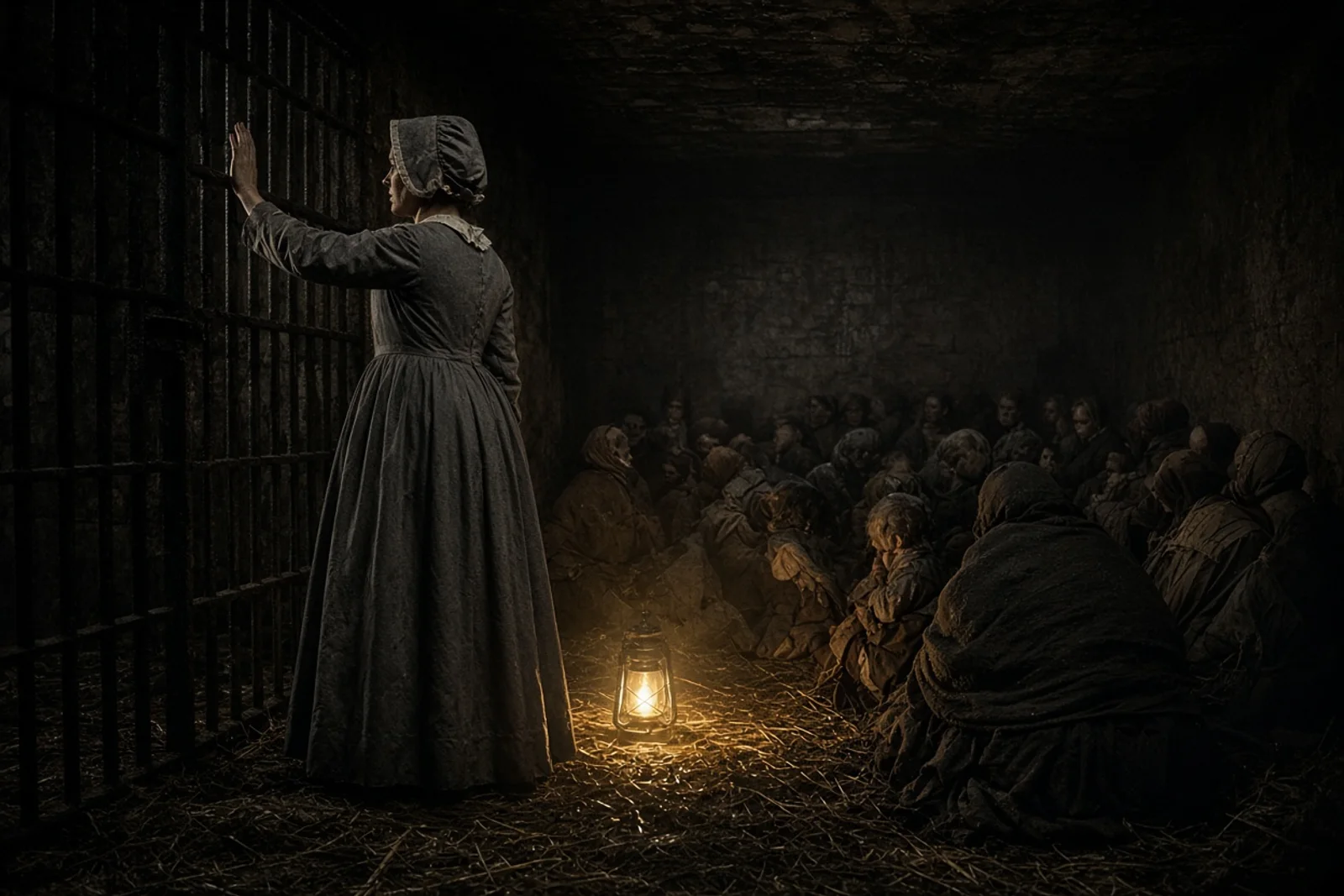
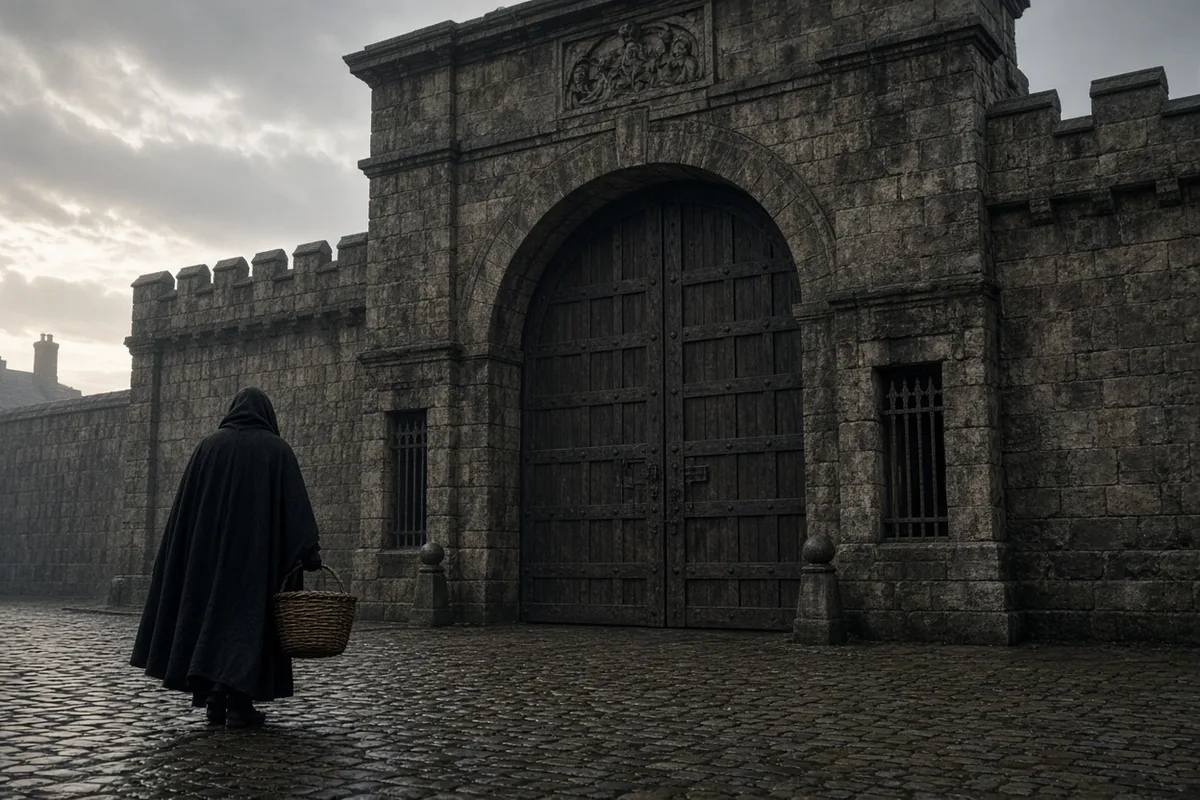
Fry answered quietly that we had come with food and would not stay long. The guard shrugged, unlocked the wicket, and waved us through. The smell hit at once. It rose from the straw on the floor, thick with waste and old blood and the sour tang of gin. Light came only from high slits and a single lantern carried by the warder who led us. Women and children pressed against the bars of the first ward. Some reached through. Others sat or lay without moving.
We set the baskets down and began handing out loaves. A woman near the back pulled a bundle of rags from a dead infant and wrapped them around a living child beside her. No one stopped her. The warder turned his lantern away. Fry watched without speaking. When the bread was gone she asked the warder how many women were held here. He said more than three hundred in wards built for sixty, and that the men’s side ran right alongside until the next assizes.
We left before dark. On the way out Fry asked the guard whether any of the women had been taught to read. He laughed once and said most could not keep their own names straight. She nodded and did not ask again.
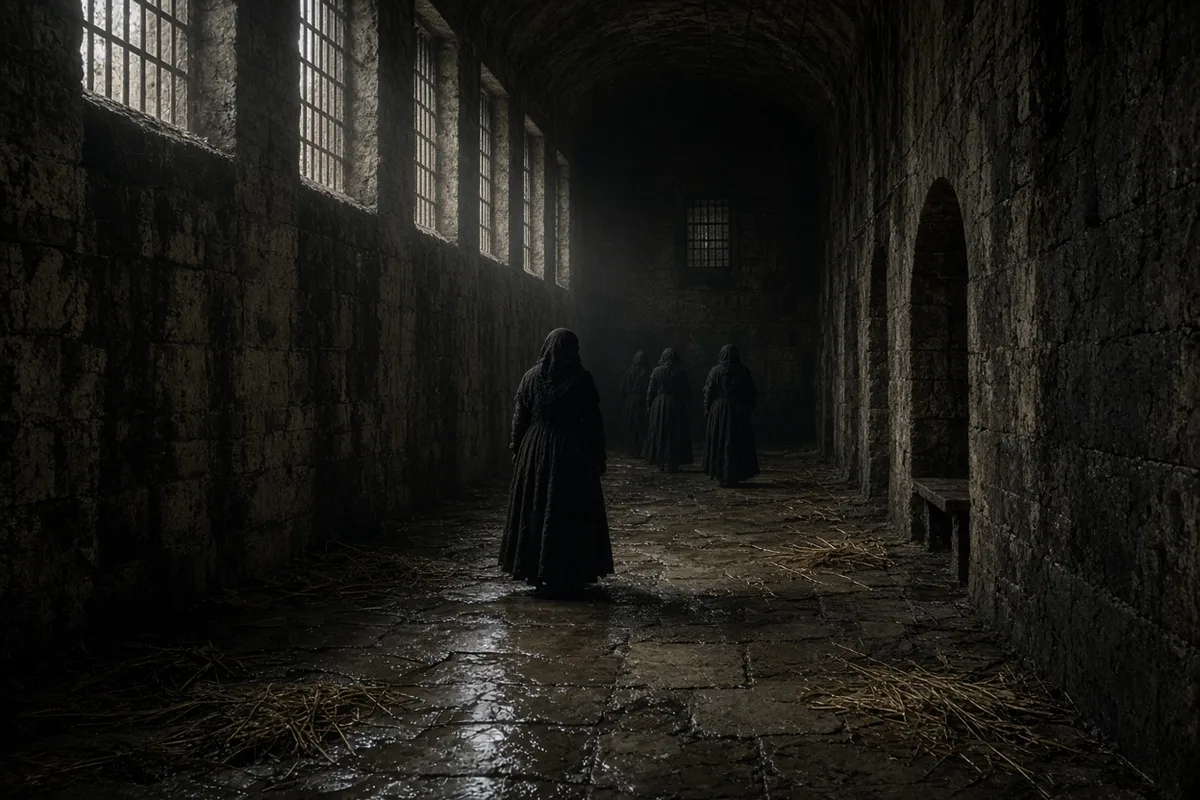
Three years later the separation of men and women had been ordered, yet the women’s wards still stank and the straw still crawled. Fry returned with fresh provisions and this time carried a Bible under her arm. She opened it in the middle of the largest ward and began to read aloud. The noise did not stop at once. A woman near the door kept shouting at another over a blanket. Then the shouting thinned. Within a quarter hour the only sounds were the rustle of straw as women shifted closer and the thin crying of a baby held against its mother’s shoulder. Fry closed the book and asked whether they would like her to return. Several nodded. She came the next week and the week after.
By the third visit she had drawn up a simple order for the day. The women would rise at six, wash as best they could at the pump, and then sit to sew or knit. She brought thread and needles from her own stores and promised to sell whatever they finished. A small room at the end of the corridor became a school where older children learned letters while their mothers worked. Fry asked each woman to agree to the rules before she received material. Most did. Those who refused were left to the old wards.
She gathered twelve women from our meeting into what she called the Ladies’ Newgate Association. We met at her house on Sunday evenings and divided the tasks. One member trained the matron in keeping accounts. Another arranged buyers for the finished shirts and stockings. Fry herself visited each week to hear complaints and to read. No man entered the women’s section without one of us present. The City authorities were not told.
In April 1817 the prison committee asked to see what had changed. Fry sent word the day before. We cleared the long table in the main ward and set out the work already finished: piles of shirts, rows of knitted stockings, slates with careful sums. The women stood or sat in rows, their hair combed, their aprons clean. When the aldermen and the sheriff walked in, the only noise was the scrape of a bench leg. The men stopped at the threshold. One of them asked the matron whether these were the same prisoners who had been here six months earlier. She answered that they were.
Fry invited the visitors to examine the account book. The earnings were recorded in her hand and in the matron’s. A portion had already been paid out to the women for small purchases. The remainder stayed in a locked box for their release. The sheriff turned the pages slowly. He asked no further questions.
After they left, Fry remained in the ward until the lamps were lit. She spoke to each woman who had a child, then walked the length of the corridor once more. At the gate she handed the key to the matron and stepped into the street. The lamps along Newgate Street were just being kindled. She paused long enough to count the baskets we carried out, then walked on.
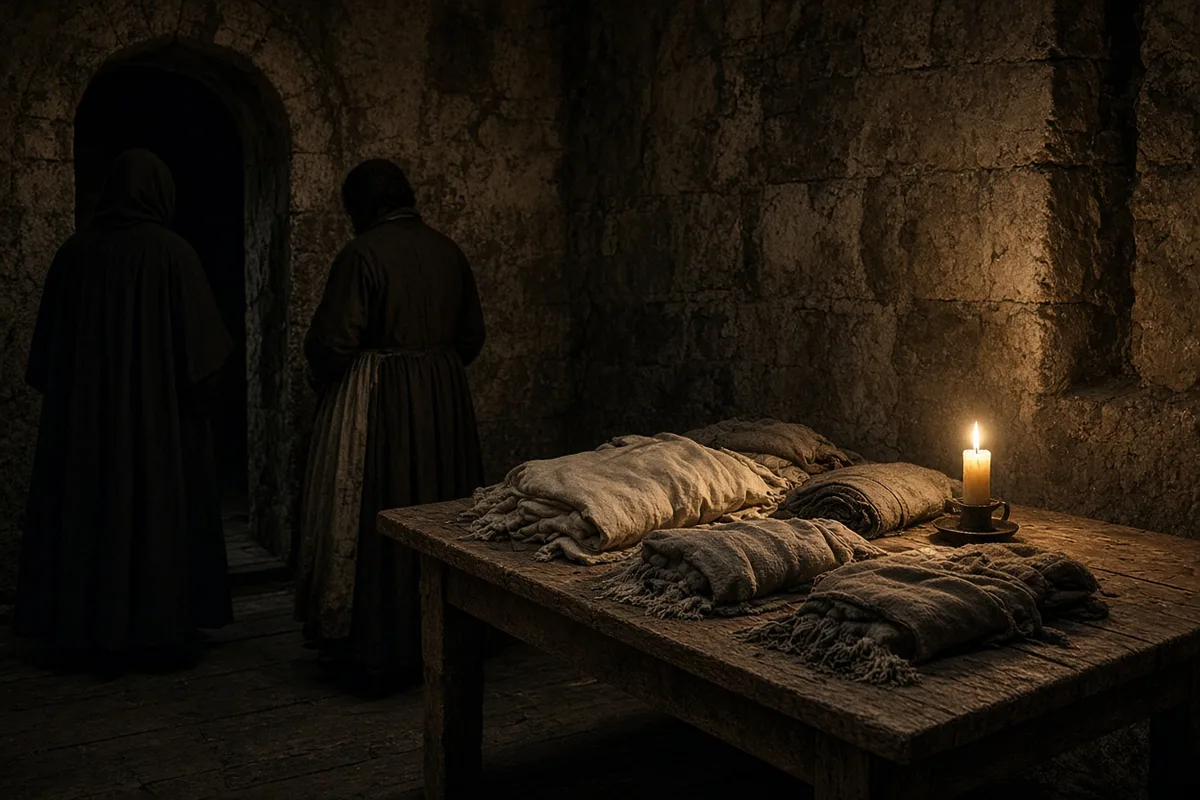
The following morning Fry returned with fresh slates and three dozen copies of the New Testament printed by the British and Foreign Bible Society. She placed one on each bench and asked the women to read the fourteenth chapter of John aloud in turn. When a woman named Mary Connor stumbled over the word “mansions,” Fry spelled it out letter by letter and waited while Connor repeated it. By the end of the hour eleven women had taken a turn. The matron noted in her daybook that the same women had been committed for picking pockets or receiving stolen goods; their sentences ranged from seven years’ transportation to three months’ hard labour.
In the winter of 1818 the House of Commons appointed a select committee to inquire into the prisons of the metropolis. Fry received the summons on the twelfth of February and appeared before the members on the twenty-seventh. She answered questions for two hours and twenty minutes. When asked how many women had been confined in the untried ward the previous September she replied, “One hundred and twenty-seven,” and added that thirty-nine of them had children under their care. She described the sale of spirituous liquors inside the walls and named the keeper who had permitted it. The committee’s printed report quoted her evidence on page forty-three.
By 1820 the Ladies’ Newgate Association had opened similar committees at Bristol, Liverpool, and Lancaster Castle. Fry travelled to each place by stage coach, carrying letters of introduction from the Lord Mayor of London. At Lancaster she met the high sheriff, who showed her the day-room where sixty women slept on loose straw. She asked whether a supply of flannel could be sent from London; he answered that the county would pay half the cost if the Association supplied the rest. The first shipment of two hundred yards arrived on the third of March 1821.
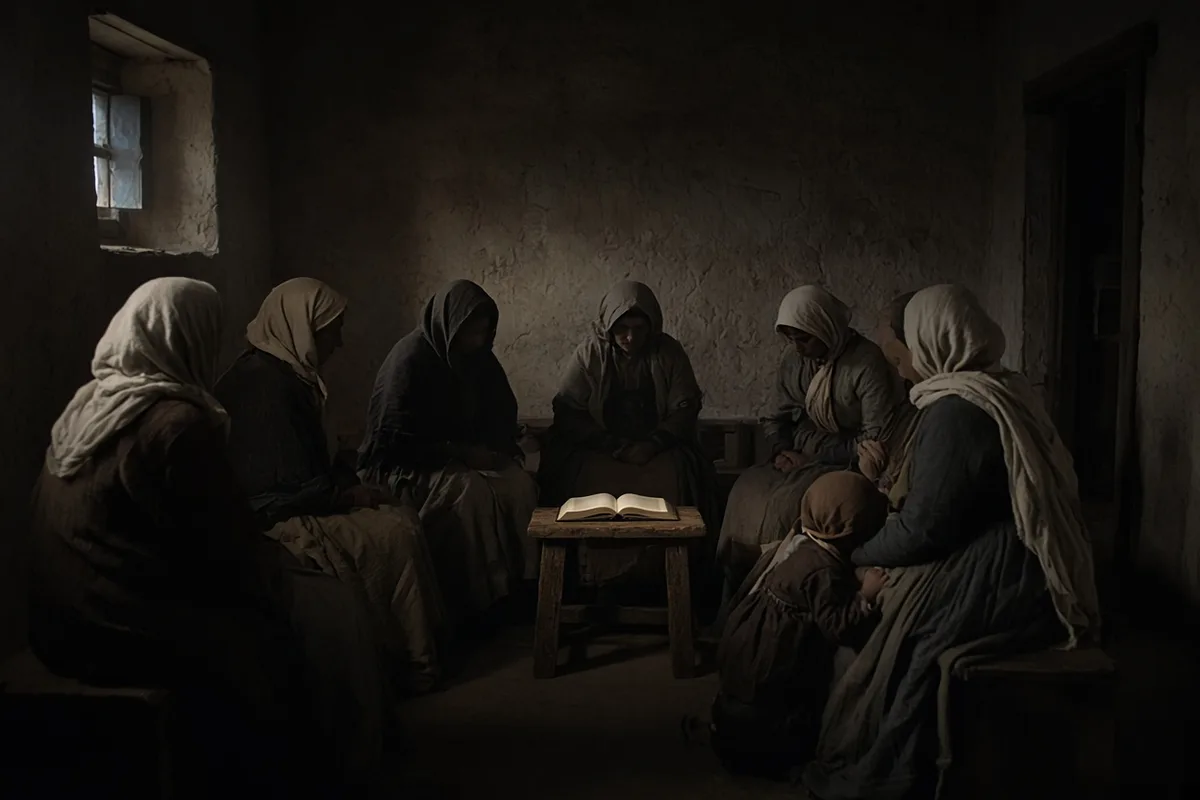
In June 1835 Fry crossed to Ireland and spent six weeks visiting every county gaol. At Cork she found twenty-eight women sentenced to transportation lodged in a single cell measuring twelve feet by nine. She obtained an order from the governor allowing them an hour’s exercise each morning and left funds for the purchase of combs and soap. The governor’s letter acknowledging the gift is dated 14 July 1835 and preserved among her papers at the Friends’ House in London.
Queen Victoria received Fry at Buckingham Palace on the 0th of December 1840. The interview lasted forty minutes. Fry presented the Queen with a copy of her “Observations on the Visiting, Superintendence, and Government of Female Prisoners,” bound in dark green morocco. Victoria asked how many women had passed through Newgate since the rules began; Fry answered that the registers showed 4,182 commitments between 1817 and 1840. The Queen noted the figure in her journal that evening.
After Fry’s death on 12 October 1845 the committee she had formed continued its weekly visits. In 1853 the City of London erected a new wing at Newgate with separate cells for each woman and a resident matron paid by the corporation. The old common wards were pulled down in 1860. A marble tablet recording the date of the first reading class was placed in the entrance hall of the female prison; it remained until the demolition of Newgate itself in 1902.
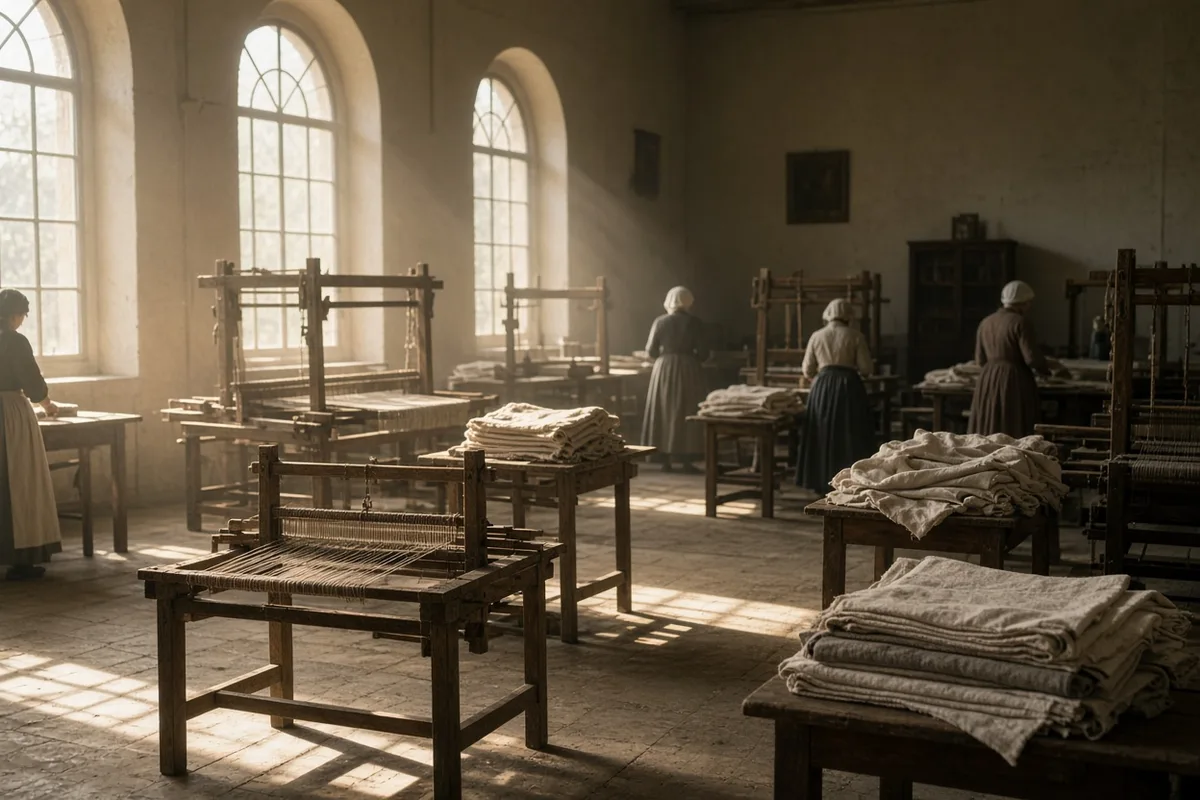
Today the site is occupied by the Central Criminal Court. A bronze statue of Fry stands in the north hall of the Old Bailey, unveiled on 21 June 1913 by Princess Louise. The figure holds an open book; the inscription on the plinth gives only her name and the years 1780–1845. Each weekday morning the court ushers pass beneath it on their way to the cells.
The north hall receives its first visitors each morning at half past eight when the security detail unlocks the bronze doors on the Old Bailey’s north side. On 3 March 1924 the Court Usher’s Association recorded that twenty-three men passed beneath the statue before the first session; one of them, Frederick T. Mason, noted in his pocket diary that the book in Fry’s hands remained open at the fourteenth chapter of John. Mason’s entry also lists the exact time the gas mantles were extinguished: 9:07 a.m.
In 1935 the City Surveyor’s office measured the plinth for repair after a crack appeared along the south edge. The report, dated 14 November and signed by Arthur H. W. King, states that the stone was Portland limestone quarried in 1912 from the Perryfield works and that the lettering had been cut to a depth of three-eighths of an inch. King ordered the crack filled with a lime mortar mixed on site; the work was completed on 2 December 1935 and inspected the following week by the chairman of the Streets Committee.
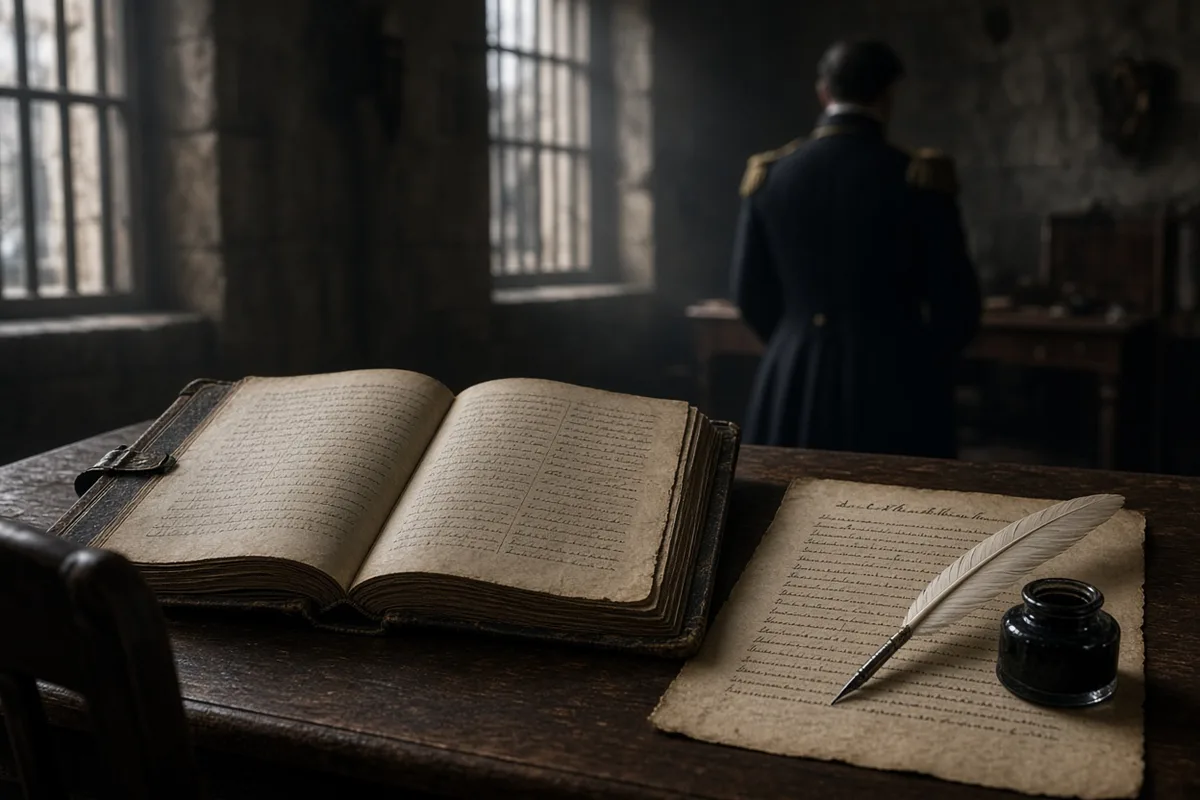
During the air raids of 1940 the statue was boarded over with timber from the disused cells beneath Court 3. The protective casing remained in place until 19 May 1945, when the same Usher’s Association minutes record its removal. Two days later the first post-war session opened in Court 1; the usher on duty, William R. Clarke, wrote that the bronze had acquired a pale green bloom and that the open book still showed the verse numbers 1 through 6.
The Howard League for Penal Reform held its annual meeting in the north hall on 8 October 1953. The printed programme lists the speaker as Margery Fry, great-niece of Elizabeth, who read aloud a paragraph from the 1820 Lancaster Castle report stating that “two hundred yards of flannel were received on the third of March 1821.” After the meeting the League placed a single white carnation at the base of the statue; the flower remained until the evening cleaning shift at 6:15 p.m.
On 21 June 1963 the Lord Mayor unveiled a small brass plate fixed to the wall six feet to the left of the statue. The plate records that the Ladies’ Newgate Association met for the final time on 17 December 1861 at the house of Elizabeth Fry’s daughter, Katherine Fry, in Plashet. The inscription gives the names of the twelve original members and the total number of shirts sold between 1817 and 1835: 11,472.
In 1974 the Central Criminal Court installed closed-circuit cameras in the north hall. The installation log, signed by engineer David L. Prentice on 4 February, notes that camera 3 was positioned twelve feet from the statue’s left shoulder and that the lens angle was set to include the plinth inscription. Prentice tested the feed at 11:40 a.m. and recorded that the image remained clear at 200 lux.
Each weekday the senior usher on Court 4 duty, currently Thomas R. Ellwood, passes the statue at 8:42 a.m. carrying the day’s cause lists. Ellwood’s notebook entry for 11 January 2023 records that he paused for twelve seconds while the lists were checked by the security officer at the north desk. The same notebook lists the temperature in the hall as 19.4 degrees Celsius and the time the bronze book caught the first shaft of daylight through the clerestory window: 8:51 a.m.
At 4:17 p.m. on 12 October 2023 the last member of the public to leave the north hall that day, a retired prison officer named Margaret S. Hale, stopped directly in front of the statue. Hale, who had worked at Holloway from 1978 to 1991, stood for forty seconds with her hands clasped behind her back before turning toward the exit doors. The security log shows she was the 184th visitor recorded that afternoon.