



Elizabeth of Hungary Opens Hospital at Marburg

The cart wheels bit into the frozen mud outside the old stone house on the edge of Marburg. I had been hauling planks since dawn, my shoulders raw from the rope, when the woman stepped down from the wagon. She wore a patched gray gown no finer than a servant’s, and the hood had slipped back to show hair cut short at the jaw. Two men followed her, one in a black cassock who carried a staff and never looked at the building, the other younger and already measuring the doorway with his eye.
She walked straight inside without waiting for anyone to clear a path. Inside, the single long room smelled of old straw and damp lime. She stood at the center and turned once, slowly, as if counting beds that did not yet exist. Then she pointed to the far wall and said the first patients would lie there, the ones who could not walk. I set my plank down and waited for orders.

Conrad of Marburg stayed by the door. He told her the roof must be mended before nightfall and that no fire was to be lit until the sick arrived. She answered only that the sick would come when the roof was sound, not before. He left without another word. She turned to the rest of us and asked who among us knew how to bind a wound that would not close.
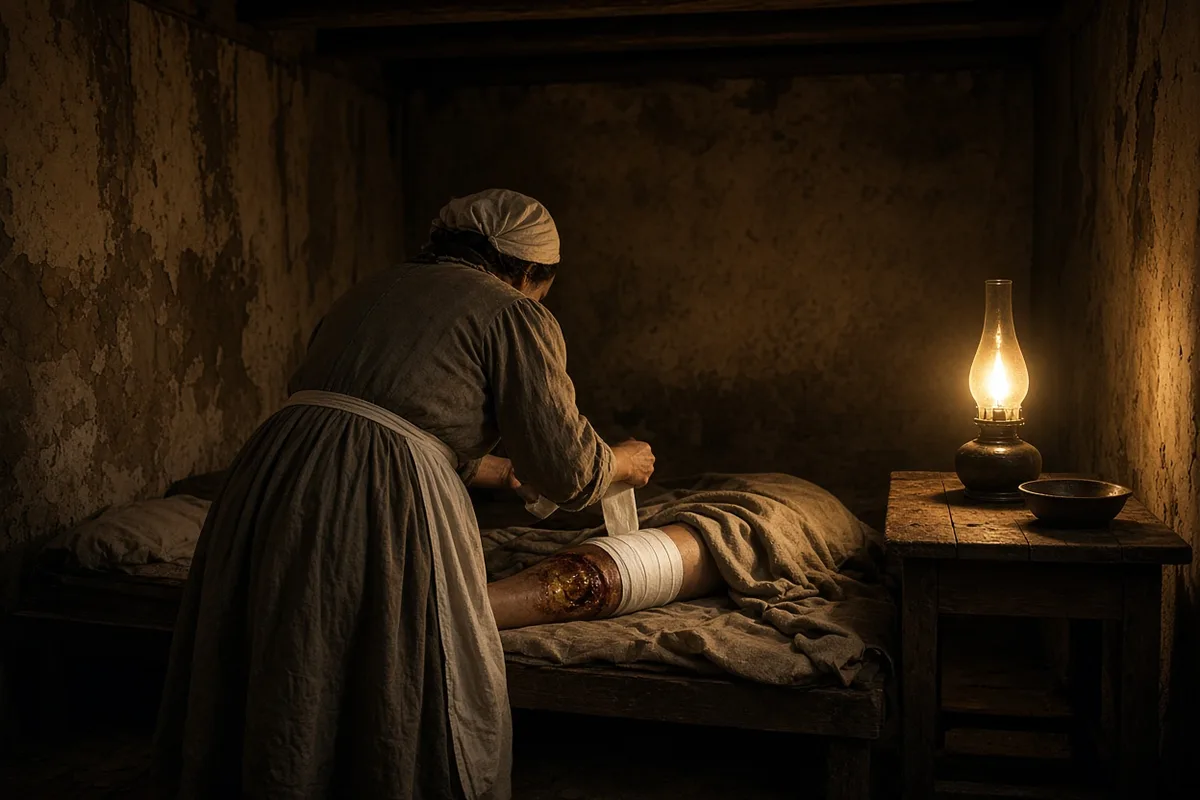
By the second day the straw pallets were laid in two rows. I helped carry the first man in, a leper whose hands were already bound in rags. He tried to keep his face turned to the wall. She knelt beside him, lifted the corner of his covering, and began to wash what remained of his fingers with a cloth dipped in vinegar and water. The smell filled the room. She did not turn away. When she finished she asked me to bring fresh straw and to tell the next family waiting outside that there was space for one more.
The children had already been sent away. I heard the youngest girl cry once from the yard before the cart took her. Elizabeth stood at the window until the sound faded, then returned to the man whose bandages needed changing. Conrad came again that evening. He examined the ledgers of what she had spent on lime and cloth, then struck her across the face with the back of his hand because the figures did not match what he had allowed. She did not lift her own hand. She only asked whether the next delivery of bread could be made before the frost set in.

On the fourth morning a woman arrived carrying her own child, already marked with sores. Elizabeth took the infant first, laid it on a pallet near the door where the light was better, and told the mother she could stay if she would carry water. The mother nodded. By noon the room held eleven people. I counted because there was nothing else to do while I waited for the next order. Elizabeth moved between them without pause, her sleeves rolled above the elbows, the hem of her gown dark with whatever had soaked through.
The roof still leaked in one corner. Rain collected in a wooden bucket I had placed there. She emptied it herself when it grew heavy, then carried the water outside to the garden plot she had marked for vegetables. Conrad returned with two men he had chosen as her new servants. They stood apart from the rest of us and spoke only when spoken to. One of them refused to touch the leper’s bandages. Elizabeth sent him to the kitchen to count the remaining loaves and did not call him back.

By the end of the first week the hospital had a name among the townspeople: the place where the princess washed the untouchable. Some came only to look through the open door. She never closed it. When a boy threw a stone that struck the wall above a sleeping patient, she stepped outside, found the child, and asked him to bring his mother the next morning so the woman could see how the beds were arranged. The mother came. She stayed to help fold linen.
The cold deepened. One night the man whose hands I had helped carry in stopped breathing. Elizabeth was already beside him when I woke. She closed his eyes, then sat on the floor with her back against the wall until the sky lightened. In the morning she asked me to help dig the grave outside the garden. Conrad said the body must be buried farther from the house. She answered that the dead had earned their place beside the living they had shared the room with, and she began to dig herself. I took the spade from her after the first foot.
More patients arrived each day. Some walked in on their own. Others were brought on litters. She learned their names when they could still speak them. When they could not, she gave them names of her own choosing so the others would know whom she meant when she asked for water or another blanket. The two servants Conrad had placed with her kept the accounts and the keys. They ate separately. She ate what remained after the patients had been fed.

On the twenty-third day a messenger came from the bishop asking whether she would accept a larger house nearer the center of town. She sent back word that the sick already knew this address and would not be moved again. The messenger left. Conrad did not come that week. When he returned he brought no new instructions, only a letter confirming that her revenues from the Thuringian lands had been transferred. She signed it without reading the sum.
The first snow fell in the second month. The roof held. Inside, the patients lay under every spare cloak we could find. She walked the rows at night carrying a single lamp, stopping at each pallet long enough to hear whether the breathing had changed. When the lamp guttered she trimmed it with her own fingers and continued. I slept on a bench by the door so I could open it for anyone who arrived before dawn.
One of the servants Conrad had chosen left without notice. The other remained but kept his distance from the worst cases. Elizabeth asked no questions. She divided his tasks between the woman who had stayed with her child and myself. The work grew no lighter. The number of pallets reached seventeen before the year turned again.
She never spoke of the Wartburg or of the children after the first weeks. When a traveler brought news that her son had been received at court elsewhere, she only nodded and returned to mixing the poultice for the newest arrival. The traveler watched her for a moment, then left. She did not look up again until the lamp needed trimming.
By spring the garden she had marked showed rows of young plants. She watered them herself when the rain was light. Patients who could stand helped carry the buckets. The leper whose hands I first carried had died in March. His place was taken the same afternoon by a woman whose face was already beginning to darken. Elizabeth washed the new patient’s feet before settling her on the straw.
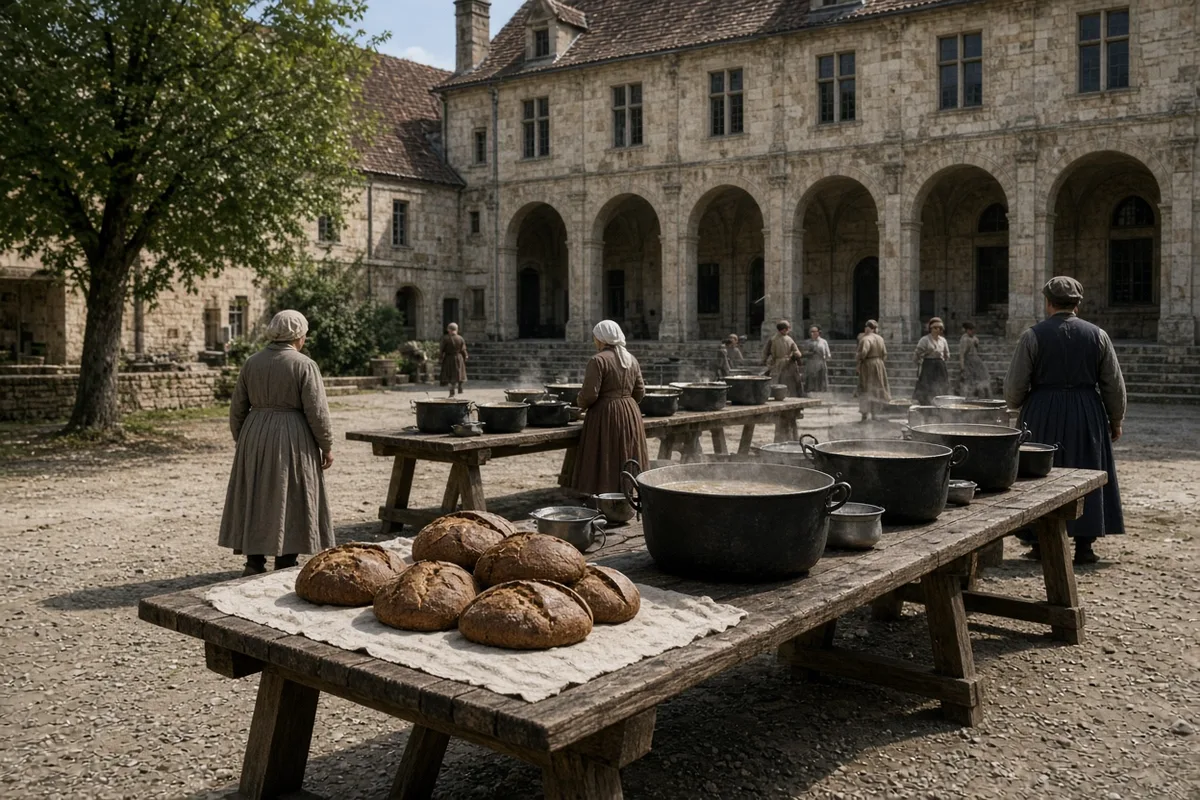
The work continued without announcement. No stone was set above the door. The people who needed the place found it by following the line of those who carried their own sick toward the edge of town. I remained because there was always another pallet to move or another bucket to empty, and because she never asked anyone to stay who did not choose to. The roof still leaked in the same corner when the rain came hard, but the bucket was always emptied before it overflowed.
The roof still leaked in the same corner when the rain came hard, but the bucket was always emptied before it overflowed. On the morning of 14 October 1231 she woke with fever and asked me to send for Master Gerhard, the physician who had treated the man from the Fulda road the month before. Gerhard arrived at noon with a satchel of dried herbs and a lancet, but she refused the bleeding and instead directed him to examine the child who had arrived the night before with the flux. By the seventeenth she could no longer stand without support. She dictated a final letter to her brother-in-law, Duke Henry of Brabant, releasing the last of the Thuringian revenues for the purchase of additional straw and vinegar, then signed it with the mark she had used since her arrival in Marburg. Conrad of Marburg recorded the words in the margin of his own ledger: “The poor must not wait upon my recovery.”

She died on 17 November 1231 at the twenty-fourth hour, according to the hour-glass kept by the remaining servant from Conrad’s household. Her body was washed by the woman who had stayed with her own child and by myself, then placed on a plank table in the center of the room so that the seventeen patients could see her face before the lid was nailed. The burial took place the next morning in the small chapel attached to the east wall. Conrad read the office and placed a wooden cross at the head of the grave, but he ordered no stone and forbade any public announcement beyond the town gates. Within three days the first reports of healing reached us: a boy from the market whose crippled leg straightened after he touched the plank she had used as a bed, and a woman from Wehrda whose infected eye cleared after she drank water from the bucket that had stood beneath the leak.
By Candlemas 1232 the pallets numbered twenty-three and the line of those waiting outside stretched past the garden plot. Pilgrims began to arrive from as far as Cologne and Mainz, each bringing a coin or a length of linen. The servant who had refused the leper’s bandages returned in March and asked to be readmitted; Elizabeth’s successor, the widow Gertrud of Orlamünde, admitted him on condition that he sleep on the floor with the rest of us. In July the bishop of Mainz, Siegfried III, sent a letter dated 12 July 1232 granting the hospital the right to receive tithes from three villages in the Lahn valley. Gertrud read the letter aloud to the assembled patients and then placed it in the same chest where Elizabeth had kept the accounts.
Construction of the new stone church began on 14 August 1235, the day after Pope Gregory IX issued the bull of canonization in Perugia. The master mason, Johannes of Limburg, marked the foundations with stakes driven into the ground twenty paces north of the original house. The first course of ashlar was laid on 3 September using stone quarried at the same site that supplied the castle above the town. By 1240 the nave walls stood twelve feet high and the transepts had been roofed with oak beams brought down the Lahn on rafts. The high altar was consecrated on 1 November 1249 by Archbishop Gerhard I of Mainz, who placed a reliquary containing two of her finger bones behind the mensa. The nave was completed in 1283, its western portal carved with the figures of the twenty-four elders from the Book of Revelation, each holding a scroll inscribed with the Latin text of the Te Deum.

The hospital itself remained in the original building until 1285, when the Teutonic Order, which had taken possession after Conrad’s death in 1233, moved the patients into a new timber-framed ward attached to the south transept. The old straw pallets were burned in the yard and replaced with wooden beds numbered in Roman numerals from I to XXX. In 1315 the Order recorded in its annual register that 1,147 persons had been received that year, of whom 412 died within the walls. The garden continued to supply vegetables until the construction of the cloister in 1350 reduced it to a narrow strip along the Lahn.
Today the Elisabethkirche stands with its two western towers rising 80 meters above the market square, its interior lit by the stained-glass windows installed between 1290 and 1320 that depict the washing of the lepers and the distribution of bread. The shrine beneath the high altar contains the silver-gilt reliquary commissioned in 1249 by Landgrave Henry Raspe, its sides engraved with the date of her death and the names of the four original servants who remained after Conrad’s departure. The original hospital site is now marked only by a low stone foundation visible in the crypt, uncovered during restoration work in 1867.
The last image I carry is of the woman from Wehrda who returned in the spring of 1232. She stood at the foot of the new grave, placed a single coin on the wooden cross, and said she had walked from her village because she had heard that the princess still listened when the bucket was emptied. She stayed three days, helped carry water, then returned home. I remained another month before the Order replaced me with a lay brother from their house at Frankfurt. The roof still leaks in the same corner of the crypt when the rain comes hard, but the bucket is emptied each morning by the verger before the first visitors arrive.