



Suzuki argues enlightenment is this breath, not future attainment

In 60 seconds
- Suzuki argues enlightenment is undivided attention in ordinary practice, not a special state to reach later.
- Expert habits screen the moment; he locates the substance of practice in beginner openness instead.
- Correct posture is itself enlightened activity, he claims, not preparation for a better mental state.
- Sitting to gain calm or insight defeats itself; practice requires what he calls no gaining idea.
- Boredom, pain, and wandering thought are the practice, not interruptions before it starts.
- Washing rice counts the same as zazen; a teacher and sangha catch the self-deceptions willpower cannot.
The big idea
Suzuki argues spiritual attainment is not a future state to strive toward but the quality of non-grasping attention available in this sitting, this breath, this bowl of rice. The moment practice becomes a means to a later payoff, he claims, it stops being practice.
The book in brief
Suzuki starts from a problem about attention itself: once competence settles in, a picture of good practice sits between the sitter and the actual moment. Expert knowing, in his account, becomes a liability.
He then grounds the argument in the body. Posture and breath are not warm-ups for a future mind-state; done without payoff, they are the activity he calls enlightened. Aiming at calm or insight turns today’s sitting into a tool and leaves the present for an imagined later self.
Difficult sittings follow the same logic. Pain, boredom, and wandering thought are not debris to clear so real practice can begin; they are what mind and body are doing, and practice is the return of attention without irritation or tally.
The frame widens past the cushion. Everyday acts done as the whole content of the minute—cooking, cleaning—share the same form as seated meditation. Formal sitting is only a low-distraction container, not a higher realm.
He names the distortion he sees most in his American students: converting Zen into self-improvement and scoring progress. He answers with a backward step away from attainment. Because the self keeps smuggling gaining ideas back in, he closes on teacher and community as the container individual willpower cannot supply.
Context
The book collects talks a Japanese Zen teacher gave to American students in California during the 1960s and was published in 1970. Suzuki had been a monastery cook before coming to America; the talks were given to a live community at the San Francisco Zen Center. The summary notes it mattered because it introduced Zen to a Western audience stripped of exoticism, grounding the tradition in posture, breath, and not-knowing rather than mystical specialness.
The key ideas

1
Beginner over expert
Suzuki claims practice’s value lies in preserving the openness of not-yet-knowing, so expert habits of mind are a liability rather than an asset.
Expert mind
Few possibilities; settled ideas of good sitting screen the actual breath
Beginner's mind
Many possibilities; attention stays open because nothing is already known
He opens with the claim that governs the rest: a beginner’s mind holds many possibilities; an expert’s holds few. This is not praise of ignorance. It is a warning about what competence does to attention.
After years of zazen, a settled idea forms of what good sitting feels like and what progress should look like. That idea becomes a screen. The expert stops noticing the breath because breathing is already known; the beginner pays attention because she does not.
Attentiveness, not accumulated knowledge, is what he treats as the substance of practice. A mind full of opinions about Zen and attainment cannot receive the present moment it claims to sit inside. He insists there is no final expert arrival after which one relaxes—each sitting is the first, each breath the first.
Mastery as ordinarily understood becomes, in his framing, mild self-deception. The person who feels they have gotten Zen has, by that feeling, lost it. Posture, breath, and daily activity are therefore not techniques to master once and deploy, but occasions to return every time to not-knowing.
In practice: Suzuki’s tea image: if the cup is already full, nothing more can go in—including the present moment.
2
Posture is the event
Correct physical posture is not a means to a right mental state; Suzuki argues it is itself the enlightened activity, so body and mind are not separate levels.
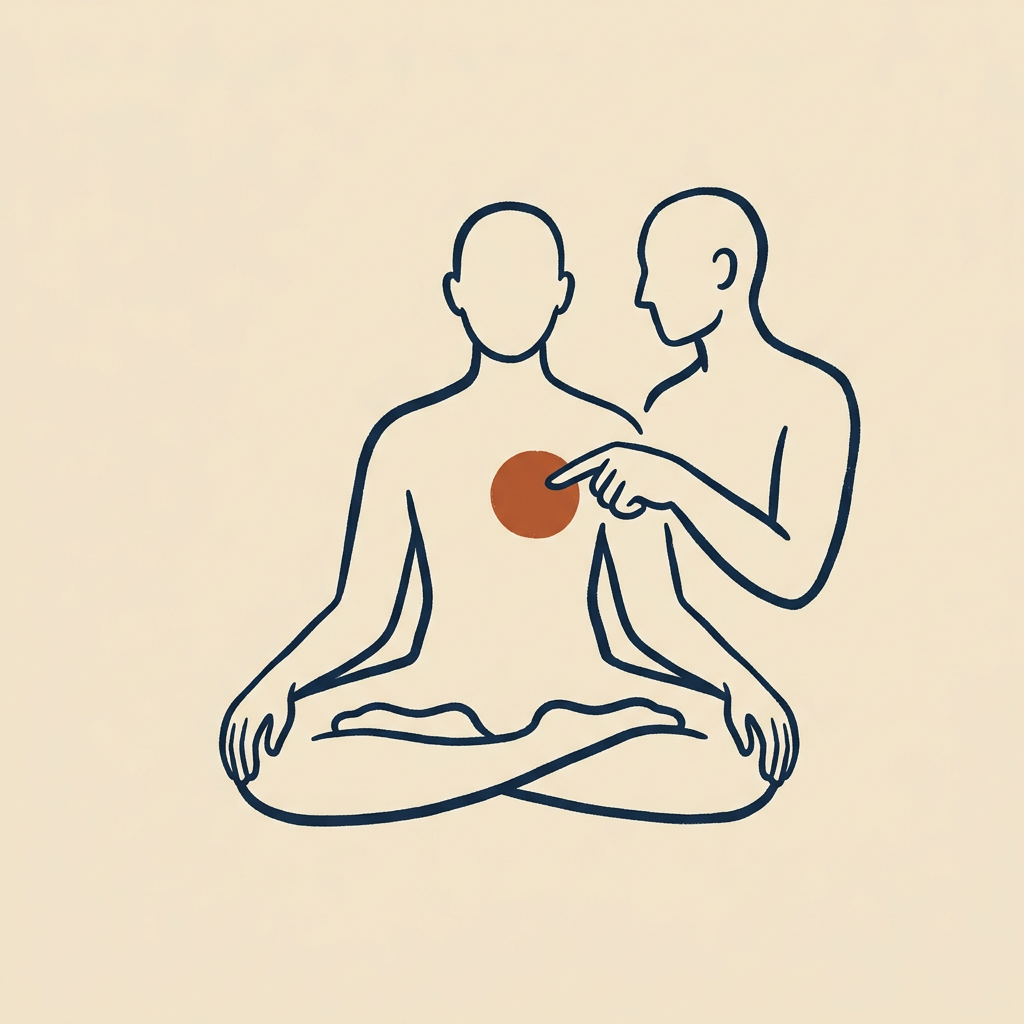
Having made expertise suspect, he turns to something concrete: how to sit. He details legs in full or half lotus, hands in a specific oval below the navel, spine straight, ears in line with shoulders, chin slightly tucked.
A Western reader expects the body to be instrumental—get posture right so the mind can settle. He denies that order of cause and effect. If there is no future attainment to prepare for, sitting cannot be preparation; it has to be the whole event. Correct posture is, in his terms, the expression of Buddha nature in that moment.
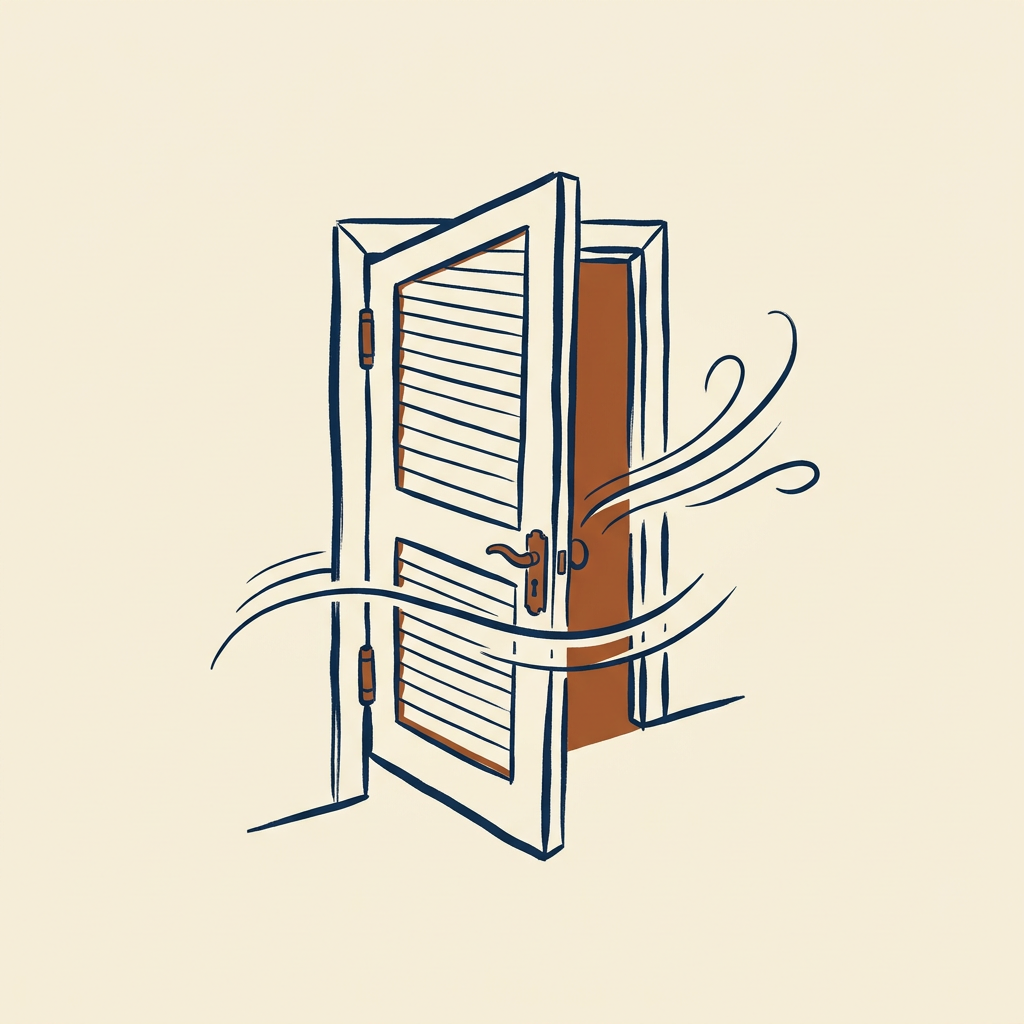
Breathing gets the same treatment. It is not a technique for manufacturing calm. He describes it happening like a swinging door: air moving through you rather than a self controlling air. Forcing a calm state differs from letting the exhale be long and the posture stable so calm arises as a side effect of form.
The teaching is inseparable from the case against expertise: this is what beginner’s mind looks like physically, in the body, rather than as an abstract attitude.
In practice: Calm arising as a side effect of stable form and a long exhale, rather than as a goal chased directly.
3
No gaining idea
Meditation done as a means to future calm, insight, or enlightenment defeats itself, because aiming turns the present sitting into a tool.
With gaining idea
Today’s sitting is a tool for tomorrow’s calm; the mind grades whether it is working
No gaining idea
Sitting is done for its own sake; grading thoughts pass like any other activity
Suzuki confronts the most common misunderstanding directly: people sit in order to get somewhere. He argues the instrumental framing is itself the obstacle.
Sit today to feel better tomorrow and today’s sitting degrades into a mere tool; you have already left the present for an imagined future. This follows his earlier claims: beginner’s mind has no destination, and posture is not preparatory, so zazen cannot be a method aimed at a result without contradicting its premises.
He uses a lineage phrasing—doing the thing for its own sake, practice with no gaining idea. The mind that watches its own zazen from outside, checking whether it is working yet, has already departed from the sitting.
The discipline that becomes visible here is constant renunciation not of desire in general but of the specific wish to convert this moment into currency for a later one. Notice the grading; let it pass as more mental activity, not as feedback to act on.
In practice: A person watching their own zazen from outside, checking whether peace has arrived yet.

4
Difficulties are the water
Boredom, pain, and wandering thought during sitting are not obstacles to clear before real practice; Suzuki argues they are what practice consists of.
Given that zazen aims at nothing, he addresses what happens when sitting is unpleasant—aching legs, unsettled mind, sittings that feel wasted. Students misread these as failures to solve so real practice can resume. He rejects that framing.
The waves of thought, the itch, the restlessness are the water practice happens in, not debris on top of it. A wave is not separate from water disturbing it; the wave is what the water is doing. A wandering thought is what mind is doing right now.
If you are not sitting toward a future calm state, a difficult sitting is not evidence of failure relative to that state—there is no such state to fail against. Sitting consists of returning attention again and again without irritation at having to return.
He is specific that this is not seeking discomfort or treating endurance as virtue. Gritting teeth to outlast pain is simply a new gaining idea. Every return of attention, however often needed, is complete in itself rather than a tally of bad behavior.
In practice: Waves on the ocean: not separate debris but the water’s own present activity.
5
Kitchen equals cushion
The split between formal meditation and ordinary activity is false; Suzuki holds that cooking, cleaning, and walking are practice in identical form.
Hall over kitchen
Meditation hall is sacred; kitchen is ordinary functional downtime
One continuous practice
Full attention with no next-task mind makes washing rice identical in form to zazen
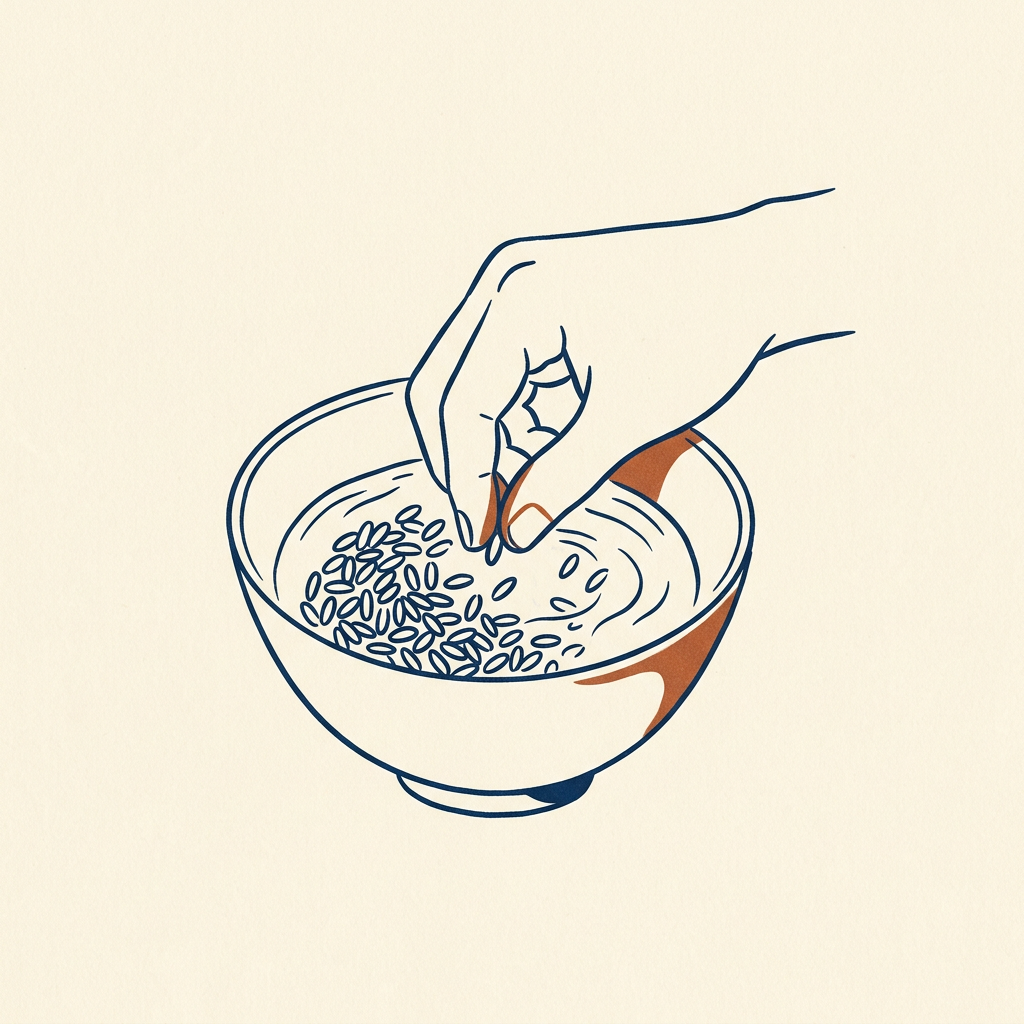
He widens the frame from the cushion to the kitchen. Before America he was a monastery cook, and he draws on preparing rice, washing vegetables, and arranging a simple meal with the same seriousness as seated posture.
If zazen’s essence is undivided attention without a gaining idea, that essence has nothing essential to do with sitting cross-legged. The posture is only a stable, low-distraction container for practicing it. Any activity done with full attention and without a result beyond itself qualifies equally.
He criticizes students who treat the meditation hall as sacred and the kitchen as ordinary. That hierarchy recreates the gaining idea the earlier chapters dismantled: formal practice valuable, informal life merely functional. His claim runs the other way.
This is the hinge that turns the book from a sitting manual into a claim about how to live. It also removes the escape hatch of treating meditation as a bounded activity you can finish and set aside.
In practice: Washing rice not efficiently and not while planning the next task, but as the entire content of that minute.
6
The backward step
Improvement as personal spiritual advancement is, Suzuki argues, a doctrine imported from ordinary ambition that Zen adopts at its own expense.
He names a phrase he attributes to Dogen, founder of his Soto lineage: practice should be a backward step away from gaining, not a forward step toward attainment. The chapter makes explicit what was implicit from the start.
Western students steeped in self-improvement instinctively convert Zen into another project, tracking whether they are better at meditation this year than last. He treats that instinct as the single largest distortion Americans bring to the practice.
The moment you evaluate practice against a standard of progress, you reinstate the self practice is meant to loosen—a self that keeps score against its past and against other people. He does not deny that people change; he denies that change should be the aim or the measure.
Goals require a self that owns and pursues them, and that self is exactly what the backward step steps away from. The claim cuts against both salvation-as-future-state and secular measurable growth.
In practice: A monk who sits for decades, realizes he is the same as when he started, and treats that sameness not as failure but as the fruit—a self no longer anxious to become someone else.
7
Teacher and sangha hold it
Because the ego keeps reinstating gaining ideas, Suzuki holds that individual willpower cannot sustain the practice; teacher and community must interrupt self-deception.
The earlier chapters create a problem they do not solve: the self reinstates gaining ideas even after being told not to. His answer is not more private instruction but relationship.
A student practicing alone will, with near certainty, convert the practice into whatever the personality already tends toward—the ambitious make it a ladder, the anxious a cure, the intellectual a theory. A teacher’s function, in his account, is not to transmit superior knowledge but to point out the exact place a given student has smuggled a gaining idea back in. That observation differs for each student and cannot be anticipated by reading alone.
The book itself, composed of talks to a live community at the San Francisco Zen Center rather than a written system, models that function: correcting anticipated errors rather than laying out doctrine.
The institutional consequence he draws is a fixed schedule—everyone sitting at the same predetermined time whether they feel like it or not—because that removes the mood-by-mood negotiation where self-deception usually enters. Beginner’s mind, on his terms, is not a private technique.
In practice: A shared predetermined sitting time that removes negotiation with whether one feels like sitting.
Key terms
- Beginner's mind Open attention with many possibilities; the opposite of expert narrowing that already knows what the moment is
- Zazen Seated meditation; in Suzuki’s framing a stable container for undivided attention, not a technique aimed at a payoff
- No gaining idea Doing the practice for its own sake rather than as currency for later calm, insight, or attainment
- Backward step Dogen’s phrase Suzuki uses for moving away from attainment instead of forward toward measurable progress
- Buddha nature What Suzuki says correct posture itself expresses in the moment, not a state produced afterward
- Swinging door His image for breath: air moving through you rather than a self forcing and controlling it
- Sangha The community whose shared silence and fixed schedule make backsliding visible when willpower cannot
What to do
- Sit ten minutes Monday morning before checking anything else, in a stable posture, and treat any judgment that the sitting is going well or poorly as just another passing thought.
- Pick one routine task this week—making coffee or washing dishes—and do it as the entire content of that time without planning the next task inside it.
- If you already meditate, notice whether you are quietly tracking progress against last month or last year, and name that tracking as a gaining idea rather than insight.
- When pain or boredom appears, return attention once without counting how many returns the sitting has already needed.
- If you have a teacher or sitting group, show up on the fixed time rather than when mood permits.
Questions to think with
- Where has expertise already narrowed the possibilities you can still notice?
- In your last difficult sitting or ordinary task, did you treat the difficulty as interruption or as the material itself?
- What gaining idea does your personality most naturally smuggle in—ladder, cure, or theory?
- If you were unchanged after decades of practice, would you read that as failure or as fruit?
- What can a book not catch that a teacher or shared schedule is for?
The other side
Suzuki offers almost no argument a skeptical reader could evaluate—only descriptions and images that rely on direct experience in zazen to confirm them—so the book cannot settle whether its psychological claims are true. Later writers in Western convert Buddhism, including Jack Kornfield, have noted that his own community struggled with the gaining ideas he warned against: a decade after his death, in the early 1980s, the San Francisco Zen Center hit a serious institutional crisis when successor Richard Baker was removed amid allegations of abuse of authority and financial impropriety, a sharp empirical counterpoint to the claim that teacher and community structurally protect against self-deception. The book is also nearly silent on ethics and on suffering from poverty, illness, or oppression rather than an overactive intellect.
Who it's for
Meditators frustrated that years of practice have not produced dramatic insight, readers of Western philosophy curious how a non-conceptual tradition talks about mind, and anyone in creative or intellectual work who suspects expertise has made them rigid.