Anne Carson wins Nobel for blending classical scholarship with desire
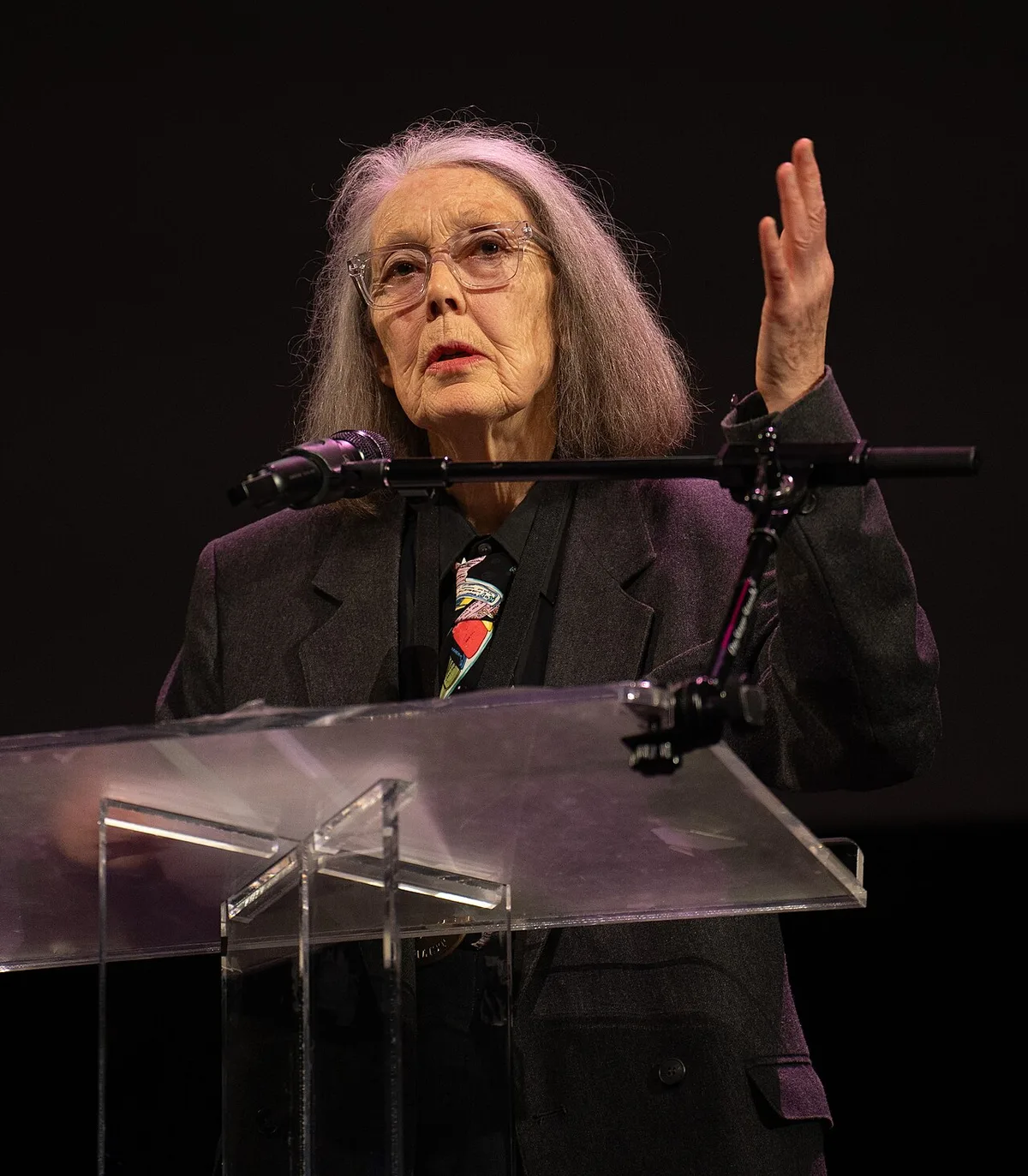
Anne Carson was eating crackers and drinking tea at her home in Reykjavik when the telephone rang. She is seventy-six, born in Toronto on June 21, 1950. An Icelandic citizen since 2022, she lives there with her husband, the visual artist Robert Currie. The ring brought the news that she had been awarded the Nobel Prize in Literature.
The first call did not settle the matter. Later, as she swept the kitchen floor, the phone kept ringing. Several more calls came through. She hung up on them out of habit. She just always turns the phone off when it rings. Currie answered one of them at last and told her she had won.
“It’s crazy. They’re all crazy,” Carson said.
When Ingrid Carlberg of the Swedish Academy reached her, the talk was brief. Carson said only that she was in Iceland, listening to the wind.
“We didn’t have much time to talk. She was taken by surprise, but she was happy. I could tell from her voice,” Carlberg said.
The Academy cited a bold and inventive oeuvre that, in playful dialogue with the classical tradition, has created new forms for contemporary literature. “Poetry may be more useful than prose now. It’s faster, and we’re all in a hurry. In the end, poetry has the advantage of being short. Homer, the ancient Greek poet, is the exception,” Carson said.
She is the nineteenth woman among 123 literature laureates since 1901, or 122 by another count, and the second Canadian woman, the first since Alice Munro in 2013. The citation named the classical tradition.
“I’m not interested in what the classics mean to us today. I’m interested in what we mean to the characters in the classics,” Carson said.

That reversal is the method. The classics stop being material updated for modern use. The living are tested against the figures already on the page. Eros the Bittersweet, published in 1986, grew from her doctoral thesis on Sappho. Finished in 1981 and titled Odi et Amo Ergo Sum, the thesis set desire as lack and distance. What is longed for is the thing not possessed. The gap itself generates the pull. The book takes its title from Sappho’s word for eros held as pleasure and pain at once.
She built the ground at the University of Toronto: Bachelor of Arts in 1974, Master of Arts in classics in 1975, doctorate in classics in 1981. Steve Sem-Samberg of the Swedish Academy framed the result as myths and characters from that time placed in a modern context, the mixture giving the writing its energy. Scholarship and desire ran as one machine. The objects that machine produced would not stay on a single shelf.
Autobiography of Red, published in 1998, took the myth of Geryon and Herakles and remade it as a queer coming-of-age story. The Beauty of the Husband followed in 2001, framed by Keats epigraphs and tracking a marriage as it came apart through boredom; it won the T.S. Eliot Prize, the first time a woman had done so. Nox appeared in 2010 as one continuous folded sheet, an accordion object made in memory of her brother Michael, who died in Denmark in 2000.
“I start in the middle. That’s the only rule I have,” Carson said. The years of classics training turned into things a reader could hold: verse novels, books that open like scrolls, pages that refuse ordinary binding. The engine that began with Sappho’s lack and distance kept producing forms that would not sit still.
Sales of her books on the Korean platform Yes24 rose about 184 times higher between 8 p.m. on October 8 and 8 a.m. on October 9 than they had in the same hours the day before.
Asked whether the prize would bring more readers, Carson answered without ceremony. “The publishers will be hoping so. There will be a sticker on the book cover. Stickers help.” The books themselves had never waited for a label. They had already moved from thesis to verse novel to accordion object. A sticker would sit on the cover while new hands reached for them.
Parkinson’s disease was revealed in 2024. She has kept writing.
Carson had not yet had time to think about what the award meant. “I’m thinking about how to distribute the prize money,” she said. One friend needed a home. She regularly donated to Doctors Without Borders. The money would go out first.
The telephone would keep ringing. She made no plan to stay for it. “I’m going to go outside and walk in the woods so I don’t have to answer the phone. Then I’ll try to listen to the silence,” Carson said.