


Eric Liddell Refuses to Run on Sunday
I was there the morning the newspapermen came pounding on the stair door in Edinburgh, and I have never forgotten the sound of it — fists on old wood, urgent, almost angry, as if the man inside owed them something.
We trained together at the University Athletic Club, and by the winter of 1923 into 1924 I had run enough laps behind Eric Liddell to know the sound of his stride before I ever saw his face — that odd, driving rhythm, head tipped back like he was searching the sky for something the rest of us couldn't see. Spectators loved him for it. I loved him for it too, though at the time I only thought of him as the fastest man I had ever shared a cinder track with, a sprinter built for the hundred and the two-twenty, a man who had already broken records at Stamford Bridge the summer before and taken the Harvey Memorial Cup home with him like it was nothing at all.

So when the Games committee in Paris settled its schedule back in January, and word came up to Scotland that the heats of the 100 metres would fall on a Sunday, none of us in the club thought twice about it. It read like a line in a minutes book, nothing more. We didn't know yet what it would cost.
Liddell knew. He had known, I think, from the moment he read it, though he said very little at first — that was his way, quiet until the thing was decided, and then immovable. He was a missionary's son, born out in Tientsin, and Sunday to him was not a mark on a calendar. It was the Lord's Day, and there was no medal in the world, no record, no crowd roaring his name, that could put him on a starting line while it was still light on a Sabbath morning.
By the time the news broke properly into the papers, it wasn't a quiet decision anymore. It was a scandal, or near enough. I stood in the close outside our lodgings one evening and watched grown journalists — men with notebooks and hard hats and harder questions — shoulder past each other to get near the door, calling up through the letterbox for him to come down and explain himself, as though he had committed some crime against the country rather than simply declined to run a race.

Greville Young was there too, another of the runners who trained alongside him, and I remember him saying afterward that the anger in some of those voices frightened him more than it seemed to frighten Eric. Someone shouted through the door that he was a traitor to his country. I heard that word myself, flung up the stairwell like a stone — traitor — for a man who had done nothing except say no to a hundred metres on a Sunday.
Liddell didn't come down and argue with them. He rarely did. When I asked him about it later, walking back from the track at Craiglockhart in the cold, he said it plainly, the way he said most things — that it was his belief, that he wasn't asking anyone else to hold it, but that he would not run on the Sunday, and that was the whole of it. No heat in his voice. No performance of conviction, the way some men wear their principles like a coat to be admired. He simply meant it, and went on training.
There was talk, plenty of it, that the selectors might leave him off the team altogether, that a man who wouldn't run in his best event on demand was more trouble than his speed was worth. But Liddell was too good to discard, and stubborn enough besides. Instead of surrendering the Games, he did something almost nobody expected — he turned his training toward the 400 metres, the quarter-mile, an event he had barely touched at that level, where he had never once gone under 49 seconds. A hundred was a dash, over in ten seconds of violence. A quarter-mile demanded a different kind of courage — pacing, suffering, holding something back and then finding there was nothing left to hold. I watched him work at it through the spring, out at Craiglockhart in his shirt with the arms flailing exactly as they always had, head thrown back, that ungainly, glorious motion that somehow never once looked like a man losing control.

We crossed to France that summer with the rest of the British squad, and Paris in July of 1924 had a heat to it that none of us had trained for — thick, still air over the Stade Olympique de Colombes, dust rising off the cinder track under a sun that seemed to sit directly above the stands rather than moving across the sky at all. I found a place among the crowd for the hundred metres heats on the Sunday, the sixth of July, and it was strange, almost eerie, to watch seventeen heats run off one after another and know that the fastest Scotsman in the field was three miles away in a church pulpit rather than on the blocks.
Harold Abrahams ran that day, won his heat with the ease of a man who knew exactly what he was capable of, and the Americans went through too — Charles Paddock, the reigning champion with his showman's finish, and Jackson Scholz, quieter but just as dangerous. I remember thinking, watching them stride out those heats and the quarter-finals that followed on the same afternoon, that whatever Liddell had given up, he had given up plenty. This was a fast field. He might have troubled any of them.
The final came the next day, the Monday, and I stood pressed against the barrier with the rest of the crowd to watch it — Abrahams drawn against Paddock, Scholz, the New Zealander Arthur Porritt, and two more Americans, Chester Bowman and Loren Murchison. Ten point six seconds, a new Olympic record, and Abrahams was over the line first, Scholz second, Porritt third. The stand around me erupted, hats going up into that thick July air, and somewhere in the noise I thought of Liddell, who by then had already run his own service that morning and was back at whatever quiet lodging the British party kept for him, and I wondered if any part of him watched that race afterward and felt the loss of it.

If he did, he never once said so to me, not then and not later. What he did instead was turn to the races that remained to him.
He ran the 200 metres two days on, the Tuesday, in a field that again held Abrahams and Scholz and the rest of the American speed, and I watched him come through for the bronze, twenty-one point nine seconds, his head back the whole way down the straight the way it always was, arms cutting the air. It wasn't gold, but it was a medal won in exactly the kind of company he'd have faced in the race he refused, and something in the way he walked off that track afterward — unhurried, almost amused — told me he counted it as a fair exchange for a clean conscience.
But it was the quarter-mile that everyone wanted to see, because by then the story of the Scotsman who wouldn't run on a Sunday had traveled well past Edinburgh, past London even, out into papers on both sides of the Atlantic, and there was a strange electricity around him at Colombes in the days before that final, the sense that people had come to watch not just a race but a man who had made himself into something more than an athlete.
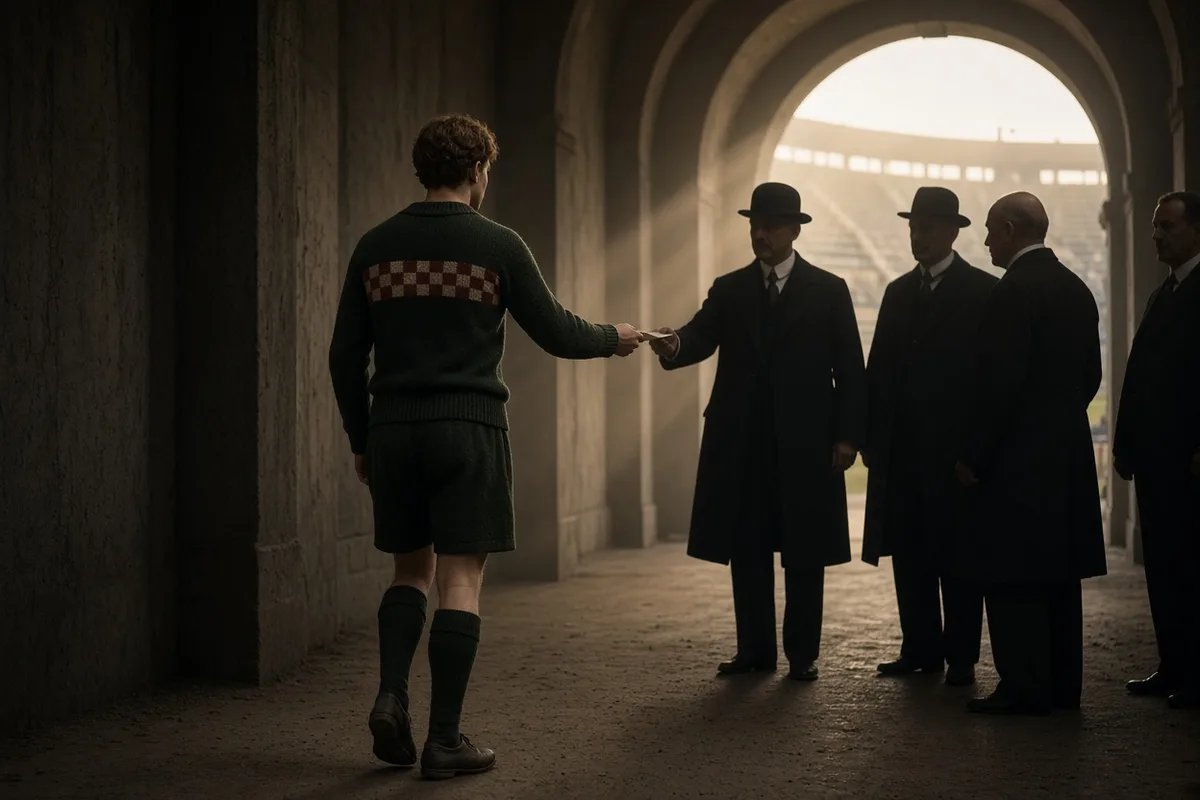
I heard — everyone in the British camp heard, sooner or later — that one of the American team's masseurs, or perhaps it was a trainer, had slipped Liddell a folded piece of paper before he went out for the final, a line from the Book of Samuel about honoring those who honor the Lord. I never saw the paper myself. I only saw the man it was given to, standing near the tunnel with that unhurried calm he wore into everything, as if the noise of Colombes were happening to someone else.
The morning of the final, the eleventh of July, sat heavy and bright over the stadium, and I found my spot in the crowd early because I knew there would be no room later. Liddell was drawn in the outside lane, which some of the other runners' camps muttered was no gift, since it meant running blind for the first half of the turn with no one to gauge himself against, chasing a stagger mark and nothing else. He went off that gun like a man with no plan for pacing at all — flat out from the very break, arms working, head back, and I remember an older hand beside me in the crowd saying under his breath that the boy would pay for it before the home straight, that no one ran a 400 like that and lasted.
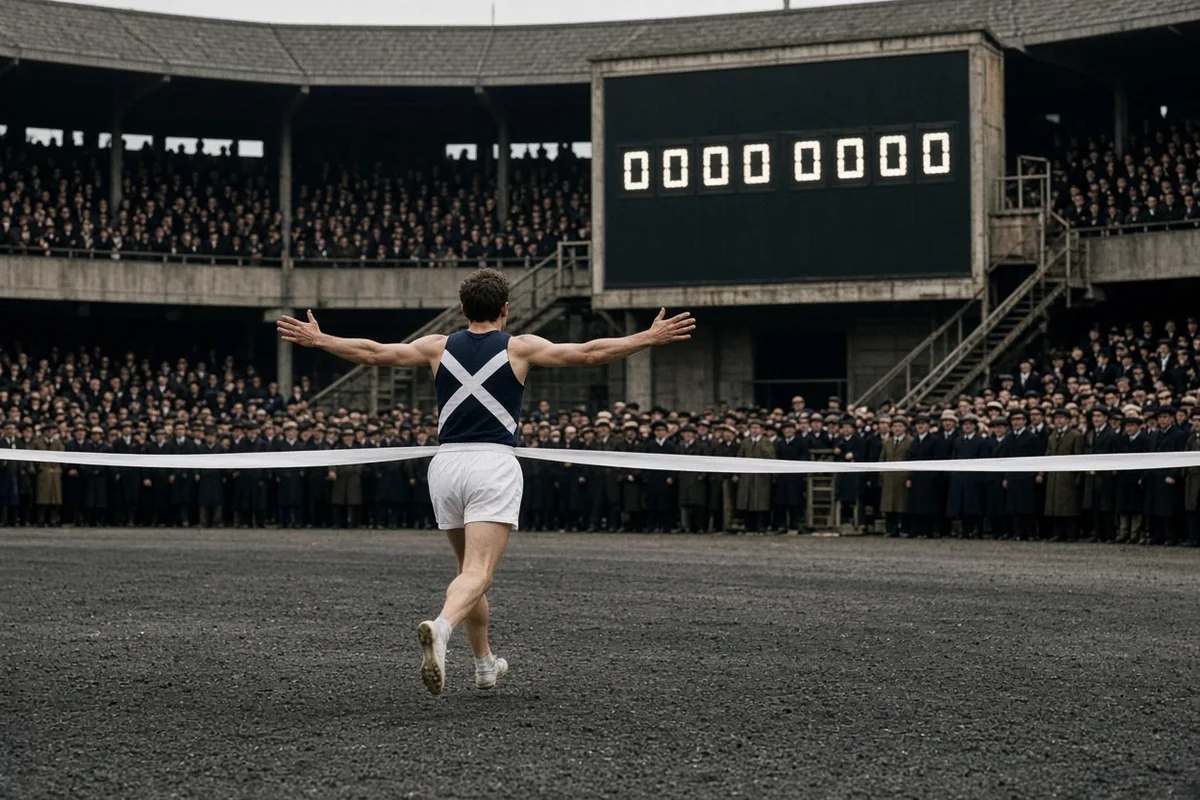
He did pay for it, in a manner of speaking. Down the back straight his form seemed to come apart at the edges even more than usual, that flailing style stretched to its limit, and by the final bend by every rule of the event he should have been dying, the way milers and quarter-milers always die in the last eighty metres when they've spent themselves too soon. Instead he held it. He held it all the way down that home straight while the gap behind him, instead of closing, seemed to widen, and the roar coming up off the crowd around me had a different pitch to it than I had heard for Abrahams two days before — less astonishment at speed than astonishment at will, at watching a man simply refuse to stop.
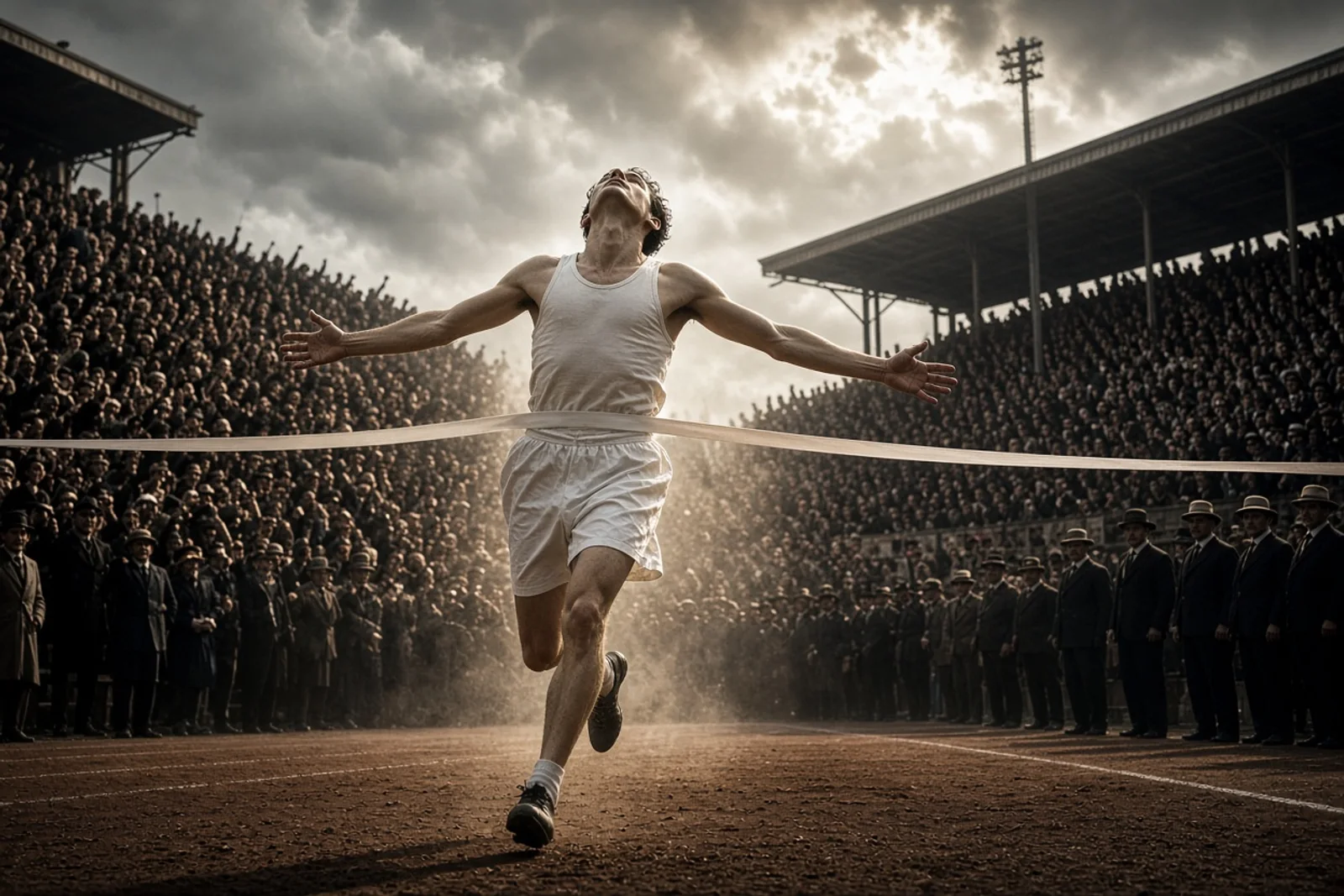
He crossed the line first. Forty-seven point six seconds, a new world and Olympic record, and for a moment the whole stand seemed to hang in the noise of it before it broke into something like disbelief. I was shouting myself, I think, though I couldn't tell you now what words came out of me. Around me men who had never met him were on their feet the way you stand for something you didn't expect to be moved by.
He didn't run again on a Sunday, not in Paris and not after, and he never had cause to regret the arithmetic of it — a bronze in an event he wasn't supposed to excel in, a gold and a world record in one he had never mastered before that spring, and the hundred metres, his best race, left forever as a question mark in the record books with his name nowhere near it. I think if you had told him at twenty-two that this was how it would balance out, he would have shrugged and said it wasn't his to calculate in the first place.
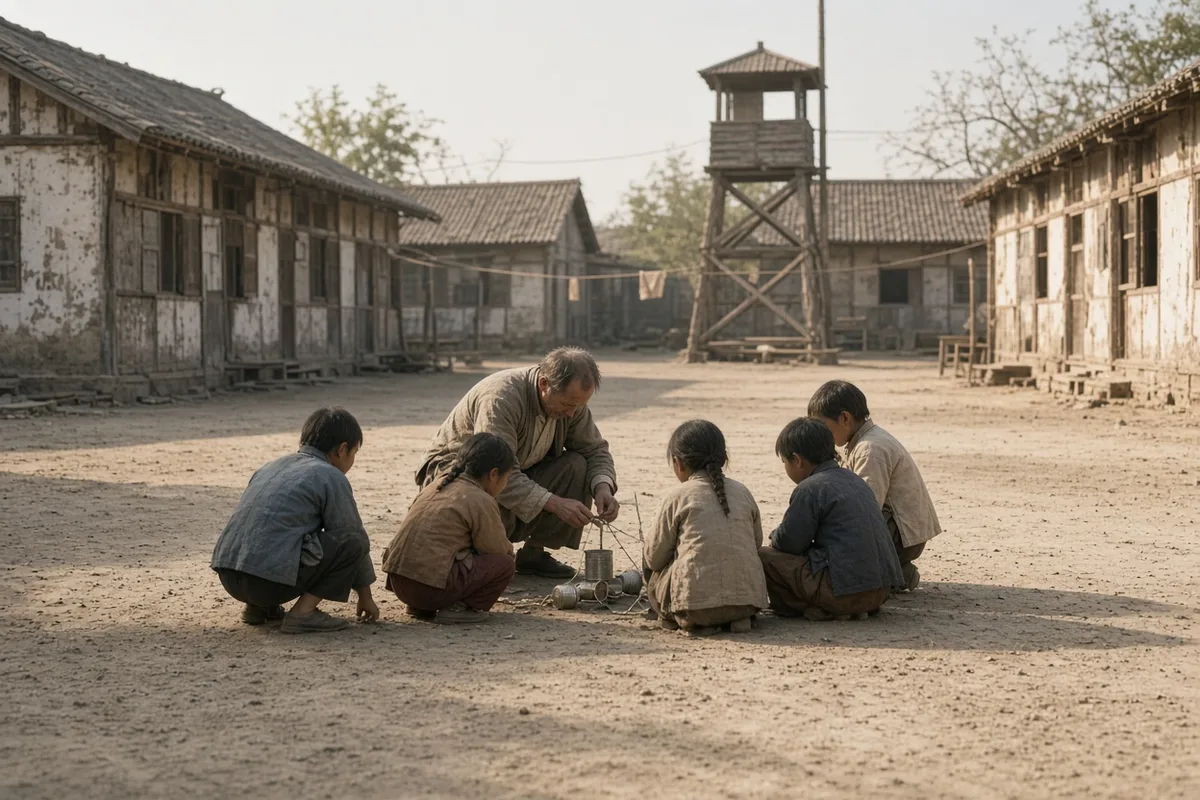
What happened to him after Paris is its own kind of race, run far from any stadium. He finished his degree at Edinburgh, was ordained, and went back out to China where he had been born, to the mission work his father had given his life to before him, teaching and preaching in Tientsin through years that grew steadily darker as Japan's occupation tightened around the province. He married, had children, and when the danger closed in far enough that his wife and daughters were sent to safety, he stayed on, because staying was what the work required of him, and staying was never something he had trouble choosing once he understood what was being asked.
He was interned by the Japanese in a camp at Weihsien along with hundreds of other foreign nationals, and there, by every account that came out of that place afterward, he went on being exactly the man I had trained beside on a cold morning at Craiglockhart — organizing games for children who had nothing else to occupy them, teaching, tending to people who were frightened and hungry, giving away what little he had as though scarcity were simply another rule he didn't feel bound to obey. He died in the camp in February of 1945, months before the war that had caged him there finally ended, a brain tumor taking him quickly at forty-three. He never met his youngest daughter, born after his wife had already been sent away to safety.
I think of him now less in the roar of Colombes than in the quiet of that Edinburgh stairwell, the fists on the door, the shouting through the letterbox, and the stillness of the one man inside who simply would not be moved. Paris gave him a record that stood for years. China took nearly everything else. But the thing he wouldn't surrender on a Sunday morning in July, he never once surrendered afterward either, not in a stadium roaring his name, not in a camp where no one was watching at all.