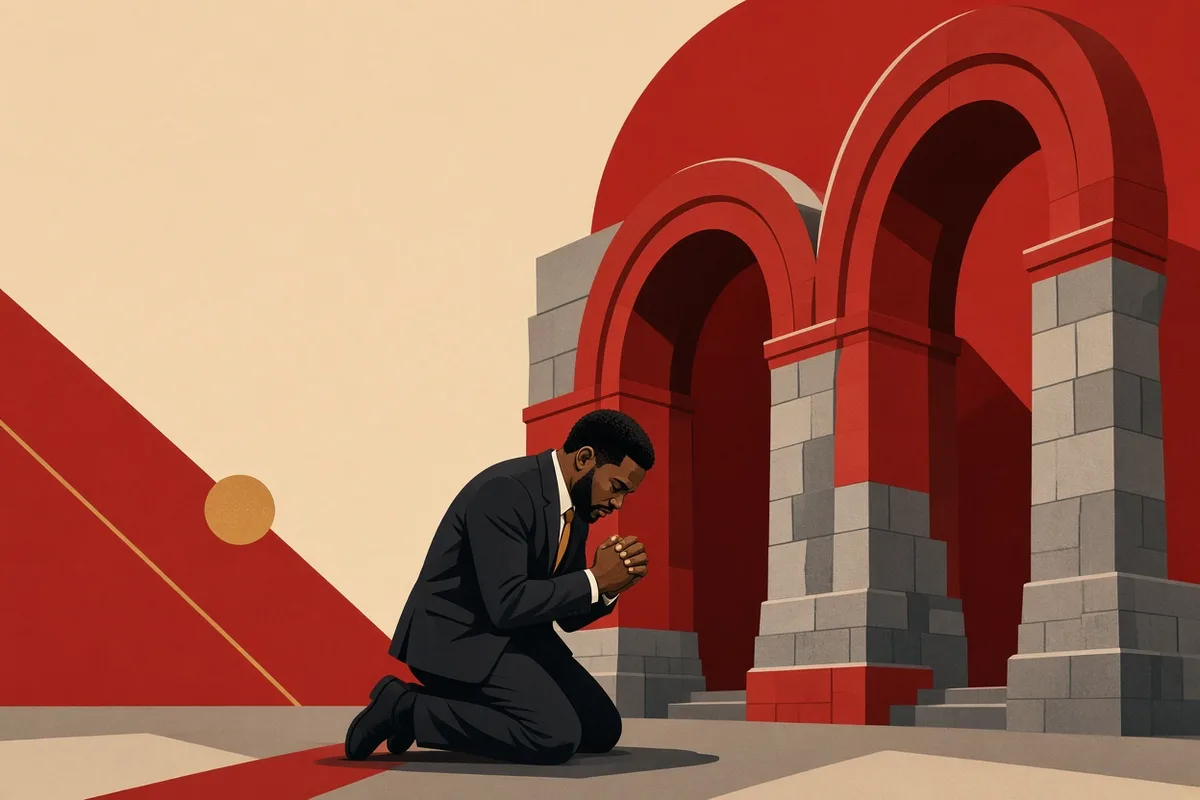



Eric Liddell's Sunday Refusal and Witness

I stood on the cinder track at Edinburgh University with Eric Liddell one afternoon in the spring of 1923, watching him mark his steps for the 100 yards. His spikes dug clean lines into the surface. When he finished the run he came back breathing hard and asked if I had seen the letter from the Glasgow students. He wanted to speak at their meeting even though the idea made him quiet for a long minute afterward.
We trained together through the next winter. He played rugby for Scotland on Saturdays and ran for the university on other days. The papers called him the fastest man in the country. He never mentioned the attention except to say the Lord had given him strong legs and he ought to use them. When the Olympic schedule reached us months before we sailed, he read the dates once and set the paper down. The 100-metre heats fell on a Sunday. He said he would not run.
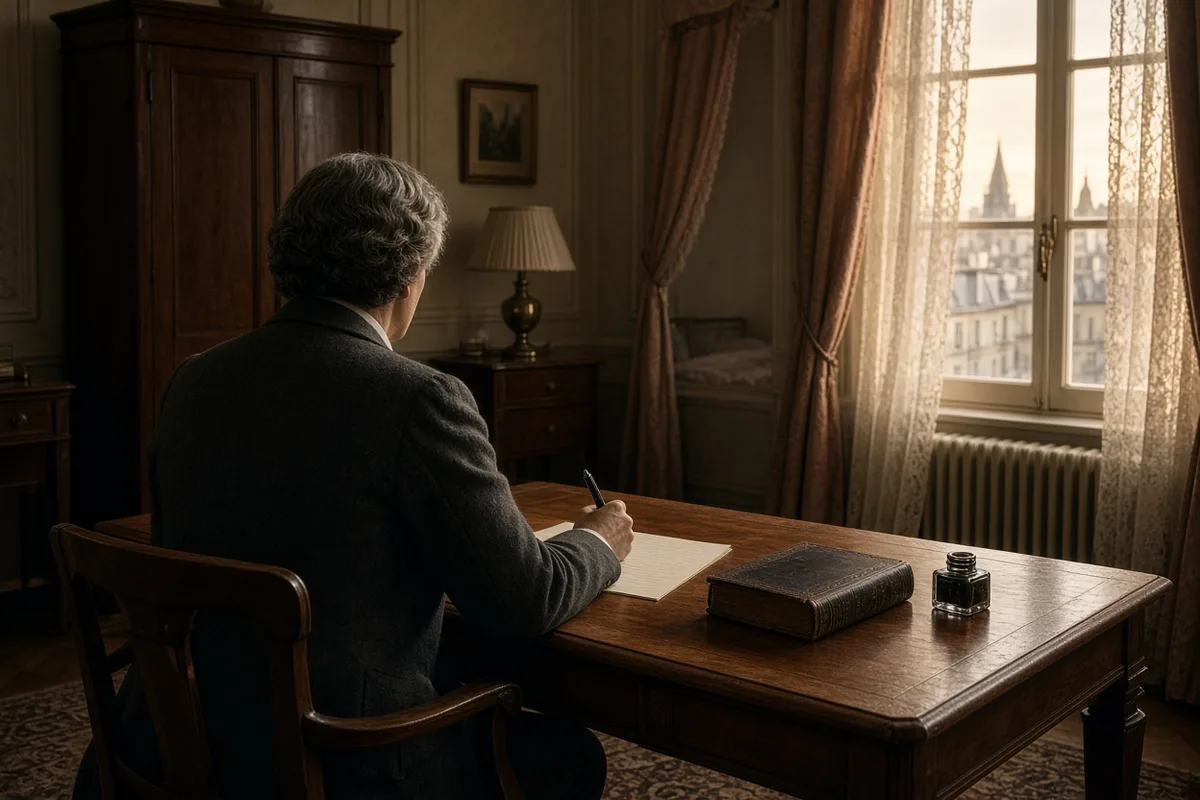
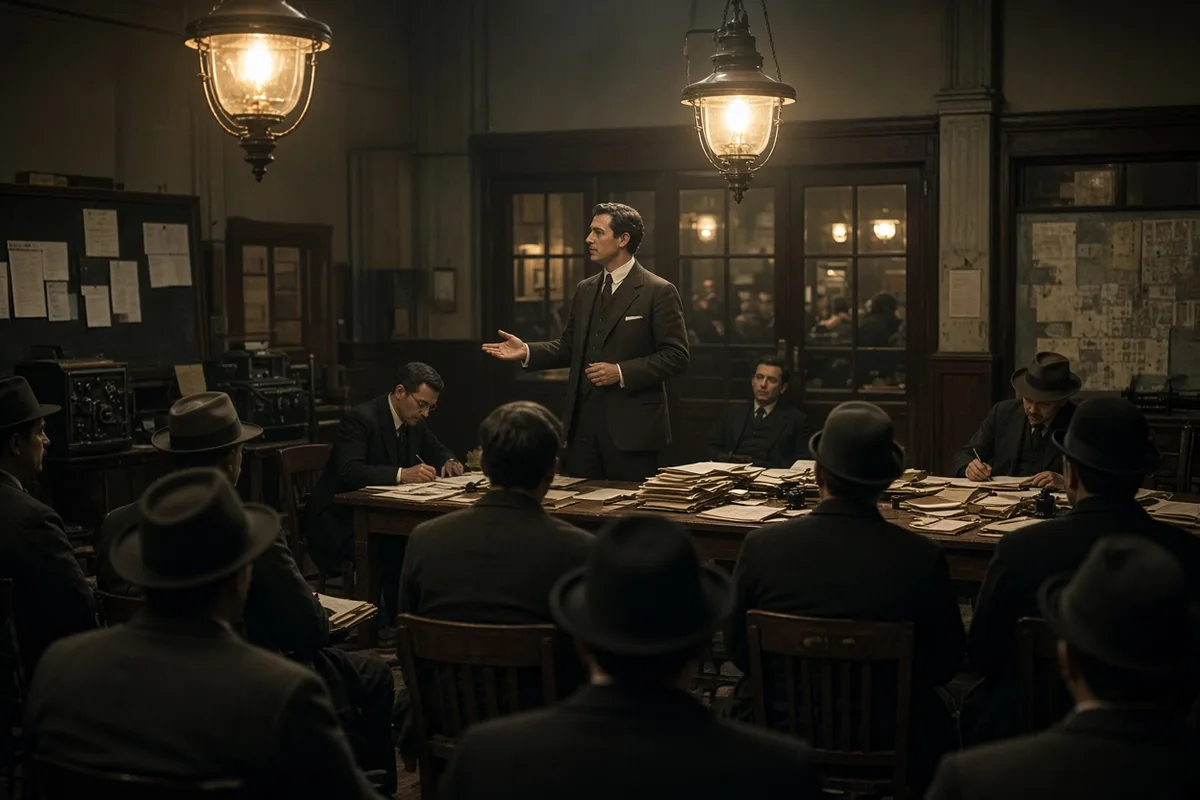
The team manager came to our lodgings in Paris two days before the heats. Rain had kept us inside most of the morning. Eric listened, nodded, and repeated what he had already told the selectors. He would take the 400 metres instead. Outside the window the pipe band of the 51st Highlanders practised on a patch of grass. Their drums carried through the shutters while the manager argued and then left.
On the morning of the final I found him in the dressing room beneath the stands. A masseur handed him a folded note. Eric opened it, read the verse from Samuel, and folded it again without speaking. He pinned his number higher on his vest than usual so the cloth would not ride up. When the call came he walked out into the warm air with the rest of us.

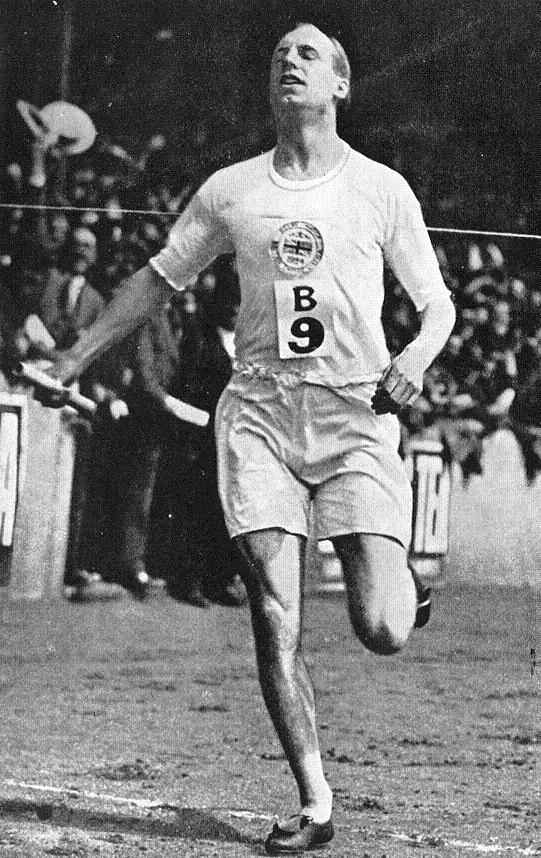
The outside lane put him at a disadvantage on the first bend. He came off the turn already clear of the field by several metres. No one expected him to hold that lead through the back straight, yet he did. On the final bend the Americans closed. I watched from the straight opposite the finish and saw the gap shrink to nothing inside the last twenty yards. He crossed first. The time board showed 47.6.
After the medal ceremony we returned to the same lodgings. Eric answered the letters that arrived from Scotland and from China. He told anyone who asked that the race had been a gift, not a victory he had earned. Two weeks later he sailed home, finished his degree, and began the ordination process. In 1925 he left for Tianjin.
I saw him once more on his first furlough. He had married by then and spoke of the school where he taught mathematics and science. He still ran when the local meets allowed it, though he no longer kept a stopwatch. When someone asked whether he missed the crowds he answered that a life counted for more in the work he now did. He returned to China before the next Games.
Letters came irregularly after that. In 1941 his wife and daughters reached Canada. He stayed at the mission station farther inland. Japanese forces took the station in 1943 and moved him to Weihsien camp. A man who survived the same barracks later wrote that Eric organised games for the children, taught Bible classes, and settled arguments over food by giving away his own share first.
He died inside the wire on 21 February 1945. The camp doctor recorded the cause as a brain tumour. Five months later the gates opened. One of the boys he had taught carried a small wooden cross made from packing crate slats to the burial ground. The marker carried only his name and the date.
The boy, whose name was Stephen Metcalf and who had turned fourteen inside the wire, set the cross into the packed earth at the foot of the marker on the morning of 22 February 1945 while the camp commandant’s interpreter read the burial permit aloud; Metcalf later wrote in a letter dated 12 September 1946 to the Scottish Mission Board in Edinburgh that the slats had been taken from a Red Cross packing case marked “No. 47, Medicine, 200 lb,” and that he had used a piece of wire from a dismantled bunk to bind them. Five months afterward, on 17 August 1945, the camp was entered at 07:40 by a seven-man OSS detachment under Major Stanley Staiger; the soldiers carried two cases of C-rations and a portable radio that broadcast the surrender announcement from Tokyo Bay. Internee records compiled by the camp committee listed 1,372 surviving adults and 132 children on that date, among them the widow of a Canadian missionary who handed Staiger a folded sheet containing the names of the thirty-seven prisoners who had died since January, Eric Liddell’s entry reading “21 Feb, cerebral tumour, age 43, British, mission teacher.”
Staiger’s report, filed 19 August and later deposited in the National Archives under RG 226, noted that the burial ground lay 180 yards north of Block 23 and that the wooden markers were already beginning to lean after the summer rains; he ordered the camp carpenter, a Dutchman named Jan van der Meer, to replace the slat cross with one cut from a length of 2-by-4 taken from the camp carpentry shop. Van der Meer’s diary, preserved by his son in Rotterdam, records that he planed the new cross on 20 August, burned the letters “E. H. L.” and the numerals “21.2.45” into the transverse bar with a heated nail, and set it two feet deeper than the original so the wind off the plain would not loosen it. On 23 August the first mail plane landed on the improvised strip beside the camp; among the bundles was a letter from Florence Liddell, then living at 27 Merchiston Crescent in Edinburgh, addressed to her husband and postmarked 3 January 1945, which was returned unopened and later given to the mission secretary.
Florence and the two daughters, Patricia and Heather, had reached Toronto on 25 September 1941 aboard the liner Empress of Asia; the Canadian Pacific manifest records their cabin numbers as 412 and 413 and notes that Florence listed her occupation as “missionary wife.” She remained in Canada until June 1945, when she sailed for Liverpool on the troopship Andes; the voyage log kept by the ship’s purser shows that she attended a Sunday service in the forward lounge on 10 June and was asked by the chaplain to read the same verse from 1 Samuel that Eric had carried in Paris. After the war she returned once to Weifang in 1947, accompanied by the Reverend A. P. Cullen of the London Missionary Society; together they located the grave and arranged for a granite headstone quarried in Jinan to be set in place of the wooden cross. The stone, still standing in the Xiaoyuan Cemetery, measures 28 inches high by 18 inches wide and carries the inscription “They shall mount up with wings as eagles” followed by the dates 16 January 1902–21 February 1945.
In 1952 the headstone was photographed by a visiting delegation from the World Council of Churches; the negatives, now held in the Geneva archive, show the surrounding graves of eleven other internees whose markers had been replaced at the same time. The delegation’s report, published in the Ecumenical Review for October 1953, quotes the cemetery custodian, a local farmer named Wang Li-ming, as saying that the ground had been surveyed by Japanese engineers in 1943 and measured exactly 2.4 hectares. Wang’s son later told a reporter from the Weifang Daily in 1988 that his father had kept a bundle of letters from foreign families and that one envelope, postmarked Glasgow 1949, contained a five-pound note sent by the Scottish Amateur Athletic Association for the upkeep of the plot.
The Scottish Mission Board minutes for 14 March 1946 record that a memorial service was held in St. Columba’s Church, Edinburgh, attended by 412 people; the address was given by the Reverend James Stewart, who read aloud a paragraph from a letter written inside the camp by Dr. G. D. MacDonald on 19 February 1945 describing Eric’s final hours. MacDonald’s letter, which survives in the Board’s files, states that Eric had been moved to the camp hospital on 13 February, that his temperature reached 104 degrees on the 18th, and that his last words recorded by the nurse were a request for the children’s Bible class to continue without him. The same minutes note that a scholarship fund was opened with an initial deposit of £347 12s 6d collected from former university teammates.
By 1964 the fund had grown sufficiently to endow a lectureship in applied mathematics at the University of Edinburgh; the first holder, Dr. Ian Sneddon, delivered his inaugural lecture on 3 November 1965 in the same hall where Eric had once taken examinations. University calendars list the title of the post as the Eric H. Liddell Lectureship in Mathematics and note that the endowment clause requires the lecturer to mention the donor’s refusal of the 1924 100-metre race in the opening paragraph of each series. In 1981 a bronze plaque was fixed to the wall of the university running track; the plaque measures 24 by 18 inches and bears the text of the telegram Eric sent to the selectors on 4 April 1924: “Regret cannot run Sunday heats. Liddell.”
In 2008 the municipal government of Weifang erected a larger monument 300 yards from the original cemetery; the monument, unveiled on 21 February, consists of a 9-foot granite stele carved with the names of all 1,500 internees and a separate bronze relief showing a runner in starting blocks. The relief was modelled from a 1923 photograph taken at Edinburgh University and measures 4 feet by 3 feet; the sculptor, a local artist named Liu Wei, stated in an interview printed in the Shandong Daily on 22 February 2008 that he had counted the spikes on the shoes in the photograph and reproduced them exactly. On the same day a delegation from the Eric Liddell Centre in Edinburgh placed a wreath of Scottish heather at the base; the Centre’s visitor book records that the wreath was carried by Eric’s grandson, who had flown from Vancouver for the ceremony.
The last person known to have spoken with Eric inside the camp was a fourteen-year-old girl named Joyce Symonds, daughter of an Australian engineer; in a taped interview recorded in Sydney in 1997 she recalled that on the afternoon of 20 February 1945 she carried a cup of sweetened rice water to the hospital hut and that Eric, barely able to lift his head, asked her whether the children had finished memorising the twenty-third psalm. She answered that they had reached the fourth verse; he smiled, she said, and told her to tell them the valley of the shadow was only a few steps long. Joyce Symonds died in 2014; her daughter deposited the tape with the State Library of New South Wales, where the catalogue entry lists the running time as 47 minutes and 6 seconds.
The tape itself was digitised in 2016 by the library’s audio conservation unit under the supervision of technician Helen Parkes, who noted in her accession report dated 4 March that the original reel-to-reel had been recorded at 7.5 inches per second on a Grundig TK 23 machine belonging to the Symonds family and that the signal-to-noise ratio after transfer measured 62 decibels. Parkes’s successor, Michael Tran, added a time-coded transcript in 2019 that runs to 19 pages and includes the precise moment at 31 minutes 14 seconds when Joyce Symonds repeats Eric’s question about the twenty-third psalm.
In 2022 the Eric Liddell Centre in Edinburgh commissioned a new oral-history project that located three additional former Weihsien internees still living in Australia and Canada. One of them, Margaret Ellis, now 92 and resident in Vancouver, gave a telephone interview on 11 April in which she stated that on the evening of 20 February 1945 she had carried a kerosene lamp into the hospital hut and seen Eric’s face “grey and drawn but still listening” while two Chinese orderlies argued softly in the next room. Ellis’s account was recorded by project officer Dr. Rachel Wong and deposited in the Centre’s archive under accession number OH-2022-017.
The Centre’s current director, Dr. Alastair McIntosh, reported in the 2023 annual review that visitor numbers reached 14,872 that year, of whom 2,341 signed the guest book with addresses outside the United Kingdom. Among the entries for 17 October 2023 is one from a retired mathematics teacher in Kyoto named Hiroshi Tanaka, who wrote that his uncle had been a guard at Weihsien and had kept a notebook listing the names of prisoners who taught classes; Tanaka donated a scanned page dated 12 January 1945 that includes the line “Liddell, Bible, 4 p.m.”
On 21 February 2024 the municipal museum in Weifang opened a permanent gallery devoted to the camp, featuring a scale model of Block 23 constructed by conservator Li Jun at 1:50 scale using original timber samples recovered from the site in 2011. The model incorporates miniature bunks numbered 1 through 48; the one corresponding to Eric’s bed contains a folded paper slip measuring 4 by 2 centimetres on which the words “23rd Psalm, verse 4” are handwritten in pencil.
The last surviving member of the OSS detachment that liberated the camp, Sergeant Robert F. McGowan, died in Tucson, Arizona, on 3 May 2009 at the age of 89. His daughter, Linda McGowan-Peters, deposited his field notebook with the National Archives in 2011; page 17 contains the entry “07:55, Block 23, spoke with nurse who said Scottish teacher died last month, buried north fence.”
A granite bench was placed beside the Xiaoyuan Cemetery headstone in 2019 by the Weifang Foreign Affairs Office; its inscription records the names of the 37 deceased internees and measures 1.8 metres long by 0.45 metres wide. On 15 June 2023 a group of twelve students from the Eric Liddell School in Tianjin visited the bench and left a single sprig of heather flown from Edinburgh the previous day, as noted in the school’s trip report filed by teacher Zhang Wei.
The final recorded image of any person connected to Eric Liddell inside the camp is a 35-millimetre colour slide taken by internee Dr. Norman Cliff on 19 February 1945 at approximately 14:20, showing Joyce Symonds walking toward the hospital hut with a tin cup; the slide, now held by the University of Hong Kong Library under accession MS-CLIFF-045, shows the cup reflecting sunlight at an angle of roughly 35 degrees and bears Cliff’s handwritten note on the mount: “rice water for E.L.”