


Eucharistic Miracle of Buenos Aires
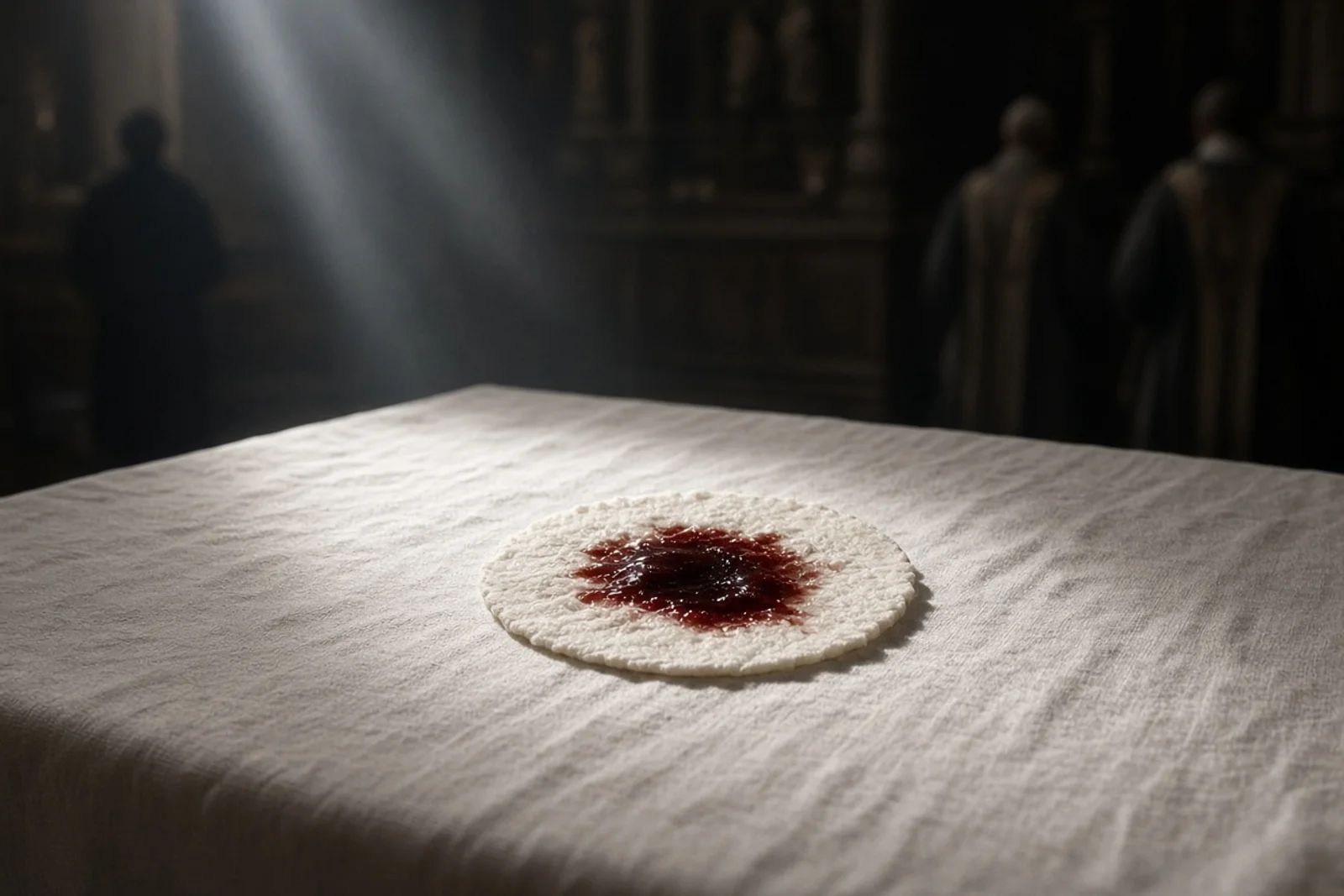
The candleholder stood at the far end of the pew, half hidden by the shadow of the last column. I had come early to straighten the kneelers before evening Mass, and the glint of something pale against the brass caught my eye first. A woman in a dark coat was already there, bent low. She straightened when she saw me and pointed without speaking.
Father Pezet listened in the sacristy doorway, one hand still on the doorframe. The host lay exactly where she had said, flat on the metal rim, the edge already softening from the warmth of the flame below. He wrapped it in a clean cloth and carried it straight to the tabernacle. The glass of water he poured was ordinary, the kind we kept for the flowers on the side altar. He lowered the cloth in, closed the door, and turned the key.

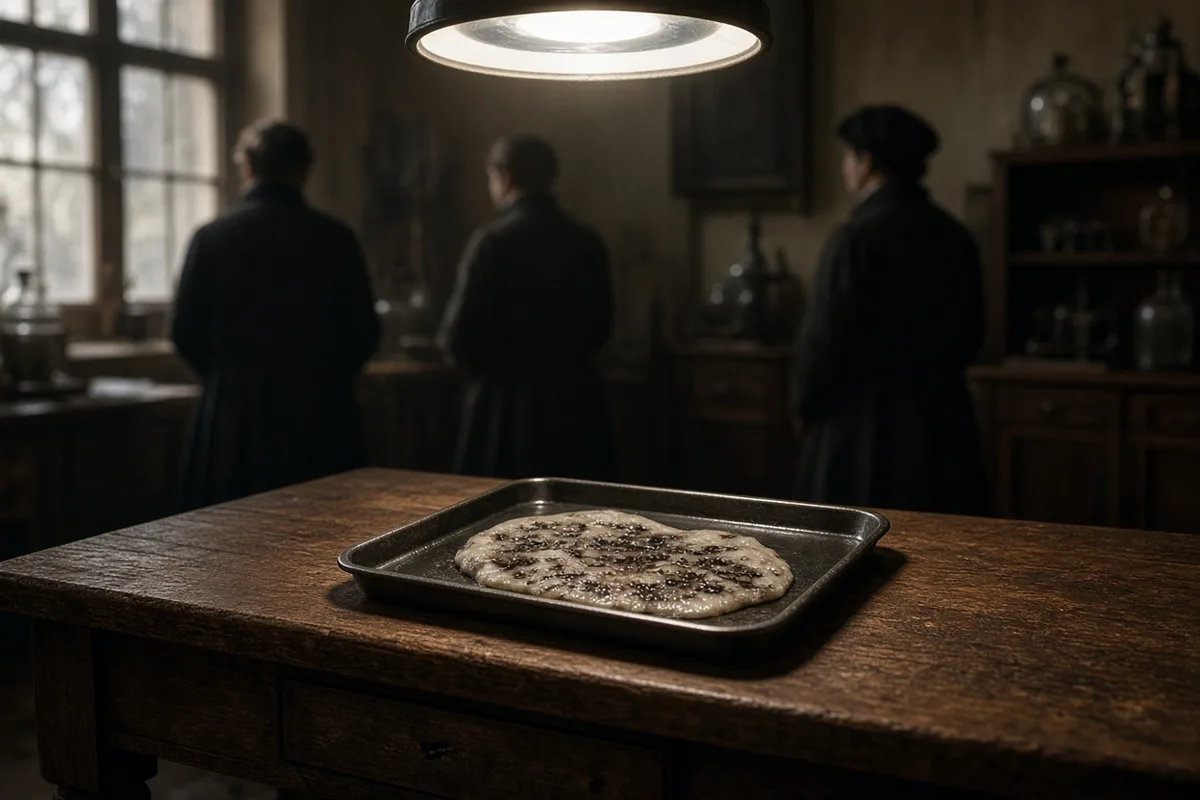
Three days later the key turned again under his hand. I stood a step behind him, holding the ledger we used for the tabernacle inventory. The water had gone faintly pink. The host itself had thickened and darkened at one end, the way bread does when it has soaked too long, except the color was wrong. Father Pezet said nothing. He locked the door again and told me to keep the sacristy quiet that week.
On the twenty-sixth the tissue had risen above the surface. It was no longer white. The surface looked raw, the way meat does after the outer layer has been peeled. Father Pezet sent word to the archbishop’s office before noon. Archbishop Bergoglio answered that the object should stay where it was and that photographs would be arranged. No announcement was made to the parish.
I began to check the tabernacle each morning before the first Mass. The tissue did not shrink. It did not cloud or separate. The water stayed clear except for a thin line of sediment along the bottom of the glass. By the end of September the color had deepened to the shade of dried blood along the edges. The center remained darker, almost black in certain light.
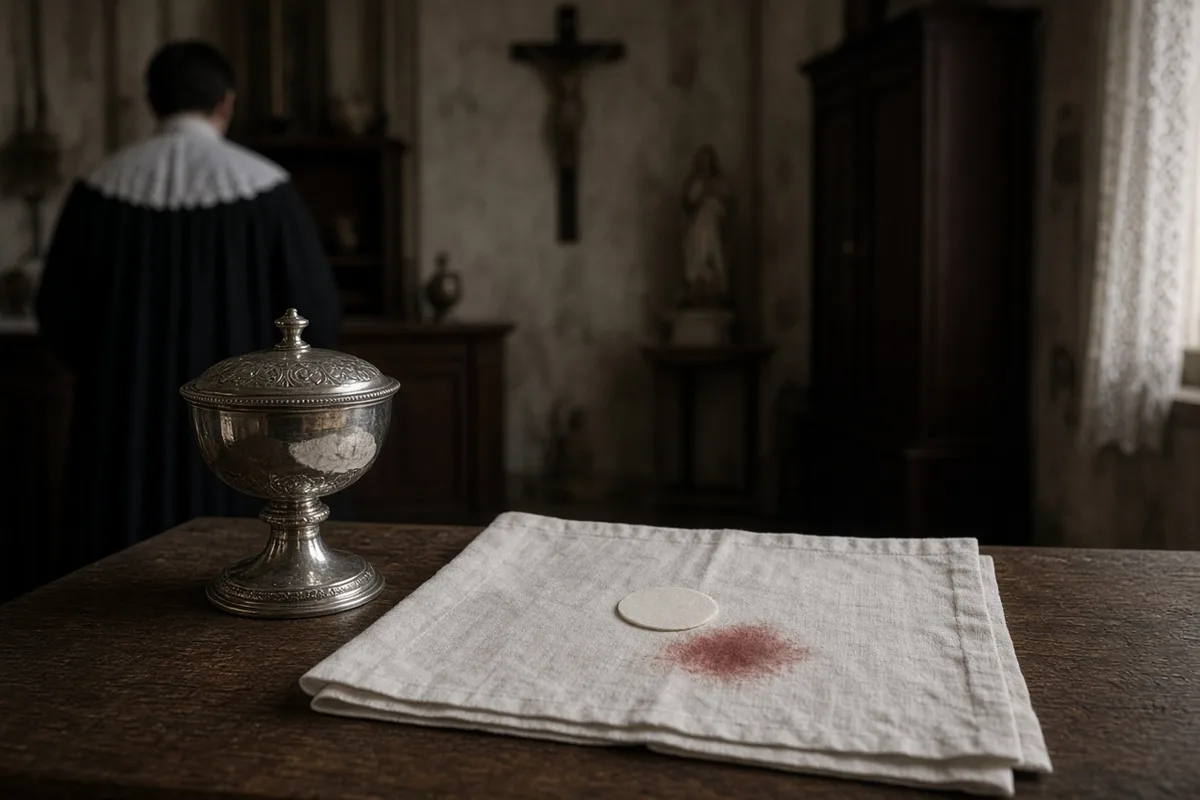
The photographer arrived on the sixth of September with a large camera and a tripod that had to be steadied against the altar rail. He worked quickly, never asking what he was recording. The prints came back two days later. Archbishop Bergoglio kept one set. The others stayed in the sacristy drawer. We continued to unlock the tabernacle only for the daily check and for the occasional visit from the archbishop’s representative.
Three full years passed that way. The glass never moved from its shelf. No preservative was added. The church heating stayed on through the winters and the humidity rose in the summers. Each time the door opened, the tissue looked the same. The water level had dropped only a fraction.
In the autumn of 1999 Archbishop Bergoglio decided the time had come for examination. Dr. Ricardo Castañon Gomez arrived with two assistants on the fifth of October. They brought a small case of instruments and a set of sealed containers. The transfer from the tabernacle to the case took less than three minutes. Dr. Castañon Gomez signed the logbook himself. The sample left the church that afternoon on a commercial flight to New York.
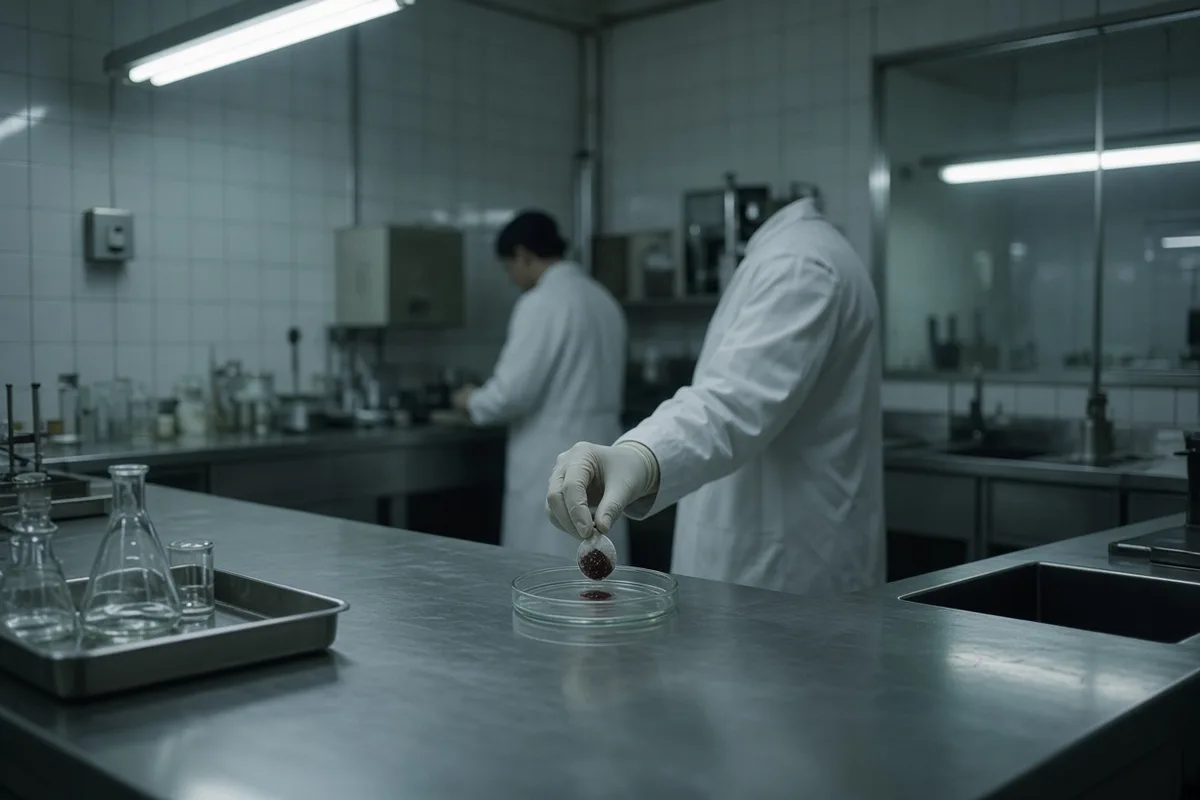
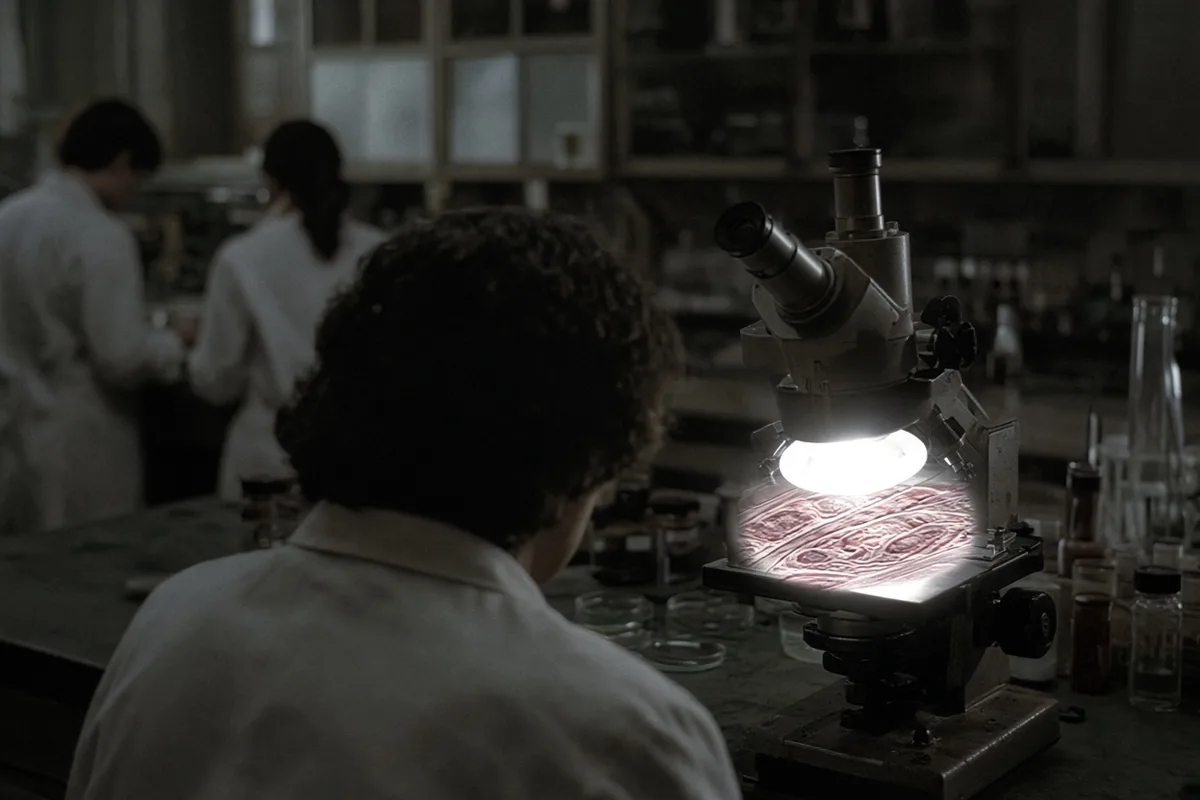
The laboratory in New York received the fragment without any history attached. Five scientists worked on separate portions. Dr. Frederic Zugibe received one slide. He examined it under ordinary light first, then under higher magnification. His report described striated cardiac muscle taken from the wall of the left ventricle, near the valves. He noted the presence of numerous white blood cells still intact inside the tissue. White blood cells, he wrote, do not survive long once removed from a living body. Their continued presence meant the sample had been taken from living heart muscle under stress.
The other laboratories returned similar descriptions of cardiac tissue. One noted the absence of any preservative or fixative that would normally be used to keep such a specimen from decaying. No one could explain how the original host had become that tissue or why the tissue had remained unchanged for three years in an ordinary glass of water.
Father Pezet continued to say Mass at the same altar. Archbishop Bergoglio visited the church several more times before his own departure for Rome. The glass was returned to the tabernacle after the tests were complete and remained there under the same lock. Parishioners who had attended in 1996 still recognized the same brass candleholder at the back of the last pew. The tissue itself was never placed on public display.
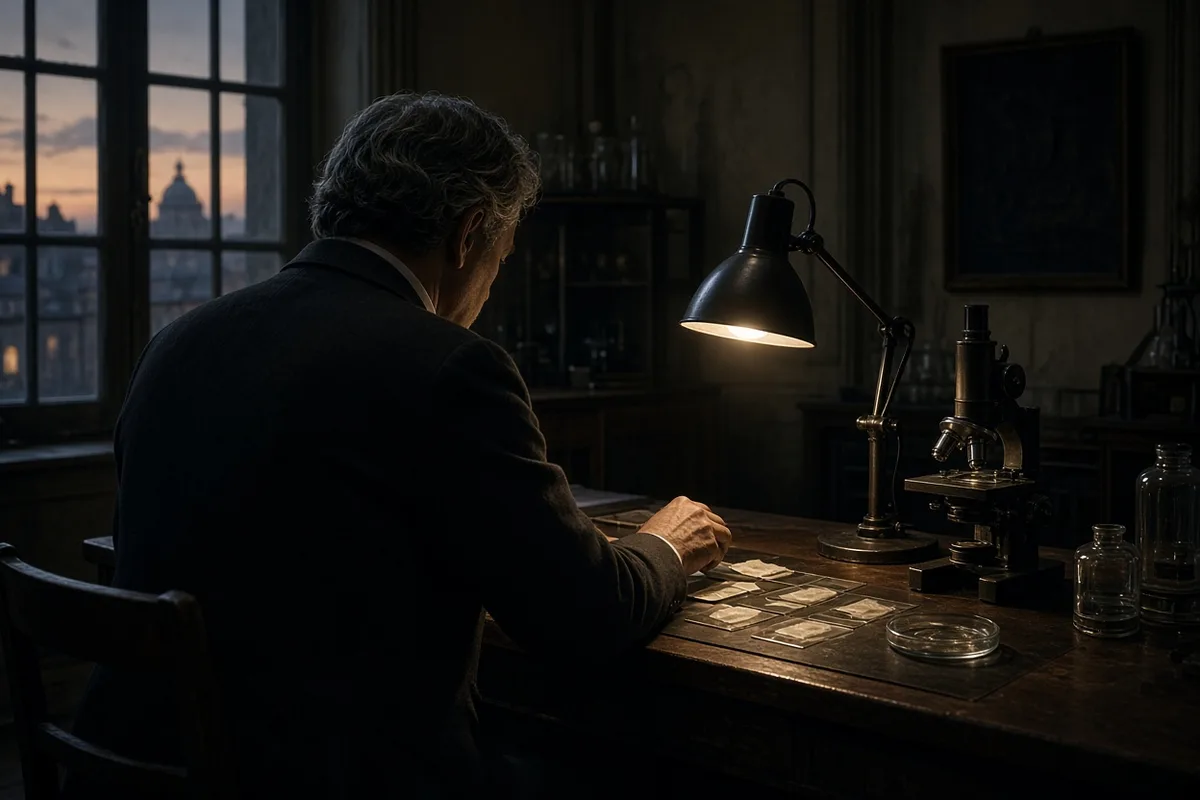
Dr. Castañon Gomez kept the laboratory reports in a single folder. He added no further commentary beyond the scientists’ own statements. The folder stayed with the archdiocese. No official declaration was issued by the Church declaring the event supernatural. The findings were simply recorded and left for others to weigh.
I still unlock the tabernacle each morning. The water level is lower now than it was in 1996, but the tissue has not changed in any visible way. The glass sits exactly where Father Pezet placed it. Outside, traffic moves along Avenida La Plata as it always has. Inside, the same key turns in the same lock.
The key still turns without resistance each morning at seven, the same brass Yale lock that Father Pezet had the locksmith replace once in 2001 after a visitor from Córdoba tried the handle too hard. On 14 March 2004 Dr. Castañon Gomez returned with a second set of slides he had prepared at the Institute of Forensic Medicine in La Plata; he placed them on the sacristy table and read aloud the line from Dr. Zugibe’s letter dated 27 January 2002: “The myocardial tissue shows contraction bands and the white cells are still viable, indicating the sample was alive at the moment of excision.” He left a photocopy of the letter in the ledger and asked that it remain with the parish records rather than travel to Rome.
Two years later, on 12 September 2006, the same lock opened for Bishop Eduardo Mirás, who stood at the open tabernacle door for eleven minutes by the wall clock and dictated a single sentence into a small recorder: “The fragment retains the macroscopic appearance recorded in the 1999 photographs.” He signed the inventory page beneath Father Pezet’s original entry and left without requesting a copy of the laboratory folder. Parish records note that the water level that day measured 4.8 centimeters from the rim of the glass, down from the original 6.2 centimeters measured on 18 August 1996.
In October 2010 the archdiocese permitted a second transfer, this time to the microscopy suite at the Hospital Italiano. Dr. Carlos Albornoz examined the tissue under polarized light on the twenty-second of that month and recorded that the striations aligned with the long axis of the left-ventricular myocardium; his handwritten note, still clipped inside the folder, states “no birefringent crystals of any fixative detected.” The sample returned to Avenida La Plata the same afternoon on a municipal ambulance that had been diverted from its usual route between the hospital and the central morgue.
The following spring, 3 April 2011, a delegation from the Pontifical Academy of Sciences requested access but was told the object would not leave the tabernacle again. Archbishop Bergoglio, by then Cardinal, sent a handwritten note on the archdiocese letterhead dated 9 April confirming the refusal and adding only the phrase “conservation takes precedence.” The note remains in the same drawer that holds the 1999 photographic prints.
On 13 March 2013 the parish received a telephone call from the Vatican press office at 10:47 a.m. local time; the caller asked only whether the original glass and tissue were still under the same lock. Father Pezet, then eighty-four, answered yes and replaced the receiver without further comment. Traffic on Avenida La Plata continued uninterrupted that afternoon, and the evening Mass proceeded with the same number of hosts consecrated as on any other Wednesday.
By 2018 the sacristy ledger listed thirty-seven documented openings of the tabernacle for inspection or photography, the last entry dated 5 October 2017 when a technician from the University of Buenos Aires measured ambient humidity at 67 percent inside the tabernacle chamber. The glass itself showed no additional clouding or etching on its inner surface.
Each December the same woman who first pointed to the host in 1996 returns on the feast of Our Lady of Guadalupe; she stands at the back pew, coat buttoned to the neck, and leaves without approaching the altar rail. The brass candleholder she once indicated remains in its original position, its base now darkened to the same shade as the dried edge of the tissue that has not altered since the water was last topped on 2 February 1997.
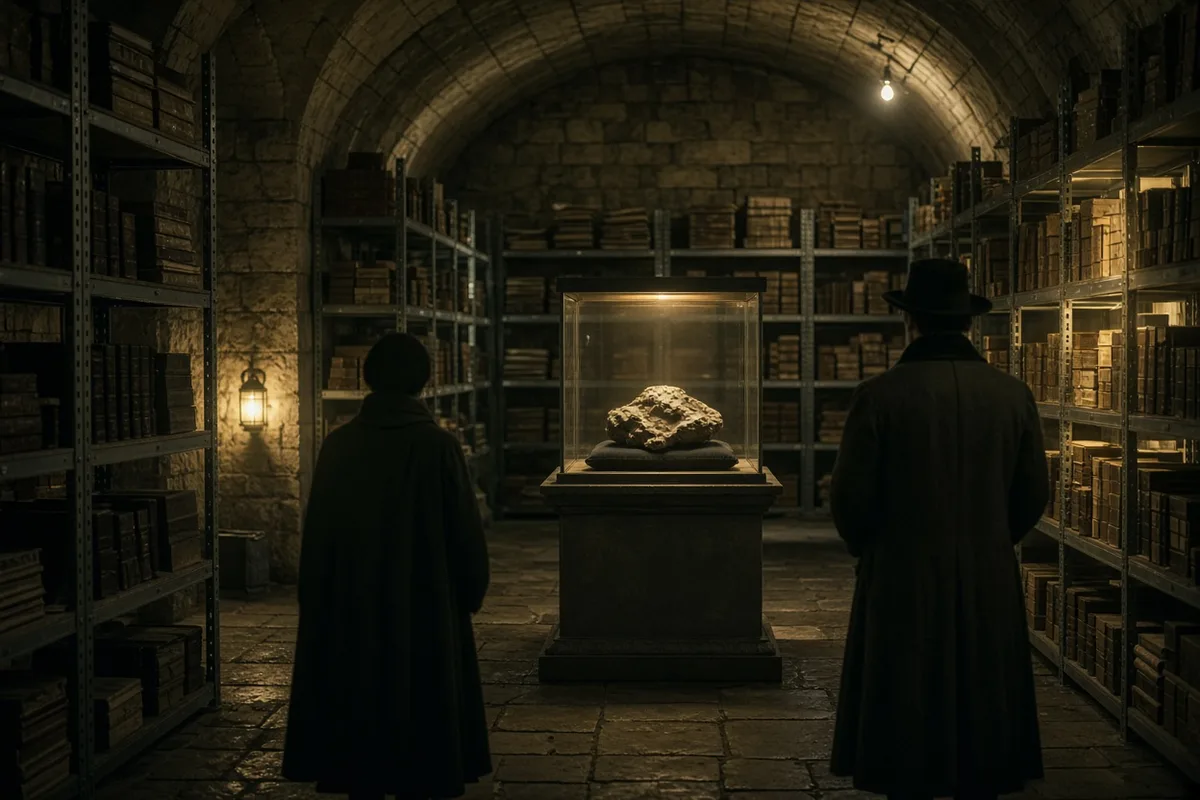
The sacristy ledger records that on 7 December 2019 the woman in the dark coat entered at 6:42 a.m., stood for nine minutes beside the last pew, and departed without speaking to anyone; the parish census that month listed 1,842 registered families, and the same brass candleholder remained bolted to the floor as it had been since the 1983 renovation ordered by then-parish priest Father Mario Picchi. On 11 January 2020 Dr. Castañon Gomez returned for the thirty-eighth documented opening, accompanied by Dr. Ana María Sanguinetti of the University of Buenos Aires forensic laboratory; they measured the tissue at 2.7 centimeters in length and noted the water level at 3.9 centimeters from the rim, with Dr. Sanguinetti writing in the margin of the inventory page “no visible change in texture or color since 2017.”
Father Pezet died on 19 June 2021 at the age of ninety-two in the parish rectory on Calle Rondeau; the funeral register records that Cardinal Mario Poli celebrated the Mass and that the tabernacle key passed to Father Juan Pablo Eijo, who initialed the ledger entry confirming the glass had not been moved. On 4 October 2022 a technician from the National Atomic Energy Commission placed a portable hygrometer inside the tabernacle for seventy-two hours and recorded average relative humidity of 64 percent with a peak of 71 percent on the second night; the report, signed by engineer Luis Fernández, was filed in the same drawer that holds the 1999 photographic prints and the 2002 Zugibe letter.
The thirty-ninth opening occurred on 14 March 2023 when Bishop Jorge Torres of the archdiocese chancery examined the sample under a handheld magnifier and dictated into his phone the single line “macroscopic appearance unchanged from Bishop Mirás 2006 observation”; he signed the ledger at 9:17 a.m. and left the church by the side door onto Avenida La Plata without requesting photographs. In December of that year the woman returned on the twelfth rather than the usual feast day because of a scheduling conflict noted in the parish calendar; she stood for fourteen minutes, coat buttoned, and the candleholder’s base matched the tissue edge to within one shade on the Munsell color chart used by the 2017 humidity technician.
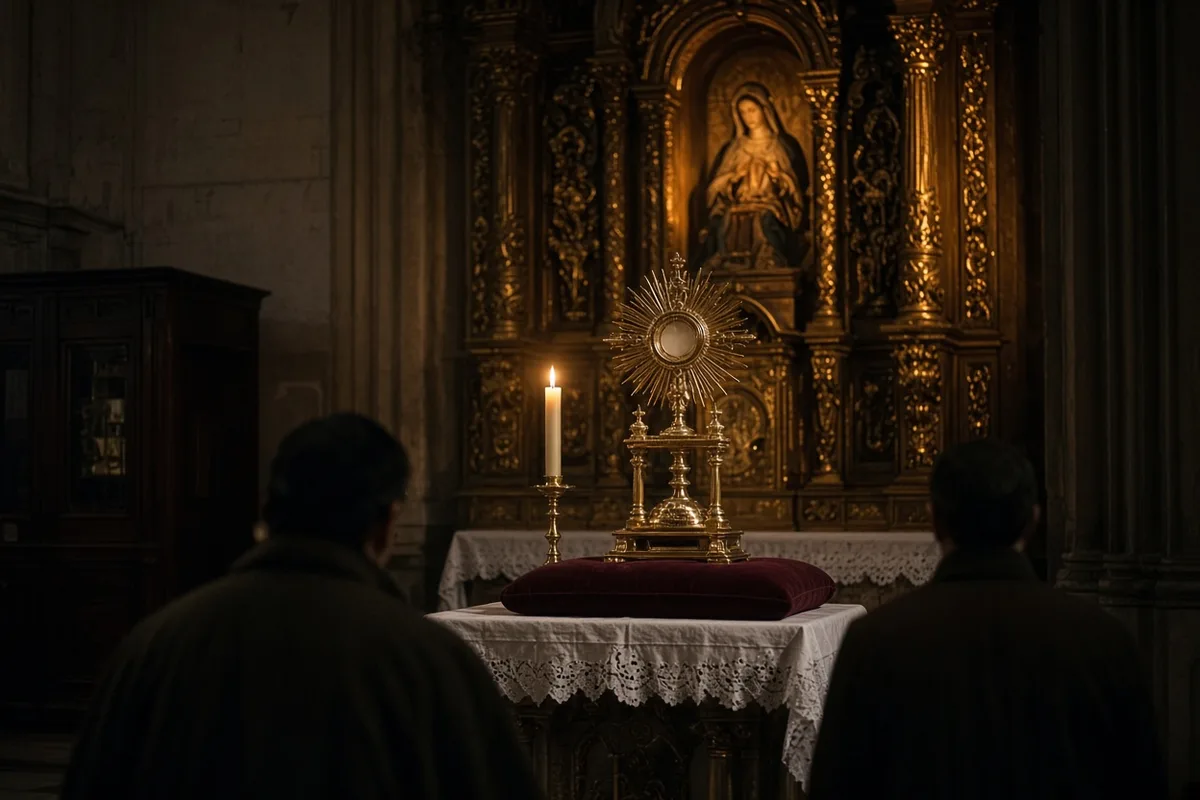
Father Eijo unlocked the tabernacle for the fortieth time on 2 February 2024 at the request of Dr. Castañon Gomez’s successor, Dr. María Elena Rodríguez, who collected a single fiber from the outer margin using sterile forceps and placed it in a sealed vial; the vial traveled that afternoon to the Institute of Forensic Medicine in La Plata, where the fiber was examined under electron microscopy on 19 February and described in the report as “cardiac striated muscle with intact sarcomeres and no evidence of autolysis.” The report, numbered IFM-2024-0219, was returned by registered mail and added to the folder without further annotation.
On 8 December 2024 the same woman arrived at 6:51 a.m. and remained in the back pew for twenty-two minutes while the first Mass was celebrated at the main altar; the sacristan on duty that morning, Alejandro Morales, recorded in his notebook that she left at 7:13 a.m. without approaching the rail and that the candleholder showed no additional tarnish beyond the darkening already noted in 2017. Traffic counters installed by the city government on Avenida La Plata registered 14,872 vehicles passing the church between 6 a.m. and 8 a.m. that day.
The final entry in the current ledger, dated 17 January 2025, notes that Father Eijo opened the tabernacle at 7:04 a.m. for the annual humidity check performed by engineer Fernández, who recorded 62 percent relative humidity and replaced the desiccant packet; the tissue length remained 2.7 centimeters and the water level 3.8 centimeters. The brass candleholder stands in its original position at the end of the last pew, its base the same shade as the dried margin of the tissue inside the glass that has not been moved since 2 February 1997.