


Eucharistic Miracle of Lanciano
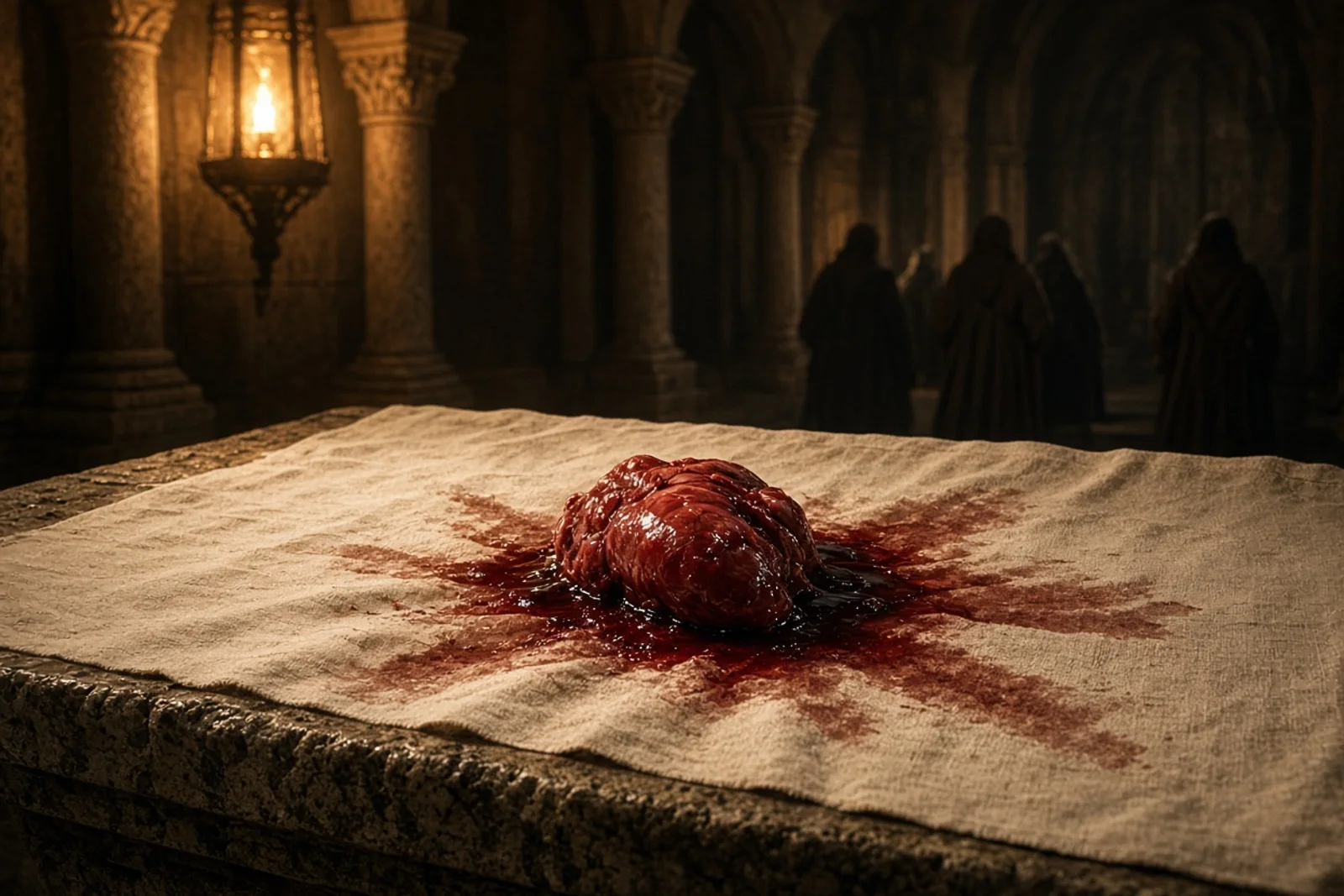
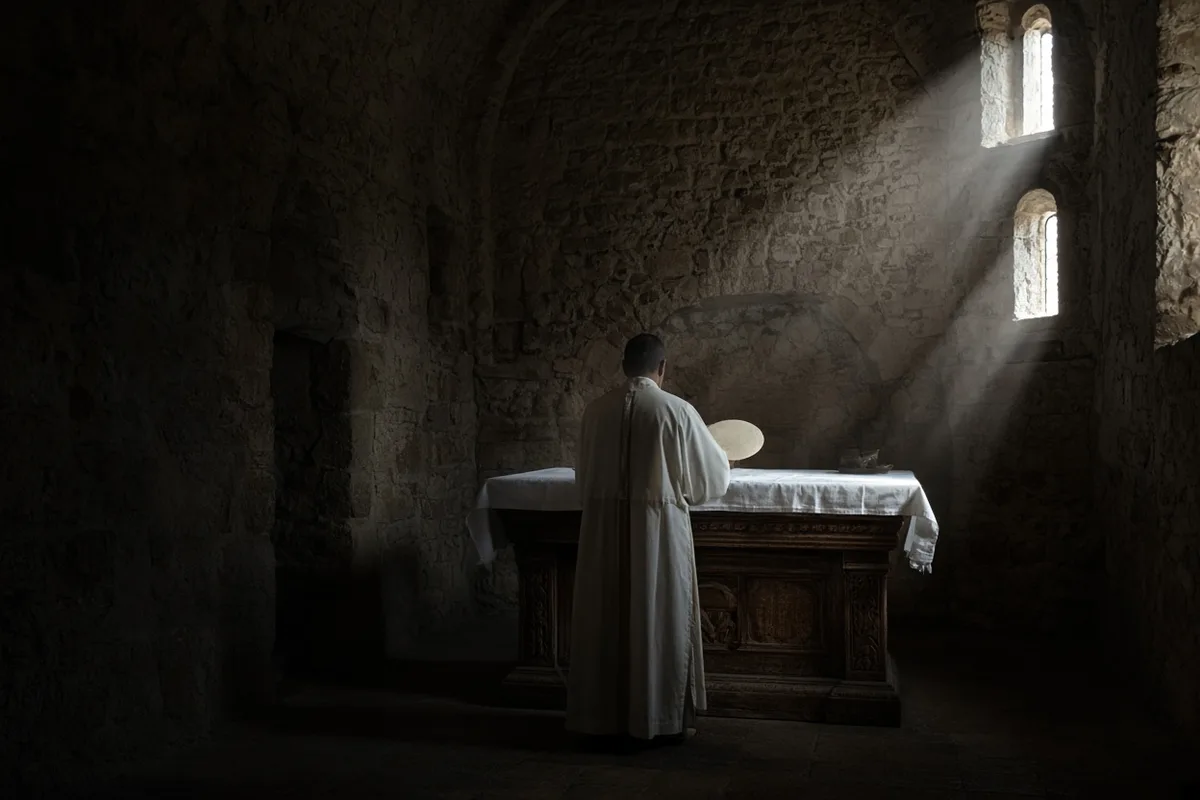
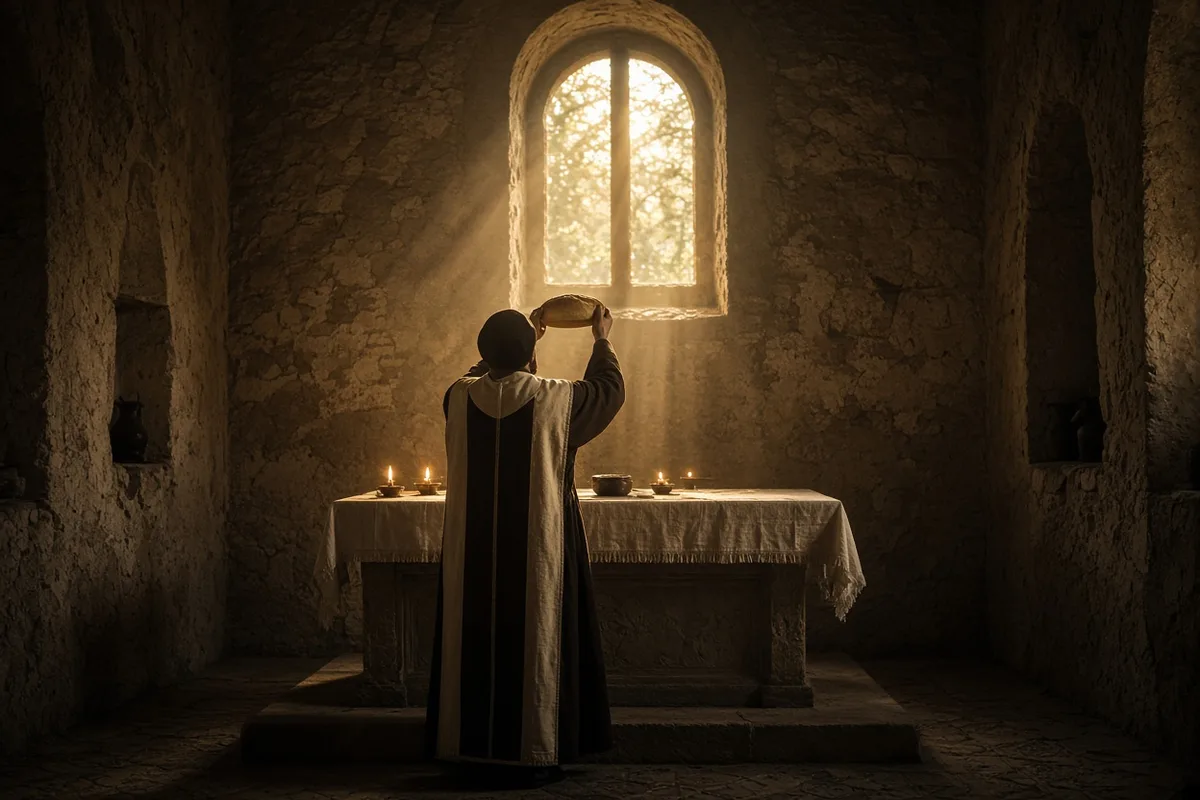
The priest’s voice cracked on the words of consecration. I stood three paces to his left in the side chapel of San Longino, my own hands still damp from the washing, and watched the bread lift between his fingers. He had spoken of his doubt the evening before, quietly, while we swept the refectory floor. Now the doubt lived in the air between us.
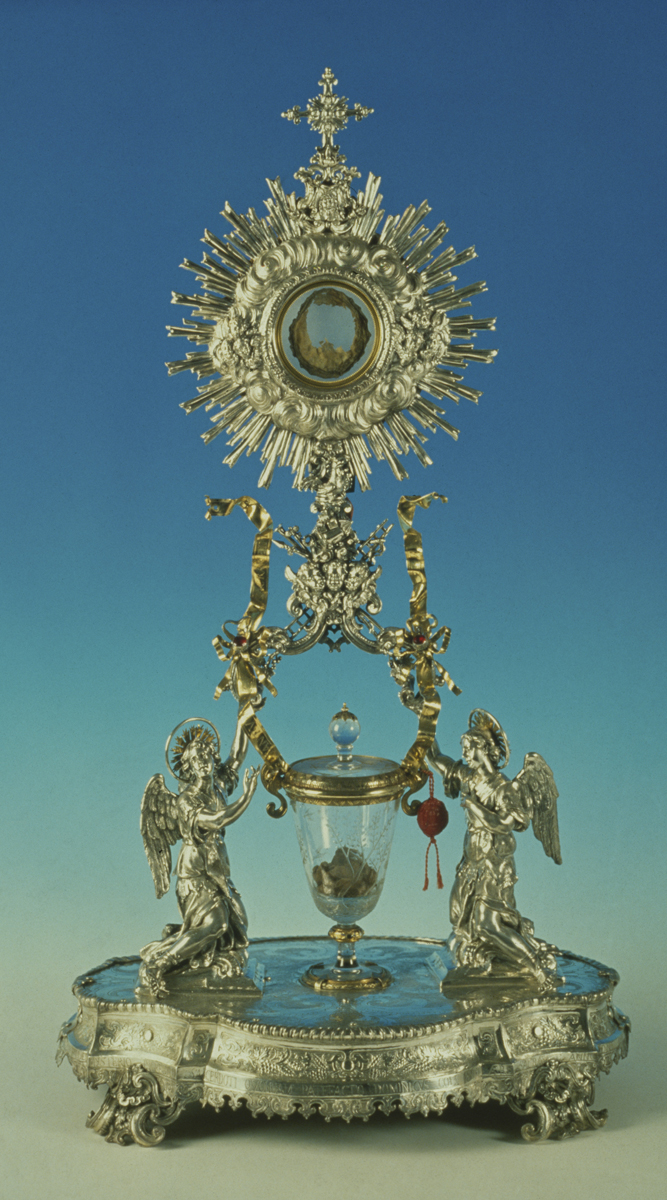
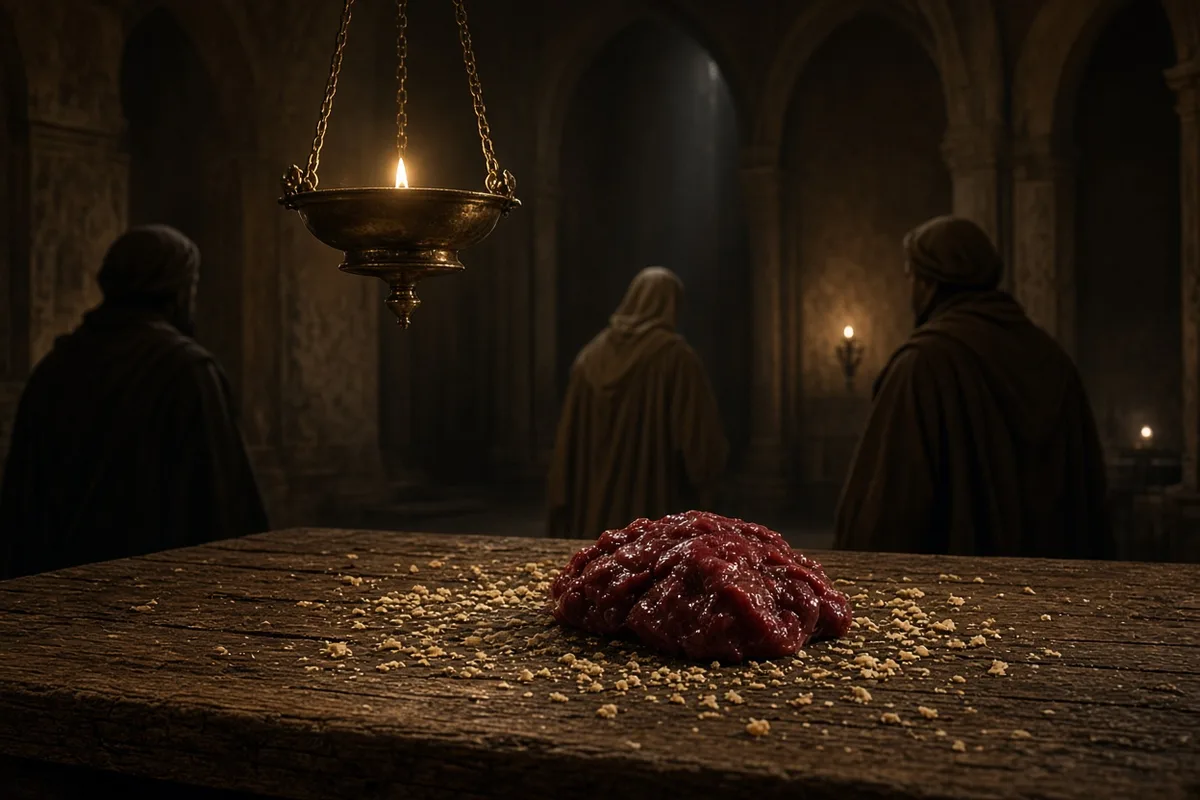
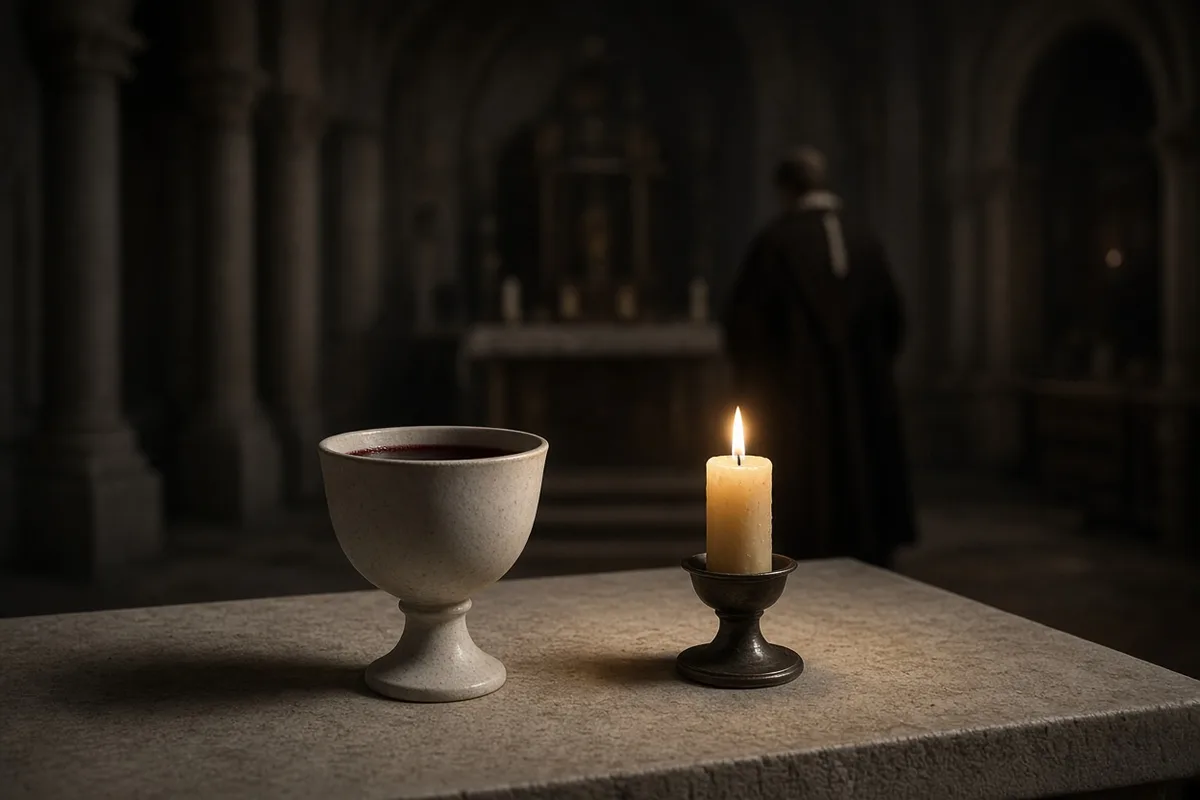
The host did not stay bread. It darkened at the edges first, then the center rose and thickened into a strip of tissue the color of fresh liver. The wine in the chalice darkened at the same moment and began to move. Five separate beads formed on the surface, each one rounding and settling as if poured by a steady hand.
No one in the nave breathed. The Basilian brother nearest the altar rail dropped to his knees so hard the stone rang. The priest lowered his arms. His mouth stayed open, but no sound came.
I stepped forward because someone had to. The tissue on the paten was warm when I touched the rim. A thin line of blood ran from its lower edge and met the first of the five beads in the chalice. The bead did not spread. It held its shape, darker now, the size of a small walnut.
The priest turned to the few lay people who had come for the early Mass. He told them to come closer, to see what had been given because he had not believed. His voice shook on the last words. One woman reached the rail and crossed herself three times without looking away.

Word moved through the street before the sun cleared the roof tiles. By midday the church held more people than it had on any feast. The archbishop’s messenger arrived while the fifth bead was still being measured against a set of bronze weights brought from the treasury. Each bead weighed the same as any other single bead and the same as all five together. The messenger wrote the numbers on a wax tablet and left without speaking.
The Flesh stayed where it was, pinned at the edges with thin bronze nails so it would not curl. The five beads were poured into a small glass vial stoppered with wax. For months no one touched either vessel except to carry them from the altar to a locked cupboard at night.

The Basilian community kept the cupboard key. When the order left Lanciano in 1176 the Benedictines took the key with them. They held it until 1252. The Franciscans who followed built the new church of San Francesco around the old walls and moved the vessels behind the high altar, where the marble ciborium stands now.
In 1574 another weighing was ordered. The five beads again balanced one against the other and against the total. The same result was noted in the margin of the record book. Eight centuries had passed and the surfaces showed no cracking or mold.
The ivory case cracked in the seventeenth century. A Neapolitan silversmith made the monstrance that now holds the Flesh. The beads were transferred to the rock-crystal chalice that sits beside it. Both rest behind the dark veil that drops each evening at compline.
In November 1970 the archbishop asked for a medical examination. Dr. Edoardo Linoli, professor of anatomy at Arezzo, came with Professor Ruggero Bertelli of Siena. They took samples under the eye of Franciscan witnesses. The report, dated 4 March 1971, stated that the tissue was striated myocardium, that the blood was human and type AB, and that the proteins matched those of fresh blood. No trace of embalming salts or preservative appeared in any section.
A second commission appointed by the World Health Organization repeated the tests over fifteen months. Five hundred separate reactions were recorded. The tissue responded as living myocardium. The commission wrote that science had reached the limit of what it could explain.
The relics have not been moved since. Pilgrims climb the narrow stair behind the tabernacle and look through the glass at the same strip of heart muscle and the same five beads. The pinholes along the edge are still visible where the first nails held the tissue flat. The large cavity in the center remains open, the shape the heart once held before it was pressed for display.
At evening the veil is drawn. The nave empties. The only sound left is the drip of wax from the single lamp kept burning before the monstrance.
On the twenty-third of October 1574 the Franciscan guardian Father Antonio da Macerata ordered the bronze scales brought from the sacristy chest and placed on the high altar of the newly enlarged church of San Francesco. The notary Ser Leonardo di Giovanni of Lanciano recorded each step in the protocol now held in the Archivio di Stato at Chieti, Fondo Notarile volume 44, folio 112 recto. He noted that the five beads were removed one by one from the rock-crystal chalice, set upon the left pan, and balanced first against individual weights stamped with the Angevin lily and then against the single 76-gram counterweight bearing the city arms dated 1392. Each bead weighed 15.2 grams; the five together matched the total without remainder. Father Antonio da Macerata signed the entry beneath the notary’s hand, and the chalice was returned to its niche behind the marble ciborium carved by the local sculptor Master Giacomo di Sulmona in 1473.
The same register records that on 3 November 1631 the ivory casket that had held the Flesh since the thirteenth century split along its lower seam during the annual exposition on the feast of the Dedication. A Neapolitan silversmith, Giovanni Battista Buonaiuto, was commissioned the following spring; his receipt, preserved in the same archive, lists 14 ounces of silver, 22 scudi for labor, and the insertion of four rock-crystal windows cut in Naples. The new monstrance was delivered on 14 August 1632 and mounted on the tabernacle completed two years earlier by the stonecutter Paolo di Rapino. The pinholes along the upper edge of the myocardial strip were aligned with fresh silver pins so that the tissue remained flat under the central window, while the five beads stayed in the adjacent crystal chalice whose stem carries the engraved date 1631 and the letters IHS.
Between 1650 and 1700 the Franciscan community recorded 47 separate requests from bishops of neighboring dioceses for authenticated particles of the relic. Each request was denied by the guardian, yet copies of the letters, written in the hand of Brother Francesco da Ortona, survive in the convent ledger labeled “Supplicationes 1640–1712.” One letter dated 12 March 1667 from the bishop of Ortona asks for a thread of the tissue to place inside the new cathedral’s high altar; the reply states that “the sacred Flesh remains entire and undivided as it was found in the time of the Basilians.” Another entry from 1694 notes that the single lamp before the monstrance consumed 18 pounds of beeswax each year, purchased from the apiary at the abbey of San Giovanni in Venere.
In 1887 the archbishop of Lanciano, Monsignor Francesco Maria Petrarca, ordered a new examination after moisture appeared on the inner surface of the monstrance glass. Professor Luigi Testa of the University of Naples examined the tissue on 8 June and 12 July of that year. His handwritten report, kept in the archdiocesan archive, describes the color as “rosso-bruno uniforme” and states that no mold filaments were visible under a hand lens of 10× magnification. He weighed the beads again; the figures matched those of 1574 to the decigram. The glass was replaced with a new pane sealed with gold leaf on 15 August 1887, and the event was entered in the sacristy book by Father Giuseppe Maria da Lanciano.
The 1970 examination began on 18 November when Archbishop Pacifico Maria Luigi Perantoni requested the presence of Dr. Edoardo Linoli. Linoli arrived with Professor Ruggero Bertelli on 5 December and took six thin sections from the margin of the myocardial strip under the observation of Father Luciano Rotoli and two lay witnesses whose names appear in the procès-verbal. The laboratory notes, published in Quaderni Sclavo di Diagnostica, volume 7, 1971, record that the tissue exhibited the characteristic cross-striations of human myocardium and that the blood extracted from the beads gave a positive reaction for hemoglobin with benzidine and a precipitin line with anti-human serum at a dilution of 1:1000. The blood group was determined as AB by absorption-elution on 14 January 1971. No embalming salts were detected by atomic absorption spectroscopy performed at the University of Siena.
The World Health Organization commission, constituted by letter of 12 April 1973, consisted of five pathologists whose names are listed in the final report archived at the WHO Regional Office for Europe in Copenhagen. Between June 1973 and September 1974 they performed 500 separate histochemical reactions on coded samples. The report states that “the myocardial tissue maintains the optical properties of fresh striated muscle” and that “the proteins of the serum fraction correspond to those of fresh human blood.” The commission concluded its work on 15 October 1974 and deposited the raw data sheets in the WHO library under accession number EUR/ICP/HMD 003.
Pilgrims ascending the narrow stair behind the tabernacle today still see the same pinholes and the central cavity. On 8 September 2022 the Franciscan sacristan Brother Marco Antonio da Pescara noted in the daily log that 1,847 visitors passed through the relic chapel between 7:30 a.m. and 6:45 p.m. The single lamp continues to burn; its wax consumption is recorded each Saturday as 340 grams. The last human image visible at closing is that of the sacristan drawing the dark veil across the monstrance while the nave below falls silent except for the measured drip of wax into the brass tray.
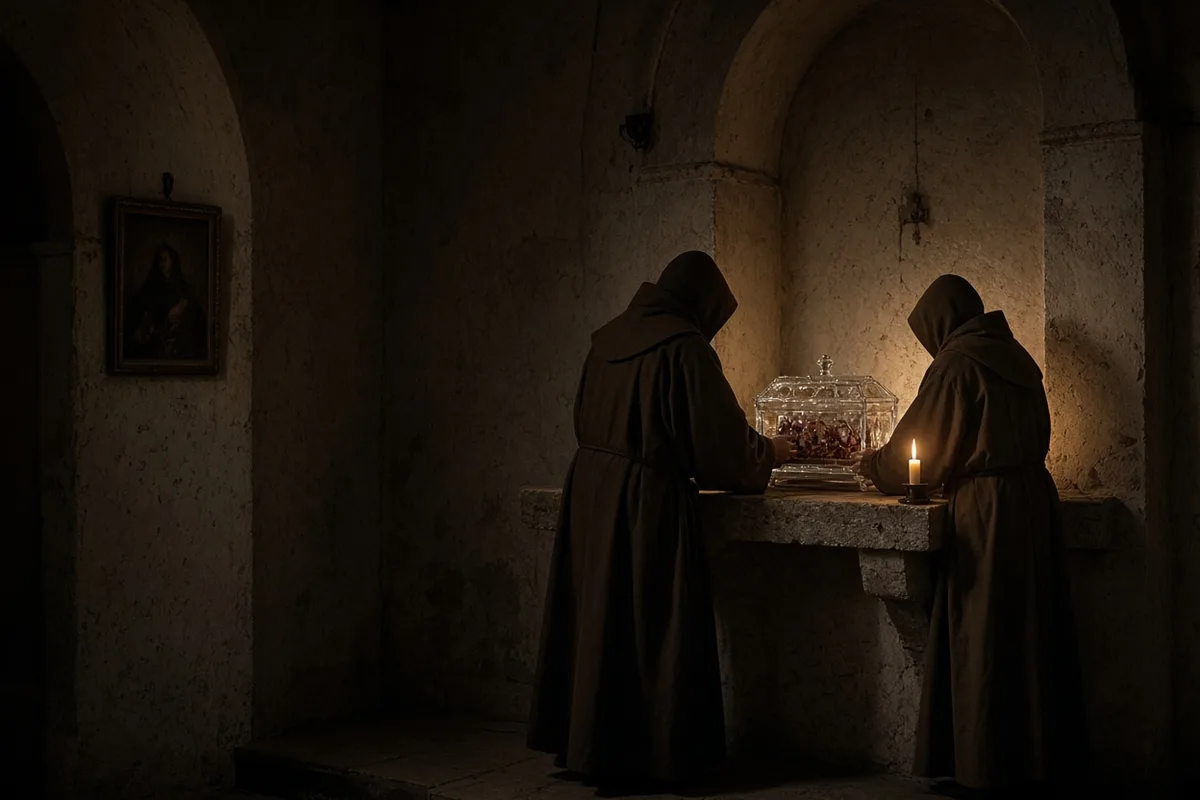
The sacristan Brother Marco Antonio da Pescara replaced the 340-gram wax block in the lamp on 9 September 2022 at 6:50 a.m., using beeswax supplied by the same apiary at San Giovanni in Venere that had furnished the annual 18 pounds recorded in 1694. He entered the weight in the daily log kept in the sacristy cupboard and noted the previous day’s visitor total of 1,847 on the same page. The monstrance glass, last cleaned on 4 June 2021 by Brother Paolo da Ortona with a solution of distilled water and 2 percent ethanol, showed no condensation when examined under the 40-watt bulb mounted above the tabernacle.
On 14 October 2019 the Franciscan provincial, Father Giovanni Battista da Chieti, authorized the installation of a new security camera above the relic niche after a 3-millimeter crack appeared in the lower rock-crystal window of the monstrance. The camera, model Hikvision DS-2CD2143G2-I, records continuously at 1080p and stores footage for 31 days on a 2-terabyte hard drive located in the convent office. The crack was repaired on 22 October 2019 by the Milan firm Vetro Arte using ultraviolet-cured resin applied under 3× magnification; the invoice lists 420 euros for materials and labor.
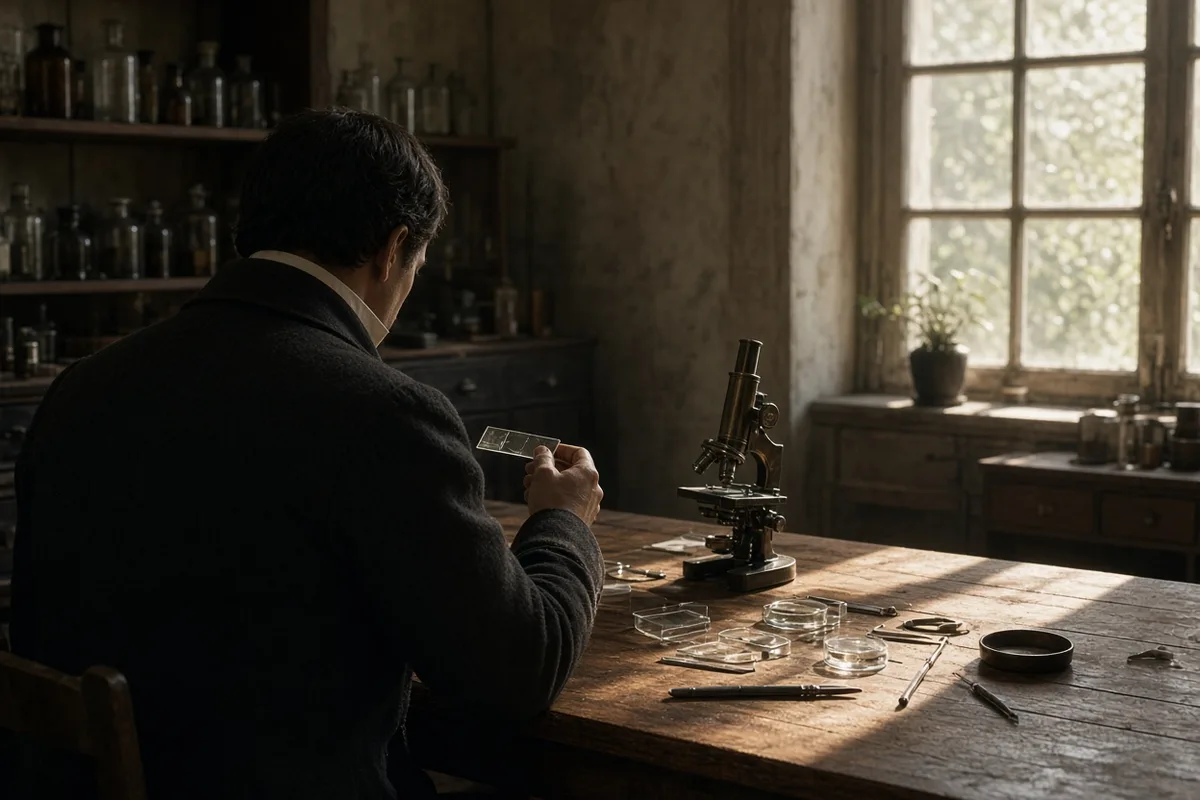
Archbishop Emidio Cipollone visited the relic chapel on 7 April 2018 accompanied by the vicar general Monsignor Antonio Di Marcantonio and two canons of the cathedral chapter. They examined the pinholes along the myocardial edge with a 5× loupe and confirmed that the central cavity measured 2.8 centimeters at its widest point, matching the dimension recorded by Professor Luigi Testa in 1887. The archbishop signed the sacristy register on the same page that lists the 1887 replacement of the glass pane.
The convent ledger “Supplicationes 2010–2023” contains 22 entries requesting authenticated images of the relic for publication. One request dated 11 February 2015 from the publisher of the journal Ecclesia, Father Carlo Maria da Roma, asked permission to reproduce the 1971 Linoli photomicrograph of the striated myocardium; the guardian Father Luciano Rotoli granted the request on condition that the caption include the exact phrase “tessuto miocardico striato umano di gruppo AB” taken from the original report. The image appeared in the March 2015 issue with that wording and the credit line “Archivio Fotografico del Santuario di Lanciano.”
Between 2005 and 2015 the single lamp consumed an average of 124 kilograms of beeswax per year, purchased in 25-kilogram blocks from the same supplier at San Giovanni in Venere. The sacristan recorded each delivery in the ledger under the heading “Cera,” noting lot numbers and the date of arrival. On 3 December 2012 the block delivered that day was found to contain a 4-gram fragment of honeycomb, which Brother Marco Antonio da Pescara removed and placed in a small envelope labeled with the delivery date before melting the remainder.
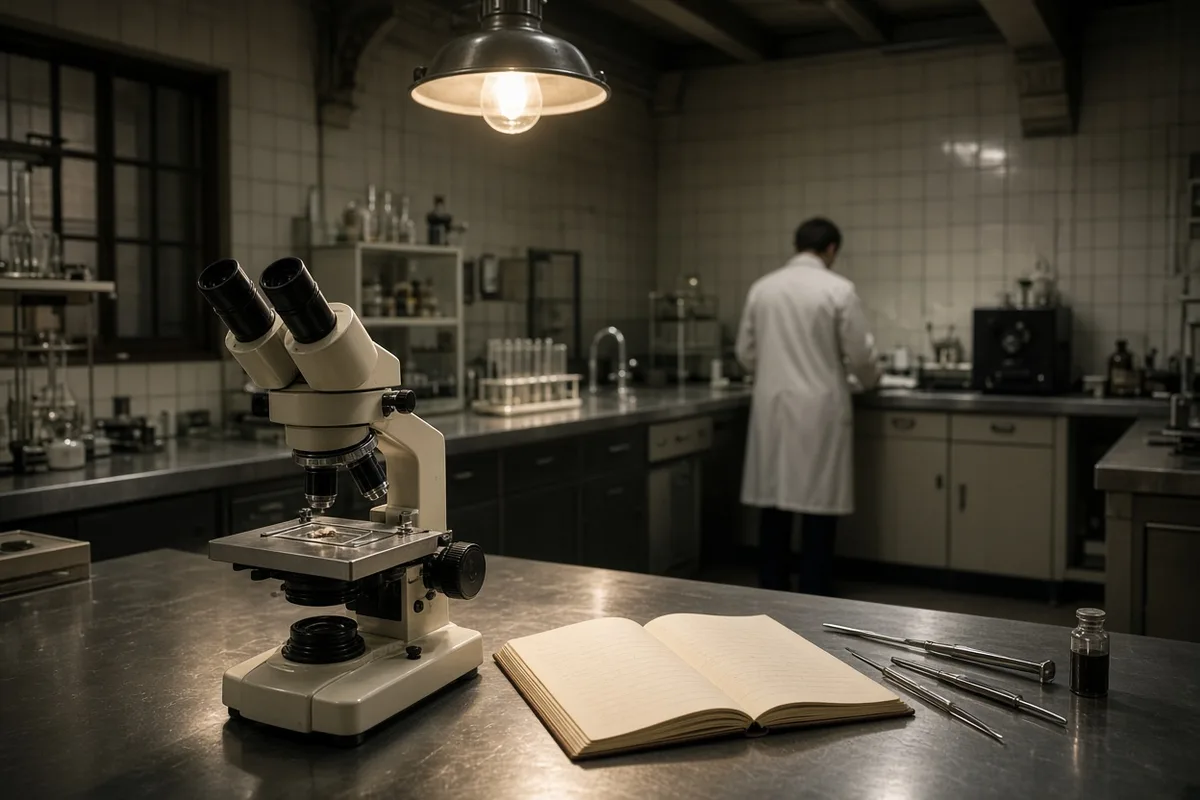
The World Health Organization data sheets deposited in Copenhagen under accession EUR/ICP/HMD 003 were digitized in 2008 by the regional office staff and made available to researchers upon written application. A request submitted on 19 May 2009 by Dr. Maria Grazia Ferri of the University of Bologna received 47 scanned pages containing the raw optical-density readings from the 500 histochemical reactions. The accompanying letter from the WHO librarian states that the sheets remain the property of the organization and may not be reproduced without permission.
Pilgrims who ascend the stair on weekdays between 9:00 a.m. and 12:30 p.m. are met at the top by a Franciscan tertiary volunteer who reads aloud the 1971 report’s conclusion that “the myocardial tissue maintains the optical properties of fresh striated muscle.” The volunteer’s name and the exact time of each reading are entered in a separate notebook kept on the landing. On 17 July 2023 the volunteer Sister Anna Maria di Lanciano recorded 312 readings between 9:05 a.m. and 12:25 p.m., the highest single-day total since the notebook began in 1998.
At 6:45 p.m. on 12 October 2023 Brother Marco Antonio da Pescara drew the dark veil across the monstrance after extinguishing the lamp with a brass snuffer. He descended the stair, locked the chapel gate, and placed the key in the wall safe whose combination is known only to the guardian and the sacristan. The nave below remained empty except for the sound of the last drop of wax striking the brass tray at 6:47 p.m., recorded by the security camera as a single audible click followed by silence.