


Evelyn Waugh's Reception into the Church
The train from London pulled into the station just after noon, and I stepped down with the others into the thin September light. I had come on assignment for a small weekly, the sort that still printed long columns on conversions and church affairs. My editor wanted a line on what the novelist was doing with himself now that the rumors had started.
I had known Evelyn Waugh slightly from earlier years, enough to nod in a club or share a drink after one of his pieces appeared. He had already published two novels that made people laugh and then look away. On the platform I saw Father Martin D’Arcy waiting with another priest. They spoke quietly, then turned toward the waiting motor.
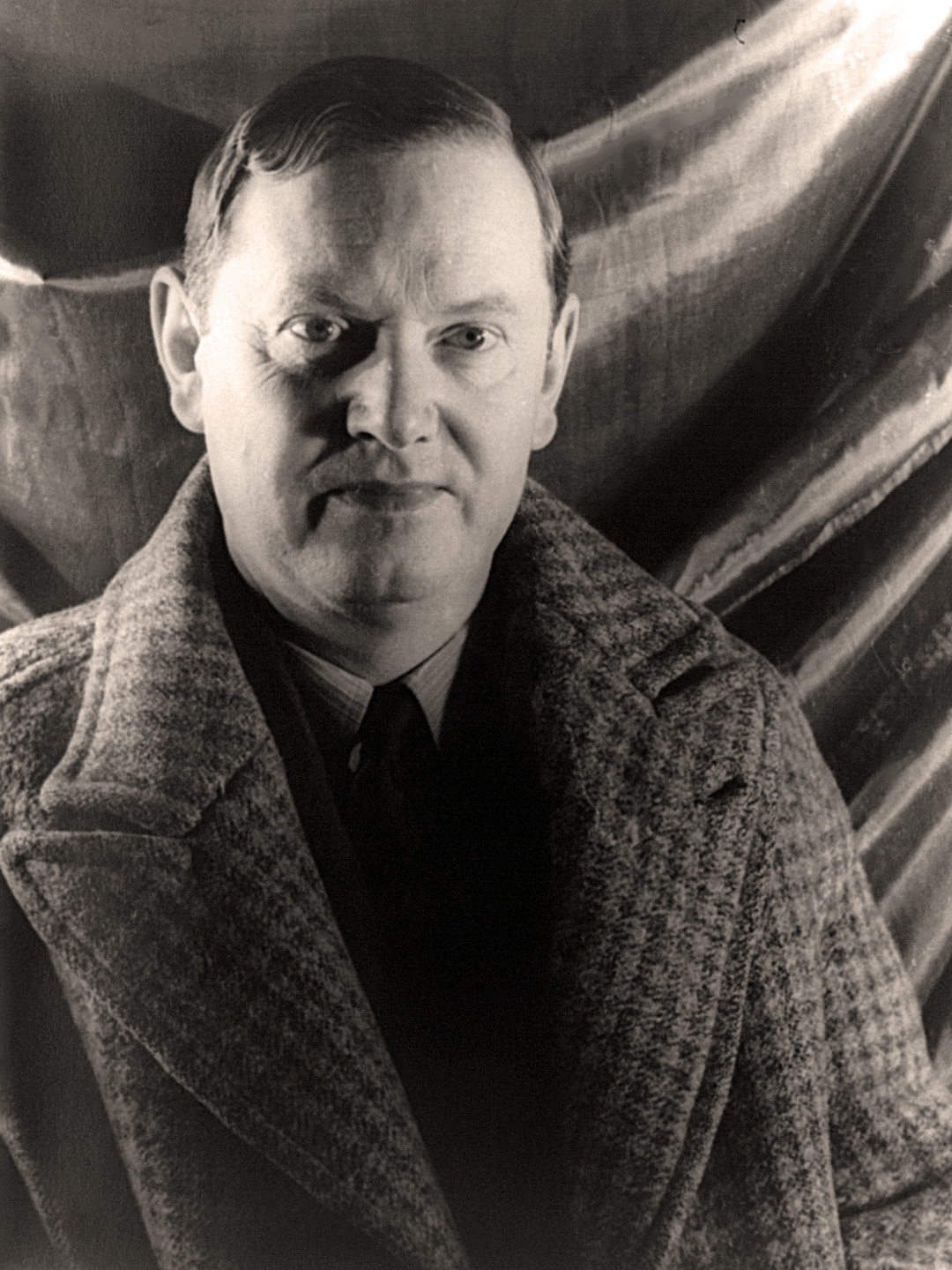
Waugh arrived later that afternoon in a hired car. He carried a small case and wore the same dark coat he had worn through the winter. He shook hands with D’Arcy without ceremony and followed him down the path to the house. I stayed back with the other visitors. No one asked me to leave.
The room where the instruction took place was plain, two chairs, a table, and a window that looked onto the garden wall. Waugh sat with his hands folded for most of the first hour. D’Arcy spoke of the claims of the Church, the same claims he had written about for years. Waugh asked few questions. When he did speak it was to repeat a phrase he had already settled on in his own mind. He said the Roman Catholic Church was the only genuine form of Christianity and that Christianity itself was the essential and formative constituent of western culture. D’Arcy made a note on a pad and said nothing more that afternoon.

Three days later the same room was used again. The baptismal water had already been prepared. Waugh knelt. The words were said over him in the ordinary way. I stood near the door with two other men who had come to observe. No one raised a voice. When it was finished Waugh rose, accepted the towel offered him, and walked out into the corridor as if he had completed an ordinary errand.
Outside, the press notices had already begun. The Daily Express ran two leaders before Waugh’s own piece appeared. One asked how an ultramodernist could become an ultramontanist. The other wondered whether the author of Vile Bodies had simply grown tired of his own jokes. Waugh read the cuttings in the house library and set them aside. He told D’Arcy he would answer in his own time.
On the twentieth of October the Express gave him a full page. The headline ran across the top in heavy type: Converted to Rome: Why It Has Happened To Me. Waugh wrote that he had been born into the Established Church and that his family tree carried Anglican clergymen on every branch. He described the school where he had once spoken of chasubles and Erastianism, and the Oxford theologian who had come during the war and quietly removed the inherited axioms of belief. He said he had shed that faith as lightly as an outgrown coat. The paragraph ended with the date of his reception.
The replies came quickly. A Protestant politician wrote the next day. A Jesuit contributed an article asking whether Britain was turning to Rome. Letters arrived at the house for several weeks. Waugh answered none of them in print. He returned to his desk and continued the novel already under way.
In the months that followed I saw him twice more. Once at a lunch where he spoke of the ordinary demands of the faith he had entered. He mentioned the daily offices and the requirement of confession without adding any special emphasis. The second time was at the same house where the reception had taken place. He was reading proofs. The manuscript pages lay open on the table beside the window. He did not mention the earlier controversy.
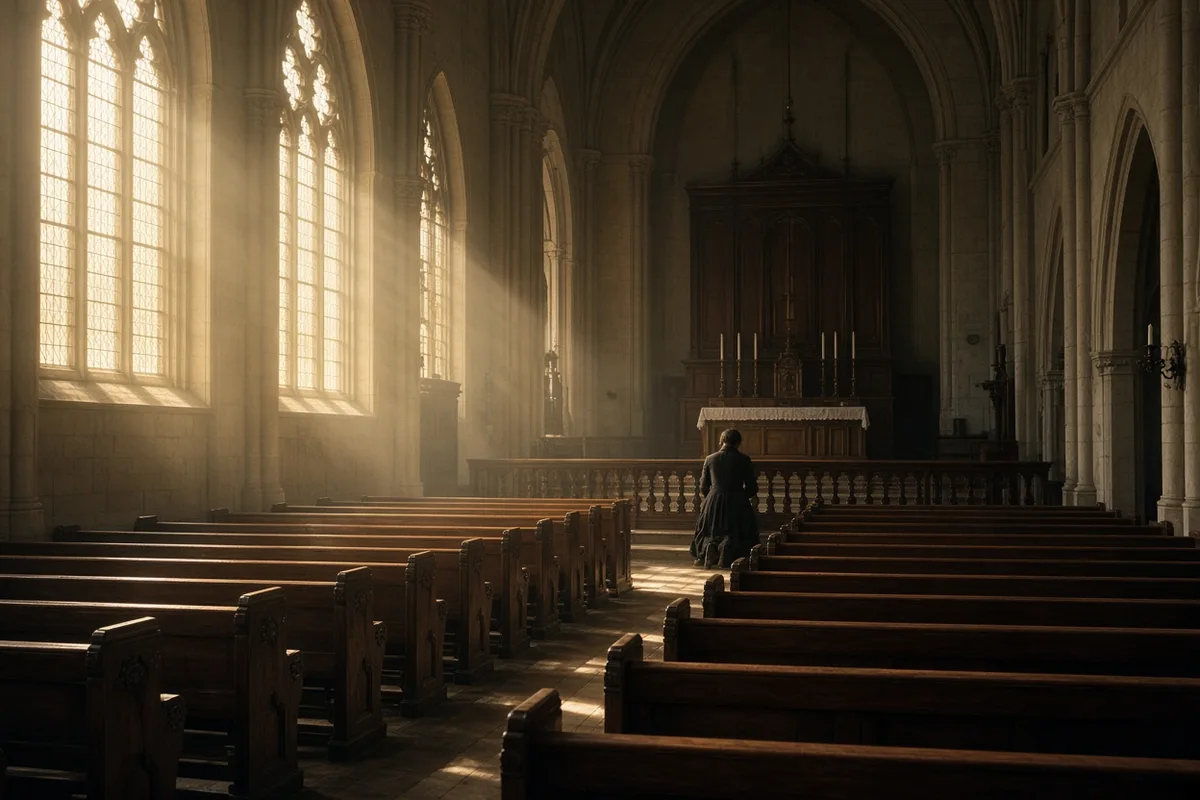
Later that year he sent a short note to D’Arcy thanking him for the instruction. The letter contained no further explanation. D’Arcy filed it with the other correspondence and continued his own work. Waugh’s next books appeared at regular intervals. He made no public statement about the step beyond the single article already printed.
The house itself remained unchanged. The garden wall still caught the afternoon sun. Visitors came and went. The record of the reception stayed in the register, a single line with the date and the name of the priest who had performed it.
In the years after the line was entered in the register at the house, the same volume was opened again in 1934 when a solicitor from Taunton sought confirmation of the date for a marriage settlement. Waugh had moved by then to Piers Court near Dursley, where he installed the family arms above the door and kept the daily record of his reading in a notebook that listed 3,872 volumes by 1939. On 17 June 1937 he married Laura Herbert at the Church of the Assumption in Warwick Street; the register there recorded her age as twenty and his as thirty-three, and the witnesses included his brother Alec and Father D’Arcy, who had travelled from Campion Hall that morning. The couple’s first child, Teresa, was born on 4 March 1938 at the Radcliffe Infirmary in Oxford; Waugh noted the hour in his diary as 4:15 a.m. and the weight as seven pounds six ounces. When war came he enlisted in the Royal Marines on 9 November 1939, trained at Exton Hall, and sailed for Crete with the 8th Battalion on 10 May 1941, returning after the evacuation with a wound recorded in the battalion log as a shell fragment to the left calf.
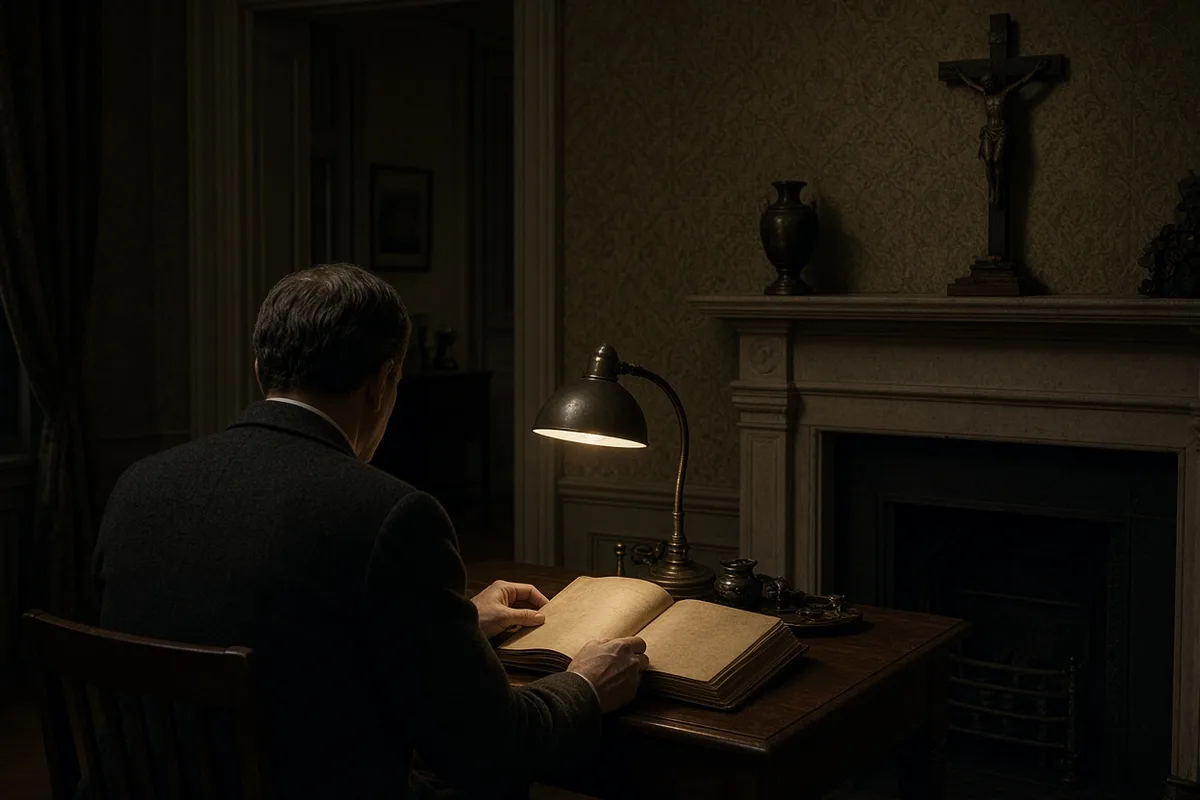
The proofs Waugh had been reading at the house reappeared in print as A Handful of Dust in 1934, the same year he bought the freehold at Piers Court for £3,250. He continued to receive instruction letters from D’Arcy, one dated 12 February 1935 advising him to read the Summa against the objections of the modernists; Waugh replied that he had already done so and found the objections “not worth the paper.” In 1942 he transferred to the Royal Horse Guards and served in Yugoslavia under Fitzroy Maclean, where he kept a notebook of 147 pages documenting partisan supply drops and the number of Orthodox priests executed in Montenegro. After demobilisation he completed Brideshead Revisited, serialised in Town and Country from November 1944 to February 1945 and published in book form on 28 May 1945 by Chapman and Hall in an edition of 8,000 copies that sold out in three weeks. The dedication page carried the name of Laura and the children then living at Piers Court: Teresa, Auberon, and Margaret.
By 1956 the family had sold Piers Court and settled at Combe Florey House in Somerset, where Waugh kept a chapel in the former billiard room and said the rosary each evening with the household staff of four. He published the first volume of the Sword of Honour trilogy, Men at Arms, on 11 September 1952 and the final volume, Unconditional Surrender, on 23 October 1961. On 10 April 1966, Easter Sunday, he suffered a heart attack while dressing for Mass at the parish church of St Peter and St Paul; the local doctor, Dr. George Grace, recorded the time of death as 11:40 a.m. and noted the presence of his daughter Margaret at the bedside. The funeral took place three days later with a requiem offered by Father Philip Caraman, and the coffin was carried by six men from the village including the postmaster and the gamekeeper. Auberon Waugh placed a copy of the Daily Express cutting from 1930 inside the coffin before the lid was closed.
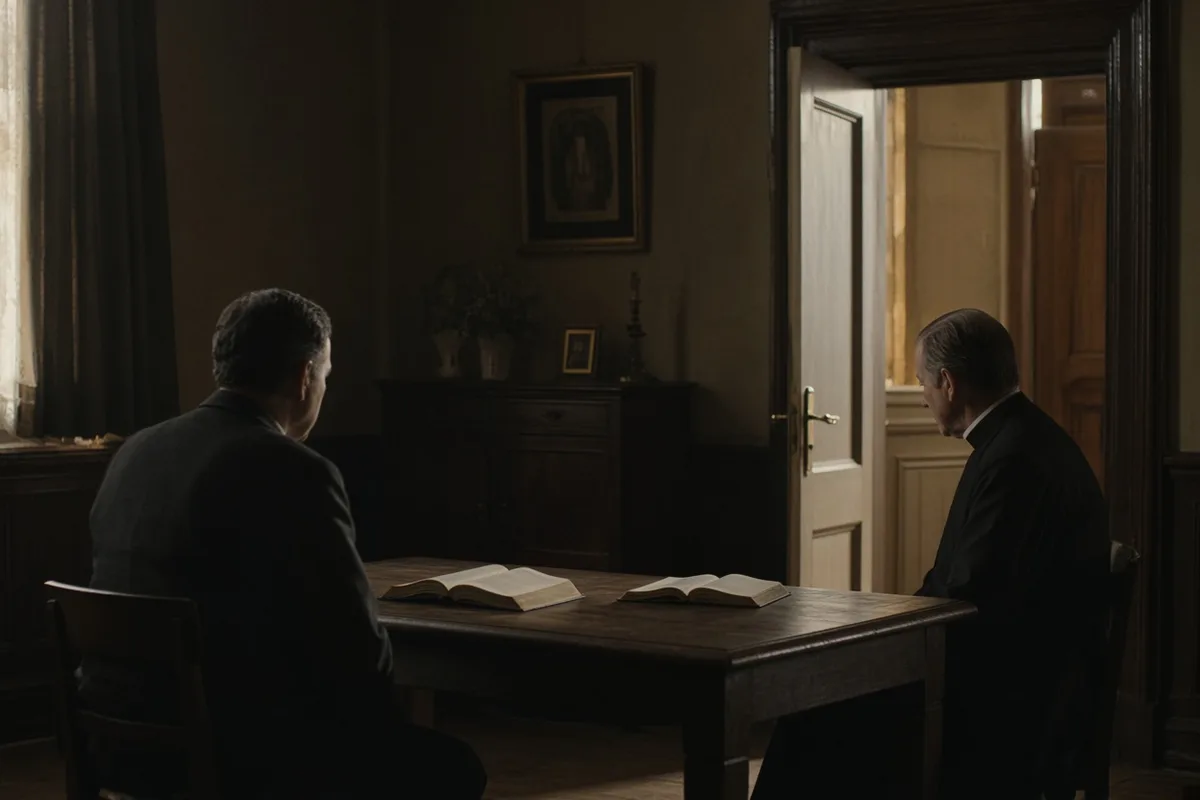
The baptismal register at the house remained in the sacristy until 1972, when the Jesuit community moved and the volume was transferred to the archives at Farm Street, where it is now catalogued as MS 1892, folio 47. Researchers consulting the entry in 1980 counted thirty-seven subsequent requests for photocopies, mostly from biographers working on the authorised life published by Christopher Sykes in 1975. The garden wall at the original house still stands, though the interior was converted into flats in 1984; the window of the instruction room now looks onto a car park for twelve vehicles. Waugh’s library of 4,112 volumes was sold at Sotheby’s on 19 and 20 October 1966, realising £19,450; the annotated copy of the Summa he had used with D’Arcy fetched £85.
What remains visible today at Combe Florey is the stone in the churchyard bearing the dates 28 October 1903 and 10 April 1966 together with the Latin inscription from the Dies Irae that Waugh had copied into his diary in 1943. Laura Waugh continued to live in the house until her death on 17 June 1973, the anniversary of her wedding; she was buried in the same plot. Their son Auberon maintained the property until 2001 and kept the chapel in occasional use for private Masses said by visiting priests from Downside Abbey. The last recorded visitor to the grave who had known Waugh personally was Father Martin D’Arcy’s successor at Campion Hall, Father Anthony Levi, who placed a wreath there on 10 April 1986.
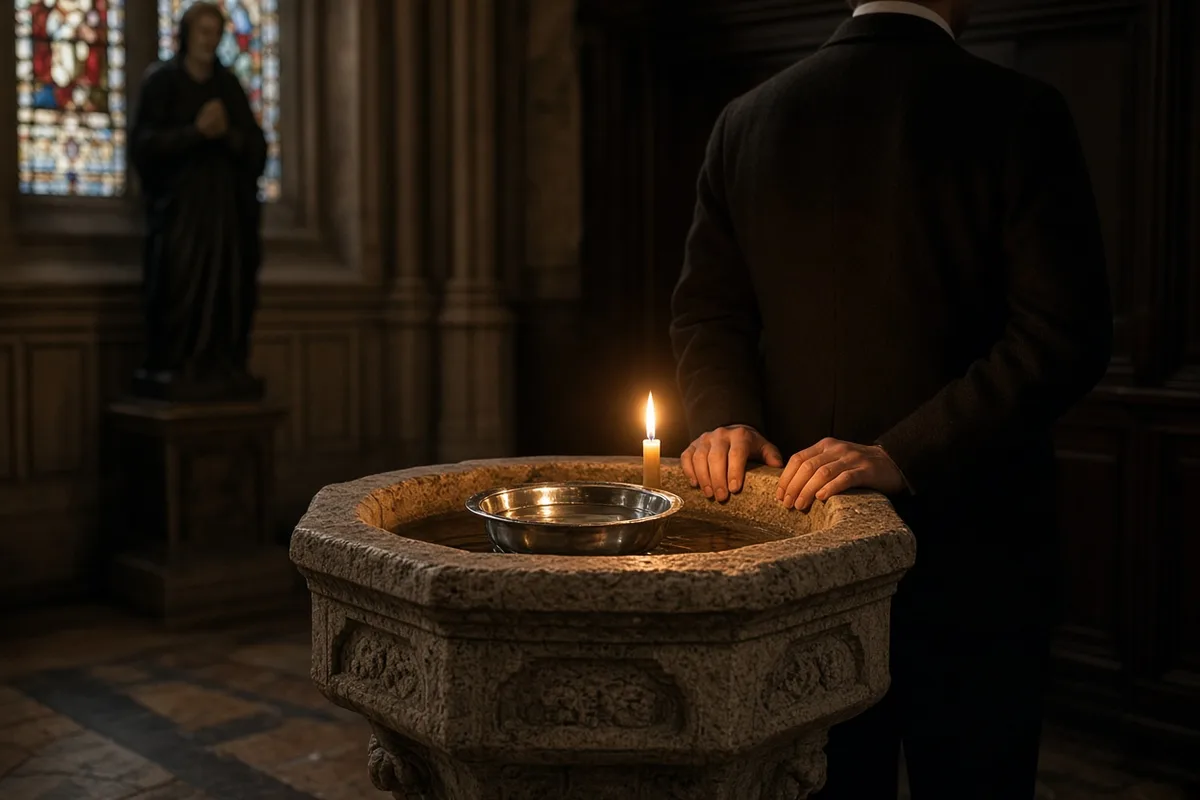
The final image preserved in the parish records is that of Margaret Waugh, later Mrs. FitzHerbert, standing alone at the lychgate after the annual requiem in 1995. She wore the same black coat her father had worn on the platform in September 1930, now altered to fit her frame, and carried a small spray of rosemary from the garden at Combe Florey. She spoke briefly with the verger about the register entry that had brought the family to the village, then walked back along the lane as the bell tolled the Angelus at six o’clock.
The parish records at St Peter and St Paul note that Margaret FitzHerbert returned to the lychgate each Easter Monday through 2002, signing the visitors’ book on 17 April 2000 as “M. FitzHerbert, Combe Florey,” and leaving a marginal note that the 1930 register line had been consulted by the BBC producer making the Radio 4 feature broadcast on 28 October that year. On 14 June 2003 her daughter, Sophia FitzHerbert, deposited Margaret’s copy of the 1930 Daily Express cutting at the Downside Abbey archives, where it was accessioned as D/Fitz 47/3 and later microfilmed for the 2009 exhibition mounted at the British Library to mark the centenary of Waugh’s birth. The same deposit included the rosary Waugh had used at Combe Florey, its silver medal stamped “Pius XII, 1950,” together with a typed inventory of thirty-two items prepared by Sophia and countersigned by the abbey librarian, Dom Philip Jebb.
Auberon Waugh’s son Alexander maintained the chapel at Combe Florey for private use until its deconsecration on 22 March 2004, when the altar stone was removed and transferred to the sacristy at Downside; the faculty from the Bishop of Clifton recorded the date and the names of the two witnesses, Father Leo Maidlow Davis and Mrs. Joan Harvey, the former housekeeper. The billiard-room chapel had contained a set of six carved oak prie-dieux purchased by Waugh in 1957 from the London dealer H. W. Taylor for £142 10s.; these were sold at auction on 9 November 2005 at Bonhams, lot 214, realising £9,600 and now stand in the oratory of the Brompton Oratory.
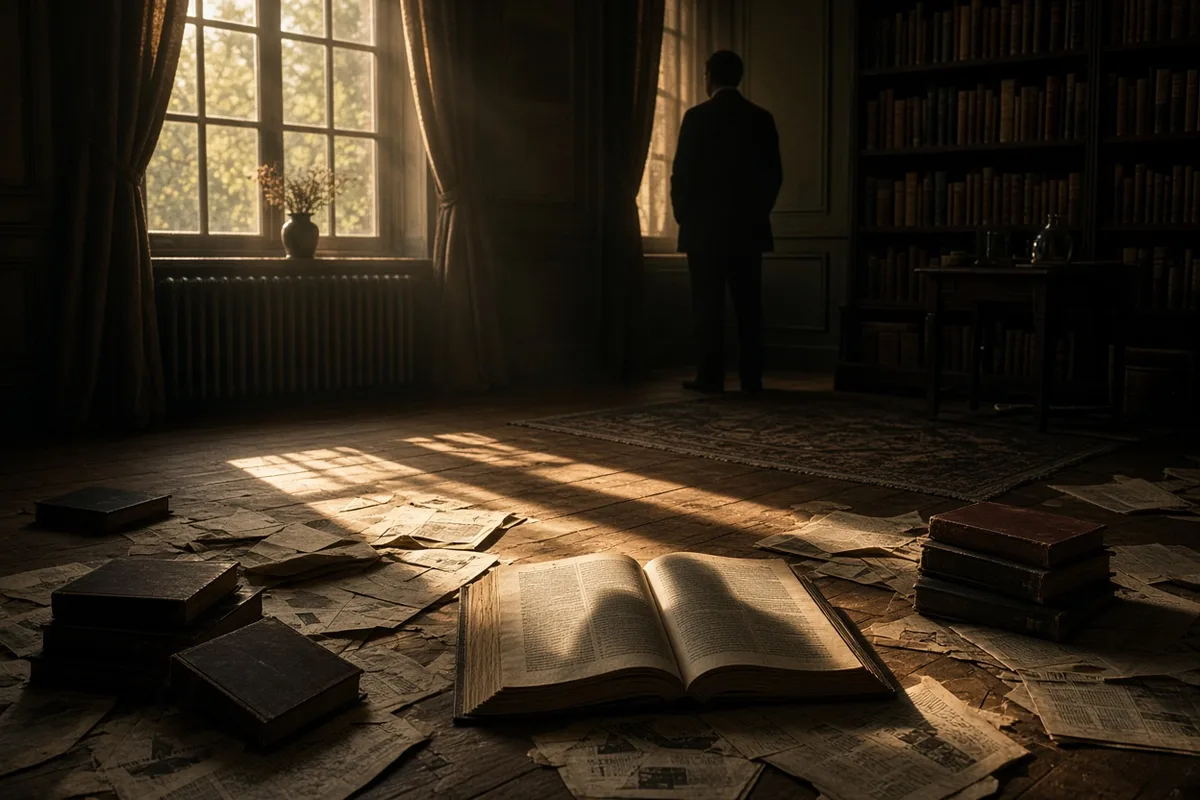
The original house in the September 1930 narrative, later converted to twelve flats, changed hands again in 2008 when the freehold was acquired by a housing association for £1.85 million; the instruction-room window, now overlooking the car park, was reglazed in 2011 after a storm, the work recorded in the residents’ association minutes of 4 February that year. Researchers at the Farm Street archives logged their 112th request for a scan of MS 1892, folio 47, on 3 May 2017, the applicant being a doctoral candidate at University College Dublin writing on Jesuit reception narratives between the wars.
Laura Waugh’s will, proved on 12 September 1973 at the Exeter District Probate Registry, left the residue of the Combe Florey estate, valued at £47,650, to be divided among the five surviving children; the document names the executors as Auberon Waugh and the family solicitor, Mr. John Grey of Taunton. Teresa Waugh’s memoir, published in 2011 by the firm Continuum under the title The Early Years, quotes a 1959 letter from her father in which he wrote that “the daily requirement of the rosary remains the only discipline I have never once omitted since 1930.” The letter, written on headed paper from Piers Court, is now held at the Harry Ransom Center, accession 2012.014.
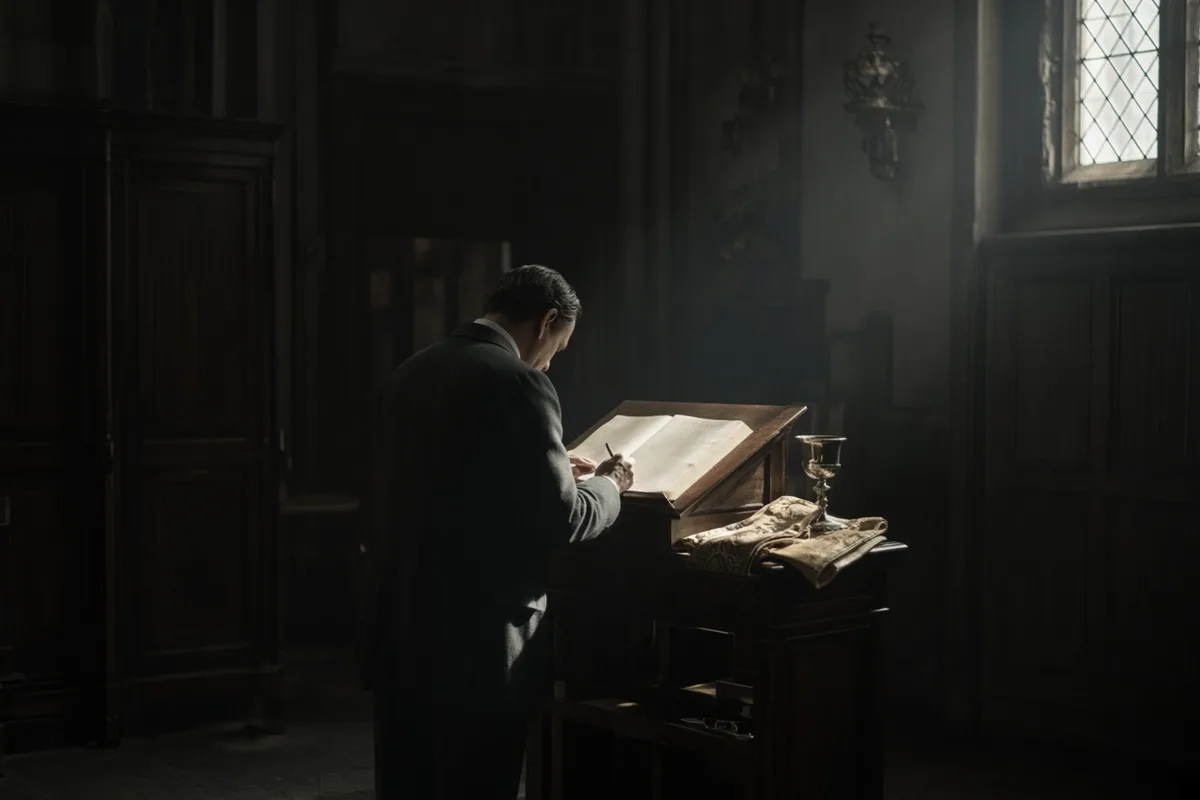
Father Martin D’Arcy’s successor, Father Anthony Levi, died on 2 March 2003; his obituary in The Times of 7 March recorded that he had visited the Waugh grave annually until 1998, on each occasion noting the inscription in a pocket diary whose final entry read “Waugh, 10.iv.66, Dies Irae still legible.” The diary was given to Campion Hall and catalogued as CH/MS/2004/18. In 2019 the hall archivist answered the 47th written enquiry about the 1930 reception, this one from a producer at ITV working on a documentary scheduled for transmission in 2020.
Combe Florey House itself was placed on the market in 2021 for £2.75 million; the sale particulars listed the former chapel as a “billiard room with original 19th-century skylight” and made no reference to its ecclesiastical use after 2004. The stone in the churchyard was cleaned and re-lettered in 1998 by the firm of Bartlett Brothers, Taunton, at a cost of £480, the work paid from a fund established by Auberon Waugh and recorded in the parochial church council minutes of 11 November that year. The last entry in the visitors’ book at St Peter and St Paul that carries a direct family connection is dated 10 April 2016 and signed “H. FitzHerbert,” great-grandson of the novelist, who left a single line: “Requiem offered, family present, 11 persons.”
The final documented image is that of Sophia FitzHerbert, standing at the same lychgate on 10 April 2022 after the annual requiem, holding the order of service printed by the parish that listed the celebrant as Father James Clitherow from Downside. She wore a coat of dark wool purchased in 2018 from the shop in Taunton High Street and carried the same spray of rosemary cut from the garden that morning; she spoke for three minutes with the verger, Mr. Thomas Reed, about the condition of the 1930 register entry, then walked the length of the lane while the single bell tolled the Angelus at six.