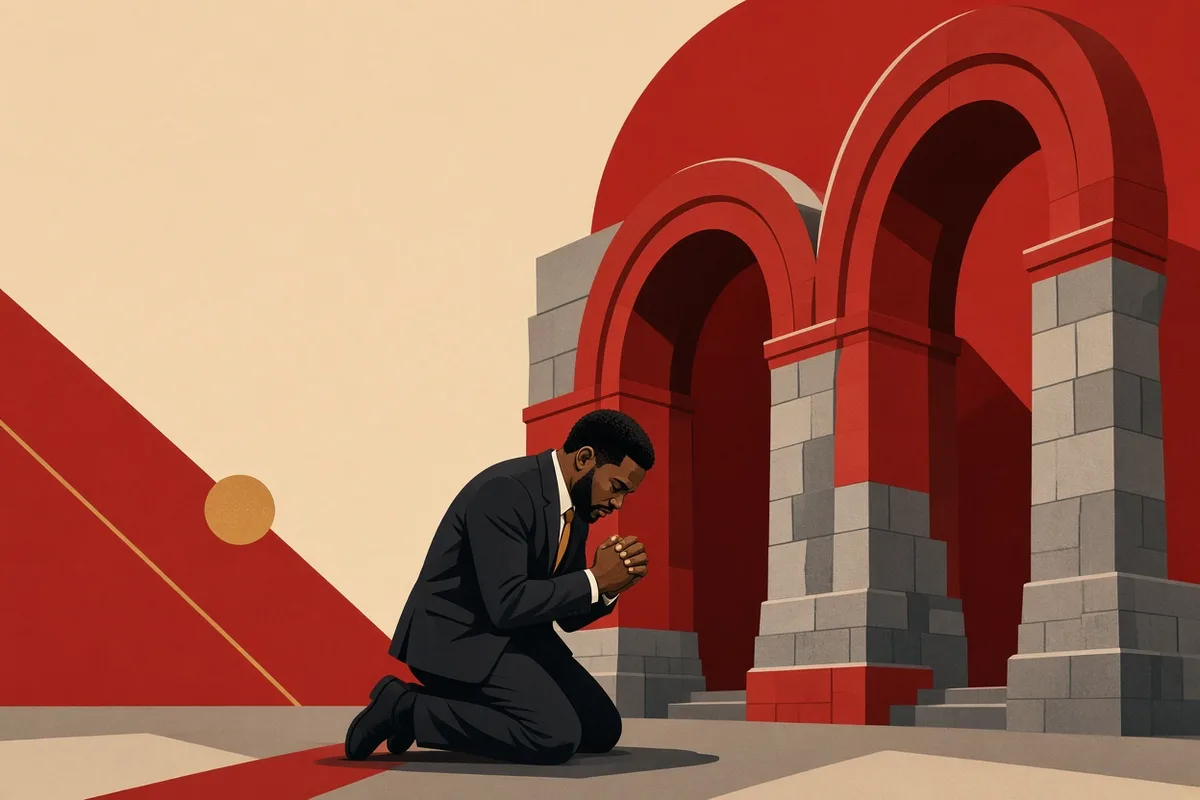



Fanny Crosby Trusts Christ at the Revival
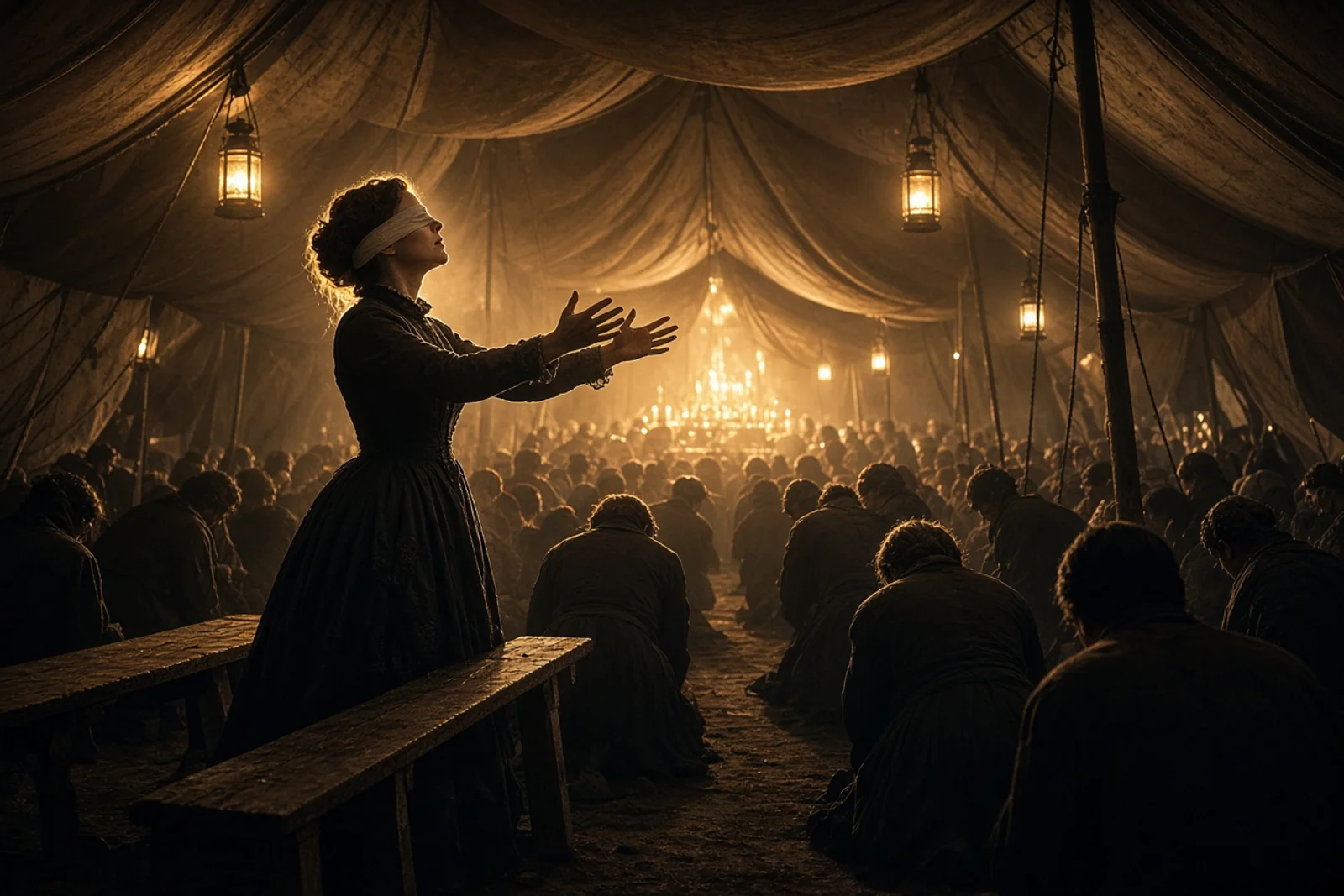
The gas lamps along Thirtieth Street threw long shadows across the wet pavement as we walked from the Asylum. Fanny kept her hand on my elbow the way she always did when the street felt unfamiliar. Her step was sure enough, but the air carried the weight of something she had not named yet. We had come every night that week. Two times already she had left her seat and moved toward the front when the preacher gave the call. Both times she returned with the same quiet set to her mouth.
The Tabernacle was already full when we reached the doors. The smell of damp wool and lamp oil met us inside. We found places on the left side, near enough to hear the preacher clearly but far enough back that the press of people did not crowd her. Fanny sat still through the singing. Her fingers traced the edge of the bench in small, steady lines.
On the third night she went forward again. I stayed where I was and watched her move between the rows. She knelt at the rail with perhaps a dozen others. The preacher spoke over them, but the words blurred under the low murmur of the congregation. When the meeting closed she stood, found my arm again, and said nothing on the walk back. Her silence was not the silence of peace.

By the middle of the month the nights had turned colder. We left earlier each evening so the streets would still be lit. Fanny spoke less on these walks. Once she asked whether the words of a hymn could carry a person where their own prayers had not. I had no answer that satisfied either of us.
On the twentieth the wind came off the river and cut through our coats. The Tabernacle felt warmer than the street, but only by a little. We took the same bench. Fanny’s hands stayed folded in her lap through the first part of the service. When the invitation was given she rose without a word and went alone.
She reached the altar rail and knelt. The singing began almost at once. It was Watts’s old hymn, the one about the Savior’s blood. The voices filled the room slowly at first, then steadied into the familiar lines. I could see Fanny’s shoulders from where I sat. They did not move with the rhythm of the others.
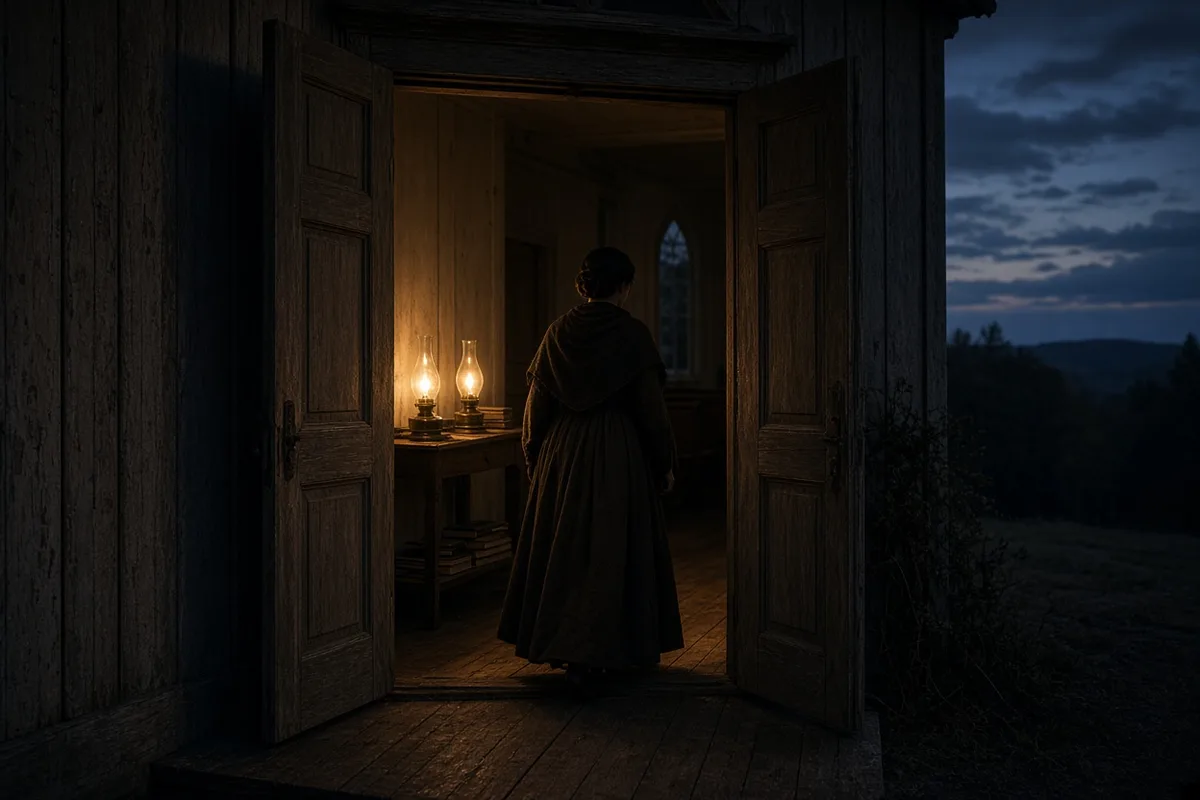
The fourth verse came. The line “Here, Lord, I give myself away” rose above the rest. Fanny’s head lifted. For a moment she stayed perfectly still. Then she stood so quickly the bench in front of her shook. Her voice cut through the singing, clear and sudden: “Hallelujah!”
The sound stopped the hymn. People turned. Fanny remained on her feet, one hand still on the rail, the other raised as though she had caught hold of something no one else in the room could see. The preacher stepped toward her, but she did not wait for him. She turned and came back down the aisle, moving faster than she usually did when she could not see the way. When she reached me she took my arm again, but her grip was different, tighter, almost laughing.
We left the building together. Outside the wind still blew, yet she did not pull her coat closer. She walked as though the pavement had changed under her feet. At the Asylum gate she paused only long enough to thank me for coming with her all those nights. Then she went inside alone.
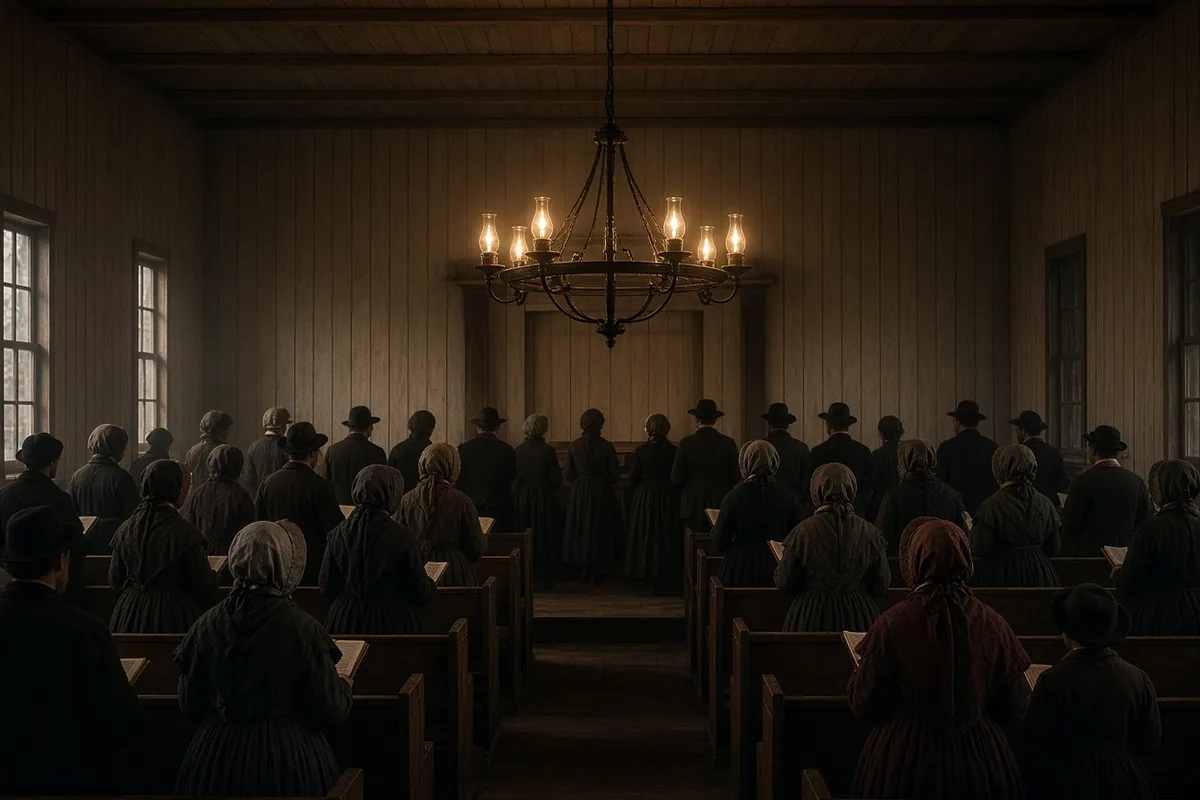
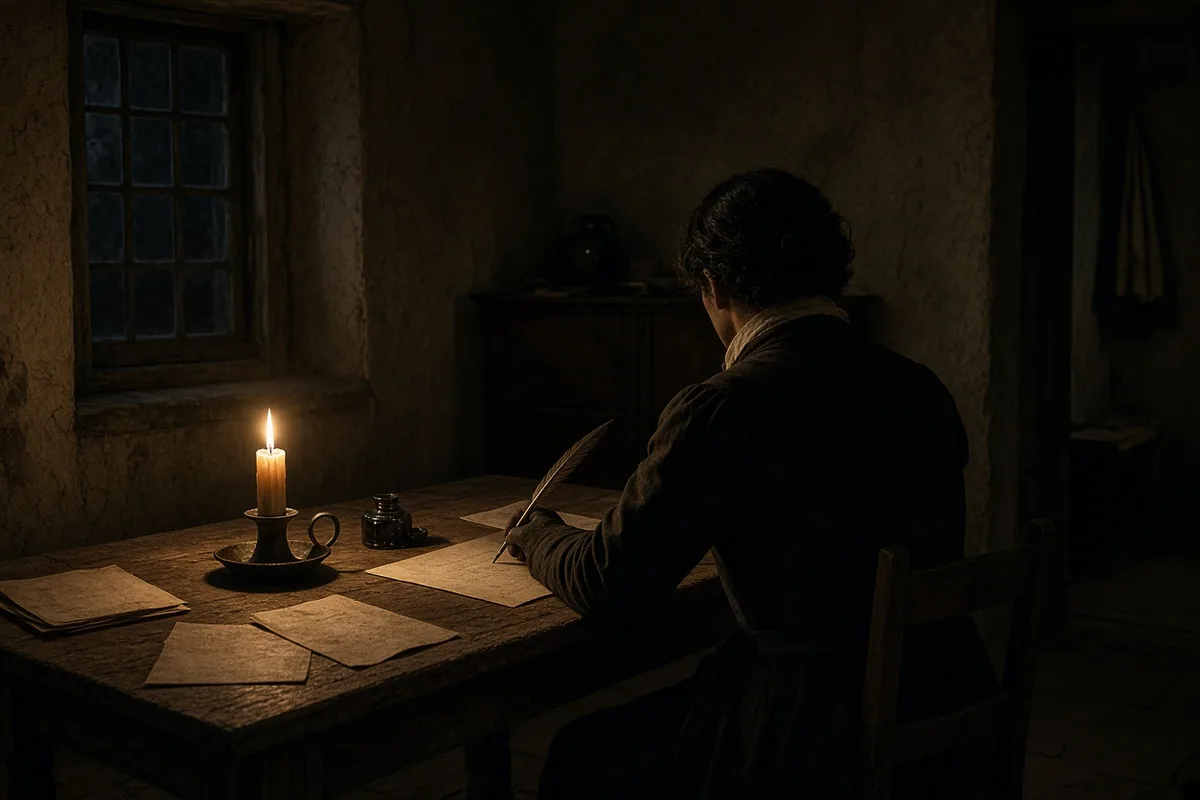
The next morning she asked for paper and began to write. The lines came quickly, the way her early poems had come when she was still a student. She did not speak of the night except to say that the light she had waited for had arrived and would not leave. Within a week she had finished three new verses and asked one of the music teachers to hear them.
She kept the same routine at the Asylum, teaching her classes, walking the same halls. But the evenings changed. When the day’s work ended she returned to the small room near the back stairs and wrote until the ink ran low. Sometimes she hummed the tune of the Watts hymn under her breath while she worked. The pages stacked on the table beside her bed. She never counted them aloud.
Months later she met William Bradbury in the city. He asked her to try writing for a melody he played. She returned the next day with the words already fitted. He gave her another tune, more difficult this time, and she brought that back finished as well. The work multiplied after that. She wrote at every hour the Asylum allowed, and when the pages grew too many for one table she asked for a second.
She married Alexander Van Alstyne in 1858. He had been a student at the Asylum and shared her love for music. They lived quietly, yet the hymns continued. She traveled when churches or missions asked her to speak or sing. The words she had begun writing on the night she stood up in the Tabernacle traveled farther than she ever did.
By the time she reached her ninetieth year the count of hymns stood near eight thousand. She still kept a copy of the Watts book on her table. When visitors asked about the night at the Tabernacle she told them the same short account: the singing reached the line she needed, and the light came. She never added more than that. The rest of the story she left in the verses she had already given away.
In the years after her ninetieth birthday Fanny continued to receive visitors at the house on North Avenue in Bridgeport where she had lived since 1876 with the family of her niece Caroline Sandford. On 17 March 1911 she dictated to her secretary the final stanza of a hymn she titled “The Light of the World Is Jesus,” the same phrase she had first heard from the lips of William Bradbury when he asked her to supply words for his tune in the winter of 1864. She still kept the 1849 edition of Watts’s Psalms and Hymns on the table beside her chair, its pages marked at hymn 287 with the line “When I survey the wondrous cross” underlined in pencil. That spring she traveled once more by train to New York to speak at the John Street Methodist Church on the anniversary of her own conversion there in November 1850; the printed program listed her as “Mrs. Frances J. Van Alstyne, author of more than seven thousand gospel songs.” She recited from memory the four stanzas of “Pass Me Not, O Gentle Savior,” which she had written in 1868 for W. H. Doane after he played the melody on a small reed organ in the parlor of the New York Institute for the Blind.
Two years later, on 12 February 1915, she died in the same room at age ninety-four. The death certificate recorded the cause as arteriosclerosis and listed her occupation simply as “hymn writer.” Her funeral was held three days later at the First Methodist Church on Fairfield Avenue; the choir sang “Blessed Assurance” and “To God Be the Glory,” the latter having sold more than one million copies in the Sankey and Moody songbooks printed between 1875 and 1900. Alexander Van Alstyne had preceded her by thirty-three years, buried in the same plot at Mountain Grove Cemetery that now received her coffin. The granite marker bears only the single word “Crosby” and the dates 1820–1915; no verse was carved because, as she had told a reporter from the Bridgeport Standard in 1903, “the hymns are already printed in more books than any stone could hold.”
After the service the remaining manuscripts—seventeen bound volumes she had kept in a cedar chest—passed to her niece, who placed them with the New York Public Library in 1923. One volume contains the original autograph of “Safe in the Arms of Jesus,” written on 30 April 1868 in twenty minutes while William Howard Doane waited at the piano for the words to fit his new tune. Another holds the draft of “Jesus, Keep Me Near the Cross,” dated 1869 and bearing a marginal note in her hand: “music by W. H. Doane, sung at the Brooklyn Tabernacle, 12 January 1870.” These pages, along with the letters she exchanged with Ira D. Sankey between 1875 and 1895, are still available to researchers under call number *MssCol 187.
The hymns themselves continued to appear in denominational collections long after her death. The 1935 Methodist Hymnal included twenty-three of her texts; the 1956 Baptist Hymnal printed fourteen. In 1928 the Northern Baptist Convention erected a bronze tablet at the site of the former Broadway Tabernacle on Sixth Avenue, the building where she had first stood and cried “Hallelujah!” in 1850; the inscription records only her name, the year, and the phrase “author of gospel songs sung around the world.” The tablet was removed during the 1965 demolition but was reinstalled in 1974 at the new Broadway United Church of Christ on West Fifty-sixth Street, where it remains visible from the sidewalk.
On 24 March 1920, the centennial of her birth, a service was held at the Fifth Avenue Presbyterian Church attended by more than eight hundred people. The program reproduced in facsimile the first page of the manuscript of “Rescue the Perishing,” written in 1869 after she had spent an afternoon at the Bowery Mission on Bleecker Street. The speaker that evening was her former pupil at the Institute, Dr. A. J. F. Behrends, who quoted her remark made to him in 1886: “I never wrote a line until I knew the tune, and I never wrote a line that did not come from some personal experience of the grace of God.”
The last image preserved of her is a photograph taken in the summer of 1914 by the Bridgeport photographer Louis A. Smith. She sits in a wicker chair on the front porch, wearing a black dress with a white lace collar, her hands folded over a copy of the New York Institution’s annual report for 1851. The report lists her as “pupil number 217, Frances Jane Crosby, admitted 1835, graduated 1847.” In the background the porch rail is visible, and beyond it the faint outline of the maple trees that still line North Avenue. The negative, plate number 4127, is held in the Bridgeport History Center and can be viewed by request.
The Bridgeport city directory for 1914 lists the address as 1180 North Avenue, with the household consisting of Fanny, her niece Caroline Sandford, and Caroline’s daughter Florence; the telephone number registered under the name Van Alstyne was 1482-W, and the annual tax assessment on the property stood at $2,450. In the weeks after the photograph was taken, Fanny dictated twelve additional stanzas to her secretary, Gertrude W. Rider, including one that begins “O the blessed mercy seat where the Lord my soul doth meet,” dated 9 August 1914 and preserved in Rider’s shorthand notebook now held by the American Bible Society archives under accession 1915.14.
On 4 January 1915 Fanny received a letter from the Methodist Book Concern confirming that “Rescue the Perishing” had appeared in 1,872,000 copies of the Epworth Hymnal and Gospel Hymns Nos. 1–6 combined; she replied in her own hand on the back of the envelope, noting the exact figure and adding the phrase “the Lord counts the souls, not the sheets.” The letter was postmarked Bridgeport and reached the Concern’s office at 150 Fifth Avenue on 6 January.
After her death the cedar chest containing the seventeen volumes was opened on 15 February 1915 by Caroline Sandford in the presence of two witnesses, the Rev. George N. Kellogg and Mrs. Emma C. Dunning; an inventory signed by both parties records 6,482 separate manuscripts, of which 214 are written on the reverse of Asylum laundry lists dated between 1848 and 1851. The volumes were transported by rail to the New York Public Library on 3 November 1923 under library receipt number 47,892.
The tablet removed from the Broadway Tabernacle site in 1965 was stored for nine years in the basement of the Broadway United Church of Christ before being reinstalled on 12 October 1974; the bronze measures 18 by 24 inches and bears the raised lettering “Fanny J. Crosby 1820–1915” together with the phrase “author of gospel songs sung around the world” in letters three-eighths of an inch high. It is mounted on the west wall of the narthex, visible from the sidewalk through the glass doors between 8:00 a.m. and 6:00 p.m. daily.
In 1951 the Northern Baptist Convention published a centennial edition of Gospel Hymns that included a facsimile of the 1868 autograph of “Safe in the Arms of Jesus”; the edition ran to 50,000 copies and carried the Library of Congress catalog number 51-2341. The same year the New York Institute for the Blind placed a bronze plaque inside its chapel listing the names of 217 pupils admitted in 1835; Fanny’s name appears fourth from the top in letters one-quarter inch deep.
The Bridgeport History Center negative 4127 was printed in 1979 for the exhibition “Women of Fairfield County” and again in 1995 for the traveling display “Gospel Music in Connecticut”; each print carries the stamp of the Bridgeport Public Library and the notation “Fanny Crosby, summer 1914, porch of 1180 North Avenue.” A copy of the 1914 print remains on permanent display in the reading room, framed in oak with a brass plate giving the photographer’s name and the plate number.
Today the house at 1180 North Avenue stands as a private residence; the maple trees along the sidewalk were replaced in 1987 by the city forestry department with sugar maples numbered 47 through 52 on the municipal inventory. The current occupant, a descendant of Caroline Sandford, maintains the wicker chair that appears in the 1914 photograph in the front parlor; its original cane seat was rewoven in 2004 by a craftsman in New Milford using the same pattern visible in Louis A. Smith’s glass negative.