



Financial crises follow one pattern for three centuries
In 60 seconds
- Financial crises are instances of one recurring pattern across more than three centuries, not unique accidents.
- Every mania starts with a real displacement that opens genuine profit before imitators overextend it.
- Credit expansion through banking innovations fuels speculation beyond optimism alone.
- In euphoria, buyers chase the greater fool rather than value, and fraud clusters because booms hide shortfalls.
- Distress begins when insiders quietly exit; panic then mirrors the boom as credit revulses and forced selling spreads.
- A lender of last resort can break the liquidity spiral, though the safety net may encourage the next boom's excess.
The big idea
Kindleberger argues that financial crises are not random accidents but a recurring pattern driven by credit expansion, herd psychology, and fraud that has repeated for over three hundred years. Drawing on Minsky's model, he traces displacement through boom, euphoria, distress, and panic, and contends that a credible lender of last resort can stop a liquidity collapse even while planting moral hazard for the next cycle.
The book in brief
Kindleberger opens by rejecting the idea that each crash is unique. He claims manias, panics, and crashes share a common anatomy across centuries and assets. Credit eases, early investors profit, others pile in, prices detach from income streams, and credit withdraws as fast as it arrived. Comparative history, not a single theory, carries the claim.
He then names the stages with Minsky's model. A real external shock creates a genuine profit opportunity. Early optimism can be sensible. The trouble starts when later waves of capital stop evaluating the opportunity and only extrapolate price gains. Bubbles need a plausible story, which is why they fool the sophisticated as well as the naive.
Credit supplies the fuel that optimism alone cannot provide. Expansions of money and lending, often through new instruments invented by banks and brokers, make speculative borrowing cheap just when restraint would be wiser. Financial innovation built for real needs gets repurposed for leverage and accelerates prices beyond fundamentals.
Euphoria arrives when buyers care only whether someone else will pay more. Leverage keeps climbing as the rationale weakens. Fraud clusters in the same climate because rising prices pay early participants in dubious schemes and make diligence look optional; the cheating surfaces only when fresh capital stops covering shortfalls.
Distress is the quiet turn. Insiders exit while the surface still holds. Isolated failures get read as isolated until a collective shift in belief turns them into open panic. Panic then runs the boom in reverse through margin calls, credit revulsion, and a scramble for cash that drags sound assets down too. The same cross-border lending and trade channels that spread the boom spread the bust. Kindleberger closes on policy: a credible actor willing to lend against good collateral can break the liquidity spiral, even though that safety net may make the next boom more reckless.
Context
Charles P. Kindleberger wrote as an international economist drawing on decades of comparative financial history and on Hyman Minsky's model of instability. The book mattered because it treated speculative excess as a structural feature of credit-based economies rather than a moral failing of investors, reshaping how economists and policymakers think about crisis prevention.
The key ideas

1
Crises share one anatomy
Financial crises are not isolated accidents but instances of a single recurring pattern that has appeared, with variations, for over three centuries.
- 1636–37Dutch tulip mania
- 1720South Sea and Mississippi bubbles
- 1840sBritish railway share mania
- 1929U.S. stock crash
- 1982Souk al-Manakh collapse
Kindleberger rejects the idea that each crash is a one-off caused by unique circumstances. He claims manias, panics, and crashes share a common anatomy whether the asset is Dutch tulip bulbs in 1636, Mississippi Company shares in 1720, or Florida land in the 1920s.
Technology, regulation, and the specific asset always differ. The sequence of psychological and financial mechanics still rhymes. Credit becomes easy. An initial group profits. Others notice and pile in. Prices detach from any plausible income stream. Credit then withdraws as fast as it arrived.
His method is comparative history. He places episodes beside each other and asks what structural features they share rather than what made each special. If the structure recurs, studying old bubbles becomes a way to recognize the next one while it is still forming—even though people rarely do.
In practice: He lines up the South Sea Bubble of 1720 beside the 1929 U.S. market to show shared mechanics rather than special circumstances.
2
Displacement starts every mania
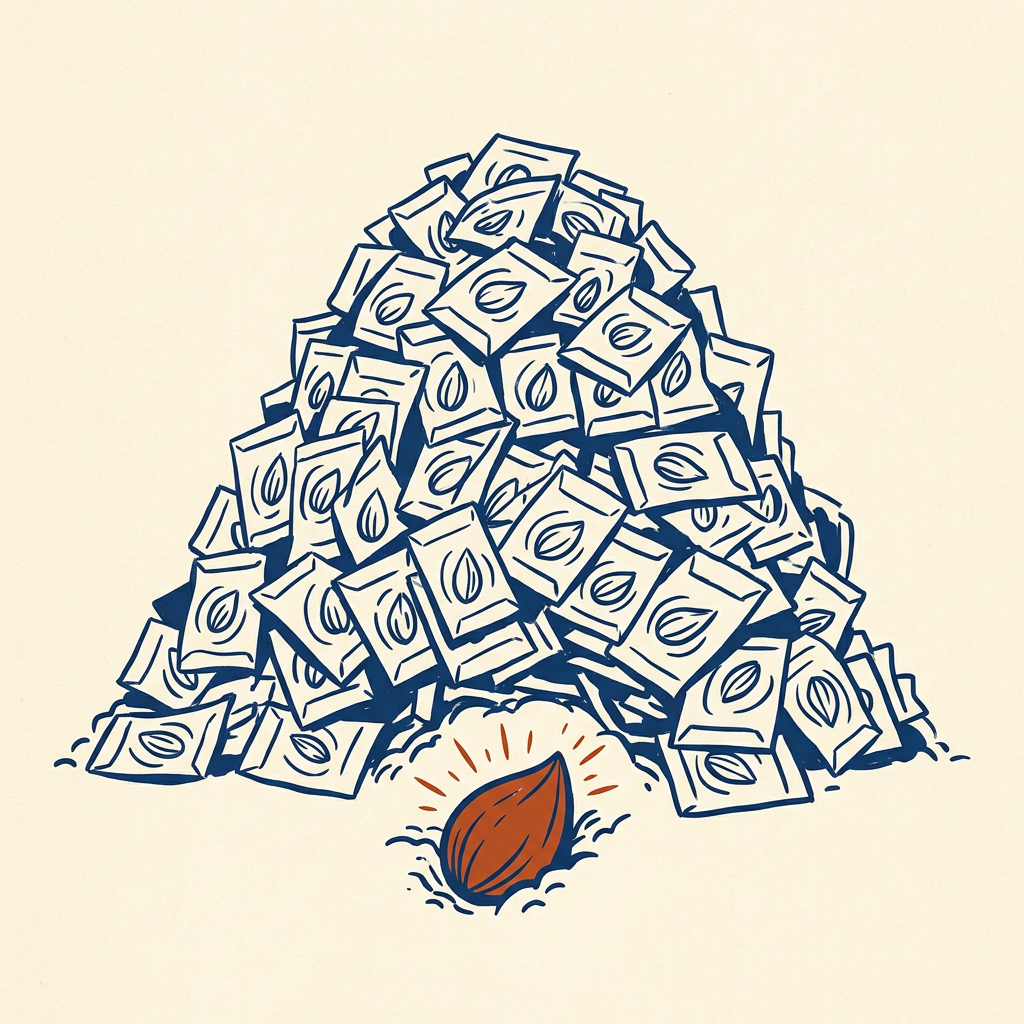
Every speculative episode starts with a real, external shock that creates a genuinely new profit opportunity, which is then overextended by imitators.
- 1Real shockWar's end, invention, deregulation, or new market opens profit
- 2Early gainsFirst investors respond to genuine change and profit
- 3Imitators pile inLater capital extrapolates prices and stops evaluating the opportunity
Kindleberger adopts Minsky's term displacement for the event that kicks off a mania. Some change opens a new avenue for profit. This is not the bubble itself but the legitimate seed from which it grows.
The shock can be a war's end, a new invention, financial deregulation, or the opening of a new market. Early investors often respond sensibly to a genuine change. Trouble begins when a second and third wave of capital no longer evaluates the underlying opportunity and simply extrapolates recent price gains.
Bubbles are parasitic on real economic change. They need a plausible story to get started, which is why they can fool sophisticated investors as easily as naive ones. At the beginning the optimism is not obviously wrong, and that is what makes early dismissal so hard.
In practice: Railways in Britain in the 1840s were real technology that would transform transport; the mania came when share speculation outran actual returns. John Law's Mississippi Company began with the real opening of territory before prices detached from the land's wealth.
3
Credit feeds the fire
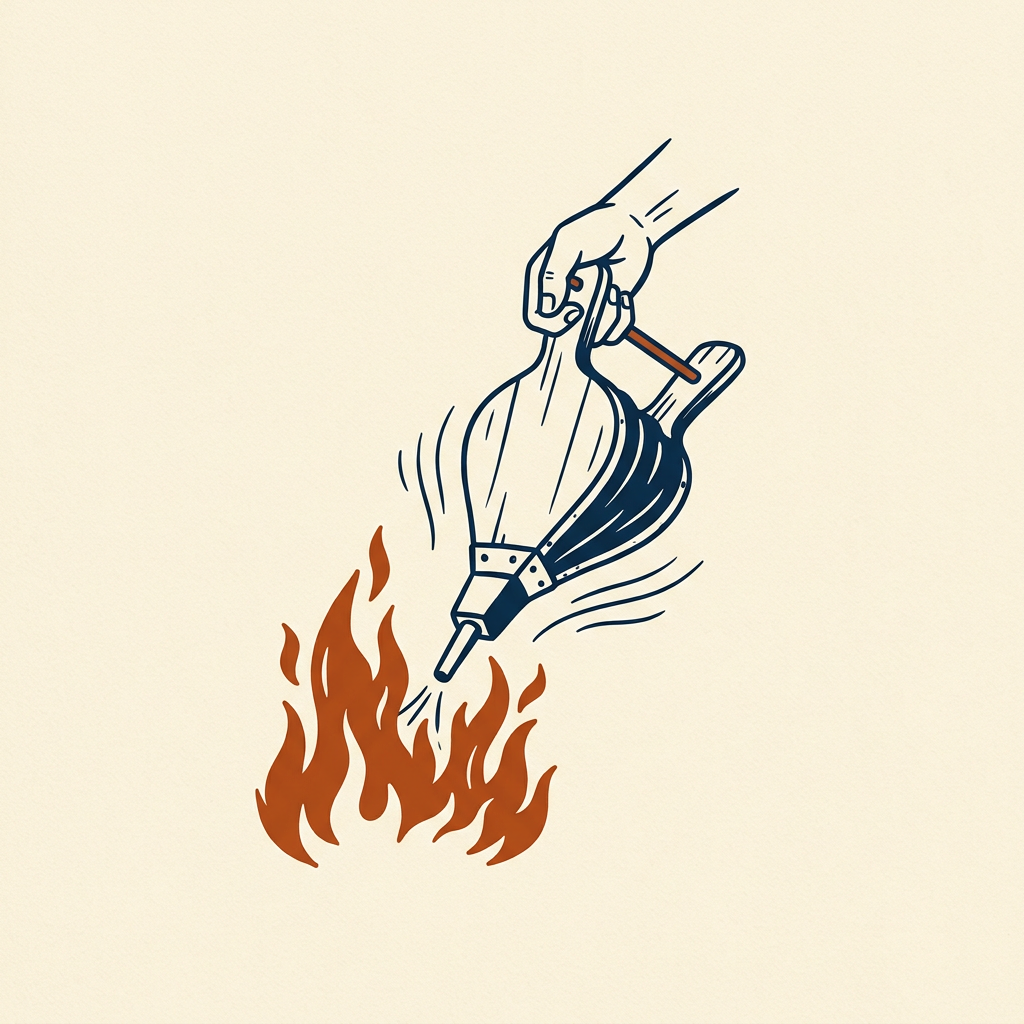
Manias cannot sustain themselves on optimism alone; they require an expanding supply of credit, often supplied by innovations in banking or lending that make borrowing easier just when it should be getting harder.
Optimism alone
Excitement without easy borrowing stays limited
Credit expansion
New instruments cheapen leverage and turn excitement into a mania
Once displacement creates opportunity, the mania needs fuel. That fuel is credit. Kindleberger stresses that every major historical bubble coincided with an expansion of money or credit that made speculative borrowing cheap and abundant.
He treats the expansion as usually endogenous to the system. Banks, brokers, and intermediaries invent new instruments specifically to accommodate demand for leverage during a boom. Instability sits inside the financial system's own innovation, not merely in investor psychology.
A bubble is not just people getting excited. It is people getting excited while institutions competitively lower the cost and difficulty of betting on that excitement. Innovation designed for a real need gets repurposed to finance speculation and accelerates the mania beyond what fundamentals could justify.
In practice: In the Dutch tulip mania of 1636–37, buyers used forward contracts and informal credit without full cash up front. In the 1920s United States, margin lending let stock buyers control large positions with a small deposit.
4
Euphoria and the greater fool
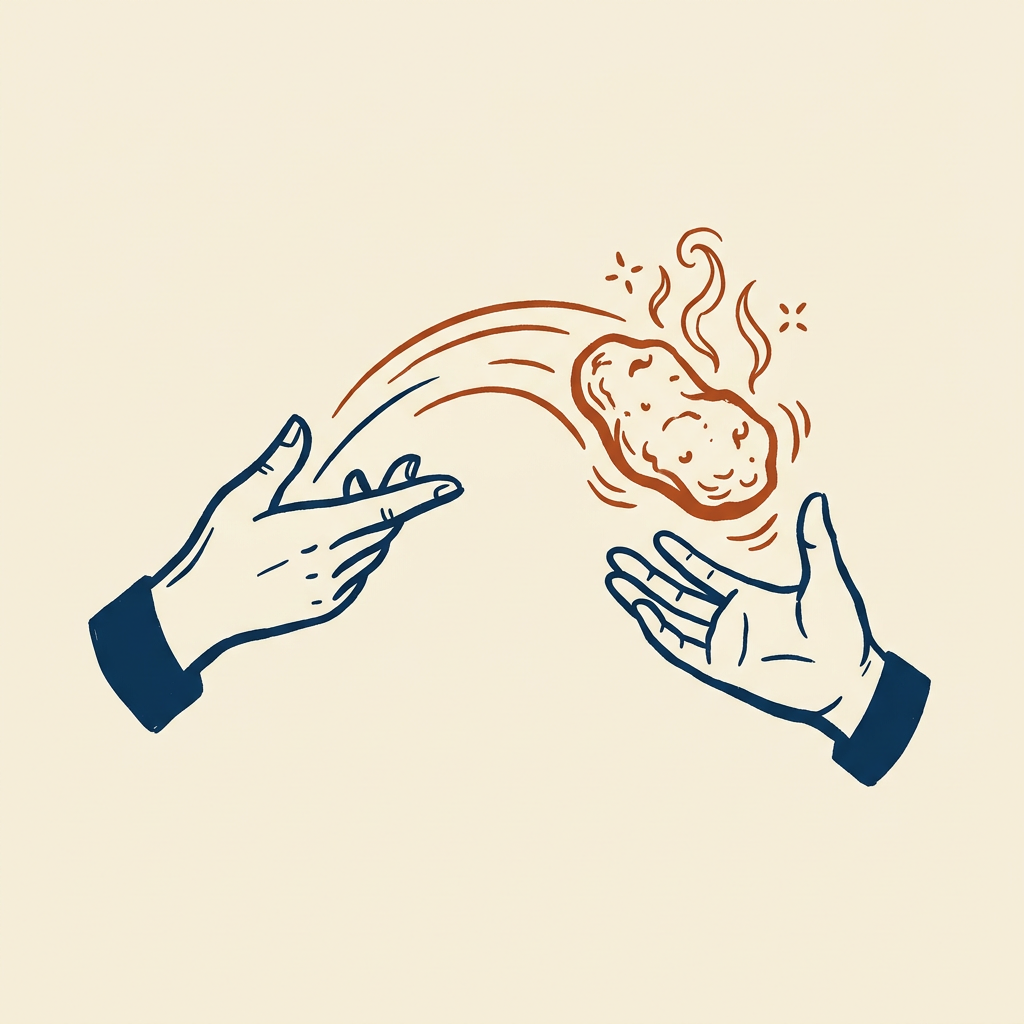
As a bubble matures, participants increasingly buy not because they believe in the asset's value but because they believe someone else will pay more, and this shift is what makes bubbles collapse suddenly rather than deflate gradually.
Value buying
Purchase rests on what the asset can earn or produce
Greater-fool buying
Purchase rests only on finding someone who will pay more later
Kindleberger describes euphoria as the stage where the connection between price and any underlying value effectively disappears. Investors stop asking what an asset is worth and start asking only whether the price will rise further.
He draws on the greater fool theory. A rational investor can knowingly buy an overpriced asset if they expect to sell it to someone even less informed before the music stops. This is less stupidity than a correct read of short-term incentives inside an irrational market.
Euphoria also attracts new, less sophisticated participants late in the cycle, drawn by stories of neighbors getting rich. Leverage keeps rising even as the underlying rationale weakens, so the eventual reversal has more debt behind it to unwind. Cheap credit meets a story good enough that people stop doing arithmetic.
In practice: South Sea Company shares in 1720 kept rising even as informed observers, including Isaac Newton, saw that trading prospects could never justify the valuation, yet many bought hoping to exit before the top.
5
Fraud thrives in booms
Financial fraud rises predictably during the euphoric stage of a bubble because rapid, unscrutinized wealth creation lowers the practical and psychological cost of cheating.
Kindleberger's distinctive claim is that swindles cluster in booms not by coincidence. Boom conditions make fraud both easier to commit and harder to detect. When asset prices rise broadly, early investors in a fraudulent scheme are actually paid, which builds credibility and starves off scrutiny.
Due diligence looks unnecessary when everyone appears to be winning. Promoters offer securities in nonexistent or wildly exaggerated ventures, counting on the climate of credulity. Embezzlement and accounting manipulation stay hidden until a boom turns to bust, when falling prices force businesses to reveal cash shortfalls they had papered over with fresh capital.
Discovery of fraud is often a symptom of the same credit contraction that causes the crash elsewhere, not its cause. The fraud existed throughout the boom, invisible, and becomes visible only when new money stops flowing. Regulators who wait for fraud to reveal itself will always act too late.
In practice: During the South Sea Bubble era, dubious joint-stock companies flooded England, including one formed for carrying on an undertaking of great advantage, but nobody to know what it is.

6
Distress at the fragile peak
A bubble's turning point is rarely triggered by a single dramatic event; it is usually the moment when a critical mass of insiders quietly begins converting speculative gains into cash, well before the public notices anything wrong.
Surface
Prices still rising or steady; nothing looks wrong
Underneath
Insiders convert gains to cash; isolated failures begin
Distress is the uneasy stage between euphoria and outright panic. The market may still rise or hold steady on the surface while underlying support erodes. The people best positioned to see trouble—insiders, early speculators, company officers—also have the strongest incentive to exit quietly rather than sound an alarm that would crash the price against their own position.
That creates an information asymmetry that delays public recognition of the peak. During distress some assets or firms begin to fail individually without yet triggering general panic, because the market still reads each failure as isolated rather than systemic.
The shift from isolated failures to general panic is a phase change. It is driven by the point at which participants collectively stop believing failures are isolated. That reinterpretation, rather than any single new fact, converts distress into a full crash. Crashes therefore often seem to come out of nowhere to ordinary investors and the press.
In practice: Insiders sold before the 1929 crash. Savvy investors quietly withdrew from Kuwait's Souk al-Manakh before its 1982 collapse, where informal credit on postdated checks failed once large players stopped paying.

7
Panic as the boom reversed
Panic is the mirror image of the mania that preceded it: the same herd psychology and the same reliance on availability of credit now work in reverse, turning gradual price weakness into a rout.
- 1Prices slipEarly weakness appears
- 2Margin callsForced selling hits the market
- 3Credit revulsesLenders refuse the asset at any price
- 4Liquidity scrambleSound assets sold for cash; distress spreads
↻ and round again
Once distress crosses into open panic, a self-reinforcing collapse mirrors the self-reinforcing rise of the boom. Falling prices trigger margin calls and forced selling, which pushes prices down further, which triggers more margin calls.
Credit that was cheap and abundant becomes suddenly scarce and expensive. Kindleberger calls this shift revulsion: lenders who could not get enough of an asset months earlier will not touch it at any price. Panics are driven as much by the search for liquidity as by pessimism about specific assets.
Investors sell whatever they can, including sound assets, simply to raise cash and meet obligations. Distress spreads from the original bubble asset into unrelated markets. Because the spiral runs through a shortage of liquidity rather than a reasoned reassessment of value, an outside actor that can supply liquidity can in principle break the cycle.
In practice: In the 1929 crash, forced liquidation of margined positions accelerated the decline far beyond any change in company earnings. In the 1837 U.S. panic, a contraction of British credit to American cotton markets set off a domestic banking crisis.

8
Contagion crosses borders
Financial panics spread internationally not mainly through shared psychology but through the concrete channels of trade credit, cross-border lending, and shared banks.
- 1Home lossesBanks take hits in one market
- 2Loans called abroadCross-border credit is pulled to cover
- 3Trade and demand fallExporters and linked economies absorb the shock
Kindleberger, trained as an international economist, stresses how crises propagate across borders rather than staying in one market. Banks that lend across countries transmit distress when they call in loans abroad to cover losses at home. Commodity exporters get hit when a credit contraction in a lending country reduces demand for their goods. Fixed exchange-rate systems transmit interest-rate pressures directly.
Just as domestic credit innovation fuels a mania, cross-border lending innovation fuels a mania that spans multiple countries at once. The unwind is harder to contain because no single national authority controls the whole chain of exposure.
Purely domestic regulation cannot fully prevent crises with an international credit component. The shock can originate in lending decisions made entirely outside the affected country's jurisdiction. Some form of coordinated or supranational lender of last resort is often necessary, even though no clean international institution has ever fully occupied that role.
In practice: British credit contraction after 1836 hurt American cotton-dependent banks. Early 1980s Latin American debt crises moved through syndicated lending by major banks that had recycled oil-exporter deposits into loans to Mexico and Argentina.
9
The lender of last resort
The most effective, and most controversial, way to stop a panic from becoming a full economic collapse is a credible lender of last resort willing to supply liquidity freely during the crisis, even though this same willingness may encourage excessive risk-taking in the next boom.
1907 intervention
Morgan organized private liquidity for solvent institutions; damage stayed limited
1929–33 failure
Young Fed did not act as lender of last resort; crash became banking collapse and depression
Kindleberger's central policy argument extends Walter Bagehot: a central bank or similar institution can stop a panic by lending freely against good collateral at a penalty rate once crisis has begun.
He credits informal versions of this intervention with limiting damage, and contrasts that with the far more damaging 1929–33 period, when the young Federal Reserve failed to act as an effective lender of last resort and allowed a stock crash to become prolonged banking collapse and depression—a failure later analyzed by Milton Friedman and Anna Schwartz.
He acknowledges the moral hazard directly. If speculators believe authorities will always step in, they have less reason to restrain risk-taking during the boom, planting the seed for the next mania. He treats the tension as genuine and unresolved. The alternative—letting panics run their course to teach a lesson—has historically produced far worse economic damage than the moral-hazard costs of intervention.
In practice: In the panic of 1907, before the Federal Reserve existed, J.P. Morgan organized private bankers to supply liquidity to solvent but illiquid institutions and limited the damage.
Key terms
- Displacement A real external shock—war's end, invention, deregulation, or new market—that opens genuine profit and seeds a mania
- Euphoria The stage when price disconnects from underlying value and buyers care only whether the price will rise further
- Greater fool theory Buying an overpriced asset on purpose because you expect to sell it to someone less informed before the collapse
- Distress The uneasy peak when the market still looks steady on the surface while insiders quietly exit and support erodes
- Revulsion The sudden shift when credit that was cheap becomes scarce and lenders will not touch the asset at any price
- Lender of last resort An institution willing to lend freely against good collateral at a penalty rate to break a liquidity panic
- Contagion The spread of crisis across borders through trade credit, cross-border lending, and shared banks rather than psychology alone
- Moral hazard The risk that a safety net encourages more reckless speculation in the next boom because losses may be contained
What to do
- Write down the specific real-world change that supposedly justifies any fast-rising asset before you commit new money, and check whether prices still track that change.
- Ask whether your reason for buying is the asset's value or the expectation that someone else will pay more; if the latter, size it as speculation and set a firm exit in advance.
- Treat rapid, broad-based credit growth in a sector as a warning signal on its own, even when individual borrowers still look healthy.
- Watch for late-cycle arrival of less sophisticated buyers drawn by stories of easy riches as a caution, not a confirmation.
- If you oversee credit, separate the health of single loans from the system-wide expansion of leverage that often leads the cycle.
Questions to think with
- What real displacement, if any, sits under the asset or sector you are most exposed to right now?
- Are you holding because of fundamentals or because you expect a greater fool to take the position off your hands?
- Where is credit expanding fastest in your markets, and who is inventing the instruments that make that expansion possible?
- If distress began tomorrow, would you recognize insider exit, or would you still read early failures as isolated?
- Does your system have a credible lender of last resort, and how do you weigh its moral-hazard cost against an unchecked panic?
The other side
The Minsky stages Kindleberger adopts are flexible enough to fit almost any large price swing after the fact, which makes the framework hard to use for prediction and raises the charge that a model explaining everything retroactively explains nothing in advance. Efficient-market critics such as Eugene Fama doubt the very idea of an identifiable bubble, since it requires an outsider to claim better knowledge of fundamental value than the market pricing in real time. The book relies on narrative case studies rather than systematic statistical tests, so it cannot show how many potential manias fizzled without crashing. Its lender-of-last-resort advice aged awkwardly against post-2008 debates over too-big-to-fail bailouts and moral hazard on a scale the original text did not fully anticipate, and it offers little concrete guidance on capital rules, derivatives, or shadow banking.
Who it's for
Investors who want historical perspective on why bubbles feel rational while they are happening, policymakers and central bankers designing crisis intervention, and economic-history readers curious how tulip mania, 1929, and modern crashes share a structure will get the most from the full book.