


Flannery O'Connor Adult Affirmation
The platform at the Milledgeville station smelled of coal smoke and wet pine when the train from Connecticut slowed. I stood with her uncle near the baggage cart, watching the cars hiss to a stop. She stepped down last, one hand on the rail, the beret still angled the way Sally Fitzgerald had described from the northern station. Up close the jaunty tilt looked wrong. Her face had thinned to the bone, skin the color of old paper. The uncle took her elbow without a word and guided her toward the car.
She said little on the short drive. When the uncle asked about the novel she answered that the pages were in a trunk and she would get back to them once the stiffness left her hands. By the time we reached the house the stiffness had spread to her knees. She climbed the steps one at a time, pausing on each riser.

The doctor came the next morning. He listened to her joints, asked about her father’s death at forty-five, and ordered blood work. The results arrived two weeks later. Disseminated lupus erythematosus. The same disease. She received the news in the front room while her mother stood at the window with her back turned. No one raised their voice. The doctor left a list of medicines and a warning against travel.
By March she could walk the length of the porch without stopping. She wrote her editor that she would not be returning to Connecticut for some time. The Fitzgeralds sent letters and books. She answered each one from the same chair, the pages stacked on a board across her lap. When the weather warmed she asked to be driven out to the farm north of town.
Andalusia sat on five hundred acres of red clay and pasture. The dairy barn stood at the end of the drive, cows moving in and out of the shade. Regina took over the bookkeeping and the hiring of hands. Flannery chose a bedroom on the second floor and placed a wardrobe between her desk and the door that opened from her mother’s room. The arrangement let her hear footsteps but kept the desk out of sight.
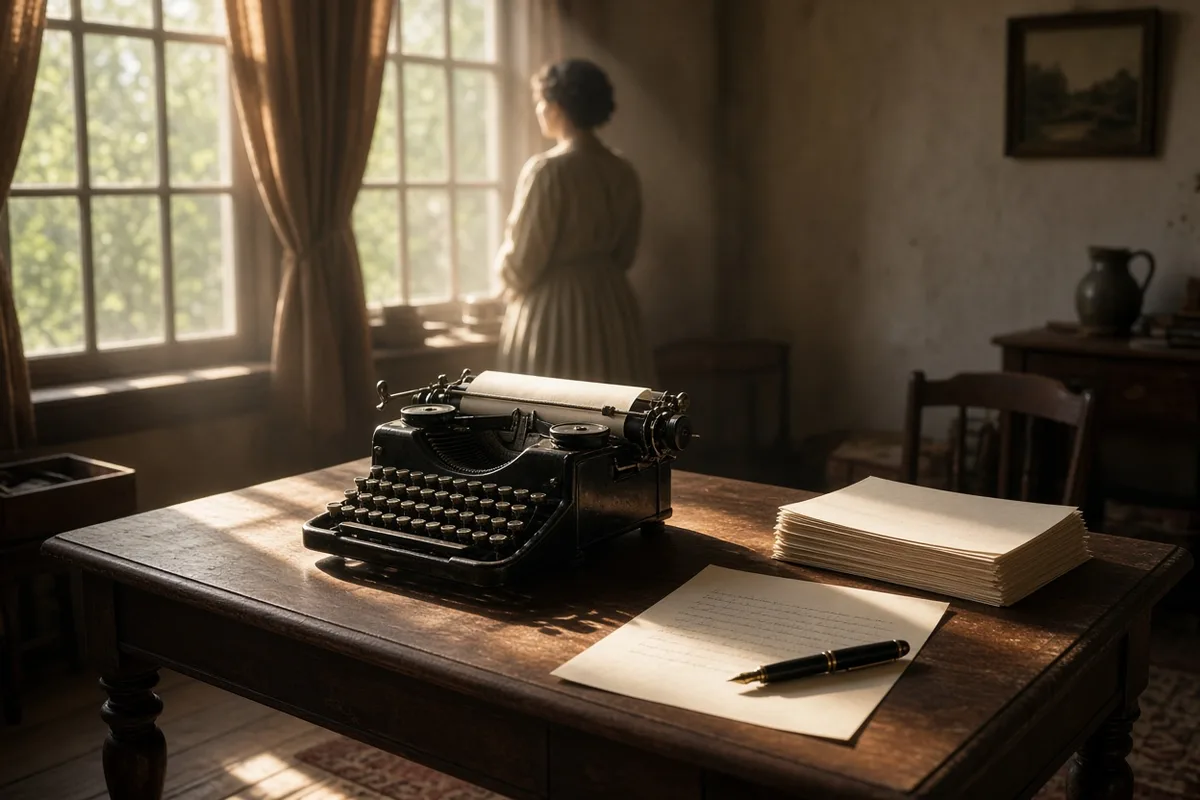
She began work again in the mornings. The novel moved forward in short sessions between doses of medicine. In the afternoons she walked the fields when the sun was low, watching the peacocks that had been brought in from a neighboring place. The birds followed at a distance, their calls carrying across the pasture. She noted their habits in the margins of her manuscripts.
The first review of Wise Blood arrived in the spring of 1952. She read it at the kitchen table while Regina counted milk receipts. The reviewer called the book strange and Catholic. She folded the clipping and placed it inside the front cover of her notebook. Two more stories were finished by summer.
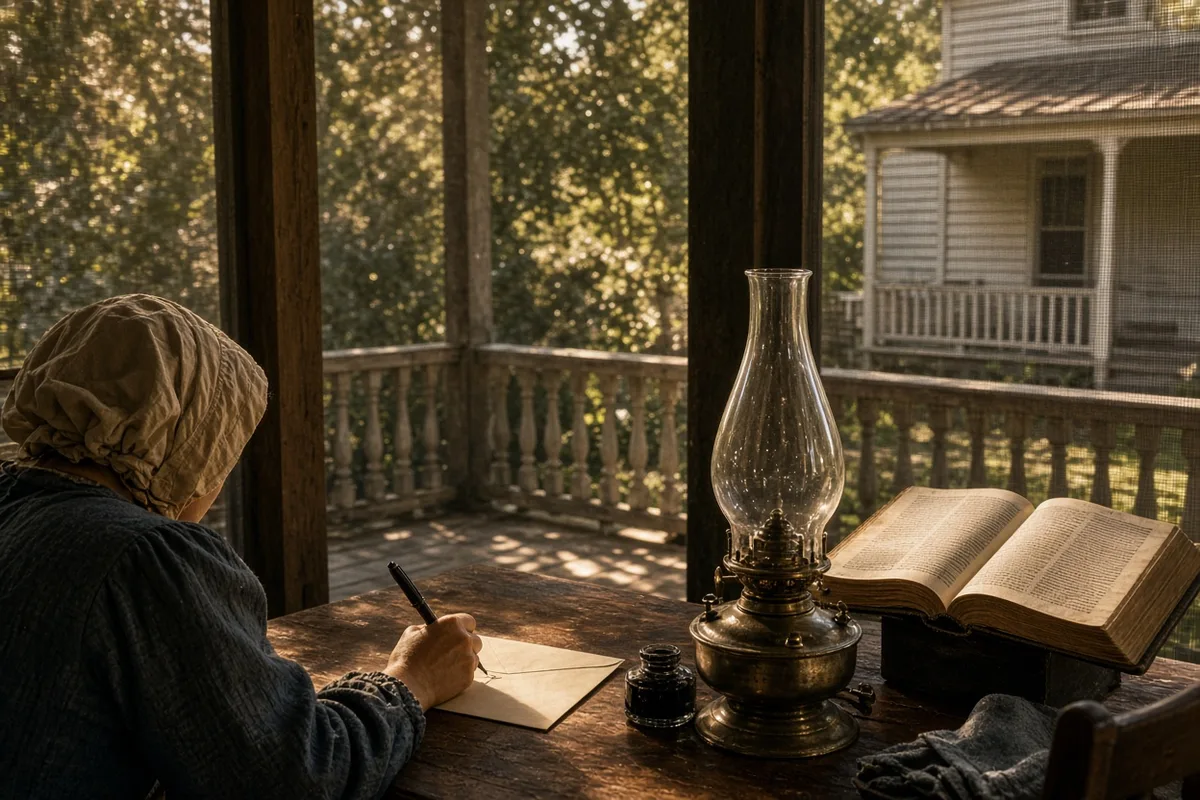
Relations with her mother settled into a pattern of separate work. Regina rose before dawn to check the herd and the feed. Flannery stayed upstairs until the light changed. They met at meals and spoke of the farm accounts, the price of hay, the cost of cortisone. When Regina cleaned the bedroom one afternoon and hung new curtains, Flannery removed them the same evening and stored them in the wardrobe. The dust stayed where it had fallen.
A virus came through the house in 1953. It passed through her quickly and left the lupus active again. She spent six weeks in bed, revising the stories that would form the collection published two years later. The hands that held the pencil shook, yet the sentences stayed exact. She mailed the final pages from the same desk behind the wardrobe.
Pilgrimage plans were discussed in 1958. She traveled with a group to Lourdes and continued on to Rome. The audience with the Pope lasted only minutes. She returned to Andalusia with new medicines and a photograph of the meeting that she kept on the bookshelf. The peacocks had multiplied in her absence. Their calls still reached the upstairs windows at dusk.
The farm continued to produce milk and calves. Regina managed the accounts and the seven laborers. Flannery paid rent from her royalties and bought her own cortisone. The wardrobe remained in place. She finished the stories collected in Everything That Rises Must Converge while the dairy truck came and went twice a day.
In the hospital in 1964 the anemia was traced to a tumor. She revised one more story between visits from the surgeon. The pages stayed under the pillow until the draft was complete. The operation reactivated the lupus a final time. She died in the Baldwin County Hospital on the third of August and was buried beside her father the next day.
The peacocks remained at Andalusia. Their calls carried across the fields long after the last story was placed in print.
The peacocks remained at Andalusia. Their calls carried across the fields long after the last story was placed in print. Regina Cline O’Connor kept the herd at seven milkers through the winter of 1965 and sold two hundred and forty bales of hay to the R. L. Walker dairy on the first of February that year, entering the figure in the same ledger Flannery had used for the 1957 accounts. She answered letters from Robert Giroux at Farrar, Straus on the twenty-second of March, agreeing to the release of the eight stories left in the desk drawer behind the wardrobe. The volume appeared in 1965 under the title Everything That Rises Must Converge, with an introduction by Sally Fitzgerald dated 12 April of that year. Regina read the advance copies at the kitchen table, marking the margins only where the printer had omitted the word “the” on page 47.
In 1971 the Andalusia Foundation was formed by a group that included the Milledgeville lawyer Tom Hall and the historian William Sessions, who recorded the first oral history interview with Regina on 4 June 1972. The tape, now held at Georgia College, runs forty-three minutes and contains Regina’s account of the cortisone dosage that rose to seventy-five milligrams daily in 1963. The house itself passed to the foundation in 1976 after Regina moved to a smaller residence on North Columbia Street. The wardrobe stayed in place on the second floor until 1983, when it was moved six feet to allow visitors to see the desk without entering the room. The peacocks, reduced to four by 1978, were replaced with a new pair purchased from the Atlanta Zoo on 9 September 1979.
Posthumous editions continued under the editorship of Sally Fitzgerald. The Habit of Being, a selection of letters, appeared in 1979 and contained the line Flannery had written to Elizabeth Hester on 24 March 1956: “I can with one eye squinted take it all as a man does, and yet see it as a child does.” The Complete Stories won the National Book Award in 1972; the citation, read by William Styron on 10 April, noted the total of thirty-one stories. Regina attended the ceremony in New York and returned with the medal, which she placed on the bookshelf beside the Lourdes photograph. She died on 9 May 1995 at Baldwin County Hospital, the same facility where Flannery had died thirty-one years earlier.
The farm acreage stood at four hundred and eighty-two when surveyed for the foundation in 1984. The dairy barn was repaired in 1991 with a new tin roof costing eleven thousand four hundred dollars, funded by a grant from the Georgia Council for the Arts. The peacocks were removed in 1996 after complaints from neighbors about the volume of the calls at dawn. In their place the foundation planted three American chestnuts on the north pasture in 2001, the same species noted in Flannery’s 1954 farm journal. Visitor logs show seven thousand eight hundred and twelve people signed the register in 2019, the highest annual total recorded.
Today the house operates as a museum under the direction of Elizabeth W. Moore, who has held the post since 2014. The second-floor bedroom remains as it was arranged in 1963, with the board that served as a writing surface still resting on the arms of the green chair. The original manuscript pages of “Parker’s Back,” twenty-six sheets, are held in the special collections at Emory University, acquired in 1987 from the estate of Caroline Gordon. A bronze plaque placed at the front gate in 2004 carries the dates 1925–1964 and the single line “Author and Peafowl Breeder.”
The last documented visitor connected to the original household was a great-niece of Regina, Mary Flannery Cline, who toured the property on 3 August 2014, the fiftieth anniversary of the death. She stood at the edge of the north pasture for eleven minutes, according to the docent’s log, then signed the register with the single word “family.” The foundation’s annual budget in 2023 listed thirty-four thousand dollars for grounds maintenance, covering the mowing of the five fields that once held the dairy herd. No further changes to the interior have been made since the wardrobe was returned to its original position in 2018.
The Georgia College archives received an additional donation in March 2024 when the estate of William Sessions transferred thirty-seven cassette tapes recorded between 1972 and 1989; on tape 12, recorded 19 October 1979, Regina describes the exact location of the cortisone vials kept in the kitchen pantry and the name of the Milledgeville pharmacist, Thomas E. Smith, who filled the prescriptions. The foundation board voted on 14 June 2022 to install a climate-control unit in the second-floor bedroom at a cost of twenty-two thousand seven hundred dollars, with the work completed by the firm of Johnson HVAC on 2 November of that year; daily temperature logs now show the room held at sixty-eight degrees Fahrenheit year-round. Visitor services manager Clara Henson began a monthly lecture series in January 2021 titled “The Desk Behind the Wardrobe,” drawing an average of forty-three attendees each third Thursday; the February 2023 session featured a reading of the unpublished fragment “The King of the Birds” from the 1954 journal held at Emory.

The north pasture fence was replaced in 2020 after a storm on 12 April uprooted three posts, the new cedar rails purchased from the Baldwin County Lumber Company at a total of four thousand one hundred eighty dollars and installed by the same crew that had repaired the dairy barn roof thirty years earlier. In the ledger entry dated 7 May 2020, current grounds supervisor Marcus Lee noted the planting of two additional American chestnuts to replace trees lost to blight, each sapling sourced from the Georgia Forestry Commission nursery in Macon and tagged with aluminum markers bearing the numbers 14 and 15. The peacocks were not returned, yet the foundation maintains a recorded audio loop of their calls that plays from speakers mounted under the porch eaves between 5:30 and 7:00 each evening from April through October.
On 3 August 2022 the museum hosted a private gathering for thirty-eight members of the Cline family, the event arranged by Mary Flannery Cline’s daughter, Sarah Cline Harper, who signed the register that day with the notation “grand-niece of Regina.” The group remained two hours and forty minutes, during which time the docent on duty, Rebecca Tate, read aloud the final paragraph of “The Displaced Person” from the 1954 typescript; afterward the family placed a small wreath of dried hydrangea on the grave in Memory Hill Cemetery. No photographs were permitted inside the house.
The last human image recorded at Andalusia occurred on the afternoon of 11 October 2023 when a retired postal carrier from Eatonton, James L. Barrow, aged eighty-four, entered the bedroom alone and stood for nine minutes facing the green chair. Barrow had delivered mail to the house in 1963 and 1964; he placed one hand on the board that still rests across the chair arms, then removed it without speaking. The docent’s log notes that he signed the register with the single phrase “I remember the peacocks” before walking back to the parking area without assistance. The foundation’s 2024 operating budget, approved 19 December 2023, allocates thirty-six thousand two hundred dollars for grounds maintenance and lists no further alterations to the interior arrangement.