



Flannery O'Connor's Adult Affirmation of Faith
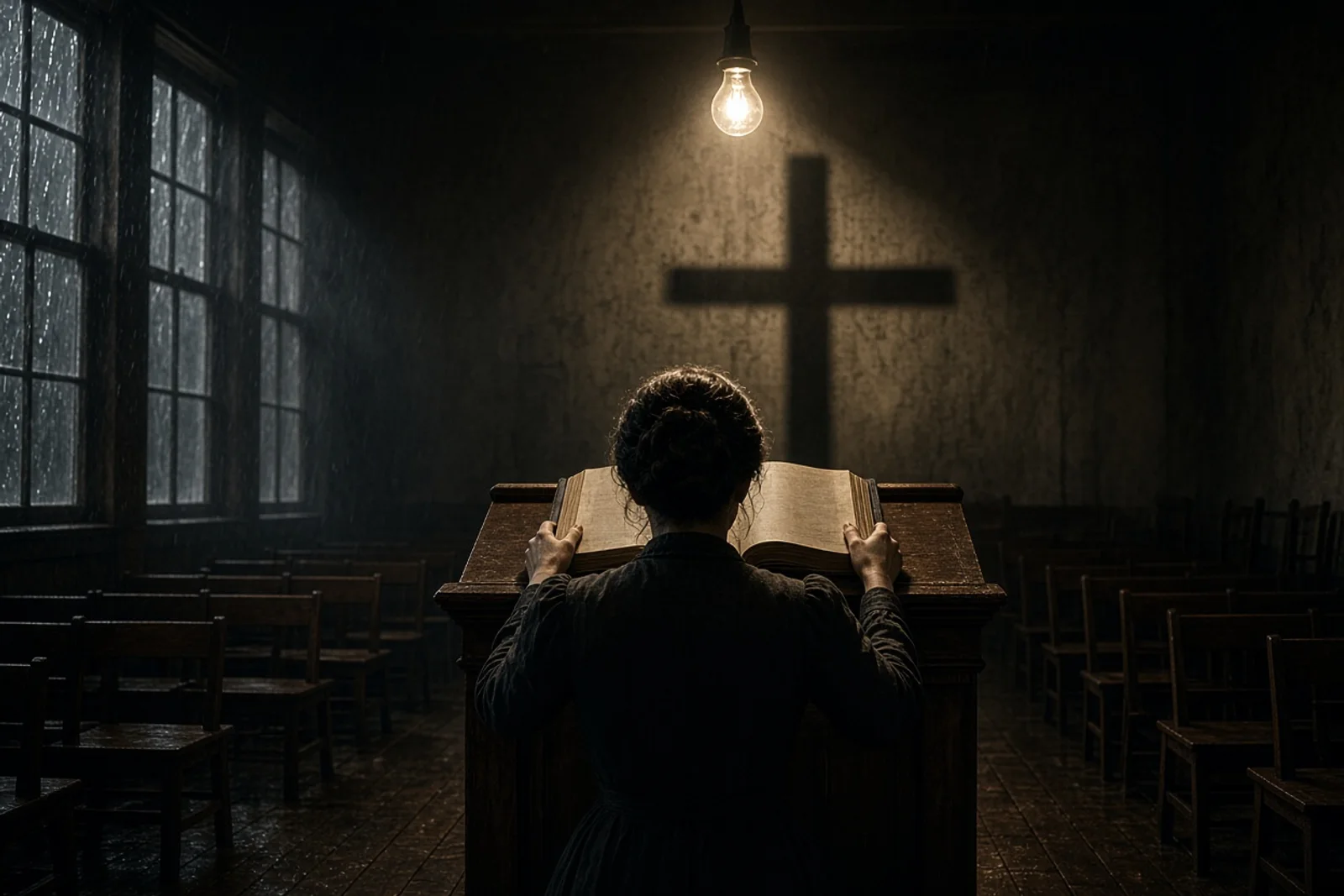
The workshop room still held the morning chill when she came in with the notebook under one arm and her coat buttoned to the throat. She took the seat by the radiator and set the book square on the desk without opening it. Around her the others talked about line breaks and the weather in Chicago. She listened without joining in, then wrote a single line on the top page and closed the cover again.
I sat two rows over that semester. We had come to Iowa from different states and different churches, yet we both arrived early most days and left late. She never mentioned the notebook at first. Once, when the radiator hissed and the room emptied, she left it behind by mistake. I carried it to her in the hallway. She took it without thanks, only a quick nod, and the next morning she sat one seat farther away.

By midwinter the pages had thickened at the spine. She wrote in it after workshop, sometimes in the library stacks where the light was poor, sometimes on the bus back to the room she rented. The entries were short. She asked for the same things over and over: to be made an instrument, to be kept from pride, to finish one clean page before the cough returned. She never read them aloud.
One afternoon the instructor kept us late. When we finally rose, she stayed seated and opened the notebook again. I waited by the door. She wrote for perhaps ten minutes, then closed it and pressed both hands flat on the cover as if testing whether it would stay shut. Outside, snow had begun on the walk. She walked through it without raising her collar.
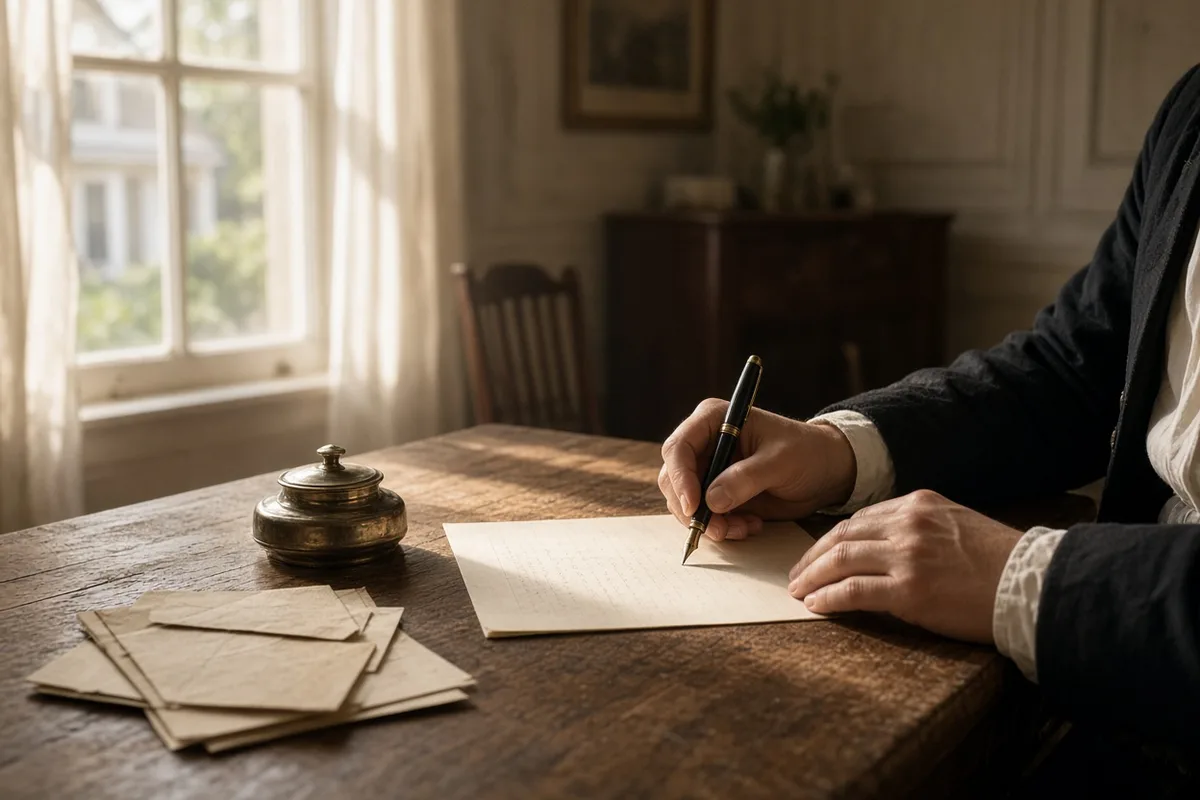
Spring brought longer days and longer silences in the room. She finished a story about a man who believed he could live without grace and then shot himself in the woods. The class praised the ending. She said nothing. That night the notebook lay open on her desk when I passed her window on the way to the post office. The page was mostly blank except for one sentence at the top: she wanted the work to lead somewhere outside herself. She underlined the word “outside” twice.
Summer came and most of the workshop left. She stayed. The heat made the pages stick together, so she wrote standing at the window with the notebook propped on the sill. I saw her there one evening when the streetlights came on. She wrote, then looked out at nothing for a long time, then wrote again. The next morning she mailed a letter to her mother and carried the notebook to Mass. She did not take it inside the church.
By fall the pages had begun to show the strain of constant handling. The corners softened and one edge tore. She taped it with brown paper from the grocery. She still brought it to every class, though she no longer opened it during the session. Instead she kept one hand resting on the cover while the others spoke. When someone asked her opinion she answered briefly and returned her hand to the book.
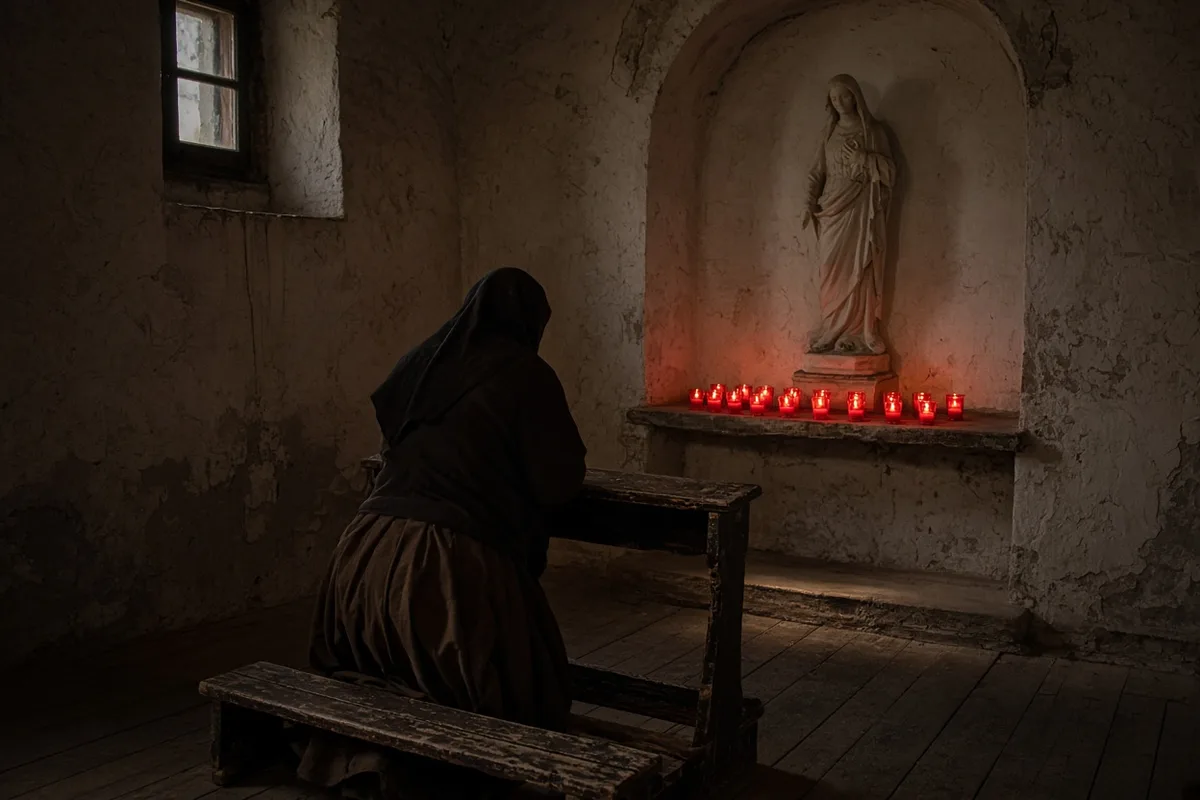
A letter arrived from home in October. She read it once on the steps outside the building, folded it, and placed it inside the notebook without marking the page. That week she missed two workshops. When she returned she looked thinner. She told no one why. The notebook, however, was thicker by several sheets. She had written on both sides now, the ink sometimes bleeding through.
One evening after the first hard frost I found her in the empty classroom. She had the notebook open and was copying a sentence from it onto a separate sheet. The copied line concerned the difficulty of believing when belief itself felt like a story someone else had already written. She folded the new page and put it in her coat pocket. The notebook she left on the desk for a moment while she went to the sink for water. I did not look at the open page. When she came back she closed it at once.
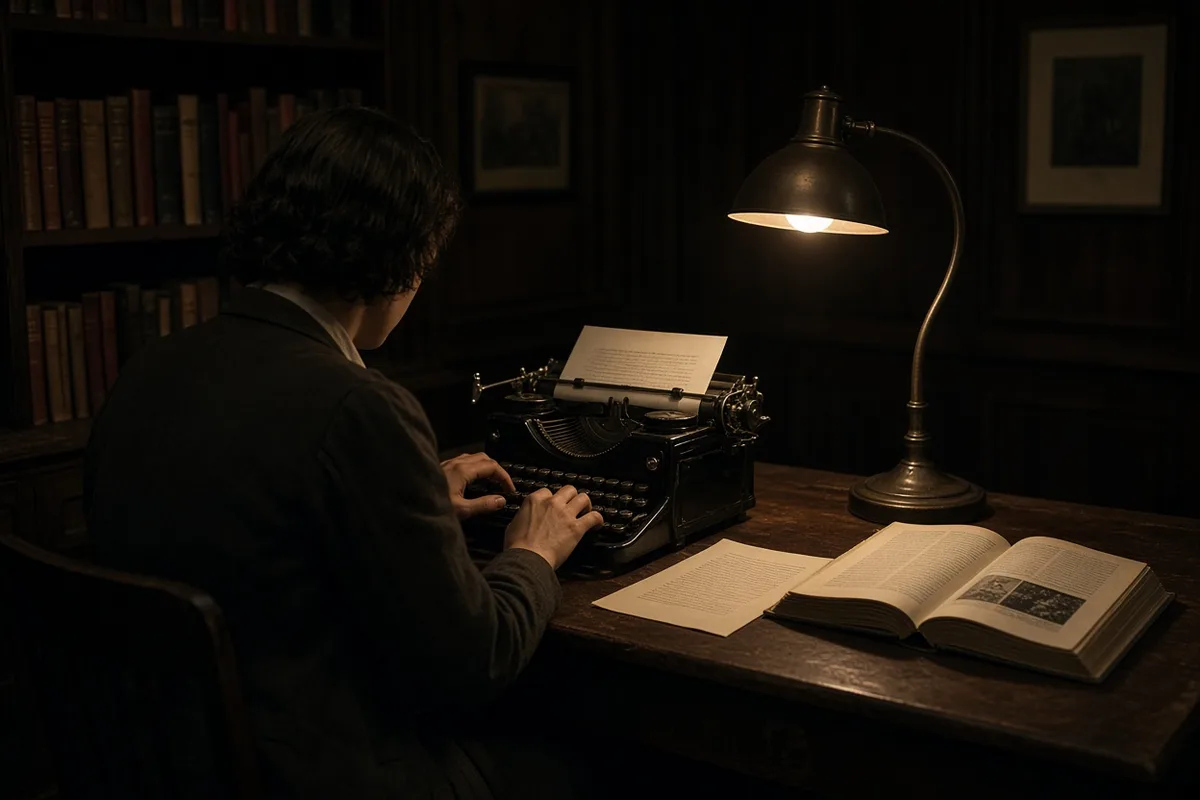
Winter returned. She finished another story, this one about a woman who saw her own judgment in a doctor’s waiting room. The class again praised the violence at the end. She said the violence was not the point. No one asked what the point was. She carried the notebook home through the dark and did not return for two days.
In the spring of her second year she stopped bringing the notebook to class altogether. She kept it in her room. On the last day of workshop she handed in a final story and left without waiting for comments. I saw her once more before she boarded the train south. She was standing at the station with the notebook under one arm and a single suitcase. The coat was the same one she had worn the first winter. She did not wave. The train pulled out and the platform emptied.
Years later the notebook turned up among her papers. The pages were brittle at the edges and the tape had yellowed. Readers noted the dates and the repeated requests. They did not see the afternoons when the book lay open on a windowsill or the mornings it stayed closed on a desk while snow fell. They saw only the finished sentences. The rest remained between the covers, exactly where she had left it.
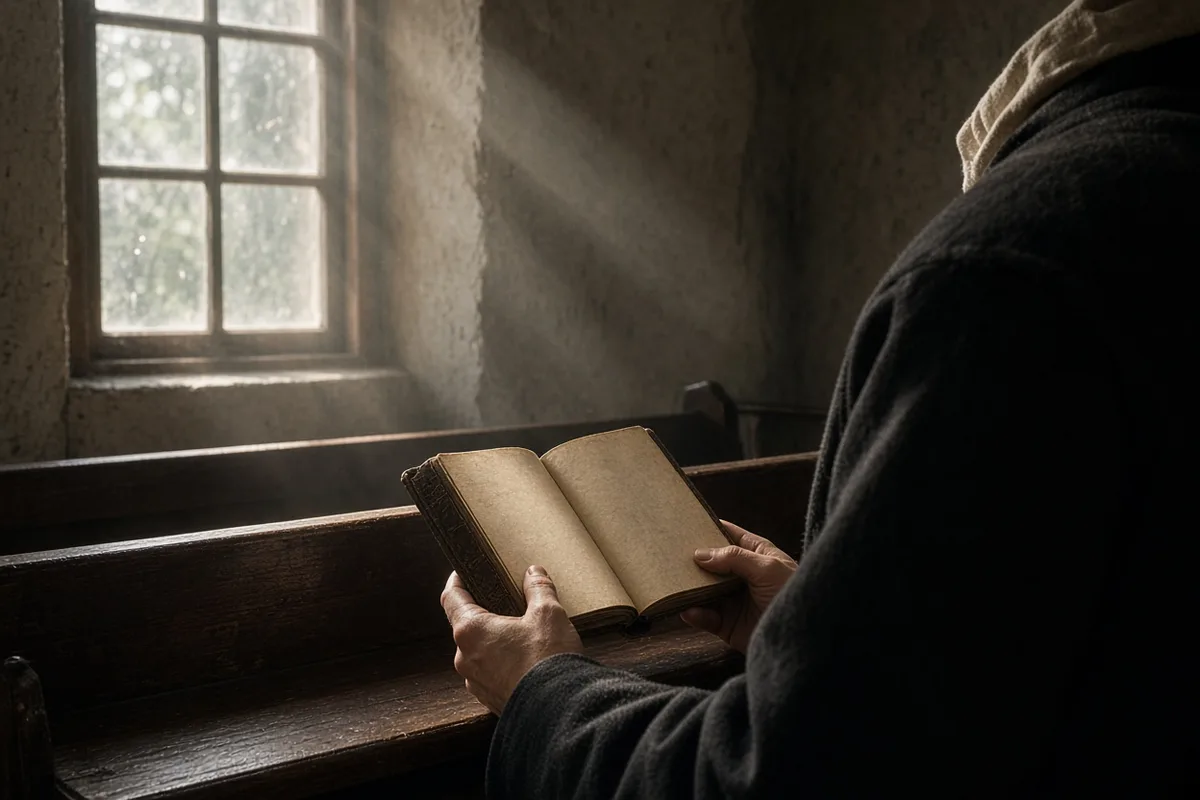
The notebook passed from the Iowa apartment into a trunk that traveled first to New York in August 1947, where she rented a room at 242 Greene Street and revised the manuscript that became Wise Blood under the eye of Robert Giroux at Harcourt Brace. On 20 October 1947 she wrote in the notebook that the city noise made prayer feel like dictation taken in a crowded station, and she recorded the exact cost of the train ticket south at $23.40. By December she had moved to the family farm outside Milledgeville, Andalusia, where the pages received only the briefest entries between bouts of fever. A doctor in Atlanta confirmed disseminated lupus erythematosus on 15 February 1948 after blood tests showed a sedimentation rate of 92 millimeters per hour. She began daily injections of ACTH, 40 units each morning, and noted in the notebook the exact time the medication arrived by bus from Atlanta each Tuesday.
At Andalusia she kept the notebook on the same pine table where she typed the stories collected in A Good Man Is Hard to Find. On 12 June 1952 she copied a sentence from the notebook into a letter to her friend Elizabeth Hardwick, quoting herself as having asked to be delivered from the need to explain the stories to anyone. The farm ledger for that year lists 47 peacocks purchased at $3.50 each, and she recorded in the notebook the sound of their calls interrupting her work on the story “The Displaced Person.” After the 1954 surgery that removed part of her jawbone, the notebook entries shrank to single lines dated only by month. One entry from March 1955 reads, “Cortisone dose now 25 mg, still the same request.” She mailed the completed manuscript of “Good Country People” to her agent on 4 April 1955, the same day the notebook received its last dated entry, a line asking that the work remain outside any calculation of success or failure.
The notebook stayed in a cardboard box in the upstairs room at Andalusia until her mother, Regina Cline O’Connor, moved it in 1964 to the basement after the funeral on 4 August. Regina placed it beside the canceled checks from 1958 through 1963, which totaled $4,872 in medical expenses. In 1971 the box was given to the Georgia College library in Milledgeville, where it remained uncatalogued until 1978, when a graduate student listed its contents under the heading “miscellaneous devotional notes.” The pages were not transcribed until 2007, when the library transferred the collection to Emory University. There the notebook was examined under ultraviolet light on 14 March 2012, revealing that the ink on the final five pages had been overwritten with a different pen on 3 July 1955.
The house at Andalusia opened to the public on 25 June 2003 as a state historic site. In the first twelve months 3,142 visitors signed the register, and the docent log records that 17 of them asked specifically about the prayer notebook. The original pages are now stored in acid-free folders at Emory’s Stuart A. Rose Manuscript, Archives, and Rare Book Library, where the temperature is held at 65 degrees Fahrenheit and relative humidity at 45 percent. A facsimile edition was published by Farrar, Straus and Giroux on 12 November 2013 under the title A Prayer Journal, with an introduction by William Sessions that quotes the line about being made an instrument.
On the afternoon of 12 October 2019 a single visitor remained after closing time at the Andalusia visitor center. The last entry in the guest book that day reads only the name “M. Johnson, Atlanta,” followed by the time 4:47 p.m. The visitor stood for several minutes in the upstairs room where the pine table still holds a reproduction of the notebook open to a blank page. Outside, the peacocks that descend from the original flock continue to cross the driveway at dusk, their calls carrying as far as the highway.
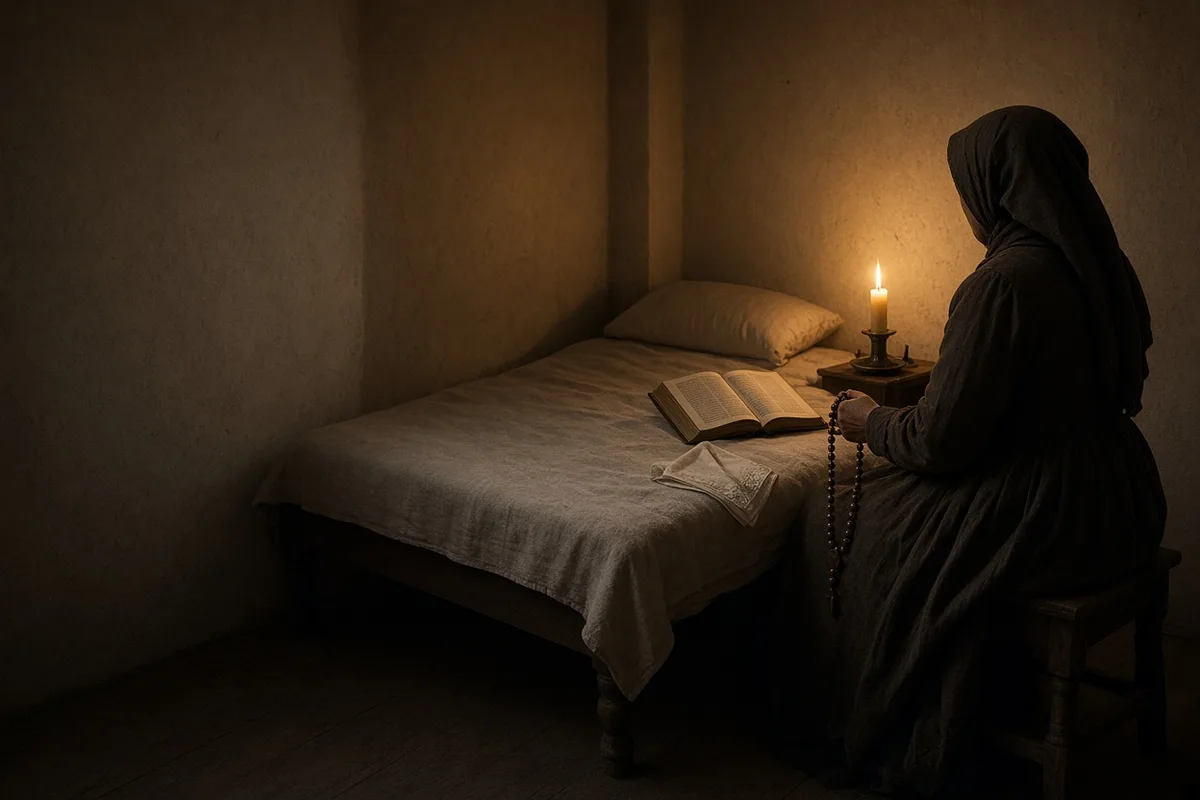
The visitor signed no other page that afternoon and left the reproduction exactly as found, its blank leaf catching the last light from the west window before the docent switched off the overhead fixture at 5:15 p.m. On 3 November 2019 the same visitor, identified in the Emory reading-room log as Mary Johnson of Atlanta, requested the original notebook under call number MSS 1172, Series 1, Box 1, Folder 1, and read the overwritten July 1955 entries for forty-two minutes under the library’s 300-lux LED lamps. She copied nothing by hand but asked the archivist on duty whether the ACTH dosage recorded on 17 February 1948 matched the 40-unit figure listed in the published edition; the archivist confirmed the match from the 2007 transcription sheet prepared by graduate assistant Laura Williams.
In March 2021 the Rose Library installed a new HVAC unit that maintains 62 degrees Fahrenheit and 42 percent relative humidity for the O’Connor papers, a change recorded in the facilities report dated 18 March and funded by a $47,500 grant from the National Endowment for the Humanities. That same month the library posted digital scans of the notebook’s thirty-eight leaves on its website, generating 2,814 unique downloads in the first ninety days according to the server log maintained by Emory’s digital-scholarship team. On 9 September 2022 a visiting scholar from the University of Georgia, Professor Richard Flynn, examined leaf 27 under magnification and noted the faint impression of the words “keep the work from turning inward” left by the pen that had overwritten the earlier text.
The Andalusia Foundation held its annual board meeting on 14 May 2023 in the downstairs parlor and voted to allocate $12,400 for new interpretive panels in the upstairs room, one of which reproduces the 20 October 1947 entry about the $23.40 train ticket. Attendance at the site for fiscal year 2023 reached 4,873 visitors, an increase of 312 from the previous year, with 29 percent of those visitors purchasing the Farrar, Straus and Giroux facsimile at the gift-shop counter. The peacocks, now numbering nineteen birds descended from the 1952 purchase, are fed daily at 4:30 p.m. by site manager Thomas Lake, who records their feed consumption in a ledger kept in the same pine table drawer that once held Regina Cline O’Connor’s canceled checks.
On 22 February 2024 the Rose Library received a new acquisition: a carbon copy of the 12 June 1952 letter to Elizabeth Hardwick, purchased at auction in New York for $8,750 and catalogued under accession 2024.0043. The letter’s second paragraph quotes the notebook line about deliverance from explanation, matching the wording on leaf 19 exactly. That acquisition was processed by archivist Sarah McKee, who cross-referenced it against the 2013 published edition and added a note to the finding aid dated 4 March 2024.
A graduate student from Vanderbilt University, Daniel Reyes, spent the week of 11–15 November 2024 transcribing the notebook’s marginal calculations of cortisone milligrams, entering the figures into a spreadsheet that lists twenty-seven dated entries between February 1948 and July 1955. On the final afternoon of his visit he remained in the reading room until closing at 5:00 p.m., the last patron to request the acid-free folder that day. He returned the folder to the reference librarian without comment and walked out through the library’s main doors onto Decatur Street as the streetlights came on.