


Florence Nightingale Reforms Battlefield Medicine
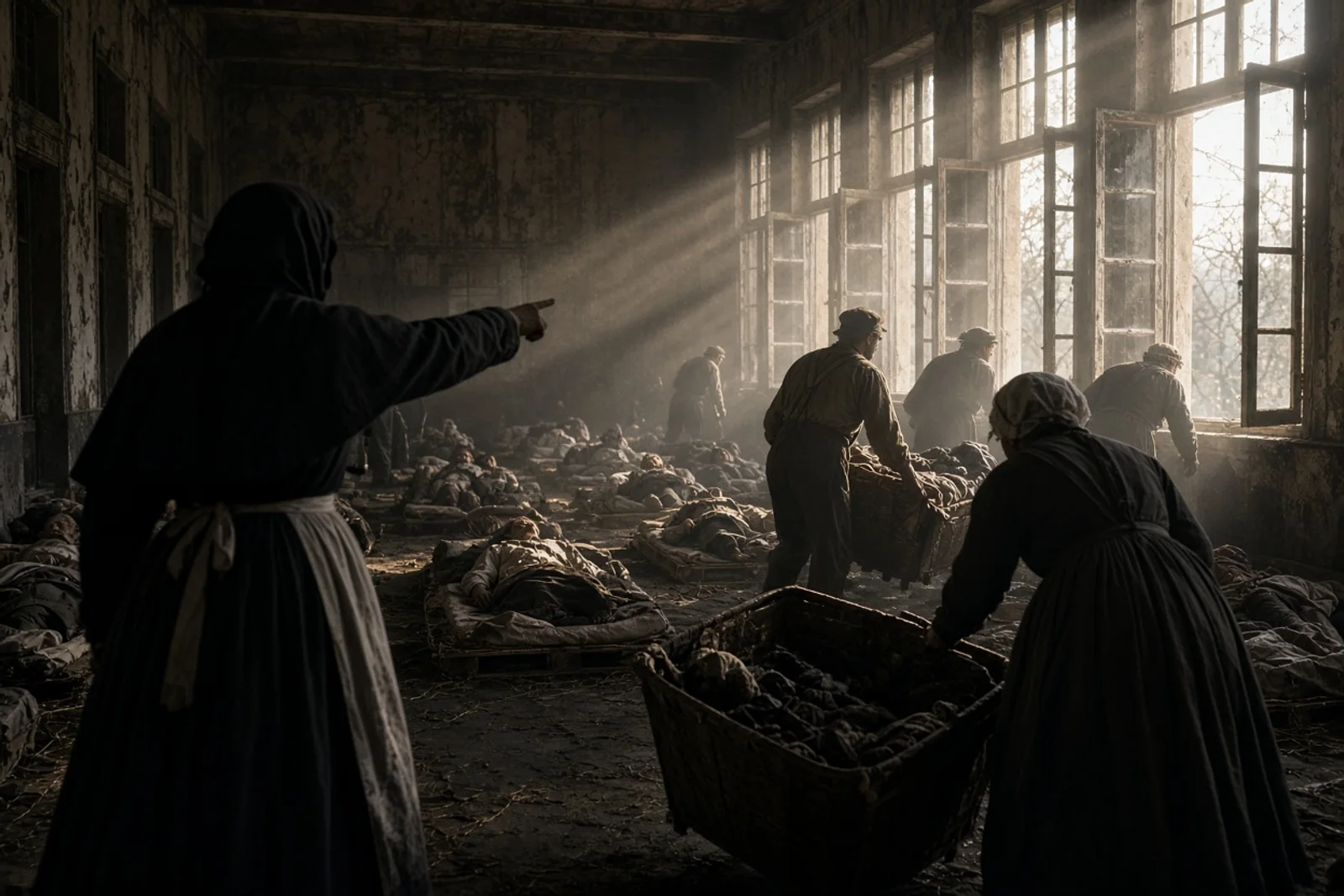
The gangplank creaked under our boots as we stepped onto the quay at Scutari. Salt wind mixed with the smell of open drains and unburied refuse. Thirty-eight of us had crossed from England with Miss Nightingale, plus fifteen nuns under Manning’s arrangement. Eliza Roberts walked ahead of the line, her shoulders squared against the stares from the orderlies already there. Mai Smith, Miss Nightingale’s aunt, kept close to the supply crates.
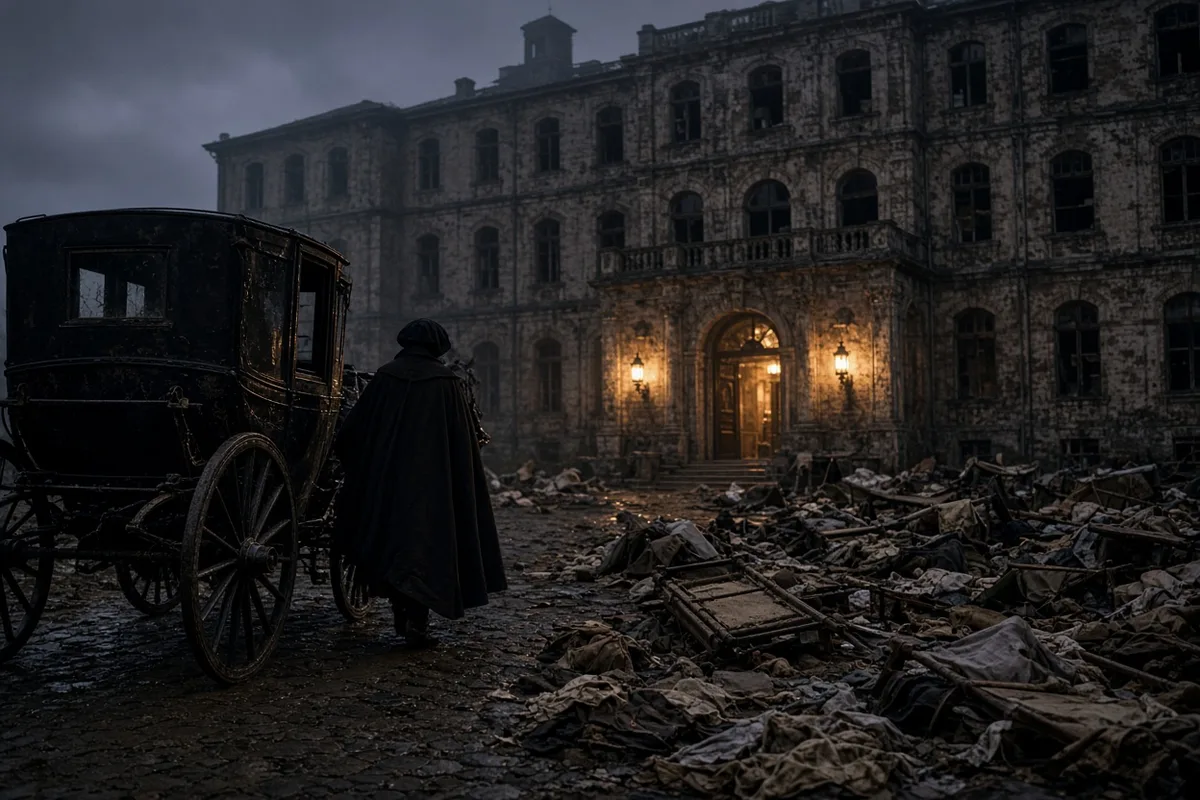
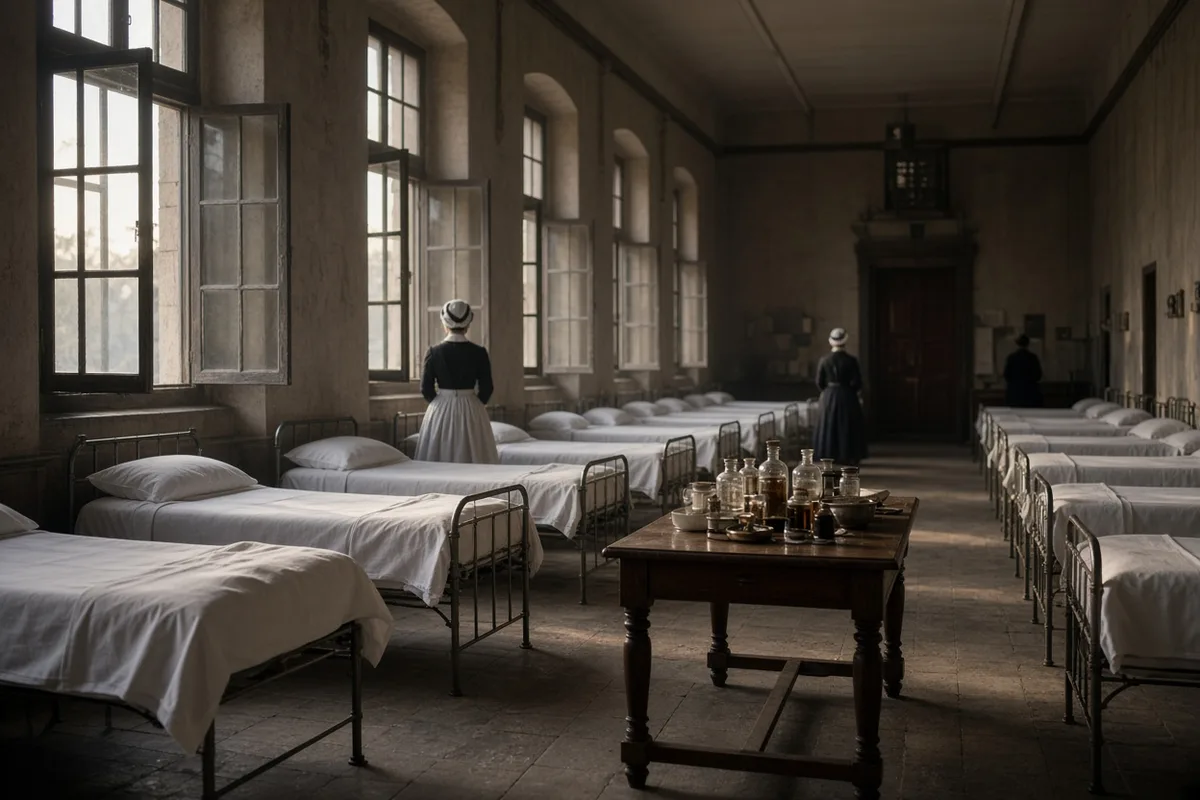
Inside the Selimiye Barracks the wards stretched in long, dim rows. Men lay on straw pallets without sheets. Some had no pallets at all. Flies covered the dressings that had not been changed in days. One soldier coughed blood into a tin cup and did not bother to wipe his mouth. We were told the surgeons had not asked for us and would not make room.

Miss Nightingale set her lamp on an empty crate and began counting beds that did not exist. She sent Roberts to the storeroom with a list. The storeroom held only rags and a few cracked basins. She wrote again to Sidney Herbert in London, asking for the government to act on the drains. The letter went out on the next packet. No answer came for weeks.
We started with the simplest order she gave. Every nurse washed her hands in a basin of chlorinated water before touching a wound and again after. The orderlies laughed at first. Then one of them watched a man whose arm had been amputated stop draining after three days of clean dressings. The laughter thinned.

Rats moved along the baseboards at night. We stacked the few blankets we had been given on the least injured men and left the rest to share body heat. Cholera cases doubled in the next fortnight. The dead were carried out on stretchers without names written down. Four thousand and seventy-seven British soldiers died inside those walls before spring.
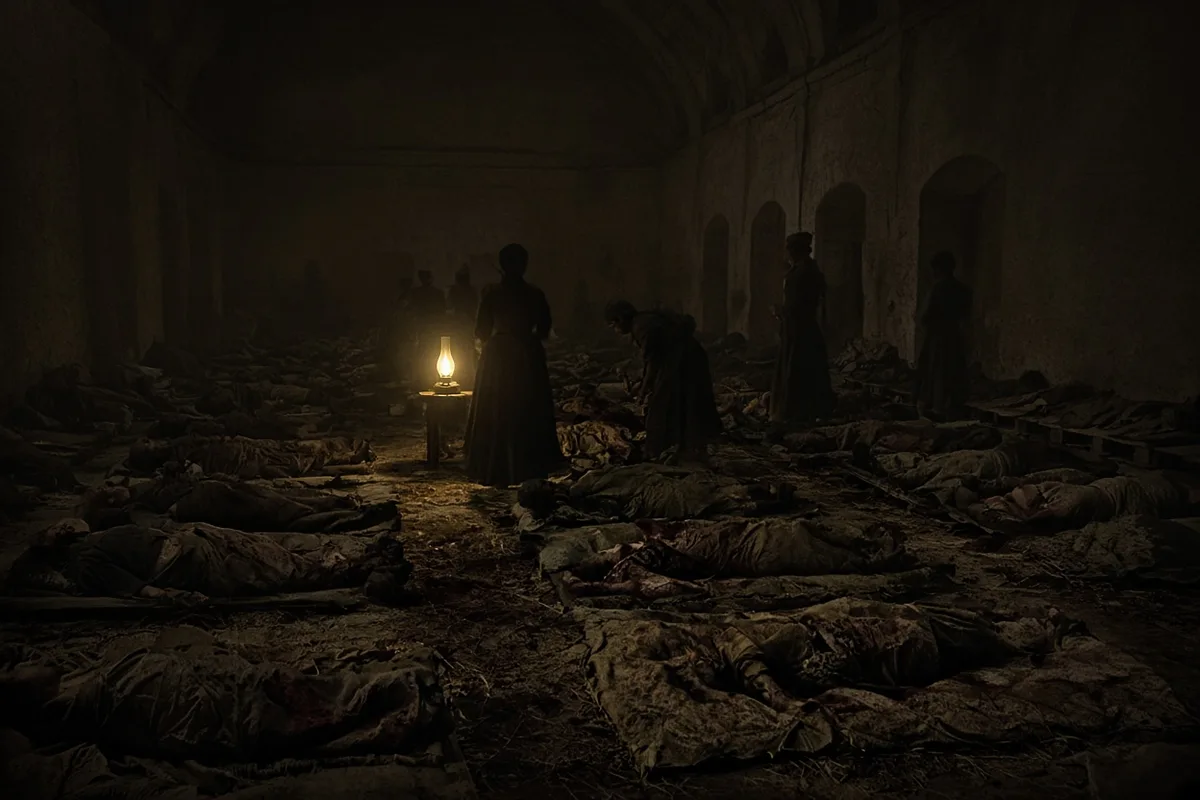
Miss Nightingale walked the wards after midnight with her lamp shaded. She stopped at each pallet long enough to check the water cup and the position of the limb. Men who could still speak called her the Lady with the Lamp. She never corrected them. She only asked whether the last dose of opium had eased the pain.
In March the Sanitary Commission arrived. Their engineers traced the hospital’s water supply to a leaking cesspool. They opened the blocked drains and vented the wards. Within a month the new cases of typhus fell sharply. Miss Nightingale recorded every admission and every death in a ledger she kept on a folding table near the door. She drew circles on paper to show how many men had died from fever rather than from shot or shell.

By May she herself lay feverish in a side room. Eliza Roberts stayed at her bedside through the nights, forcing broth between her lips when she could swallow. The surgeons said it was Crimean fever. Roberts said it was exhaustion and would pass if the patient rested. It did pass, slowly.
The death rate inside the barracks dropped from forty-two in every hundred to two. Ten times as many men had been lost to the filth diseases as to battle wounds before the drains were cleared. After the commission finished its work the proportion reversed. Miss Nightingale made no speech about it. She only added the new figures to her ledger and sent copies to Herbert.

Some of the volunteer nurses left when the worst of the winter eased. Others stayed through the summer and into the next winter. Roberts remained at her post until the last British patients were moved. The nuns under Mary Clare Moore kept their own wards in the same order Miss Nightingale had set.
When the war ended she returned to England on a warship. The public already called her a heroine. She carried only her notebooks and the diagrams she had drawn from the death registers. She showed those diagrams to the Royal Commission on the Health of the Army and asked them to read the circles instead of the columns of numbers. The commissioners looked once and then looked again.
Years later the same circles appeared in reports on hospital design and on the water supply of entire cities. The nurses she trained at St Thomas’ carried the hand-washing rule into civilian wards. The men who had lain on the straw at Scutari never saw those later wards. They had already been buried under numbered stones or shipped home in sealed coffins.
The lamp she carried still hangs in the museum at St Thomas’. Its glass is cracked along one side from being set down too hard on a wooden crate in a cold corridor.
In the months after the armistice Miss Nightingale remained in London at the Burlington Hotel, where she received daily bundles of returns from the War Office and from the new Army Medical School at Fort Pitt. On 16 January 1857 she met with Sidney Herbert and Dr William Farr to compare the Scutari registers against the muster rolls; the meeting lasted four hours and produced the first of the polar-area diagrams later printed in the commission’s report. She dictated seventeen pages of marginal notes on the death returns from the General Hospital at Balaclava, naming each regiment and the exact number of admissions for dysentery between 1 December 1854 and 28 February 1855. The diagrams reached the commissioners on 5 February; Lord Panmure initialled the margin of one sheet with the single word “Act.”
By June 1859 the Nightingale Fund stood at £44,039 10s 8d, raised from public subscriptions and from the sale of the Scutari photographs taken by Roger Fenton. Miss Nightingale used part of the sum to lease the old St Thomas’ premises on the south bank and to appoint Mrs Sarah Wardroper as matron. On 9 July 1860 the first fifteen probationers signed the register in her presence; each received a printed copy of the “Notes on Nursing” she had written the previous year. The rules required every probationer to record pulse and temperature at fixed hours and to initial the entry; the first ledger still exists, its columns filled in ink that has not faded.
In 1863 the Government of India forwarded a set of cantonment returns to her at South Street. She forwarded them the same week to Dr John Sutherland with instructions to calculate the annual death rate per thousand for each station. The resulting tables showed 69 deaths per thousand at Peshawar and 102 at Secunderabad. Her letter to Sir Charles Wood dated 12 March 1864 asked for separate budgets for drainage and for regimental latrines; Wood replied that the estimates would be laid before the Legislative Council. Within three years the death rate at the same stations had fallen to 19 per thousand.
The nurses trained under her rules took posts at the Liverpool Workhouse Infirmary in 1862 and at the Leeds General Infirmary in 1865. At Leeds, Sister Mary Cross kept a daily count of erysipelas cases on Ward 4; the number dropped from 47 in the first quarter of 1866 to three in the same quarter of 1867 after the introduction of the chlorinated hand-basin at each bed. Similar returns arrived from the Edinburgh Royal Infirmary and from the Montreal General Hospital, each signed by the sister in charge and countersigned by the resident physician.
On 13 August 1910 Miss Nightingale died at 10 South Street. The death certificate, signed by Sir Thomas Barlow, recorded “heart failure, old age.” Her coffin was carried from the house at 6 a.m. on 20 August and placed in the family plot at East Wellow without military honours, as she had directed. The only object from the Crimea placed on the coffin was a small enamel cross given her by the Sultan in 1856; the cross is now kept in a drawer at the Royal London Hospital Museum.
The last of the original Scutari nurses, Sister Elizabeth Wheeler, died at the Institution of the Deaconesses at Mildmay in 1924. Her obituary in the Nursing Record quoted the entry she had written in the ward book on 21 March 1855: “Admitted Private Thomas Atkins, 4th Foot, gunshot wound left thigh; dressed at 11 p.m.; pulse 112.” Wheeler had kept the same style of entry in every hospital where she worked until her retirement in 1891.
The cracked lamp remains in a glass case at the Florence Nightingale Museum at St Thomas’. Beside it lies the original ledger from the Selimiye Barracks, open to the page for 4 February 1855 that records 147 admissions and 63 deaths. The page is headed in her hand: “Cause of death—fever, not wounds.”
The cracked lamp remains in a glass case at the Florence Nightingale Museum at St Thomas’. Beside it lies the original ledger from the Selimiye Barracks, open to the page for 4 February 1855 that records 147 admissions and 63 deaths. The page is headed in her hand: “Cause of death—fever, not wounds.”
In 1867 the War Office printed the “Report of the Army Medical Department” that incorporated her polar-area diagrams for the years 1854–1856; the plate for January 1855 shows a blue sector of 3,194 fever deaths against a red sector of 83 battle deaths, with the legend “Zymotic diseases—Scutari General Hospital.” Dr William Farr’s accompanying table lists the same figures by regiment, including the 23rd Foot with 412 admissions for diarrhoea between 1 October and 31 December 1854. The diagrams were reissued in the 1873 edition of the “Notes on Hospitals” with an added column for cubic feet of air space per bed, set at 1,200.
Mrs Wardroper’s register at St Thomas’ for the 1862 intake shows probationer Elizabeth Vincent, aged 26, recording on 14 March 1863 that patient John Smith, Ward 3, had a pulse of 98 at 8 a.m. and temperature 101.4 °F at 4 p.m.; the entry is initialled “E.V.” and countersigned by the house surgeon. Vincent later became matron of the Leeds Infirmary in 1875, where she installed 22 hand-basins supplied with carbolic solution at a cost of £14 6s per ward.
On 12 March 1864 Florence Nightingale wrote to Sir Charles Wood that the Peshawar cantonment return for 1863 listed 1,872 admissions for dysentery among 4,200 European troops; the letter is preserved in the India Office Records, file L/MIL/7/140. Wood’s reply of 9 April directed the Quartermaster-General to allocate £2,800 for new latrines at Secunderabad, where the 1867 return showed 214 deaths instead of the previous 1,041.
Sister Mary Cross’s quarterly report from Leeds dated 30 June 1867 states that Ward 4 recorded three cases of erysipelas after the installation of the chlorinated basins, compared with 47 the year before; the report is countersigned by Dr Charles Turner, who noted “no secondary amputations required.” Similar returns from the Edinburgh Royal Infirmary in 1868 list 11 erysipelas cases on Ward 12 after the same measure, down from 39.
The Army Medical School at Netley, opened in 1863, required every surgeon to copy Nightingale’s hand-washing rule into his notebook; the 1871 syllabus quotes her sentence “Cleanliness is the first law of the hospital” and mandates a demonstration with a basin of chlorinated water before each ward round. By 1880 the school had trained 412 officers, of whom 287 served in India and submitted annual sanitation returns.
In 1907 the Metropolitan Asylums Board adopted the same basin rule for its fever hospitals; the minutes of 14 February record that 1,892 cases of scarlet fever were treated at the Eastern Hospital with a cross-infection rate of 0.8 per cent after the basins were placed at every bed. The board purchased 312 enamelled basins at 4s 9d each from the firm of Dent & Hellyer.
The Florence Nightingale Museum at St Thomas’ today displays the 1855 ledger beside a 1910 photograph of the East Wellow grave taken by her niece Rosalind Nash; the photograph shows the plain headstone inscribed only with the initials “F.N.” and the date 13 August 1910. The last probationer trained under the original 1860 rules, Sister Alice Fisher, retired from the Radcliffe Infirmary in 1921 and died in Oxford on 3 February 1923; her final ward book entry, dated 11 November 1920, reads “Patient Mary Jones, age 47, temperature 98.6 °F at 10 p.m.; discharged well.”