



Aaron Ford defeats Gov. Joe Lombardo in Nevada governor race
By The Conservative Desk (/journals/conservative-desk)
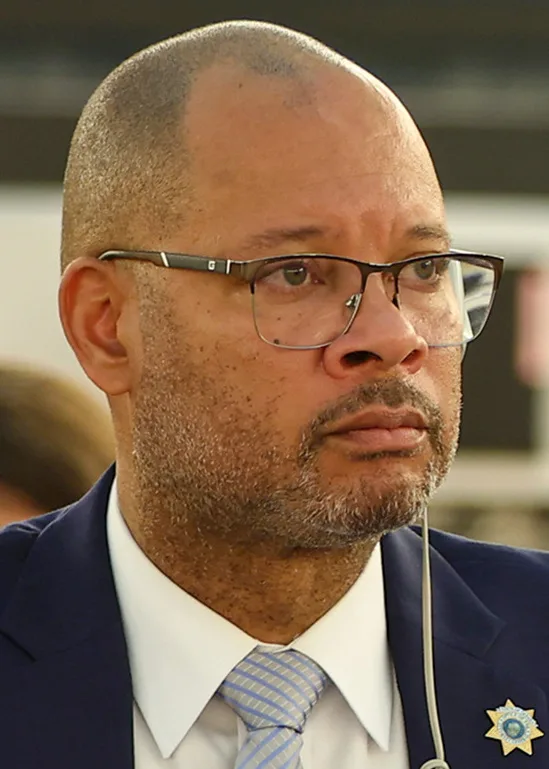
The Associated Press called the race and NBC News projected the outcome: Nevada Attorney General Aaron Ford had defeated incumbent Republican Gov. Joe Lombardo. Ford becomes the state’s first Black governor.
The result removes from Carson City a governor who cast a record 160 vetoes and described that record in plain terms. “160 vetoes are nothing to celebrate, because what that means is bad government,” Lombardo said. “I won’t hesitate for a second to say no again, though, or to be the last line of defense between you and irresponsible politicians.” Those vetoes stood between a Democratic legislature and statutes that would have expanded state power over housing markets, drug pricing, and labor rules. With Ford’s win, that check ends.
Ford has served as attorney general since 2019. He was Nevada’s first Black Senate majority leader from 2017 to 2019 and first won a seat in the Nevada State Legislature in 2012, representing State Senate District 11 through 2019. He holds a bachelor’s degree from Texas A&M in 1994, a law degree and a Ph.D. in educational administration from Ohio State University, and graduate degrees from George Washington University and Ohio State. As attorney general he joined lawsuits against the Trump administration on birthright citizenship, federal election interference, and education funding restoration.
Lombardo entered the governor’s office in 2022 after defeating incumbent Democrat Steve Sisolak 49 percent to 47 percent. A former sheriff, he carried an endorsement from President Trump. During the campaign just concluded he appeared publicly with Trump on a summer visit to Nevada. He sought to separate state results from federal decisions he said he could not control.
Ford and his allies framed the contest as a referendum on what they termed the “Lombardo-Trump economy.” Ford put the charge this way: “No more failed leadership in Carson City that lets jobs disappear while prices are soaring … no more to a governor who bends the knee to a president he seeks to please instead of the people he’s sworn to protect.” Nevada gas prices sat over $5 per gallon during the campaign, among the highest in the country. Las Vegas tourism fell 7.5 percent last year, according to ABC News, and unemployment remained among the nation’s highest. The state also risks losing an estimated $1.2 billion in federal funding from changes to Medicaid, food assistance, and Affordable Care Act cuts.
Lombardo’s campaign answered with its own ledger. “Under Governor Lombardo’s leadership, Nevada has led the nation in job growth for 11 consecutive months, employment has grown 1.8% year-over-year, we’ve reached a record 1.6 million jobs, generated over $6 billion in new investment, and created nearly 100,000 jobs,” the campaign stated. Lombardo himself listed the same figures in nearly identical language: “creating nearly 100,000 new jobs, attracting over $6 billion in private investment, leading the nation in job and wage growth, improving our schools, strengthening public safety, and making housing more affordable.” Those numbers were the free-enterprise case he put before voters who still faced high pump prices and a tourism slump.
The policy stakes now shift from vetoes to affirmative statutes. Ford has said he will bring back measures Lombardo killed, including limits on the number of homes large corporations can buy and authority for the state to adopt Medicaid-negotiated prescription drug prices. On labor law he has been explicit. Asked about repealing Nevada’s right-to-work statute—a rule that bars mandatory union membership or dues as a condition of holding a job—Ford replied, “It can be done legislatively. They can send me a bill. And if they send it to me, I'm signing it.” That single sentence converts a long-standing protection for individual workers and employers into a bill that needs only a legislative majority and a signature.
Housing formed another pillar of Ford’s platform. His campaign website pledged to “stand up to tariffs that threaten to drive up housing costs ... crack down on Wall Street firms coming into Nevada ... and encourage new construction by working with municipalities to ease the permitting process and use vacant land.” Both candidates had supported tax breaks for data centers; they differed on how tightly those projects should now be policed. Lombardo’s earlier set-aside of $133 million for middle-income housing and pay increases for teachers and state employees formed the counter-record he offered voters worried about affordability.
For limited government the practical consequence is immediate. A governor who treated 160 vetoes as a constitutional backstop against a legislature he called irresponsible is replaced by an attorney general who has already sued the federal government on citizenship, elections, and school funding and who has promised to sign a repeal of right-to-work. The ordinary Nevadan who watched gas stay above $5 and tourism drop 7.5 percent will now see whether new statutes on corporate home purchases, drug prices, and union security deliver lower costs or simply larger state direction of private markets. Nevada remains a presidential battleground two years out; the same electorate that ended Lombardo’s term will judge the results.
Ford’s path ran through private law practice and math teaching before the Senate leadership and the attorney general’s office. Danielle Ford, listed with no political party, also appeared on the ballot. The Associated Press and NBC News calls confirmed the Democratic attorney general’s victory over the Republican incumbent. The legislature’s next session can place a right-to-work repeal on the new governor’s desk. He has said he will sign it.