



Four meals expose how cheap corn remade American eating
In 60 seconds
- Most carbon in American bodies traces to corn after 1970s policy locked farms into permanent surplus.
- Feedlots force cattle onto corn their stomachs cannot handle, then hide antibiotics, manure, and a ten-to-one fossil-energy cost behind cheap steak.
- Processors break surplus corn into syrups and gums that stock roughly seventeen thousand supermarket items and only look like real choice.
- Industrial organic often keeps monocultures, long trucking, and thin outdoor access while selling a small-farm story on the package.
- Polyface Farm cycles grass through cattle, chickens, and pigs so sunlight does the work feedlots buy with fuel and drugs.
- A fully transparent farm meal costs more and reaches fewer people, yet knowing the source still changes what and how seriously you eat.
The big idea
The big idea
Pollan argues that cheap corn and industrial logic have severed eaters from the origins and true costs of food. Recovering even partial knowledge of those origins—on a grass farm, through clearer labels, or by hunting and foraging—changes both the plate and the weight of the choice.
The book in brief
The book in brief
Pollan begins with one question—what should we eat?—and answers by following four meals to their roots. The industrial path leads straight into corn: Nixon-era policy pushed farmers to plant fencerow to fencerow, prices crashed, and surplus had to be absorbed as feed, sweetener, and additives.
That surplus next enters the feedlot and the processing plant. Cattle fatten fast on grain their bodies reject; the resulting health and energy bills never appear at the meat counter. The same corn is cracked into thousands of branded products that create an illusion of variety over a narrow base.
Seeking an exit, he tests the organic aisle and finds large operations that meet the legal input rules yet still run monocultures, cross-country refrigeration, and broiler houses whose “outdoor access” is mostly theoretical. Marketing supplies the missing pastoral story.
The living counter-example is Polyface Farm, where daily cattle moves, a following chicken coop, and pigs turning compost let grass and species relationships replace purchased feed and diesel. A meal drawn entirely from that farm makes transparency tangible—and also shows how narrow the audience is that can pay its unsubsidized price.
The final meal is one he hunts and forages himself. It forces a direct reckoning with the death any eating extracts from other lives. The book closes not with a diet plan but with the claim that lost knowledge of food origins is the real dilemma, and that reclaiming some of it is both practical and moral work.
Context
Michael Pollan published the investigation in 2006, working as a journalist from farm visits, interviews, and selective studies rather than controlled nutrition trials. The book mattered because it made the hidden industrial chain behind ordinary American meals visible to a wide general audience for the first time.
The key ideas
1
Corn captured the diet
Carbon-isotope tests show most tissue carbon in Americans traces to corn because 1970s policy and the plant’s own efficiency locked the entire system onto one crop.
- 1970sEarl Butz pushes fencerow-to-fencerow planting and volume subsidies
- AfterwardSurplus floods feedlots, processors, and ethanol
- TodayMost carbon in American bodies traces to corn
Pollan opens with a fact that only sounds trivial until the scale hits: the carbon in most American bodies comes from corn, whether eaten directly or as corn-fed animals. That dominance was not a master plan. After agriculture secretary Earl Butz urged farmers to plant fencerow to fencerow, federal subsidies rewarded sheer volume even as prices collapsed.
Iowa grower George Naylor lays out the trap. When the price per bushel falls, the only way to cover costs is to grow still more corn, which drives the price lower again. The result is permanent surplus that industry must absorb.
Corn’s biology helped. As a C4 plant it converts sunlight more efficiently than most crops, so it out-yields alternatives per acre and became the natural vessel for a volume-first system. Understanding that single-crop grip is the necessary starting point; every later chain in the book is defined by how it relates to corn.
In practice: George Naylor keeps planting more corn simply to stay solvent as the price per bushel keeps falling.
2
Feedlots break cattle biology
Switching cattle to corn produces routine bloat, ulcers, and liver abscesses, standing antibiotic use, and roughly ten fossil-fuel calories for every beef calorie sold.
Cattle evolved as ruminants to ferment grass slowly. Corn is not what their stomachs expect. At a Kansas yard called Poky Feeders, Pollan watches animals moved onto high-corn rations so they reach slaughter weight fast and cheap.
The acidic diet brings bloat, ulcers, and liver abscesses common enough that antibiotics are given as ordinary practice, not as treatment for occasional illness. That routine drugging is one route by which antibiotic resistance becomes a public-health problem tied to meat. The same acid gut appears to favor dangerous E. coli strains that grass-fed chemistry would suppress.
Manure, once thin fertilizer on pasture, now pools in lagoons and turns from asset into waste. None of these costs—animal, medical, or climatic—show up in the supermarket price of steak. The point is not that meat itself is wrong; it is that the corn system manufactures problems and then hides the bill.
In practice: Poky Feeders cattle develop liver abscesses so regularly that antibiotics are administered as standard protocol.
3
Processing invents fake variety
Turning surplus corn into starches, syrups, and gums lets a few commodity firms stock roughly seventeen thousand supermarket items that only look like abundant choice.
Once the grain piles up, someone has to do more with it than feed cattle. Firms such as Archer Daniels Midland and Cargill break corn into chemical parts—starches, high-fructose corn syrup, xanthan gum, maltodextrin—that food scientists reassemble into texture, shelf life, and flavor.
Pollan walks a supermarket and counts roughly seventeen thousand items; the large majority contain some corn derivative. The appearance of endless choice is mostly surface decoration over a narrow raw-material base. A cheap bushel becomes far more profitable once it is fractured and rebuilt as a branded snack carrying a health claim.
The system’s incentives point the same way: companies earn more from processing than from selling whole foods, so complexity and marketing novelty win over nutrition. Eaters receive engineered simplicity dressed up as freedom.
In practice: A fast-food dinner of nuggets, soda, and fries eaten in the car turns out to be corn at every layer—from the chicken to the syrup to the packaging.
4
Organic stops at inputs
Large-scale organic meets the legal definition while often repeating monocultures, long refrigerated hauls, and broiler-house lives that barely change.
Label promise
Pastoral farms, outdoor animals, short clean chains
Industrial organic reality
Monoculture greens, brief door access, cross-country refrigerated trucks
Pollan enters the organic aisle expecting a clean break and finds only a partial one. Earthbound Farm grows salad greens as organic monoculture on a vast California scale, then ships them across the country in fuel-burning trucks much like any conventional crop.
An organic chicken house may satisfy federal rules by opening a small door for a few minutes a day; the birds rarely use it, so their actual lives differ little from conventional broilers. Whole Foods built its brand on red-barn imagery yet sources much produce and meat from operations that look industrial once visited.
Pollan names the effect “supermarket pastoral”: package art and copy that let shoppers imagine a small farm behind a tightly optimized supply chain. Certification still removes synthetic pesticides and certain inputs, which matters for soil and workers. It simply answers a narrower question than most buyers think they are asking.
In practice: Organic birds receive “access to the outdoors” through a door opened briefly each day and almost never used.
5
Grass runs the whole farm
Daily cattle shifts, a following eggmobile of chickens, and pigs aerating compost let Polyface capture sunlight through species relationships instead of bought feed and diesel.
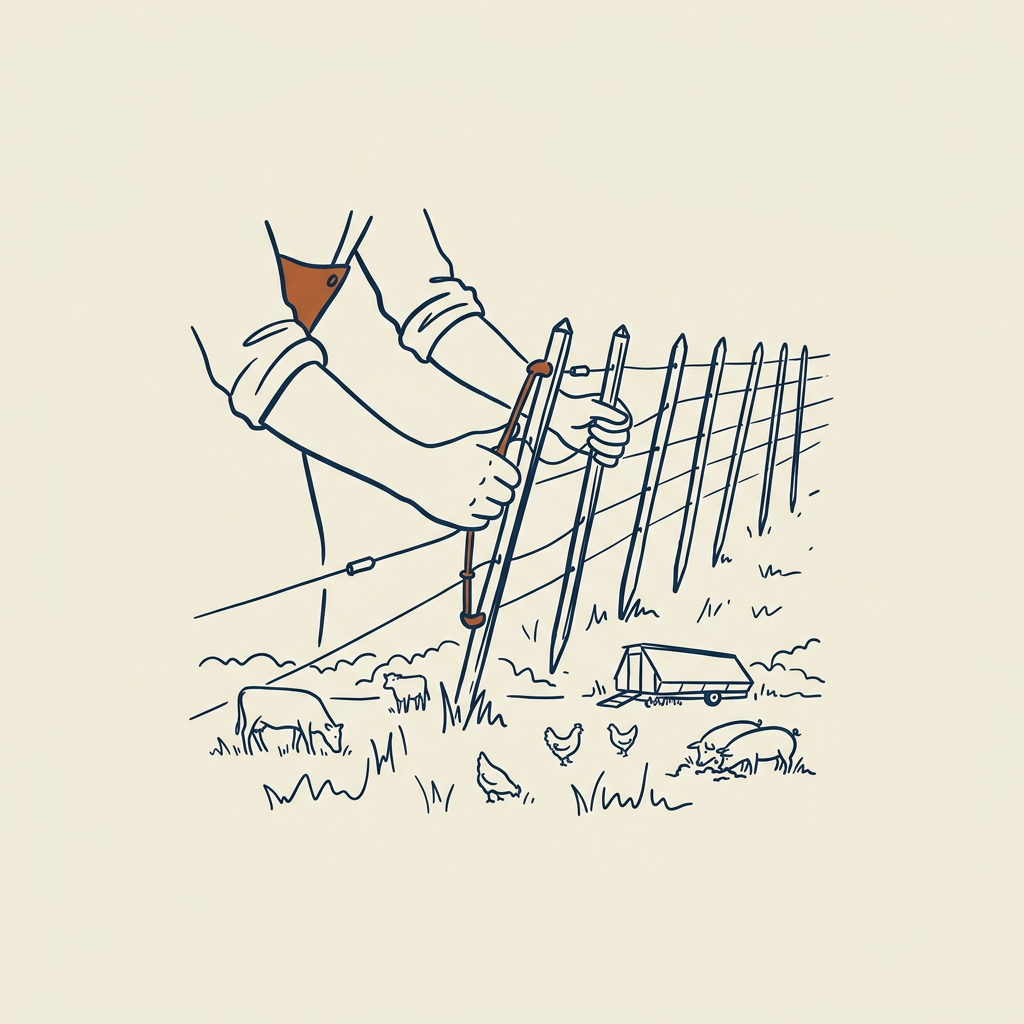
Joel Salatin’s Virginia farm is built around grass, not grain. Cattle move each day to a fresh paddock behind portable electric fence, mimicking wild herds that graze, fertilize, and leave so pasture can recover.
Days later a mobile chicken coop—the eggmobile—rolls onto the same ground. Birds scratch through cow pats for fly larvae, sanitizing the field and adding their own manure while laying eggs. Pigs later turn compost piles; Salatin calls the result “pigaerator pork,” work that would otherwise need diesel machinery.
Each species performs a job. Output is counted not only in pounds of meat but in total solar energy captured by grass and amplified through the animal cascade. Yields rival conventional pasture without synthetic fertilizer or purchased cattle feed. Where the feedlot concentrates animals and imports corn, Polyface disperses them and lets a renewable input do the heavy lifting.
In practice: Chickens in the eggmobile follow cattle onto fresh paddocks and clean fly larvae from the manure while laying eggs.
6
Transparency carries a real price
A meal sourced entirely from a farm like Polyface costs more because the price finally includes labor and land care instead of corn subsidies, and only a narrow slice of eaters can currently pay.
Supermarket meal
Low sticker price built on hidden corn subsidies and externalized costs
Polyface meal
Higher price that includes labor, land care, and full visibility
Pollan works a week at Polyface—moving animals, cleaning the eggmobile—then sits down to a dinner made only from what the farm produced. Salatin sells direct and wants any customer able to see every part of the operation, a deliberate rejection of industrial anonymity.
The meal costs more than a supermarket equivalent. The premium is not gouging; it reflects actual labor, stewardship, and the absence of the subsidies that keep commodity corn and meat artificially cheap.
Here the argument grows harder rather than simpler. A system like this depends on customers with income, time, and interest enough to reach a farm or market and pay extra. That describes a relatively small and privileged group. Pollan does not pretend otherwise.
In practice: After a week of farm labor, Pollan eats a dinner raised entirely on Polyface and finds its true cost higher than any subsidized supermarket version.

7
Hunting restores the cost
A meal hunted and foraged by hand forces an honest reckoning with the fact that eating anything, plant or animal, extracts a life.
The last of the four meals is one Pollan obtains himself by hunting and foraging. No supply chain, label, or pastoral package stands between the eater and the source.
The exercise strips away abstraction. Killing and gathering make plain that every meal rests on the death or removal of other living things. Industrial and even organic systems hide that fact behind distance and branding; the foraged plate cannot.
Pollan treats the experience less as a practical diet for millions than as a moral calibration. Once the cost is felt directly, the earlier choices—corn-fed nuggets, industrial organic greens, grass-finished beef—appear in a clearer light. Knowledge, even imperfect and personal, changes the weight of the decision.
In practice: Pollan prepares a meal from animals he hunted and plants he foraged, meeting the deaths involved without any industrial buffer.
Key terms
- C4 plant A crop, like corn, that photosynthesizes especially efficiently and therefore out-yields most alternatives per acre
- fencerow to fencerow The 1970s policy push to plant every possible inch for maximum corn volume
- supermarket pastoral Package art and wording that make shoppers picture a small farm behind an industrial organic product
- eggmobile Salatin’s mobile chicken coop that follows cattle to clean pasture and lay eggs
- management-intensive grazing Moving animals frequently so grass recovers and each species performs a job in the system
- pigaerator pork Pigs used to turn and aerate compost, replacing diesel machinery
- high-fructose corn syrup A sweetener made from surplus corn that ends up in soda, sauces, and countless packaged foods
What to do
- Read the ingredient lists on three packaged foods in your kitchen and count every corn or soy derivative.
- Buy one item this week from a farmers market or direct farm source and ask how it was raised.
- Before the next grocery trip, list what you plan to buy and why, then swap one packaging-claim item for a whole unprocessed food.
Questions to think with
- If most of the carbon in your body already comes from corn, what would it take to change that ratio?
- When an organic label guarantees inputs but not scale or animal life, what extra questions should a shopper ask?
- Who actually pays the ten fossil calories behind one feedlot-beef calorie, and is that fair?
- Can a system like Polyface ever feed cities, or is its real value the standard it sets?
- What changes in your next meal once you treat every bite as a decision that costs another life?
The other side
The book’s clearest weakness is scale: Polyface is one highly refined personal project, and Pollan never shows a path from it to feeding hundreds of millions. Grass systems generally need more land per calorie than grain-fed ones, a tradeoff mentioned only lightly. Labor is almost invisible; migrant and low-wage workers in slaughterhouses, harvest crews, and organic fields receive little attention. The celebrated transparent meal costs money and time most households lack, and food deserts or tight budgets go largely unaddressed. Evidence is journalistic rather than systematic trial data. James McWilliams later argued that transport is often a minor share of a food’s energy footprint, so “local” is not automatically greener than efficient large-scale farming—a point the book underweights. The entire frame stays almost wholly American.
Who it's for
Readers who want to see why chips and soda are both, chemically, mostly corn, and anyone testing whether “organic” or “local” deliver what the labels imply. It also serves people looking for a concrete, non-abstract way to weigh the ethics of eating meat.