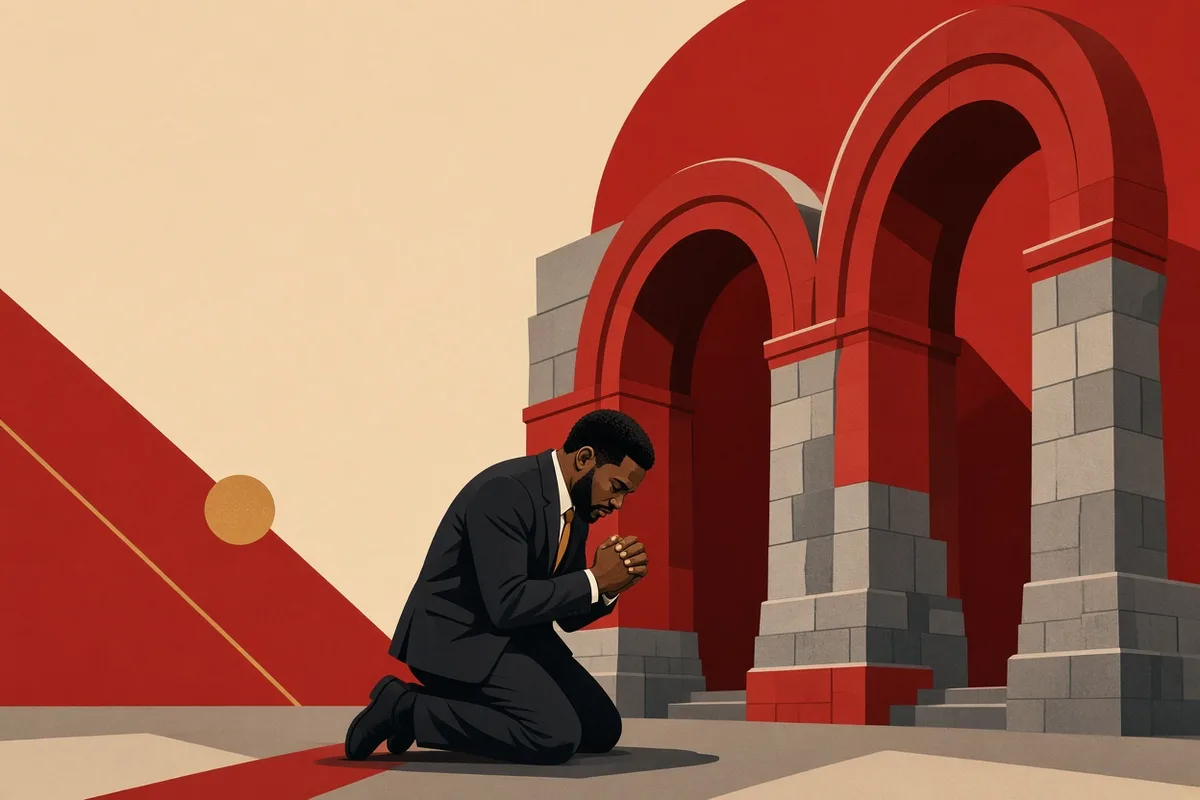



Francis and Clare Establish the Poor Clares
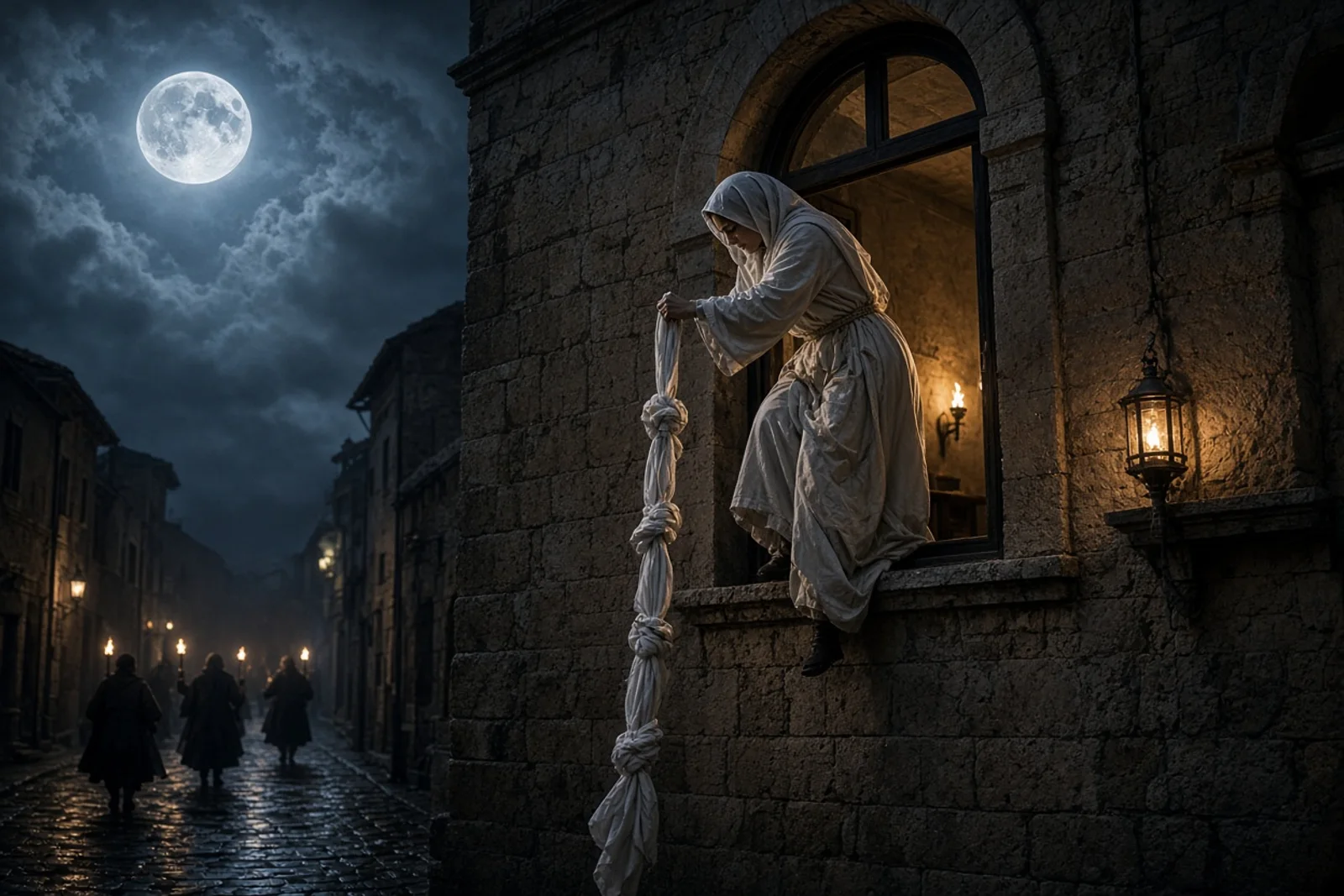
The palm was still green in her grip when she left the nave. I had seen the bishop step down to her, seen her fingers close around the branch without lifting her eyes. Outside the air held the last chill of March. She walked fast toward the western gate, cloak pulled tight, and I fell in behind because someone had to know where the night took her.
We kept to the edges of the road. Twice she stopped to listen for pursuit, once when a dog barked inside the walls, again when a cart creaked past. Her breath came quick but steady. She had told me only that Francis would know what to do with a woman who meant to keep nothing. The moon gave enough light to see the path turn toward the valley.
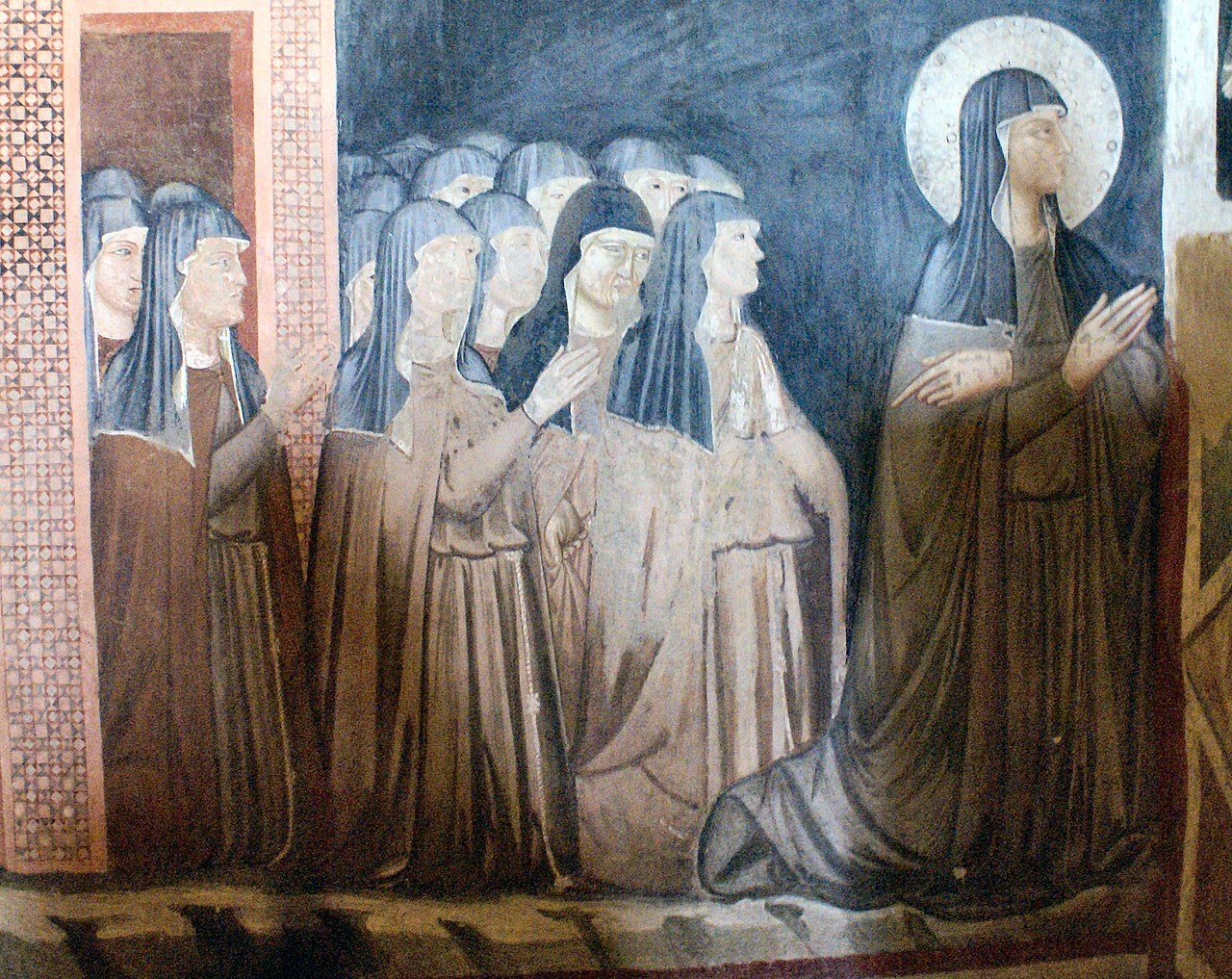
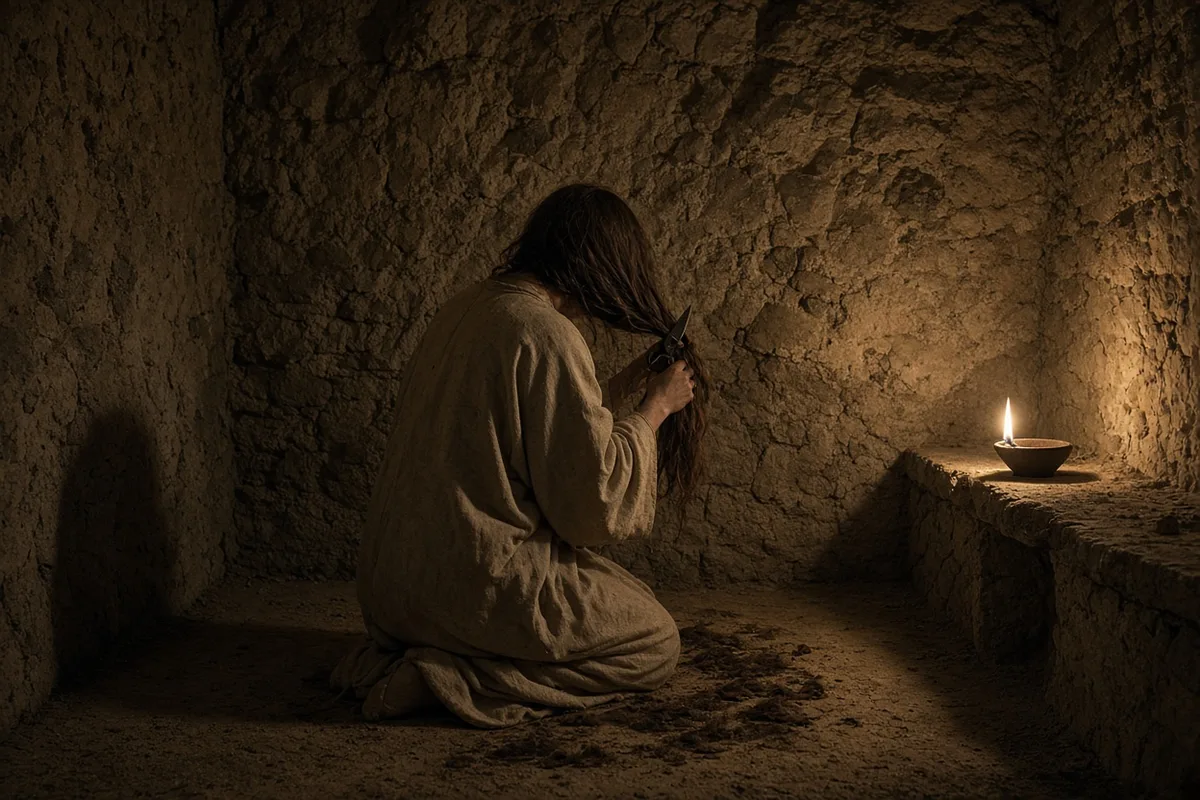
At the Portiuncula the brothers were still awake. Francis met her at the door with two others, each holding a taper that threw their faces into hard lines. She stepped inside without looking back at me. I stayed in the shadow of the porch and watched through the open frame. She laid the fine cloak on the stone before the altar of Our Lady. Francis took the shears. The first lock fell straight, then another, until the floor held a small dark pile. He gave her the coarse tunic and the cord. She tied it herself, hands sure. No one spoke above a whisper.
By morning she was gone from the chapel. Francis had sent her to the Benedictines at Bastia for safety. I walked the same road back to Assisi with the news already running ahead of me. Her mother’s people were out before noon, asking which way a girl in a plain habit might have gone.

They found her at Sant’ Angelo di Panzo two days later. Twelve men came, her uncles among them. I was at the gate when they pushed past the porter. Inside the chapel they took her by the arms. She locked both hands around the altar legs and would not let go. The cloth tore halfway down before they stopped pulling. One of them shouted that she had shamed the family. She answered that Christ had called her and she would have no other. They left her there, hair still short under the veil, but the bruises on her wrists showed dark by evening.
Her sister Agnes came the next week. Fourteen years old and already set on the same road. Francis gave her the habit as well. The uncles returned with more men this time. They dragged Agnes across the yard by her hair until she went limp. Clare reached her before they could lift her again. Between the two of them the men could not move either girl without drawing blood. The brothers watching from the wall said nothing. By nightfall the uncles rode away empty-handed.
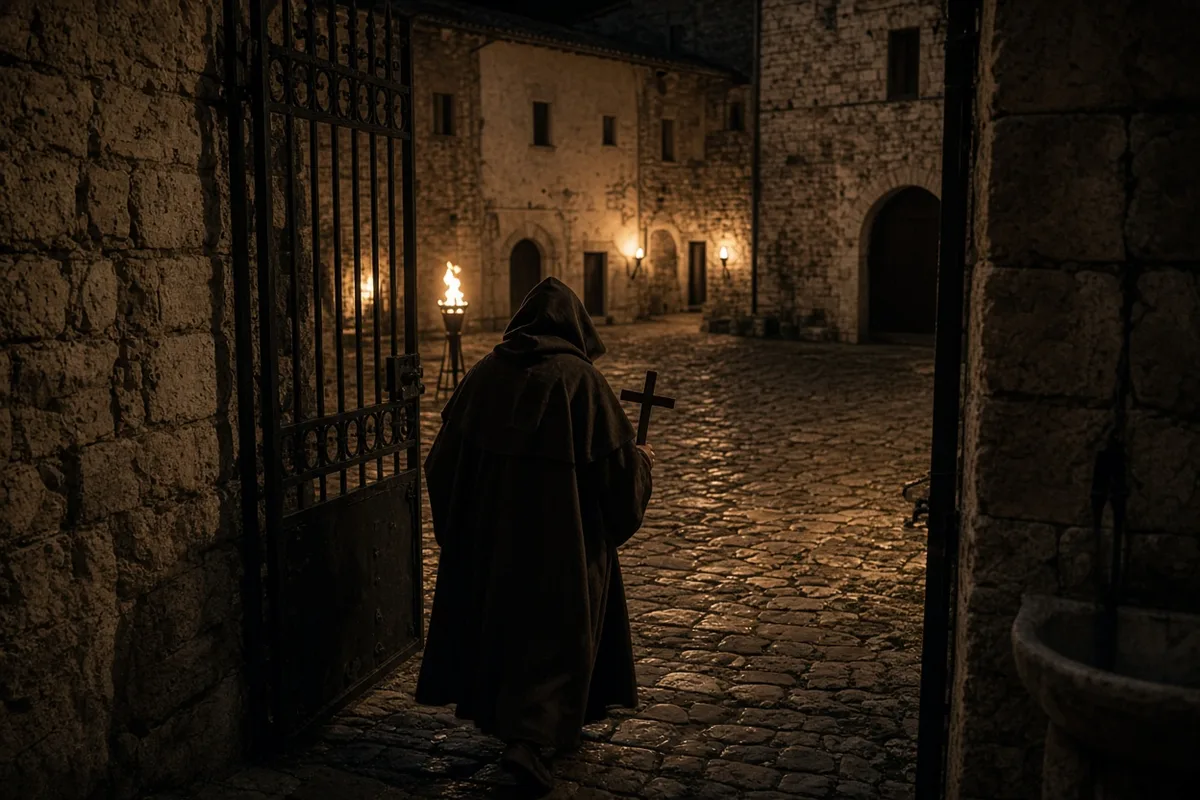
Francis kept them moving. First back to Bastia, then to the small house beside San Damiano where the roof let in rain and the walls held the smell of old plaster. Clare swept the floor herself the first morning. She set the single bench against the wall and placed the wooden cross above it. No one brought money. Bread came from the town when people remembered. She ate what arrived and gave the rest to the brothers who came to pray.
Word spread that two women now lived as Francis lived. A widow from the lower street brought her daughter. Then a girl from the market whose father had promised her in marriage. They arrived at dusk, each carrying nothing. Clare met them at the door, took their bundles if they carried any, and showed them where to lay their cloaks. By the third month the house held sixteen.
Her mother Ortolana arrived last, walking the road alone. She stayed three days in the yard before she asked for the habit. Clare cut her hair in the same small room where she had cut her own. The older woman wept once, then was quiet. They slept on the same straw that night.
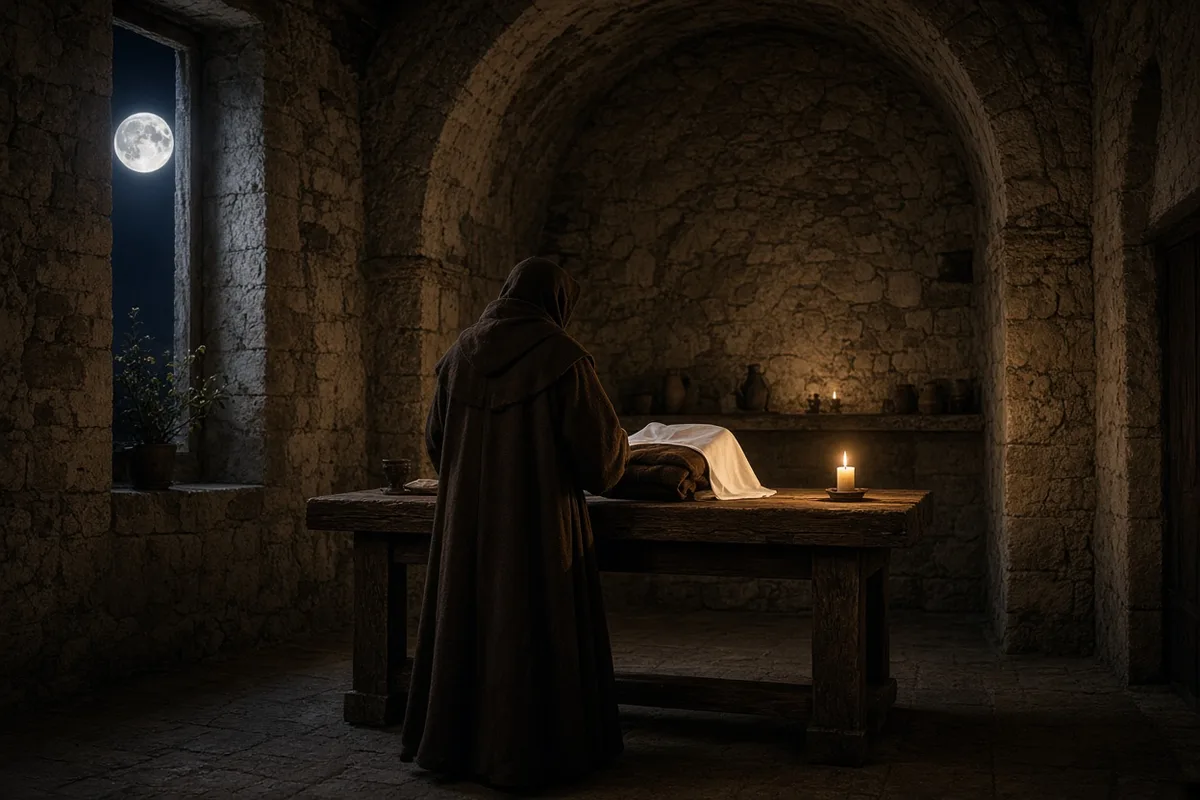
I brought them water from the spring most mornings after that. Clare was always already awake, kneeling on the stone before the cross. She never asked how long the bread would last or where the next roof would come from. She only said the rule Francis had given them was enough. The men who had tried to drag her away never returned. The house at San Damiano stayed as it was, low and plain, its door open to anyone who came on foot.
In the spring of 1216 Cardinal Hugolino came from Perugia and stood in the yard at San Damiano while Clare read aloud the letter Francis had written from Rieti. The cardinal counted sixteen women already living under the cord and noted the single cooking pot and the three goats that supplied the milk. He asked her to accept an income from the Lateran treasury. She answered that the words Francis had spoken on the night he cut her hair still held: “We will live by the work of our hands and the alms that are given without promise.” Hugolino left the next morning without pressing the matter further.
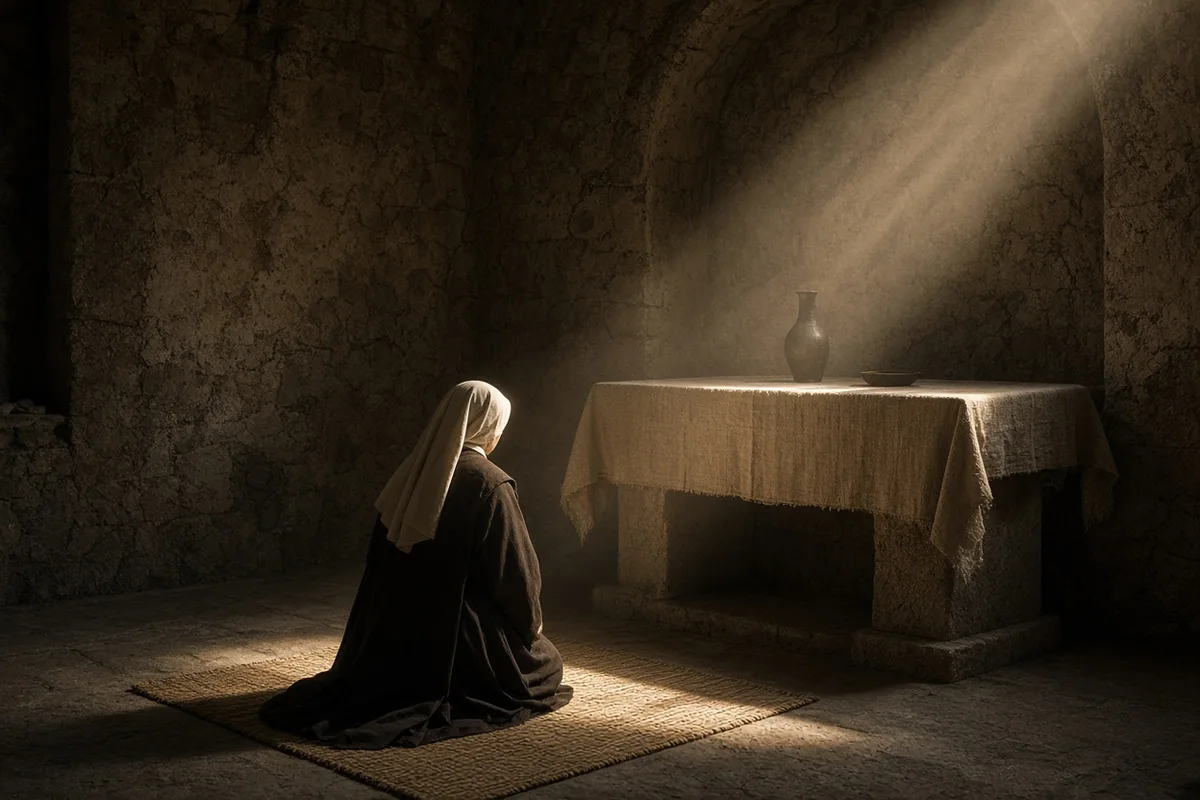
By 1228 the number at San Damiano had reached thirty-four. Pope Gregory IX, the same cardinal now wearing the tiara, rode to Assisi and offered her the bull that would have granted lands and rents. Clare took the document, placed it on the altar stone beside the wooden cross, and said the sentence that was later copied into the register of the papal chancery: “I desire only the privilege of poverty.” Gregory signed the Privilegium paupertatis on 17 September that year, the first such document issued to any community of women. The parchment was kept in a wooden chest under the bench where the sisters ate.
Agnes left for Monticelli near Florence in 1221 and later governed the house at Bagnoregio. She wrote to Clare each year on the feast of Saint Agnes, describing the bread they baked from the same coarse flour and the refusal of any bequest. Clare answered in her own hand, the letters carried by Brother Elias, and kept the replies folded inside her breviary until the pages grew thin at the folds. Pacifica di Guelfuccio, who had arrived the same week as Ortolana, took charge of the infirmary when the first cases of fever struck in the summer of 1234. She recorded the names of the eight sisters who died that season and the exact hours they received the last anointing.
The enclosure wall was raised in 1240 after the podestà of Assisi ordered the sisters to remain inside the cloister except for the collection of alms. Clare asked that the door facing the road be left unbarred during daylight so that any woman who arrived on foot could still be received. The masons left the original wooden lintel in place; the mark of Francis’s shears was still visible on the beam above the entrance. That same year the Saracen troops under Frederick II reached the valley. The sisters placed the ciborium on the sill of the choir window and Clare remained kneeling there until the soldiers turned back toward Spoleto without entering the house.
Innocent IV visited in 1247 and proposed a new rule that would have allowed the community to own property in common. Clare asked him to wait until she had written her own form of life. She dictated the text to Sister Balbina during the winter months when her legs no longer carried her to the chapel. The rule repeated the phrase “to observe the poverty of the Gospel” twelve times and required that no sister accept any inheritance or dowry. On 9 August 1253 the pope’s notary brought the approved copy bearing Innocent’s seal. Clare held it against her cheek while the sisters sang the Te Deum in the choir.
She died two days later, on 11 August, at the hour of terce. The sisters counted forty-seven women then living at San Damiano. Brother Angelo placed the sealed rule in her hands before the coffin was carried to the cathedral. The body was later moved to the new basilica built on the slope below Assisi, where the marble slab records the date of her profession as 18 March 1212 and the date of her death as 1253. The original wooden cross from the San Damiano chapel now hangs above the high altar of Santa Chiara.
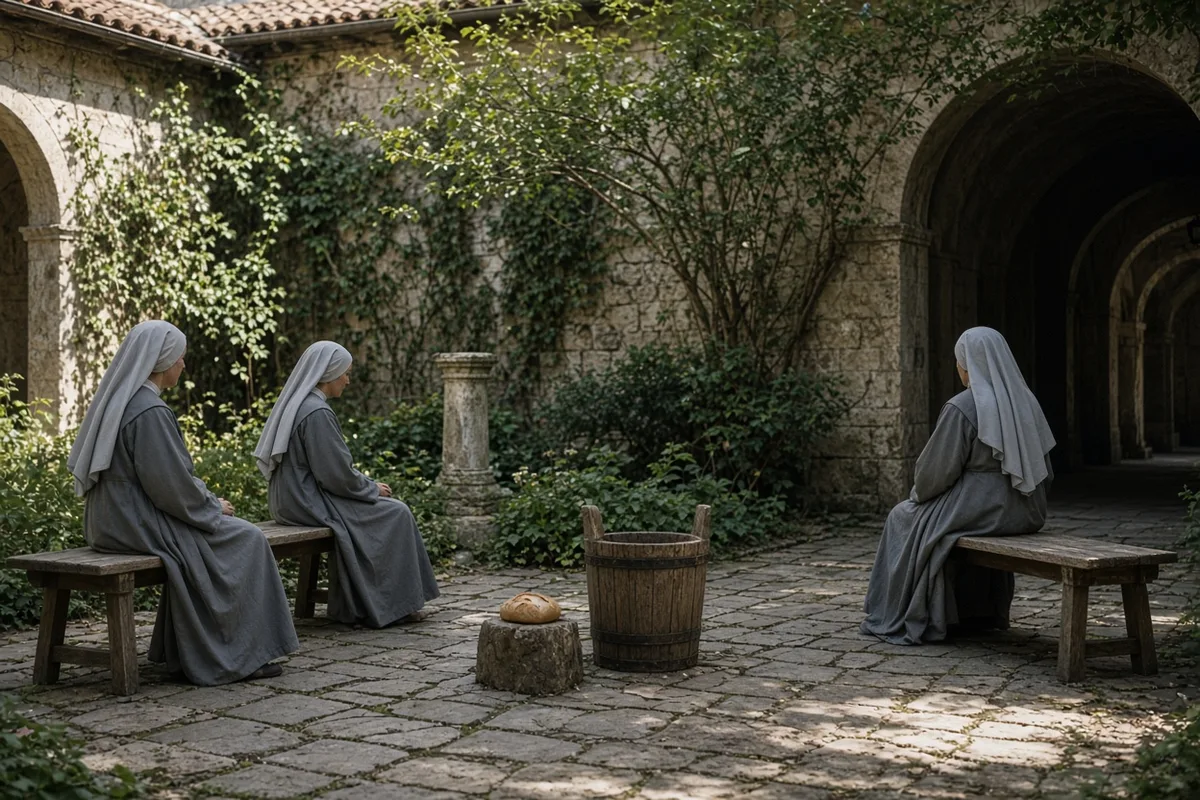
The last sister who had known Clare personally, Sister Cecilia, died in 1275 at the age of eighty-three. She had entered at the age of fourteen and could still repeat the exact words Francis spoke when he placed the cord around Clare’s waist. The community continued at San Damiano until 1503, when the nuns were transferred inside the city walls. The low house remained standing, its door open to pilgrims, until the earthquake of 1832 brought down the western wall. The lintel beam with the mark of the shears was salvaged and set into the rebuilt portal, where it can still be seen from the footpath that runs past the spring.
The rebuilt portal at San Damiano received its first recorded restoration in 1848 when the Franciscan custodian Father Antonio da Rieti ordered masons to replace three cracked stones above the salvaged lintel while leaving the shear mark untouched. On 3 May that year the work crew noted the beam measured 2.4 meters and still bore the groove left by Francis’s blade on the night of 18 March 1212. Pilgrims continued to pass the spring daily, and the parish register at Santa Maria Maggiore listed 214 visitors from Perugia and Foligno who signed the book between 1851 and 1860, each entry recording the date and the phrase “to see the place where Lady Clare first tied the cord.”
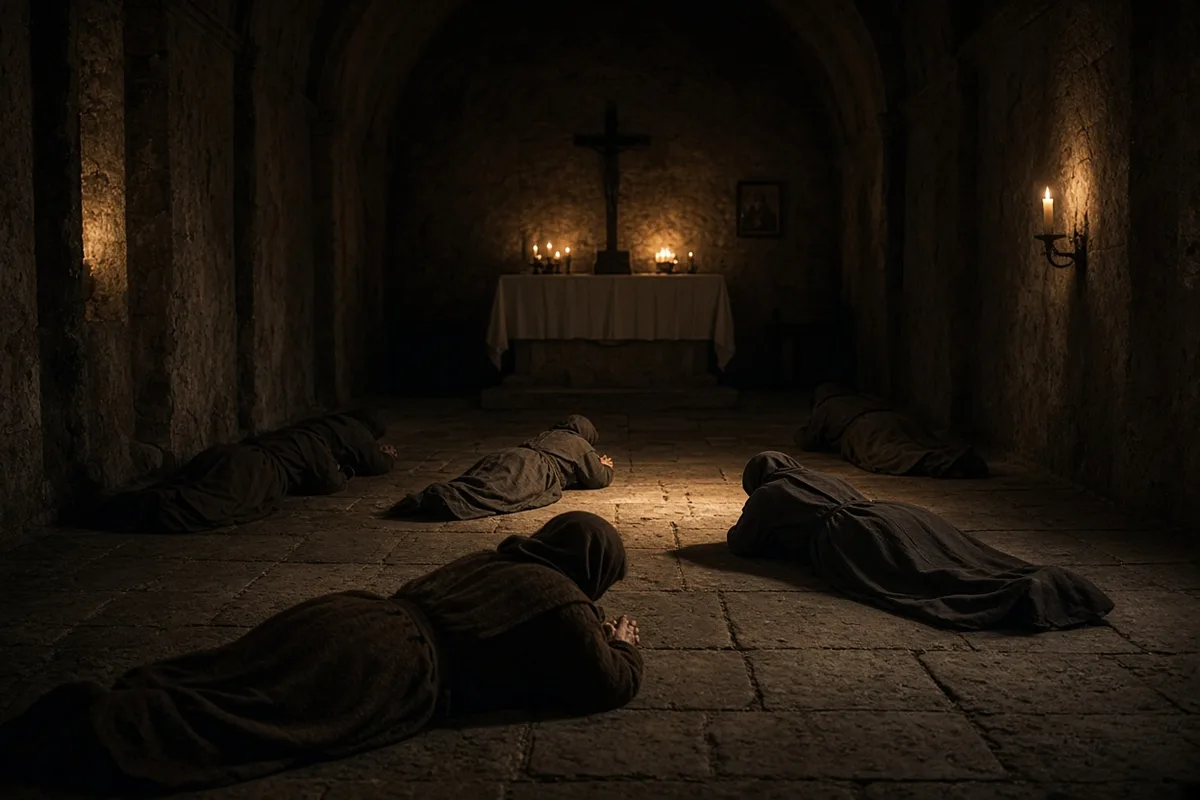
In 1894 the Italian government declared the entire San Damiano site a national monument under the tutela law of 12 June 1889. The decree listed the dimensions of the surviving cloister as 18 by 22 meters and required that any future work preserve the original plaster fragments still clinging to the north wall. Sister Maria Crocifissa of the neighboring monastery at Santa Chiara copied the 1253 rule by hand in 1902, producing a manuscript of 47 folios that she sent to the Vatican Library on 14 November with a covering letter noting the exact number of times the phrase “poverty of the Gospel” appeared.
The community that had left San Damiano in 1503 settled first at the monastery of Santa Maria di Monte inside Assisi’s walls, where the abbess at the time, Sister Battista Alfani, recorded in the necrology that the sisters brought with them the wooden chest containing the Privilegium paupertatis. By 1547 the house held 29 nuns, and the same register notes that six of them still worked at spinning wool each morning before prime. The order expanded to 312 Poor Clare monasteries across Europe by 1600, according to the statistics compiled by the procurator general in Rome on 8 January 1601.
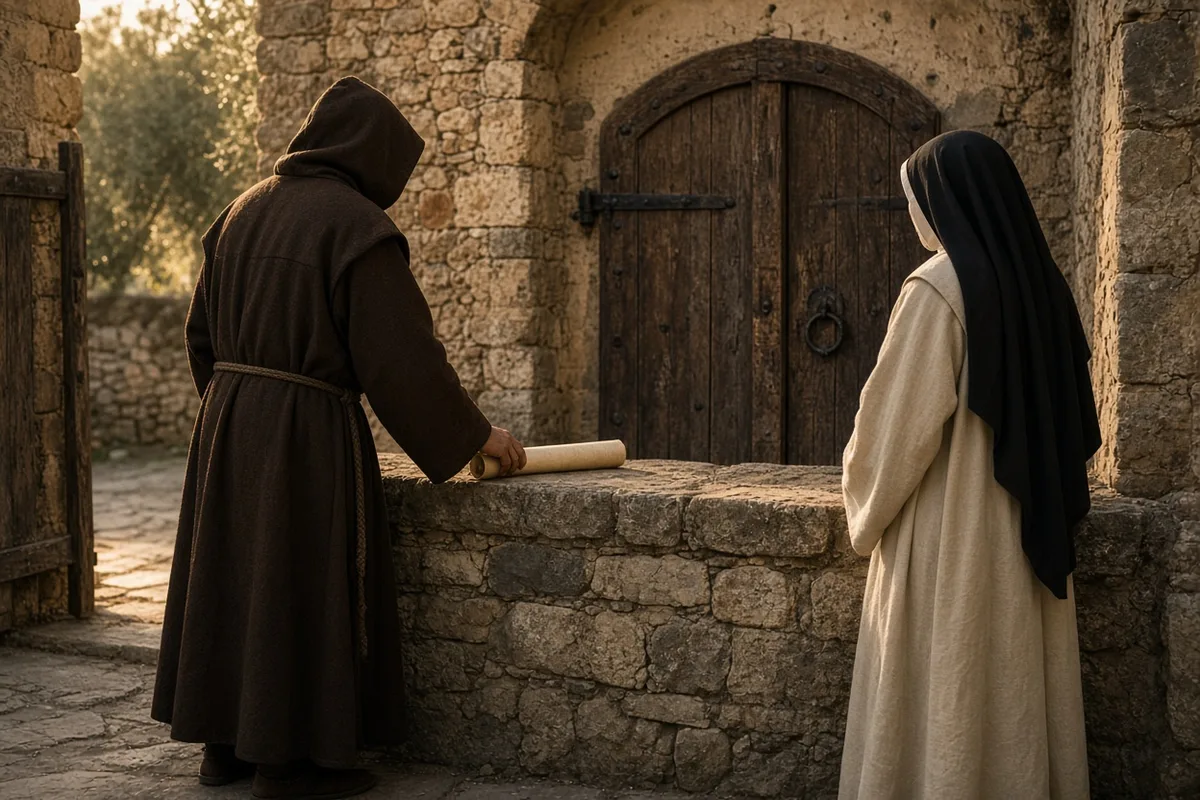
During the suppression of religious houses under the Kingdom of Italy, the Assisi community received an exemption on 22 October 1866 after Cardinal Antonelli presented Pope Pius IX with a petition signed by 47 local citizens. The nuns remained at Santa Maria di Monte until 1908, when they moved to the larger convent of San Quirico on the eastern slope. Sister Pacifica Boscaini, who entered there in 1911, lived until 1987 and was the last to recall seeing the original rule parchment before it was transferred to the treasury of the Basilica of San Francesco on 4 July 1958 for permanent display under glass.
Restoration work between 1925 and 1928 uncovered a second set of foundations beneath the San Damiano chapel floor, measuring 9 by 11 meters and dated by coins to the late twelfth century. The supervising architect, Giuseppe Castellucci, noted in his report of 17 March 1927 that the stones aligned with the position of the altar where Clare had placed her cloak. The lintel beam was examined again in 1974 by the Istituto Centrale del Restauro, which recorded its oak species and confirmed the single 14-centimeter groove consistent with shears of the period.
On 12 October 1982 an earthquake of magnitude 5.8 struck the valley once more. The portal at San Damiano suffered only hairline cracks, and the beam remained in place. The present-day footpath, paved in 1997 with local pietra serena, still passes within three meters of the spring, which continues to supply water at a measured rate of 2.3 liters per minute during the dry season. The last direct descendant of the original community, Sister Chiara Benedetta Rossi, died at San Quirico on 19 February 2019 at the age of 94. She had entered in 1946 and for thirty-seven years kept the daily record of visitors who stopped at the spring, noting each date and the number of times the phrase “privilege of poverty” was read aloud from the 1253 text during their tours.