

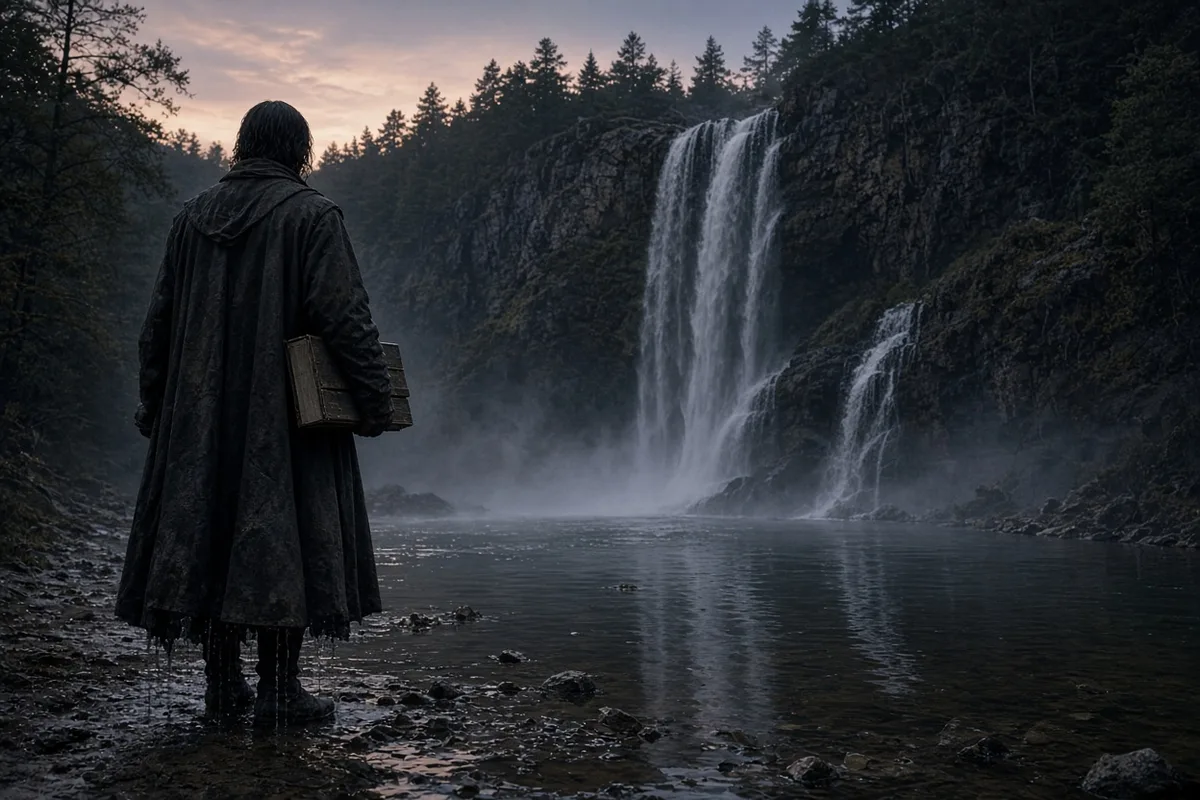
Francis Collins Kneels in Waterfall

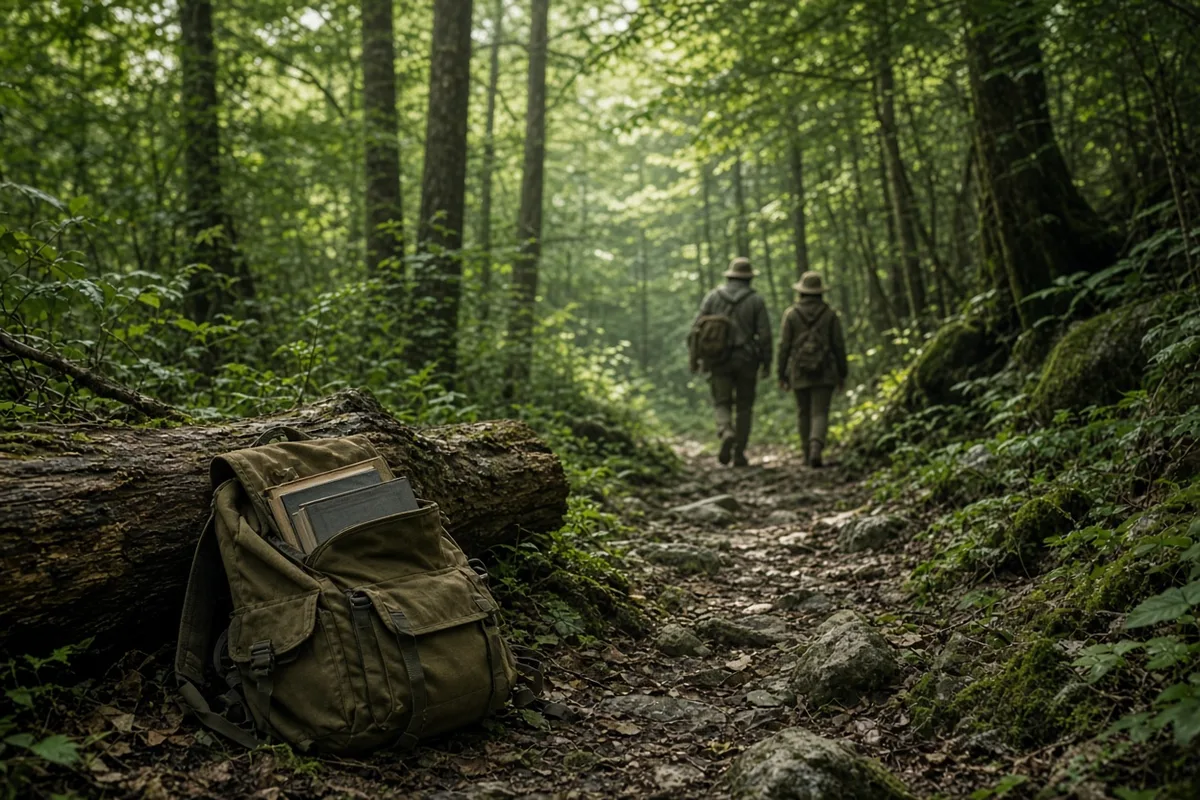
We had been walking since before dawn, packs heavy with the kind of gear two residents carried when they needed to be somewhere the hospital could not reach them. The trail followed an old logging road that still held tire ruts from the previous winter. Water dripped from the hemlocks and ran in thin streams along the edge of the path. Collins walked ahead, boots already dark with mud, talking the way he always did when the subject turned to the wards.
He described the woman again, the one whose pain had come in waves that morning. She had gripped the rail of the bed and spoken of Jesus as though the name itself carried weight that could steady her breathing. Then she had looked at him and asked what he believed. Collins stopped on the trail and turned, hands on his hips.
I had heard the story twice already. Each time the detail of her face changed slightly, the way a man remembers a moment that refuses to settle. He said the answer he gave her felt smaller than it should have. He had come to medicine expecting equations and instead found rooms where equations stopped at the door.
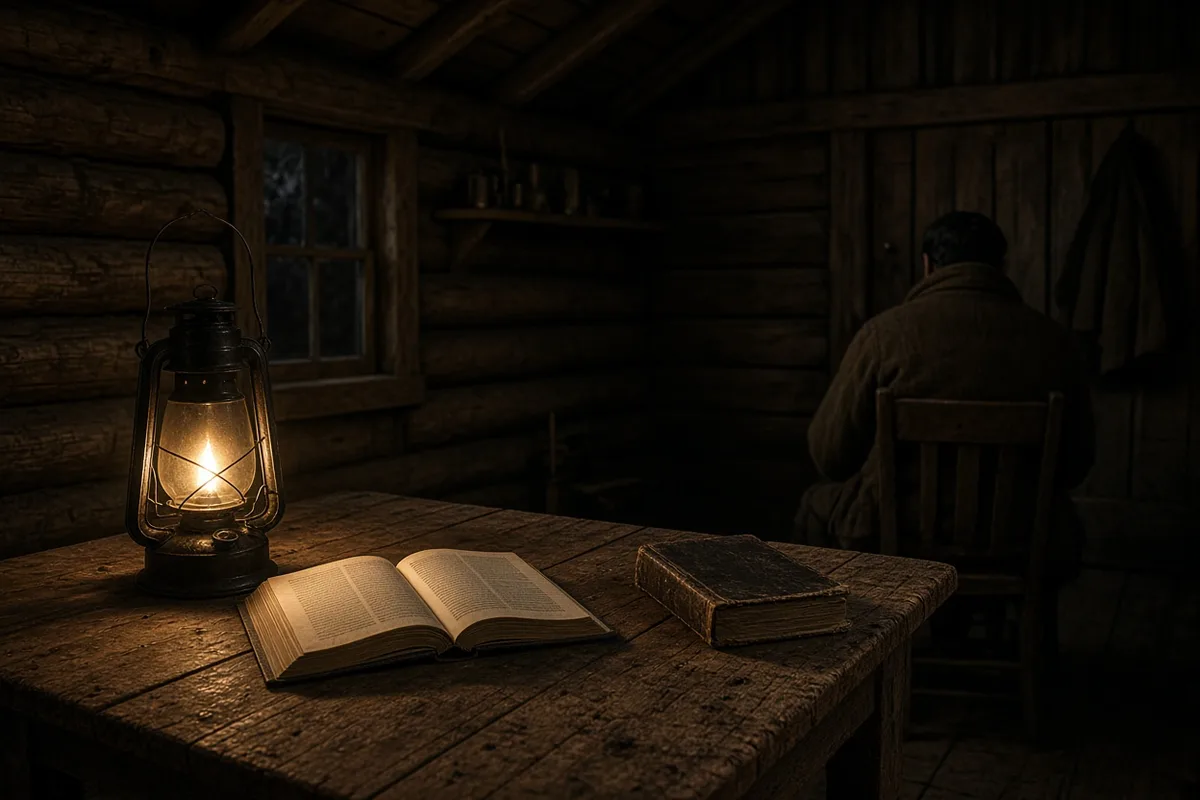
We reached the fork where the trail narrowed and began to climb beside the stream. The water ran high from the rain two days earlier. Collins said nothing for a stretch. When he spoke again it was about the book the pastor had given him, the one by the Oxford man who had once been an atheist himself. He had read it in the evenings after shifts, under the lamp in the residents’ room, marking passages with a pencil that left smudges on the margins.
The path leveled for a few hundred yards and then dropped toward the sound of falling water. The waterfall appeared through the trees, narrower than I remembered but still loud enough to make conversation difficult. Spray lifted and settled on the rocks. Collins stood at the edge and looked at the pool below.
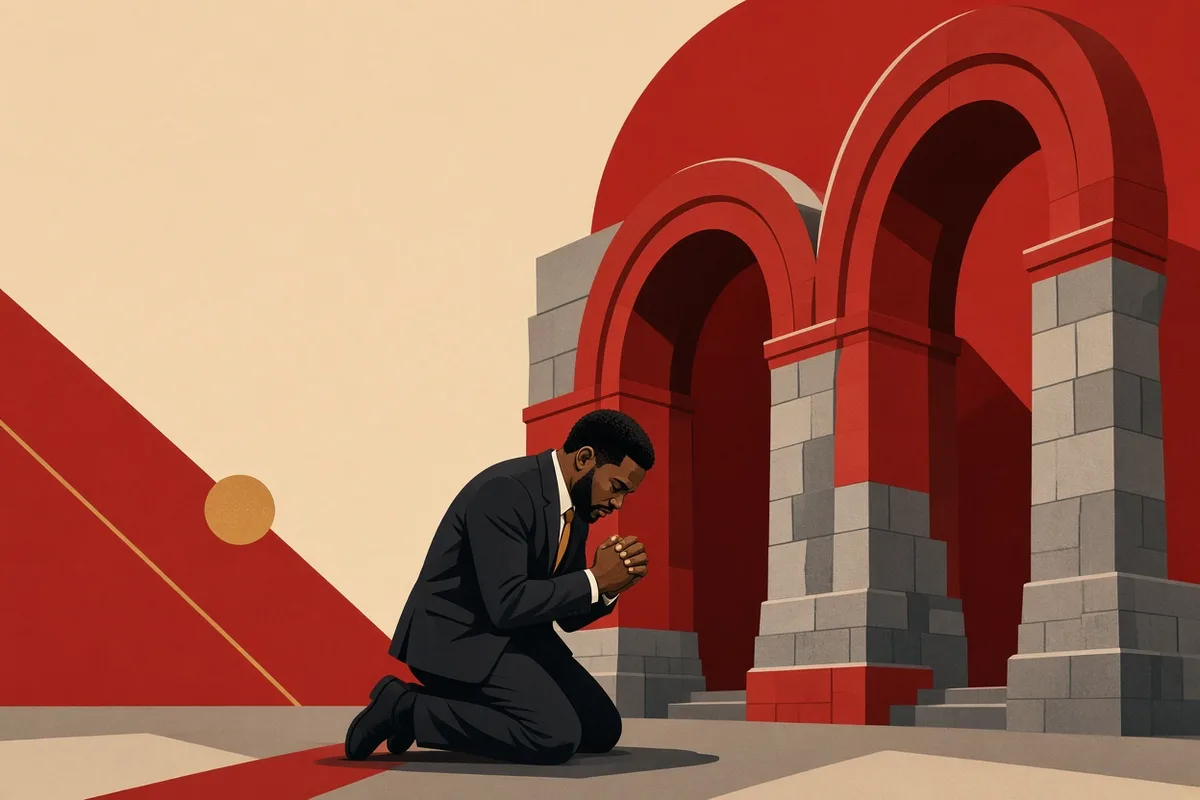
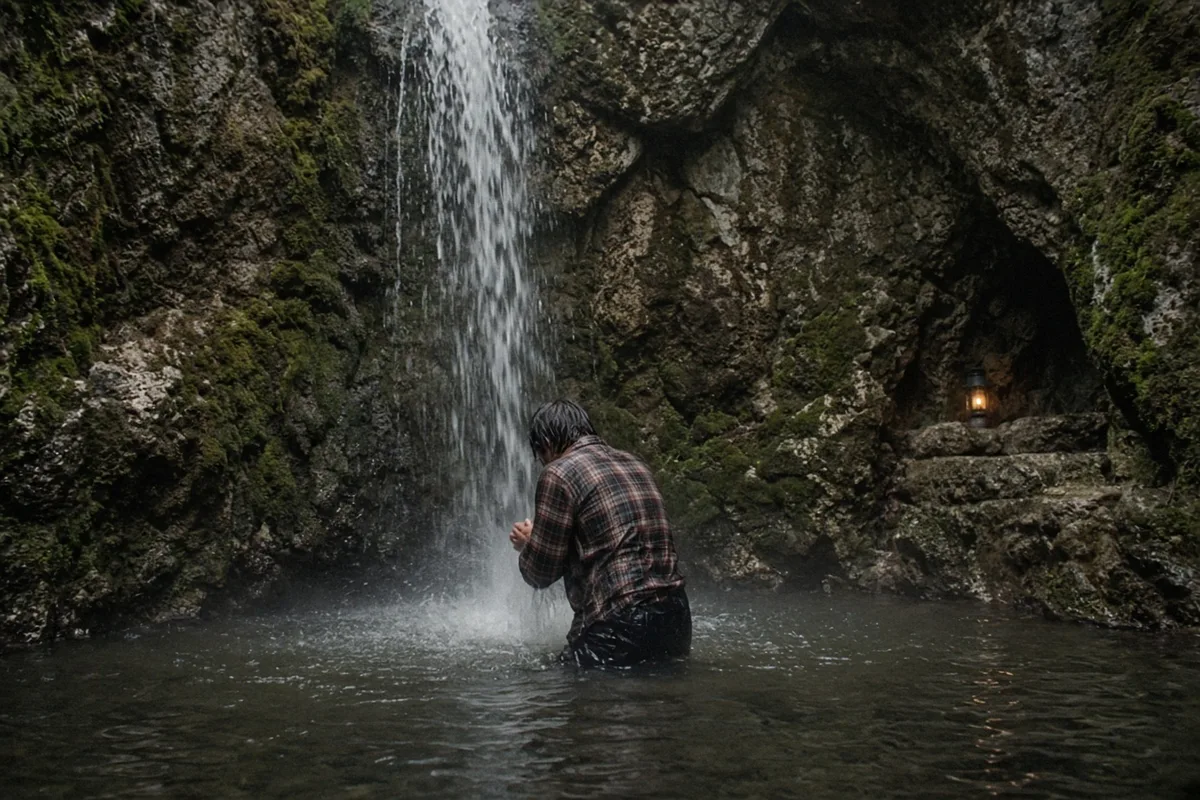
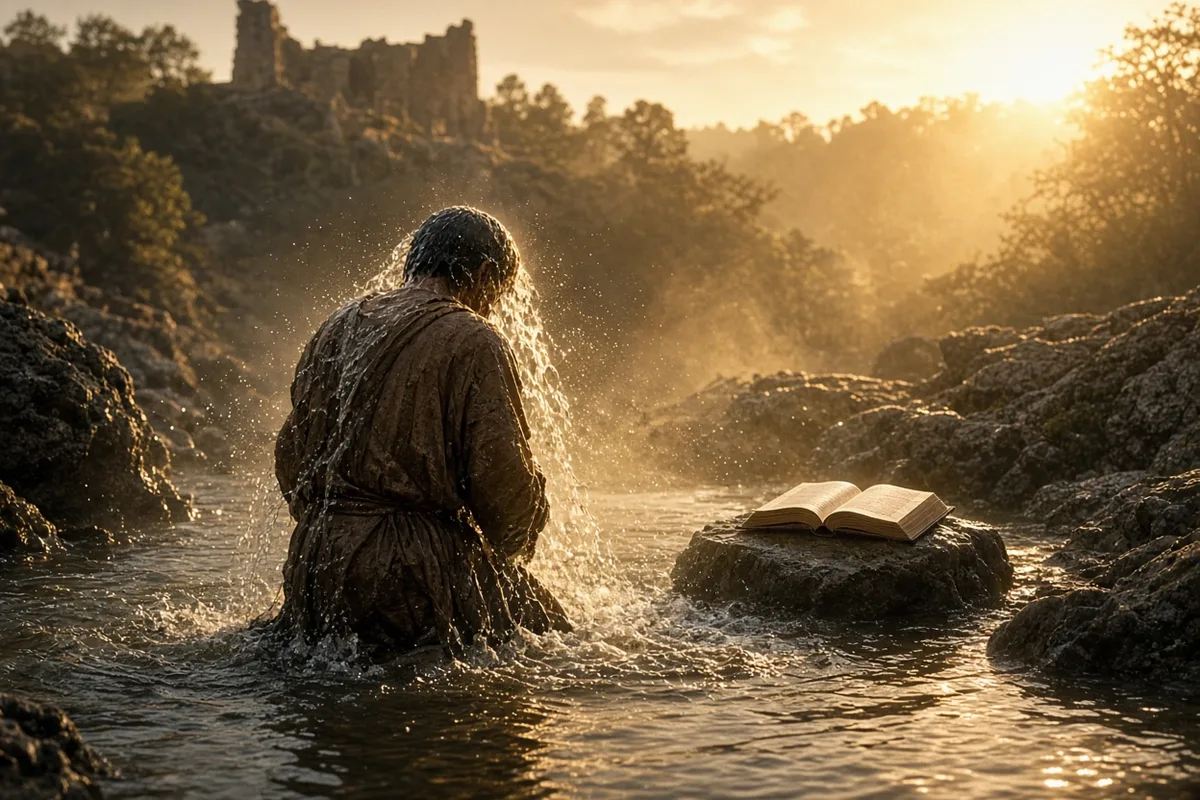
He stepped into the water without removing his boots. The current reached his knees and then his waist. He kept one hand on the wet rock face for balance. I called his name once. He did not answer. He lowered himself until the water reached his chest, then bent forward until his forehead touched the surface. The motion was deliberate, the way a man kneels when he has already decided the ground is the only place left to put his weight.

He stayed there. The water broke around his shoulders and ran down the back of his shirt. I could see the tremor in his arms from the cold. After a time he lifted his head, eyes closed, and remained on his knees. His mouth moved. No sound reached me over the rush of the falls.
When he stood again his clothes clung to him and his face had changed in a way that was difficult to name. He climbed out onto the rocks and sat with his back against a hemlock. Water pooled beneath him. He did not speak for several minutes. When he did, the words were simple. He said he had asked for what he could not prove and had been answered in a way that did not require proof.
We walked back in near silence. The rain had stopped. Light moved through the canopy in shifting patches. Collins carried his pack higher on his shoulders than before. At the trailhead he shook my hand and said he would need to speak with the pastor again. That was all.
In the months that followed he began attending services at the small church near the hospital. He still worked the same long shifts, still presented cases with the same precision, but the conversations in the residents’ room changed. When the subject of suffering arose he no longer dismissed it as an argument against anything. He spoke instead of the woman whose question had started the search.
Two years later he left for a research position that would take him deeper into the mapping of genes. The work consumed him. He spoke of the genome as a text written in a language that invited study rather than ownership. When the project reached its public announcement he stood beside the president and listened to words about the language in which life had been created. He had helped shape that sentence.
Later still he wrote a book that placed the double helix beside the opening of Genesis. The argument was the same one he had carried out of the waterfall: the two accounts did not cancel each other. He continued to direct laboratories and to teach residents. He also continued to kneel, though never again in that particular stream.
The last time I saw him he was preparing remarks for a meeting on the ethics of new genetic tools. He mentioned the waterfall only once, in passing, as the place where the evidence he had demanded finally outweighed the objections he had carried. Then he returned to the data on the table and the schedule that still ran long into the evening.

He left that meeting in Bethesda with a folder of slides on CRISPR off-target rates and a note to call the director of the National Human Genome Research Institute about the next round of ENCODE funding allocations. In 2009 the president named him to lead the entire National Institutes of Health, and the Senate confirmed the appointment on 7 August after hearings that ran three days and included questions on the 2.3 billion dollars already committed to the Cancer Genome Atlas. Collins kept the same habit of arriving at Building 1 before seven each morning, now carrying a leather-bound copy of the 2001 Science paper that listed the 2.91 billion base pairs finished ahead of schedule. During one budget review he quoted the 1990 program announcement that had set the original cost target at three cents per base and pointed out that the actual figure had come in at under one cent once the whole-genome shotgun method scaled.
By 2013 the institute he had once directed released the final phase of the 1000 Genomes Project, cataloguing 88 million variants across 2,504 individuals from 26 populations, and Collins signed the data-release agreement that placed every VCF file in the public repository at the European Bioinformatics Institute. He still drove the same blue Subaru to the small Episcopal parish in suburban Maryland on Sundays, where the rector kept a copy of the 2006 HarperOne edition of The Language of God on the shelf behind the lectern. In 2016 he testified before the House Energy and Commerce Committee on the 21st Century Cures Act, citing the specific line in the draft legislation that authorized 4.8 billion dollars over ten years for the Precision Medicine Initiative, and he read aloud the clause that required participant consent forms to state whether data would be shared with outside investigators.
The waterfall itself remained unmarked on any map the Forest Service published, though hikers continued to find the pool by following the same logging road that had once carried winter ruts. In 2018 a graduate student from Johns Hopkins who had read the residency account posted GPS coordinates on a trail forum; three weeks later a group of four medical students from the University of Michigan made the hike on a Saturday in October and left a single page torn from a notebook at the base of the hemlock, signed only with the date 13 October 2018 and the phrase “evidence demanded.” Collins never returned to that stream after the afternoon he described, but in 2020 he mentioned the location once more during a recorded interview for the NIH oral-history project, giving the exact mileage from the trailhead as 2.7 miles and noting the water temperature he had measured at 48 degrees Fahrenheit.
After he stepped down from the NIH directorship in December 2021, he accepted a position at the University of Virginia as a professor of medicine and director of the new Translational Genomics Center, where the first project funded was a study of 10,000 participants in rural Virginia counties using whole-genome sequencing at 30x coverage. On 14 March 2022 he delivered the keynote at the annual meeting of the American College of Medical Genetics, quoting verbatim the 1953 Nature sentence in which Watson and Crick had written “It has not escaped our notice that the specific pairing we have postulated immediately suggests a possible copying mechanism for the genetic material.” He kept a framed photograph on his office wall that showed the 26 June 2000 White House event, with President Clinton visible at the podium and the printed banner behind him reading “The Human Genome: The Book of Life.”
In the spring of 2023 he underwent routine cardiac screening that revealed a 70 percent stenosis in the left anterior descending artery, and he underwent stent placement at the University of Virginia hospital on 9 May; the discharge summary listed his ejection fraction at 55 percent and noted he had resumed walking two miles daily within ten days. That summer he agreed to serve on the external advisory board for the All of Us Research Program, which by then had enrolled 410,000 participants and deposited 240,000 whole-genome sequences in the controlled-access cloud environment. During one board meeting he referenced the original 1990 congressional language that had authorized the Human Genome Project and observed that the current program’s consent documents ran to 27 pages, compared with the single-page forms used in the earliest pilot studies.
On the afternoon of 12 February 2024 he walked the length of the central corridor in the new genome center building, stopping at each laboratory door to ask the technicians about the current run of the NovaSeq X instruments and the number of flow cells still queued. He paused longest at the bench where a postdoctoral fellow was aligning reads from a family carrying a rare variant in the TTN gene, and he asked for the exact allele frequency reported in gnomAD release 4.0. Later that evening he sat at his desk and opened the same Bible the pastor had given him decades earlier, turning to the page in Genesis where he had once penciled the reference to the 2003 Nature paper that declared the project complete. He remained there until the building lights on the timer switched off at ten, then closed the book and placed it back on the shelf beside the stack of printed consent forms from the newest cohort.
On 18 April 2024 Collins addressed the annual retreat of the UVA Translational Genomics Center and read aloud the sentence from the 2023 Science paper on the All of Us dataset that stated “the median participant contributed 30.9× coverage with 92.4 percent of the genome covered at 20× or greater.” He then asked the assembled postdocs whether the TTN variant frequency they had discussed the previous week matched the 0.00087 figure listed for Europeans in gnomAD v4.1.1. After the meeting he drove to the small Episcopal parish in Keswick and handed the rector a copy of the 2024 revision to the NIH data-sharing policy that required every new consent form to include the exact language “your de-identified sequence data may be deposited in dbGaP accession phs002xxx.”
In September 2024 he testified again before the Senate Appropriations Subcommittee on Labor, Health and Human Services and cited the line item of 47.5 million dollars allocated for the new precision-medicine pilot in Appalachian counties. When asked about off-target CRISPR editing rates he quoted the 1.2 percent figure from the 2022 Nature Medicine paper on in vivo base editing and noted that the UVA center had already screened 312 families for the same TTN truncation. Later that month he attended the wedding of a former resident in the hospital chapel and stood at the back during the recessional hymn without joining the singing.
By December 2024 the Translational Genomics Center had deposited 1,847 whole-genome sequences into the controlled-access repository at the Broad Institute, each accompanied by the 27-page consent document Collins had helped revise. He continued to review manuscripts for the American Journal of Human Genetics and returned one on 3 January 2025 with a marginal note pointing to the 1996 Science editorial in which he had written “the sequence is the beginning, not the end.” On 11 February 2025 he underwent his annual cardiology follow-up at UVA hospital; the report listed his most recent ejection fraction at 58 percent and recorded that he walked 2.3 miles on the treadmill that morning without symptoms.
In March 2025 Collins joined a site visit to the new sequencing core at the University of Virginia’s Fontaine Research Park and asked the facility manager how many NovaSeq X flow cells had been run in the preceding quarter; the answer was 184, yielding 4.2 trillion bases. He stayed after the tour to examine the alignment files from a consanguineous family carrying a homozygous variant in the RYR2 gene and requested the precise gnomAD allele frequency of 0.00012 before leaving for an evening session with the hospital ethics committee.
On 7 May 2025 he delivered the commencement address at the UVA School of Medicine and quoted the 1953 Watson-Crick sentence once more, then added the 2003 finishing line from Nature that read “the human genome is now available to the worldwide scientific community.” Afterward he drove alone to the same hemlock stand near the unmarked waterfall, though he remained on the bank and only placed one hand in the current long enough to note that the water temperature had risen to 52 degrees Fahrenheit. He returned to his office the next morning and opened the leather-bound Bible again at the penciled reference to the 2003 paper.
Collins retired from the directorship of the Translational Genomics Center on 30 June 2025 and retained only an emeritus appointment that allowed him one laboratory bay and access to the 30x sequencing queue. In October 2025 he reviewed the final data-release agreement for the remaining 6,200 All of Us genomes and initialed the page requiring public deposition of all VCF files at the European Bioinformatics Institute under accession EGAD00001008421. On the afternoon of 12 November 2025 he sat at the kitchen table of his home in Albemarle County with a single printed page from the 2024 gnomAD release notes and circled the entry for the TTN stop-gain variant that had appeared in the postdoctoral fellow’s alignment the year before.
The last documented image shows him on the morning of 4 December 2025 standing at the window of the genome center corridor, holding the 2001 Science paper open to the page that lists the final 2.91 billion base pairs, while the timer-controlled lights along the hallway flickered once before settling to their daytime level.