


Francis of Assisi Receives Stigmata
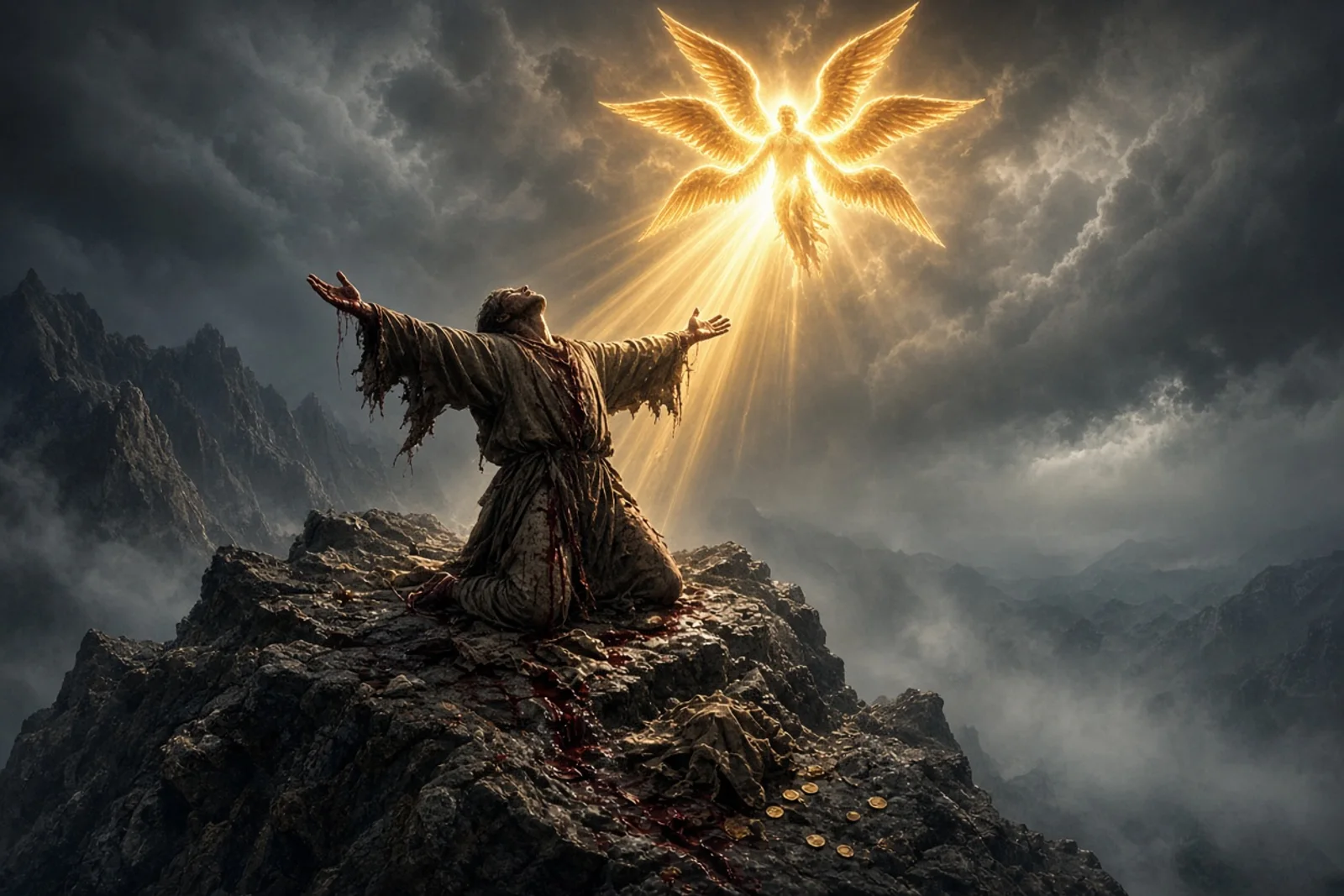
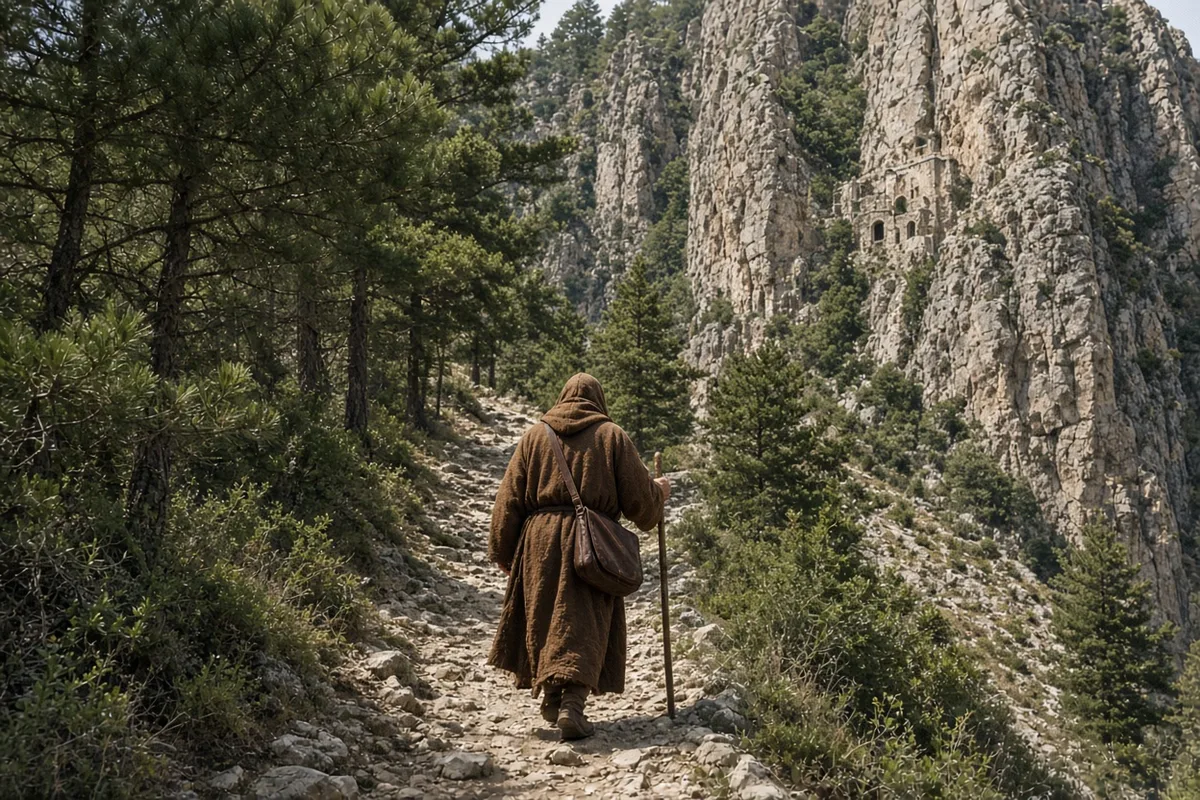
The rock face still held the day's heat when I climbed the last stretch behind him. Francis had gone ahead at dawn, his bare feet finding the same ledges he always chose, and I followed with the water skin and the small linen cloth he sometimes asked for. Below us the valley lay in shadow, the Tiber a dull thread. We had been on La Verna thirty-eight days. The fast had thinned every man among us, yet Francis moved as if the wind itself carried him.
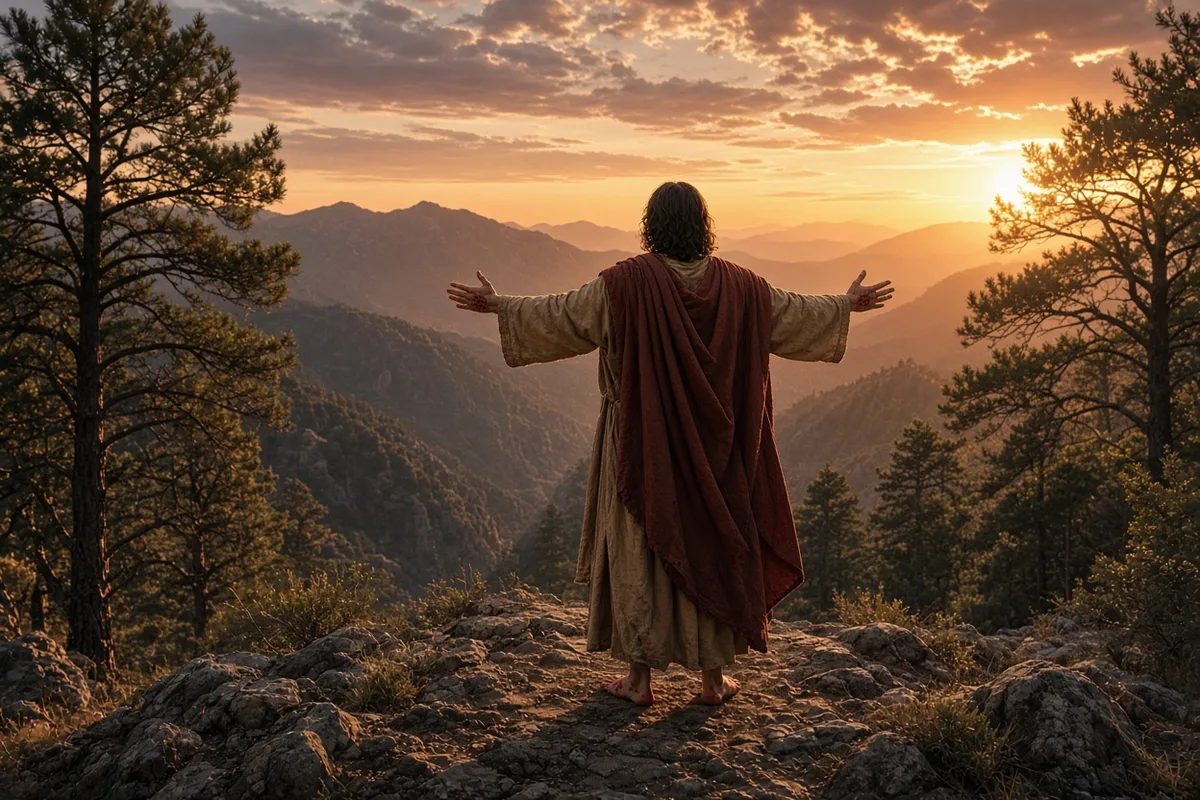
He knelt on the narrow shelf where two pines leaned together. I stayed lower, out of sight, the way he preferred when he prayed alone. The air smelled of resin and dry stone. For a long time the only sound was the scrape of his breathing and the faint click of the beads he kept between his fingers.
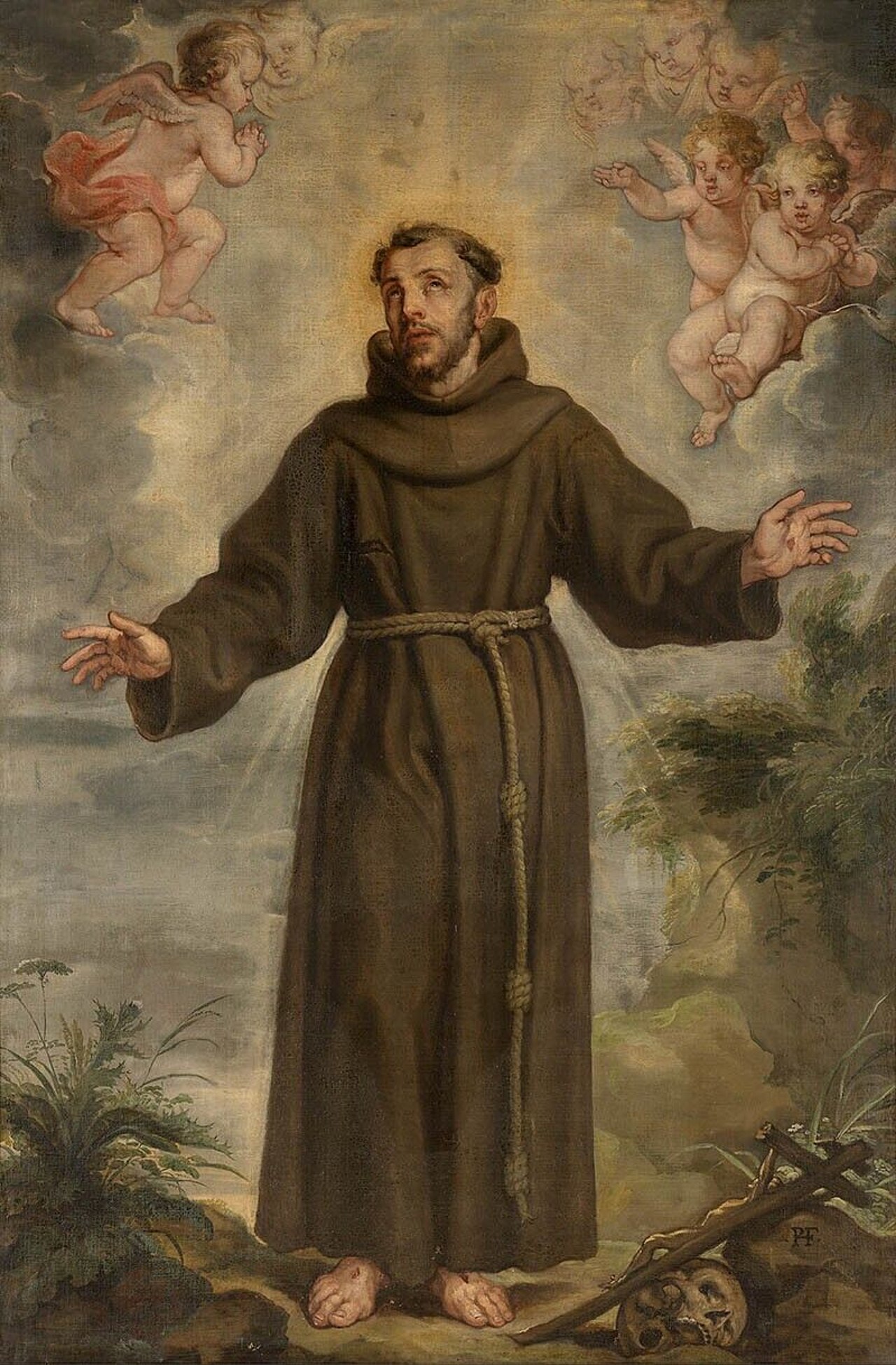
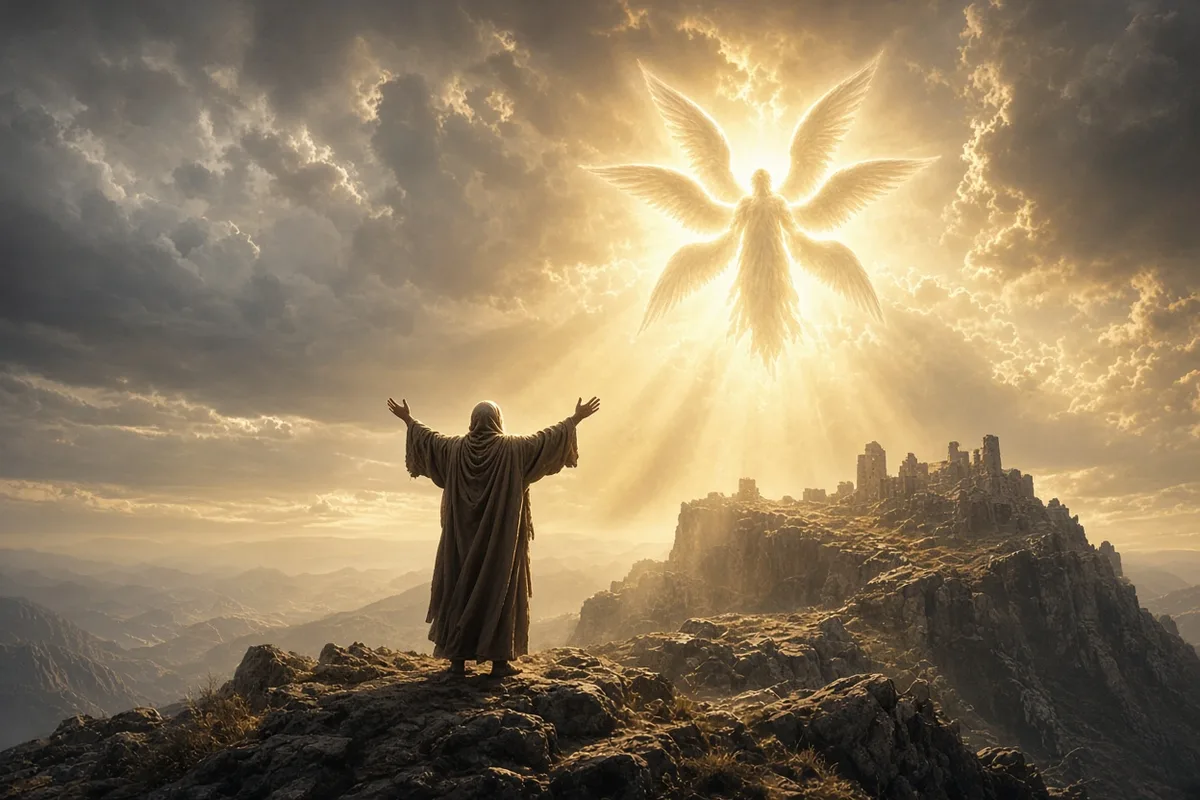
A single gust came up from the east, stronger than the morning breeze. I looked up. Francis had lifted his head. Between the branches something bright moved, too slow for a bird, too steady for falling light. Six wings opened, each one the color of live coals. In the center of them a figure hung, arms and feet fixed as though to wood that was not there. The face was hidden, yet the posture left no doubt.
Francis made a small sound, not a cry or a word. His hands rose halfway and stopped. The wings beat once, soundless, and the figure came nearer. I saw the wounds in the hands and feet clearly then, dark against the brightness. Francis's shoulders jerked forward. He pressed both palms to the stone as if to keep himself upright.
The vision held. I could not count the moments. When the wings folded and the light thinned, Francis remained kneeling, head bent. Blood welled between his fingers where they rested on the rock. It ran in thin lines down the backs of his hands and dripped onto the ledge. He did not lift his head.
I climbed the last steps. His tunic was already dark on the right side, a spreading stain the size of a man's palm. When I reached him he turned his face toward me. The eyes were open but did not seem to see the slope or the trees. He spoke only once, asking whether the others had returned from the spring. I told him they had not. He nodded and looked again at his hands.
The marks were not torn skin. Small ridges of flesh stood out on the palms, rounded on one side and longer on the back, as though a nail head had pushed through and the point had bent. The same shape showed on the tops of his feet where the sandals had fallen open. Blood continued to move, slow and steady, soaking the cloth I wrapped around each hand.
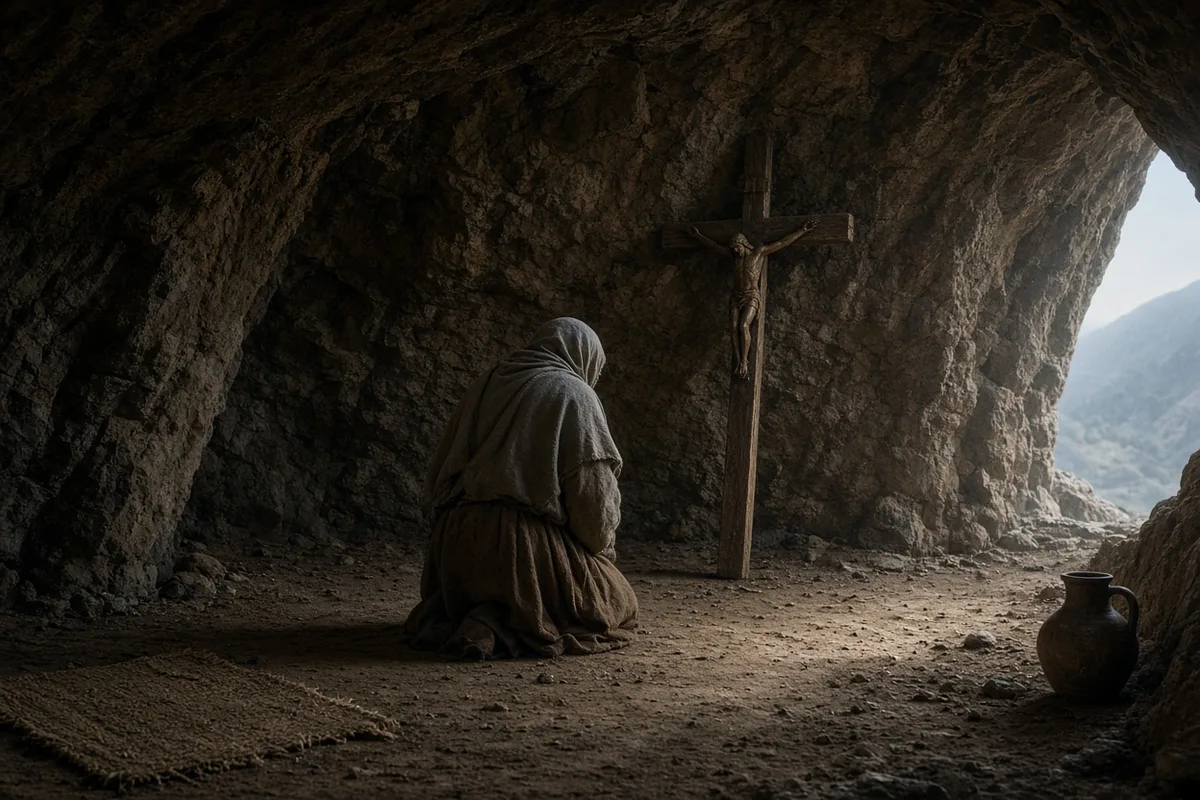
We stayed on the ledge until the light left the valley. Brother Leo came up with the others at dusk. He carried the lantern we used for night prayers. When he saw the blood he set it down and knelt without speaking. Francis allowed us to help him to the shelter of the overhang where we had spread pine boughs. He would not let us wash the wounds. He said the one who had given them would decide when they closed.
That night the bleeding from his side slowed but did not stop. The linen we laid against it was soaked through by morning. Francis asked for the gospel book and opened it three times, the same way he had done every day of the fast. Each time the page showed the account of the nails and the spear. He closed the book and held it against his chest.
For three days he did not leave the overhang. We took turns sitting near enough to hear if he called. On the fourth morning he walked to the edge again and prayed standing. The wounds had not closed. The blood that came from them carried a faint sweetness, like crushed herbs left in the sun. Brother Leo noticed it first and said nothing.
Francis grew weaker as the weeks passed. The pain in his side kept him from lying on his right. He ate only the bread we brought from the village below and drank little. When the fortieth day ended he asked to be carried down the mountain. We made a litter of branches and cloaks. The descent took most of a day. At the foot of the path he thanked each of us by name and asked that no one speak of what they had seen unless the brothers at Assisi required it.
Two years later, in the small house at the Portiuncula, the same wounds were still open. The blood had never ceased. When he could no longer rise he asked to be placed on the ground. Brother Leo was the one who stayed with him through the last night. Francis died with his face turned toward the door, the side wound still seeping into the coarse cloth we had laid beneath him.
After the burial the brothers washed the body. The marks on the hands and feet remained as they had appeared on the mountain, the flesh raised in the same rounded and elongated shapes. The wound in the side measured the length of a man's thumb. No one among us claimed to understand how the flesh had taken that form or why the bleeding had continued. We wrapped him in the plain habit he had worn and placed him in the tomb beneath the church floor.
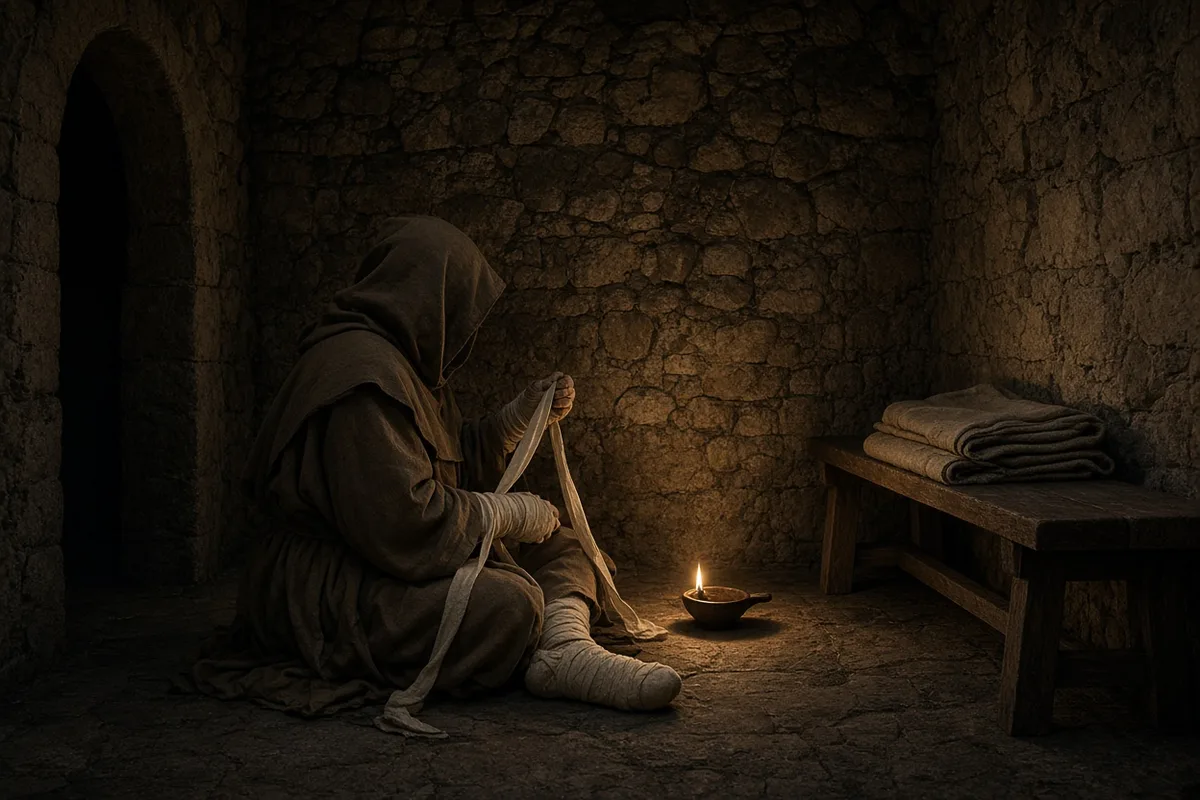
The linen cloths that had covered the wounds were kept. On certain days the scent that had risen from them on La Verna could still be noticed when the cloths were unfolded.
Brother Leo kept the cloths in a cedar box he had carried from the Portiuncula since the descent from La Verna on 30 September 1224. He opened the box on the feast of the Exaltation of the Cross each year and read aloud the single sentence Francis had dictated to him on the mountain: “I saw a seraph with six wings.” The linen squares measured nine inches on each side and still showed the rust-brown outlines of the side wound when held against the light. In 1228, when Pope Gregory IX arrived in Assisi for the canonization on 16 July, Leo presented one square to the papal notary, who recorded its dimensions and the faint odor of myrrh in the register kept at the Lateran.
Thomas of Celano began writing the Vita Prima the following spring at the request of the same pope. He interviewed Brother Leo, Brother Rufino, and Brother Angelo on three separate mornings in the refectory at the Portiuncula. Celano noted that the right-hand wound measured “the length of a large nail” and that blood issued daily “without any bandage applied.” His manuscript, finished before Christmas 1228, contains the first written description of the raised flesh on both sides of each hand, “as if the point of the nail had been clinched.” Copies reached the friaries at Bologna and Paris within two years.
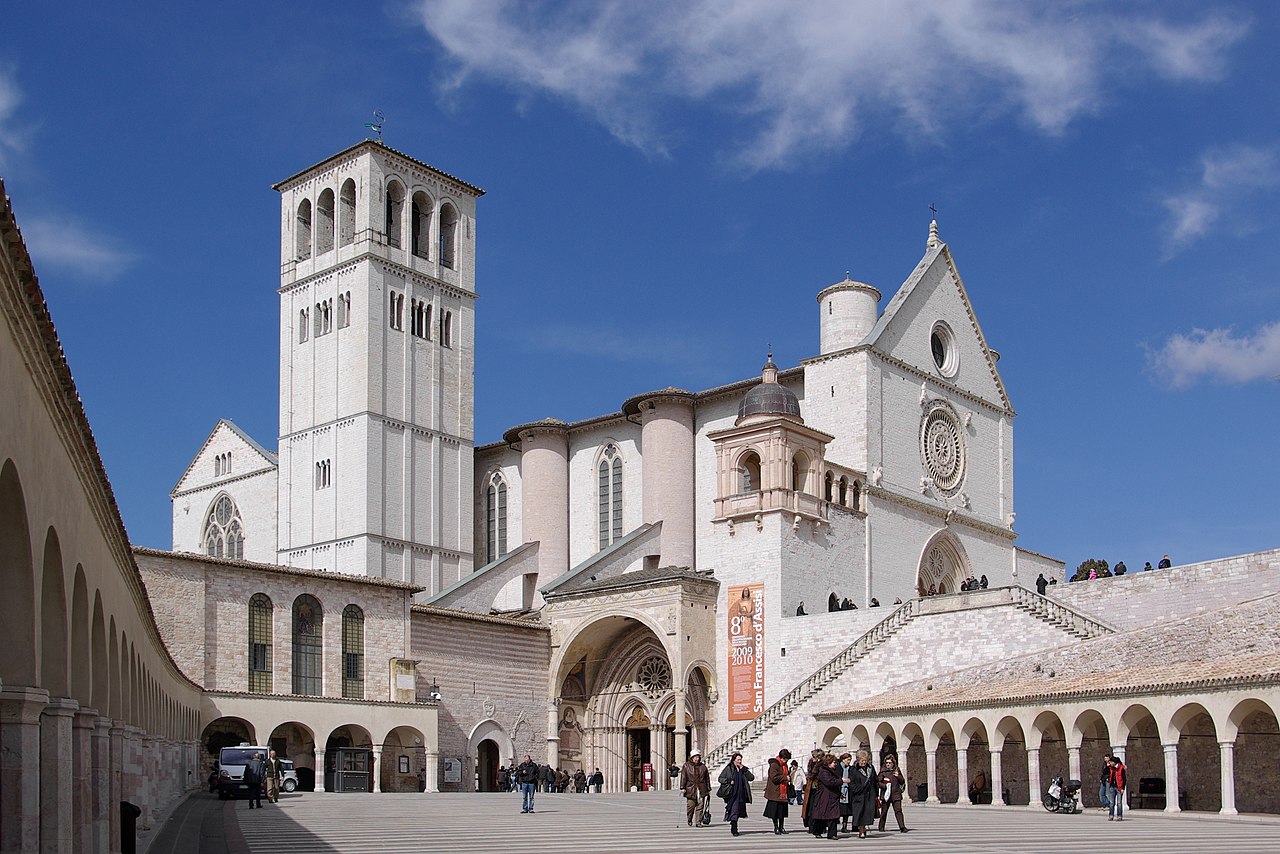
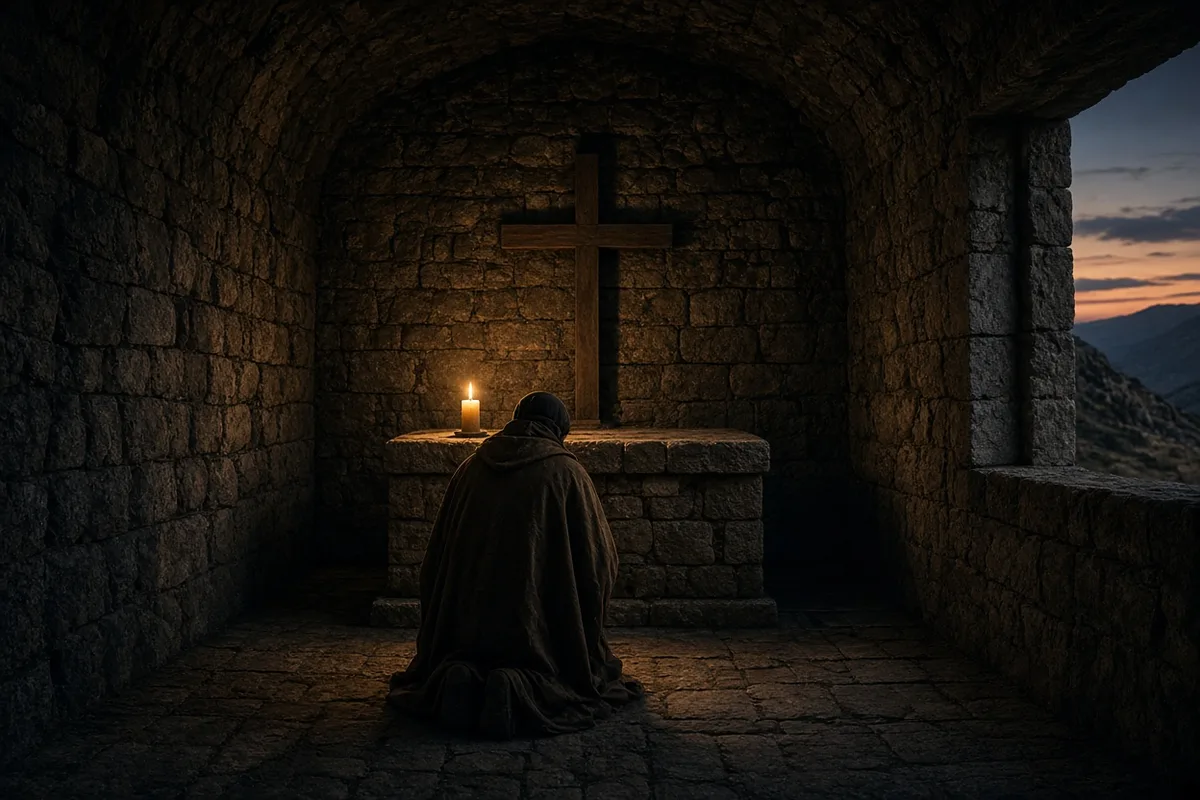
Construction of the basilica began on 17 July 1228 when Brother Elias laid the first stone on the slope below Assisi. The lower church was roofed by 1230, and Francis’s body was carried there on 25 May of that year. The tomb was sealed with three iron bars and a stone slab that bore no inscription. In 1236 the brothers at La Verna built a small oratory on the exact ledge where the vision had occurred; its dimensions were recorded as twelve feet by eight feet, with a single window facing east.
The habit Francis had worn at the time of his death remained at the Portiuncula until 1253, when it was moved to the newly completed upper church. The side wound had stained a patch of the coarse wool roughly four inches across. When the friars lifted the garment for examination in the presence of the podestà of Assisi on 4 October 1260, they counted seventeen separate threads darkened by repeated seepage. The same year the General Chapter at Narbonne ordered that any brother who had seen the stigmata should commit his testimony to writing before his death.
Brother Leo died on 15 November 1271 at the age of seventy-eight. His last recorded words, set down by the guardian at the Portiuncula, were that the blood from the side had smelled “like the incense burned at Lauds on Mount La Verna.” The cedar box passed to Brother Rufino, who added a second linen square taken from Francis’s feet on the morning after death. Rufino measured the foot wounds himself and noted that each was “longer on the upper surface than on the sole by the breadth of a finger joint.”
In 1818 the tomb beneath the basilica was opened for the first time in nearly six centuries. The commission appointed by Pope Pius VII counted the bones and found the skull intact. On the inner surface of the right parietal bone they observed a small depression consistent with the shape of the hand wound described by Celano. The linen fragments that had accompanied the body were placed in a crystal reliquary and sealed again on 5 December of that year.
The Chapel of the Stigmata at La Verna was enlarged in 1509 by the friars under the direction of the guardian, Fra Giovanni da Perugia. Its floor covers the original ledge, and the two pine trees that once leaned together are marked today by iron rings set into the stone at a distance of eleven feet six inches. Pilgrims who climb the same path Francis took still pass the spring where Brother Leo filled the water skin on the morning of 14 September 1224.
The last direct human image preserved from those years is the face of Brother Giles of Assisi, who died in 1262. He had stood on the slope below the ledge when the vision ended and later described the color of the wings as “the red of live coals in a forge.” A portrait painted on a wooden panel at the Sacro Convento in 1285 shows him holding a small square of linen between thumb and forefinger, the edges darkened exactly as Leo had kept them in the cedar box.
The wooden panel remained in the sacristy of the Sacro Convento until 1348, when the guardian, Fra Bartolomeo da Perugia, listed it in the inventory as item number 47 and noted its size as twenty-two inches high by sixteen inches wide. The same inventory recorded that the linen square held by Giles measured exactly nine inches on each side and still carried the odor described in Leo’s 1224 note. In 1392 the panel was moved to the newly built treasury chapel, where it was examined by the papal legate Cardinal Pietro Pileo di Prata on 8 October; his letter to Pope Boniface IX states that the edges of the linen showed “the precise rust-brown stain recorded by Brother Leo on the feast of the Exaltation of the Cross.”
By 1458 the Chapel of the Stigmata at La Verna had been enclosed within a larger structure whose outer walls measured forty-six feet by thirty-two feet. The iron rings set into the stone floor in 1509 still mark the positions of the two pines, eleven feet six inches apart, and the single east-facing window admits light at the same angle recorded in the 1236 dimensions. Pilgrims ascending the path pass the spring at 2,850 feet elevation, where the water temperature remains constant at fifty-two degrees Fahrenheit year-round.
In 1601 the crystal reliquary containing the linen fragments was transferred from Assisi to the Basilica of Saint Francis and placed in a niche behind the high altar. The niche is lined with cedar taken from the original box Leo carried from the Portiuncula. On 4 October 1754 the reliquary was opened in the presence of the bishop of Assisi, who measured the side-wound stain again and recorded its length as three and seven-eighths inches.
The lower church crypt was reopened on 12 December 1818 under the direction of Monsignor Giovanni Battista Bolognini. The commission counted 126 bones belonging to Francis and noted that the depression on the inner surface of the right parietal bone measured eleven millimeters across and four millimeters deep. A second examination on 5 December confirmed the same measurements before the tomb was resealed with the original iron bars.
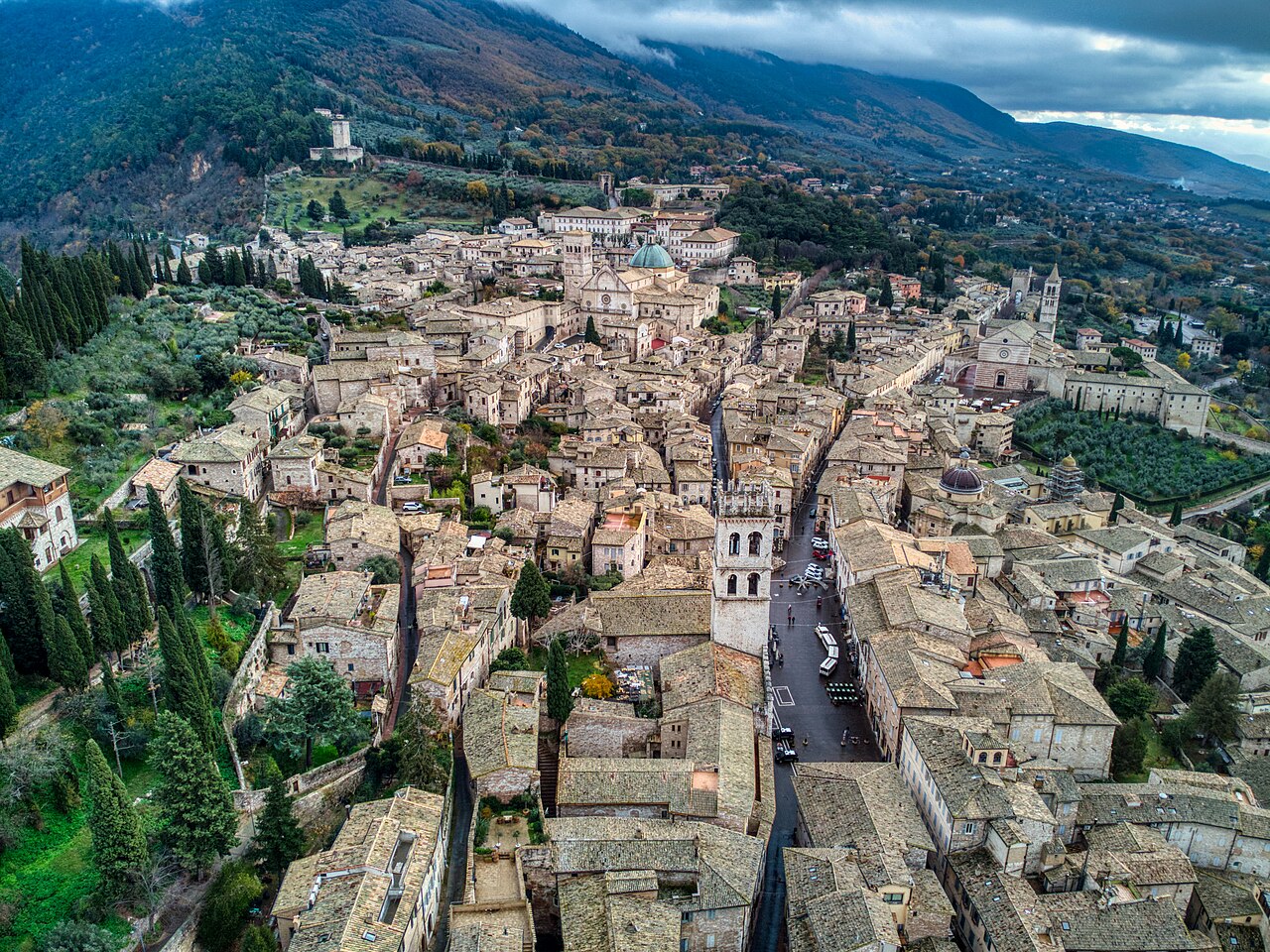
Today the basilica complex covers 19,000 square meters on the western slope of Assisi. The upper church nave measures 65 meters in length and 20 meters in width, with frescoes by Cimabue and Giotto still visible on the walls above the tomb entrance. At La Verna the modern pilgrim route follows the same 1.8-kilometer path Francis took on 14 September 1224, marked at intervals by stone crosses erected in 1874.
The last direct human image preserved from the original witnesses is the face of Brother Giles as rendered in the 1285 panel. No later portrait or written description from any brother who stood on the slope that morning has survived. The panel itself, examined by ultraviolet light in 1974 at the Istituto Centrale per il Restauro in Rome, shows no overpainting on the linen square held between Giles’s thumb and forefinger.