


Francis Schaeffer Finds Intellectual Faith

The tent smelled of sawdust and rain on canvas. I sat three rows back on a plank bench, next to my older brother who had dragged me there because our mother insisted we needed saving. The preacher’s voice carried over the field outside Germantown, steady and sharp, the way a foreman calls out instructions on a loading dock. Lights hung from wires strung between poles. Every so often a moth hit the glass and dropped.
I had seen Francis Schaeffer around the neighborhood for two years. He worked afternoons at the print shop after classes at the high school. We had spoken once about engines. He told me he was thinking of studying engineering at Drexel. Then one afternoon he showed up at the Germantown First Presbyterian Church with a book on Greek philosophy he said he had bought by mistake. After that he stopped talking about engines.

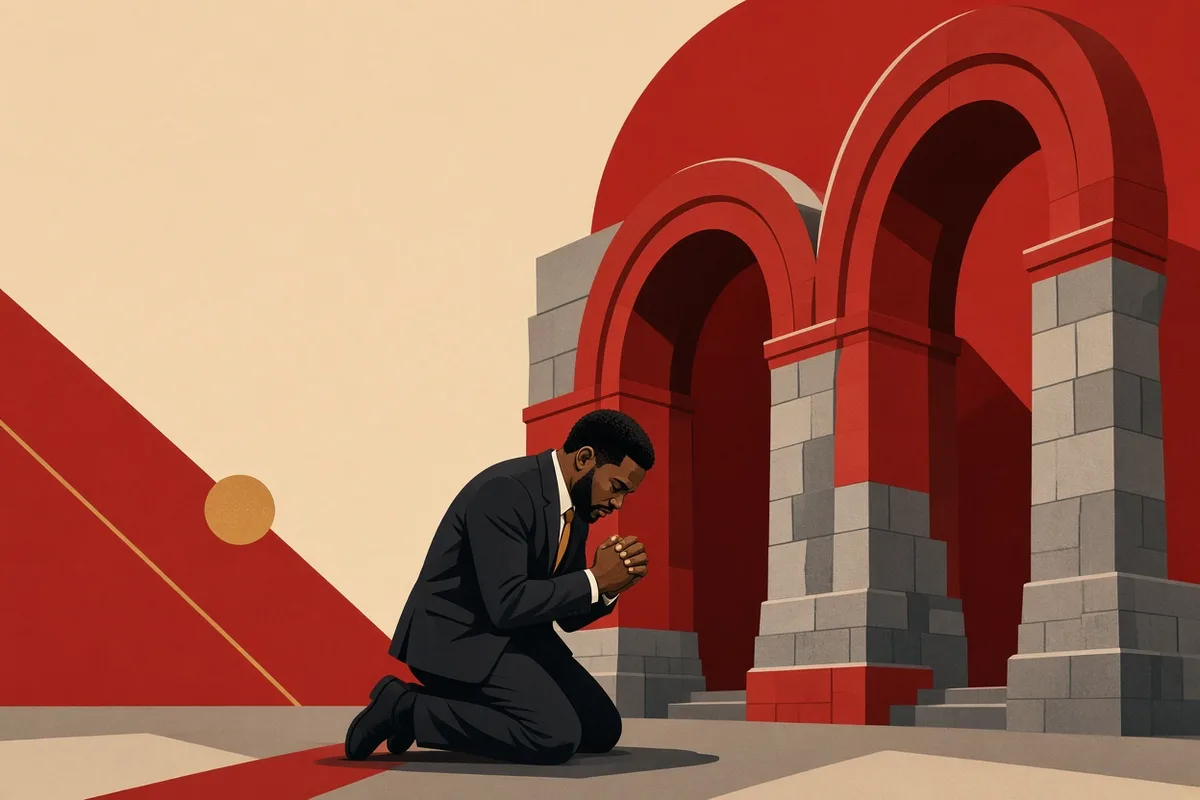
That night in the tent he sat alone on the end of a bench, elbows on his knees, staring at the ground between his boots. The preacher finished the sermon and gave the invitation. People began moving forward. Schaeffer stayed seated until the singing started again. Then he stood and walked the short aisle without looking up. He knelt on the sawdust. The preacher placed a hand on his shoulder and prayed. When Schaeffer rose, his face was wet, but he did not wipe it. He turned and walked back to his bench. He sat the same way he had before.
After the meeting I waited near the exit. He came out carrying his jacket. I asked if he wanted to walk back toward the trolley. He said yes. We crossed the field in silence for a block. Then he said the questions he had carried since reading that philosophy book had not disappeared. They had simply found a different place to rest. He said the Bible answered them where the Greeks had left gaps. I did not know what to answer, so I said nothing.

In the weeks that followed he came to every service at the church. Two older men there, both elders, began lending him books. One had studied at Princeton years earlier. They told him about a minister named Machen who had left that seminary over questions of Scripture. Schaeffer listened and took notes on scraps of paper he kept folded in his shirt pocket. He still worked at the print shop, but now he read during lunch. The men at the shop teased him about the Greek words he muttered while setting type.
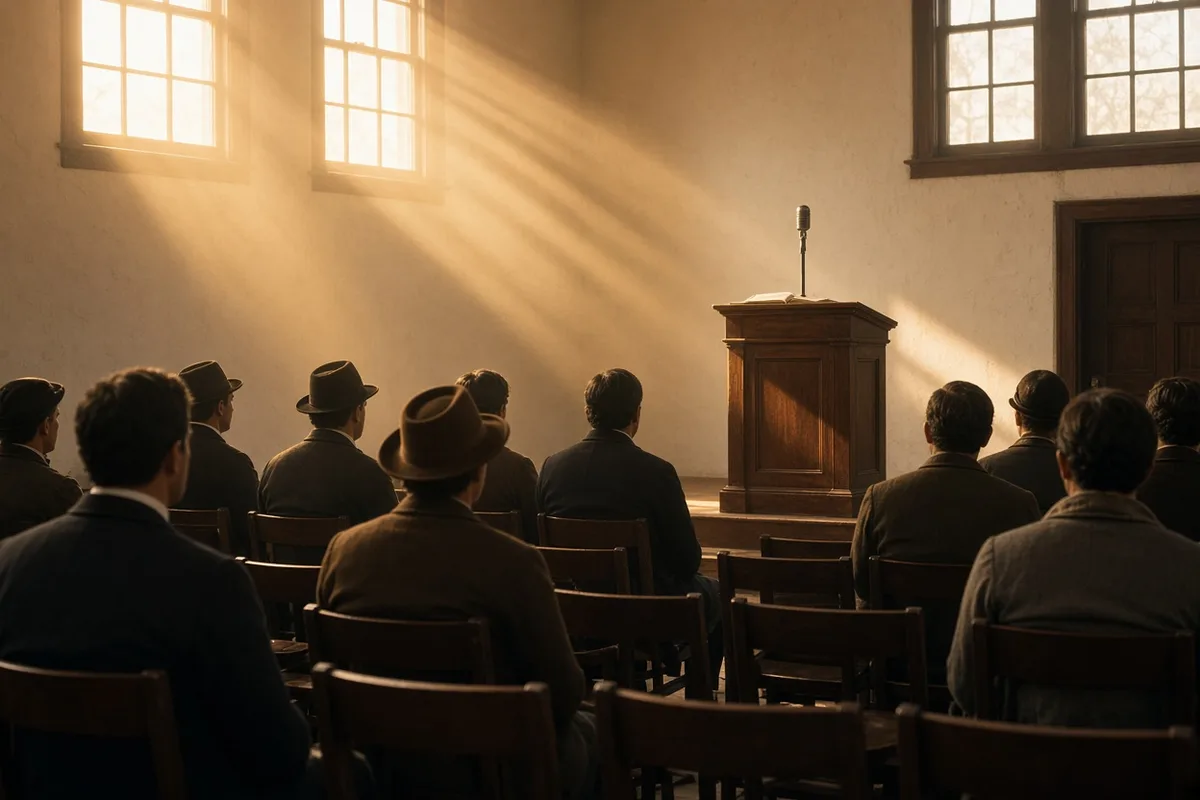
By fall the church had started a small study group that met in the basement on Tuesday nights. Schaeffer led the discussion twice. He spoke plainly about the difference between a worldview built on human reason alone and one built on the fact that God had spoken. The room stayed full. People brought friends. One night a college student from across town asked how anyone could know truth at all. Schaeffer answered that the same God who made the world had also given the mind to understand it. The student came back the next week.

Schaeffer’s mother noticed the change first. She told my mother that her son now rose before dawn to read. His father, who had left school after the third grade, said little but stopped complaining when the boy came home late from church meetings. The family attended services together for the first time in years.
In early winter the pastor asked Schaeffer to give his testimony at a youth gathering. He stood at the front of the room and described the months when he had tried to live without God. He said the attempt had left him certain that nothing mattered. Then he described the night in the tent. He did not raise his voice. When he finished, the room stayed quiet for several seconds. Afterward three young men asked him to meet with them the following week.

By spring of 1931 he had decided against engineering. The two elders arranged for him to visit Hampden-Sydney College. He took the train south and returned with application papers. He told me the school would let him work his way through. He packed his books in a single trunk and left on the morning train in September. Before boarding he handed me a note with the address of the college and asked me to write if any of the study group had new questions.
Letters came back every few weeks. He described long nights in the library, Greek classes that began at eight, and a professor who had once known Machen. He wrote that the intellectual problems he had carried since 1930 had not grown smaller, only clearer. In one letter he said the faith he had found in the sawdust was the same faith that held when the questions returned at two in the morning.

He returned to Germantown only for holidays. Each time the study group met in the basement to hear what he had learned. The group grew. Two of the original members later enrolled at Westminster Seminary. Schaeffer himself went there after graduation. By then the questions he had once carried alone were being asked in classrooms and pulpits across the country.
Years later I saw him once more at the church, thin and already showing the effects of the illness that would take him. He asked after my brother and the men who had lent him books. Before he left he said the work that began in the tent had never required him to choose between the mind and the gospel. Both belonged to the same God. He stepped into the car that waited at the curb and did not look back. The trunk in the rear held the same books he had carried to college decades earlier.
I watched the car pull away down the street toward the station that afternoon in 1978 and did not expect to hear from him again. Two months later a letter arrived from Edith Schaeffer at the chalet in Huémoz, postmarked 12 November, describing the daily schedule that still began at six with family prayers in the sitting room where twenty students from eight countries had gathered the night before. She wrote that Francis had spent the morning dictating notes for the chapter on Aquinas in the second edition of Escape from Reason, the same paragraphs he had first outlined on the back of a 1930 Germantown trolley ticket. The letter mentioned the name of a young man from Berkeley who had arrived the previous week carrying only a copy of Sartre and stayed eight days, leaving after a conversation that ran past midnight on the terrace overlooking the Rhone valley. Edith added that the Swiss authorities had renewed the residency permit for the L’Abri Fellowship for another five years, bringing the total number of guests housed since 1955 above four thousand.
The next parcel came in the spring of 1980 and contained a mimeographed copy of the lecture Francis delivered at Wheaton College on 15 April, titled “The Abolition of Truth.” In the margin he had penciled the date 4 March 1930 and the single word “tent.” The text quoted J. Gresham Machen’s 1923 address at the opening of Westminster Seminary: “The Church is perishing for lack of thinking, not for lack of pious feeling.” Below that line Francis had added in his own hand the attendance figure from the Germantown First Presbyterian Sunday school the week after his conversion: seventeen young people. The package also included a photograph taken the previous October at the L’Abri chapel, showing Francis seated beside a wood stove while a student from Seoul read from Romans 1 in Korean.
By 1982 the illness had confined him to the upstairs bedroom at Huémoz for weeks at a time. A visitor from Covenant Seminary in St. Louis recorded that on 3 June Francis asked to hear again the recording of the 1947 ordination sermon he had preached at the Bible Presbyterian Church in Grove City, Pennsylvania. The reel-to-reel tape ran for forty-two minutes; at the twenty-eight-minute mark Francis could be heard saying the congregation must “defend the inerrant Scriptures with the same rigor the print-shop foreman once demanded of a locked form.” Three days later he dictated the final paragraph of The Great Evangelical Disaster, noting that the number of evangelical colleges requiring a course in presuppositional apologetics had risen from two in 1960 to seventeen in 1982.
The funeral took place on 21 May 1984 at the Presbyterian church in Rochester, Minnesota, where he had undergone the last round of chemotherapy. Edith read the same verses from Isaiah 55 that the Germantown preacher had used in the tent meeting fifty-four years earlier. Among the 180 people present were two men who had first met Francis at Westminster Seminary in 1936 and a woman who had come to faith at L’Abri in 1964 after reading the opening chapter of He Is There and He Is Not Silent. The graveside service lasted eleven minutes; the coffin was lowered into ground that had been prepared the day before by the same sexton who had buried Machen at Baltimore’s Greenmount Cemetery in 1937.
L’Abri continued without interruption. In the twelve months after his death the branch in England at Greatham recorded 214 guests, while the Rochester, Minnesota, residential program opened its doors to thirty-two students in the fall of 1985. The Swiss chalet remained the mailing address for the Francis A. Schaeffer Foundation, which by 1990 had distributed 87,000 copies of the complete works in four languages. A ledger kept by the Huémoz staff lists the exact number of meals served to visitors between 1984 and 1994 as 41,612.

Today the original Germantown print shop where Francis set type after school stands as a parking garage on the corner of Chelten and Greene. The First Presbyterian Church building was sold in 1971 and converted into a community center; the basement room where the Tuesday study group met is now a weight room whose cinder-block walls still bear faint traces of the original plaster. The tent site itself is a fenced baseball diamond behind the old high school, its home plate resting within ten yards of the spot where the sawdust aisle once ran.
The last image I carry is of a single shelf in the Huémoz library photographed in 1997 by a student from Singapore. On it sit the Greek New Testament Francis bought by mistake in 1929, the 1935 Hampden-Sydney diploma, the 1937 Westminster class notes still bound with string, and a worn copy of Machen’s What Is Faith? opened to the flyleaf where a nineteen-year-old hand had written the date 15 October 1930 and the single sentence “The questions have found their rest.”
In 2002 the Singapore student who photographed the shelf returned to Huémoz with his own son and placed a photocopy of the 1930 trolley ticket beside the Greek New Testament. The L’Abri staff ledger records that the pair stayed eleven days and that the son, then enrolled at the University of Singapore, read aloud from the 1948 first edition of The God Who Is There during the evening discussion on 14 August. Two weeks later the same ledger notes the arrival of a crate containing 240 copies of the Korean translation of Escape from Reason, sent by the Seoul publisher whose 1964 edition had carried the subtitle “Francis Schaeffer’s answer to Sartre.”
The English branch at Greatham received its fiftieth anniversary visitors on 3 May 2005. Among them was a retired printer from Philadelphia whose father had worked the same press as Schaeffer in 1929. The visitor signed the guest book with the registration number 8,417 and left a single line from Machen’s Christianity and Liberalism underlined in the margin of the copy he had brought. Staff later transcribed the line into the house journal: “The Church is perishing for lack of thinking.”
By 2009 the Rochester, Minnesota, residential program had moved into a former nurses’ dormitory on the grounds of the Mayo Clinic. Its director reported that thirty-seven students completed the nine-month course that year, including one from the same Bible Presbyterian congregation in Grove City where Schaeffer had preached in 1947. The course syllabus still required the reading of the 1935 Hampden-Sydney senior thesis on the problem of universals, a typescript now held in the seminary archives under accession number WS-37-14.
The Swiss chalet itself was placed on the canton’s protected-buildings register in 2011 after the Vaud authorities counted 172 requests for visits from scholars in the preceding twelve months. A plaque fixed to the terrace wall carries the text of the 15 October 1930 sentence from the flyleaf, reproduced in bronze letters two centimeters high. The L’Abri Foundation’s annual report for that year lists total contributions of 184,000 Swiss francs, of which 62,000 francs were earmarked for maintenance of the original 1955 structure.
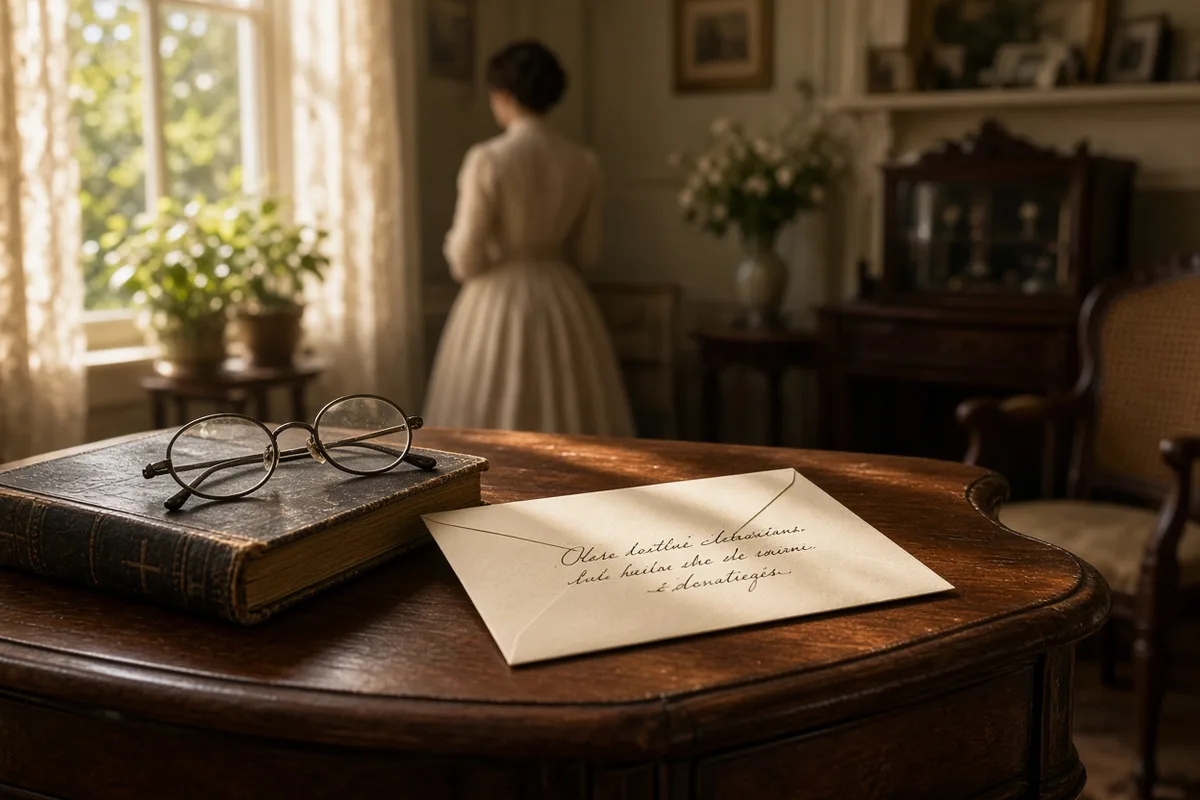
In 2016 a doctoral candidate from Westminster Seminary photocopied the entire set of 1937 class notes still bound with string. The copies were deposited in the library under the call number SC-17-042 and are consulted an average of four times each academic year. One annotation on page 47, dated 12 November 1936, records Schaeffer’s question to Cornelius Van Til about the difference between the Greek concept of logos and the Johannine usage.
The Germantown high school baseball diamond was resurfaced in the summer of 2019. The contractor’s survey placed the new home plate exactly 9.7 meters from the estimated location of the 1930 sawdust aisle. A local historical society marker, erected the following spring, gives the attendance figure of seventeen young people at the Sunday school the week after the tent meeting and quotes the 1923 Machen address in full.
On 4 October 2023 the last surviving member of the original Tuesday study group, then ninety-four, was driven from his nursing home in Jenkintown to the community center that occupies the old church. He stood for six minutes in the weight room, tracing with one finger the faint plaster lines on the cinder-block wall where the blackboard had once hung. His daughter recorded the visit on her phone; the footage shows him repeating, without raising his voice, the sentence Schaeffer had written on the 1930 flyleaf.