



Book argues French cadre method yields calmer children

In 60 seconds
- French babies often sleep through the night by two or three months because parents pause before answering cries, letting infants learn to link sleep cycles alone.
- Parents deliberately allow small frustrations—a toy out of reach, a held no—so children learn limits are real and survivable rather than emergencies to erase.
- Discipline runs on a cadre: a handful of non-negotiable rules plus wide freedom inside them, which ends endless negotiation and hovering.
- Fixed meals four times a day, one afternoon goûter, early food variety, and no backup safe dish teach children to eat what is served without constant battles.
- State crèches and nearly universal école maternelle from about age three treat independence and calm separation as shared curriculum, not private parental luck.
- Mothers are expected to keep adult identity, work, marriage, and body after birth; total self-sacrifice is framed as a loss that makes whole households more anxious.
The big idea
Druckerman argues French children seem better behaved not from temperament but from parents confident enough to expose them to manageable frustration and hold a few firm rules. The surrounding culture—and heavily subsidized institutions she underplays—makes that consistency ordinary rather than heroic.
The book in brief
Druckerman, an American raising children in Paris, keeps noticing the same gap: French toddlers sleep through the night early, eat vegetables and multi-course meals, and sit through adult outings while American peers melt down and American parents stay exhausted. She sets out to learn whether the difference is culture, not magic.
The trail starts with sleep. French parents practice a deliberate pause before answering night cries so babies can resettle themselves; the same logic widens into a belief that small, survivable frustration is a developmental good rather than a failure of care. Limits are explained once and held.
She then names the structure behind the calm: the cadre—a thin frame of true non-negotiables surrounding real freedom. Food follows the same pattern. Meals arrive on a fixed daily schedule, hunger does motivational work, and tasting a wide range of foods is treated as a skill to teach, not a preference to indulge.
Institutions lock the philosophy in place. Trained crèche staff and free école maternelle normalize independence, conflict resolution, and separation at scale, so individual families are not inventing the rules alone. Mothers, meanwhile, are culturally pushed to remain sexual, working, partnered adults rather than erase themselves into the child’s schedule.
Everyday life becomes practice: bakery lines, proper greetings, long family dinners without constant entertainment or praise for ordinary behavior. The book lands on a package deal—confidence that children can cope, few firm rules, practiced patience, and a society that backs parents who mean no—while leaving open how much of the result is attitude and how much is policy scaffolding.
Context
Pamela Druckerman, an American journalist raising three children in Paris, published the book in 2012. It mattered because it reframed permissive Western parenting as anxious rather than loving and gave overwhelmed new parents a cross-cultural mirror for sleep, food, and discipline fights.
The key ideas
1
The night-time pause
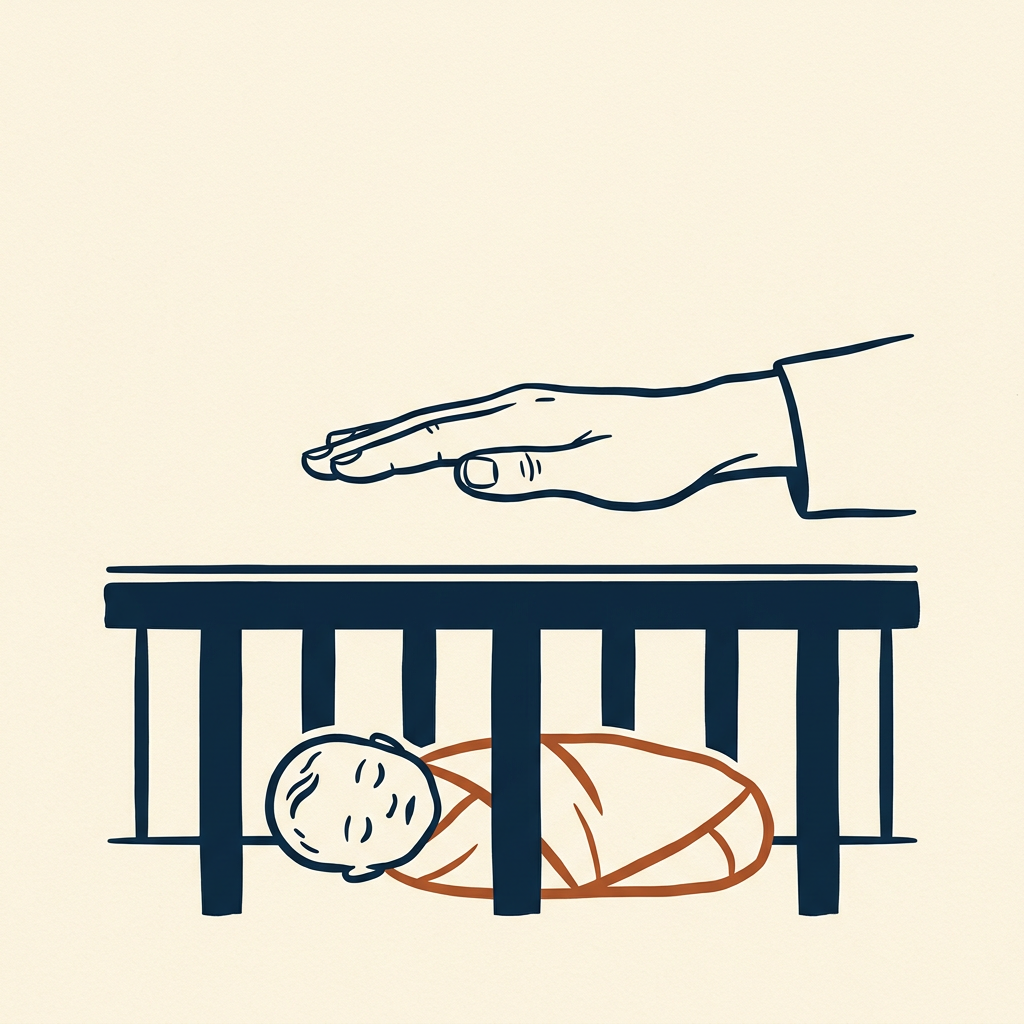
French babies sleep through earlier because parents wait minutes on night cries so infants learn to link sleep cycles on their own.
Druckerman notices friends’ babies sleeping through the night by two or three months while her daughter still wakes repeatedly at four months. The French pediatric habit she meets is simple: when a baby stirs or cries at night, adults wait a few minutes before going in instead of rushing at the first sound.
The point is not neglect. Babies cycle through sleep phases and often resettle if given the chance; constant immediate intervention, she is told, blocks the skill of linking those cycles. Pediatrician Michel Cohen frames sleep training as a capacity infants can learn patiently, not an emergency requiring instant rescue every time.
American advice she had absorbed treated crying as a signal that demanded immediate response, which she argues produces infants who never fall back asleep alone and parents who never rest. French parents start from the opposite assumption: even young babies have some self-regulation, and brief frustration is tolerable and useful.
The pause is the first concrete version of a wider stance—confidence over hovering—that the rest of the book keeps expanding into food, discipline, and public behavior.
In practice: After Druckerman tries the pause with her daughter Bean, longer sleep stretches appear within a couple of weeks.
2
Allowed small frustrations
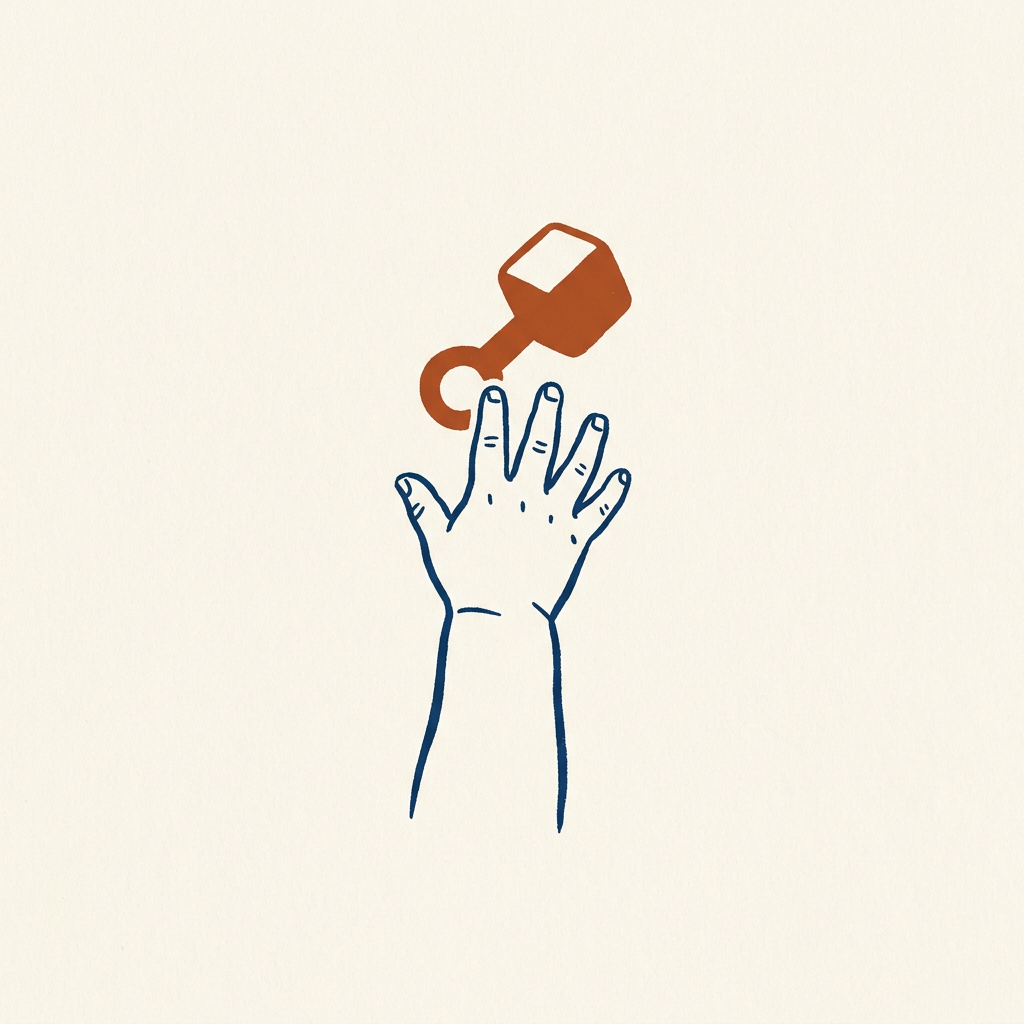
French parenting exposes children to manageable frustration on purpose because coping with limits builds resilience that constant rescue blocks.
Erase the distress
Instant attention, bargaining, or diversion whenever a child struggles or whines
Hold a small limit
Brief explanation, then a calm no that stands after a short protest
The sleep pause is only the opening move. Druckerman watches French adults refuse to spring into action the instant a child struggles or whines. A toddler reaching for a toy just out of reach is left to work at it; a clear no is expected to stand after a brief protest rather than turn into bargaining or distraction.
She contrasts this with American circles where distress is treated as something to erase immediately through attention, deals, or diversion. Influential French ideas associated with Françoise Dolto still cast children as rational beings from birth who can understand explanations and accept limits, not only fragile creatures to be managed around.
So parents calmly state why something is not allowed, then hold the line without anxious over-explaining or capitulation. Consistency teaches that limits are real and survivable; a childhood scrubbed of every disappointment, she argues, leaves a child unready for a world full of them.
The risk she flags on the other side is a child who has never practiced tolerance because an adult always intervened first.
In practice: A French mother tells her son he cannot have a snack until dinner, gives a brief explanation, and moves on; after a short whine, he drops it.

3
The cadre framework
French discipline uses a few firm non-negotiables surrounded by wide freedom so parents enforce calmly instead of negotiating every micro-choice.
Everything negotiable
Each rule is up for debate; whining reopens the case and parents stay drained
Cadre
A handful of firm rules plus real freedom inside them; no is final and rare
Druckerman names the structure behind the apparent ease: the cadre, or framework. Parents keep only a limited set of true non-negotiables—no rudeness to adults, no interrupting adult conversation, set mealtimes—and inside that frame children play, roam, and choose without constant direction or praise.
This is neither total control nor endless permission. Because the rule list is short, adults can enforce it consistently without turning into exhausted bargainers over every small preference. Saying no comes with finality and without guilt once the big boundaries are already settled.
Before absorbing this, Druckerman often relented under whining because each rule felt independently debatable. French parents she watches look relaxed in public without children running wild precisely because the outer boundary is clear and the interior is genuinely free.
Less anxiety follows: they are not managing every micro-decision when the major ones are already decided.
In practice: At a park, French parents let children play unsupervised at some distance, trusting the outer boundary rather than hovering over every interaction.
4
Fixed meals, wider palates
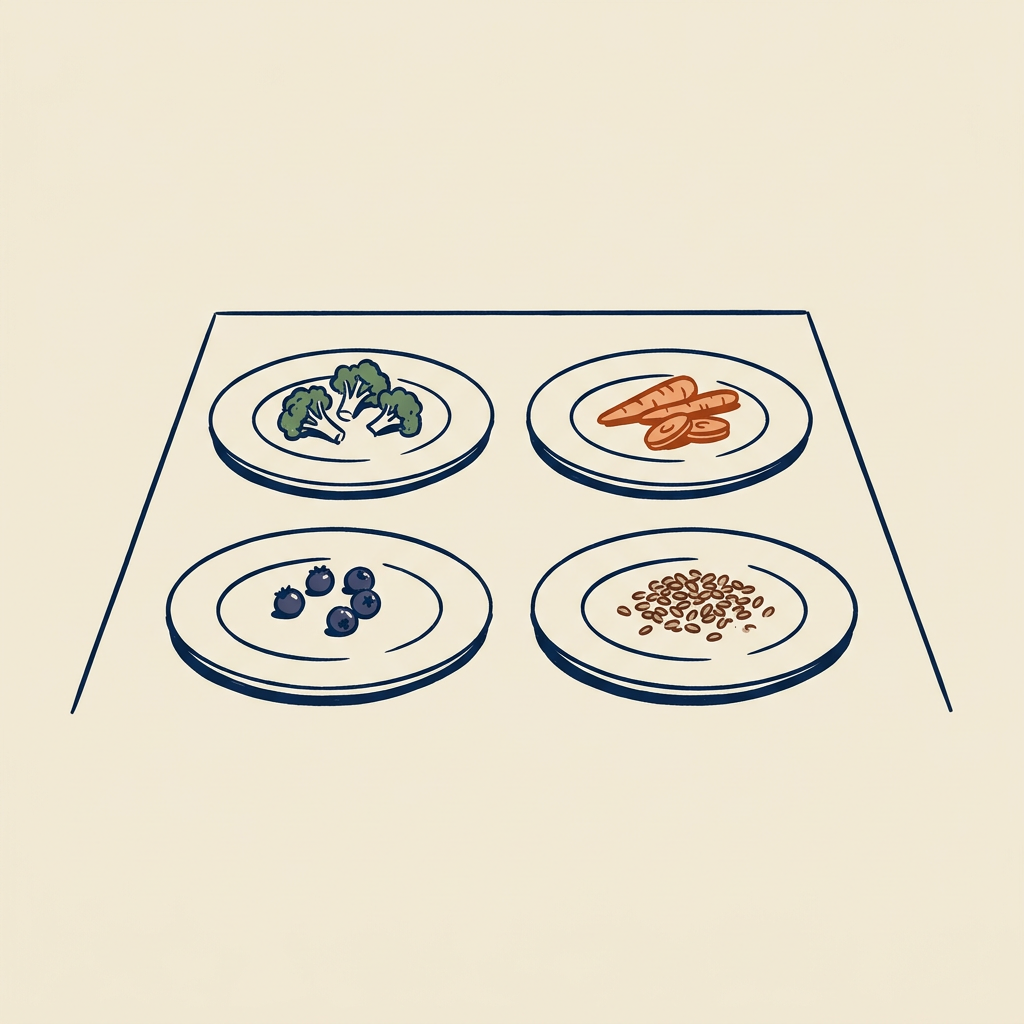
French children eat varied foods without fuss because eating is taught on a fixed schedule where hunger, not backup safe food, does the motivational work.
Druckerman is startled that French toddlers take fish, vegetables, and multi-course meals while many American children she knows live on nuggets and constant snacks. The mechanism she finds is structure: four set eating times a day, including one afternoon snack called le goûter, and no grazing between them.
Children arrive actually hungry, so they are motivated to try what is offered. Parents introduce a wide range of foods early and repeatedly, sometimes requiring a few bites of something new without forcing a clean plate, on the theory that palates grow through exposure rather than preference-matching.
Crèches serve rotating menus that treat vegetables as ordinary education. The American habit of always having a safe backup food, she argues, removes the hunger that would push a child toward the main meal. Sweets are not taboo forbidden fruit; they appear in reasonable scheduled amounts, which lowers the temperature of food as a conflict zone.
Mealtimes become another cadre: the schedule is not negotiable, choice exists inside it, and battles shrink.
In practice: French crèches serve rotating menus with vegetables such as leeks and fennel to toddlers as a normal part of the day, not an optional extra for adventurous eaters.

5
Crèche and maternelle
Trained public childcare and preschool built on a shared philosophy produce more secure, socially competent children than ad hoc private arrangements.
France’s state-subsidized crèche for infants and toddlers and free école maternelle from around age three are not treated as guilty stopgaps. Staff are trained professionals, and childcare is a normal valued institution rather than something parents must apologize for.
Workers describe deliberately teaching toddlers to feed themselves, resolve small conflicts, and separate from parents calmly as core curriculum. That stands against American anxieties Druckerman knows, where daycare often feels like a private compromise and quality varies wildly by provider.
École maternelle adds group structure and independence early. Because nearly all children enter at the same age under the same routines, separation drama shrinks; the system is consistent and culturally normal rather than an individual exception to negotiate.
These institutions are the practical backbone for cadre and frustration-tolerance ideas: the values are reinforced at scale, not only at home.
In practice: Her son settled into école maternelle faster than she expected because every other family was doing the same normalized routine at the same age.

6
Mothers remain adults
French mothers protect identity, sexuality, work, and marriage after birth because culture treats total self-sacrifice as a loss, not a virtue.
Total absorption
Good motherhood equals erasing body, career, and marriage into the baby’s every need
Adult life continues
Work, partnership, and physical recovery stay legitimate; calm authority follows
Druckerman watches French mothers return to pre-pregnancy weight and work relatively quickly, prioritize marriages, and refuse to organize their entire selves around children’s schedules and achievements. Doctors, magazines, and social expectation reinforce that a mother’s adult life matters as much as the child’s development.
Neglecting body, career, or partnership is cast as a mistake rather than noble erasure. Institutional postpartum care even includes state-subsidized pelvic floor rehabilitation, signaling that maternal physical recovery and sexual health deserve formal attention.
She had absorbed an American script in which total absorption in the baby proves good motherhood and self-prioritizing mothers risk looking selfish. French mothers she interviews find the idea that motherhood should consume a whole self mildly baffling; work and adult identity are assumed to continue.
The book admits French pressures remain—including beauty standards and unequal housework—yet argues a mother with her own footing produces a calmer household than one organized entirely around a child’s demands.
In practice: State-subsidized pelvic floor rehabilitation after birth treats a mother’s physical recovery and sexual health as worth institutional time and money.

7
Practiced patience and manners
French parents teach patience and politeness through repeated small social exercises rather than treating them as traits children either have or lack.
Children are expected to greet and say goodbye properly to adults, wait their turn to speak, and not interrupt. These are practiced skills, not personality accidents. Everyday moments—a bakery line, an adult dinner—become low-stakes drills in waiting and boredom tolerance.
Phones, toys, and snacks are not automatically deployed to erase empty time. That loops back to frustration tolerance: patience is built by repetition, not discovered fully formed. Parents also avoid constant praise for ordinary behavior, on the view that excess praise cheapens feedback and breeds dependence on external validation.
Politeness rituals such as greeting adults by name and offering a hand or cheek kiss place the child inside a wider adult social world instead of a sealed child-centric bubble. The same cadre logic applies: firm expectations, practiced often, without turning every outing into entertainment logistics.
What first looks like unusually compliant children reads, over time, as ordinary outcomes of framework plus rehearsal.
In practice: At family dinners, French children of various ages sit through long multi-course adult meals without demanding entertainment or leaving the table—an expectation Druckerman comes to see as normal, not exceptional.
Key terms
- le pause Waiting a few minutes before responding to a baby’s night cry so the infant can learn to resettle and link sleep cycles
- cadre A thin frame of firm non-negotiable rules with wide real freedom inside them
- le goûter The single scheduled French afternoon snack; part of a four-meals-a-day structure with no constant grazing
- crèche State-subsidized group childcare for infants and toddlers staffed by trained professionals
- école maternelle Free public preschool starting around age three that nearly all French children attend
- la rééducation périnéale State-subsidized postpartum pelvic floor rehabilitation that treats mothers’ physical and sexual recovery as worth formal care
- frustration tolerance The practiced ability to accept small limits and delays without an adult erasing every discomfort at once
What to do
- Pick no more than three household rules that are truly non-negotiable, state them calmly, and stop re-litigating them daily.
- Before rushing to soothe every whimper, pause for a slow count of ten and intervene only if real distress continues.
- Set fixed meal and snack times, remove constant snacking, and stop offering a backup safe food at dinner.
- Introduce new foods repeatedly with a few required bites rather than matching every preference on the first try.
- Once a week, spend deliberate time on work, exercise, or your partner without treating it as a guilty exception.
- Use one ordinary errand—a shop queue or adult meal—as a short practice session in waiting with no phone or snack rescue.
Questions to think with
- Which of your current rules are truly non-negotiable, and which do you quietly reopen every time whining starts?
- What changes in your evenings if you wait ten seconds before answering the next night stirring?
- Where does a backup safe food or all-day snacking undercut the hunger that might widen what your child will try?
- How much of your household’s anxiety comes from managing every micro-decision instead of guarding a short list of limits?
- If your adult life shrank to the child’s schedule, what one piece would you put back this week?
The other side
Druckerman is a journalist, not a researcher; the portrait is mostly wealthy central-Paris parenting plus a few experts, not France as a whole, and causal claims rest on anecdote. Critics note she flattens a diverse country, underplays the subsidized crèches, leave, and safety net that make “French calm” workable, soft-pedals fathers’ labor share and children with atypical needs, and sometimes dresses a thin, put-together motherhood ideal as liberation.
Who it's for
New parents drowning in conflicting sleep, food, and discipline advice, plus Americans and Britons who want the mechanism behind the “better-behaved French child” stereotype rather than another pile of techniques. Readers who need controlled data or a full account of class, disability, or policy limits will hit the book’s ceiling fast.