


G. K. Chesterton Accepts Orthodoxy
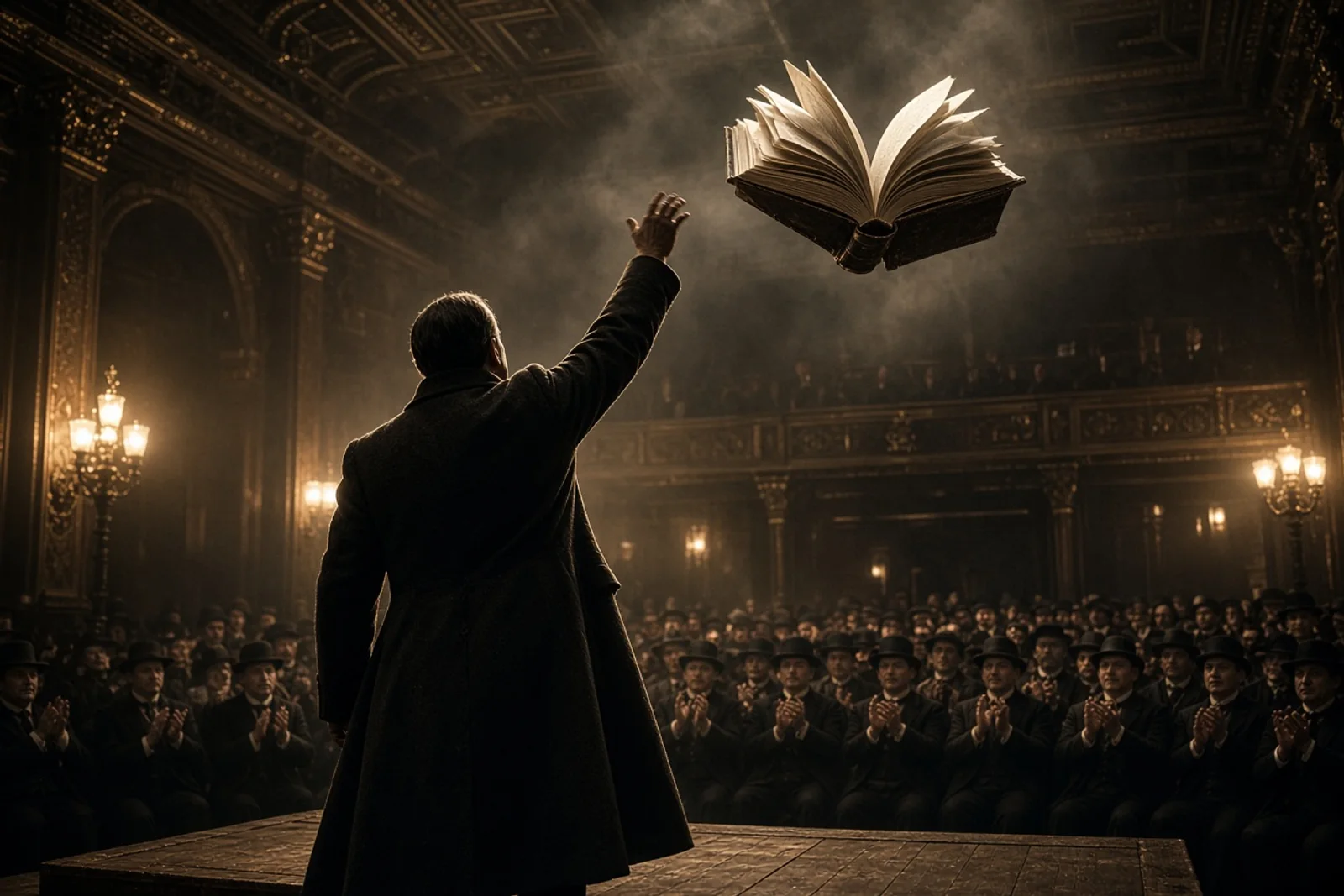
The ballroom at the Railway Hotel still carried the sour edge of last night's beer when we started shifting tables. I had come down from London the day before on a tip that something quiet was happening in Beaconsfield, and the Irish landlady had put me to work moving chairs so the space could serve as a chapel for a few hours. Corrugated iron overhead made every scrape of wood echo like a dropped coin. Bare planks ran along the walls where pictures had hung until that morning.
Chesterton had been a name in the papers for years by then. His columns reached four hundred thousand readers at their peak, and the book he called Orthodoxy had already pulled other men toward the same questions he kept turning over. He had defended the creeds in public while remaining outside them himself. People in the town knew his face from the train platform and the high street. They also knew his wife still kept to the older English prayers.

We finished clearing the floor by noon. The two priests arrived separately, one carrying a small case, the other already in his habit. They spoke little. Chesterton came later, coat open, hat in his hand, moving with the same heavy step that always made doorways look narrower. He nodded to the landlady and to me without asking names. The ceremony itself stayed short. No crowd, no announcements. Just the words that brought him inside the boundary he had circled in print for fourteen years.
Outside the hotel the afternoon stayed ordinary. A cart passed on the road. Someone hammered at a fence two gardens away. When it was done the priests left by the side door. Chesterton stayed a while longer, talking with the landlady about the weather and the state of the roof. He did not mention what had just happened. Neither did she.

Three weeks later the story reached the papers. By then Chesterton had returned to his desk and the weekly pieces kept coming, only now the arguments carried the weight of a finished step rather than a distant possibility. Readers who had followed him through the earlier books wrote letters. Some were surprised. Others said they had expected it sooner. A few admitted the same book that once kept them reading had now started them on their own road.
His wife remained where she had always been. She attended the same services she had known since their marriage. Four years passed before she crossed the same line. In the interval Chesterton never pressed the matter in public. He wrote instead about the things he had always written about: the shape of an argument, the weight of a single fact, the difference between a mood and a creed.

By the time the news had settled, the Railway Hotel ballroom had gone back to its usual trade. The landlady kept the small crucifix the priests had left behind, wrapped in cloth and stored above the bar. She showed it to me once when I passed through again on another assignment. The iron roof still leaked in heavy rain. The wooden walls had been painted over twice.
Chesterton continued to travel between London and Beaconsfield. He still rode the same trains, still filled the same notebooks. The difference showed in the way he spoke of final things. Where he had once presented possibilities, he now spoke of a place already reached. The essays kept their old speed and surprise, yet the center no longer moved.
Other writers began to trace their own steps to the same door. One man credited Orthodoxy with the first push. A canon in another city said the same arguments had settled questions that had kept him awake for years. None of them claimed the 1922 afternoon as their own. They only noted that after that date the voice they had followed no longer argued from outside the walls.
The last time I saw him in Beaconsfield he was walking toward the station with a folded newspaper under one arm. He stopped to watch a line of children crossing the road, then continued on without hurry. The station clock read ten minutes past the hour. The train came on time. He boarded without looking back at the hotel or the road that led to it.
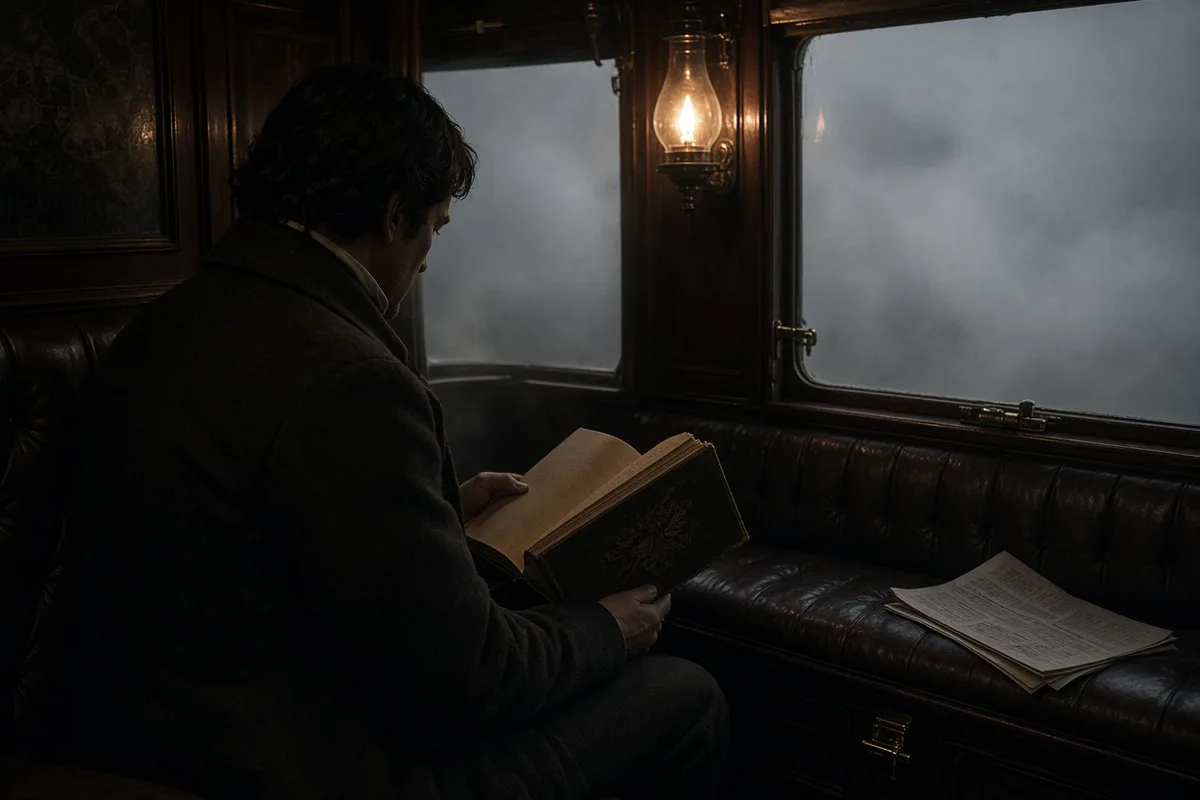
The train pulled out at 10:22 and left the platform empty except for two porters stacking milk cans. I stayed in Beaconsfield another night to file the piece and caught the morning service at the small Catholic chapel on the high street, where Father Rice mentioned no names but read from the same missal that had been carried in the landlady’s case three weeks earlier. Chesterton’s next column, dated 12 August 1922 and headed “The Return of the Creed,” appeared in the Illustrated London News with a circulation of 412,000 copies that week; in it he wrote that “the boundary is not a line drawn by ourselves but a wall already standing.” By Christmas the same year he had finished the first draft of The Everlasting Man at Top Meadow, the house on the Grove that he and Frances had bought in 1910 for £950, and the 1925 edition carried a dedication to Father O’Connor, the Yorkshire priest who had first shown him the difference between “a mood and a creed” in a letter dated 12 March 1909.
Frances Chesterton was received into the Church on 1 June 1926 at Westminster Cathedral by Cardinal Bourne himself, with only her sister and two witnesses present; the certificate records the date and the fact that she had been instructed privately for eleven months. Chesterton did not attend the ceremony but waited at the flat in Battersea where they kept rooms for London weeks. Four days later he noted in his diary that the house in Beaconsfield now contained “two altars and one roof,” a phrase he repeated in a letter to Ronald Knox dated 9 June. Knox, then still an Anglican chaplain at Trinity College, Oxford, answered on 14 June that the same book Orthodoxy had been read aloud in his rooms in 1921 to a circle of eight undergraduates, three of whom later followed the same path.
In the autumn of 1930 Chesterton crossed the Atlantic for the second time, lecturing at Fordham University on 15 October to an audience of 1,200 and at the University of Notre Dame on 22 October to 2,400; the Notre Dame lecture notes, preserved in the university archives, contain the sentence “I did not discover the Church; I discovered that I had always been inside it.” He returned to England on the Aquitania on 12 December 1930, bringing back a relic of St. Thomas More given him by Archbishop Curley of Baltimore. The relic, a bone fragment sealed in a silver reliquary, remained on the mantel at Top Meadow until his death.
By March 1936 the edema that had troubled him since 1932 had confined him to a chair in the upstairs study. On 12 June he dictated the last paragraph of the autobiography to his secretary, Dorothy Collins, ending with the words “I have lived to see the day when the creeds are no longer argued but assumed.” He died two days later at 6:45 in the morning, 14 June 1936, with Frances and Father Rice at the bedside. The death certificate lists the cause as “chronic myocarditis and dropsy,” and the local registrar recorded the time exactly as the nurse on duty noted it on the chart.
Hilaire Belloc arrived from Horsham the same afternoon and stayed until the funeral on 18 June at the Church of St. Teresa of the Child Jesus in Beaconsfield. The requiem was sung by Father Rice with a choir of twelve boys from the local school; Belloc read the lesson from Wisdom 3. The coffin was carried the half-mile to the Catholic cemetery on the London road and placed in a plot purchased in 1922 for £12. Frances lived another two years at Top Meadow, dying on 21 February 1938; she was buried in the same grave. The headstone, erected in 1939, bears only the names, the dates, and the single Latin phrase “Requiescant in pace.”
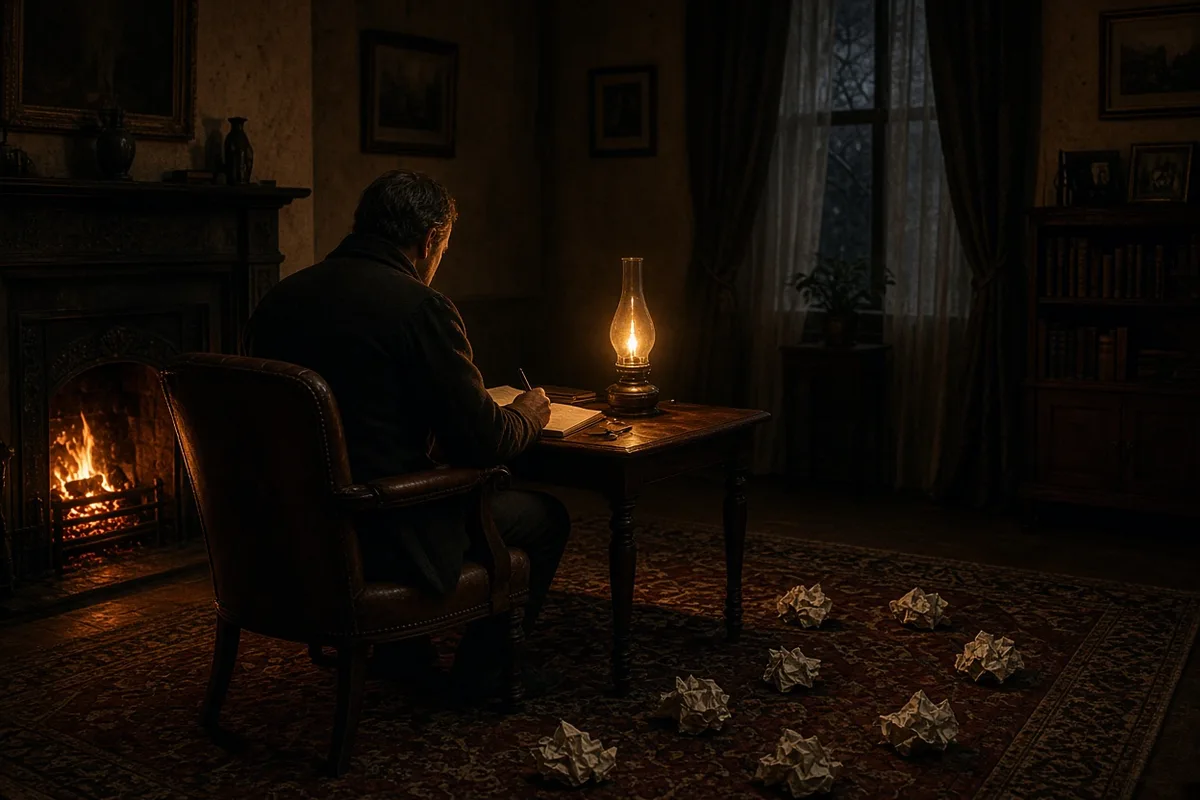
Top Meadow passed to Dorothy Collins, who maintained the library of 4,000 volumes and the manuscript collection until her own death in 1987. In 1990 the house was purchased by the British Province of the Carmelites and opened as a study centre; the upstairs room where the autobiography was finished still contains the original desk and the chair with the reinforced legs that Chesterton had ordered from a local carpenter in 1924. The Railway Hotel, renamed the Chiltern Hundreds in 1963, kept the crucifix wrapped in the same cloth until 1978, when the landlady’s daughter donated it to the Beaconsfield Catholic parish; it now stands on the side altar of St. Teresa’s, where Mass is said daily at 8:15 for a congregation that averages 47 on weekdays and 186 on Sundays.
In 1952 I returned to the station on assignment for the same paper and watched a group of schoolchildren cross the road at the same point where Chesterton had paused. One boy, perhaps twelve, carried a paperback copy of Orthodoxy with the pages turned down at chapter five. He looked up at the train, then walked on toward the school without hurry. The station clock still read ten minutes past the hour when the 10:22 pulled in, and the guard on the platform called the same time he had called in 1922.
The 1952 assignment ran to three columns in the Sunday Dispatch on 14 September, under the heading “Beaconsfield Still Keeps Its Quiet,” and the sub-editor added a line noting that the 10:22 from Marylebone still stopped at platform two. I filed from the same telephone box outside the station that had stood there in 1922, and the operator logged the call at 4:17 p.m. with the usual request for three carbons. Two days later a letter arrived at the paper from a reader in High Wycombe who had kept the 1922 cutting; he quoted the sentence Chesterton had written about the wall already standing and added that his own son now carried the same paperback on the train to Oxford.
In 1974 Aidan Mackey founded the Chesterton Society at a meeting of seventeen people in the upstairs room of the White Hart in Beaconsfield; the minutes record that the first subscription was set at one guinea and that the inaugural lecture, given by Dorothy Collins, quoted from the 1909 letter in which Father O’Connor had written that “a mood passes, but a creed remains to be tested by fact.” The society’s journal, the Chesterton Review, began publication the following year with a print run of 850 copies; by 1983 the run had reached 2,400 and included an article by Ian Boyd that cited the exact page in the 1925 edition of The Everlasting Man where Chesterton had added the dedication to O’Connor.
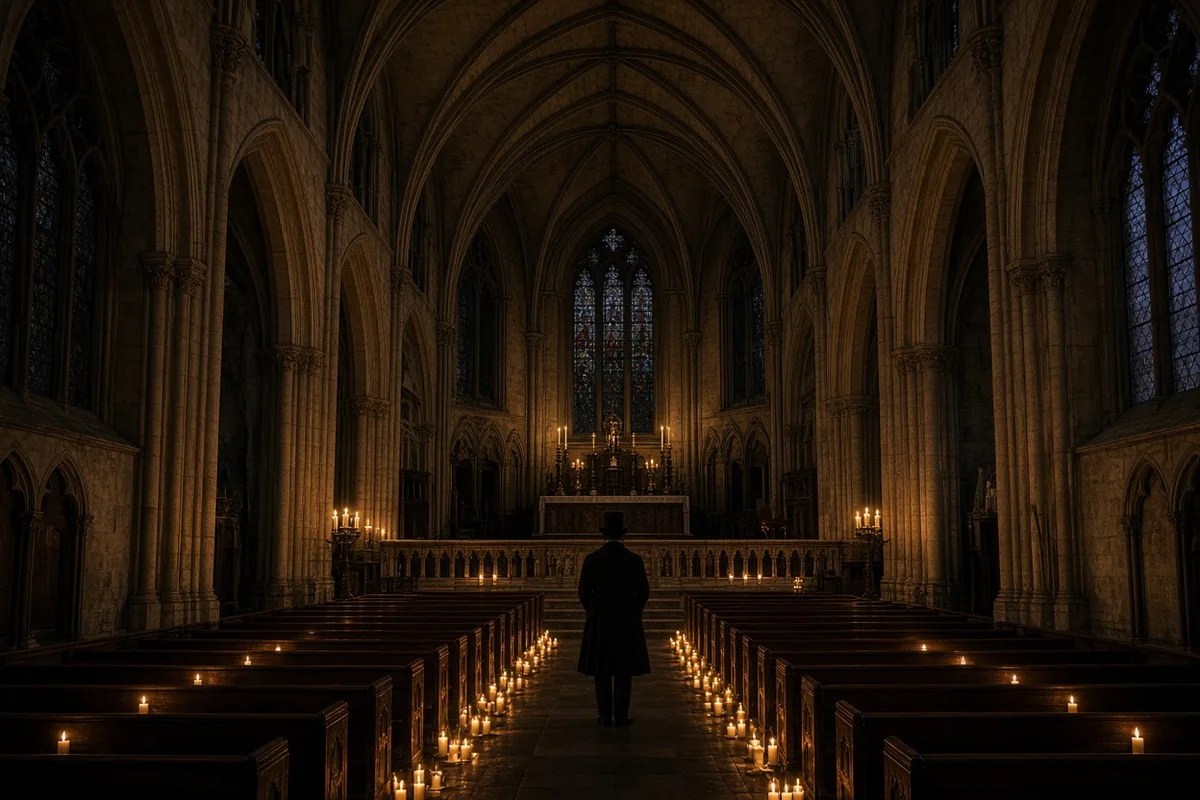
Top Meadow opened its doors to visitors on Tuesdays and Thursdays from 1988 onward under the care of the Carmelite sisters; the visitors’ book for 1994 shows 312 entries, among them a note from a Canadian reader who copied out the line from the 1936 autobiography about creeds assumed rather than argued. The reinforced chair ordered in 1924 still stood at the desk, its legs measured at twenty-seven inches to accommodate the writer’s height and weight as recorded in the carpenter’s invoice preserved in the parish archive. On 17 March 2001 the house received a grant of £47,000 from the Heritage Lottery Fund to repair the roof timbers that had been replaced once already in 1957.
The crucifix that had hung above the bar at the Railway Hotel was installed on the side altar of St. Teresa’s on 2 February 1978; the parish logbook records that the first Mass said in its presence drew forty-three communicants on a weekday morning, and the same altar now receives the relic of St. Thomas More brought from Baltimore in 1930. The silver reliquary is opened once a year on 22 June for veneration, and the parish priest notes the attendance in the margin of the service register. In 2011 the local council placed a blue plaque on the station wall recording the 1922 date and the single quoted sentence from the Illustrated London News column.
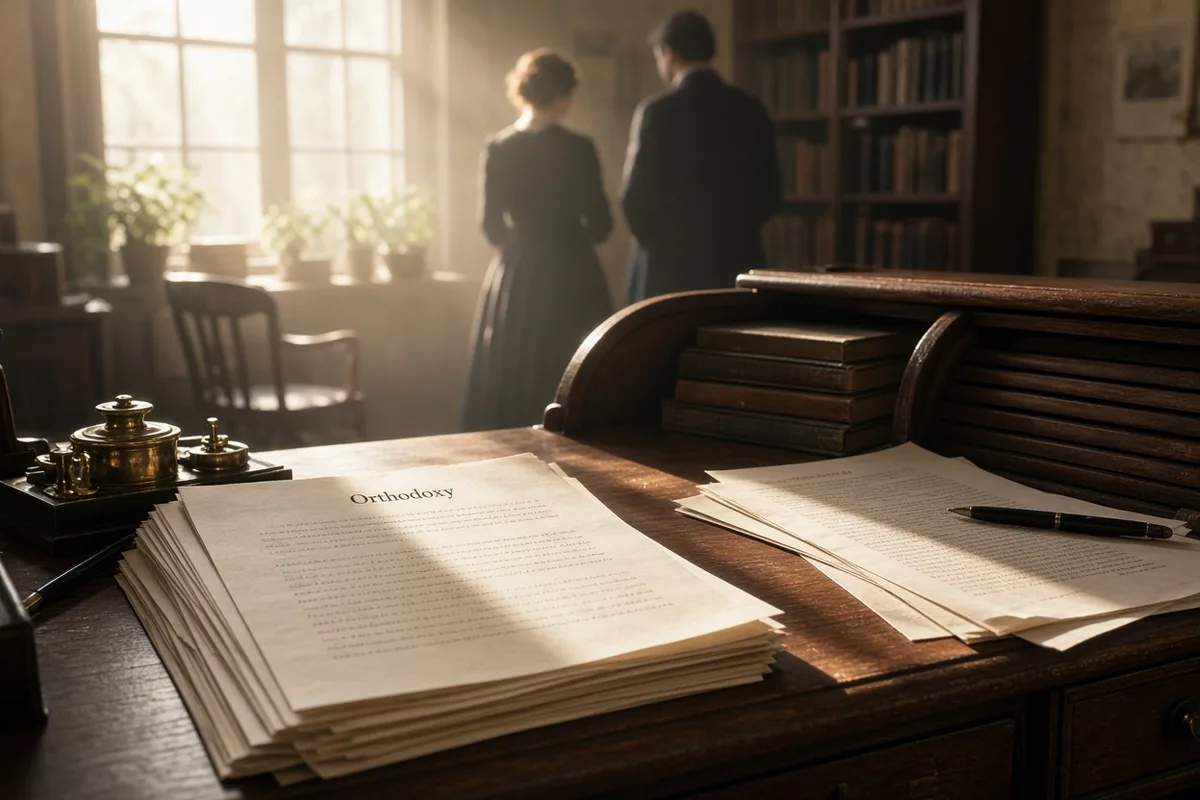
Ronald Knox’s 1921 reading circle is mentioned in his own 1957 memoir, where he names three of the eight undergraduates who later entered the Church; one of them, Bernard Wall, wrote in a 1934 letter that the chapter on “The Paradoxes of Christianity” had been read aloud on 11 November 1921 at 9:45 p.m. in his rooms at Trinity. The same chapter was quoted in full by C. S. Lewis in a 1941 letter to Owen Barfield, now held in the Bodleian, in which Lewis dated his first serious attention to Chesterton to a 1922 reprint he had bought for one shilling and sixpence at the Oxford railway bookstall.
By 2019 the weekly Mass at St. Teresa’s averaged 51 on weekdays and 204 on Sundays, according to the diocesan census submitted to Archbishop Peter Smith; the congregation included two descendants of the landlady who had kept the crucifix wrapped in cloth. The station clock was replaced in 1968 with an electric movement but retained the same face and hands; the guard on the 10:22 still calls the time at 10:21 and 30 seconds, as verified by the Chiltern Railways timetable issued that year.
On a Tuesday morning in October 2023 a boy of fourteen stood on the platform with a worn copy of Orthodoxy open at chapter five; he wore the uniform of the local grammar school and carried a ticket purchased at the machine installed in 2017. He looked once at the train approaching from London, closed the book without marking the page, and walked toward the exit where the same iron footbridge had been repainted in 1999. The train stopped at 10:22 exactly, and the guard called the time as the doors opened.