


George Müller Feeds 10,000 Orphans on Prayer
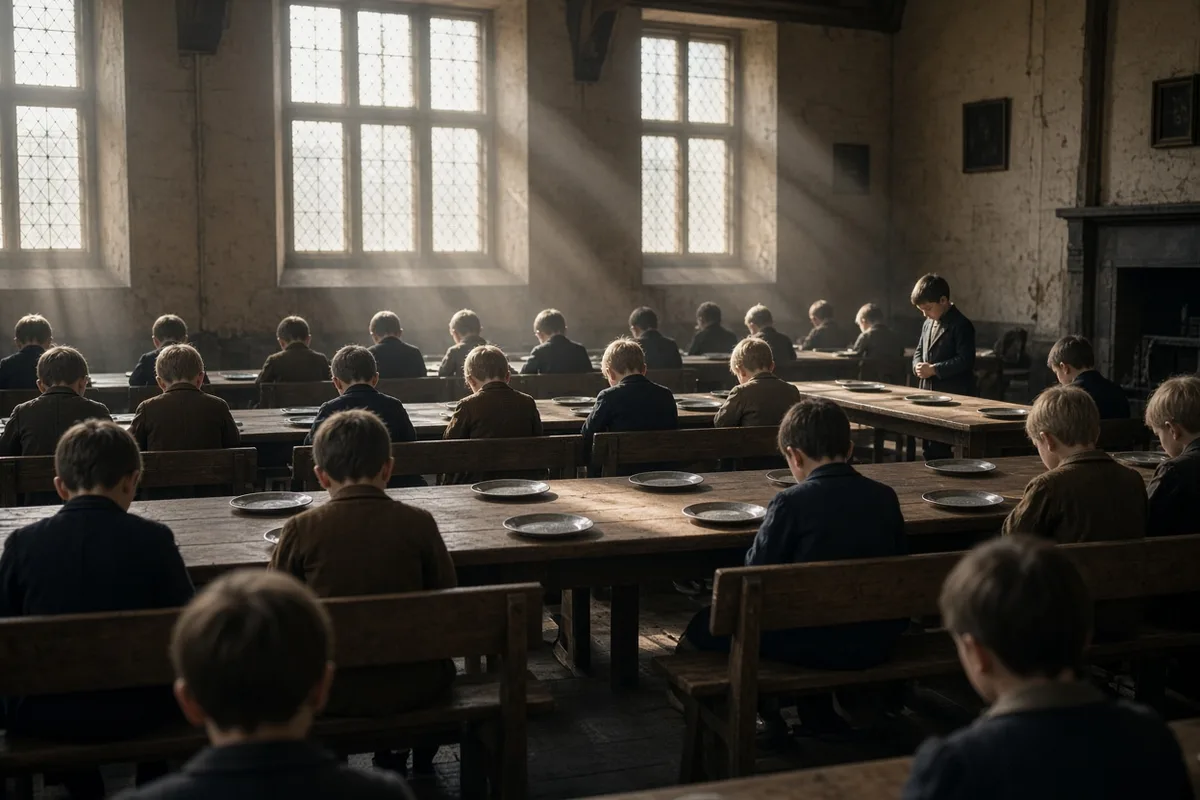
I was scrubbing porridge pots the morning the flour ran out, and I remember the sound before anything else — the scrape of the last spoon against the bottom of an empty barrel, dry as bone. Sixty children were already washed and seated at the long tables on Wilson Street, hands folded, waiting for a breakfast that did not exist. I had been at the orphan house going on a year by then, hired to help with the little ones, and I had seen thin weeks before. I had never seen a morning with nothing at all.
Bristol in those years was a city of narrow lanes and coal smoke, of dockside boys sleeping in doorways and girls begging along the quays with nothing between them and the winter but a shawl. George Müller had come to that city from Prussia by way of London, a young preacher with a voice that carried and a habit that unsettled people — he refused to ask anyone for money. Not from the pulpit, not by letter, not through friends of influence. When the orphan house opened its doors in April of 1836, on Wilson Street, he had made that refusal into a kind of law for the whole enterprise, and I remember thinking, the first week I worked there, that it was either the bravest thing I had ever seen or the most reckless.

He had started with almost nothing. A house rented, some furniture given, a matron appointed, and thirty children brought in off the streets of a city that had thousands more it could not feed. Word went round the neighborhood fast — no collection plates passed, no subscription lists nailed to church doors, no begging letters sent up to the wealthy houses on Park Street. Only prayer, and afterward, when the need had been met, an account of it printed for anyone who cared to read how it had happened. I did not understand, in my first months, how a household of that size could run on such a thin thread. I understood it better after that morning with the empty barrel.
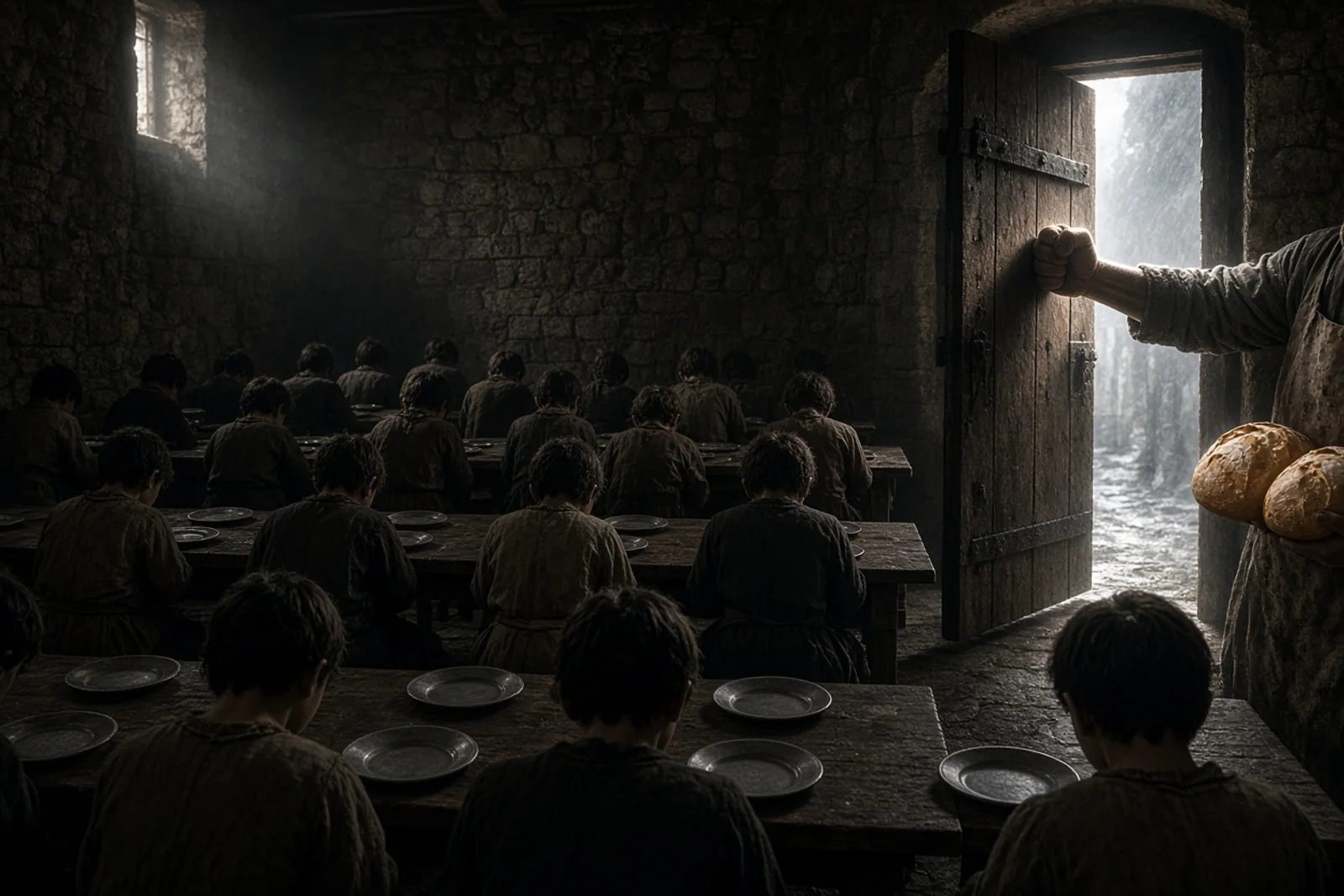
The matron came to me white about the mouth and said there was no bread, no milk, not a scrap for the children's breakfast, and could I go and see if Mr. Müller knew. I found him already standing at the head of the table where the children sat, hands folded same as theirs, and instead of sending anyone running to the market he asked them all to bow their heads. I stood in the doorway with my apron still dusted in flour that wasn't going to become anything, and I listened to him give thanks for food we did not have, as calmly as another man might thank God for food already on the plate.

I do not pretend I understood it. I only remember the silence after, the children's eyes still shut, some of them peeking, the smell of nothing cooking anywhere in that kitchen. And then — I heard it before I could believe it — a knock at the door.
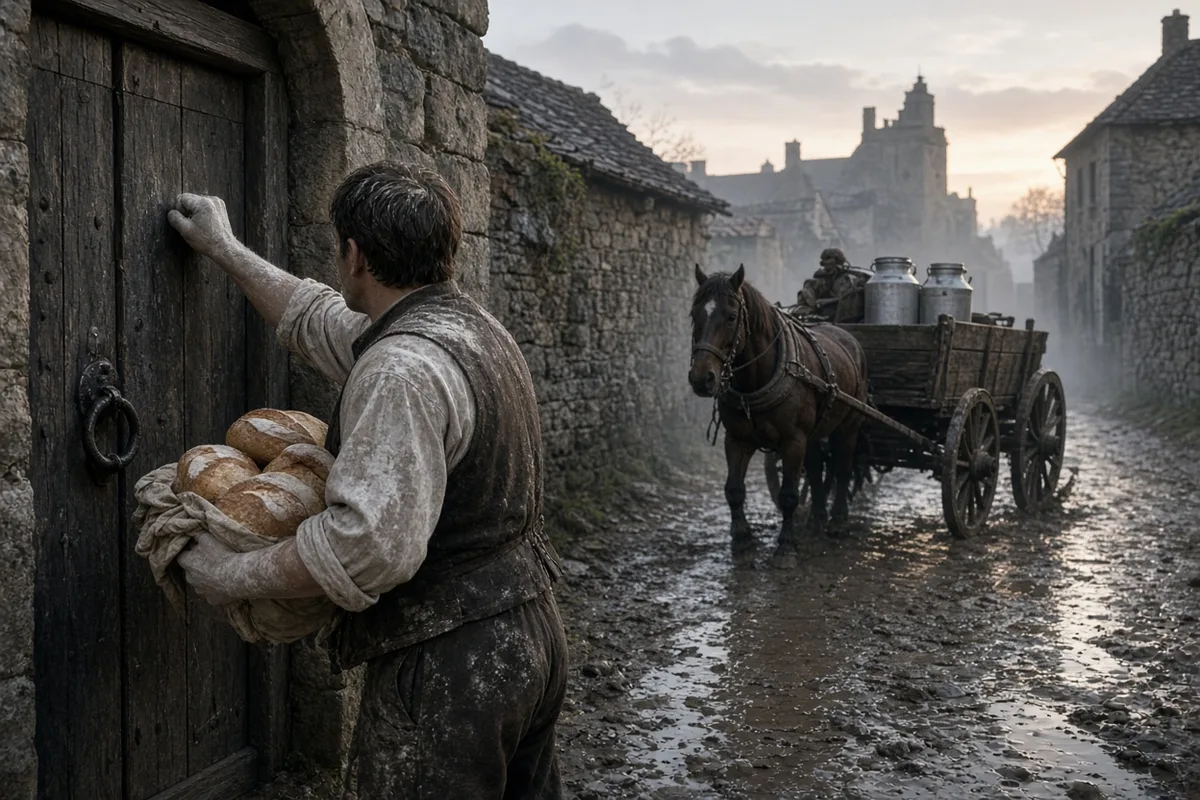
It was a baker. He said he could not sleep the night before, some restlessness in him he could not shake, and it had occurred to him near midnight that the orphans might be in want of bread come morning, so he had risen and baked three batches before dawn and brought them round himself, still warm, before he opened his own shop. Behind him, not five minutes later, a milk cart stopped outside the gate — the driver said his wheel had come off just there, right at that spot in the road, and rather than let the milk spoil while he mended it he would give it to the children, every can. That was the whole of it. Bread at the door, milk in the road, and a prayer finished not twenty minutes before either man had any way of knowing the other existed.

After that morning I watched Müller differently. He was not a careless man. He kept books as exact as any merchant's, wrote down every gift, every shortage, every answer, and later told the stories in print so that no one could say he had dressed up an ordinary rescue as a miracle. He believed, plainly, that if the work was God's work, God would feed it, and if it was not, better it failed honestly than limped along on borrowed money and human strings. I heard him say once, in that steady way he had, that he would rather the children go hungry a single meal in full view of Bristol than have it whispered that the orphan house had begged.
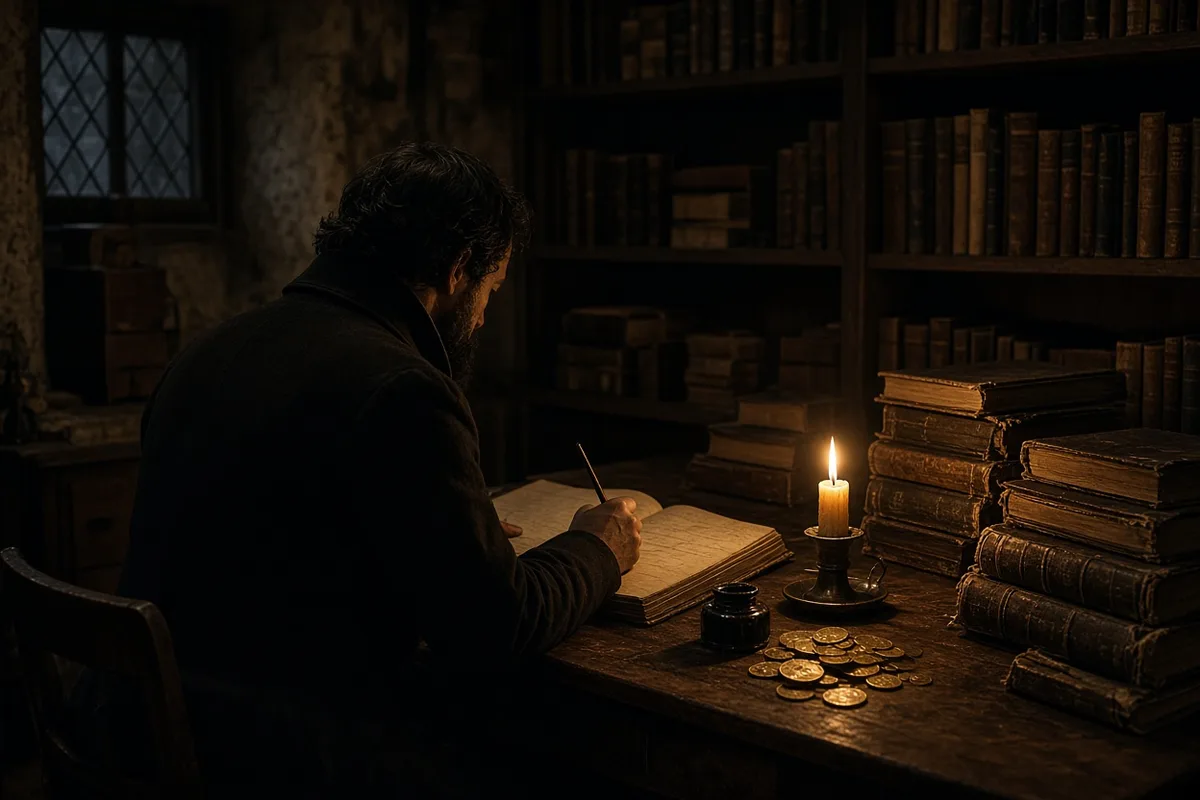
It never came to that, meal after meal, year after year — I can only say I never once saw the table bare when the hour came to sit down to it. Sometimes the food arrived an hour before it was needed. Sometimes, like that morning, it arrived at the very moment of need and not a breath sooner. Money came the same way — anonymous letters slipped under the door, coins left with no name attached, a stranger appearing at the office with exactly the sum required for a debt no one outside the house had spoken of aloud. Müller kept a ledger of these things the way another man might keep a ledger of harvests, patient, unadorned, because he intended the record itself to be the argument. He never asked. He only prayed, and wrote afterward what had happened.

The Wilson Street house filled within the year, then filled again in a second rented building, then a third. Bristol had no shortage of children needing taking in — fever left them orphaned by the dozen, and the workhouses were no kindness to a small child. By the time I had been there several years the numbers had grown past what any of us in the beginning would have believed a single household could hold, and Müller began speaking of building on open ground at a place called Ashley Down, on the northern edge of the city, where there was room to build something permanent instead of borrowed.
The first great house went up there in 1849, brick and stone rising out of fields where sheep had grazed the year before, and I remember standing at the gate the day the first children were led up the drive, counting the windows because I could not quite believe how many rooms had been finished without a single loan taken out to pay for them. Four more houses followed over the years after that, built the same way the first orphan house had been run — money given freely, spent as it came, never borrowed against what had not yet arrived. By the time the last of the five stood finished, in 1870, Ashley Down held more children under that one man's care than some small towns held people.
I did not stay in the kitchens the whole of those years — I moved to help with the linens, then with the younger dormitories, watching generations of children come in thin and leave grown, apprenticed out to trades or sent into service, some of them writing back years later with news of families of their own. But I kept hearing the same reports at the yearly gatherings where the accounts were read aloud: no debt. No collection ever taken up in a church service to keep the doors open. No letter ever sent asking a rich man for his purse. Whatever had come, had come unasked, and whatever had not come yet, Müller simply prayed for and waited, the way he had waited that morning over the empty barrel.
There were harder years than that one morning, years I heard about more than saw firsthand, when the shortage did not end in twenty minutes but dragged through weeks. I remember one stretch when the funds ran so low that the staff themselves discussed among each other, quietly, whether this might be the season the whole confidence of the thing finally broke. Müller did not change his method. He called the workers to prayer, the way he always did, and did not so much as draft a letter to a single wealthy acquaintance he could easily have written to. The relief, when it came, came from directions none of us could have guessed at — a legacy from a stranger who had read of the work in a printed report years before and never forgotten it, a sum exactly matching what was owed arriving the same week the bill was due. I began to understand that this was not a man performing faith for an audience. This was simply how he had decided to live, tested against real children's real hunger, over and over, for decades, without once quietly abandoning the rule when it grew inconvenient.
The scale of it, looking back, is what still catches in my chest more than any single morning does. Not one household of sixty, but five great houses standing on that hill above Bristol, holding at their fullest well over two thousand children at a time, and across the whole span of the work, from that first rented house on Wilson Street to the year Müller himself was buried, something on the order of ten thousand children passed through those doors and were fed, clothed, taught a trade or a craft, and sent out into the world with a Bible and a character reference instead of a workhouse stain against their name. Ten thousand meals a day, some years, cooked in kitchens that had opened more mornings than I could count not knowing where the next loaf was coming from, and had never yet, in all the years I knew of, failed to set something on the table when the bell rang.
Müller grew old in that work. I watched the dark hair I remembered from Wilson Street go entirely white, watched him keep to the same discipline of prayer and account-keeping into an age when other men would have handed the whole burden to younger hands and rested. He did hand parts of it over eventually, to his son-in-law, and he traveled in his last years preaching in places far from Bristol, but the orphan houses on Ashley Down kept running the same way the whole time, funded by nothing but what arrived unasked. He died in the spring of 1898, an old man by then, having outlived two wives and outlasted every doubter who had said in 1836 that no household could survive on prayer alone without collapsing within the year.
I think of that baker sometimes still, a man whose name I never learned, standing at the gate with warm bread under his arm at an hour when decent men are asleep, saying only that he could not rest until he had brought it. I think of the milk cart's wheel coming off in that particular stretch of road, at that particular hour, and not fifty yards further on or an hour later. I do not know how to explain either of those mornings except as they happened, plainly, in front of children too young to know they were watching anything remarkable, only that breakfast had come after all.
The houses on Ashley Down are still standing where they were built, brick gone dark with a century of Bristol weather, the fields around them long since grown into streets. I am an old woman now myself, and most mornings I no longer remember exactly which year the flour ran out, or which of the five houses I was standing in when I heard that particular knock at the door. But I remember the smell of the bread, still warm from an oven lit at midnight by a man who could not say why he had lit it, and I remember sixty small heads bowed over an empty table, and I remember that when they lifted their heads again, there was something to eat.