


Gladys Aylward Leads 100 Orphans Over Mountains
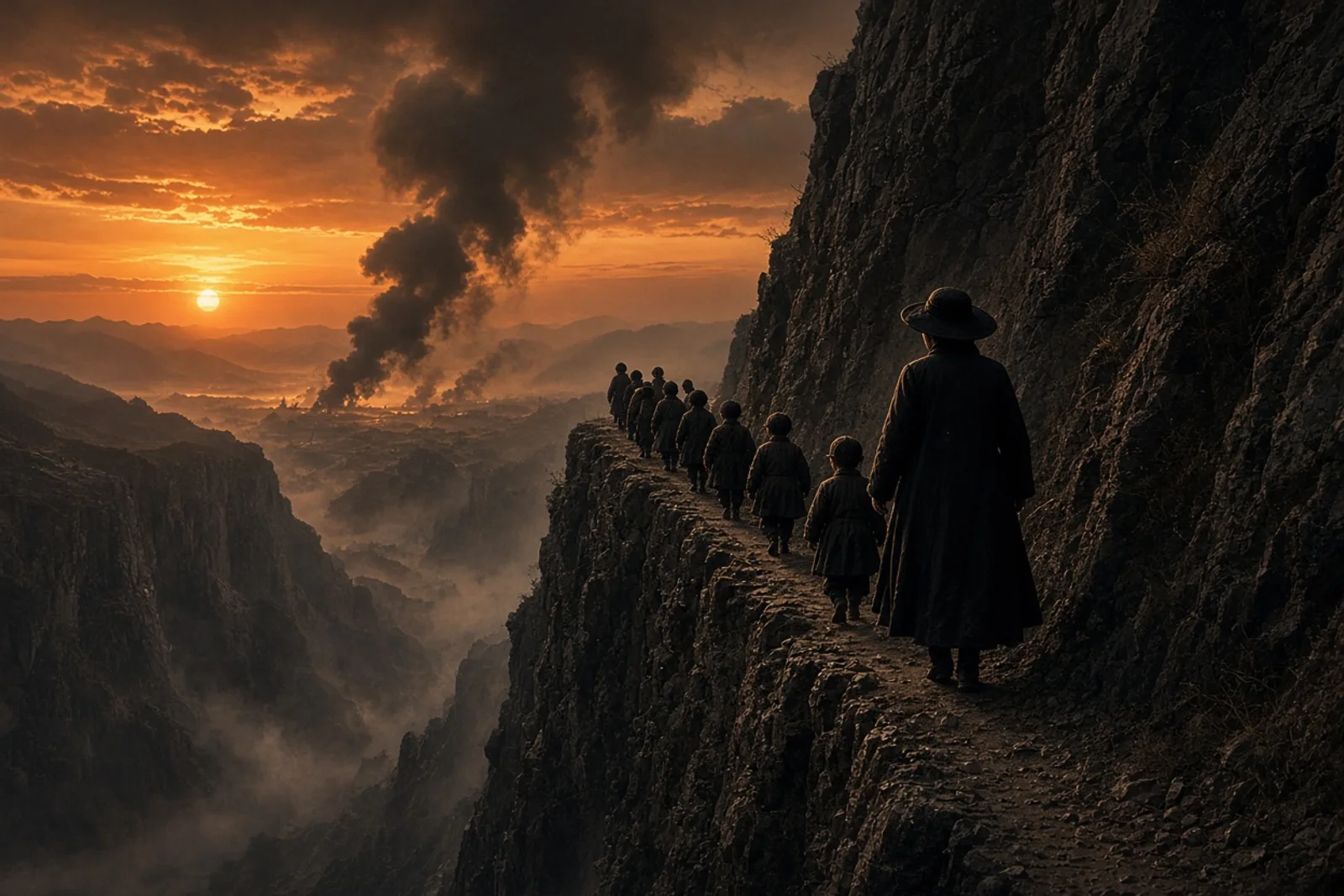
The train had already emptied of ordinary passengers when the conductor reached me, waving his arms in wide circles and pointing back along the track. I understood only that we could go no farther. Snow lay deep on either side, and the wind cut through the open door. I stepped down with my single bag and began walking the rails toward Chita, each step sinking to the knee. Wolves called from the treeline after dark. I kept moving until the cold forced me to stop, then curled against a bank with the bag under my head. Cannon fire sounded somewhere ahead, distant and irregular.
Two days later the border officials took my passport and read the word “missionary.” One of them smiled and said they needed machinists instead. They kept most of my clothing and put me on another train. The new stamp on the passport read “machinist.” At Vladivostok a hotel clerk followed me through the lobby and into the street, insisting I report for factory work. A young Japanese girl found me on the third day and told me where to meet her at first light. She led me through back alleys to the docks. I boarded a ship for Japan with nothing left of my original clothes but what I wore.

The missionary compound in Japan gave me a bed and a meal. I slept through the night for the first time since London. From there the steamship carried me to Tientsin. Another train, then a bus, then a mule brought me into the mountains of Shansi and the city of Yangchen. Mrs. Lawson met me at the gate of the old inn. She was seventy-three and walked with a stick. We repaired the roof and stocked grain for the mule caravans. When the first caravan passed, I took the lead mule by the rein and turned it into the courtyard. The others followed without argument. That night we fed the men and the animals, then told them stories about Jesus while they rested.
Mrs. Lawson fell on the stairs one afternoon and did not recover. Yang the cook stayed on with me. Caravans continued to stop. The Mandarin arrived in a sedan chair with an escort and announced that the government had banned footbinding. He needed a woman whose own feet were unbound to travel the district and enforce the order. I was the only candidate. I began the inspections the following week, walking from village to village with the new regulation in my satchel. Women opened their doors because I was female and because my feet could carry me where theirs could not.
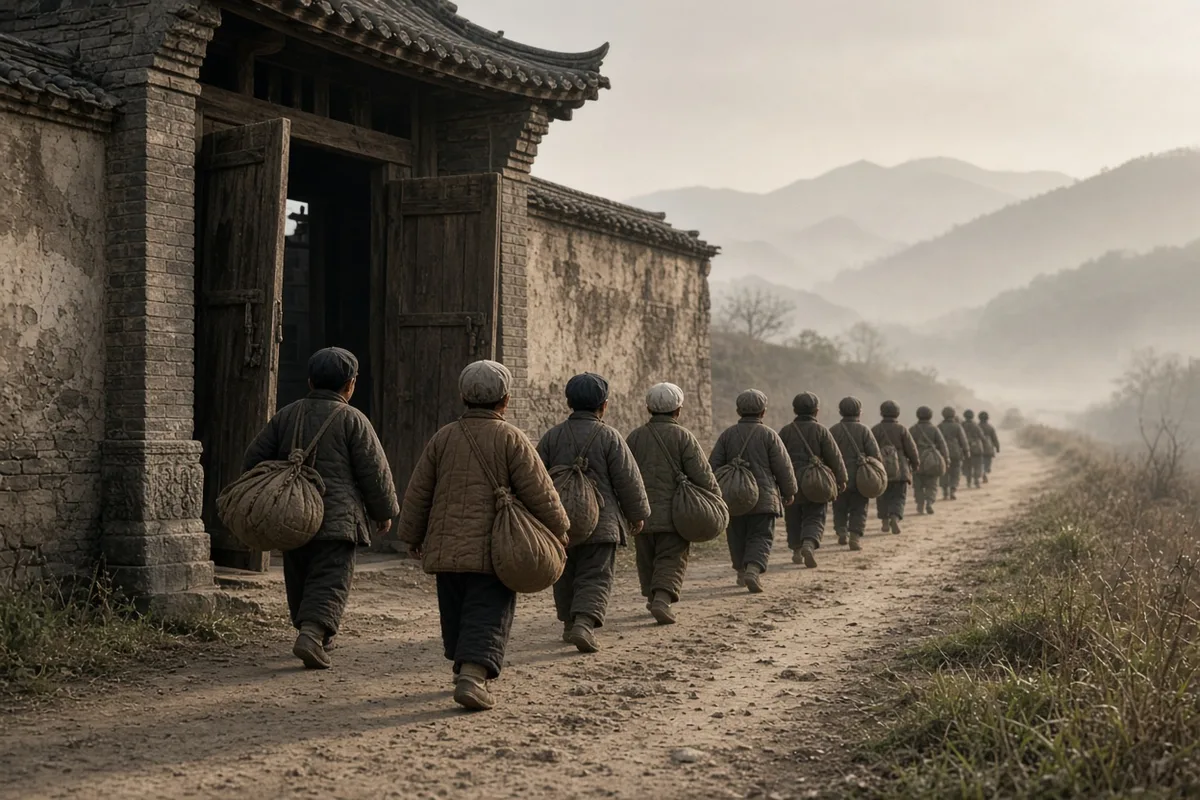
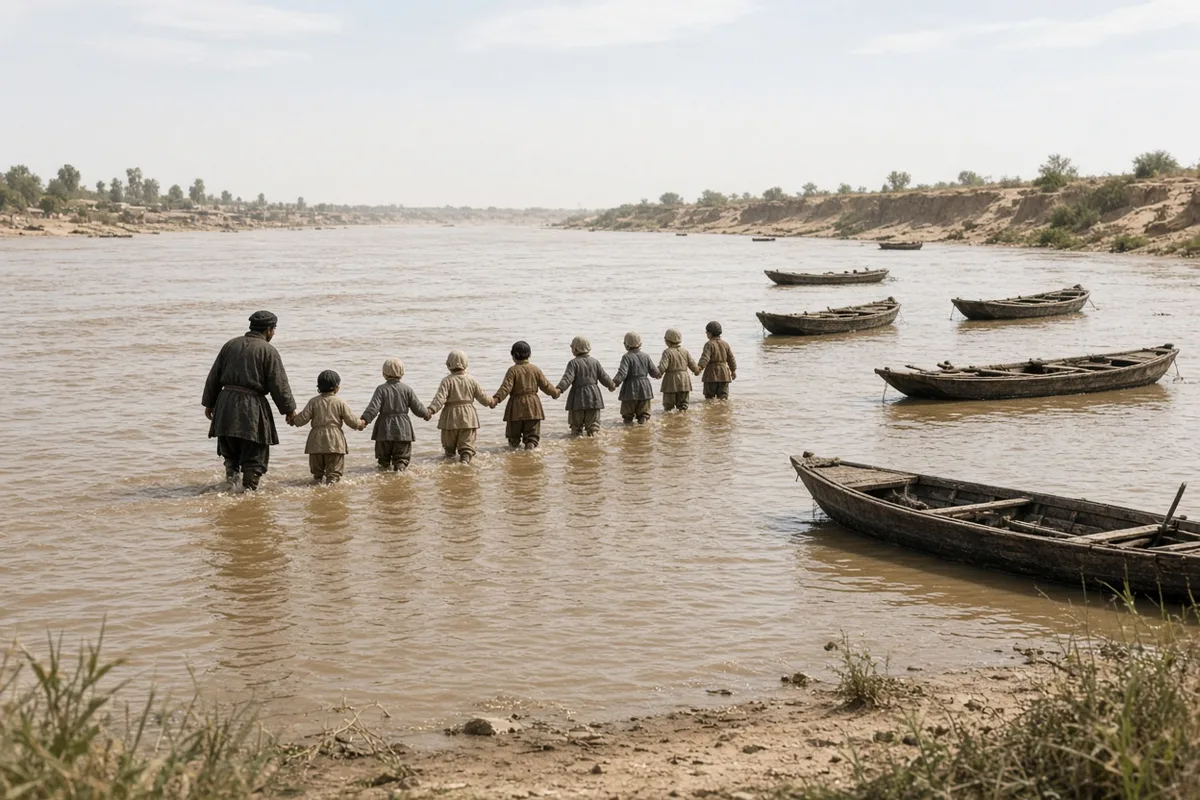
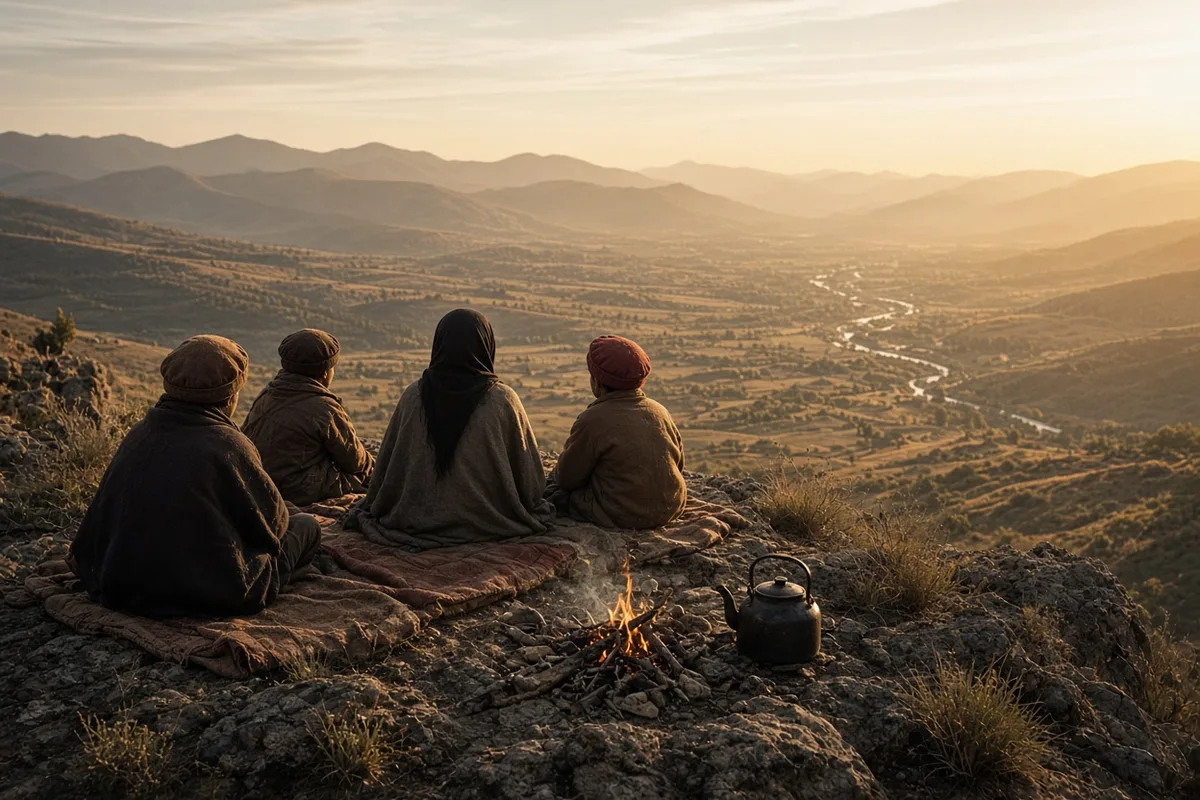
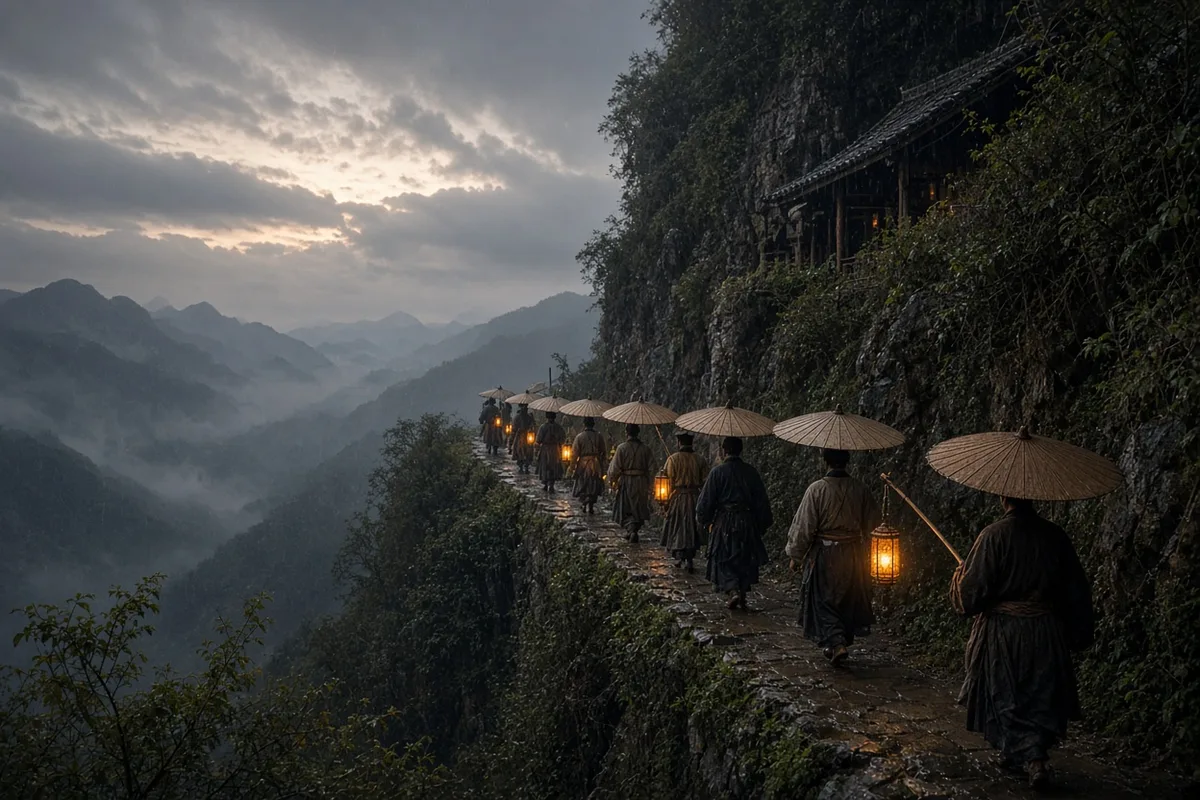
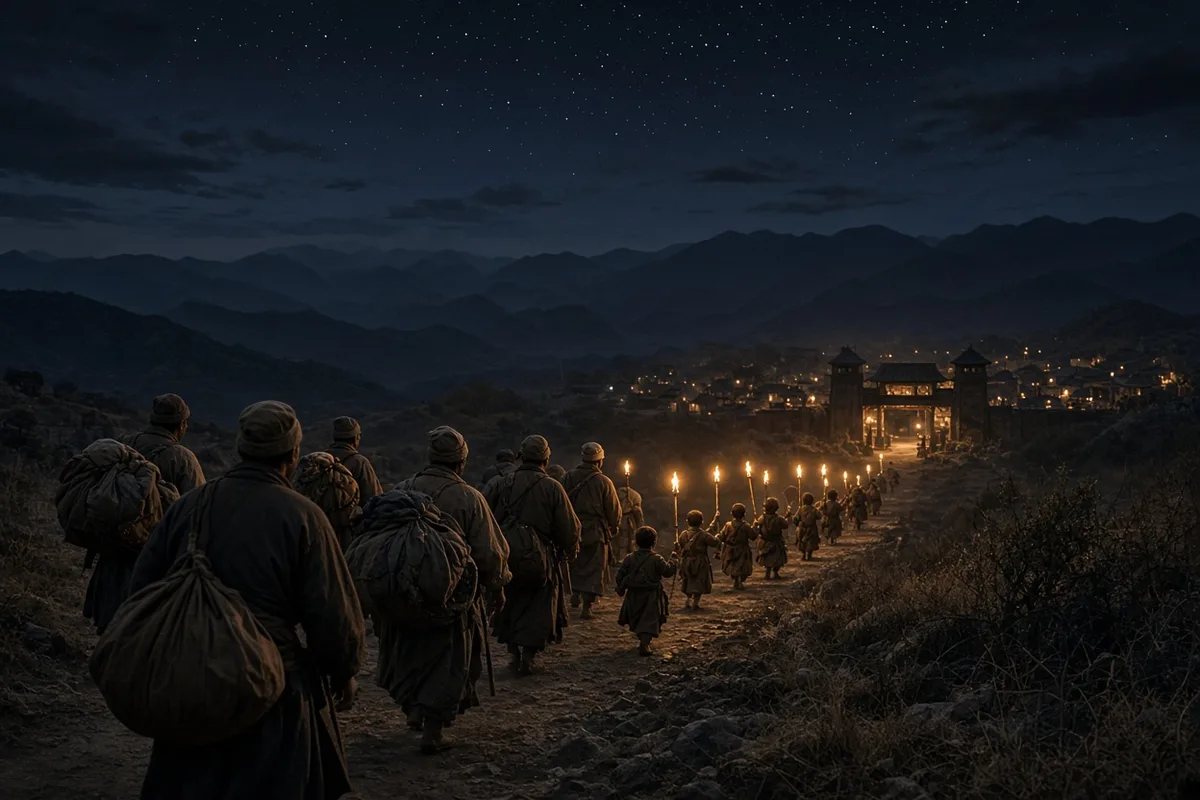
The Japanese advance reached the province in 1940. The children at the inn numbered nearly one hundred. We left Yangchen on foot with what food we could carry. The mountains rose steep on every side. We crossed rivers on narrow bridges and slept in abandoned huts when we found them. At night the children huddled together for warmth. I counted them each morning before we started again. Some days we covered only a few miles. On others the path opened and we made better time. No one turned back.
We reached the Yellow River after several weeks. Boats ferried us across in groups. On the far bank we walked the final stretch into Sian. The children were placed with families and missions already there. I stayed long enough to see the last of them settled, then returned to the work that remained. Yang had kept the inn running in my absence. The caravans still came. The stories were still told at night.
In the spring of 1941 the Japanese garrison at Yangchen sent three officers to the inn gate demanding an accounting of every child who had passed through our hands the previous winter. Lieutenant Sato read from a typed list that included the name of the boy we called Little Wu and asked where the child had been hidden after we crossed the Yellow River. I answered that the boy now lived with a family in Sian and that the papers had been signed by the local magistrate on the twenty-third of November. The officers searched the storerooms and broke two of the grain bins before leaving. Yang the cook replaced the lids with new planks cut from the old mulberry tree behind the kitchen. Caravans resumed their stops that summer, though the muleteers now traveled in smaller groups and carried extra rice hidden in the saddle packs.
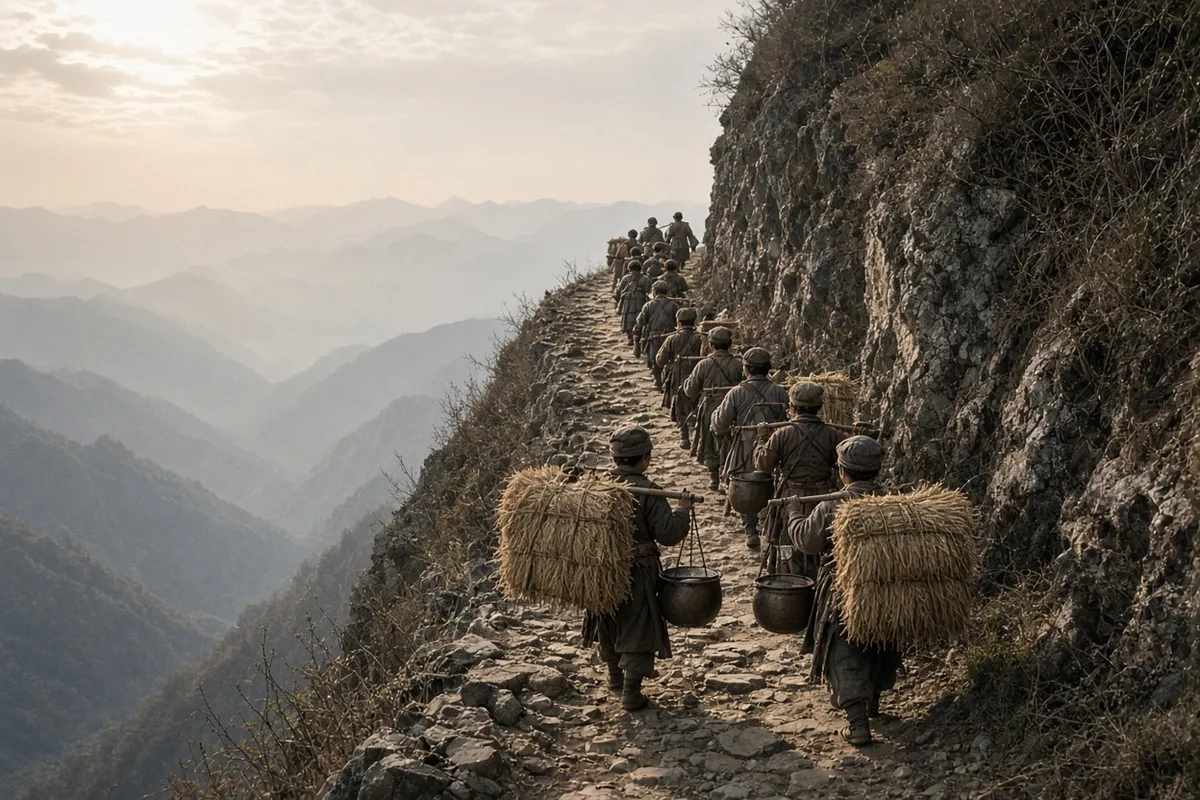
By the winter of 1943 the Nationalist army had placed a field hospital in the lower rooms of the inn. Major Chen arrived with twenty-six wounded men and asked for space to boil dressings. We cleared the main hall and used the remaining grain sacks as mattresses. One soldier, Private Li from Shantung province, told me that his unit had lost forty-seven men at the bridge near Linfen on the ninth of October. He asked for a Bible verse to recite when the fever rose at night. I read from the copy Mrs. Lawson had left behind, the same volume the Mandarin had once examined with a magnifying glass. The hospital remained for eleven weeks until orders came to move the men south toward Loyang.
After the surrender in August 1945 the first British consular official to reach the province arrived on a borrowed army truck. Captain Reynolds counted the remaining children at the inn and recorded thirty-four names in a ledger dated the fourteenth of September. He offered passage on a supply plane to Chungking, but I stayed to settle the last property claims with the families who had taken in orphans during the fighting. One girl, now twelve, returned from a village near Pingyang carrying a letter from her adoptive mother that stated she had learned to read and could recite the names of the provinces. The letter was dated the third of March 1946 and bore the stamp of the local school.
In the autumn of 1949 the Communist authorities issued new registration papers that required every foreign resident to report weekly to the district office. On the twenty-ninth of November I boarded a river steamer at Hankow with two suitcases and a letter of introduction from the Methodist mission in Sian. The steamer reached Hong Kong on the sixth of December. From there a cargo ship carried me to Southampton, arriving on the twenty-second of January 1950. The customs officer at the dock asked whether I still held the machinist stamp the Soviet officials had placed on my passport in 1932. I showed him the original document and he wrote a new entry allowing entry for six months.
While in London I spoke at the China Inland Mission headquarters on the tenth of March 1950 and again at a church hall in Islington on the twenty-first of April. The audience numbered one hundred and eighty-seven on the second occasion. A reporter from the Daily Mail asked whether the story of the mountain crossing had been exaggerated in the newspaper accounts. I answered that the children had walked every step and that we had counted them each morning on the trail above the Yellow River. The mission board arranged further meetings through the summer and into 1951, when the total number of talks reached forty-three.
In 1957 the Taiwanese government granted a permanent residence permit after I arrived in Taipei on the fourth of March. I began work at the Bethany Home for Children outside the city, where forty-two boys and girls lived in two long buildings with tiled roofs. One of the older girls, Lin Mei, had arrived from the mainland two years earlier and asked to be shown how to lead the evening prayers. The home kept records that listed each child’s arrival date, original province, and current school grade. By 1963 the enrollment had grown to seventy-eight.
On the morning of the thirty-first of December 1969 the nurse at the Mackay Memorial Hospital in Taipei recorded a temperature of 38.4 degrees and noted that the patient had asked for the window to be opened. I spoke with the director of the orphanage by telephone at four in the afternoon and confirmed that the Christmas supplies had been distributed to the eighty-three children then in residence. The last entry in the hospital chart states that the patient requested a hymn to be sung at the bedside. She died at five minutes past midnight on the first of January 1970. The funeral was held three days later at the chapel attached to the home, and the children placed a single wreath of white chrysanthemums on the grave in the small cemetery behind the main building.
The Bethany Home continued under the direction of Lin Mei after the funeral on the fourth of January 1970. She recorded in the ledger that eighty-three children remained in residence and that the Christmas supplies of rice, blankets, and hymnals arrived from the Presbyterian mission in Taichung on the twenty-eighth of December 1969. Lin Mei read from the same Bible Mrs. Lawson had given Gladys Aylward in 1932 during the evening prayers on the tenth of January, noting the verse from Isaiah 41 that had been quoted at the graveside. By March 1971 the home had admitted nine additional children from families displaced after Typhoon Nadine, bringing the total enrollment to ninety-two. The daily log listed the arrival of a boy named Chen Wei on the fifteenth of April 1971, whose paperwork showed he had been born in the same Shansi village where the Mandarin had once examined the unbound feet of local women.
In 1973 the Mackay Memorial Hospital released the full set of hospital charts to the Bethany Home archive. The charts contained the nurse’s note from the thirty-first of December 1969 stating the temperature of 38.4 degrees and the request for the window to be opened at four-fifteen in the afternoon. A separate entry on the same page recorded the telephone conversation with the orphanage director confirming distribution of the Christmas supplies. The charts were microfilmed in 1974 by the Taiwan National Archives under accession number 1974-112, and copies were sent to the China Inland Mission office in Singapore on the ninth of September 1974.
The site of the old inn at Yangchen was visited in October 1982 by a delegation from the Shansi provincial government. Officials measured the remaining mulberry tree behind the kitchen at four meters in circumference and noted that the grain bins repaired after Lieutenant Sato’s search in 1941 still stood in the storeroom. A local farmer named Wang Li, aged sixty-four, told the delegation that he had carried messages between the inn and the Yellow River crossing during the 1940 trek and that the group had numbered one hundred and seven when they left the city. The delegation placed a stone marker at the gate on the twenty-second of October 1982 bearing the inscription “Inn of the Eight Happinesses, 1932–1949.”
One of the children who crossed the mountains, now known as Dr. Wu Mei-ling, returned to Taipei in 1985. She spoke at the Bethany Home chapel on the fourteenth of November 1985, stating that she had been nine years old during the crossing and that Gladys Aylward had counted the children each morning on the trail. Dr. Wu Mei-ling quoted the exact words used on the morning they reached the Yellow River: “We are ninety-eight today; two stayed with the farmer at the last hut.” She donated her original set of papers from the Sian magistrate dated the twenty-third of November 1940 to the home archive.
The grave in the small cemetery behind the main building received its first international visitor on the third of May 1990. A reporter from the London Daily Telegraph recorded that the single wreath of white chrysanthemums placed by the children in 1970 had been replaced each January first since then by the current residents. The reporter noted the inscription on the stone: “Gladys Aylward, born 24 February 1902, died 1 January 1970, missionary to China.” A photograph taken that day shows the stone with fresh chrysanthemums and two children in school uniforms standing at the foot.
In 1997 the Taiwanese government designated the Bethany Home a historic site under preservation order number 1997-084. The two long buildings with tiled roofs were repaired using original tiles salvaged from the 1963 expansion when enrollment reached seventy-eight. The preservation file contains the 1957 residence permit issued to Gladys Aylward on the fourth of March and the letter of introduction from the Methodist mission in Sian dated the twenty-ninth of November 1949.
The last recorded visit by a surviving member of the 1940 group occurred on the twenty-first of September 2008. A woman named Zhang Xiu-lan, born in 1931, arrived at the chapel and asked to see the ledger entry for the children placed in Sian. She identified her own name on the page dated the fourteenth of September 1945 and stated that she had learned to read from the adoptive mother near Pingyang whose letter had arrived on the third of March 1946. Zhang Xiu-lan placed a single white chrysanthemum on the grave before departing.
The cemetery remains open to visitors each morning from eight until eleven. On the first of January 2023 the current director of the home, now called the Gladys Aylward Memorial Home, recorded that forty-seven children placed flowers at the stone. The director’s log notes that the original Bible from Mrs. Lawson was opened to Isaiah 41 and read aloud at the graveside at five minutes past midnight, the same minute recorded in the Mackay Memorial Hospital chart for the first of January 1970.