


Gladys Aylward Leads 100 Orphans Over the Mountains
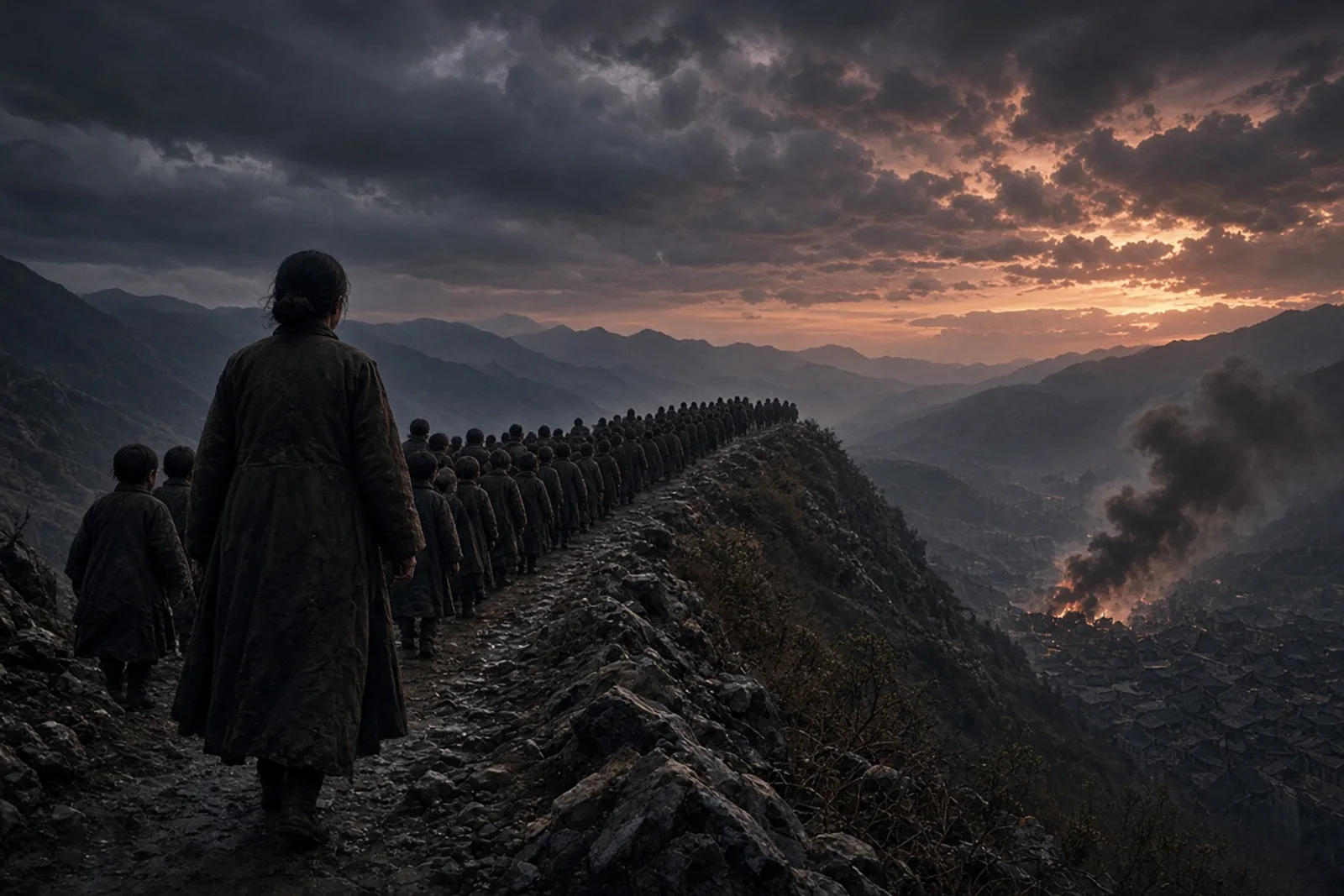
The path had gone to ice hours before, and still she counted us. One, two, three — her voice cracking dry over the wind, running down the line and back up again like a shuttle on a loom, because if a child slipped away in that white nothing there would be no finding them again. I remember the sound of her voice more than the cold. I remember thinking that a woman so small should not have a voice that carried so far up a mountain.
We had not always been children of the road. Some of us came to her one at a time, the way stray animals come to a warm door. I had heard the story of the first of us long before I ever saw her — a girl bought for a few coins from a woman who meant to let her die, and given the name Ninepence, because that was the price paid for her life. After Ninepence came others, brought by relatives too poor to feed them, or found half-starved on a roadside, or simply left at the gate of the inn because someone in the valley had heard that the foreign woman with the strange, plain face did not turn children away. By the time the soldiers came, there were nearly a hundred of us sleeping under her roof, in a town called Yangchen, in the mountain province of Shansi.

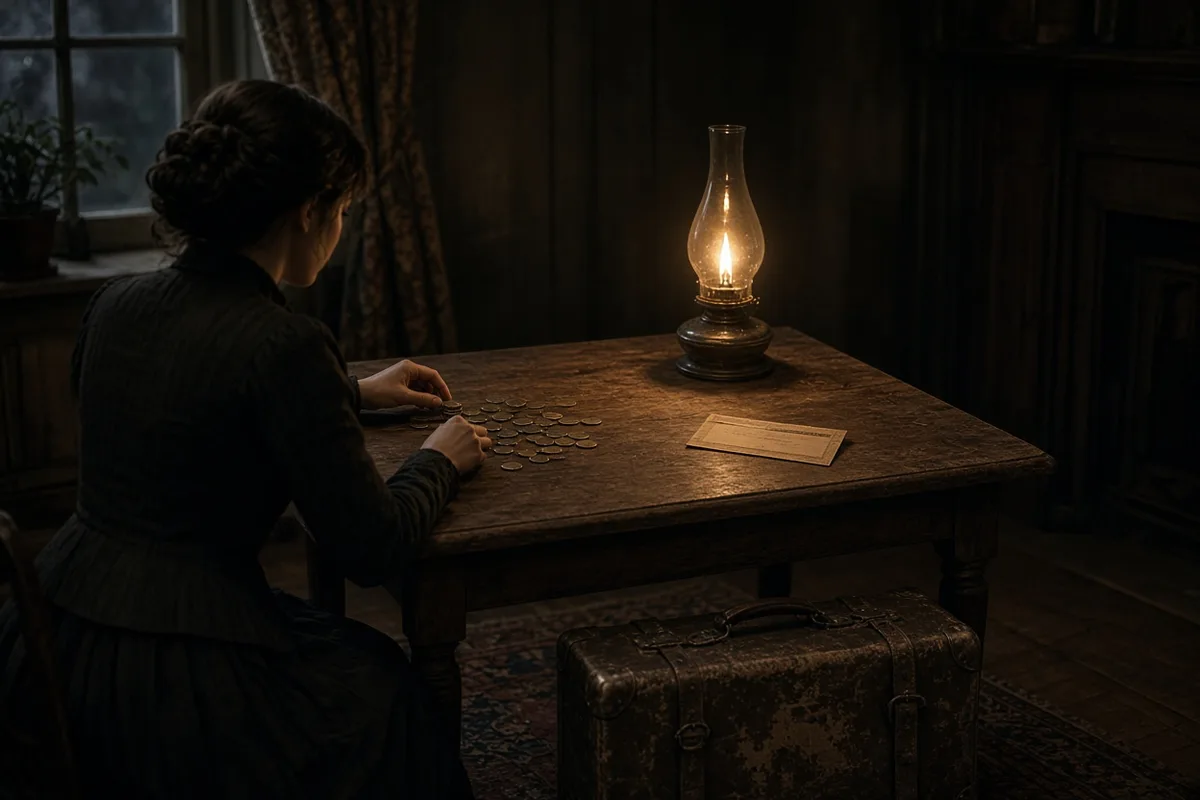
She had not meant, I think, to become a mother to that many. She had come to China meaning to preach, nothing more — a London parlormaid who had failed the examinations of the very mission that should have wanted her most, who had gone on saving her coins from housework anyway, three pounds and then more, paying a shipping clerk in installments until she owned a ticket clear across two continents. She had crossed Siberia in a war she did not fully understand, walked thirty miles alone through snow when a train would go no further, been mistaken for a machinist twice by officials who could not read past one word on her passport, and slipped out of a hotel in Vladivostok in the dark to escape a clerk who wanted to send her to a factory. All of that, before she had preached a single sermon in the country she had crossed the world to reach.
She reached an old woman named Jeannie Lawson in Yangchen, seventy-three years old and running an inn for mule caravans, and the two of them turned that inn into the strangest pulpit in Shansi — grabbing the lead mule's rein as a caravan passed, hauling the whole train of animals and drivers into the courtyard whether the muleteers liked it or not, feeding them well, and then, every night, telling them the story of a man named Jesus. Word of the stories traveled faster than the mule trains did. Within weeks nobody had to be pulled in off the road anymore. They came for the food, and they stayed for the stories, and carried both away with them into the mountains for months at a stretch.
When Mrs. Lawson died of a fall not long after, the mission was left in the hands of a young Englishwoman with a cook named Yang and a stubborn command of a language her own teachers had once told her she was too dull to learn. She learned it anyway, in the dark, over months, until the villagers stopped calling her the foreigner and started calling her Ai-weh-de — the Virtuous One.
It was that reputation, more than anything, that put her in the sedan chair path of the local Mandarin. Foot-binding had been outlawed by the government, and someone was needed to go from house to house, unwind the bandages, inspect the crushed little feet of girls too young to refuse, and enforce a decree that centuries of custom did not want to obey. It had to be a woman. It had to be someone whose own feet were unbound, so she could walk the mountain paths the work required. There was exactly one such woman in that district, and she took the job on one condition — that she be allowed to tell her stories in every courtyard she inspected. The Mandarin agreed. She became, after that, the Storyteller as much as the foot inspector, welcomed into rooms no foreign missionary had ever entered, and it was in those rooms, hearing of children unwanted or unclaimed, that the orphans began arriving at her gate one after another.
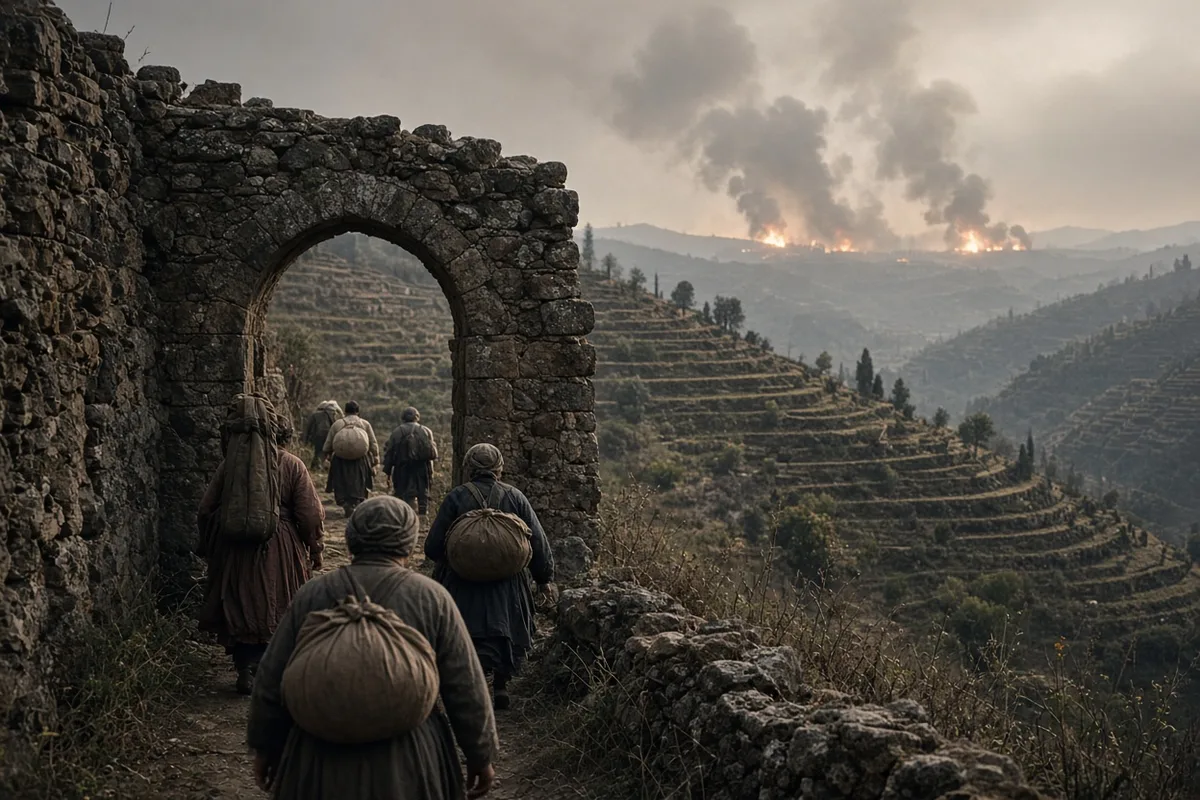
Then the war that had been a rumor over the mountains became a fact in the streets. Japanese soldiers pushed into Shansi, and the Storyteller who had once been merely tolerated became, almost overnight, a woman with a price on her own head, because she had been passing what she knew of troop movements to Chinese officers who needed it. I remember the day that word reached the inn. I remember her face did not change much. She had already decided, I think, before any of us understood there was a decision to be made — that whatever happened to her, it would not happen to us.
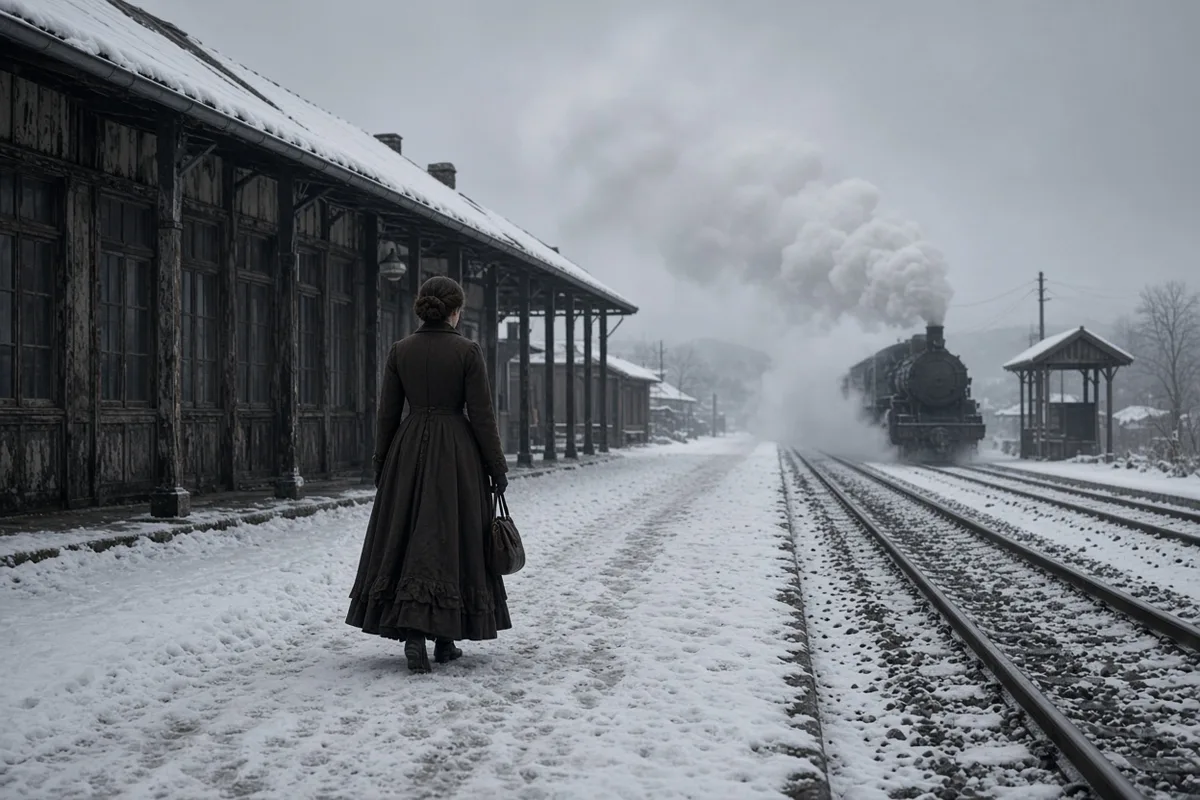
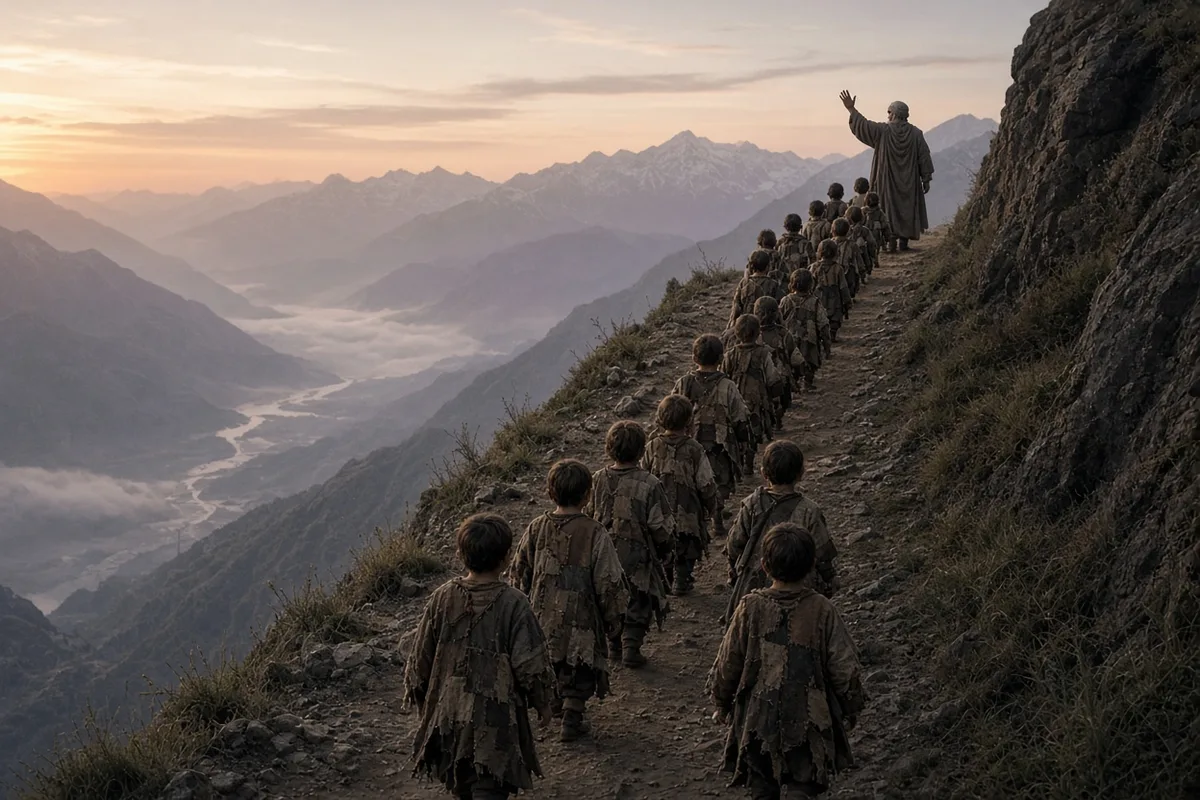
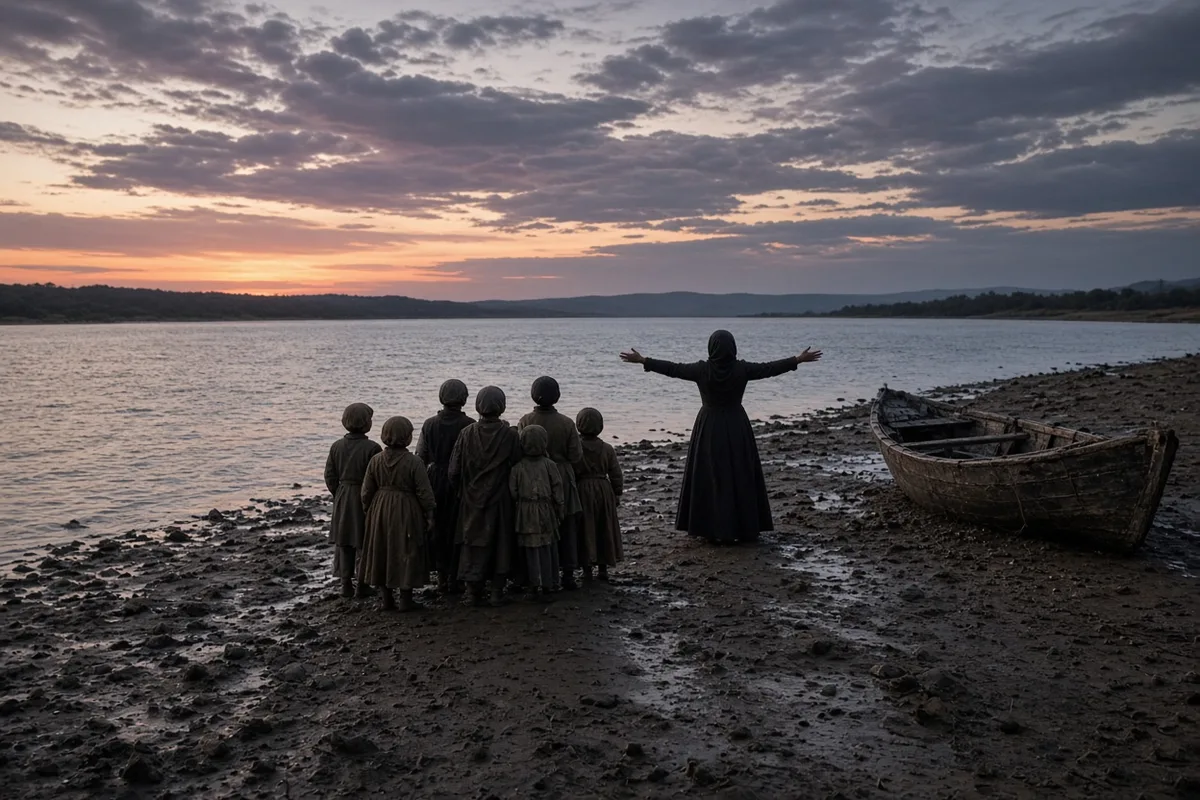
She gathered every child in that house, from the oldest of us down to the ones who still had to be carried, and told us we were leaving the mountains behind by walking straight through more of them, toward the river, toward whatever government territory still lay unoccupied and safe. Nearly a hundred of us. No trucks. No mules to spare for children, only for what little food we could carry. She put the smallest ones on her back and on the backs of the oldest boys in turns, and she put herself at the rear of the line where she could see all of us at once, and we started walking.
The first days were merely hard. The path climbed and climbed, switchbacked along drops that none of us dared look down into, and the wind came off the peaks like something with teeth. We sang to keep the little ones from crying, hymns mostly, because those were the songs we all knew by heart from her nightly stories, and I have never since heard a hymn without thinking of frozen breath rising off a line of children on a mountain trail.
Food ran low faster than she had planned for. We ate what we had thinly, stretched over days, and some nights there was nothing at all, only water from a stream if we were lucky enough to find one not yet iced solid. I remember chewing on nothing just to have something to do with my mouth, to trick my stomach a little longer. She never let us see her eat less than us, though I understood later, much later, that she must have.
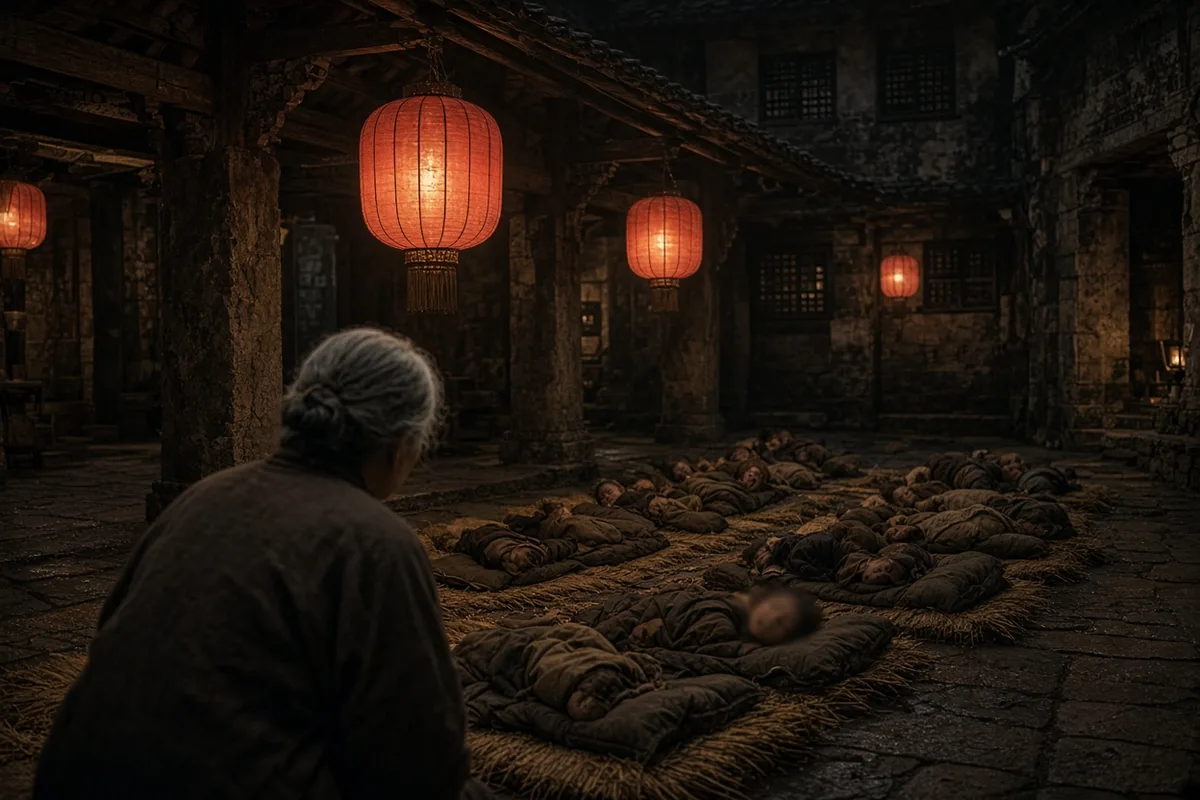
There were nights we slept in caves cut into the hillside, all of us pressed together for warmth, the smallest children in the center where the heat of other bodies could reach them. There were nights we slept in the open because no cave presented itself, and she walked the line before dawn, checking each of us was still breathing, still there, before she would let herself close her eyes at all.
Somewhere past the middle of that crossing, sickness moved through the smaller children, and for two days I watched her carry a boy who could no longer walk on her own back, over ground that made grown soldiers curse, without once putting him down to rest her own legs. I asked her once, years afterward when I was old enough to think to ask, how she had done that stretch of road. She said only that she had not thought about the whole road. She had thought about the next step, and then the one after that, and had refused herself permission to think any further ahead than her own two feet.
There was a river to cross before the mountains would let us go, and I remember standing at its edge with the whole line of us bunched up behind, the water moving too fast and too cold for the smallest ones to manage alone. She went back and forth across that current more times than I could count, a child on her back each time, until every single one of us stood dripping and shivering on the far bank and she herself had crossed it more times than any of us.
We heard soldiers more than once in those mountains, near enough that she hushed the whole line into silence with nothing but a raised hand, all of us frozen mid-step until the sound of boots or engines faded again into the rock. I do not know, to this day, whether they were looking for her specifically or simply patrolling, and I have come to think it did not matter to her either way — a hundred children on a mountain path were reason enough to hide from anyone wearing a uniform that year.
By the time the mountains began to drop away beneath us, we were thinner than when we had started, and slower, and there were sores on feet that had never been meant for that many days of walking. But we were still a hundred, near enough, still all of us, and that fact alone — that she had lost none of us to the mountains — mattered to her, I came to understand, more than her own exhaustion, more than the price still sitting on her own head somewhere behind us in Shansi.
We came down at last into country where the roads were roads again and word of the war had not yet turned everything to rubble, and I remember the strange, disbelieving quiet of that first night sleeping somewhere that was not a mountain ledge or a borrowed cave — no wind trying to find the gaps in our clothes, no watch to keep against soldiers, only the ordinary dark of a room with a roof.
She did not rest long, not the way the rest of us wanted to. There was still the business of finding homes, orphanages, schools, whatever safety could be arranged for a hundred children in a country at war, and she went about that work with the same flat, stubborn patience she had walked the mountains with, as though the crossing had simply been the first half of a task and the second half required just as much of her.
For years afterward she went on doing that kind of work in China, through more war, through illness, through hardship that never entirely let go of her, and it was not until 1949 that she returned to England, to the country she had left as a parlormaid with three pounds and a determination nobody had believed in.
Almost no one in London knew her name when she came back. She was small, and plain, and did not think her own life was a story worth much telling, until a writer named Alan Burgess came and sat with her and drew the whole of it out — the failed examinations, the frozen walk to Chita, the inn full of mule drivers listening to Bible stories, Ninepence bought for a few coins, the foot inspections, the price on her head, the mountains. He wrote it down and called it The Small Woman, and years later it became a film that made her face known to people who had never heard of Yangchen, a film she never much cared for, because fame had not been what she crossed those mountains for.
I think of her sometimes still counting under her breath in the dark, one, two, three, running the number of us over and over like a woman afraid the mountain might have taken one without her noticing. It never did. Whatever else that crossing cost her, and it cost her plenty, she brought every one of us down off that mountain alive, and set us down on the far side of the war she had walked us through, still singing, still breathing, still counted.