



Rural Finnish town braces as Google plans €13 billion data centers
A few cows dozed in the meadow in front of the barn as Joni Pitkanen, a 36-year-old farmer in Muhos, prepared for life with a new neighbour. A few kilometers down the gravel road that passed his farm, the forest had already been cut down on land acquired by Google. Excavators were clearing the ground. Rumbling trucks shuttled back and forth to the construction area next to major power lines.
Google planned to build new data centres on that cleared ground. A data center is a facility that houses the computer systems and equipment used to process, store and transmit digital information; the largest frequently contain thousands of servers. The empty tract and the machine traffic already sat only a short distance from the farm.
"The project is so massive that it's basically hard to really grasp, even though we're right here on the sidelines," Pitkanen said. "But of course we are concerned about... how we can prepare for the energy consumption."
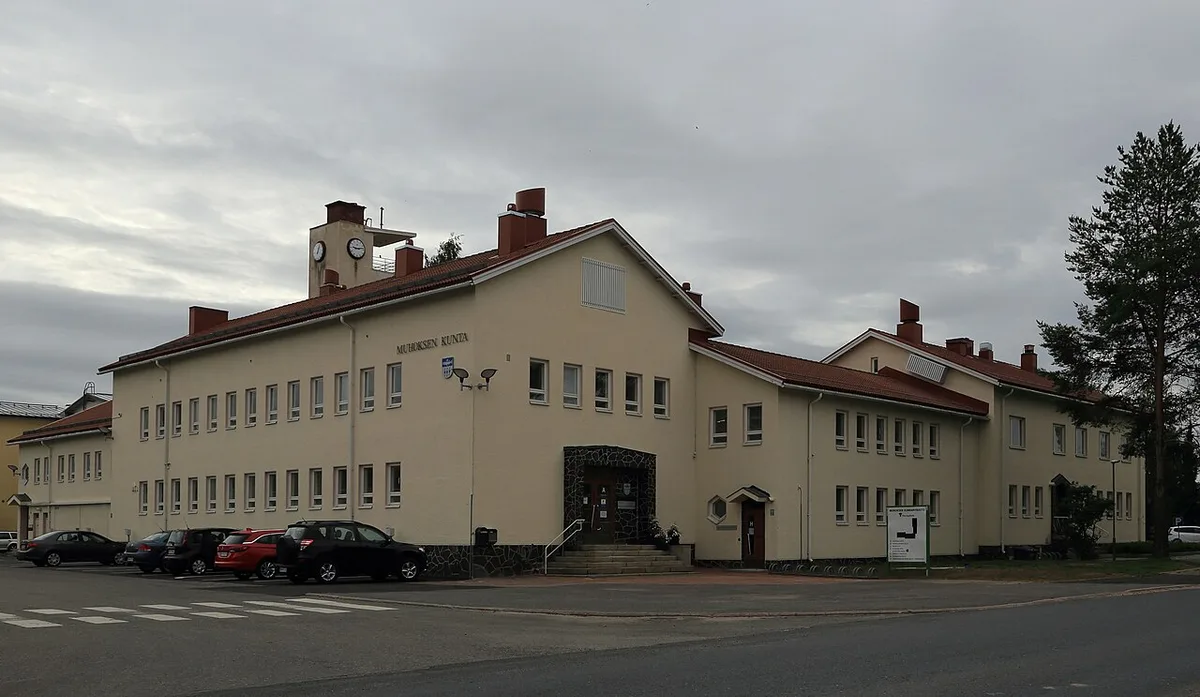
In his office in the small village centre, Muhos mayor Kimmo Hinno spoke of Google's "massive investment." "No industry of this type" existed here at present. The municipality sits in the province of Oulu, in Northern Ostrobothnia, roughly 35 kilometers from the city of Oulu — a half-hour drive. Around 8,800 people live there.
"This will completely change the situation for the entire municipality and the Oulu region," Hinno said. He expected "thousands of workers" of different nationalities during the construction period. Those workers would need housing. They would need other services too.
Pitkanen said he was so far fairly positive about the project. It would bring "large-scale business activity" and "life." Outside a grocery store, Aila Heilima, a 60-year-old nurse, said she hoped the investment would "motivate young people to stay" in Muhos for work, instead of moving to bigger towns in search of job opportunities.

The centres were part of an announced €13 billion ($15 billion) Google investment in Finland over the next two years. It was the company's single biggest investment in Europe. The expansion covered Kajaani, Muhos and Vaala, and Hamina, where Google already operated a data centre. Hyperscale data centres are large facilities, often above 100 megawatts, built to run cloud and artificial-intelligence workloads; the largest hold thousands of servers and can consume more than 3,000 megawatts. That order of capital and power was what now sat on the map of the Finnish north.
Hanna Halmeenpaa stood at the edge of the deforested area and satellite images showing nature sites that should have been preserved and that had been logged. She chairs the board of the Finnish Association for Nature Conservation. The Finnish Supervisory Agency, known as LVV, was investigating whether Tuike Finland, the company that represents Google, had cleared more than 300 hectares of forest in Muhos without a mandatory environmental impact assessment.
The clear-cut matched the size of 420 football fields.
"In our view, operations at this construction site should be suspended until it is clarified whether the project is in compliance with the law," Halmeenpaa said.
Sondre Ronander, communications manager for Google in Finland, said tree felling had taken place in compliance with Forestry Act requirements and that the company was awaiting further guidance from the LVV. He said extensive nature surveys had covered the entire area as part of the zoning and environmental impact assessment processes, so that high-value nature zones inside the sites stayed protected during the forestry works. The logged tract and the machines on it still waited on that word.
Finland’s electricity is largely produced without fossil fuels, thanks to nuclear plants as well as extensive wind and hydro power. The cool climate and relatively stable, cheap supply have brought a spike in data-centre investment. Dozens of the energy-guzzling centres are under construction, and many more are planned by companies including Microsoft and TikTok. Muhos is unilingually Finnish. It is home to the Pyhäkoski hydro-electric power plant, commissioned in 1949, which has the highest fall in Finland at 32.4 metres.
In Muhos the Finnish Supervisory Agency's investigation of the forest clearing and the work of preparing the data-centre ground both stayed unfinished. No determination had closed the inquiry. No stop had been placed on the machines. Construction and investigation ran on unresolved, in parallel. Rumbling trucks still shuttled back and forth to the construction area next to the major power lines.