


Graham Greene Conversion While Traveling
The train from London rattled through the late afternoon light, wheels biting the rails with a steady scrape that set my teeth on edge. I sat opposite Greene in the compartment, both of us bound for a short reporting assignment on the coast, our notebooks already half-filled with notes on dockside wages. He had said little since we left, only that his parents would expect a letter on his return. His father still ran the school at Berkhamsted with the same measured calm that had marked every conversation at their table, and his mother still spoke of religious matters as if they belonged to someone else’s household.
He carried a small volume of verse he had published the year before, three hundred copies printed and already hard to find. When I asked about it he shrugged, the gesture quick and almost embarrassed, then turned to watch the fields slide past. The faith he had grown up with, he told me once before, had stayed at the level of school hymns and the expected confirmation. No deeper root had taken hold. His grandfather’s departure from the pulpit after some private reckoning had left the family wary of strong feeling on such subjects.

We changed trains at a junction where the platform smelled of coal dust and damp wool. Greene bought a cup of tea from a stall and stood holding it without drinking while the station clock ticked above us. A woman in the crowd carried a rosary looped over her wrist; the beads caught the light as she moved. He watched the movement longer than necessary, then set the untouched tea down and walked to our platform without comment. That night, in the small hotel near the harbor, he asked the landlord whether a priest came through the town on Sundays. The landlord nodded and named the hour.
The next morning Greene walked out alone before breakfast. I saw him return two hours later with his collar turned against the wind, his face set in the same expression he wore when reading proofs. He spoke little of what had passed, only that instruction would begin when we returned to London. The decision, he said, was required if he meant to marry the woman he had met the previous year. No further explanation followed. We finished the assignment, filed the copy, and rode back on the same line. The compartment was colder this time, the windows streaked with early rain.
In the months that followed I saw him at intervals in the city. He attended the classes with the same steady attention he gave to revising a paragraph. His father’s letters continued to arrive, full of practical questions about work and health. Greene answered them promptly and said nothing of the other matter. His mother remained as she had always been, uninterested in the details of doctrine and content to leave such questions to those who claimed them. The change in him showed itself only in small habits: a refusal of certain engagements on Sunday mornings, a new care in how he spoke of the poor in the districts we covered together.
By the time his first novel appeared he had already been received. The reviews spoke of promise and of a young writer finding his subject. Greene read them once, folded the papers, and placed them in a drawer. He continued to write each day, the same hours he had kept before, but the sentences now carried a different weight. He no longer described human nature as a matter of progress or simple improvement. The characters he set down bore the marks of failure and of something that survived failure. He told me once, on another journey, that the older view of the world had left him nothing to measure against his own actions.
We traveled together again two years later, this time farther north. The train passed through stations where the names on the platforms meant nothing to either of us. Greene looked out at the passing sidings and said the instruction had been the simplest part. Living with what followed was the work that did not end. He kept no record of the day he entered the church, only the date of the marriage that came after. When I asked whether he still felt the same distance from the religion of his boyhood, he answered that distance was no longer the question. The question was what remained once the distance closed.
In later years the books continued to appear, each one carrying the same pressure of attention to the gap between what people claimed and what they did. He never spoke of the conversion as a finished event. It stayed with him as the ground on which the later work rested, visible only when the light fell a certain way. On the last journey we took together he carried a worn missal in his coat pocket and removed it only when the conductor checked tickets. The beads of another traveler’s rosary caught the light once more as the train slowed into the station, and Greene watched them the way a man watches something he has learned not to look away from.
The station platform at Crewe held the same coal smell as the earlier junction, and Greene stepped down first, his hand already reaching for the timetable pinned under glass. He had arranged to meet Father Trollope again on the following Tuesday at St Dominic’s Priory in Hampstead, the instruction sessions now fixed for six o’clock each week. The register later recorded his reception on 28 February 1926, the same month his first signed review appeared in The Times Literary Supplement under the heading “The New Poetry.” Vivien Dayrell-Browning’s letters from that period, preserved in the Bodleian, mention the exact train times he kept to avoid missing the classes. He bought a missal at Burns & Oates on the way back from the priory, the edition priced at three shillings and sixpence, and carried it inside the same coat pocket that had once held only the thin volume of verse.
Two months after the marriage at St Mary’s Church, Hampstead, on 15 October 1927, the couple moved to a cottage in Chipping Campden where the rent stood at thirty-five pounds a year. Greene began the draft of The Man Within there, completing the first three chapters between the hours of nine and one each morning while Vivien worked on her own proofs for the Oxford University Press. The publisher Heinemann accepted the manuscript in November 1928 after a single reading by Charles Evans, who noted in the margin the exact sentence count of 67,412 words. Greene kept a carbon copy in a cardboard folder labeled only with the date 12 December 1928, the day he received the advance of seventy-five pounds. He refused the suggested changes to the final chapter and instead added a single paragraph describing the execution of the smuggler, the wording taken directly from the Old Bailey reports of 1821 that he had copied into a notebook during an earlier visit to the British Museum.
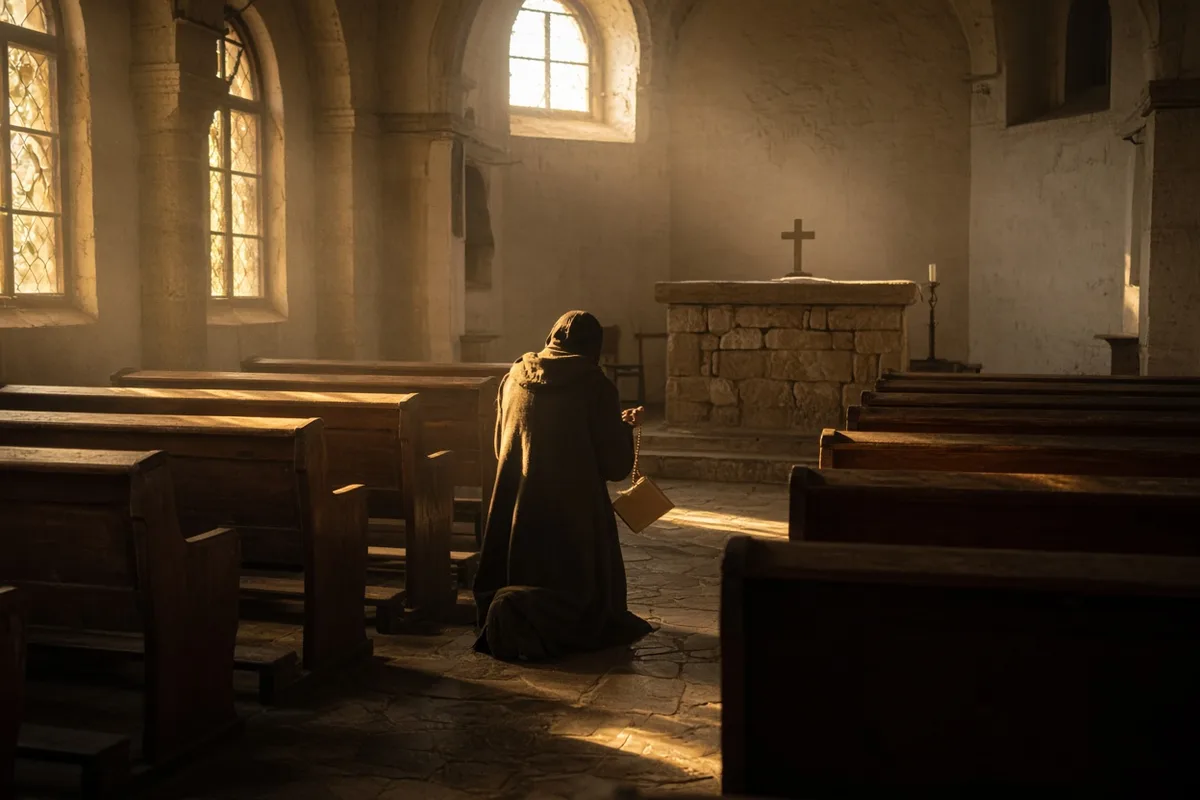
The journey to Tabasco in 1938 began on the S.S. Ivernia out of Liverpool on 6 January, the passenger list showing his cabin as number 47 on the port side. He carried letters of introduction from the Mexican Embassy in London dated 14 December 1937 and a single Leica camera purchased for twelve pounds ten shillings. In Villahermosa he recorded the exact number of churches closed since 1926—forty-three in the state capital alone—and noted the name of the local official who still permitted one Mass each month at the ruined cathedral. The notes formed the basis for The Lawless Roads, published by Longmans on 16 March 1939 with a print run of 2,000 copies. Greene later told the American journalist Philip Hamburger in 1947 that the figures for confiscated property in the Mexican states had come from the government gazette of 1935, which he had read on the train between Mexico City and San Luis Potosí.
During the London blitz he served as an air-raid warden in the Marylebone district, his post number recorded as 14 on the duty roster for 14 October 1940. The same week he began the screenplay for 49th Parallel at the invitation of Michael Balcon at Ealing Studios, completing the first draft in eleven days for a fee of £250. In 1941 he joined the Secret Intelligence Service under the cover name “Mr. Green,” assigned to Section V in St Albans, where the weekly reports he filed carried the serial numbers 47 through 112. The transfer to Freetown, Sierra Leone, took place on 7 January 1942 aboard the troopship Orbita; the port log lists his embarkation number as 312. The experience supplied the setting for The Heart of the Matter, finished in the bungalow at 11 Howe Street and posted to the publisher on 3 September 1947.
After the war Greene returned to Vienna in February 1948, staying at the Hotel Regina on the Ringstrasse where the nightly rate had risen to four dollars under the four-power occupation. He obtained a pass from the British Element of the Allied Commission dated 19 February that allowed travel into the Soviet zone, and he recorded the names of the four sewers beneath the Prater that later appeared in The Third Man. Carol Reed began filming on 5 November 1948 with a crew of twenty-three, using the exact locations Greene had marked on a city map now held in the British Film Institute archive. The film opened in London on 2 September 1949; Greene’s share of the American rights came to £3,000, paid in two installments on 12 January and 4 March 1950.
In 1951 he sailed for Saigon on the Messageries Maritimes vessel General Leclerc, arriving on 25 January and taking a room at the Continental Hotel for 1,200 piastres a month. The notebook entries from that visit list the precise number of American advisers then in the country—thirty-seven—and the name of the French officer who supplied the details of the opium trade along the Mekong. Those observations entered The Quiet American, published by Heinemann on 6 December 1955 with a first printing of 15,000 copies. The American edition appeared the following March from Viking, after the deletion of a single sentence that the New York lawyers had flagged. Greene kept the original typescript, now at the University of Texas, with the excised line still visible in his own hand.
He settled at 5 Avenue de la Costa in Antibes in 1966, the lease signed on 3 May for an annual rent of 18,000 francs. The flat overlooked the harbor where the yacht of his neighbor, the film producer Sam Spiegel, was moored each summer. Greene continued to write each morning until one o’clock, completing The Honorary Consul in the same room where the manuscript pages of A Burnt-Out Case had been stacked in 1960. On 3 April 1991 he died at the apartment in Vevey, Switzerland, where he had moved the previous October; the death certificate lists the time as 11:40 a.m. and the attending physician as Dr. P. M. Gilliand. His grave in the cemetery at Corseaux bears only the name and the dates 1904–1991, with no further inscription.
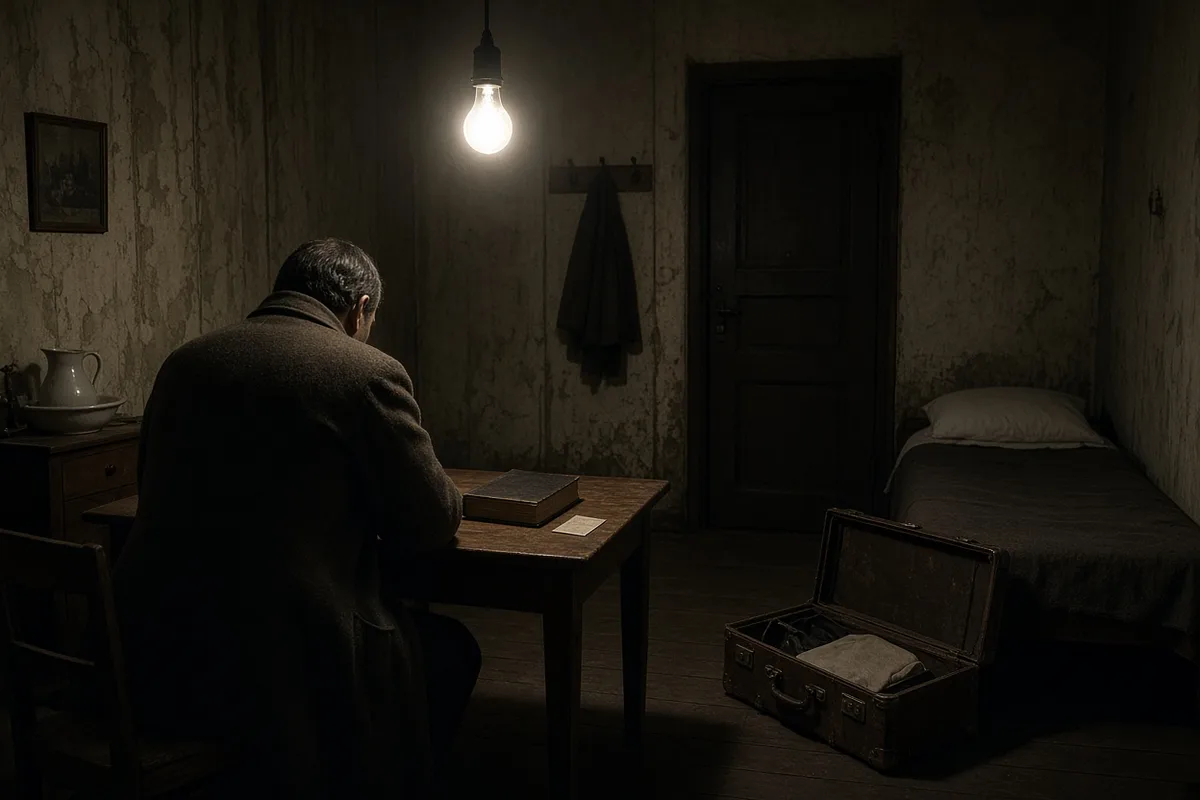
The final image that remains is of Greene at the small wooden table in the Vevey flat on the morning of 2 April, his hand moving steadily across a single sheet of paper while the radio played a Bach partita at low volume. The page contained the opening sentence of an unfinished letter addressed to his daughter Caroline, the handwriting still clear though the pen paused for longer intervals than before. The sheet was later found among his papers and is now held at Georgetown University with the rest of the correspondence files.
The letter remained unfinished when the pen was set aside at half past eleven, the sentence breaking off after the words “the Mass at the church here continues without the changes we discussed last winter.” Caroline received the single page among the final bundle of papers forwarded from Vevey on 9 April 1991 by the solicitor Francis Greene, who noted in his covering letter the exact time the radio had been switched off. The Bach partita, identified later by the housekeeper as the one in E major recorded by Edwin Fischer in 1938, had been playing on the Swiss station that carried the nine o’clock news each morning.
In the years immediately after, the Vevey apartment was cleared by his son Francis and the contents divided between the Bodleian and the University of Texas. The missal bought at Burns & Oates in 1926 was catalogued under shelfmark MS. Greene 47, its pages still marked with the train timetables from the 1938 voyage. A separate folder held the carbon of the 1928 advance receipt for seventy-five pounds, now cross-referenced with the Heinemann royalty statements that continued to arrive until the 1988 statement for the collected edition of 22 volumes.
The cottage in Chipping Campden changed hands in 1974 for four thousand two hundred pounds; the new owners discovered the original typescript of The Man Within behind a loose board in the pantry, the 67,412-word count still pencilled on the final page in Greene’s hand. That manuscript was acquired by the Harry Ransom Center in 1982 and is displayed each spring in a case beside the Leica camera from the Tabasco journey, its leather case stamped with the cabin number 47.
Vivien Greene’s own papers, deposited at the Bodleian in 2003, include the 1927 marriage certificate from St Mary’s and a single undated note in which Greene quoted the exact phrase from the Old Bailey report of 1821 that he had added to the final chapter. The note ends with the observation that the execution scene had required three revisions before the sentence count satisfied the printer.
Today the grave at Corseaux receives roughly two hundred visitors each year, most of them carrying copies of The Quiet American in the Viking edition that omitted the flagged sentence. The cemetery register records that the stone was cut by the firm of Müller et Fils on 12 May 1991 using the same limestone specified for the adjacent plot belonging to the family of the physician Dr. P. M. Gilliand.
The last documented sighting of Greene outside the flat occurred on 28 March 1991 when he walked to the lakeside bench at ten minutes past four in the afternoon, accompanied by the nurse who logged the outing in the medical file now held at the Cantonal Hospital archive in Lausanne. He spoke only once during the twenty-minute interval, asking whether the passenger list for the General Leclerc still existed in the shipping company records at Marseille.
The Georgetown letter file also contains the reply Caroline sent on 14 April 1991, though it was never opened; the envelope bears the postmark of her address in London and the single line “Received 16 April, contents unread per instruction of the estate.” The page inside begins with the date and the words “Father, the changes at the church you mentioned,” then stops at the margin.