



Great at Work shows seven habits beat longer hours

In 60 seconds
- A five-year study of 5,000 managers and employees found hours worked had only a weak link to supervisor performance ratings.
- People who cut priorities to a handful and then obsess over refining them outranked those who juggled many goals.
- Top performers redesign inherited workflows instead of only executing the given steps faster.
- They forge a personal mission from their values, run a loop of strong opinions tested against contrary evidence, and collaborate only when their input will change the result.
- They advocate forcefully while incorporating dissent, and sustain results by cultivating real enjoyment in the daily work itself.
- The seven practices reinforce one another; Hansen frames excellence as a designable set of habits, not talent or hours logged.
The big idea
Hansen contends that seven specific work practices predict high performance far better than long hours. Those practices—narrow focus with obsession, process redesign, personal mission, tested strong opinions, selective collaboration, forceful advocacy paired with uniting, and worthy passion—work as a reinforcing system rather than isolated tips.
The book in brief
The book opens by rejecting the hustle-culture belief that grinding more hours is the main path to excellence. Hansen and his team surveyed more than 5,000 managers and employees about their habits and matched those answers to independent supervisor performance ratings. Hours worked correlated only weakly with those ratings; people putting in 60-plus-hour weeks were not reliably rated higher than those working 40 to 50. That finding sets up the rest of the argument: a shortlist of seven behaviors, each chosen because it moved the needle in the data, explains who produces more value.
The first two practices tackle focus and method. Performers who deliberately shrink their priority list and then pour intense refinement into what remains outperform busy multi-goal jugglers. Once the field is narrowed, the next move is to stop accepting the inherited process as fixed and redesign the workflow itself—eliminating root causes rather than merely handling volume faster.
Motivation and judgment come next. Attaching personal values so the job becomes a mission, not a checklist, sustains effort through hard stretches. Alongside that, Hansen's strong-opinion loop asks people to form a clear view, hunt for disconfirming evidence, revise, and repeat—avoiding both paralysis and stubborn overconfidence.
The social practices follow. Collaboration helps only when it is selective and disciplined; saying yes to every meeting and request dilutes results. When disagreement arises, the winning pattern is fighting to be understood—pressing one's ideas with energy while still working to incorporate others' views so decisions carry buy-in.
The final practice addresses staying power: cultivating genuine enjoyment inside the work one already has, rather than chasing only pay or status. Hansen closes by stressing that the seven habits reinforce each other—focus without redesign wastes effort, mission without tested conviction hardens into dogma—and that excellence is a designable architecture of habits, not a fixed trait or a function of hours logged.
Context
Morten T. Hansen published Great at Work in 2018 after a five-year study of 5,000 managers and employees. The book mattered because it applied rigorous survey methods and independent performance ratings to a question usually answered with anecdote and hustle-culture advice, challenging survivorship-bias stories from famous executives.
The key ideas

1
Measure habits, not hours
Across more than 5,000 people, hours worked showed only a weak link to supervisor ratings, while seven specific practices showed the strongest statistical relationships.
Common assumption
Longer hours are the primary lever for higher performance
Study finding
Hours worked correlated only weakly with independent supervisor ratings
Hansen starts from a research design rather than another stack of executive war stories. His team asked detailed questions about daily habits, then cross-referenced answers with performance ratings gathered independently from supervisors. That separation reduced the chance that people who saw themselves as hardworking simply also claimed excellence.
Dozens of candidate behaviors were tested statistically. Only seven survived as the strongest predictors. The surprise was how little extra hours bought: 60-plus-hour weeks did not reliably outrank 40-to-50-hour weeks. Common Silicon Valley and Wall Street assumptions about grinding took a direct hit.
The chapter's real contribution is methodological. Most performance advice rests on survivorship bias—successful people describing what they did without checking whether those same moves predict success in a larger population. Every later practice earns its place because it moved the performance needle in the data, not because it sounded good in a seminar.
In practice: People logging 60-plus-hour weeks were not reliably rated higher by supervisors than those working 40 to 50 hours.

2
Cut the list, then obsess
Selecting a handful of priorities and concentrating intense refinement on them outperforms juggling many goals, even when the juggler works harder overall.
The data separates two halves of one practice. Narrowing alone is not enough; treating the remaining work casually produces no gain. The payoff appears when fewer commitments meet repeated, deep iteration—the kind that turns an adequate deliverable into an excellent one.
Focus creates room to discover nonobvious improvements. Breadth keeps people at surface competence across too many fronts. Managers in the sample who shrank a dozen stated priorities down to three saw ratings rise because freed attention went into refinement, not because total effort fell.
The same pattern also tracked with better work-life balance. Diffusing energy less left more capacity outside work, contradicting the idea that top performers must sacrifice everything else. Once the field is chosen, the next question is how to execute inside that narrowed space.
In practice: Surveyed managers who cut stated priorities from a dozen to three saw performance ratings rise through deeper refinement of what remained.
3
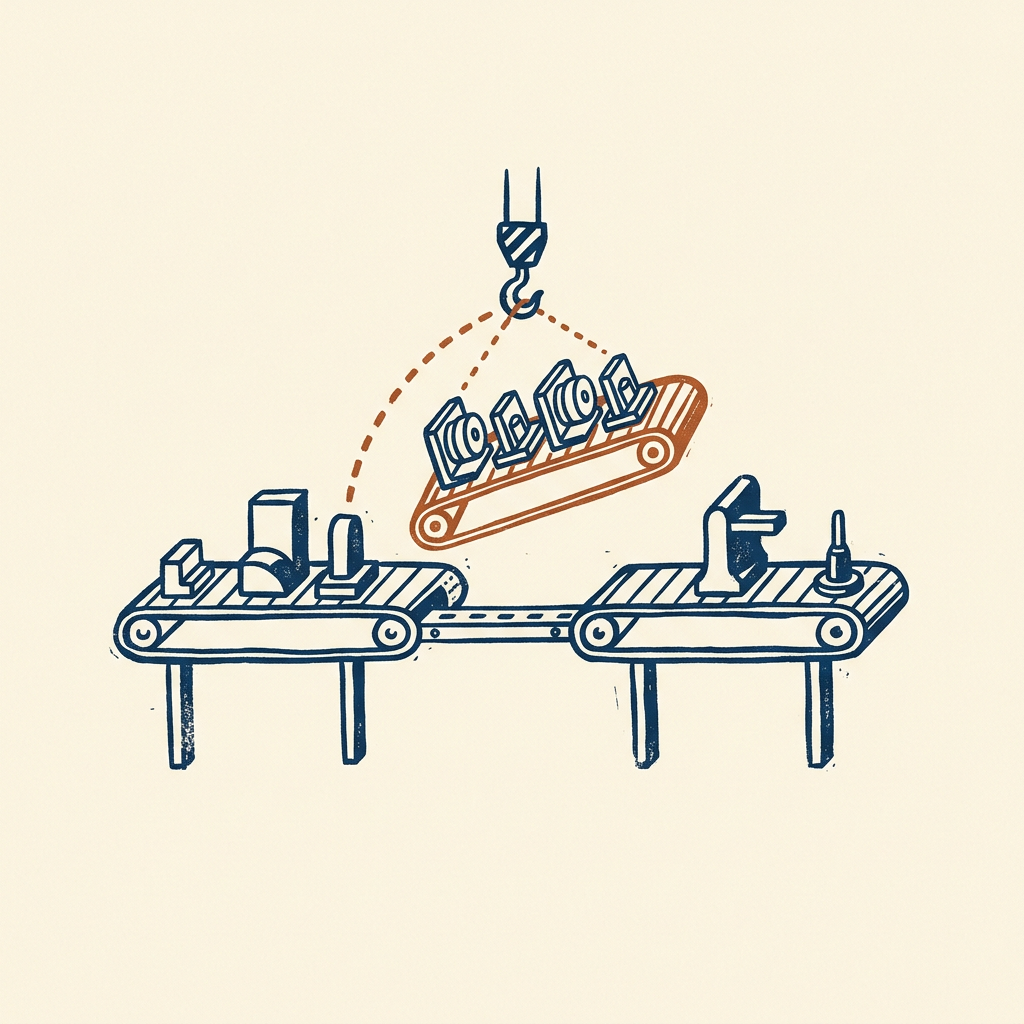
Rethink the workflow
Stepping back to restructure or eliminate steps in a process produces more value than pouring harder effort into an unexamined routine.
Work in the process
Execute inherited steps faster and more diligently
Work on the process
Eliminate, automate, or restructure the steps themselves
Once priorities are set, the second practice asks whether the inherited steps are even the right ones. Top performers work on the process, not only in it. Survey links between this redesign habit and higher ratings beat the links for raw effort inside the old process.
The move requires a temporary pause that can look unproductive. Questioning an established workflow may read as insubordination or inefficiency to a manager who only watches output. Across the data, people who took that risk still ranked higher on longer-term measures.
Focus without redesign wastes the narrowing from the first practice. Someone can obsess over a bad process and still lag a person who obsesses over a rebuilt one. Dissatisfaction with the status quo becomes an asset when it leads to elimination, automation, or restructuring rather than mere speed.
In practice: A customer service employee stopped chasing faster call handling and instead removed root causes of whole complaint categories, cutting volume rather than just clearing it.

4
Turn the job into a mission
Employees who reframe identical tasks around a self-generated mission tied to personal values outperform those who treat the role as a duty checklist.
Hansen separates mission from passion. Passion is what someone loves doing; mission is why the work matters—fairness, craftsmanship, service to a concrete group. High scorers on mission reported more resilience in difficult stretches because the why supplied fuel a pure task list could not.
Corporate slogans rarely create this. The effect showed most clearly when individuals built their own account of significance rather than adopting a company statement wholesale. Even unglamorous roles produced high mission scores when people linked their diligence to the wellbeing of customers or coworkers downstream.
Mission also feeds the earlier practices. It supplies a criterion for which priorities to keep when narrowing, and a reason to do the often-unrewarded work of redesigning a process instead of settling for adequate.
In practice: Back-office administrative workers scored high on mission when they tied accuracy and diligence to the wellbeing of customers or coworkers downstream rather than seeing only paperwork.

5
Loop conviction with doubt
Pairing a clear, confident point of view with active hunting for disconfirming evidence outperforms both stubborn certainty and chronic indecision.
Hansen labels the pattern a strong-opinion loop. A person states a definite view, deliberately seeks people and evidence that might prove it wrong, revises when warranted, then states a sharper view and repeats. Confidence without the test produced costly overconfidence errors. Avoiding opinions until consensus arrived produced slow, indecisive action.
He links the loop to how skilled forecasters treat each view as a testable hypothesis rather than a fixed identity. Teams need it to be safe to voice strong views without making them untouchable once spoken; the value sits in being willing to be publicly wrong.
Without the loop, mission from the prior practice can calcify into dogma. Tested conviction keeps meaning from hardening into the stubbornness that wrecks decisions.
In practice: People who held strong opinions but never tested them made costly errors from overconfidence, while those who never formed opinions failed to act when a moment required it.

6
Collaborate with discipline
Selective collaboration on a few high-payoff efforts raises performance, while saying yes to every meeting and cross-team request lowers it through dilution and overhead.
Indiscriminate collaboration
Yes to every meeting, request, and working group; attention dilutes and overhead rises
Disciplined collaboration
Few joint efforts chosen for large payoff; many invitations declined
Hansen's earlier research already warned that too much internal collaboration can damage results as much as too little. The new data pushed further: indiscriminate yes-saying reduced ratings. Top performers picked a small number of joint efforts where the payoff was large and declined many others, even when refusal made them look like weaker team players in the moment.
The practical test is simple. Before joining, ask whether one's specific contribution will change the result. Join for that reason alone, not because the invitation exists or refusal feels uncooperative. Saying no cleanly depends on the narrowed priorities from the first practice.
Prevailing corporate rhetoric treats more cross-functional work as an unambiguous good. This finding cuts against that assumption and restores collaboration as a scarce resource spent only where expertise materially shifts the outcome.
In practice: Managers who resisted pressure to join every committee or working group, saving energy for initiatives where their expertise would materially change the outcome, ranked higher.

7
Fight to be understood
Combining vigorous advocacy for one's ideas with genuine effort to understand and incorporate others' views beats both quiet compliance and conflict without listening.
The sixth practice balances pressing a point with energy and clarity against uniting enough shared understanding that the final decision carries buy-in even from dissenters. Low assertiveness left good ideas without traction because people were talked out of them too easily. High assertiveness without the uniting half bred resentment that blocked implementation even when the idea was right.
The pattern is the strong-opinion loop played out in a social, persuasive setting rather than a purely analytical one. Hold the position with conviction; remain open to revising it from what others contribute. Persuasion is not one-way transmission of a fixed idea.
People who kept advocating after an initial rejection while folding specific objections into a revised version that kept the core insight moved outcomes further than either abandonment or stubborn resubmission of the unchanged plan.
In practice: A manager whose proposal senior leadership first rejected kept advocating while incorporating the specific objections, and eventually won approval for a revised version that retained the core insight.

8
Build passion inside the work
People who derive genuine enjoyment from the work itself, not only from pay or status, sustain higher performance over time; that enjoyment can be cultivated inside a job already held.
Hansen rejects the simplistic advice to quit and chase a preexisting passion. Many people cannot or should not leave stable roles. Worthy passion means finding aspects of current work that connect to intrinsic interests—problem-solving, craftsmanship, learning, helping others—and deliberately investing more attention there.
The data showed an interaction with mission. People who both tied work to values and took direct enjoyment from doing it posted the highest and most sustained performance of any group. Building a career purely around achievement markers with no attention to daily enjoyment predicted burnout and declining performance across multi-year spans.
This final practice closes the arc the book opened. Effort alone does not produce excellence. A deliberate architecture of focus, redesign, meaning, tested conviction, selective collaboration, persuasive skill, and sustained intrinsic interest must work together; no single piece compensates for missing others.
In practice: People motivated mainly by external rewards showed more burnout and declining performance over multi-year periods than those who also reported genuine enjoyment of the work itself.
Key terms
- Do less, then obsess Cut priorities to a few, then pour intense repeated refinement into what remains
- Work on the process Redesign or eliminate steps in a workflow instead of only executing them harder
- Mission A self-generated account of why the work matters, tied to personal values, distinct from mere passion for the activity
- Strong-opinion loop State a clear view, actively seek disconfirmation, revise, and repeat
- Disciplined collaboration Join only the few joint efforts where your specific input will change the result; decline the rest
- Fight and unite Advocate forcefully for your ideas while working to build shared understanding and buy-in
- Worthy passion Genuine enjoyment cultivated inside current work by investing in intrinsically interesting aspects, not only external rewards
What to do
- Pick three priorities for the next quarter and write down what you will stop doing to make room for them.
- Before your next recurring meeting or collaboration request, ask whether your specific contribution will change the outcome; if not, decline it.
- Choose one process you currently execute without question and spend thirty minutes this week asking whether a step could be eliminated rather than done faster.
- Write one sentence connecting your current role to a value you actually care about, and revisit that sentence when the work feels like mere task completion.
Questions to think with
- If you cut your current priorities in half, which three would remain and what would you stop?
- Where are you working harder inside a process you have never questioned?
- Is your collaboration load selective, or mostly a string of yeses that dilute attention?
- When you hold a strong view at work, how deliberately do you hunt for evidence that might prove it wrong?
- What part of your daily work already produces genuine enjoyment, and how could you invest more attention there?
The other side
The study is correlational: high performers may already have the latitude to narrow focus, redesign work, and decline meetings, so status could enable the behaviors rather than the behaviors producing status. Hansen does not fully address reverse causality or run longitudinal or experimental tests. The sample skews toward white-collar knowledge work in well-resourced organizations, leaving little guidance for hourly, gig, or rigidly managed roles where autonomy is scarce. Critics also note that the seven practices resemble conventional consulting virtues packaged quantitatively, and that the book underplays how toxic culture or bad management can neutralize individual habits.
Who it's for
Mid-career professionals whose long hours have stopped raising their impact, managers deciding which habits to coach, and skeptics who want performance advice tied to a large study rather than anecdote will get the most from the full book.