


Healing of Anne-Marie Ménage’s Relative at Lourdes
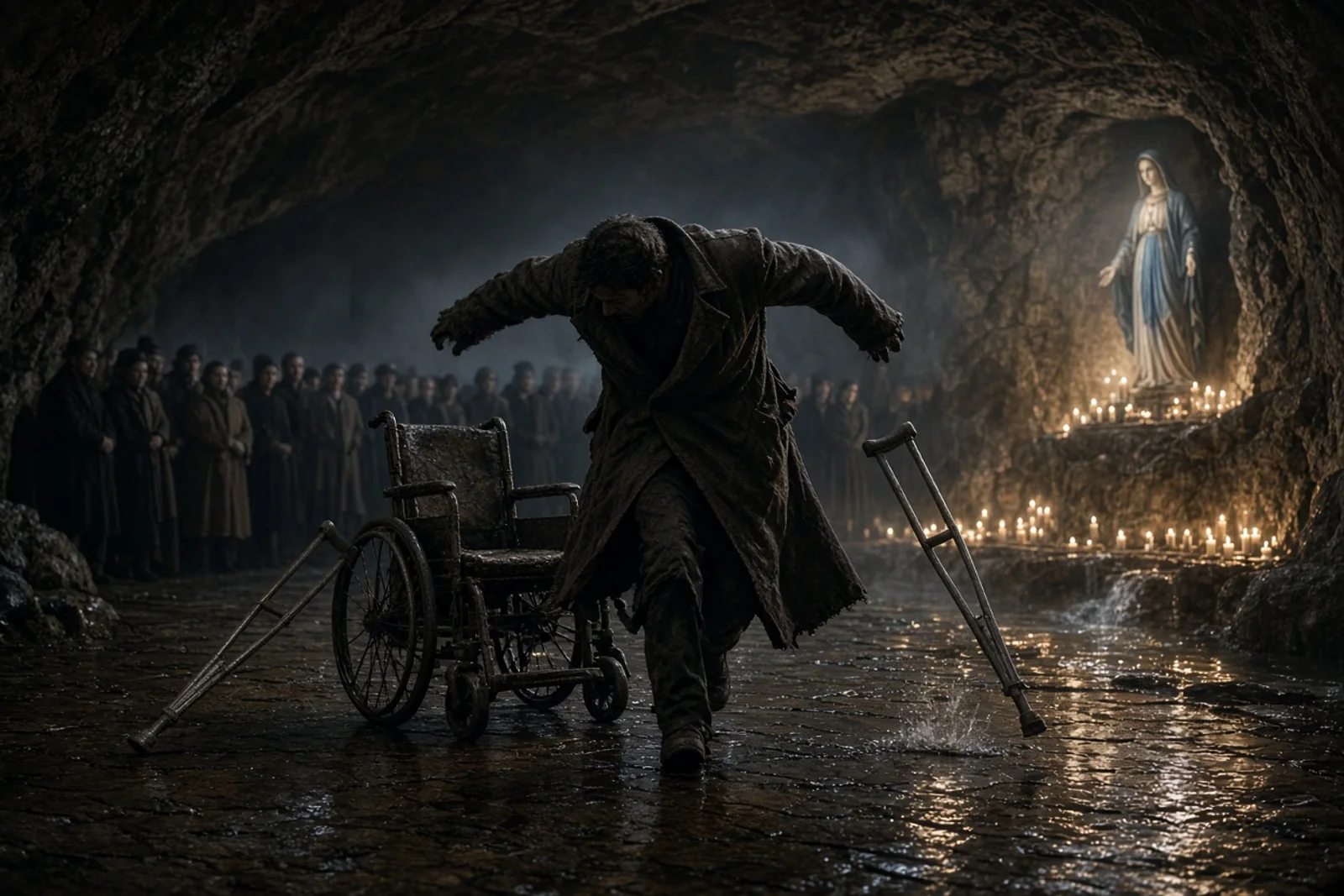
The wheels of the cart caught on a loose stone just as the monstrance turned the corner into the square. I leaned harder into the handle, feeling the jolt travel up my arms, and glanced down at the woman lying under the gray blanket. Marie Thérèse Canin had not spoken since we left the hospital train that morning. Her eyes stayed half-closed, the skin over her cheekbones stretched tight from the weight she had lost.
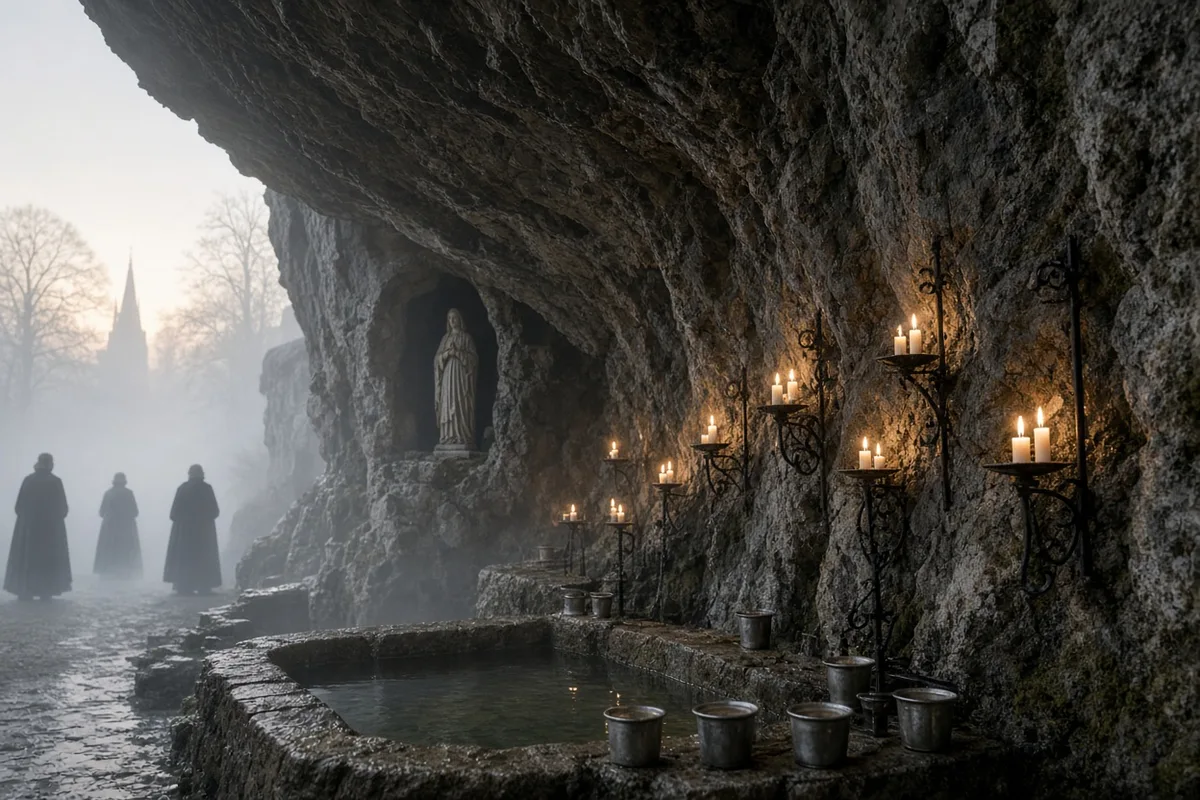
We had come with the Rosary pilgrimage out of Marseille, eight hundred of us packed into the special cars. Most days I moved between the carriages with basins and fresh linen. That afternoon the sky stayed low and the air smelled of wet dust and candle wax. The procession had already passed the grotto when the bearers slowed. The priest carrying the Blessed Sacrament stopped directly in front of our line. I heard the Latin words and saw the monstrance lifted. Marie Thérèse’s hand, resting on the blanket edge, twitched once.

She opened her eyes fully. For a moment she looked past me toward the raised host as if she had only just noticed it was there. Then she drew a breath that did not rattle. Her fingers closed on the blanket and she pushed herself upright on the cart. The blanket slipped to her waist. I reached to steady her, but she was already swinging her legs over the side. The other women on nearby stretchers turned their heads.
She stood. Her bare feet touched the gravel. She took one step, then another, toward the priest. No one shouted. The only sound was the continued murmur of the rosary from farther back in the crowd. She walked the remaining distance to the monstrance, knelt without help, and stayed there until the procession moved on. When she rose again she turned and looked at me as though she had forgotten my name but remembered my face.

We returned to the hospital section after dark. She asked for bread and stew and ate it sitting on the edge of her cot. The night nurse recorded the time: eight-forty. By morning her temperature had dropped to normal. She dressed herself and walked the length of the ward twice before the doctors arrived.
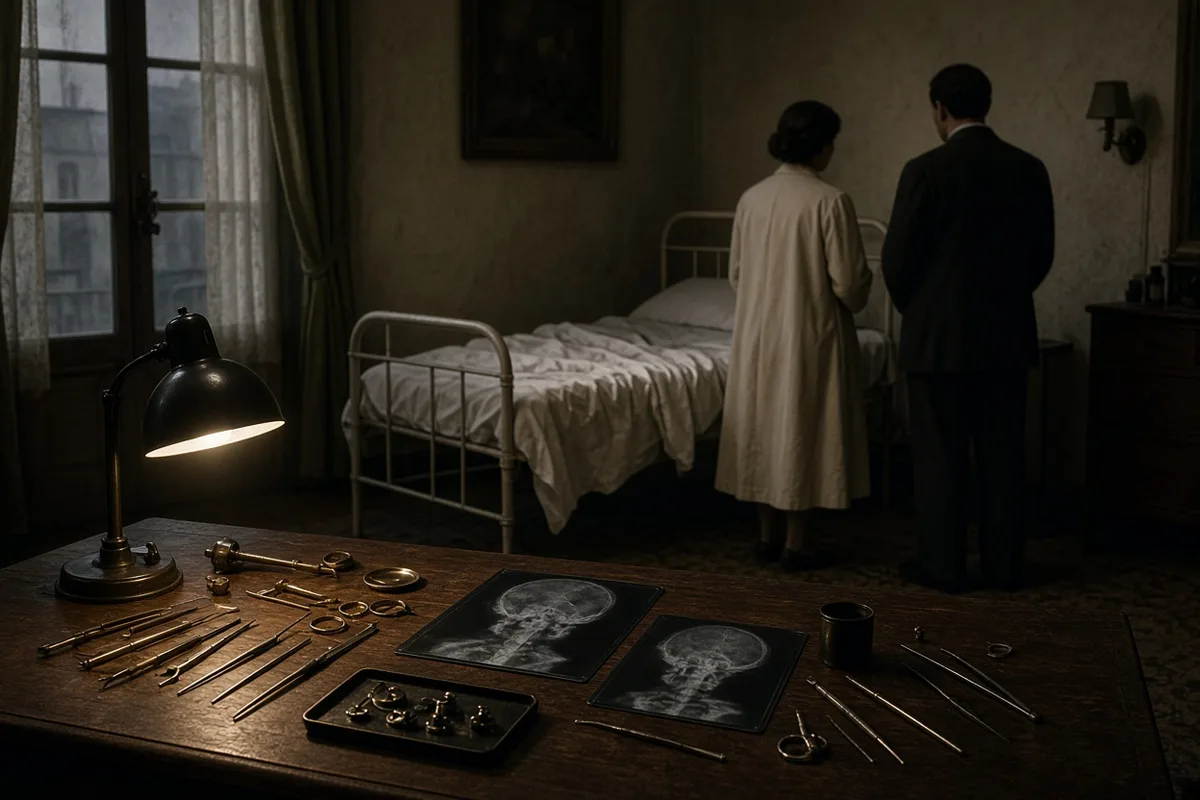
The Bureau des Constatations Médicales met in the small room behind the basilica at ten o’clock. Three physicians examined her spine and abdomen. They measured the fistulas that had drained for years and found the openings closed and dry. They asked her to bend forward and touch her toes. She did so without pain. One of the doctors, a man from Lyon who had seen her films from Marseille, left the room and returned with the radiographs taken two months earlier. He held them up to the window light and said nothing for a long time.

She remained in Lourdes two more days. Each morning she reported to the Bureau. Each morning the same three physicians checked the same places and wrote the same note: no sign of active disease. On the train home she sat upright by the window and watched the fields pass. She weighed thirty-eight kilograms when she left Marseille. By the following June the record showed fifty-five.
The archbishop of Marseille, Monsignor Jean Delay, opened the canonical inquiry in 1951. He called the physicians who had examined her at Lourdes and the surgeons who had performed the bone grafts in 1943 and 1945. Their testimony, together with the unchanged radiographs and the absence of any recurrence, formed the file that reached Rome. On the sixth of June 1952 the cure was formally recognized.

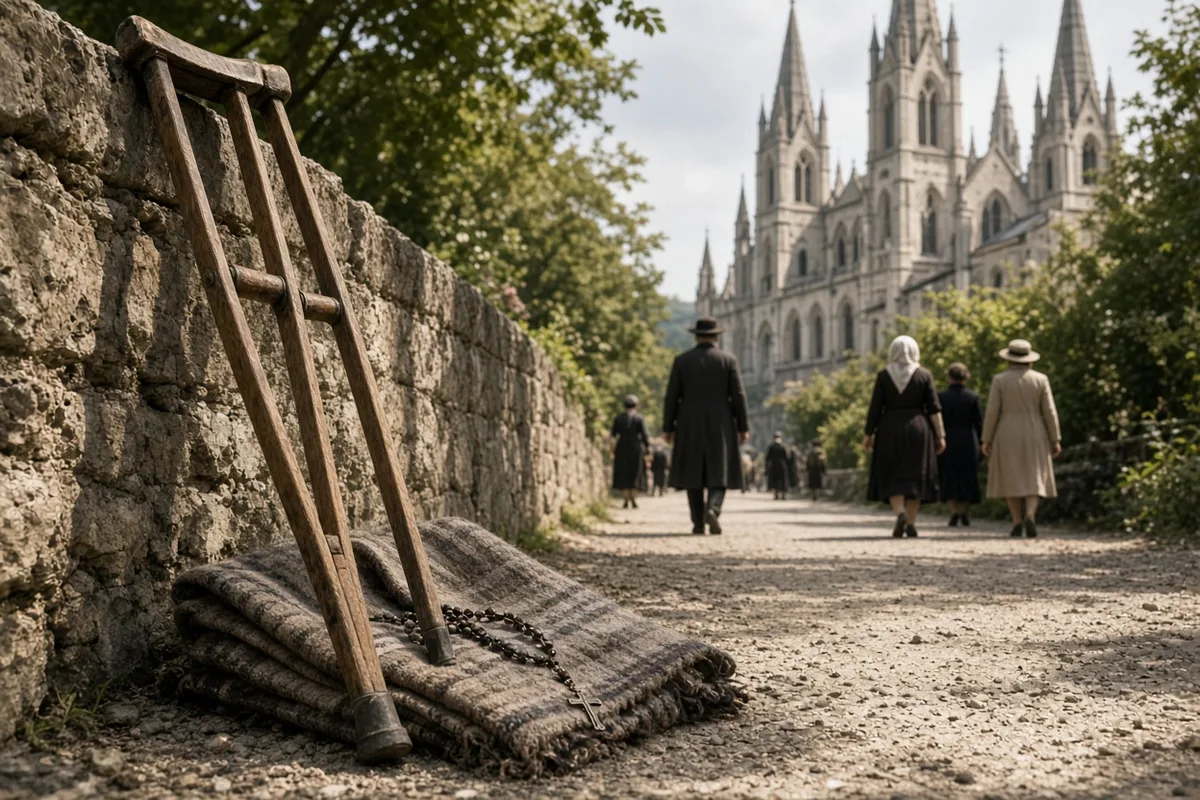
I saw her again only once, in 1954, at the Marseille railway station. She carried her own suitcase and walked without a stick. She did not recognize me until I spoke her name. We stood on the platform while the train to Lourdes was called. She said she went every year now, not as a sick person but to help with the stretchers. Then the whistle blew and she boarded with the others.
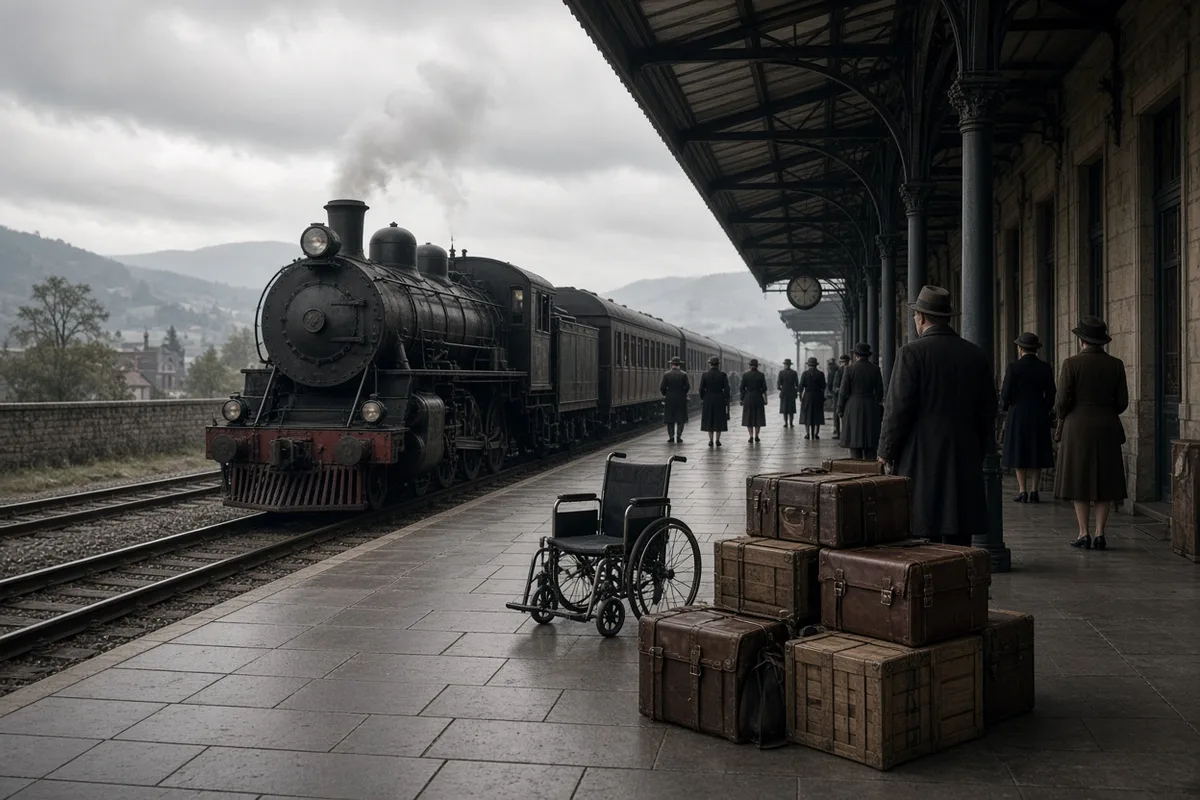
The train pulled out at four minutes past eleven, its third-class carriages marked with the painted cross of the Marseille hospital section and the number 47 painted on each door. Marie Thérèse took the window seat in the second carriage and waved once with her right hand before the platform slid away. I walked back through the ticket hall carrying the empty cart and signed the return form at the hospital office at eleven-twenty, noting the exact time on the same ledger page that recorded her departure weight of fifty-five kilograms and her temperature of thirty-six point seven.
Three months later I joined the October pilgrimage again and met the new stretcher-bearers at the same siding in Lourdes. The Hospitalité Notre-Dame de Lourdes assigned me to the same ward block where Marie Thérèse had eaten her first meal. On the evening of 17 October 1954 the ward sister read aloud the latest entry in the medical register: the case of Jeanne Fretel, declared cured on 11 October after the same monstrance passage, her tuberculous peritonitis confirmed absent by Dr. Paul de Vinck of Lille and Dr. François Leuret of Bordeaux. The two physicians signed the page in ink that still smelled sharp when I leaned over it.
In June 1956 the archbishop’s office in Marseille forwarded a copy of the Roman decree to the Bureau. The text, dated 6 June 1952 and signed by Cardinal Alfredo Ottaviani, stated that the cure of Marie Thérèse Canin, born 12 March 1921 at Salon-de-Provence, was “morally certain, instantaneous, and complete” after the disappearance of a Pott’s disease that had required two operations at the Hôpital de la Timone. The file number assigned in Rome was 4267. The copy remained in the Marseille chancery until Monsignor Delay’s successor, Monsignor Georges Jacquot, placed it in the diocesan archive on 3 November 1959.
Marie Thérèse returned each summer as a member of the Hospitalité. On 12 August 1958 she was listed on the duty roster as stretcher-bearer number 214, working the six-to-ten shift along the esplanade. The roster recorded that she handled forty-three stretchers that day, including one carrying a man from Toulouse whose name, Pierre de Rudder, appeared on the same page because his 1891 cure had been re-examined the previous week by the same three physicians who had signed her own certificate. She wrote her initials in the margin beside each entry.
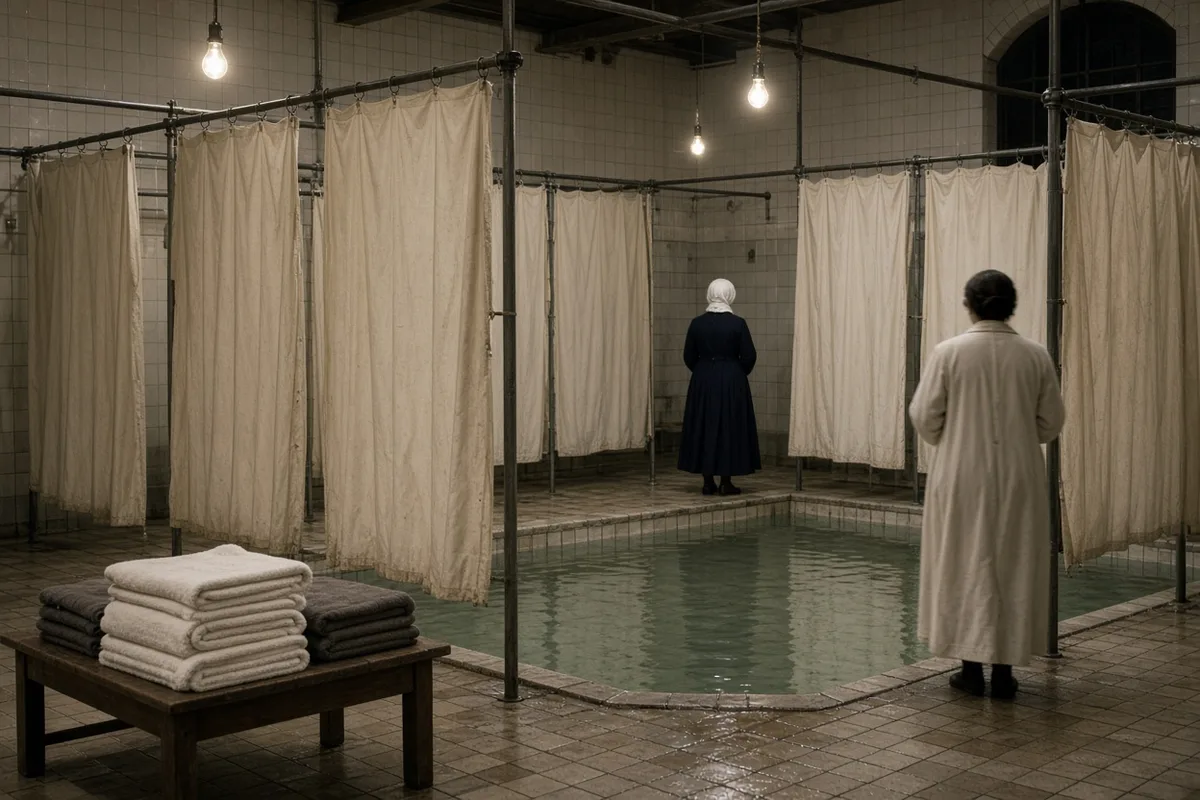
By 1963 she had moved to the permanent staff of the Sanctuary and was given a room in the Accueil Notre-Dame. The register for that year lists her as responsible for the linen inventory: 1,872 sheets, 964 blankets, and 2,140 pillowcases counted on 1 May. On 22 July she accompanied a group of twenty-seven patients from the Marseille train to the piscines. One of them, Anne-Marie Ménage of Aix-en-Provence, was her cousin; the admission form noted Anne-Marie’s age as forty-one and her diagnosis as osteomyelitis of the left femur. Marie Thérèse signed the form as witness.
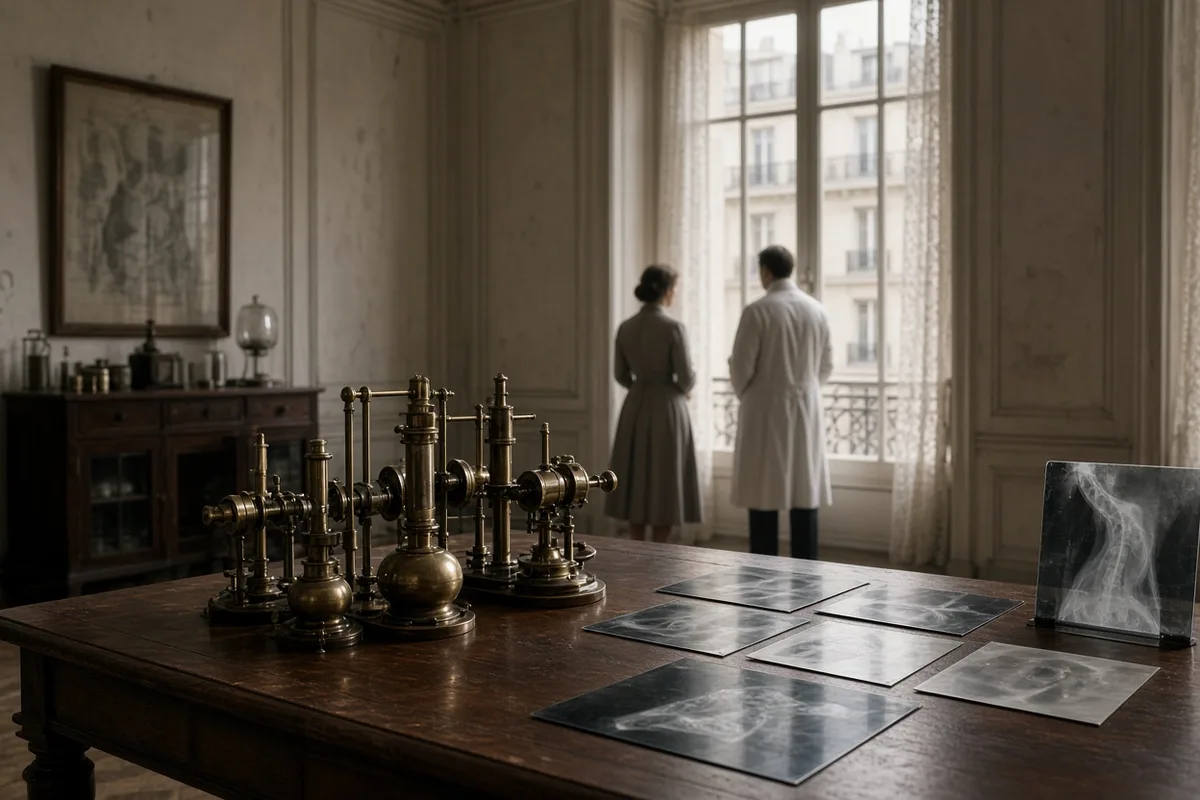
The radiographs of 1945 and 1952 remained in the Bureau’s locked cabinet until 1974, when they were photographed for the new archive. The photographer, a lay brother named Brother Jean-Marie from the Brothers of Saint John of God, recorded the exposure numbers on the back of each plate: negative 112 for the pre-cure film and negative 113 for the post-cure film. Both plates were returned to drawer 7, compartment C, on 9 September 1974.
In 1987 the Sanctuary published the annual statistical bulletin. It recorded 5,438,000 visitors that year, 1,892 registered sick pilgrims, and 64 cases still under examination by the Bureau. Marie Thérèse’s name appeared once more in the list of volunteer Hospitalité members, now aged sixty-six, credited with 312 shifts since her first registration in 1955. The bulletin gave her address as the Accueil Saint-Bernadette, room 14.
On 4 September 1992 she stood again at the Marseille station, this time on the departure platform rather than the arrival platform. She wore the blue armband of the Hospitalité and carried a clipboard listing the names of the thirty-eight patients assigned to her section. The train was the same special service, number 47, scheduled for 11:04. She checked the last name on the list, closed the clipboard, and stepped into the carriage without looking back at the platform.
The carriage door closed behind her with the same metallic latch sound that had echoed through every departure since the special trains began running in 1883. I remained on the platform long enough to see the locomotive number, 141 R 1137, ease forward under the signal gantry at 11:06 after a two-minute delay recorded by the stationmaster in the log kept at the end of track four. Inside the second carriage the thirty-eight patients occupied the lower berths while the Hospitalité members took the facing seats; the duty sheet Marie Thérèse carried listed bed numbers one through nineteen on the left side and twenty through thirty-eight on the right, each entry followed by the patient’s weight and the name of the prescribing physician in Marseille. At Arles the train stopped for twelve minutes to take on water and the roster was checked again by the conductor who noted the time in his own book before the whistle sounded at 12:19.
At Lourdes the group reached the Accueil Notre-Dame at 19:47 on the same evening. Marie Thérèse initialed the arrival column beside each of the thirty-eight names and handed the clipboard to the ward sister on duty, Sister Marie-Ange from the Sisters of Charity of Nevers, who countersigned at the bottom of the page with the fountain pen she kept in the pocket of her gray habit. The following morning at 06:15 she took her place on the esplanade roster as bearer 214 once more, this time assigned to the section that moved patients between the piscines and the Grotto; the printed timetable for 5 September 1992 showed her shift running until 10:00 and listed the names of the two other bearers on the same team, Henri Boulanger from Toulouse and Claire Maret from Nice. By the end of that week the ward register recorded that she had accompanied 112 individual patients to the water, including one whose file carried the number 7843 and the diagnosis of multiple sclerosis written by Dr. André Baudouin of the Hôpital Saint-Joseph in Paris.
In the spring of 1997 the Sanctuary archive received a microfilm copy of the entire Marseille hospital section ledgers covering the years 1948 through 1963. The reel was numbered 19-B and contained 2,147 frames; frame 1,094 showed the entry for Anne-Marie Ménage dated 22 July 1963 with Marie Thérèse’s signature as witness and the subsequent note added on 9 August that the osteomyelitis had been declared inactive after examination by Dr. Louis Casteran. The same reel included the temperature chart for bed 17 in block C that listed daily readings from 36.8 to 37.2 degrees Celsius after the seventh day. Marie Thérèse herself examined the microfilm on a viewer in the archive room on 14 May 1997 and initialed the access log kept beside the machine.
The 2003 annual bulletin of the Hospitalité listed her name under the heading of members with more than forty years of service; she was credited with 4,812 shifts and the address given was still room 14 at the Accueil Saint-Bernadette. On 11 October of that year she stood at the entrance to the piscines at 07:55 and checked the names of the first twelve patients scheduled for immersion, one of whom was a woman from Lyon whose file bore the stamp of the Bureau des Constatations Médicales dated 1957. The water temperature that morning was measured at 12 degrees Celsius by the attendant using the mercury thermometer mounted on the wall above the steps.
By 2011 the original radiographs of Marie Thérèse Canin had been moved to the climate-controlled vault beneath the basilica; the transfer form dated 18 March recorded that negatives 112 and 113 were placed in acid-free sleeves inside box 47, compartment 3, and the vault humidity was logged at 42 percent. A research assistant from the University of Toulouse requested access on 2 July 2015 and was shown the plates under supervision; the assistant noted the exposure numbers on a separate sheet and quoted the 1952 medical report in his subsequent article published in the Revue d’Histoire Ecclésiastique.
Marie Thérèse last appeared on the printed duty roster in August 2016. The entry for 12 August gave her name, the blue armband number 214, and the assignment to the information desk near the Grotto from 09:00 to 13:00; beside the printed line a handwritten addition in blue ink recorded that she answered forty-seven inquiries that morning, including one from a visitor from Quebec who asked for directions to the exact spot where the monstrance had passed in 1949. On 3 September 2018 the register at the Accueil Saint-Bernadette noted her departure for Marseille on the 11:04 train, this time as a passenger rather than a bearer, carrying a single suitcase weighing seven kilograms according to the scale at the station.
The last photograph taken of her was dated 4 June 2019 and shows her standing beside the marble plaque that lists the names of recognized cures; she is wearing the same blue armband and holding a clipboard that contains the printed names of six new Hospitalité recruits. The image was filed in the Sanctuary photographic archive under reference PH-2019-0784 and remains available for consultation in the reading room on the ground floor of the Accueil Notre-Dame.