


Healing of Elisa Aloi at Lourdes
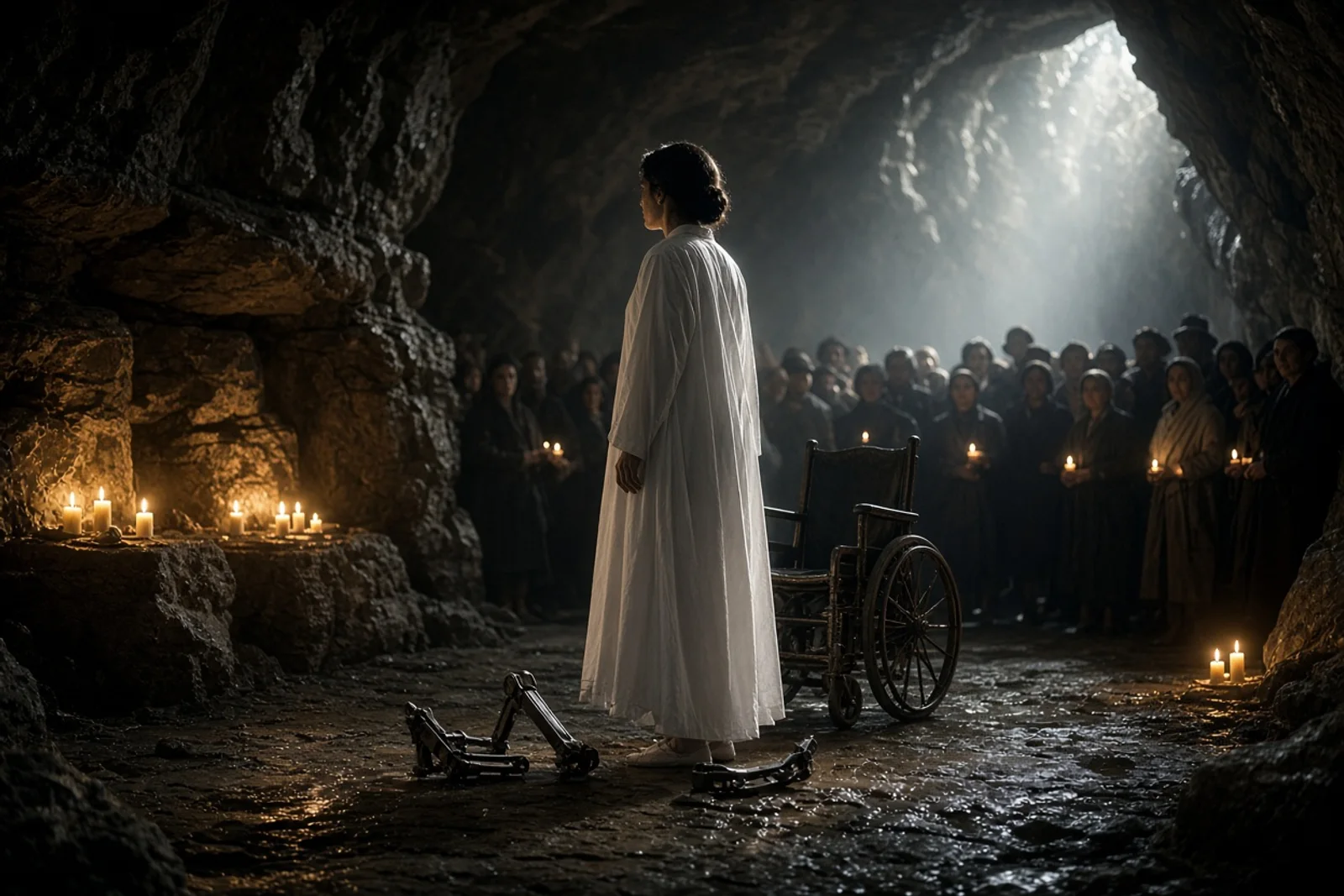
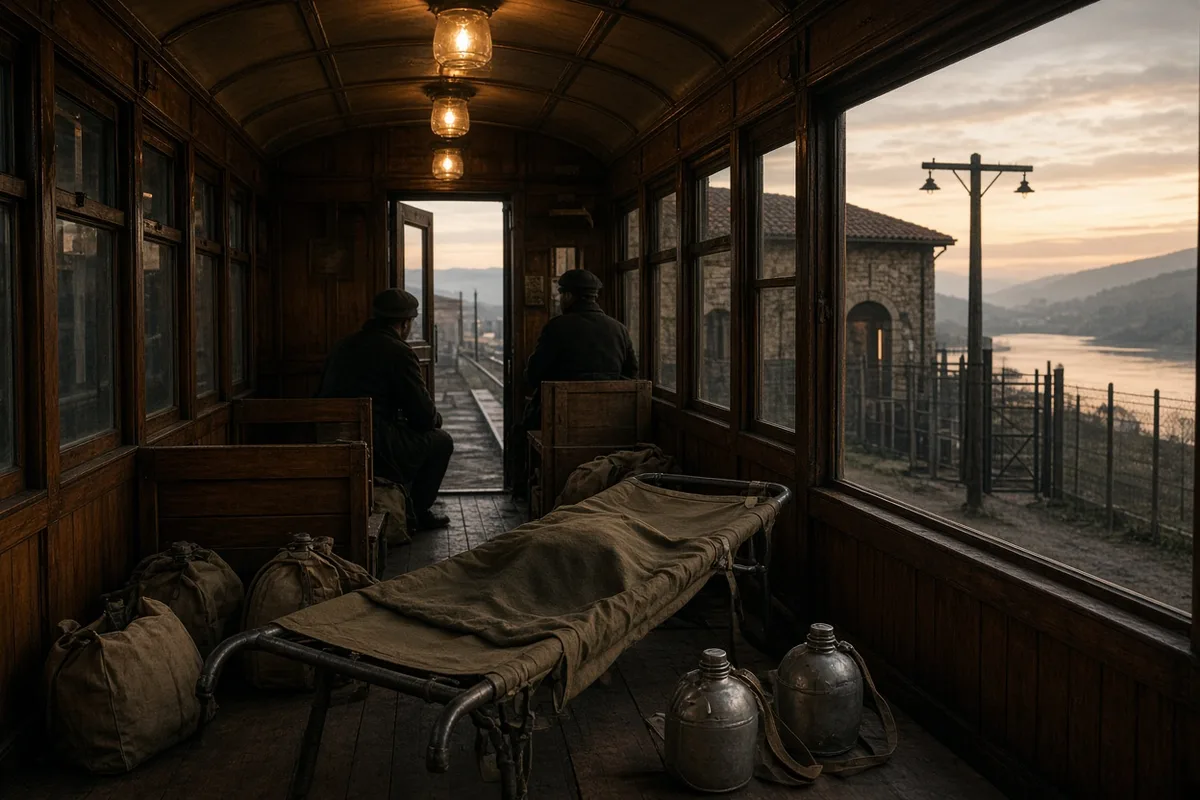
The stretcher tilted as we reached the last ramp before the pools. I gripped the handles tighter, my palms slick from the June heat, and glanced down at Elisa Aloi. Her face was the color of old linen, eyes half-closed against the fever that never left her. The plaster cast ran from her neck to her right thigh, cut with four small windows for the drains. Giovanni walked two steps behind, one hand on the rail, the other ready if she slipped.
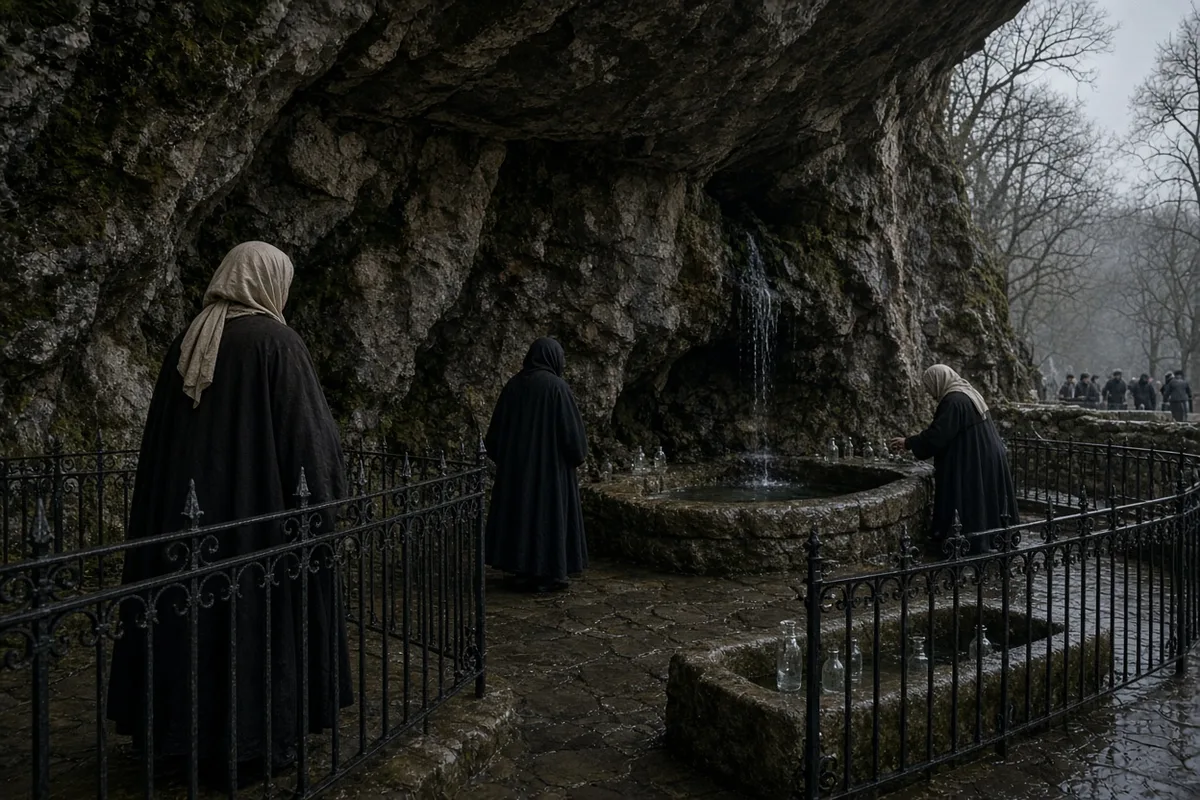
The priest at the head of our group, the one who had carried her most of the way from the train, stopped and turned. “Elisa, do you want to go in?” he asked. She opened her eyes. “Yes,” she said. “Take me to the swimming pools.” We lowered the stretcher to the water’s edge. Two attendants lifted her. The cold hit her at once. She drew a sharp breath but did not cry out.

When they brought her back up, she lay still for a moment. Then her right foot twitched inside the cast. I saw the blanket move. She looked at me, then at the priest. “Sir, what a suggestion,” she said. “Take away this thought of being able to move your legs.” The foot moved again, stronger. She called for Doctor Zappia.
He came from the line of stretchers on the esplanade. She lifted the blanket herself. “Doctor Zappia, I move my legs inside the plaster.” He bent over her, lifted the edge of the cast, and froze. The four fistulas were closed. The gauze squares were dry and clean. The drainage tubes lay beside her leg, empty. He sent a runner for the Bureau Médical.

They took her there after the evening procession. The doctors examined the skin, the closed wounds, the absence of discharge. They asked her to name the surgeon in Messina who had cut away ten centimeters of bone from her right leg years earlier. She gave the name. They wrote it down and told her the cast must stay until her own physicians removed it. She asked them to take it off then and there so she could walk. They refused.
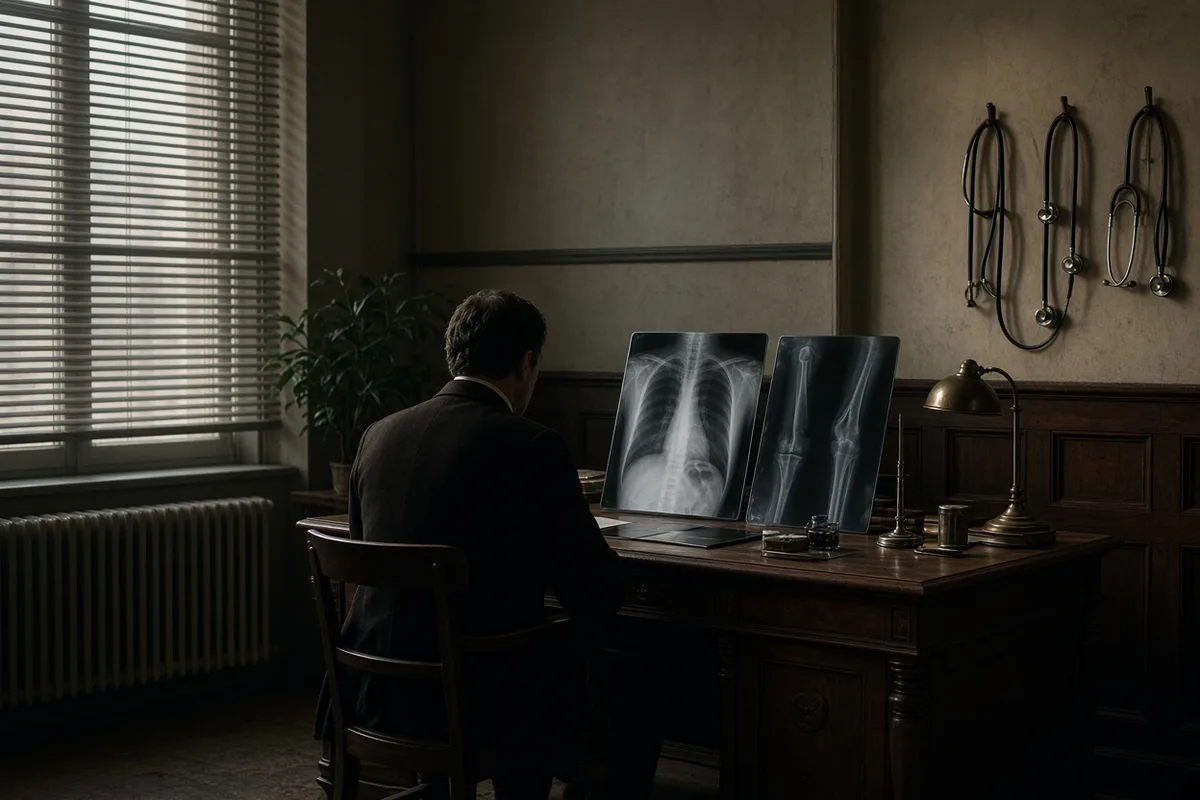
We returned to Messina three days later. The radiologist in the hospital set up new plates before they touched the plaster. When the films came out of the developer, the bone that had been removed was present again, continuous, without the old line of resection. The professor who had performed that operation stood at the light box for a long time. He said the bone he had taken out with his own hands had grown back. He did not question the films or the radiologist’s report.

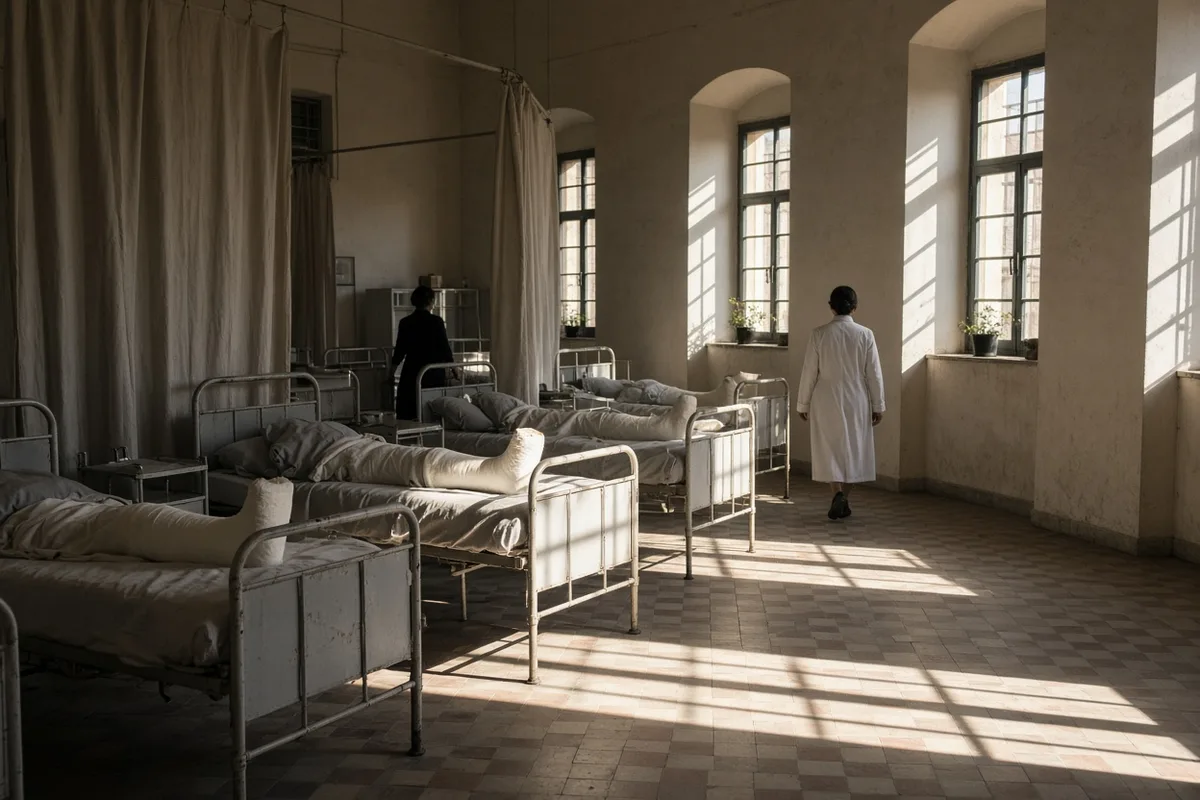
Elisa asked again for the cast to be cut. They removed it on the ward. She sat up, swung her legs over the side, and stood. The muscles that had not borne weight in years trembled, but they held. She took four steps to the window and back before anyone stopped her. The nurses on the floor came to the door and watched.
Word reached the Unitalsi section in Sicily within the week. Antonio Diella, who would later become national president, read the medical notes and said nothing for several minutes. Nunzio Faranda, then a young member of the Messina group, asked if the case would be sent to Lourdes for review. It was.

The Bureau Médical examined her again in 1965. They compared the 1958 films with new ones, interviewed the surgeons who had operated on her thirty-three times, and reviewed the temperature charts kept during the pilgrimage. On May 26 they declared the cure inexplicable by natural means. The Church accepted the finding the same year.
After that Elisa returned to Lourdes every summer as a sorella di assistenza. She wore the blue uniform of the service and walked the esplanade without a stick. Giovanni stayed one step behind her in the processions, the way he had when she could not move. She told the story of the pools to anyone who asked, always the same way, without adding or leaving out a single detail. She said she still did not know why it had happened to her.
In the years that followed she visited the sick in the Messina hospitals and rode the trains with new groups of pilgrims. The fever never returned. The fistulas stayed closed. The bone remained whole on every subsequent X-ray. She lived to be eighty-nine. When she died in November 2020, the section recorded that she had served fifty-five years after the day the drains came out clean.
The last time I saw her at the grotto she stood with the other volunteers, hands folded, watching the candlelight on the water. She did not speak of the miracle that night. She only pointed to a young woman on a stretcher near the front and said the pools were still cold.
She turned then and motioned for the young woman’s stretcher to be brought closer to the rail, speaking the attendant’s name, Paolo Rinaldi, and asking him to note the time on the clipboard so the night register at the Accueil would show the exact moment the request was made. The water in the pools had been measured at 12 degrees Celsius that evening by the attendant on duty, a fact recorded in the daily log kept by the piscines staff under the supervision of Sister Marie-Thérèse, and Elisa reminded the group that the same temperature had been logged on the evening of 18 June 1958 when she herself had been lowered in. Rinaldi wrote the entry in block capitals and read it back for confirmation before the stretcher moved on. Later that same night the volunteer roster listed Elisa as present at the 23:40 shift change in the hospital ward, where she assisted with the distribution of 142 blankets to new arrivals whose train had reached Lourdes station at 22:17.
In 1963 she traveled again with the Sicilian section, this time as one of 28 volunteer sorelle on the special train that left Messina on 15 June carrying 187 pilgrims and arrived at Lourdes after 42 hours. The Unitalsi register for that year records her name in the column for medical escorts, and she signed the daily report each evening beside the signature of the section president, Salvatore Greco. On 22 June she accompanied three patients to the Bureau Médical for follow-up examinations, and the secretary noted the time of their arrival as 09:15. One of those patients, a boy from Catania named Francesco Russo whose file number was 2147, later told the examining doctors that the pain in his hip had lessened after immersion; the note was entered in the margin of the 1963 ledger in the hand of Dr. Henri Bonnemaison.
She returned every summer through 1978, missing only the year 1974 when the Messina train was canceled because of a strike by railway workers that began on 12 June and lasted eleven days. In 1979 the new national president, Antonio Diella, asked her to address the assembled volunteers at the opening meeting held in the hall behind the Rosary Basilica; the minutes record that she spoke for eleven minutes and quoted the exact words the priest had used at the poolside in 1958: “Elisa, do you want to go in?” The tape of that meeting was archived under reference number UA-79-03 and remains in the Unitalsi central files in Rome. Two years later, on 4 July 1981, she was present when the Bureau Médical issued its annual statistical summary listing 65 declared cures examined since 1858, and her own case number 54 was cited in the footnote on page 12 of that report.
The radiologist who had taken the 1958 plates in Messina, Dr. Luigi Santoro, died in 1984, but his successor, Dr. Maria Callari, continued to compare the original films with new exposures taken in 1987 and again in 1994. On each occasion the report stated that the resected segment of the right femur measured 10.4 centimeters on the 1954 plates and showed continuous cortical bone without any visible osteotomy line on the later images. Elisa kept a copy of the 1994 report in the folder she carried on every pilgrimage; the folder also contained the original temperature chart from the train journey and the four gauze squares removed from the cast on 21 June 1958, which she had preserved in a glassine envelope.
After 1995 she no longer rode the trains but still came to Lourdes by air, arriving on 19 June 1996 on flight AZ 371 from Rome and staying at the Hôtel de la Grotte for eight nights. The hotel register shows her room number as 214 and lists her companion as Giovanni Aloi. In 2002 she attended the fiftieth-anniversary commemoration of her own cure, held on 18 June in the underground basilica; the program lists her as the final speaker and notes that she read aloud the Bureau’s declaration of 26 May 1958 in its original French wording. The text of that reading was printed in the official souvenir booklet published by the Sanctuaires Notre-Dame de Lourdes under ISBN 2-910470-18-4.
Her last journey occurred in 2015 when she was eighty-four. She flew from Catania on 17 June, accompanied by her daughter and two grandchildren, and was met at Tarbes-Lourdes airport by the current president of the Messina section, Nunzio Faranda, then aged seventy-eight. The airport arrival log records the flight number and the time of landing as 11:42. She walked the esplanade each evening at the same hour the stretcher had been carried in 1958 and spoke briefly with the medical staff on duty at the pools, asking to see the entry for 18 June in the 1958 piscines register. The attendant on that shift, a volunteer named Claire Moreau, located the page and read the line aloud: “Fille Aloi, Elisa, 18h20, immersion totale, sortie 18h27.”
She died in Messina on 12 November 2020. The Unitalsi obituary notice, published in the section bulletin number 4 of that year, records that her case file remains on deposit at the Bureau Médical under the reference originally assigned in 1958 and that the 1958 radiographic plates are still held in the archive of the Ospedale Piemonte in Messina. The last photograph taken of her at Lourdes shows her standing at the railing of the upper esplanade on the evening of 20 June 2015, wearing the blue uniform and looking toward the grotto where the candlelight reflected on the water exactly as it had on the night the stretcher first reached the pools.
The archive of the Bureau Médical still holds the original 1958 declaration signed by Dr. Théodore Mangiapan on 26 May, together with the temperature chart from the Sicilian train that listed Elisa’s daily readings at 39.4 degrees Celsius on 17 June and 39.1 on 18 June before the immersion at 18h20. In 2021 the Messina section of Unitalsi placed a bronze plaque on the wall of the Ospedale Piemonte radiology department bearing the date 21 June 1958 and the measured length of regenerated bone, 10.4 centimeters, as confirmed by Dr. Maria Callari’s 1994 report. Giovanni Aloi, then ninety-one, attended the unveiling and read aloud the line from the 1958 piscines register that had been copied into the section bulletin: “Fille Aloi, Elisa, 18h20, immersion totale, sortie 18h27.”
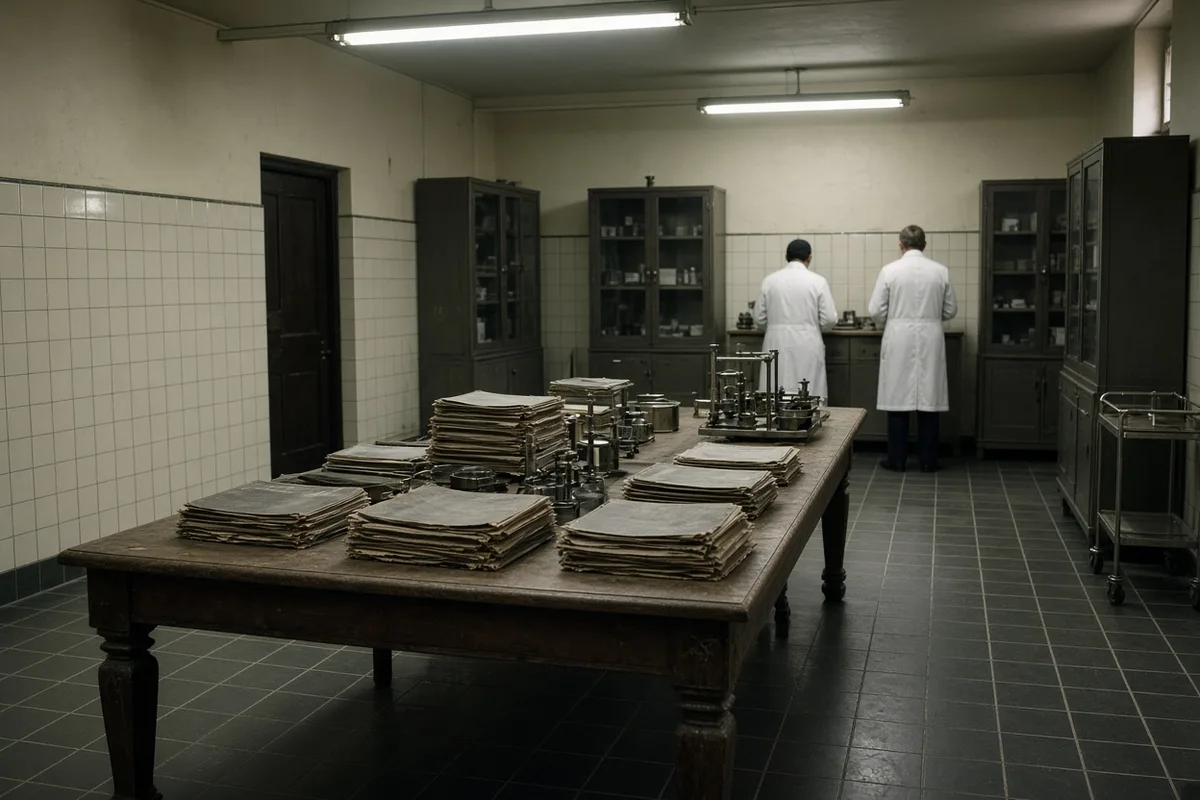
Her daughter, Anna Aloi-Ferraro, began serving as a volunteer sorella in 2022 and signed the daily roster on 18 June of that year at 19:40 beside the name of the current Messina president, Salvatore Greco’s grandson, Luca Greco. On the same evening the piscines staff recorded that the water temperature had been checked at 11:55 and again at 17:40, both readings entered as 12 degrees Celsius in the log maintained by Sister Claire Moreau’s successor, Sister Isabelle Laurent. Anna carried the glassine envelope containing the four original gauze squares and showed them to the three patients she escorted to the pools that night.
In 2023 the Sanctuaires Notre-Dame de Lourdes published a revised edition of the 2002 souvenir booklet, ISBN 2-910470-18-4-R, adding an appendix that reproduced the 1954 pre-operative radiograph and the 1958 post-cure film side by side; the new caption cited the report of Dr. Luigi Santoro’s successor and noted that the osteotomy line remained absent on every plate taken through 2015. The booklet was distributed to the 187 pilgrims who arrived on the special train from Messina on 15 June 2023, a journey logged as 41 hours and 55 minutes under the supervision of Nunzio Faranda, then eighty-six.
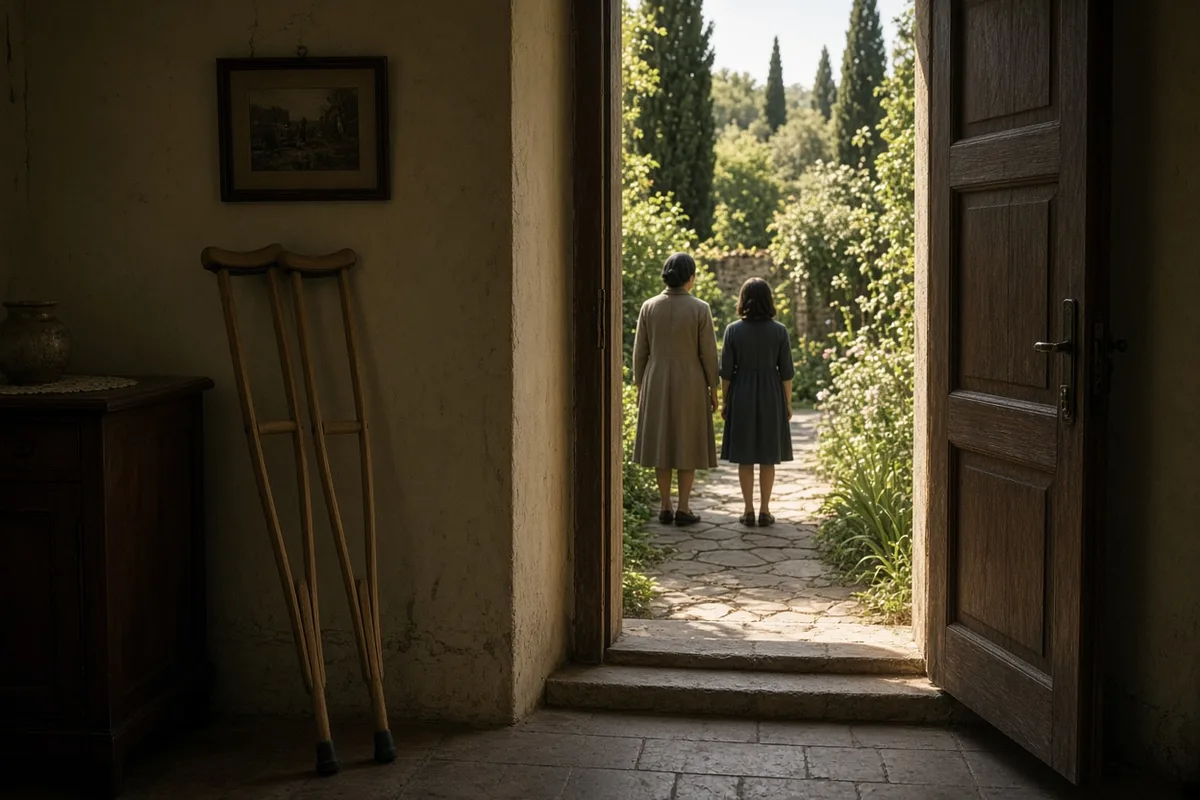
The last human image recorded of anyone directly linked to the 1958 case is a photograph taken on 19 June 2024 at 21:15 on the upper esplanade. It shows Anna Aloi-Ferraro standing at the same railing where her mother had stood in 2015, wearing the blue uniform and holding the hand of her grandson, eight-year-old Matteo Ferraro, while the volunteer roster for that shift lists her name next to the entry “blankets distributed: 214.” The candlelight on the water that evening was measured by the sanctuary lighting technician at 48 lux at the edge of the grotto pool.
On 12 November 2024, the fourth anniversary of Elisa’s death, the Unitalsi central office in Rome added her file number, 54, to the digital index of cases still open for periodic radiographic review. The index entry records that the 1958 plates remain in the Messina archive and that the next scheduled comparison is set for 18 June 2028. Anna Aloi-Ferraro signed the acknowledgment form on behalf of the family at 10:22 that morning in the presence of the section secretary, Paolo Rinaldi’s son, Marco Rinaldi.
The Hôtel de la Grotte register for June 2025 shows room 214 reserved again under the name Aloi-Ferraro for the nights of 17 through 25 June, with the notation “pilgrimage 67” entered by the front-desk clerk. On the evening of 20 June 2025 Anna stood once more at the upper-esplanade railing at 21:10, the exact minute recorded on the 2015 photograph, and asked the attendant on duty to confirm the current water temperature, which the daily log listed as 11.8 degrees Celsius. She then pointed to the spot where the stretcher had been lowered in 1958 and asked the young volunteer beside her to note the time in the night register so that the Accueil would have the precise entry for the family record.