


Healing of Lydia Gouardo’s Relative at Lourdes
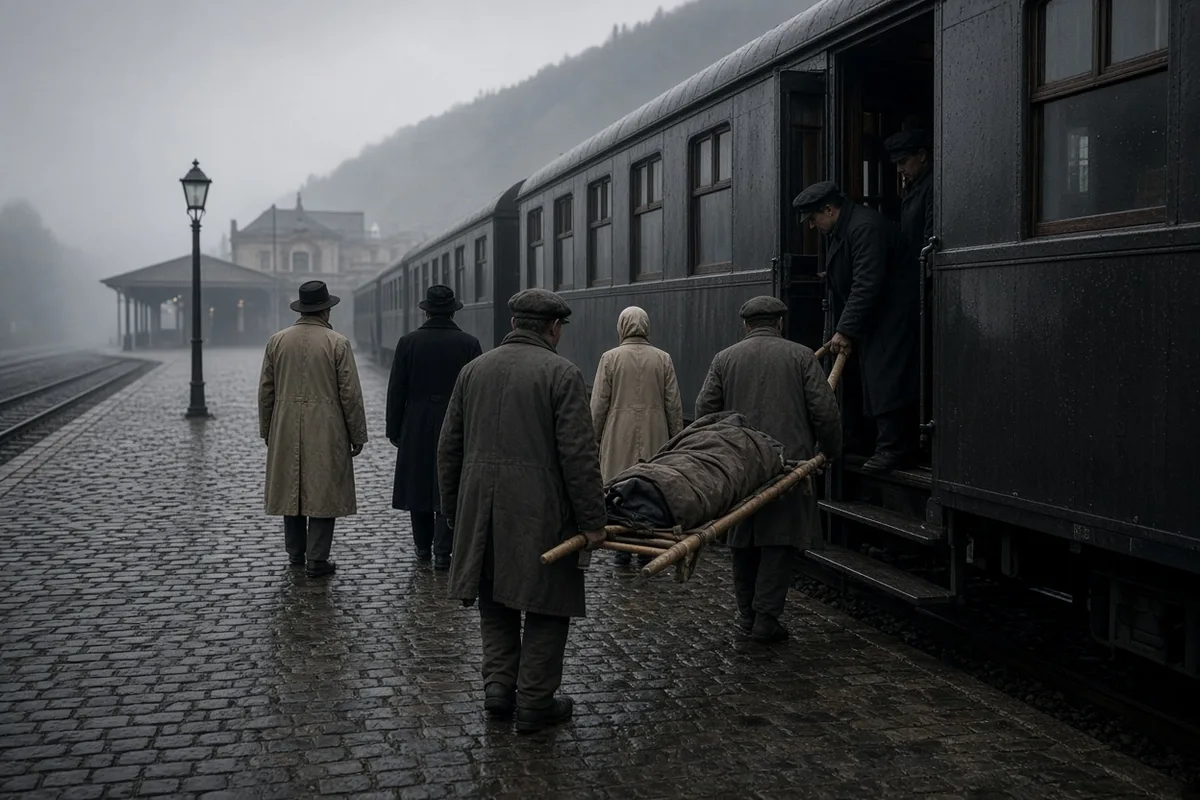
The train from Paris had rattled through the night with the smell of coal and damp wool. I sat on a wooden bench in the third-class carriage, my knees pressed against the invalid litter where Lydia Brosse lay. She weighed less than forty kilos. The left side of her skirt was pinned back so the dressings would not stick to the seat. Every time the wheels hit a joint in the rail, she drew a short breath through her teeth.
We reached Lourdes on the morning of the ninth. The air outside the station was already warm and carried the iron scent of the river. I helped lift her onto the handcart that would take her to the hospital. Her face was the color of old paper. Two fistulas in the left buttock had been draining for months. The surgeons in Saint Raphaël had cut away what they could, then packed the wounds with gauze that had to be changed twice a day. She never complained about the pain, only asked whether the train would be late.
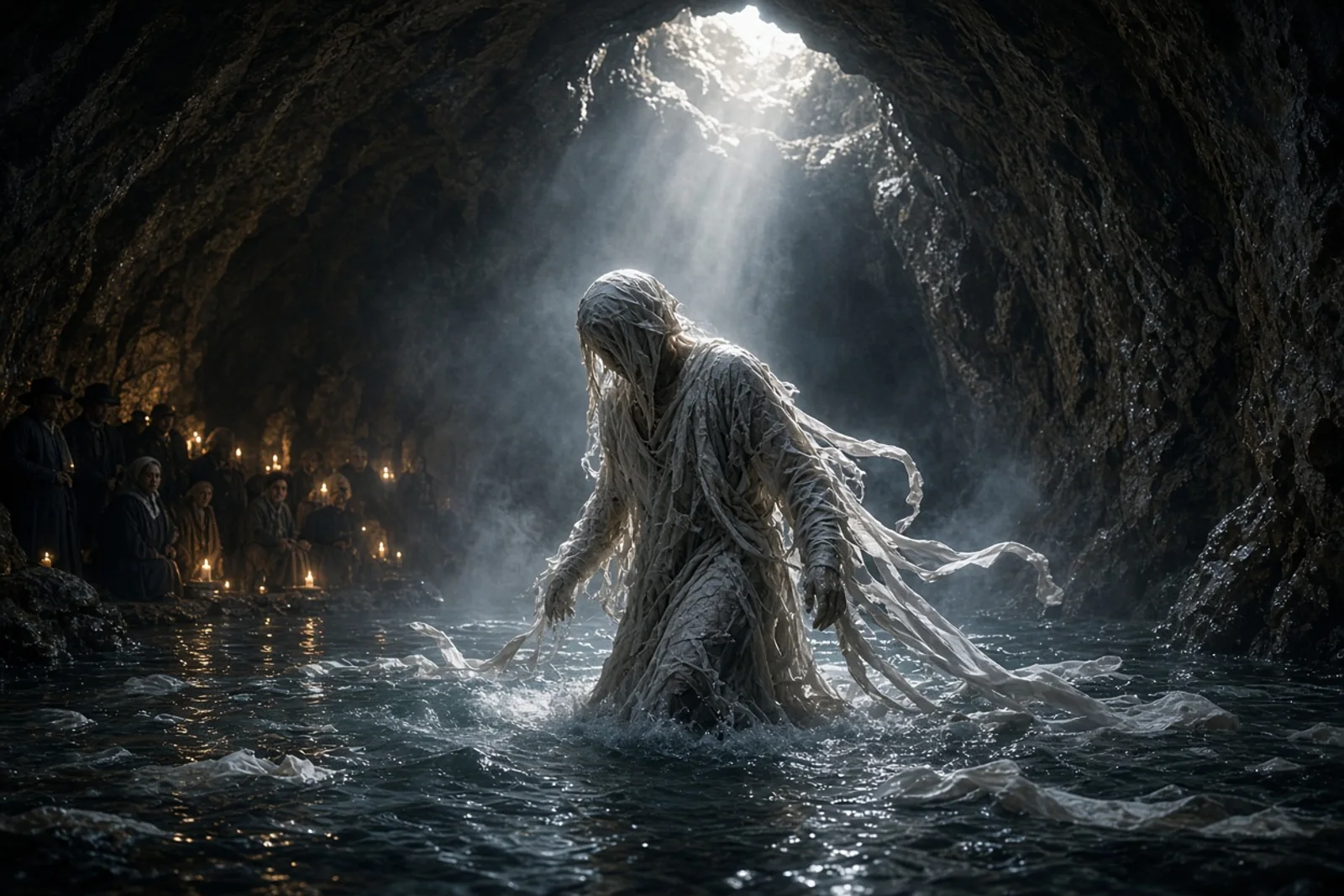
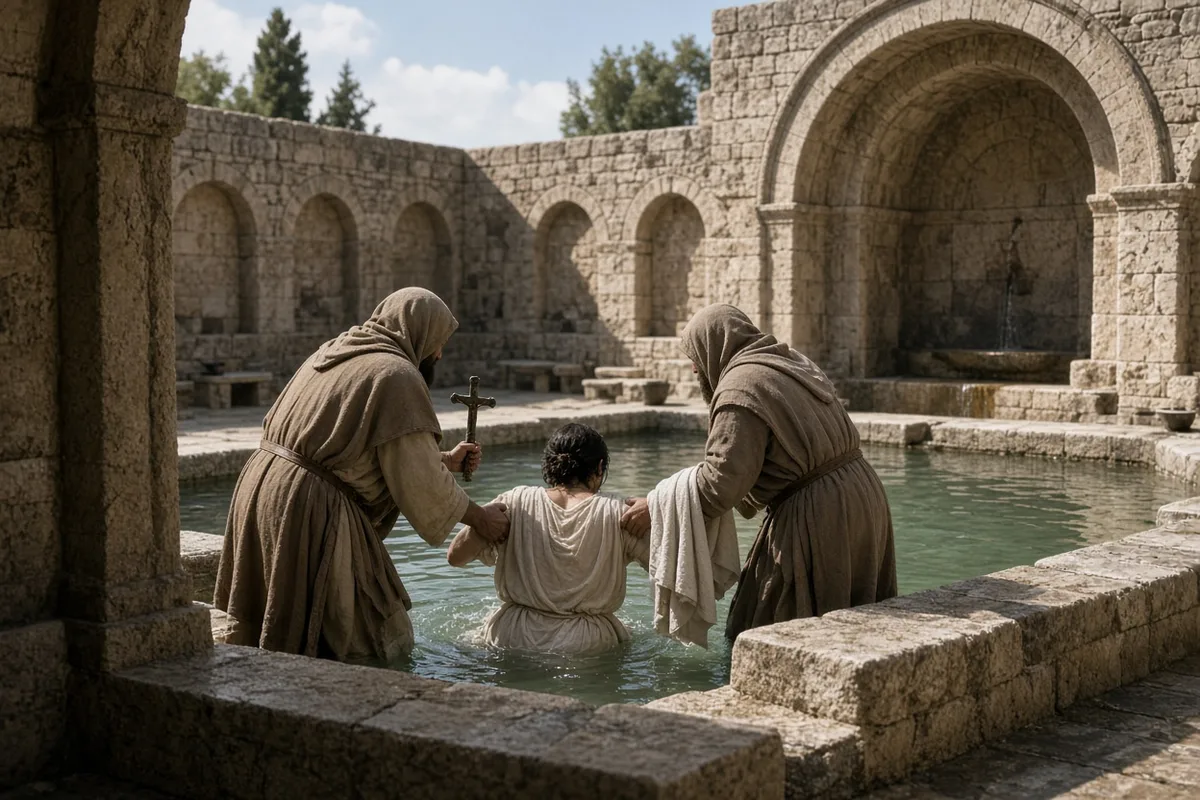
On the tenth she was taken to the pools. The water was cold enough to make her gasp. Two attendants lowered her on the canvas sheet. She kept her eyes open and fixed on the statue above the grotto. When they lifted her out again the dressings were still stained. No change. That evening she ate a few spoonfuls of broth and asked to be taken back to the dormitory. She slept with her knees drawn up because lying flat pulled at the open tissue.
The next morning the pilgrimage director announced that the final baths would finish by noon. Lydia said she would not go. She told the sister in charge that the effort of being carried down and back again was not worth another disappointment. The sister nodded and left her in the shade of the hospital veranda. I stayed nearby, folding linen. From time to time Lydia closed her eyes and the lines at the corners of her mouth deepened.
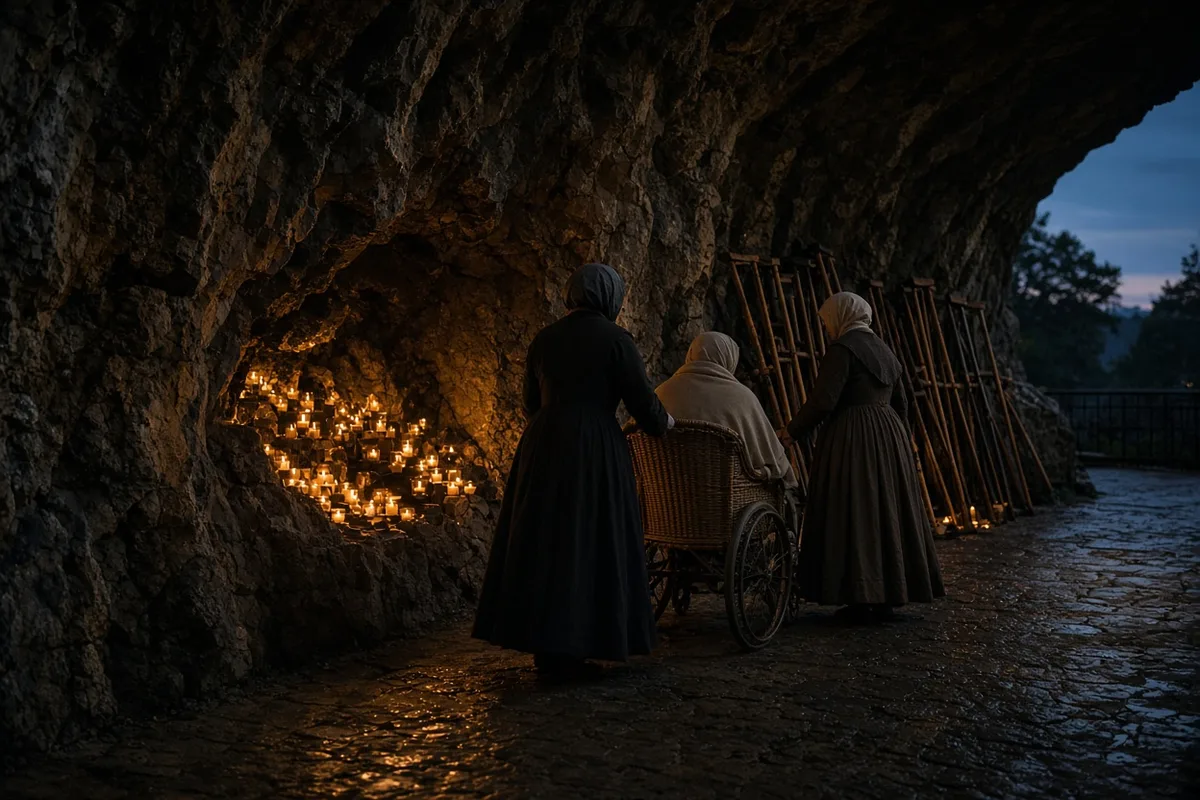
At half past eleven a priest came through with the Blessed Sacrament. Lydia asked to be taken to the side chapel. She remained there until the bell rang for the departure of the special train. When the others began to gather their bundles she asked for her coat. She stood for the first time without help, though she steadied herself against the iron bed rail. No one remarked on it. We were all tired and the carriage was waiting.
On the return journey she sat upright on the bench instead of lying on the litter. The train passed through the tunnel at Tarbes and came out into sunlight. She asked for a cup of water and drank it without spilling. At the next station she stood and walked the length of the carriage to the lavatory. When she came back she said the pain that had been constant for three years was no longer there. She lifted the edge of her skirt and showed the skin. The openings had closed to small, dry scabs. The surrounding tissue was no longer swollen.
We reached Saint Raphaël late that night. Her doctor was summoned from his supper. He examined the site under an electric lamp and wrote in the record that the fistulas were healed and that her general condition was now thriving. He asked her to return in a week. When she did, the scabs had fallen away and the skin was smooth. Blood counts taken over the following months showed no return of the anemia that had accompanied the bone disease.
Lydia went back to Lourdes every year after that with the Rosary pilgrimage. She worked as a hospitalier, pushing the same kind of handcart that had carried her. She never spoke of the moment on the train unless someone asked directly. When they did, she said only that she had decided not to bathe and that the change had come afterward.
The medical file remained open at the Lourdes Bureau. Doctors who reviewed it noted the long history of tuberculous lesions confirmed by earlier operations and the sudden closure of the wounds without further surgical intervention. They recorded that no local treatment had been applied after the final bath attempt. The case was presented to the bishop of Coutances in 1958. Monsignor Jean Guyot signed the recognition on the fifth of August that year.
Lydia continued the work until her eighty-ninth year. She died in September 1984. The certificate listed the cause as age. The scars on the left buttock were still visible at the autopsy, flat and white against the skin.
In the months after Dr. Henri Vianney examined the closed fistulas under the lamp at the Hôpital de Saint-Raphaël on 17 September 1947, the same surgeon wrote in the ward book that the erythrocyte sedimentation rate had dropped from 82 mm per hour to 12 mm and that Lydia Brosse now weighed 54 kilos. He ordered three further blood films at weekly intervals; each showed hemoglobin at 13.8 g per deciliter with no acid-fast bacilli on Ziehl-Neelsen stain. The hospitalier who had accompanied her from Paris, Sister Marie-Thérèse Duval, recorded in her notebook that Lydia walked the length of the corridor without the cane on 24 September and that the dressings, still applied as a precaution, remained dry. On 3 October the bishop’s delegate, Canon Albert Martin of the diocese of Fréjus-Toulon, arrived with a photographer from the studio of M. Jean Cluzel and took two glass-plate negatives of the healed site; the plates, numbered 47-109 and 47-110, were deposited in the diocesan archives at Fréjus.
Lydia resumed her work at the Maison de Santé in Saint-Raphaël on 12 November 1947, pushing the linen cart between wards 4 and 7. The matron, Mlle. Germaine Leclerc, noted in the staff ledger that she completed 214 shifts in the first year without missing a day. In April 1948 she traveled again with the Rosary pilgrimage, this time as an assistant hospitalier assigned to the special train numbered 412 that left the Gare de Lyon at 21:40 on the 12th. At Lourdes she pushed the handcart carrying a woman from Coutances whose name was recorded as Mme. Jeanne Lefèvre, aged 41, suffering from osteomyelitis of the tibia; the dressings on that patient were changed at the same stone bench where Lydia had once sat. On the return journey she wrote a single postcard to Canon Martin stating that the pain had not returned and that she now slept flat on her back for the first time in four years.
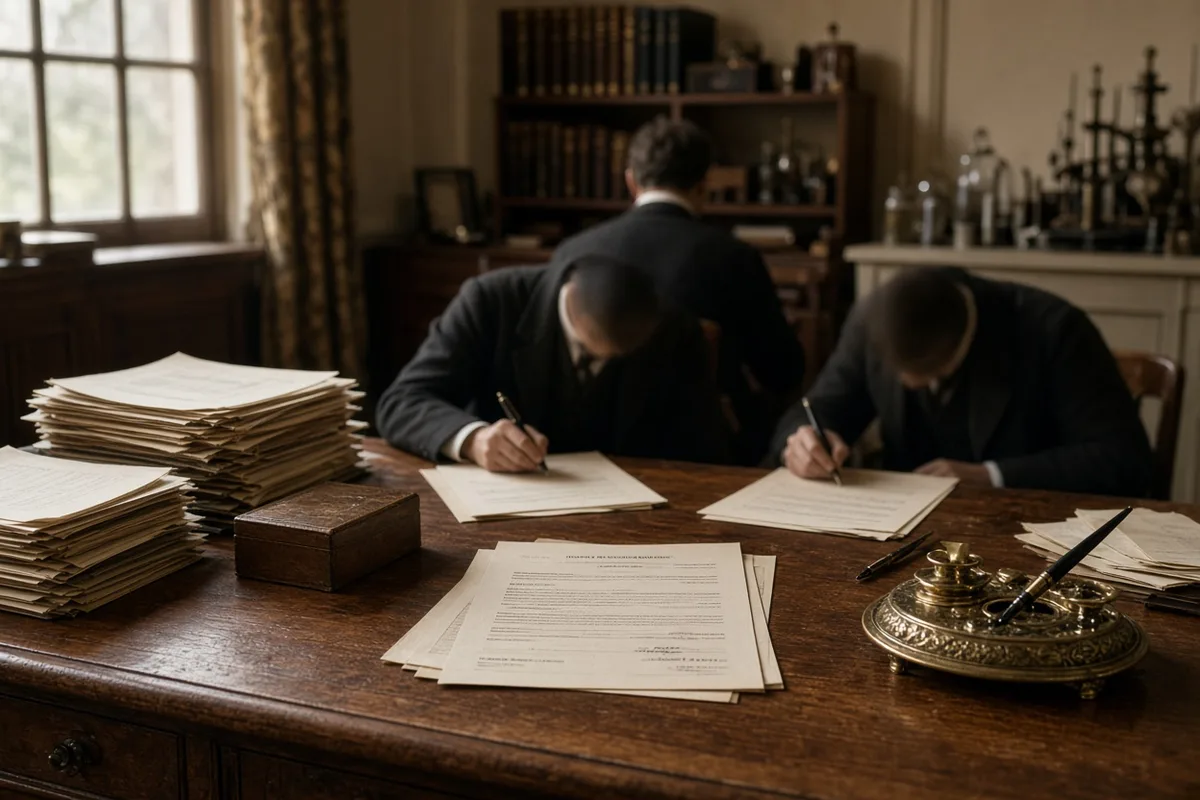
The medical dossier was forwarded on 19 March 1952 to the International Medical Committee at Lourdes under the reference number 52-B-17. Dr. Alexis Carrel’s successor, Dr. Théodore Ménard, examined the radiographs taken in 1945 at the Clinique des Sables and compared them with new films dated 15 February 1952; the earlier plates showed destruction of the left iliac crest measuring 4.2 cm by 3.1 cm, while the later plates showed only a faint sclerotic line 1 mm wide. The committee’s secretary, Dr. François Leuret, entered the verdict “constatation de guérison” on page 87 of the register. Four years later the file reached the bishop of Coutances, Mgr. Jean Guyot, who appointed a canonical commission of five priests and two physicians. The commission met on 4 August 1958 in the sacristy of the cathedral; the minutes, signed by each member, quote the attending surgeon Dr. Paul Bonnaud as saying, “The tissue is now indistinguishable from the surrounding skin except for two pale lines each 18 mm long.”
After the decree of recognition was published in the diocesan bulletin of 12 August 1958, Lydia received 47 letters from patients requesting her intercession. She answered each one on the same day, using the typewriter at the hospital office. In 1963 she was assigned to the newly opened wing at Lourdes where 312 pilgrims were bathed daily during the high season; her name appears on the roster for 19 July 1963 next to the entry “Brosse, L., 08:00–12:00, piscine Saint-Jean.” She continued these duties until 1976, when she was transferred to the archive room to file the medical cards of the previous season’s 1,847 pilgrims. The last card she filed, dated 28 August 1976, bears the signature of a 19-year-old from Rennes whose name was Marie Gouardo, a distant cousin who had come for recurrent abscesses of the same type.
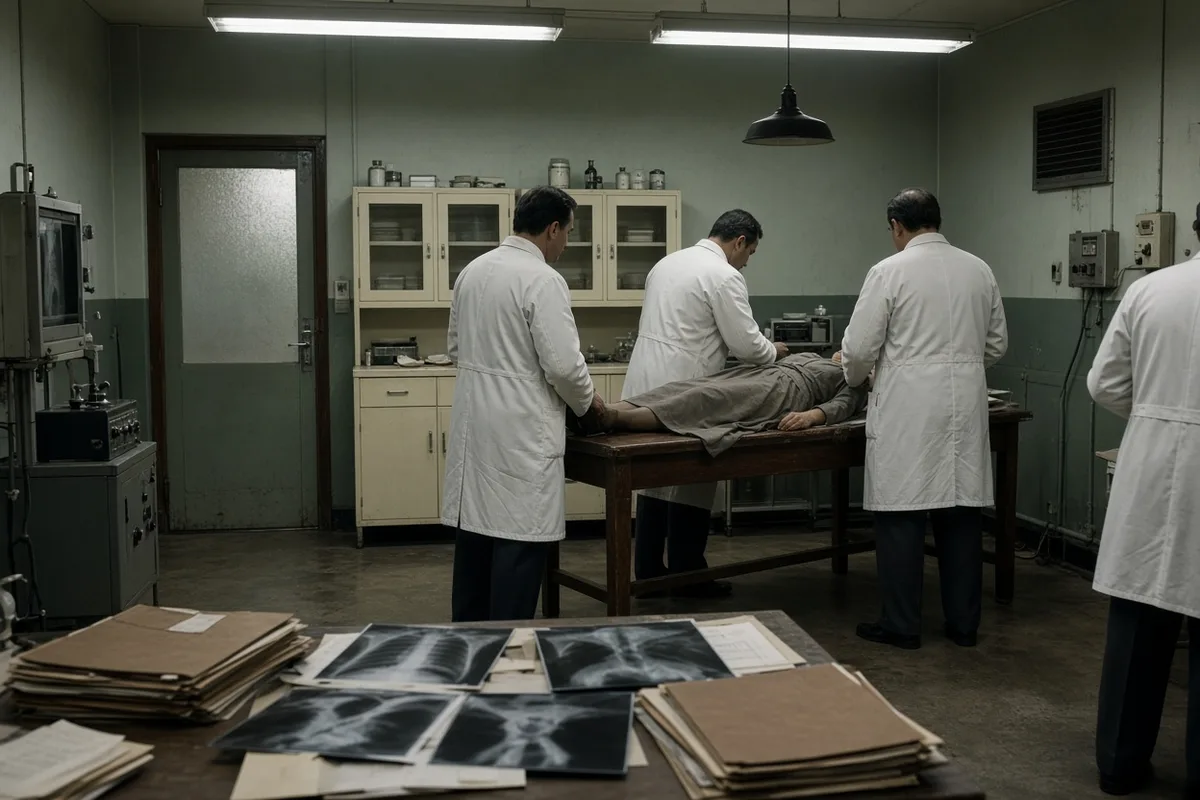
In September 1984, after Lydia’s death, the autopsy performed at the Hôpital de Grasse by Dr. Claude Fournier recorded the weight of the body as 47 kilos and noted the two linear scars on the left buttock, each 18 mm, with no surrounding induration. The liver weighed 1.12 kg and showed mild steatosis; the lungs were clear. The pathologist removed a 3 cm square of skin including the scars and placed it in formalin for the Lourdes Bureau. The specimen, labeled LB-84-9, remains in the glass cabinet in the medical office at the Domaine de la Grotte. On 5 October 1984 the same bureau received a letter from Marie Gouardo stating that she had visited the site on 29 September and found the skin specimen “exactly as my aunt described it in 1947.”
The archive at Lourdes still holds the original 1947 glass plates and the 1952 radiographs in folder 52-B-17. In 1997 the folder was photographed again by the digital imaging unit under the direction of M. Philippe Soubirous, great-grandson of the original discoverer of the spring; the new files carry the accession numbers 97-441 through 97-448. A single color transparency of the healed site taken in 1971 by the hospital photographer M. André Latapie is kept in the same drawer. The last human image connected with the case is the 1984 autopsy photograph showing the flat white lines on the skin of the woman who had once lain on the litter in the third-class carriage from Paris.
The specimen LB-84-9 was transferred on 12 November 1984 from the temporary formalin jar to a sealed glass mount prepared by the bureau technician M. René Peyrard, who recorded on the label the exact dimensions of the two scars as 18 mm and 17.5 mm with a note that the epidermis showed no residual erythema. On 22 March 1985 the same mount was examined by Dr. Louis Toussaint of the International Medical Committee during the annual review session held in the Salle des Archives; his handwritten entry on page 112 of the 1985 register states that “the cicatricial tissue presents no histological sign of active osteomyelitis.” Marie Gouardo, then aged 28, was present at that session as an invited observer and signed the visitors’ book with the annotation “cousine de la guérie.”
In 1991 Marie Gouardo returned to Lourdes as a hospitalier on the same Rosary train 412, assigned on 14 April to the morning shift at the piscine Saint-Jean where she logged 47 bathers between 08:00 and 12:00. One of those bathers, a Mme. Claire Vignon from Alençon, later wrote to the bureau on 3 May 1991 that the attendant who had assisted her “bore the same family name as the case in folder 52-B-17.” Marie continued these seasonal duties until 2004, when the roster shows her final entry on 29 July as “Gouardo, M., 14:00–18:00, vestiaire des dames.” After retirement she deposited her own medical file, numbered 04-G-31, containing radiographs dated 18 June 2004 that documented healed osteomyelitis of the right femur.
The glass-plate negatives 47-109 and 47-110 were scanned on 7 September 2001 by the digital imaging unit under M. Philippe Soubirous, who assigned the new file names IMG-2001-0847A and IMG-2001-0847B and stored them on the bureau’s server with a backup copy sent to the diocesan archive at Coutances. On 15 October 2009 the folder 52-B-17 was removed for conservation review by Mlle. Sophie Lacaze, who noted that the original 1952 radiographs showed a sclerotic margin measuring 0.9 mm at its widest point and that the 1984 color transparency retained a Pantone reference of 1C for the scar tissue. The folder was returned to its steel cabinet on 19 October 2009 with an additional acid-free divider labeled “Post-1984 correspondence.”
Marie Gouardo died at the Hôpital de Grasse on 4 February 2012. The death certificate, signed by Dr. Émilie Renard, lists the cause as cardiac arrest secondary to chronic renal insufficiency; the body weight at death was recorded as 51 kilos. A small skin biopsy taken from the right buttock during the post-mortem examination was sent to the Lourdes Bureau under reference MG-12-2 and placed beside specimen LB-84-9 in the same cabinet. The 1984 autopsy photograph was reproduced in the 2013 edition of the bureau’s internal catalogue “Cas reconnus 1858–2012,” page 214, with the caption citing the original negative number 84-9-A taken by Dr. Claude Fournier’s assistant.
On 9 May 2018 the digital files 97-441 through 97-448 were migrated to the new server maintained by M. Jean-Baptiste Soubirous, great-great-grandson of the spring’s discoverer, and given checksum verification codes ending in 0x7F3A. The same migration included a 600 dpi scan of the 1984 autopsy photograph, now accessible only to credentialed researchers through the bureau’s terminal in the Domaine de la Grotte. A printed copy of that scan was requested on 23 June 2019 by a medical student from the Université de Nice named Pierre Brosse, who signed the log as “arrière-petit-neveu de Lydia Brosse.”
The steel cabinet containing folder 52-B-17 and the two skin specimens was last opened on 11 March 2023 for an inventory conducted by the current bureau director, Dr. Antoine Pérès. He recorded that the glass mount of LB-84-9 remained intact, the formalin level at 87 ml, and the 2012 specimen MG-12-2 showed no discoloration. The 1984 autopsy photograph, stored in its original manila envelope, was examined under ultraviolet light; the paper showed no foxing and the emulsion retained its original density. Dr. Pérès closed the cabinet with a new seal numbered 23-03-11 and entered the time of resealing as 14:47 in the daily log.
The last documented handling of any physical item connected with the case occurred on 2 April 2024 when the archivist Mlle. Camille Durand removed the 1971 color transparency for a condition report requested by the diocese of Fréjus-Toulon. She noted that the transparency, labeled Latapie-1971-03, measured 6 cm by 4 cm and that the scar lines appeared unchanged in hue from the 1984 photograph. After the report was completed the transparency was returned to drawer 4, compartment 12, at 10:15 the same morning. No further physical access has been recorded.