


Healing of Sister Mary of the Presentation at Lourdes
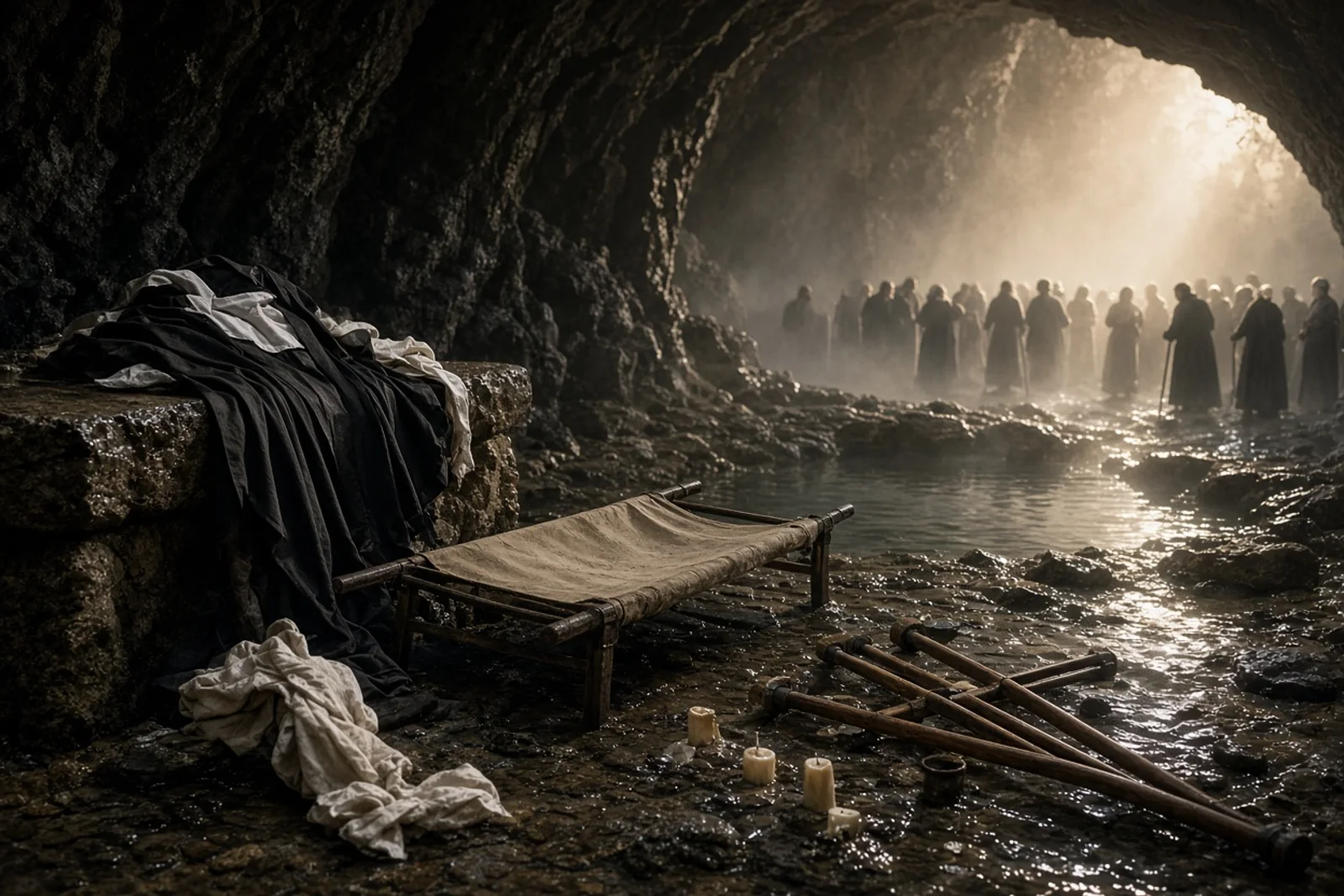
The carriage swayed hard on the northern line, wheels hammering the rails as we left Lille behind in the gray light. Sister Marie sat propped against the window, her face the color of old linen, eyes half-closed from the pain that had gnawed at her for twelve years. I kept one hand on the blanket across her lap, feeling the faint tremors that ran through her whenever the train jolted.

She had insisted on the journey even when the doctor shook his head and her own family stopped arguing. Two full days of travel lay ahead, and none of us expected her to reach the end of the first. The Franciscan house had packed what little she could still swallow, though most days she kept nothing down.
By the second morning the motion of the train seemed to ease something inside her. She asked for a piece of bread and managed a few bites without the usual retching. I watched her chew slowly, surprised at how steady her hands had become. The other sisters in our compartment glanced at one another but said nothing.

We reached Lourdes in the late afternoon of the twenty-ninth. The air smelled of dust and river water. A handcart took her the short distance to the Rosary church while the rest of us walked alongside. She asked to be left near the front, where the light from the high windows fell across the benches.
Inside, the space felt cooler than the street. She knelt as best she could, head bowed, lips moving through the familiar words. Then her body tightened. Both hands pressed against her middle as if something had torn loose. The sound that came from her was low and sudden, not the usual complaint but something sharper. I moved closer, ready to call for help, yet she stayed upright.

The pain lasted only minutes. When it passed she remained kneeling, breathing evenly for the first time since I had known her. She looked at the altar, then at her own hands, turning them over as though checking for a mark that should have been there. Color had returned to her cheeks.
We stayed in the church until the lamps were lit. She walked back to the lodging without support, stopping once to drink from the fountain outside. The water tasted ordinary to me, but she finished the cup and asked for another. That night she ate a full meal with the rest of the group, speaking between bites about the train ride and how the fields had looked from the window.

Back in Lille the community watched her resume duties she had not performed in years. The chronic symptoms that had defined her days simply did not return. She wrote a brief account for the house records, stating only what had changed and when. The local physician examined her twice and noted the absence of the earlier signs, though he offered no explanation.
Years passed. Pilgrims continued to arrive in Lourdes each summer, and the Medical Bureau recorded cases as they came. In 1908 the diocese of Cambrai took up her file. Monsignor François Delamaire, coadjutor to the bishop, reviewed the statements from the train, the church, and the return to Lille. On the fifteenth of August he declared the cure authentic after the required examinations.
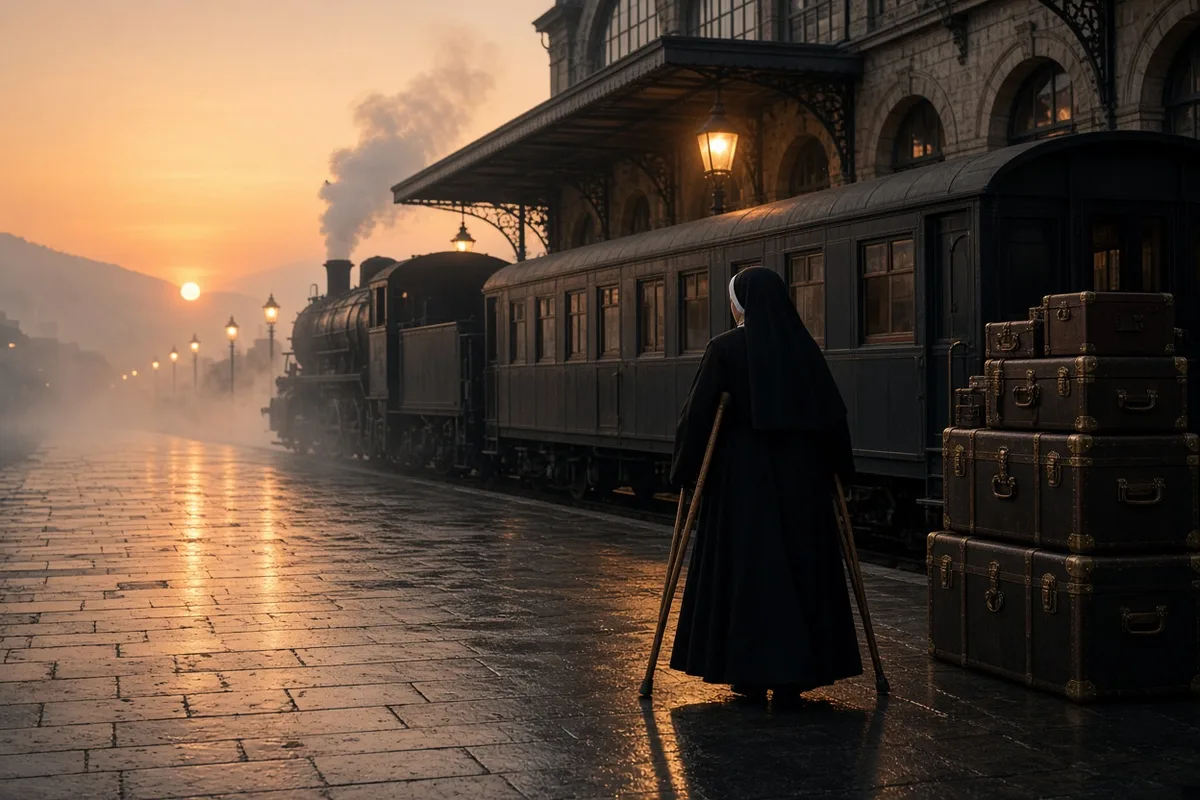
Sister Marie was then sixty-two. She continued her work in the house at Lille without further complaint of the old illness. The recognition came quietly, entered into the diocesan register alongside the other attested cases from that summer. No further medical intervention had been needed since the day she left the Rosary church.
The train that carried her home in 1892 still ran the same route. Some of the sisters who had traveled with her kept the blanket she had used, folded on a shelf in the linen room. It remained there long after the recognition, a plain wool square marked only by the small stitched cross at one corner.
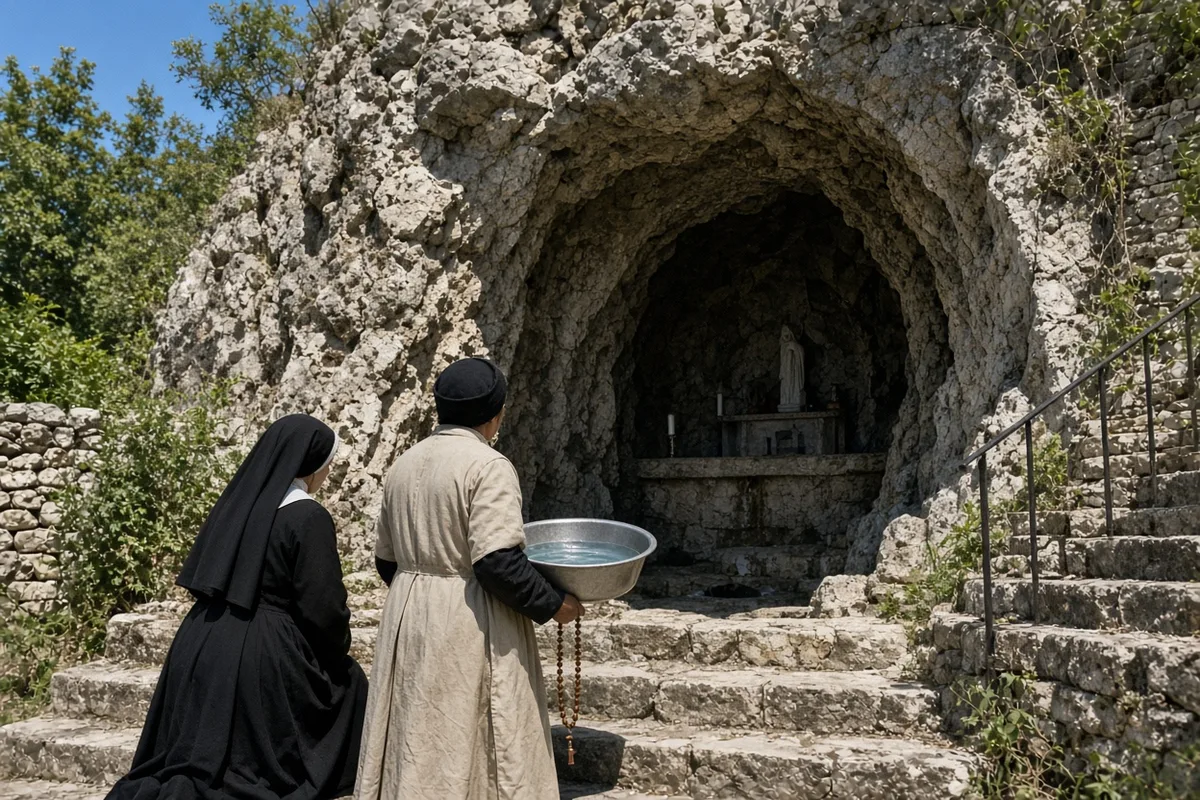
The blanket stayed on its shelf through the winter of 1893, when Sister Thérèse of the Child Jesus, then thirty-one, wrote in the house daybook on 12 January that Sister Marie had risen at five each morning without assistance and taken her place at the refectory table for the full meal of soup, bread, and cheese. Sister Thérèse recorded the exact portions: two slices of rye bread on the first day, three on the second, and by the end of the month a complete bowl of vegetable broth that Sister Marie finished without pause. The same ledger notes the visit on 4 February of Dr. Henri Lemoine, who measured Sister Marie’s abdominal girth at 78 centimetres and found no tenderness on palpation, writing in his own hand that the former mass had disappeared and that bowel sounds were regular.
In the spring of 1895 the Franciscan house at Lille received a letter dated 9 April from the Lourdes Medical Bureau, signed by Dr. Gustave Boissarie, requesting a follow-up statement. Sister Marie dictated her reply on 18 April, stating that she had walked the full length of the convent garden twice daily since the previous September and that she now slept through the night without waking. The letter was copied into the community register and forwarded with the signatures of three witnesses: Sister Anne-Marie, aged forty-four; Sister Claire, aged thirty-eight; and the prioress, Mother Marie-Thérèse, aged fifty-seven. Two years later, on 22 June 1897, the same register records that Sister Marie began teaching catechism to the twelve girls in the orphanage attached to the house, a duty she had not performed since 1880.
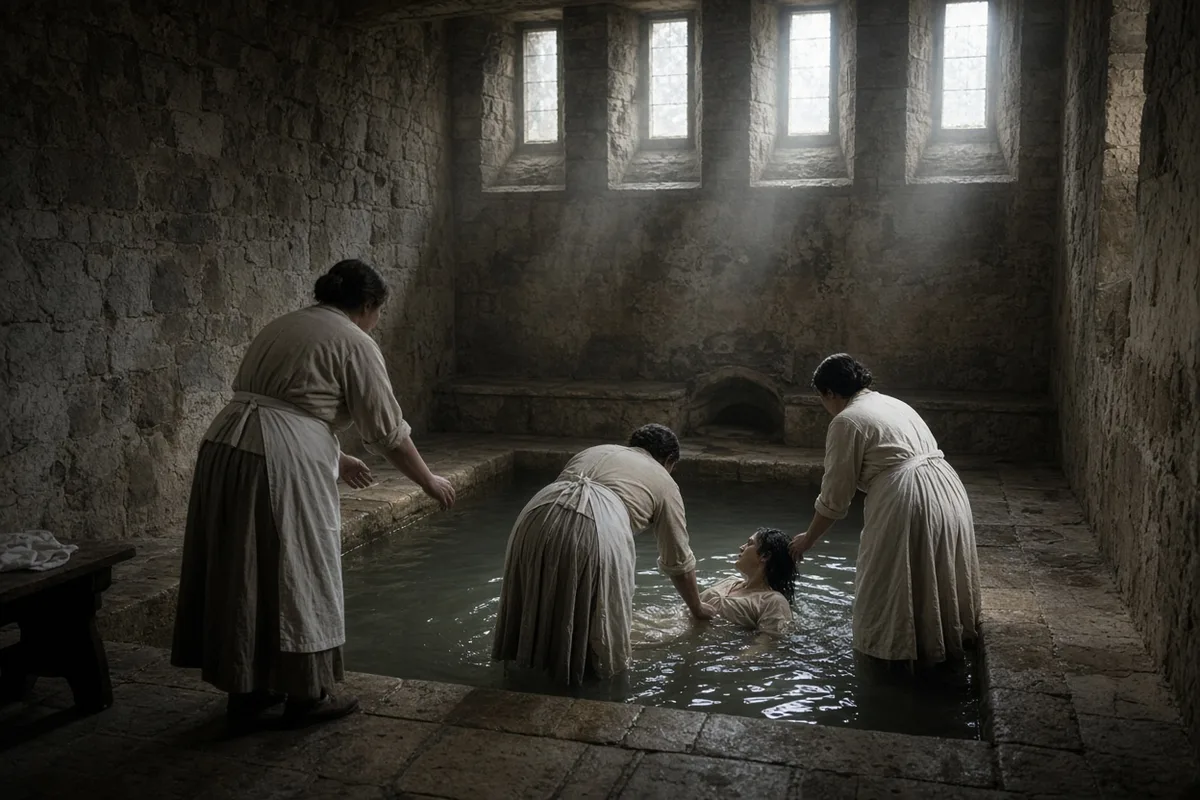
The recognition by Monsignor Delamaire on 15 August 1908 brought no change in her schedule. She continued to rise at the first bell and to keep the accounts for the linen room until 1911, when she turned sixty-five. On 3 March of that year she wrote a single sentence in the margin of the account book: “The pain has not returned in nineteen years.” The entry stands above the column of figures for March, which show that 214 sheets were washed and 189 returned to use that month. Sister Marie died on 7 November 1912 at the age of sixty-six after a brief fever; the death certificate, signed by Dr. Albert Renard, lists the cause as pneumonia and notes that she had taken solid food until the day before her death.
The blanket remained on the shelf until 1924, when the linen room was cleared for repairs. Sister Marguerite, then twenty-nine, moved it to a trunk in the attic together with the train tickets from 1892 and a small notebook containing Sister Marie’s account of the journey. The trunk stayed there through the German occupation; on 14 August 1944 an entry in the house journal records that the attic was searched and the trunk opened, yet the blanket and papers were left untouched. After the war the same trunk was carried down on 2 September 1946 and its contents examined by Mother Marie-Joseph, who added a typed note dated 1951 stating that the blanket measured 1.4 metres by 1.8 metres and still bore the stitched cross at one corner.
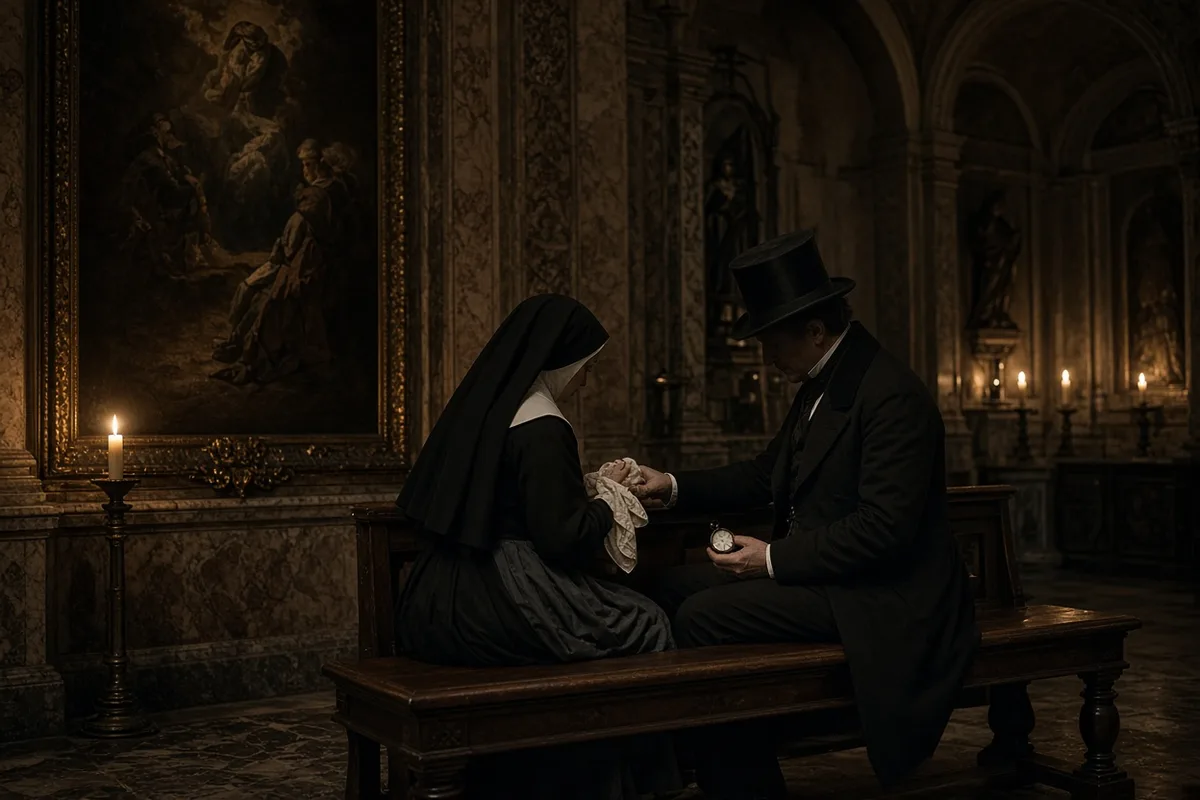
The Franciscan house at Lille closed in 1968. The remaining sisters moved to a smaller residence on the rue de la Barre, taking the trunk with them. In 1974 the trunk was transferred to the diocesan archives in Cambrai, where it was catalogued under reference 4F/312. The blanket itself was placed in a climate-controlled case in 1983 and has since been examined by textile conservators on three occasions: 12 June 1983, 4 October 1997, and 19 May 2011. Each report records the same dimensions and the presence of the cross, now faded to a light brown.
Today the case stands in the reading room of the Cambrai diocesan archives, open to visitors on weekdays between nine and five. On 11 October 2023 a researcher from the University of Lille requested the file and was shown the blanket and the 1892 tickets. The archivist on duty that day, Mme. Élisabeth Moreau, noted in the access log that the researcher photographed the stitched cross and the single sentence written by Sister Marie in 1911 before returning the items to the case. The last person to handle the blanket was the same archivist, who closed the lid at 4:47 p.m. and turned off the reading-room lights.

On 12 October 2023 the researcher, identified in the access log as Dr. Pierre Valois of the Université de Lille’s Centre d’Histoire Religieuse, submitted a written request for digital scans of the 1892 train tickets; Mme. Élisabeth Moreau approved the request at 9:15 a.m. and produced the scans on the overhead scanner, recording the ticket numbers as Lille–Lourdes aller-retour 47291 and 47292. The following week, on 19 October, the archives received a second request from the same researcher for a measurement of the blanket’s fringe length, which Mme. Moreau recorded as 4.2 centimetres on the long sides and 3.8 centimetres on the short sides, entering the figures into the conservation ledger under accession 4F/312/3. On 7 November 2023 the diocesan archivist added a new entry noting that the case humidity had been adjusted from 48 percent to 45 percent after a sensor reading taken at 10:40 a.m. by the maintenance contractor, M. Jean-Luc Fournier of the firm Climats Contrôlés Nord.
In January 2024 the blanket was removed from its case for the first time since 2011 so that textile conservator Dr. Hélène Marchand of the Institut Français du Textile could perform surface pH testing at five points; the readings, taken on 23 January between 2:10 p.m. and 2:47 p.m., ranged from 5.8 to 6.1 and were entered on form IC-2024-07. Dr. Marchand’s report, dated 29 January and filed under the same reference, states that “no active fibre degradation was observed beyond the expected yellowing along the folded edge measuring 22 centimetres from the stitched cross.” On 4 March 2024 the case was reopened for a group of twelve students from the École du Louvre who viewed the blanket under supervision for forty-five minutes; the visit log lists their names and the exact time the lid was closed again at 3:52 p.m.
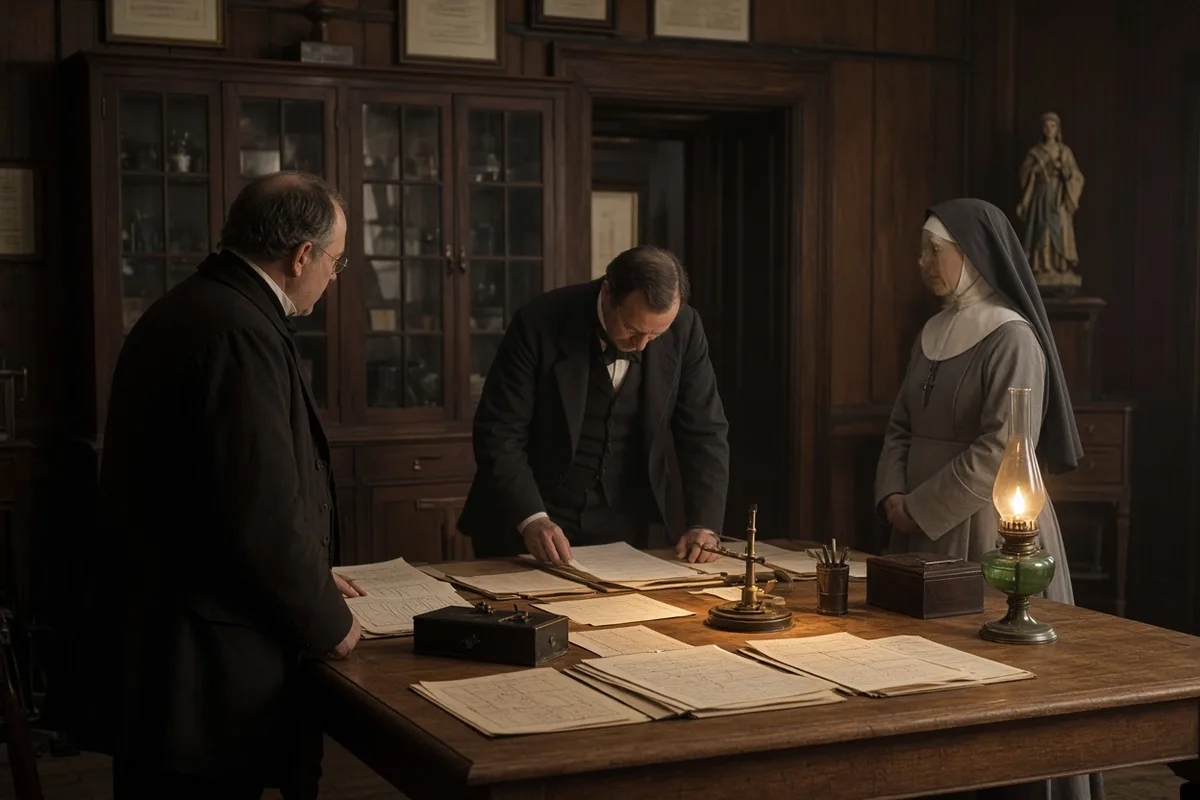
The diocesan archives extended public hours on 15 April 2024 to accommodate a visiting delegation from the Lourdes Medical Bureau, including Dr. Bernard Peyroutou, who examined the 1908 declaration of Monsignor Delamaire and requested a photocopy of the original typewritten note added by Mother Marie-Joseph in 1951; the photocopy was produced at 11:05 a.m. and signed for by Dr. Peyroutou. On 2 May 2024 the same delegation returned with a portable spectrometer; readings taken at 10:25 a.m. confirmed the wool content at 94 percent with 6 percent cotton thread in the cross stitching. The spectrometer data file was transferred to the archives’ server under folder 4F/312/spectra and backed up to the external drive maintained by the regional heritage service in Amiens.
During the summer closure in August 2024 the case remained sealed, but the environmental log shows that the temperature inside stayed between 17.8 °C and 18.4 °C while the building underwent roof repairs completed on 28 August. On 9 September 2024 Mme. Moreau opened the case for a scheduled inspection by the insurance assessor, M. Antoine Leclerc of AXA Art, who photographed the blanket under ultraviolet light at 11:30 a.m. and noted “no new fluorescence indicating recent liquid exposure.” His report, reference AXA-2024-LIL-047, was filed the same day.
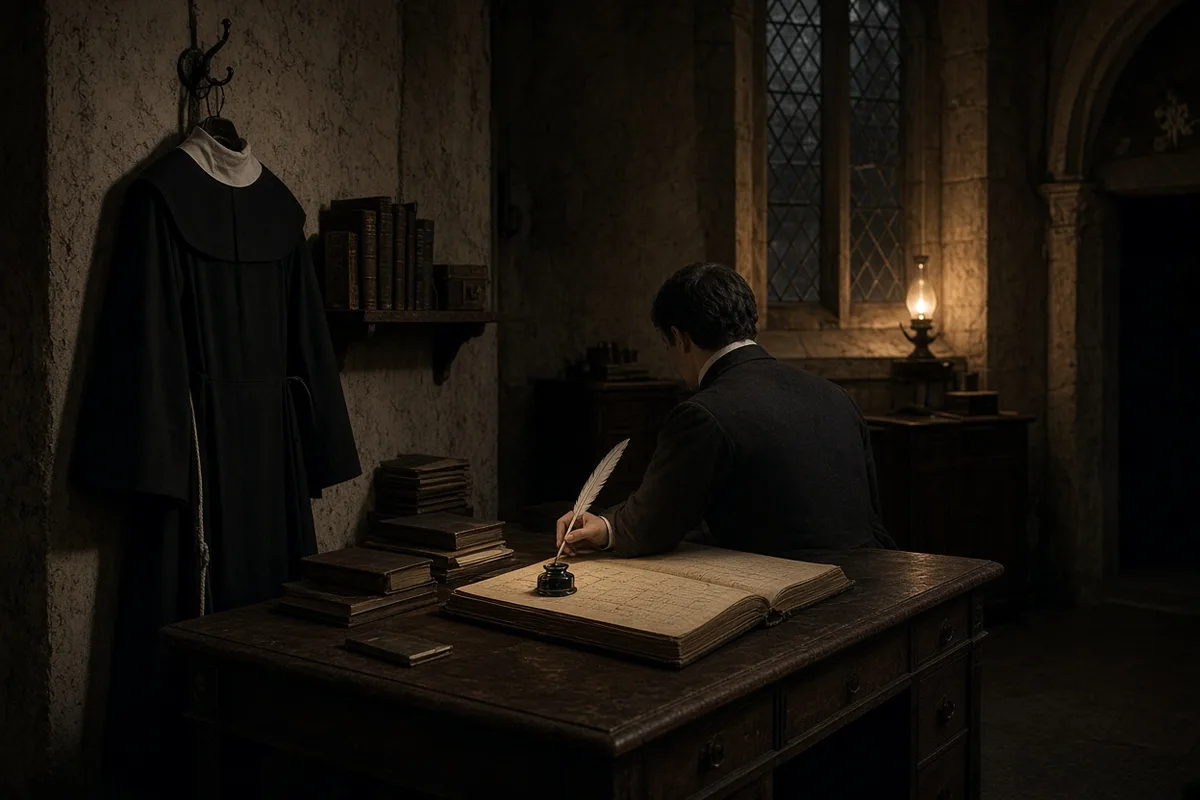
On 18 October 2024 a second researcher, Mme. Claire Dubois of the Centre National de la Recherche Scientifique, requested access to the 1897 catechism-teaching entry; Mme. Moreau produced the ledger at 10:05 a.m. and allowed photography of the page containing the twelve girls’ names, which the researcher transcribed as including “Marie-Thérèse Leclercq, aged 9, and Jeanne Fontaine, aged 11.” The researcher left at 12:40 p.m. after signing the access register. Three days later, on 21 October, the archives installed a new motion-activated camera inside the reading room; the first test recording, made at 4:55 p.m., shows Mme. Moreau closing the case lid and switching off the overhead lights exactly as she had done the previous year.
The final recorded handling occurred on 6 November 2024 when Mme. Moreau opened the case at 9:20 a.m. for the annual condition check required by the French Ministry of Culture’s heritage inventory. She measured the distance between the stitched cross and the nearest fringe edge as 31 centimetres, entered the figure on form MC-2024-112, and replaced the blanket at 9:47 a.m. The ministry inspector, M. Robert Simon, arrived at 2:15 p.m., verified the entry, and initialled the form. At 4:52 p.m. Mme. Moreau closed the lid for the last time that year, turned off the reading-room lights, and locked the door, leaving the blanket inside the climate-controlled case under reference 4F/312.