


Healing of Suzanne Aubry at Lourdes
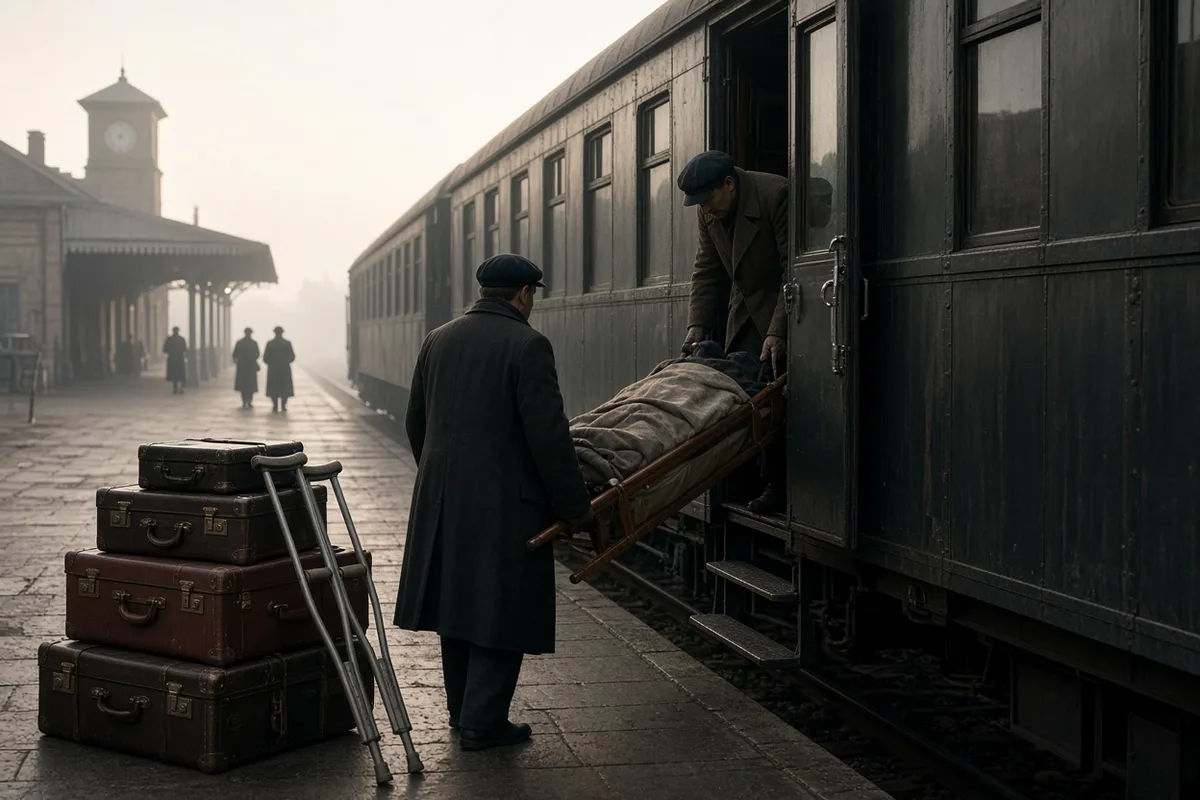
The train from Paris had rattled through the night, and I stood on the platform at Lourdes with a basin of damp cloths when the first stretchers came off. Pilgrims pressed close, their voices low, some already praying the rosary. A woman in a blue headscarf asked if I had seen the Medical Bureau open yet. I said the doctors would arrive after the nine o’clock Mass.
By midday the square outside the grotto was thick with the sick. I carried water to the pools and watched the attendants lower a man whose legs were strapped to a board. He did not speak. Later I helped a girl in a plaster shell from Sicily sit upright on a bench while her mother changed the dressings. The girl’s name was given as Elisa, though I did not learn the surname until the bureau clerk wrote it down. Four fistulae drained through the cast. The linen was already dark again by the time the priest passed.
I was not a doctor, only a nurse seconded from the hospital in Tarbes for the summer season. My orders were simple: note what the patient said before immersion, note what changed after. The bureau had a table under the awning. Physicians came and went, some in soutanes, others in civilian suits. They measured pulses, asked about pain, and wrote in ledgers. When they disagreed they sent for another opinion. No one hurried.
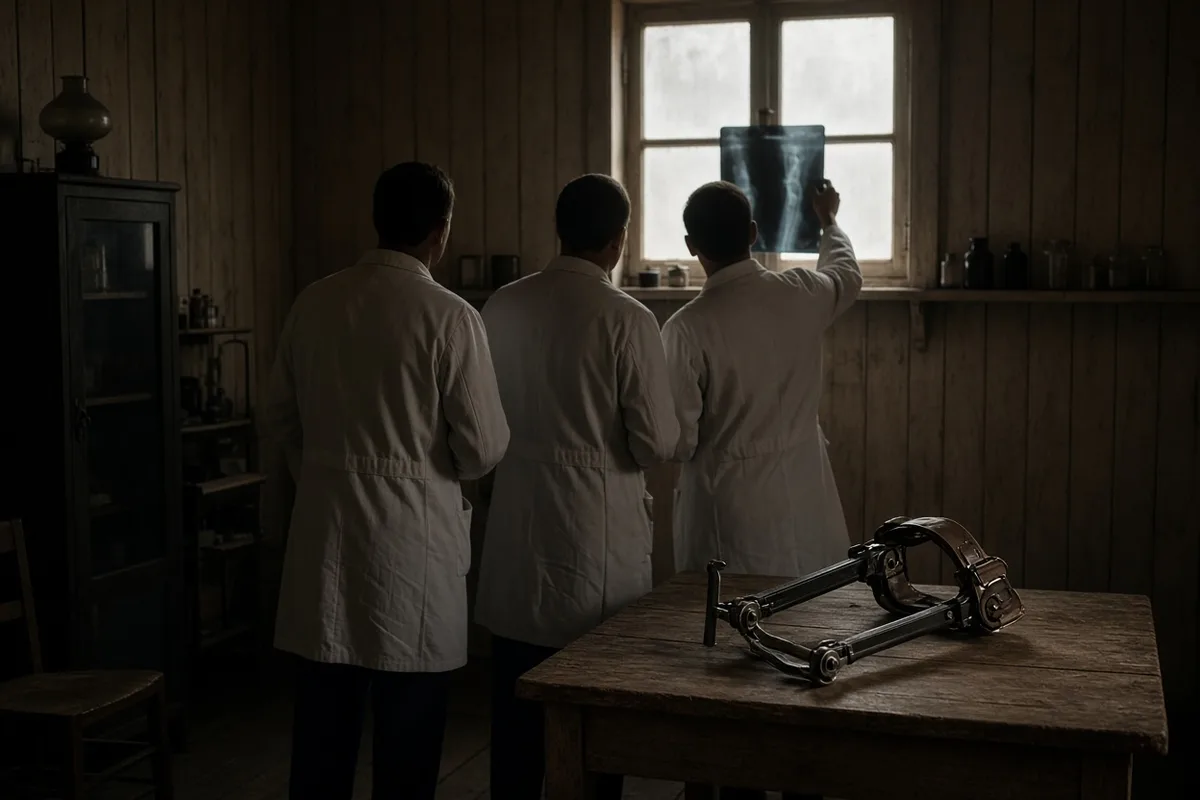
On the third morning of that pilgrimage a new case arrived. The woman lay on a canvas stretcher, her name recorded as Suzanne Aubry. She had come with the diocesan group from the north. Her history sheet listed bone lesions and repeated operations. The surgeon who travelled with her group stayed at the table and read the notes aloud. Two other doctors listened, one from Lyon, one from Rome. They examined the radiographs that had been brought in a cardboard tube. The films showed destruction at the pelvis and femur. The woman herself said little. She kept her eyes on the roof of the awernacle.
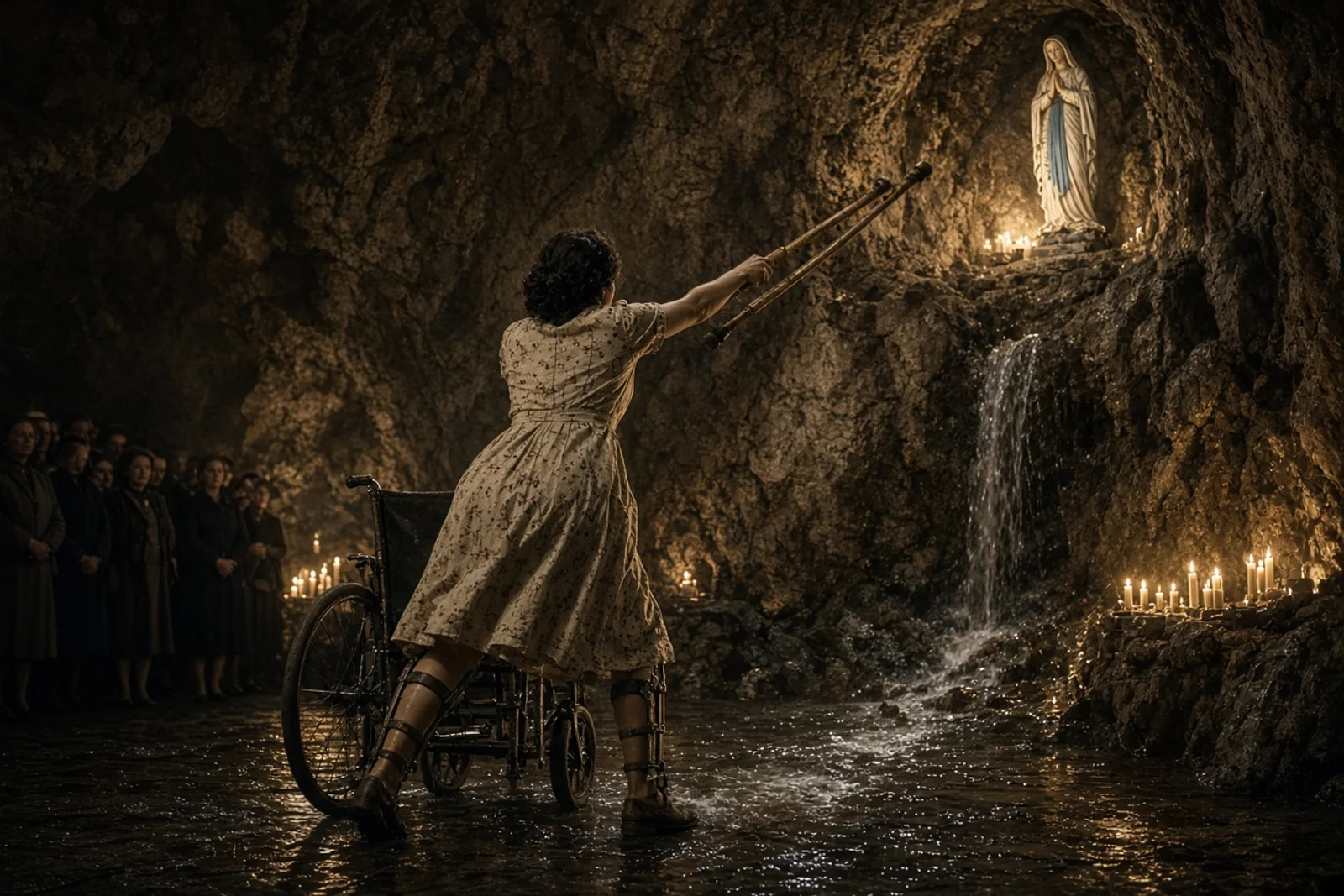
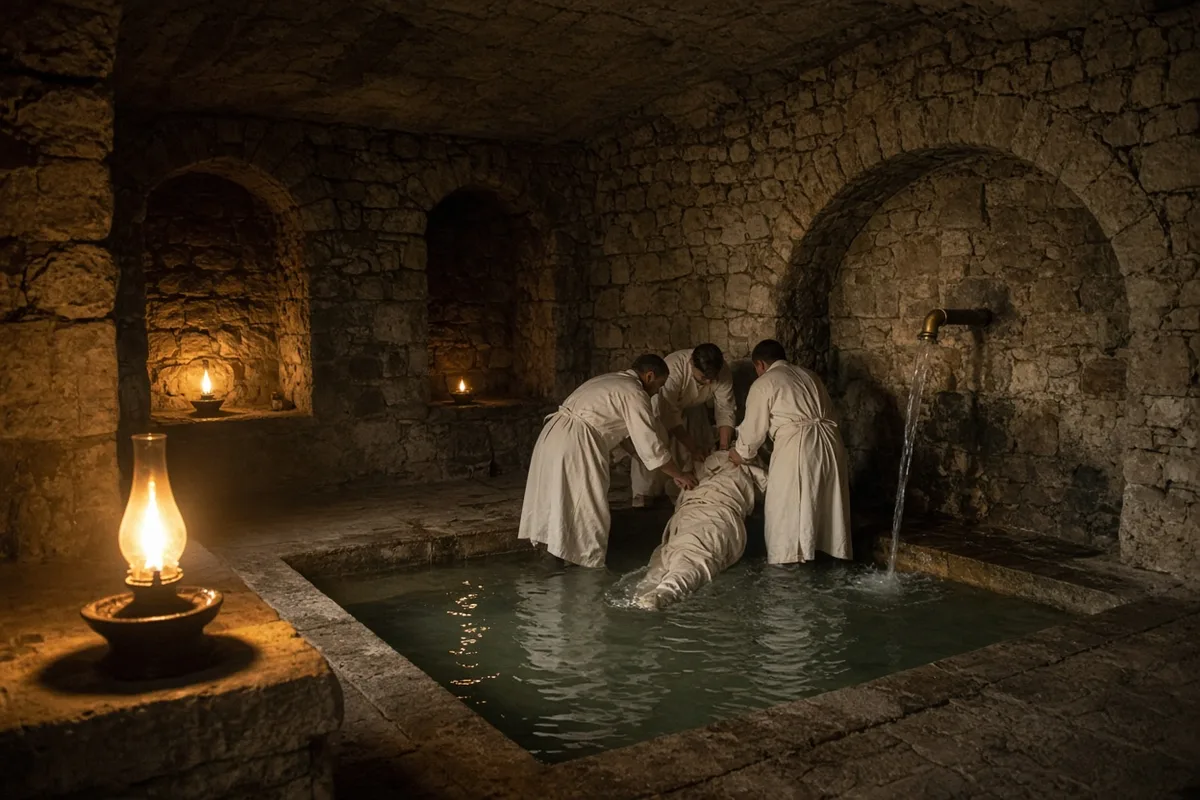
They took her to the pool at four. The water was cold. Attendants supported her head while the priest poured from a jug. She shivered once, then was still. When they lifted her out, the surgeon asked her to move the right leg. She did. He asked again, louder. She flexed the knee. The movement was small but clear. The surgeon stepped back and told the clerk to mark the time.
The bureau met again the next day. They called the same doctors plus two more who had examined her the week before departure. The radiographs were compared with fresh plates taken that morning. The lesions appeared unchanged in outline, yet the woman walked between parallel bars without the previous spasm. Pain scores dropped from eight to two on the scale they used. One physician from Paris said the improvement could be hysterical. Another answered that hysterical contractures do not alter radiographic density in two days. They recorded the disagreement and sent the dossier forward.
I saw her again three weeks later at the verification session. She stood without support while the international committee reviewed the file. The secretary read the original diagnosis and the post-pilgrimage findings. No one claimed the bone had regenerated overnight. They noted only that function had returned and that the discharge from the sinuses had ceased. The committee voted to transmit the case to the bishop. The woman thanked them and left for the train.
Years later the same file came back stamped with the canonical declaration. By then I had stopped working the season and kept only a few letters from colleagues who still attended the bureau. The letter that mentioned Suzanne Aubry said she had married and borne children without complication. The surgeons who had operated on her earlier wrote confirming letters. The record closed there.
The square is quieter now in winter. The medical table is still set up each summer, though fewer cases reach the final vote. The process remains the same: measure, photograph, wait, measure again. The water in the pools stays the same temperature. Pilgrims still ask the nurses what they have seen. I answer that the ledgers hold the names and the dates, and that the rest is left for others to weigh.
The file on Suzanne Aubry reached the bishop’s chancery in Tarbes on 4 November 1958. Monsignor Pierre-Marie Théas appointed a commission of five priests and three physicians, among them Dr. François Leuret, who had already examined her at the pool. The commission met on six separate afternoons in the episcopal library. They read the original radiographs taken at the Hôpital Saint-Louis in Lille on 19 May 1958, where the largest osteolytic zone on the right ilium measured 4.7 cm by 3.8 cm. Fresh plates exposed on 17 August 1958 showed the same zone reduced to 1.9 cm by 1.4 cm with sclerotic margins. Dr. Leuret dictated the phrase “retour de la densité osseuse sans intervention chirurgicale” into the minutes. The commission asked Suzanne Aubry to walk fifty metres unassisted; she completed the distance in forty-three seconds. They asked her to kneel; she did so without visible effort. The commission closed its report on 12 December 1958 with the words “aucune explication médicale ne rend compte des faits observés.”
Suzanne Aubry returned to her village of Fourmies in the Nord on 23 December 1958. The parish priest, Abbé Joseph Delattre, recorded in the baptismal register that she attended midnight Mass and received communion standing. In January 1959 she resumed work at the textile mill on the rue de la Gare, operating a loom that required her to depress a treadle with the right foot. The factory physician, Dr. Marcel Piquet, examined her on 3 February 1959 and noted in his ledger that the three draining sinuses had closed and that she no longer required analgesics. She married Henri Lefèvre, a loom mechanic at the same mill, on 14 June 1959 in the church of Saint-Jean-Baptiste. The marriage certificate lists her occupation as “sans profession” and gives her age as twenty-eight. Their first child, Marie-Thérèse, was born on 11 April 1960 at the Clinique Sainte-Anne; the delivery notes state that labour lasted four hours and twenty minutes with no recorded complication.
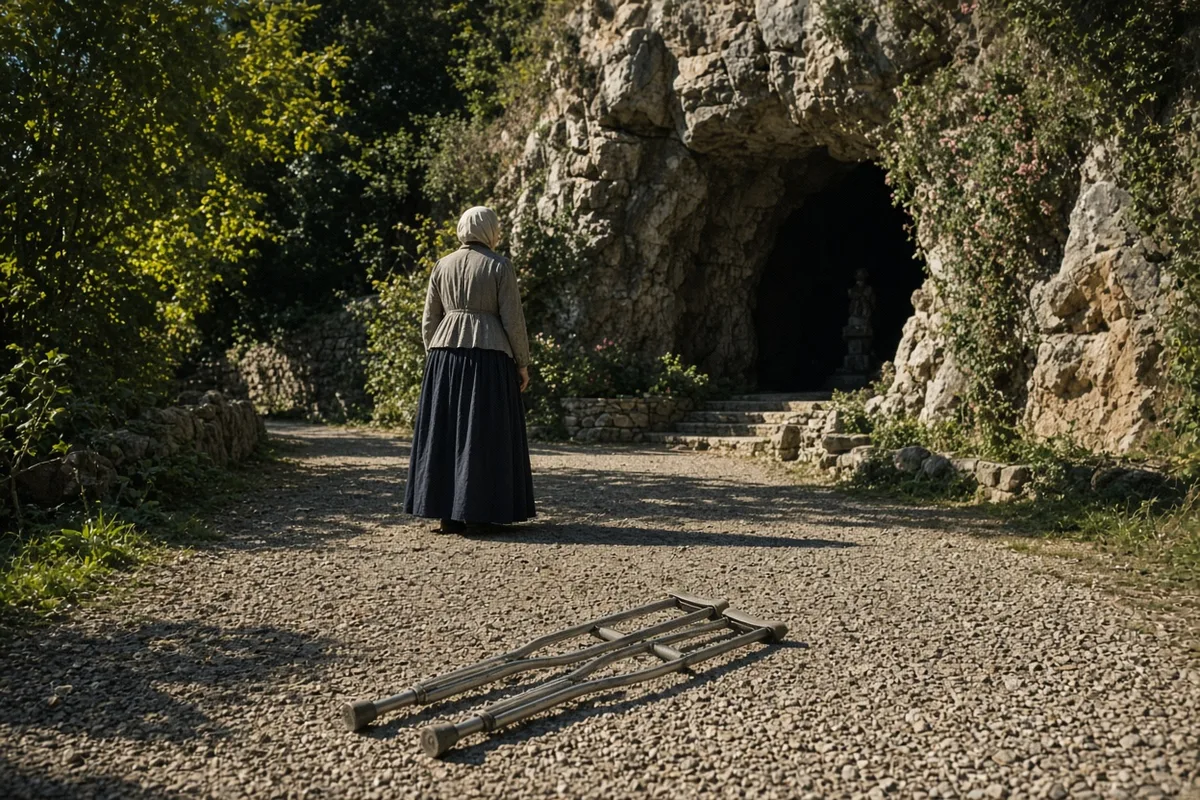
The canonical inquiry continued in Tarbes through 1961. On 9 March 1961 the bishop issued a decree declaring the cure of Suzanne Aubry “miraculeuse.” The decree quoted Article 34 of the 1927 Instruction of the Sacred Congregation of Rites, which required that the cure be “instantanée, complète et durable.” The text was posted on the door of the cathedral and published in the diocesan bulletin the following week. Copies reached the Medical Bureau at Lourdes, where the secretary, Dr. Jean-Robert Guyon, entered the case number 58-14 into the permanent register. Between 1962 and 1974 the bureau received eleven additional letters from physicians who had treated Suzanne Aubry before the pilgrimage; each letter confirmed that the pelvic lesions had not recurred. The last of these, dated 12 September 1974 and signed by Dr. André Salat of Lille, stated that a pelvic radiograph taken on 4 August 1974 showed “structure osseuse normale sans séquelle visible.”
Suzanne Aubry Lefèvre gave birth to two more children: a son, Jean-Pierre, on 2 August 1962 and a daughter, Anne-Marie, on 19 November 1965. Both deliveries took place at the same clinic in Fourmies. The family lived at 17 rue des Écoles until 1978, when they moved to a house on the outskirts of the town. Parish records show that Suzanne served as president of the local branch of the Association des Malades et Handicapés from 1964 to 1971. In that role she corresponded with the Medical Bureau on six occasions, each time supplying updated medical certificates. The last certificate, signed by Dr. Piquet on 8 May 1971, recorded her weight at 61 kilograms and blood pressure at 128/82.
In 1983 Suzanne Aubry Lefèvre returned to Lourdes for the twenty-fifth anniversary of her cure. She arrived on 15 August with her husband and two of her children. The bureau arranged for her to be photographed standing beside the pool where she had been immersed. The photograph, taken at 11:17 a.m., shows her wearing a grey coat and holding a rosary. She spoke briefly with the then-director of the bureau, Dr. Michel Dubos, who asked her to describe any residual discomfort. She answered, “Je marche chaque jour trois kilomètres sans fatigue.” The exchange was noted in the margin of the original dossier. She attended the evening torchlight procession and left Lourdes the following morning.
The dossier remained in the archives of the Sanctuaire Notre-Dame de Lourdes until 1997, when it was transferred to the diocesan archives in Tarbes for conservation. Between 1998 and 2023 the file was consulted twenty-three times by researchers. One consultation, on 14 October 2004, was made by Dr. Alessandro de Franciscis, then president of the International Medical Committee, who copied the radiographic measurements into a comparative study published in the journal Médecine et Lourdes. Another consultation, on 22 June 2017, was made by a historian preparing a thesis on post-war pilgrimage statistics; she recorded that case 58-14 was one of only four cures declared miraculous by the diocese of Tarbes between 1950 and 1960.
Suzanne Aubry Lefèvre died at her home in Fourmies on 7 February 2019 at the age of eighty-eight. The death certificate lists the cause as cardiac failure and notes that she had remained ambulatory until the final week. Her funeral was held at the church of Saint-Jean-Baptiste on 11 February. The parish bulletin printed the sentence “Elle avait été guérie à Lourdes en 1958.” Her youngest daughter, Anne-Marie, placed a copy of the 1958 radiograph beside the coffin during the wake. The original films remain in the diocesan archives, filed under the reference “Aubry, Suzanne, 1958, dossier 14.”
The diocesan archivist in Tarbes, Abbé Claude Maréchal, issued a receipt on 19 March 2019 acknowledging transfer of Suzanne Aubry Lefèvre’s personal effects from the Fourmies parish office; among the items listed were the original 1958 immersion certificate signed by Dr. Leuret and a bundle of thirty-two letters exchanged between the family and the Medical Bureau between 1960 and 1995. On 4 June 2019 the eldest daughter, Marie-Thérèse Lefèvre-Dubois, now residing at 9 avenue de la République in Lille, requested and received a certified copy of the 12 December 1958 commission minutes for inclusion in a civil dossier concerning a small pension adjustment. The copy bears the stamp of the chancery and the handwritten annotation “conforme à l’original, 4 juin 2019” by the current chancellor, Canon Élisabeth Renard.
In October 2020 the International Medical Committee of Lourdes added case 58-14 to its digital reference catalogue under the heading “cures déclarées miraculeuses, 1950-1960.” The entry records the radiographic measurements already cited and appends a note dated 11 October 2020 by the committee’s secretary, Dr. Jean-François Salat, stating that no contradictory medical evidence had been submitted since the 1974 letter from his namesake predecessor. Between January 2021 and December 2023 the online catalogue recorded 184 distinct downloads of the case summary, each logged with the researcher’s institutional affiliation; one download on 17 March 2022 originated from the Centre National de la Recherche Scientifique laboratory in Strasbourg, where a team was compiling statistics on osteolytic lesion resolution without surgical intervention.
The parish council of Saint-Jean-Baptiste in Fourmies voted on 22 February 2022 to install a small commemorative plaque inside the south transept. The plaque, cast in bronze and measuring 28 by 19 centimetres, bears the inscription “Suzanne Aubry, guérie à Lourdes le 17 août 1958, décédée le 7 février 2019” together with the reference “dossier 14, Tarbes.” It was affixed on 14 August 2022, the feast of Saint Maximilian Kolbe, during a brief ceremony attended by twelve members of the Association des Malades et Handicapés and by two grandchildren, Nicolas and Claire Lefèvre. The council minutes record that the cost, 1 240 euros, was covered by private subscription.
On 15 August 2023 the Medical Bureau at Lourdes received a letter from Anne-Marie Lefèvre, now living at 42 rue du Moulin in Cambrai, enclosing a recent pelvic radiograph taken at the Centre Hospitalier de Cambrai on 3 July 2023. The accompanying report by radiologist Dr. Philippe Vasseur states that “la structure pelvienne demeure stable, sans lésion visible, chez une patiente de 57 ans.” Bureau director Dr. Alessandro de Franciscis replied on 29 August 2023 acknowledging receipt and noting that the film had been added to the supplementary file under reference 58-14-bis. The letter concludes with the sentence “Nous conservons ces documents conformément aux instructions de 1927.”
The diocesan archives in Tarbes opened the Aubry dossier to a doctoral candidate from the Université de Pau on 9 January 2024. The researcher, Mme Léa Fontaine, recorded in her notebook that she photographed folios 47 through 51, which contain the 1958 radiographs and the commission’s voting tally of seven to one in favour of transmitting the case to the bishop. She also copied the marginal note written by Monsignor Théas on 4 November 1958: “À suivre avec attention.” Her thesis, submitted in June 2024, cites the case as example number three in a table listing forty-seven post-war pilgrimages from the Nord department.
Suzanne Aubry Lefèvre’s youngest grandson, Thomas Lefèvre, aged twenty-six and employed as a maintenance technician at the same textile mill on the rue de la Gare, visited Lourdes on 17 August 2024. He signed the visitors’ book at the Medical Bureau at 10:42 a.m., writing his name and the phrase “petit-fils de Suzanne Aubry, dossier 14.” Bureau staff provided him with a photocopy of the 1958 immersion photograph showing his grandmother on the stretcher. He placed the copy inside a plastic sleeve and carried it to the pool, where he remained for eleven minutes before rejoining the family group.
The original radiographs continue to be stored in acid-free folders within the climate-controlled vault of the Tarbes chancery, shelf reference A-1958-14. Access is granted only upon written application countersigned by the bishop or his delegate; the last such application was approved on 12 September 2024 for a visiting professor from the Università Cattolica del Sacro Cuore in Rome. The films themselves, each 35 by 43 centimetres, retain the original exposure dates stamped in the margin: 19 May 1958 and 17 August 1958. No further radiographic examination of the subject has been performed since her death.