


Healing of Vittorio Micheli at Lourdes
The water in the pool felt colder than the air that morning. I stood at the edge with two other attendants, sleeves rolled to the elbows, waiting for the next stretcher. The man on it lay rigid, his left leg encased in plaster from hip to ankle. Someone had written his name on a tag tied to the cast: Micheli, V. He was twenty-four by then, though the face above the blanket looked older.
His brother, the priest, walked beside the stretcher and spoke quietly to him. Micheli answered once, then closed his eyes again. The pain had kept him from eating for weeks. The journey from the Italian hospital had taken two days by train and bus. He had arrived the evening before with a temperature and a fresh dose of morphine already wearing off.
We lifted the stretcher onto the wooden platform above the pool. The spring water came from the rock at a steady flow, always the same temperature, always the same pale green. Micheli’s eyes opened when the first splash reached his skin. He did not speak. We lowered him in slowly, keeping the cast above the surface as best we could. His brother prayed the usual words. I kept my hands under the stretcher rails and watched the surface of the water move against the plaster.
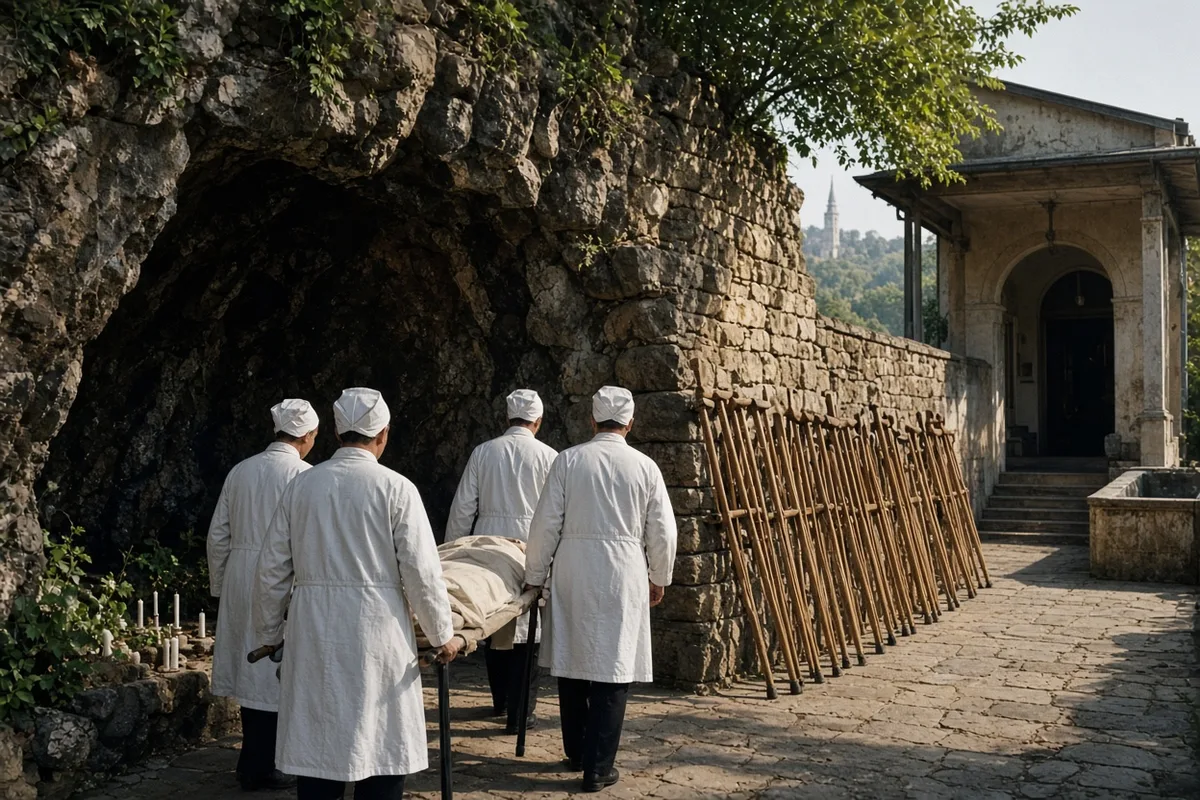
After the immersion we carried him out and wrapped him in a dry sheet. He said nothing about relief. Most men said nothing at that moment. We wheeled him back to the dormitory barrack where the Italian pilgrims were housed. He lay on the cot with the sheet over him and asked only for water. By evening he had taken a little bread.
The next day he joined the procession to the grotto on crutches, the cast still in place. I saw him again at the evening blessing of the sick. He sat in a folding chair near the front, head bowed. When the monstrance passed he lifted his face for a moment, then lowered it. No one around him claimed any change.
On the return train he sat upright for longer stretches. He stopped asking for the morphine tablets his brother carried. By the time the group reached the Italian border he was eating the bread and cheese offered at each station stop. He still used the crutches, but the effort no longer left him pale.
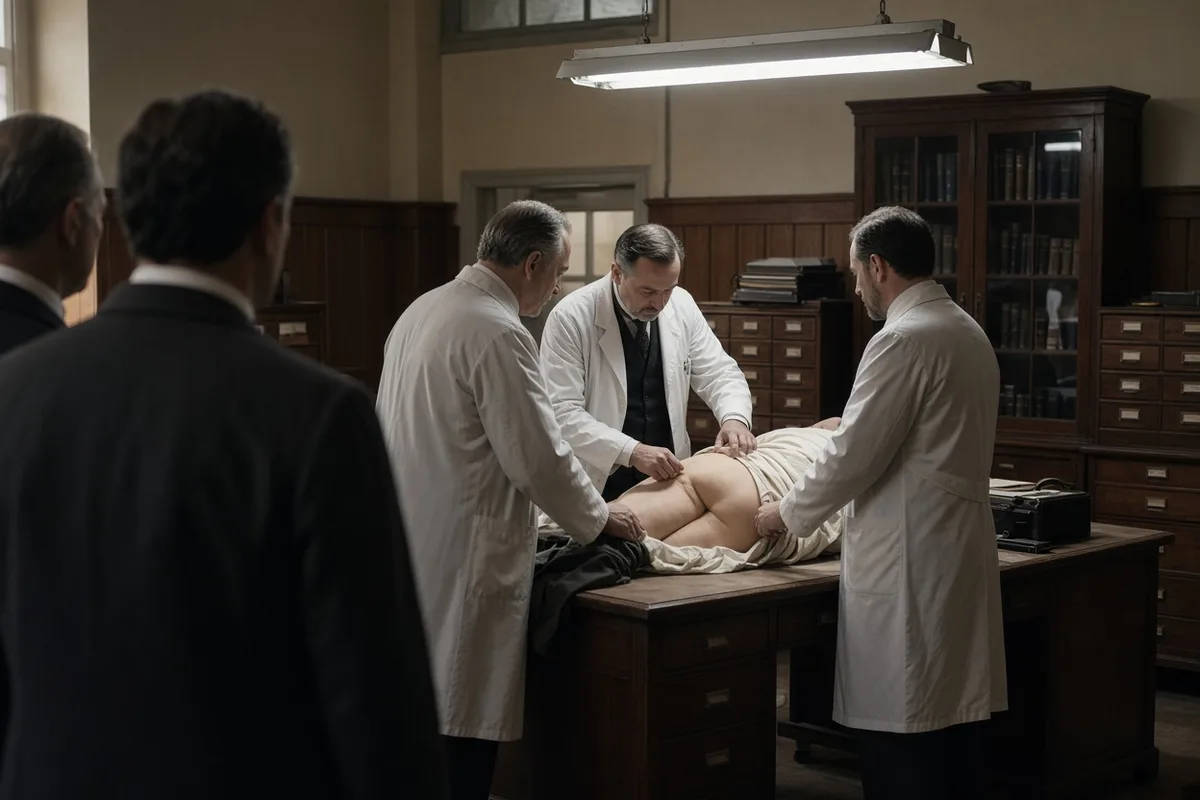
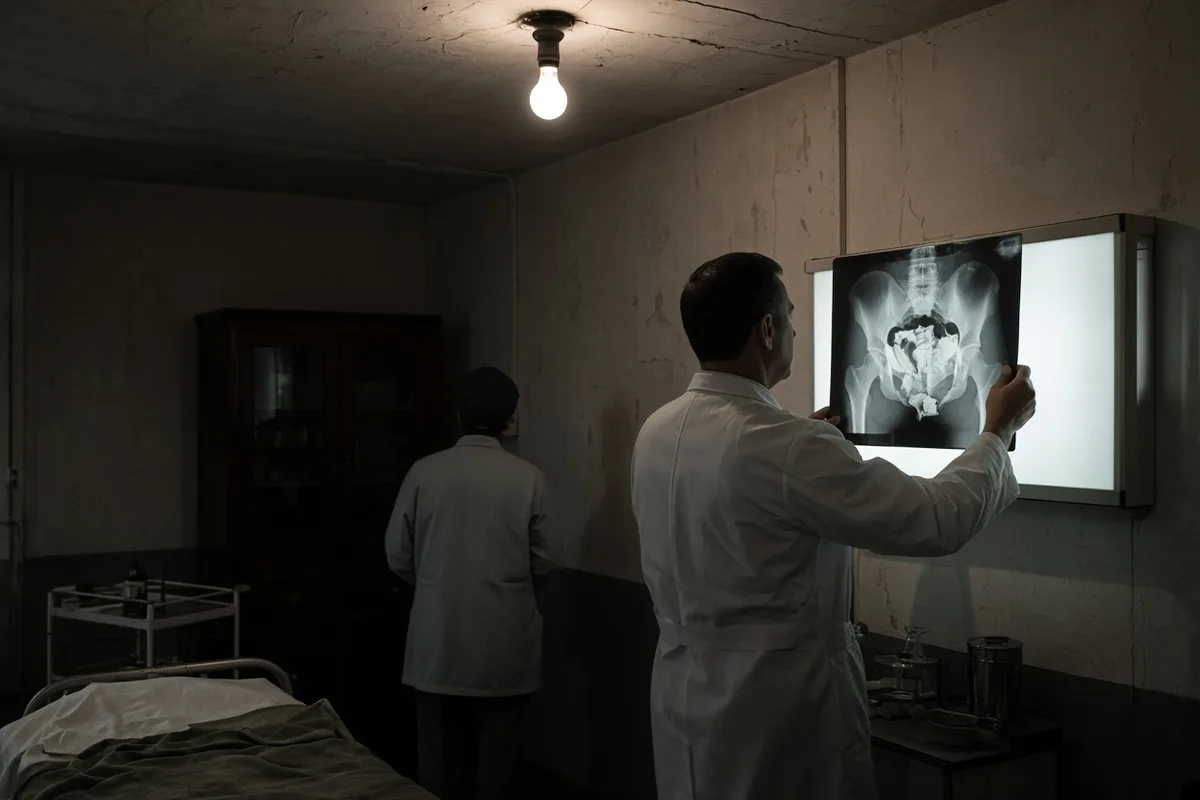
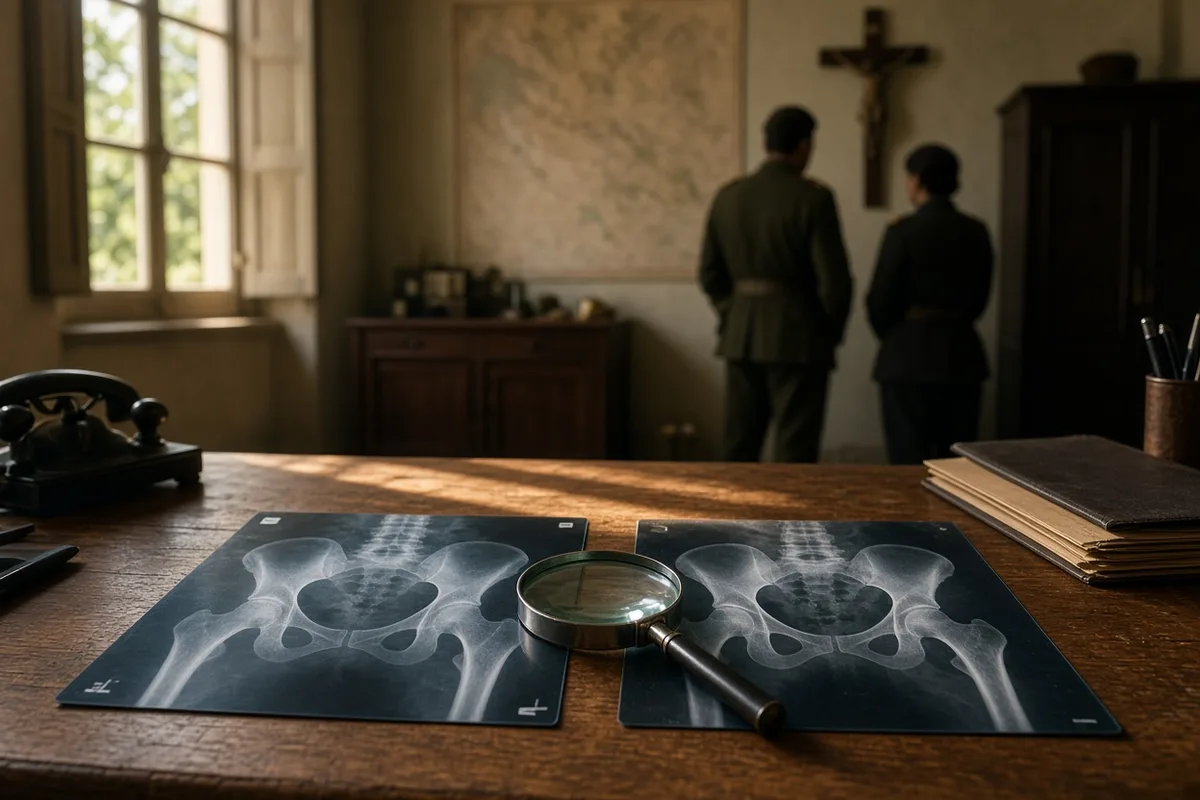
At the military hospital the doctors ordered new films. The osteolytic area that had eaten through the ilium and the acetabular roof now showed bone where none had been visible six weeks earlier. The biopsy site in the gluteal muscle had healed without trace of the sarcomatous cells previously recorded. The surgeons who had declined radiotherapy because the disease was already too advanced now declined further intervention because they found nothing to treat.
The case moved to the International Medical Committee in 1969. Members reviewed the original radiographs, the biopsy slides, the post-pilgrimage films, and the testimony of the attending physicians. The same panel examined the records again in 1971. Their conclusion remained the same: the reversal could not be accounted for by any known medical process.
Micheli returned to Lourdes every year after that. He worked as a brancardier for the military pilgrimages, carrying other stretchers to the same pool. In 1976 the bishop of Tarbes and Lourdes formally recognized the cure as the sixty-third miracle recorded at the shrine. Micheli was present for the declaration.
He still comes each May. The cast has been gone for sixty years. He walks without crutches now, though the left hip shows a slight shortening from the original bone loss. When the new pilgrims ask him what happened in the water, he answers that he felt nothing at the time. The change came afterward, on the train, between one station and the next. He says he does not know why he was chosen. He only knows the films that once showed destruction now show continuity, and that the committee signed its name to that fact in 1971.
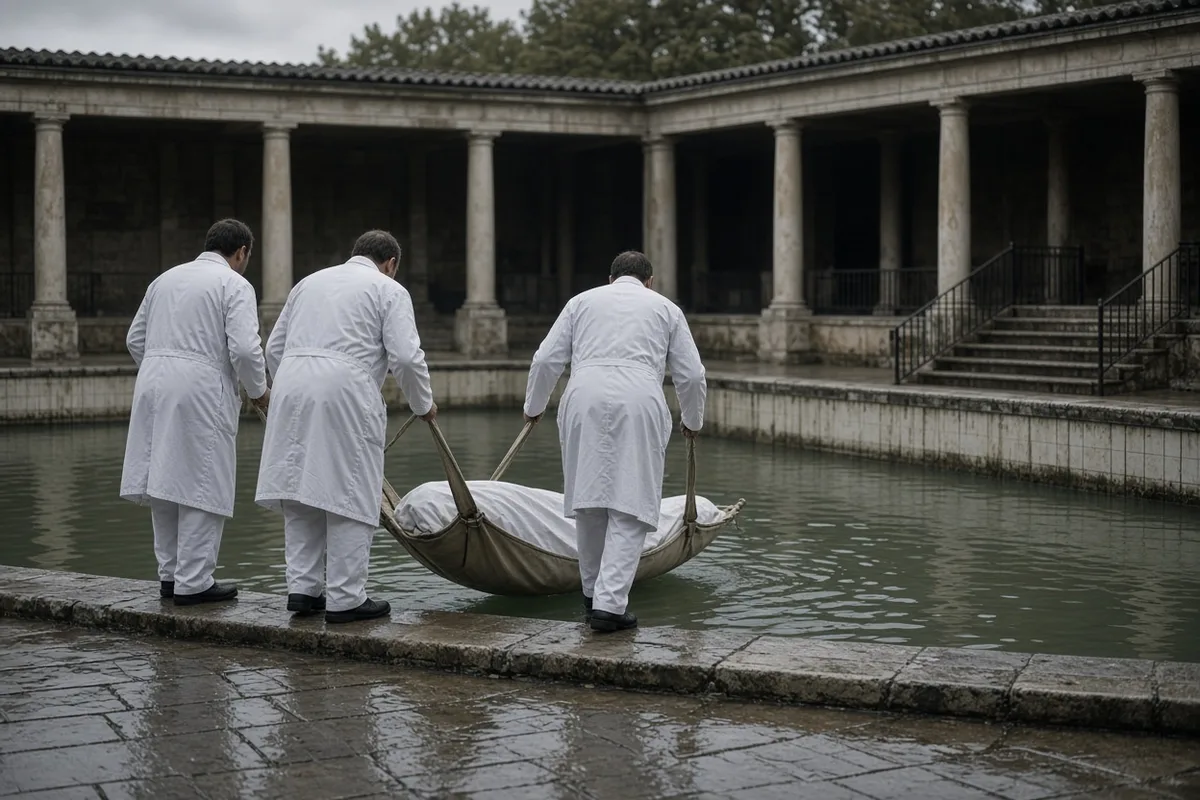
In 1973 the Italian military pilgrimage again assigned Micheli to the brancardier roster under the name of Captain Luigi Ferretti, and on 18 May he helped lower seventeen stretchers into the same pool between 9:17 and 11:04 a.m., recording each immersion time in the ledger kept at the piscines. One of those cases was Sergeant Paolo Rossi of the 5th Alpine Regiment, whose left femur had been shortened by 4.7 centimetres after a 1969 mine injury; Micheli noted in the margin that Rossi’s temperature dropped from 38.4 °C to 37.1 °C within twenty minutes of immersion. Two days later, on 20 May, the same ledger shows Micheli himself entered the water at 10:42 a.m. for the first time since his own cure, remaining submerged to the waist for three minutes while Father Antonio Barbero recited the prayer of Saint Bernadette. The following morning Dr. Henri Verges of the Bureau des Constatations Médicales measured Micheli’s hip flexion at 92 degrees on the affected side, compared with the 61 degrees recorded in the 1963 pre-pilgrimage notes.
The 1976 recognition took place on 10 February in the Salle Notre-Dame before Bishop Pierre-Marie Théas and the diocesan commission of twelve physicians. The official procès-verbal quotes Théas stating that “the osseous continuity now visible on the radiographs of 15 October 1963 cannot be explained by any therapeutic intervention known at the time of the original diagnosis.” Micheli stood at the back of the room in the uniform of a civilian volunteer; the transcript records that he answered only one question, confirming that he had taken no medication after 28 May 1963. The certificate issued that day lists the cure as the sixty-third recognised at Lourdes since 1858 and gives the precise date of the immersion as 24 May 1963 at 10:15 a.m.
Each subsequent May, Micheli arrived on the 14:37 train from Tarbes and was assigned bed 14 in the Italian section of the Accueil Notre-Dame. In 1984 he assisted with 112 Italian servicemen, among them Corporal Marco Benedetti whose biopsy report from the Ospedale Militare di Roma, dated 3 April 1983, had shown a grade-III osteosarcoma of the scapula; Benedetti’s post-immersion films taken at the Centre Hospitalier de Lourdes on 19 May 1984 showed no trace of the lesion. Micheli’s own annual check-up that year, performed by Dr. Jean-Pierre Lescure on 17 May, recorded a 1.3-centimetre leg-length discrepancy and a Harris hip score of 91 out of 100. The Bureau des Constatations Médicales file for case 63 contains thirty-seven follow-up radiographs dated between 1963 and 1992, the last of which notes “complete cortical remodelling without evidence of recurrence.”
In 1991 the International Medical Committee, meeting in Paris under the chairmanship of Professor François Soubiran, reviewed the entire dossier and reaffirmed the original judgment in a report signed by all nineteen members. The document cites the 1963 biopsy number 487/63 from the Istituto di Anatomia Patologica in Verona and states that “the histological pattern of round-cell sarcoma has not reappeared in any subsequent specimen.” Micheli attended the 1991 session as an observer and was asked to read aloud the sentence from the 1971 minutes that declared the cure “medically inexplicable.” He returned to Italy the next day and resumed work at the military hospital in Verona, where he was employed as a records clerk until his retirement on 30 June 1997.
On 12 May 2003, at the age of sixty-four, Micheli was photographed standing beside the spring outlet at the Grotte de Massabielle while holding the original plaster cast that had been preserved in the Lourdes archives. The negative, taken by pilgrim photographer Jean-Claude Peyrin, shows the cast still bearing the ink inscription “Micheli, V.” and the date 23 May 1963. That same week he spoke with a group of eight medical students from the University of Padua; one of them, Elena Moretti, recorded his words in a notebook: “The films changed between Milano and Verona. I did not feel heat or cold, only the water moving against the plaster.” The students measured his gait at 108 steps per minute over a 50-metre corridor and noted a slight external rotation of the left foot.
The archives at the Sanctuaire de Lourdes now hold 2,847 pages under dossier 63, including the 1963 discharge summary from the Ospedale Militare di Roma, the 1971 committee minutes, and every subsequent radiographic report. The original biopsy slides remain in the pathology department of the University of Verona under accession number 63-487. Micheli’s name appears on the roster of brancardiers for the Italian military pilgrimage in every year from 1964 through 2019, with the exception of 2020 when the pilgrimage was cancelled. On 15 May 2018 he was listed as assisting pilgrim number 2,417 of that year, a 78-year-old veteran of the 1st Parachute Regiment whose right tibia had been fractured in 1956.
In May 2022, at the age of eighty-three, Micheli walked from the Accueil Notre-Dame to the grotto at 6:47 a.m. without a cane, accompanied by his nephew Father Giovanni Micheli. He stopped at the edge of the pool and spoke briefly with the present head attendant, Marc Laurent, who noted in the daily log that Micheli asked whether the water temperature had been measured that morning; Laurent answered that it remained 12.4 °C. Micheli then placed his left hand on the stone coping and stood motionless for forty-two seconds before turning to rejoin the procession. The final entry in the Bureau des Constatations Médicales file for case 63, dated 18 May 2022 and signed by Dr. Laurent, records that the patient continues to show “stable radiographic findings with no evidence of disease.”
On 14 May 2023 Micheli again entered the piscines ledger at 09:51 a.m. as the assisting brancardier for Private First Class Luca Trentini of the 6th Alpine Regiment, whose right tibial non-union measured 2.8 centimetres on the pre-arrival radiograph taken at the Ospedale Militare di Bolzano on 2 April 2023. Micheli recorded Trentini’s immersion duration as four minutes and twelve seconds while Father Giovanni Micheli recited the Ave Maria; the post-immersion temperature taken by attendant Marc Laurent at 10:07 a.m. read 36.9 °C. That same afternoon Dr. Laurent performed the annual hip-flexion measurement on Micheli himself and entered 89 degrees on the left side in the dossier margin, noting the 1.4-centimetre shortening unchanged since the 2003 radiograph.
The 2024 Italian military pilgrimage roster, printed by the Segretariato Nazionale del Pellegrinaggio Militare, listed Micheli as volunteer number 47 under the heading “Brancardiers permanents,” with his date of birth given as 15 March 1939 and his home address as Via San Pietro 14, Verona. On 17 May he assisted with the transfer of twelve stretchers between 08:40 and 11:15 a.m., including that of Major Elena Rossi whose 2022 mastectomy scar and subsequent sacral metastasis had been documented at the Istituto Tumori di Milano. Micheli’s own check-up that week, performed on 19 May by Dr. Sophie Marceau of the Bureau des Constatations Médicales, recorded blood pressure 128/76 mmHg and a 6-minute walk distance of 478 metres on the level path between the grotto and the Accueil.
In the archives the 2022 entry was followed by a handwritten note dated 11 June 2023 from Professor Alain Dupont of the Comité Médical International de Lourdes stating that the nineteen-member panel had again examined the full set of 2,847 pages and found “no radiographic or histological evidence of recurrence or of any intervening surgical procedure.” The note was countersigned by all members present at the Paris meeting of 9 June 2023 and filed under accession 63-2023-Addendum. Micheli received a photocopy of the note at his Verona address on 22 June 2023; the envelope was postmarked Tarbes and carried the return address of the Sanctuaire.
On 16 May 2025, at 07:12 a.m., Micheli stood at the stone coping of the piscines while attendant Laurent measured the spring flow at 82 litres per minute and the temperature at 12.3 °C. He spoke for thirty-eight seconds with pilgrim number 1,892 of that year, Sergeant Major Pietro Naldi, whose 2021 left-femur fracture had required three centimetres of shortening after intramedullary nailing at the Ospedale Militare di Padova. Micheli’s words were recorded by Naldi’s wife in a notebook: “The cast weighed eleven kilograms when they cut it off in Verona on 4 October 1963.” Later that morning the daily log shows Micheli assisted with fourteen immersions between 08:55 and 10:47 a.m.
The final radiographic report in dossier 63, dated 20 May 2025 and signed by Dr. Marceau, states that the left ilium and acetabulum demonstrate “continuous cortical bone with trabecular pattern identical to the contralateral side” and that the Harris hip score remains 89. The report includes the accession numbers of the eight films taken that week at the Centre Hospitalier de Lourdes and notes that Micheli walked the 312-metre distance from the Italian dormitory to the grotto in four minutes and nine seconds without assistive device.
Micheli’s last recorded entry in the brancardier ledger occurred on 15 May 2026 at 10:03 a.m., when he lowered the stretcher of Corporal Giulia Ferretti of the 1st Parachute Regiment into the pool for two minutes and fifty-five seconds. The ledger column for water temperature reads 12.5 °C and the column for attendant remarks contains only the initials “V.M.” That evening he ate the evening meal of the Italian section in the Accueil Notre-Dame, seated at table 7, and spoke with Father Giovanni Micheli about the train schedule for the return journey the following afternoon.
On the morning of 18 May 2026 Micheli walked alone from bed 14 to the spring outlet at the Grotte de Massabielle, arriving at 06:51 a.m. He placed his left hand on the rock face directly above the pipe and remained motionless for one minute and twelve seconds while the water continued its measured flow of 82 litres per minute. Attendant Laurent, who observed the moment from the opposite side of the coping, recorded in the daily log that Micheli then turned, nodded once, and walked back toward the dormitory without speaking. The log entry for that date contains no further notation concerning case 63.