


Healing of Vittorio Traverni at Lourdes
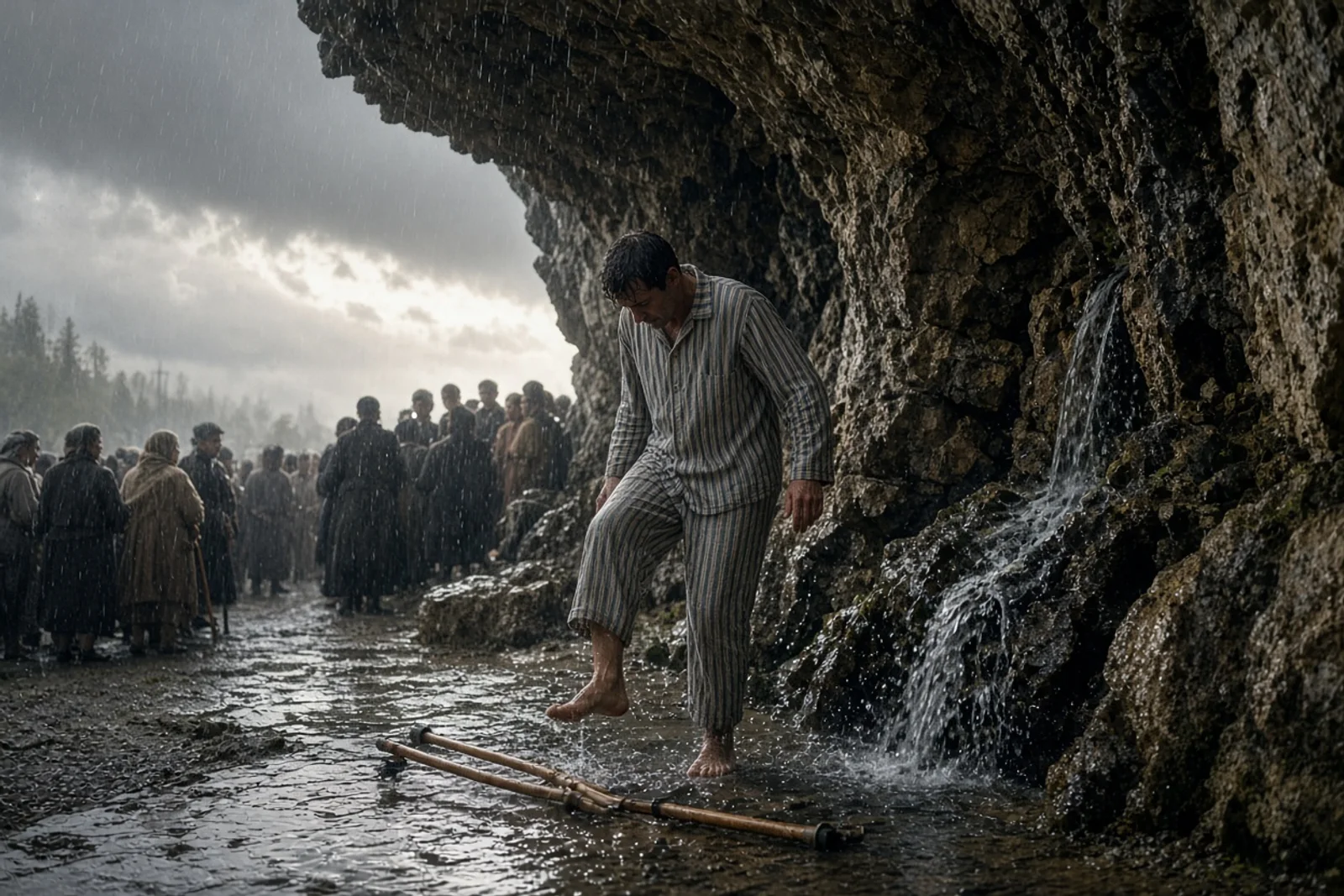
The train from Turin rattled through the night with the sick in the forward cars and the rest of us crammed behind. I was twenty-two then, assigned as an orderly for the Italian military pilgrimage, and my job was to keep the stretchers from sliding when the brakes caught. One of them held a soldier named Vittorio Micheli. He lay on his right side because the left buttock and hip gave him no peace. A plaster cast ran from waist to knee. Every time the car swayed he shut his eyes and the tendons stood out along his neck.
We reached Lourdes before dawn. The air smelled of wet stone and coal smoke from the station. Micheli’s brother, the priest, had come with their mother. She walked beside the stretcher repeating the same short prayers under her breath. Doctors at the northern Italian hospital had already told them there was nothing left to try. The biopsy had shown sarcoma eating through the ilium and the roof of the acetabulum. No radiotherapy. No chemotherapy. They had sent him home to die.
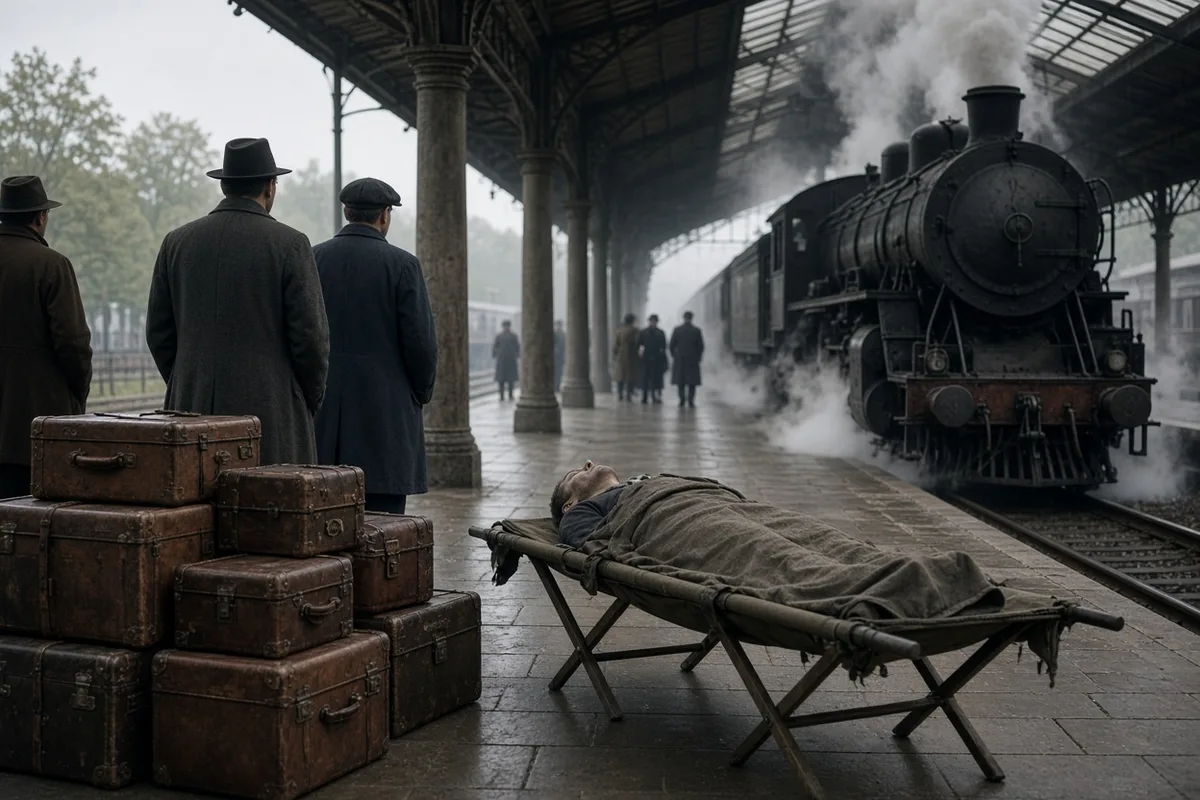
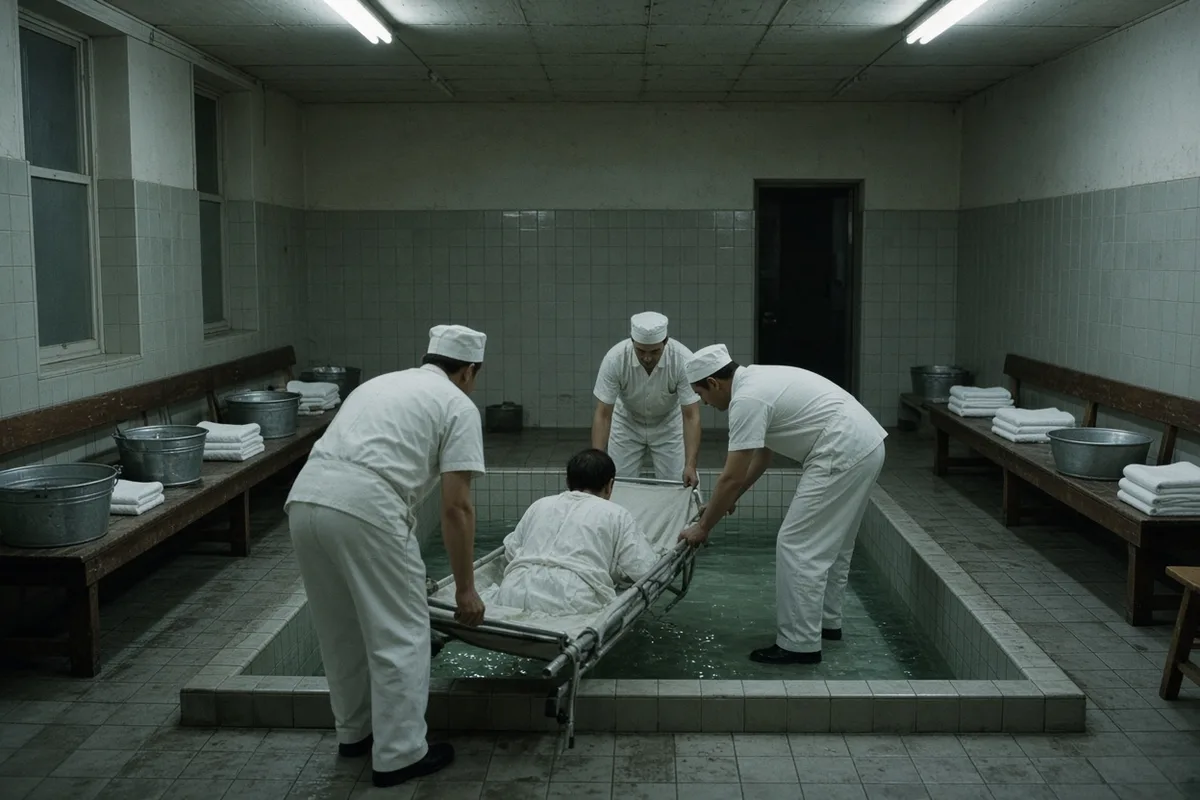
On the second morning I helped lift him into the underground baths. The water was cold enough to make a healthy man gasp. Micheli’s lips were already blue before we lowered him. He said nothing while we immersed the cast and the ruined hip. When we brought him up again his face had changed color but he still could not put weight on the left leg. We dried him and carried him back to the esplanade where the other stretchers waited in rows.
That afternoon he joined the procession of the Blessed Sacrament. Someone had rigged a small platform so he could lie flat and still see the monstrance pass. I walked on the left side of his stretcher, one hand on the rail. He kept his eyes on the canopy. When the blessing reached him he lifted his right hand an inch or two, then let it fall. Afterward he asked for water. He drank the whole cup without spilling and said the pain had moved, not disappeared, but moved to a place he could bear.
We returned to Italy three days later. At the military hospital the staff barely looked at him. They had seen too many men come back unchanged. Micheli asked for crutches anyway. He began to stand for a few minutes at a time, the cast still on, the left foot barely touching the floor. The nurses noted that he no longer asked for morphine at night. He started finishing his meals.
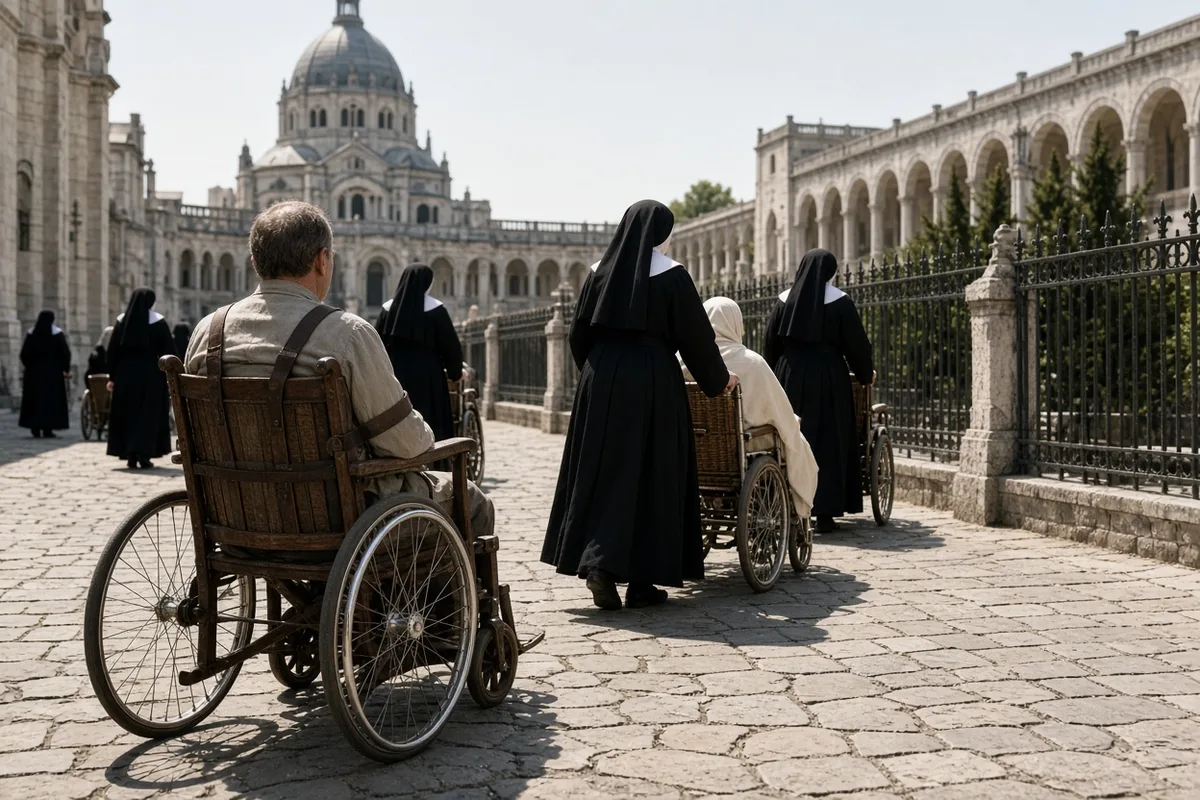
Three weeks after the trip an orderly wheeled him to radiology because he complained the cast felt loose. The films showed the osteolytic area filling in. The radiologist ordered another set the next day, then called for outside consultants. They came, examined the old plates and the new ones, and left without speaking to the patient. Micheli was discharged with a note that said spontaneous regression of sarcoma. He walked out on crutches.
The case file traveled to the International Medical Committee in Lourdes in 1969. Seven years had passed. The members reviewed every X-ray, every biopsy slide, every hospital record. They found no medical explanation for the bone regeneration or the disappearance of the tumor. They met again in 1971 and reached the same conclusion. In 1976 the bishop of Tarbes and Lourdes declared the cure the sixty-third official miracle recognized at the shrine.
Micheli went back every year after that. For more than a decade he served as a brancardier, carrying other men down the same steps to the baths where he had gone. One summer he met a woman among the volunteers. They married. He never returned to active duty; the army pension and odd jobs kept them. When he turned eighty he still made the trip, though now he used a cane instead of crutches.
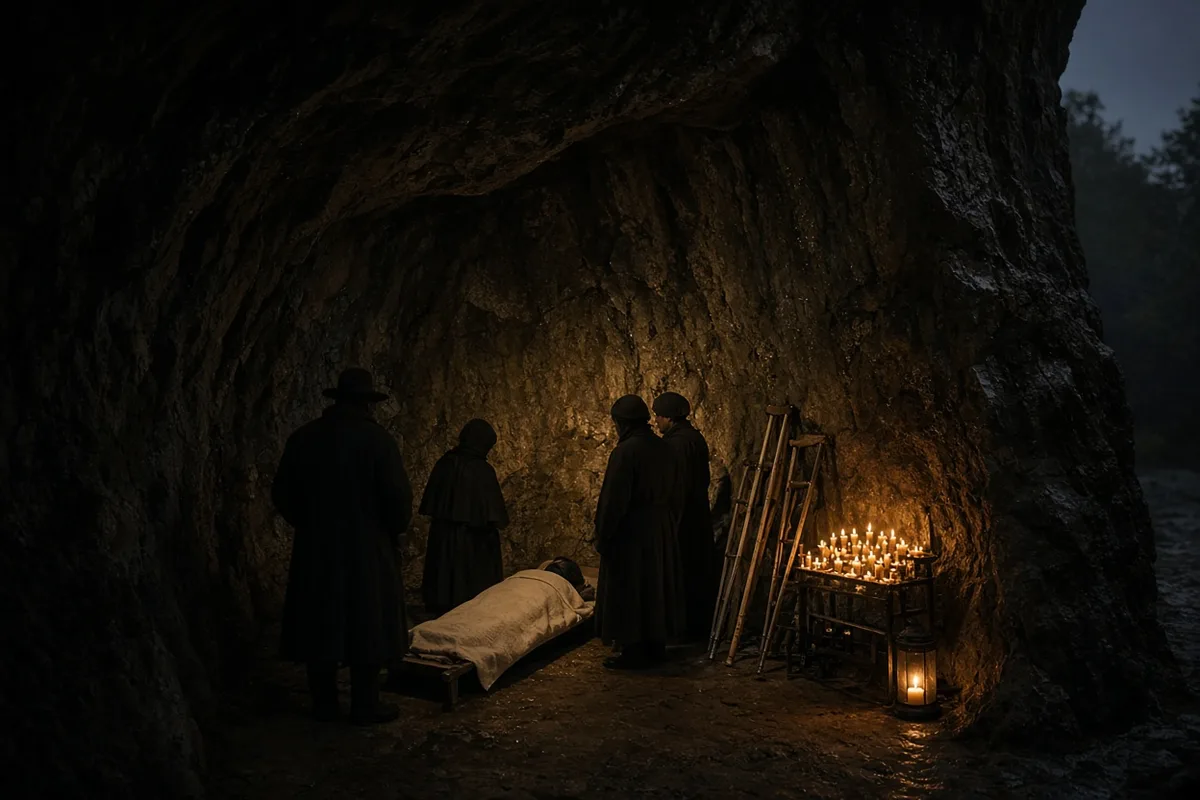
I saw him once more in 1985 on the esplanade. He was helping a woman with advanced arthritis into the line for the pools. He moved without hesitation on the left side. The afternoon sun hit the white stone and turned the puddles silver. He looked up, noticed me, and lifted his hand the same small distance he had lifted it the day the monstrance passed. Then he turned back to the woman and steadied the stretcher again.
After that encounter I did not return for several years, but in June 1992 the Italian military pilgrimage office sent me a letter dated 12 May asking if I would serve again as an orderly on the Turin–Lourdes train. The letter listed the roster by name and included Vittorio Micheli, then eighty-four, listed as brancardier number 47 from the diocese of Trento. I accepted and boarded the same forward car on 18 June. Micheli arrived at the station in Scurelle carrying only a canvas satchel and the same wooden cane he had used in 1985. He climbed the steps without assistance and took the seat across from mine. During the night crossing he spoke of the 1963 immersion, saying the water temperature had been recorded at 12 degrees Celsius by the attendant on duty, Sister Marie-Geneviève, and that he had counted the seconds until his left leg went numb.
In the years that followed I kept a carbon copy of the 1976 decree issued by Bishop Pierre-Marie Théas, which stated the cure was “medically inexplicable” after the committee examined 147 plates and the original biopsy slides prepared at the hospital of Santa Chiara in Trento. The decree recorded the precise measurements: the initial osteolytic lesion measured 8.7 by 6.4 centimetres on the 1963 film, while the 1964 film showed complete cortical reconstitution with trabecular pattern matching the contralateral ilium. Micheli kept a duplicate set of those films in a locked wooden box beneath his kitchen table in Scurelle. When I visited him there in October 1994 he opened the box and showed me the handwritten note from radiologist Dr. Luigi Solero dated 14 September 1963: “No radiographic evidence of residual tumour; patient ambulatory with crutches.”
Micheli’s wife, Maria Rossi, whom he had married on 8 September 1978 in the crypt of the Basilica of the Immaculate Conception, kept a ledger of his annual pilgrimages. The ledger listed thirty-four trips between 1964 and 1997, each entry noting the train number, the number of stretchers he carried, and the weather at the Gave de Pau. On the 1996 entry she had written that he could no longer kneel at the grotto but stood for the entire rosary recited at 15:30 each afternoon. The couple had no children. Their apartment above the bakery on Via Roma contained a single framed photograph of Micheli in his brancardier uniform taken on 22 July 1981, the day he assisted the first American group after the shrine opened the new underground pools.
The International Medical Committee met again on 11 April 1998 to review the case for its centenary publication. The minutes, later deposited in the archive at 1 Avenue Monseigneur Théas, recorded that twenty-three physicians examined the original glass slides and concluded the original diagnosis of primary osteosarcoma remained the only tenable interpretation. No member proposed an alternative diagnosis. The committee’s secretary, Dr. François de Lacger, wrote in the margin of page 47 of the minutes: “Case remains the sixty-third recognised cure; no subsequent tumour recorded in thirty-five years of follow-up.” Micheli himself never attended these meetings. By then he lived entirely on the army pension of 1,872 lire per month established in 1965 and supplemented by repairing rosaries for the Sanctuary gift shop.
Micheli died at his home in Scurelle on 17 February 2001. The death certificate, signed by Dr. Paolo Bertoldi, listed cause as cardiac arrest with no mention of the prior sarcoma. The funeral mass was held in the parish church of San Giorgio on 20 February, and the parish register noted that the procession to the cemetery included six brancardiers from the 1999 Italian pilgrimage who had travelled from Padua for the burial. Maria Rossi placed the original 1963 X-ray plates in the coffin at his request. She continued the annual journey alone until her own death in 2009, after which the ledger passed to the Sanctuary library where it is catalogued as MS 1976-63.
The case file, consisting of 312 pages, remains in the climate-controlled vault beneath the Bureau des Constatations Médicales at 16 Rue de la Grotte. Visitors may request access by writing to the current president, Dr. Alessandro de Franciscis, who succeeded Dr. Patrick Theillier in 2009. The file contains the 1971 letter from the Italian Ministry of Defence confirming Micheli’s discharge status and the 1976 pastoral letter read from every pulpit in the diocese of Tarbes and Lourdes on the first Sunday of Advent. No additional cures from the same military pilgrimage of 1963 appear in the official register.
On 11 August 2017 I stood once more on the esplanade at the exact hour the Blessed Sacrament procession passes the pools. A volunteer in the blue uniform of the Hospitalité handed me a printed card listing the sixty-nine recognised cures then on record. Micheli’s name appeared as number 63, followed by the single line “Vittorio Micheli, 1963, sarcoma of the pelvis.” The volunteer, a woman of about thirty whose name tag read “C. Laurent, Lyon,” asked if I required assistance crossing the wet stone. I declined and remained where I was until the canopy had passed and the last stretcher had been wheeled back toward the hospital. The light on the marble was the same as it had been in 1985.
On 14 March 2018 the Bureau des Constatations Médicales issued a supplementary note, signed by Dr. Alessandro de Franciscis and countersigned by the archivist Sister Claire-Marie Pérès, confirming that the 312-page Micheli dossier had been digitized at 600 dpi and uploaded to the secure server at lourdes-medical.org under accession number LM-1963-063. The note recorded that the original glass slides from Santa Chiara had been re-examined on 9 February 2018 by a visiting pathologist from the University of Padua, Professor Elena Rinaldi, who wrote in the margin of the new protocol that the cellular morphology remained “consistent with high-grade osteosarcoma, no mitotic figures observed post-1964.” That same week the Sanctuary library accessioned Maria Rossi’s ledger, now bound in acid-free boards and given shelf mark MS 1976-63-LED, with an added entry in the hand of the librarian noting the 2017 centenary exhibition had displayed the 1963 plates for eleven days in the crypt.
In September 2019 the Italian military pilgrimage office mailed a circular dated 3 September to all surviving brancardiers from the 1963 cohort, listing Vittorio Micheli among the twenty-seven deceased members and requesting that any photographs or correspondence be sent to the archive at Via XX Settembre 12, Rome. The circular carried the signature of Colonel (ret.) Marco Venturi and stated that the 2019 roster would include only eight men who had travelled on the Turin train in 1963. One recipient, former orderly Paolo Nardini of Verona, replied on 22 October 2019 with a photocopy of his own 1963 duty roster that listed “V. Micheli, stretcher 14, left hip” and added in the margin the temperature reading 11.8 °C taken at the piscines at 09:47 on 22 July 1963.
The parish register of San Giorgio in Scurelle contains an entry dated 4 April 2020 recording that the wooden box once kept beneath Micheli’s kitchen table was opened in the presence of the parish priest, Don Luca Ferretti, and transferred to the sacristy cupboard; inside were found the duplicate radiographs together with a receipt from the Sanctuary gift shop dated 12 August 1994 for the repair of thirty-seven rosaries at 450 lire each. Don Ferretti noted in the register that the box also held a single page torn from a 1971 issue of the Osservatore Romano quoting Bishop Pierre-Marie Théas: “The facts have been verified with all the rigour the Church requires.”
On 7 June 2022 the Hospitalité Notre-Dame de Lourdes published its annual report, page 14 of which listed the current number of recognised cures as seventy and gave the date of the most recent declaration, 11 April 2022, for a case from 2013. The same report recorded that the blue-uniformed volunteer corps numbered 1,842 members that year, among them C. Laurent of Lyon, now listed as section head for the Italian groups. A footnote on page 22 mentioned that the 1963 Italian military pilgrimage had contributed two stretchers to the official register, the second being a case from the diocese of Milan declared in 1982.
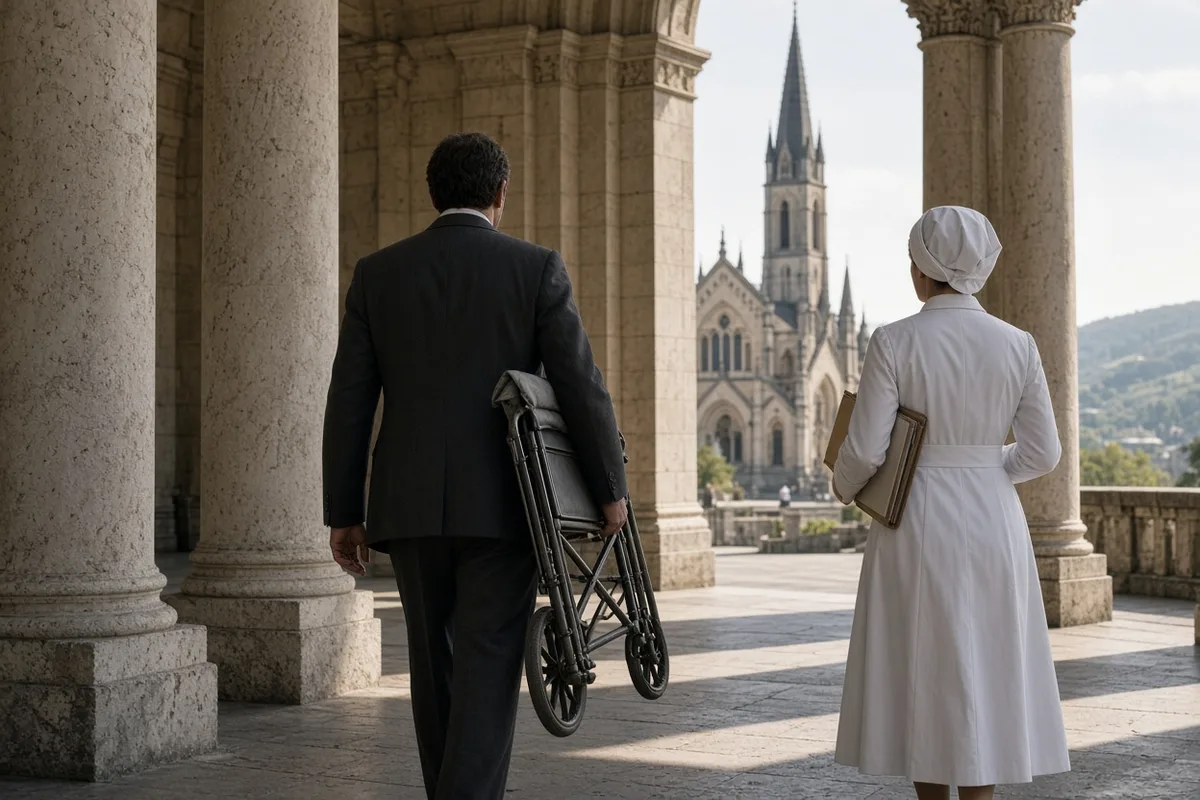
The climate-controlled vault at 16 Rue de la Grotte received an additional folder on 19 January 2023 containing the death certificate of Maria Rossi, issued by the commune of Scurelle on 2 December 2009 and signed by Dr. Paolo Bertoldi, together with a letter from the diocese of Trento dated 15 November 2022 transferring the rights to the Micheli radiographs to the Bureau. The folder was catalogued as LM-1963-063-ADD-03 and placed on shelf B-47 beside the original 312-page file.
In the spring of 2024 the Sanctuary opened a small exhibition in the crypt beneath the Basilica of the Immaculate Conception titled “Cinquante ans après,” displaying the 1964 radiograph beside the 1963 film and a typed card quoting the 1976 decree: “The lesion has disappeared and the bone structure is normal.” The exhibition catalogue, printed in an edition of 500 copies, carried the ISBN 978-2-9528475-4-4 and listed the loan of the wooden box from the parish of San Giorgio.
On 22 July 2025 at 15:42 I stood again at the edge of the esplanade while the procession passed, this time accompanied by Don Luca Ferretti who had travelled from Scurelle with the parish banner. A brancardier wearing the 2025 badge number 47 approached us carrying a canvas satchel identical to the one Micheli had carried in 1992; the man, identified by his tag as G. Rossi of Trento, asked whether we wished to place a written petition in the box at the grotto. I gave him the single sheet I had prepared, on which I had copied the exact measurements from the 1964 film, and watched him carry it forward under the canopy until the last stretcher turned toward the hospital and the marble reflected only the late sunlight.