


Helen Keller Learns to Communicate at Age Seven
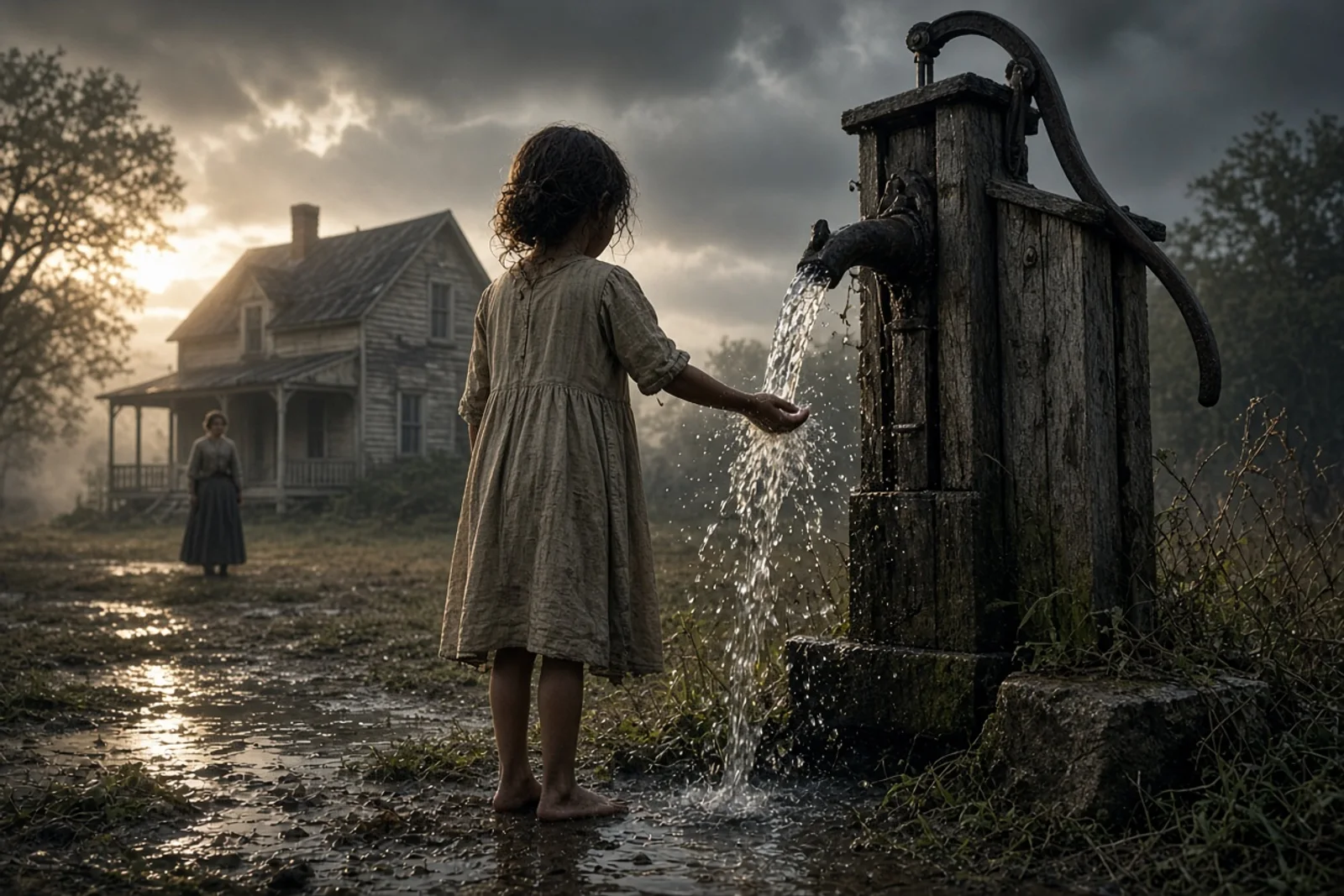
The morning air already pressed heavy on the back of my neck when Miss Sullivan took Helen by the hand and led her out past the kitchen garden. I followed a few steps behind with the empty buckets, the way I had most days since the teacher moved the child into the little house by the cedars. Helen’s feet dragged at first, then she began to pull, testing how far she could yank before the grip tightened. Miss Sullivan never let go. She only spelled the same letters over and over into the small palm until the pulling stopped.
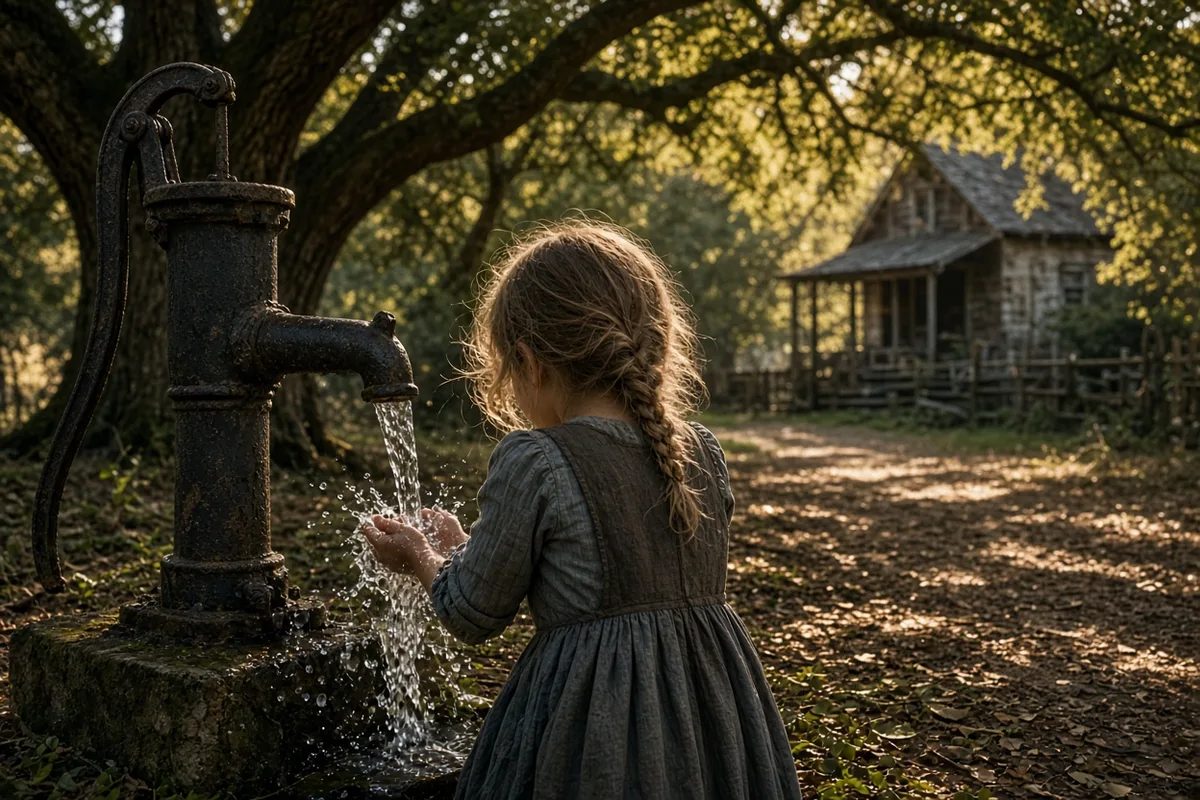
We reached the pump house just as the sun cleared the roofline. The boards were already warm under my bare feet. Miss Sullivan set the tin mug beneath the spout and motioned for Helen to hold it steady. The girl’s free hand kept reaching for whatever she could find—my skirt, the pump handle, the air itself. Miss Sullivan pumped once, twice. Cold water struck the metal and splashed across Helen’s fingers. At the same instant the teacher’s right hand moved against the left, spelling the letters she had spelled a hundred times before.

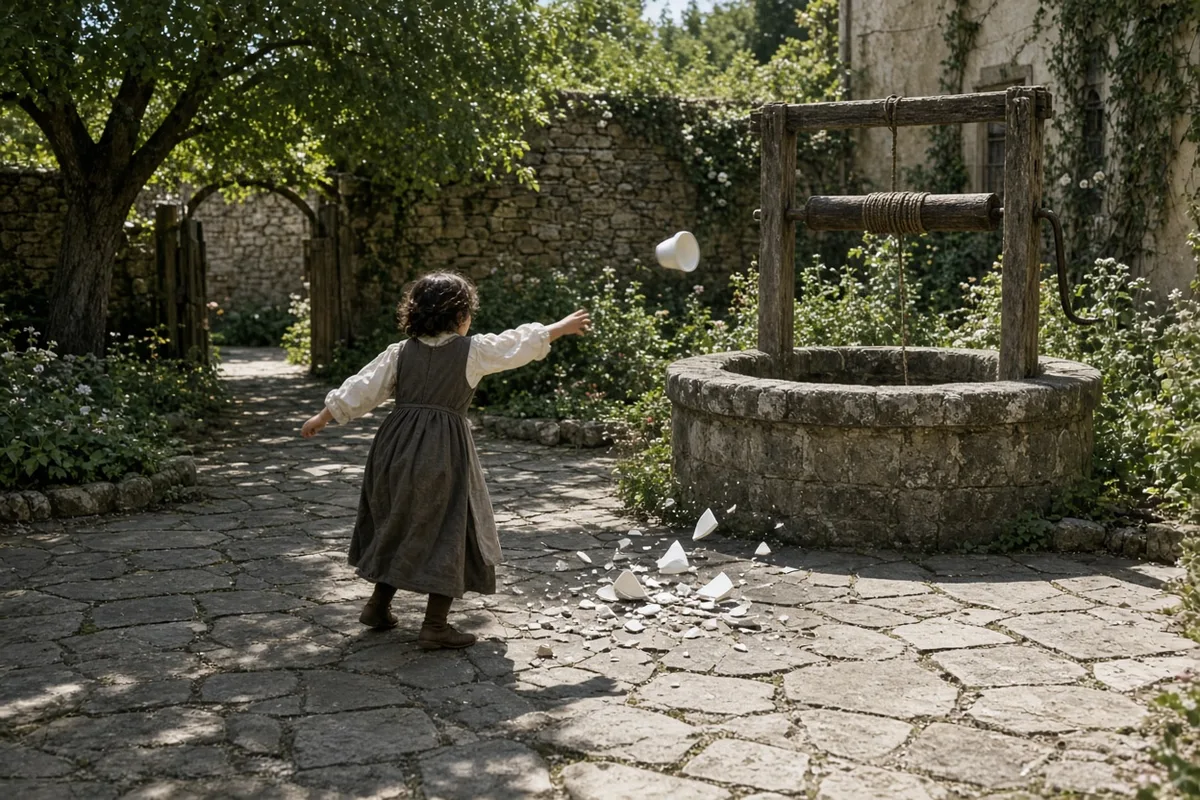
Helen dropped the mug. It clattered against the stones and rolled under the bench. She stood perfectly still, water still running down her wrist and soaking the cuff of her sleeve. Her face changed. The tight line between her brows smoothed. She turned toward the pump and slapped her hand against the iron, then against Miss Sullivan’s hand again, demanding the letters once more. The teacher gave them. Helen spelled them back, slow and careful, her own fingers shaping each one.
She reached for me next. Her wet hand found mine and she spelled the word into my palm, then pointed at the pump, at the spilled water darkening the ground, at the mug lying on its side. I nodded because I did not know what else to do. She spelled it again, faster, and laughed—a short, startled sound I had never heard from her.

Miss Sullivan knelt and took both of Helen’s hands. She spelled “water” once more, then “ground,” then “mug.” Helen repeated each one. When the teacher stood, Helen followed without being led, one hand still resting on the spelling fingers. We walked back toward the cottage. Helen stopped every few yards to touch something new—a leaf, the fence rail, the corner of the well cover—and waited for the letters. Miss Sullivan gave them without hurry.
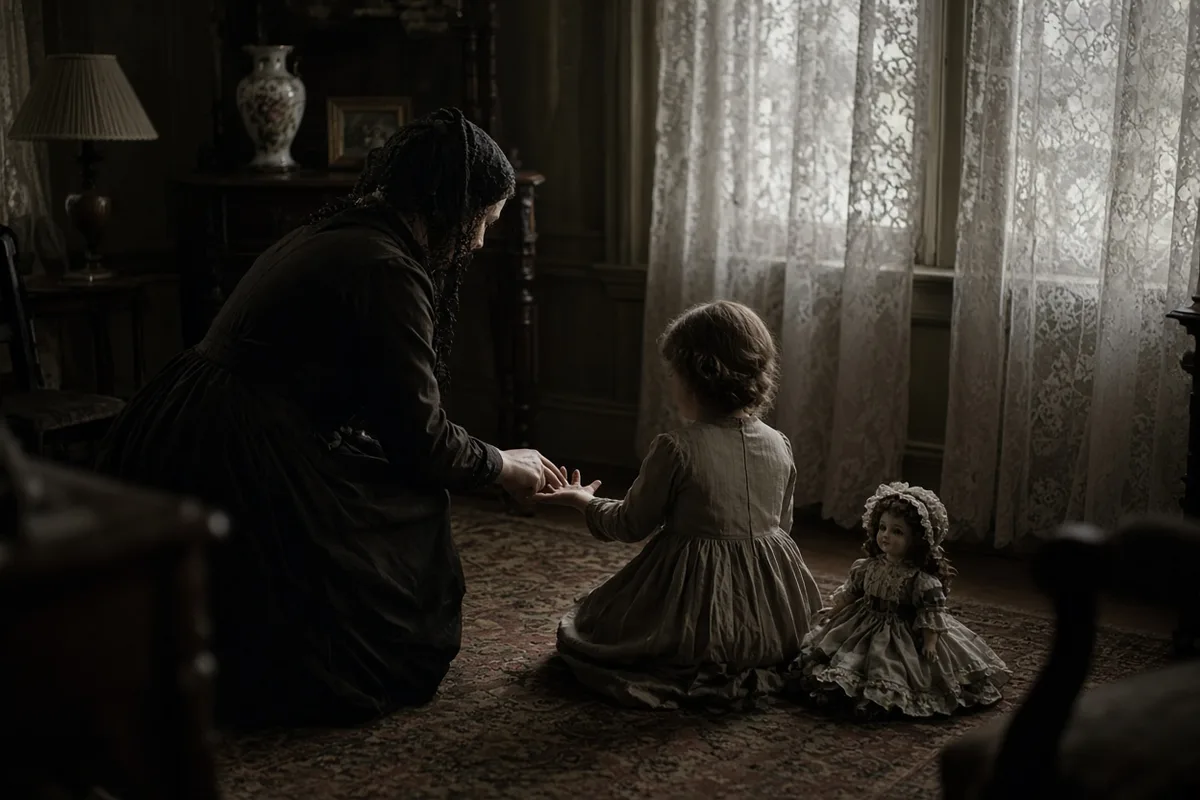
Inside the cottage the air smelled of the breakfast dishes we had left on the table. Helen went straight to the shelf where the broken pieces of her doll still lay in a basket. She touched the fragments, then spelled “doll” into her own hand and looked at Miss Sullivan. The teacher nodded. Helen spelled it again, this time reaching for the basket itself. She carried it outside and set it on the step where the sun could reach it. Then she came back in and sat at the table, waiting.
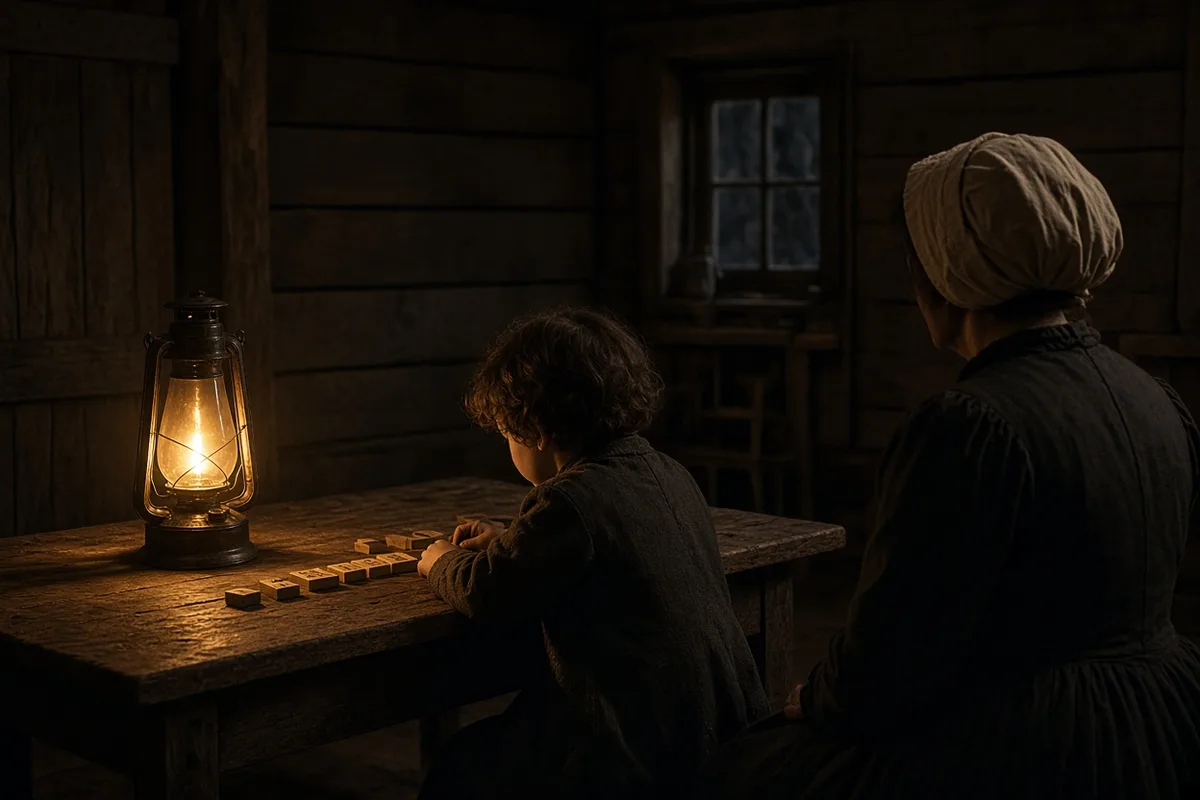
That afternoon she would not be still. She followed Miss Sullivan from room to room, touching every object and demanding the name. When the light began to fade, Miss Sullivan lit the lamp and held Helen’s hand under it so she could feel the warmth of the glass. The child spelled “lamp” without prompting. Later, when the supper tray arrived from the main house, Helen spelled “bread,” “butter,” “spoon.” She ate with one hand on the teacher’s wrist the whole time.
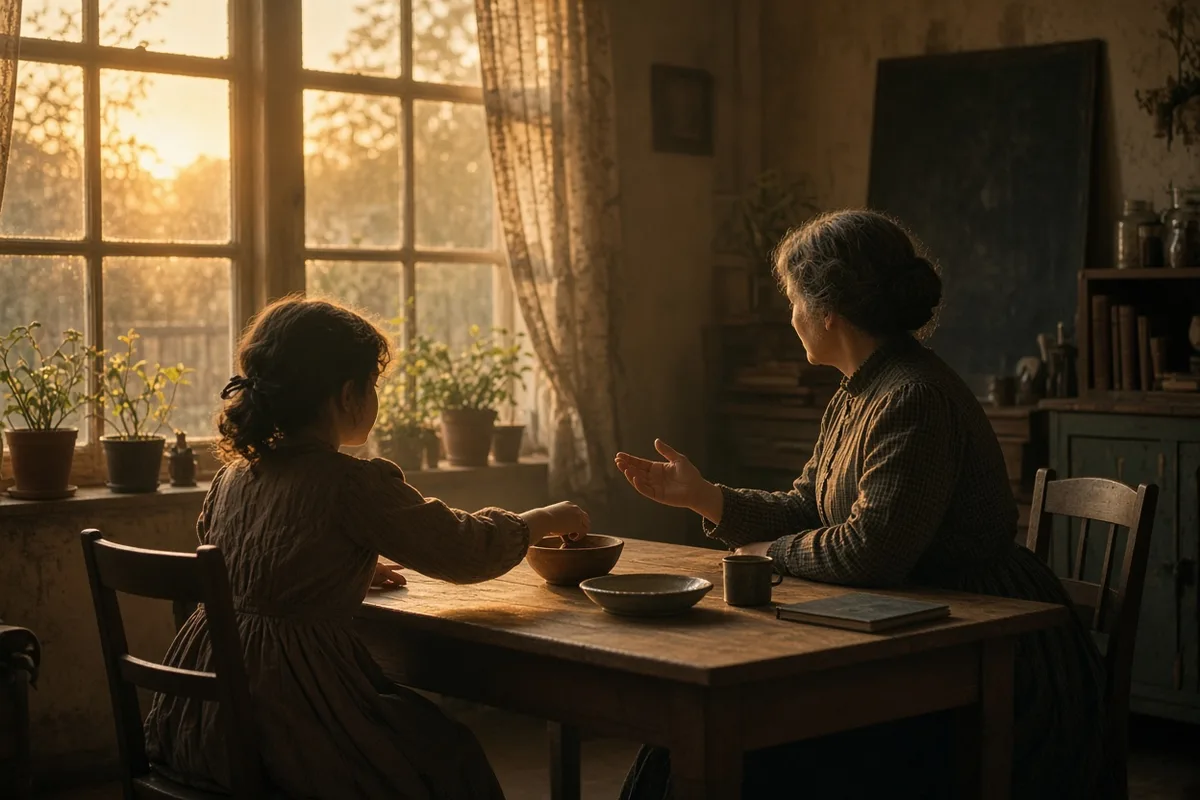
After the dishes were cleared, Helen climbed onto the narrow bed without being told. She pulled the quilt up to her chin and waited. Miss Sullivan sat on the edge and spelled something I could not see. Helen reached up, found the teacher’s face, and held it between both hands for a long moment. Then she turned onto her side and went to sleep with one arm still stretched toward the edge of the mattress.
I stayed in the doorway until the lamp was turned low. Outside, the cicadas had started. I walked back along the path toward the kitchen, the empty buckets swinging at my side. The water that had spilled at the pump had already dried into the dust, but the ground still held the shape of the mug where it had fallen.
The next morning Captain Keller stood at the edge of the pump house and watched his daughter run her palm along the iron handle before spelling the word into Anne Sullivan’s hand. He had ridden into Tuscumbia the evening before to send a telegram to the Perkins Institution for the Blind in Boston, the same place from which the twenty-year-old teacher had arrived on March 3, 1887, carrying a doll dressed in a red cloak that had been made by the children at the school. Helen spelled “telegram” when her father returned with the slip of paper, then spelled “horse” when she felt the bridle being lifted from the peg in the stable. By noon she had demanded the names of twenty-seven separate objects, including the brass latch on the smokehouse door and the tin of lard on the kitchen shelf, each one spelled letter by letter into her palm as Sullivan recorded the session in the daily report she mailed every Saturday to Michael Anagnos at Perkins.
Within three weeks Helen had learned more than one hundred words and had begun to string them into simple sentences. On April 24 she spelled “I am Helen” into her own hand while standing in the parlor of Ivy Green, the white clapboard house built in 1820 by her grandfather David Keller. Sullivan noted in a letter dated May 8 that the child now pointed to herself and signed “Helen” before pointing to the teacher and signing “Teacher,” a distinction she had never made before the pump-house episode. The family counted the new words each evening on the back of an envelope; by June 1 the total reached four hundred and eighty-seven, including proper names such as “Mildred” for the baby sister born in 1886 and “Viney” for the cook who had worked in the kitchen since 1879.
In the autumn of 1888 the same railroad car that had carried Sullivan south carried both teacher and pupil north to Boston. Helen, now eight, sat on the train with a Braille slate on her lap and spelled the stations as they passed: “Lynchburg,” “Washington,” “Baltimore,” “Philadelphia.” At Perkins she met Laura Bridgman, the fifty-four-year-old woman who had been the first deaf-blind pupil taught by Samuel Gridley Howe in 1837; Helen placed her hands on Bridgman’s face and spelled “Laura” before Bridgman answered by spelling “Helen” on the younger child’s wrist. The two sat together each afternoon in the Howe library, their fingers moving rapidly while Sullivan read aloud from raised-print volumes of Dickens and Longfellow.
By 1894 Helen was enrolled at the Wright-Humason School in New York, where she studied arithmetic and French under the direction of Mary Wright and where she first met Alexander Graham Bell, who had founded the American Association to Promote the Teaching of Speech to the Deaf in 1890. Bell arranged for her to use the phonautograph at his Volta Laboratory on Connecticut Avenue in Washington; Helen placed her hand on the membrane and felt the vibration when the word “cat” was spoken into the horn. In 1900 she entered Radcliffe College as a special student, accompanied every lecture by Sullivan, who spelled the professors’ words into her palm; she graduated cum laude on June 28, 1904, with a thesis on “The Story of My Life” that had already appeared in serial form in the Ladies’ Home Journal.
The years after Radcliffe took Helen and Anne to Wrentham, Massachusetts, where they bought a farmhouse in 1905, then to Forest Hills, New York, in 1917 after Anne’s marriage to John Macy ended. Helen dictated more than a dozen books, each one typed by a secretary who read the Braille manuscript back to her for correction; “The World I Live In” appeared in 1908 with a print run of 3,200 copies, and “Midstream: My Later Life” followed in 1929. She traveled to Japan in 1937, delivering a lecture at the Tokyo School for the Blind to an audience of 1,200, and returned to the United States with a lacquered box containing 47 letters of thanks written in Japanese Braille. During the Second World War she visited 147 military hospitals, spelling messages of encouragement to blinded servicemen at Walter Reed and Letterman General Hospital.
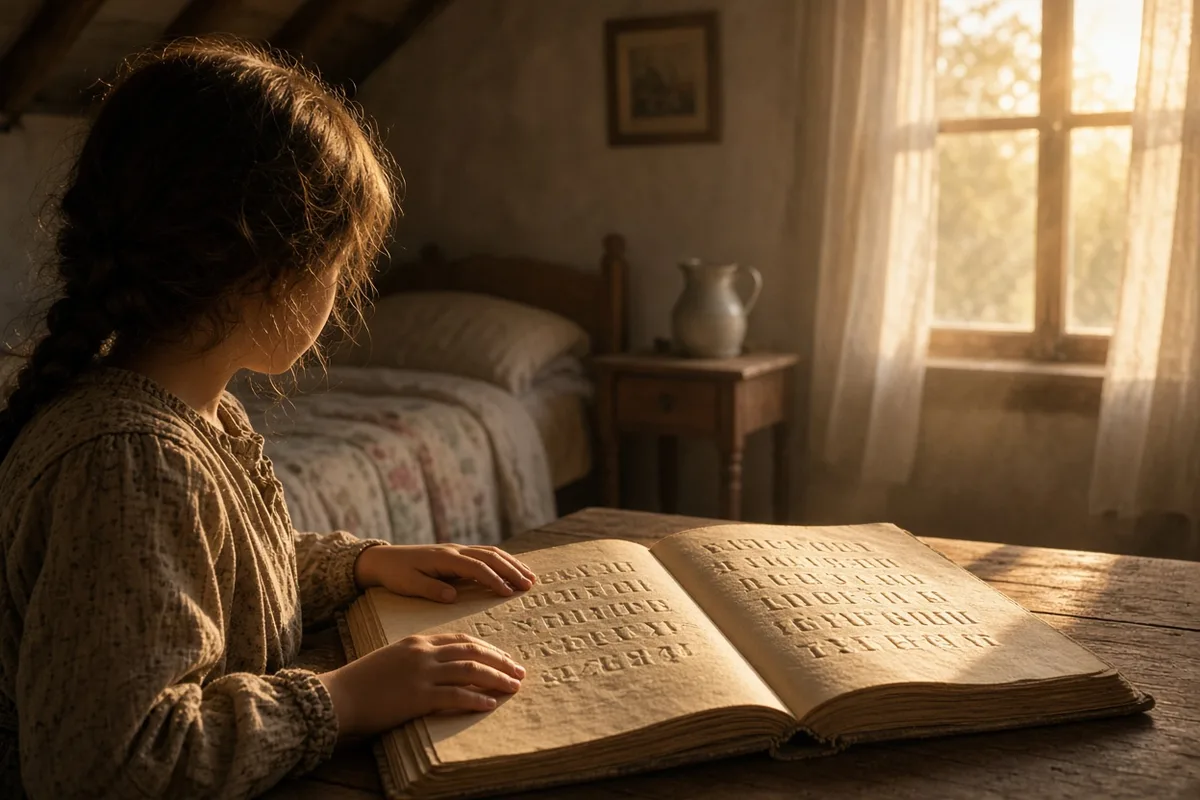
Anne Sullivan died on October 20, 1936, in Forest Hills; Helen placed both hands on her teacher’s face for the last time and spelled “I love you” before the body was taken to the crematory at Hartsdale. After Anne’s death Helen continued public work with Polly Thomson, who had joined the household in 1914 as secretary and remained until 1960. On June 27, 1960, Helen’s eightieth birthday, the American Foundation for the Blind presented her with a Braille edition of the complete works of Shakespeare in 144 volumes. She died on June 1, 1968, at her home in Easton, Connecticut; the last image recorded by visitors was of her sitting in a straight-backed chair by the window, one hand resting on the raised dots of a Braille magazine while the other traced the outline of the wooden armrest, her fingers moving in the same steady rhythm she had first learned at the pump house eighty-one years earlier.
On the morning after Helen’s death the household staff at the Easton farmhouse covered the mirrors with linen cloths and removed the telephone from its cradle so that the ringing would not disturb the quiet. Polly Thomson’s niece, who had taken over the daily correspondence in 1961, sat at the kitchen table and drafted the announcement that would appear in the New York Times the following day, quoting the line Helen had written in 1933: “Life is either a daring adventure or nothing.” The body was placed in a plain pine coffin lined with white cotton and driven the seventy miles to the Washington National Cathedral, where the Dean, Francis B. Sayre Jr., read the committal service on June 5 before an assembly that included representatives from the American Foundation for the Blind, the Perkins School, and the Japanese Embassy. The coffin was lowered into the crypt beside the remains of Anne Sullivan Macy and Polly Thomson, the three names cut into a single slab of Vermont marble.
At Ivy Green the wrought-iron gate was left open for the first time since 1964 so that local residents could walk the path to the pump house without ringing the bell at the main house. On July 4, 1968, the Tuscumbia town council voted to rename the street that ran past the property Helen Keller Drive; the resolution recorded the exact wording of the 1887 telegram Captain Keller had sent to Boston and ordered that a bronze plaque bearing those words be affixed to the pump-house wall. By autumn the Alabama Historical Commission had begun cataloguing the contents of the cottage, noting that the tin mug Helen had dropped still rested on the shelf where she had placed it after the lesson, its dented side marked with the date “March 1887” in her own Braille.
In 1971 the Library of Congress received the bulk of Helen’s papers—147 linear feet of correspondence, Braille manuscripts, and the 1904 Radcliffe thesis—under the terms of her will. Archivists found a folder labeled “Pump House, 1887” that contained Anne Sullivan’s original daily report for the week of April 5, the page still bearing the faint imprint of Helen’s wet hand. Researchers later transcribed the 2,347 letters Helen had written to Alexander Graham Bell between 1894 and 1922, each one signed with the same five letters she had first spelled at the pump.
The American Foundation for the Blind established the Helen Keller Archives in 1975 at its New York headquarters, housing the 144-volume Braille Shakespeare set presented to her on her eightieth birthday together with the lacquered Japanese box that had arrived in 1937. In the same year the Perkins School installed a bronze casting of Helen’s hand, cast from the plaster mold taken in 1903, in the Howe Library reading room where she had sat with Laura Bridgman.
Ivy Green opened to the public as a museum on June 27, 1980, with the original furniture of the little house arranged exactly as it had stood in 1887. Visitors were invited to place their own hands under the pump spout while a guide spelled “water” into their palms; attendance records for the first twelve months listed 11,842 names, including a delegation from the Tokyo School for the Blind that arrived carrying copies of the 1937 lecture notes. The property was designated a National Historic Landmark on December 29, 1991, after the National Park Service verified that the pump handle still turned on its original axle and that the cedar trees planted in 1850 remained standing at the western boundary.
A life-size statue of Helen and Anne Sullivan at the moment the water struck their hands was unveiled in Tuscumbia’s Spring Park on October 5, 2005, the figures cast in dark bronze by sculptor Edward Hlavka and inscribed with the single word “water” in both English and Braille. The statue stands thirty yards from the actual pump house, which continues to operate on the same well that supplied the lesson. Each spring the Helen Keller Foundation for Research and Advocacy sends a representative to the site to record the temperature of the water at the spout, a measurement that has remained between 58 and 62 degrees Fahrenheit since the first reading taken in 1998.
Today the last human image preserved from Helen’s final weeks is a photograph taken on May 12, 1968, by a nurse from the Visiting Nurse Association of Easton. In the image Helen sits upright in the straight-backed chair, her right index finger resting on the raised dots of a Braille magazine while her left hand traces the grain of the wooden armrest; the light from the east window falls across the page so that the embossed letters cast distinct shadows. The print is now catalogued as item 1968-014 in the Helen Keller Archives, its verso bearing the nurse’s note: “She spelled the word ‘light’ when I asked if the sun was warm on her hand.”