


Henry IV Walks to Canossa
Snow packed hard against the outer gate when the first rider came in shouting that the king’s party had crossed the ridge. I was hauling water from the lower well when the call went up, and the bucket swung against my knee as I turned. Inside the hall the fires already burned low against the wind that had followed us from the valley. Matilda stood by the long table with Adelaide, both of them still in travel cloaks, while Abbot Hugh spoke quietly with two of Gregory’s clerks. None of them raised their voices, yet the air changed at once.

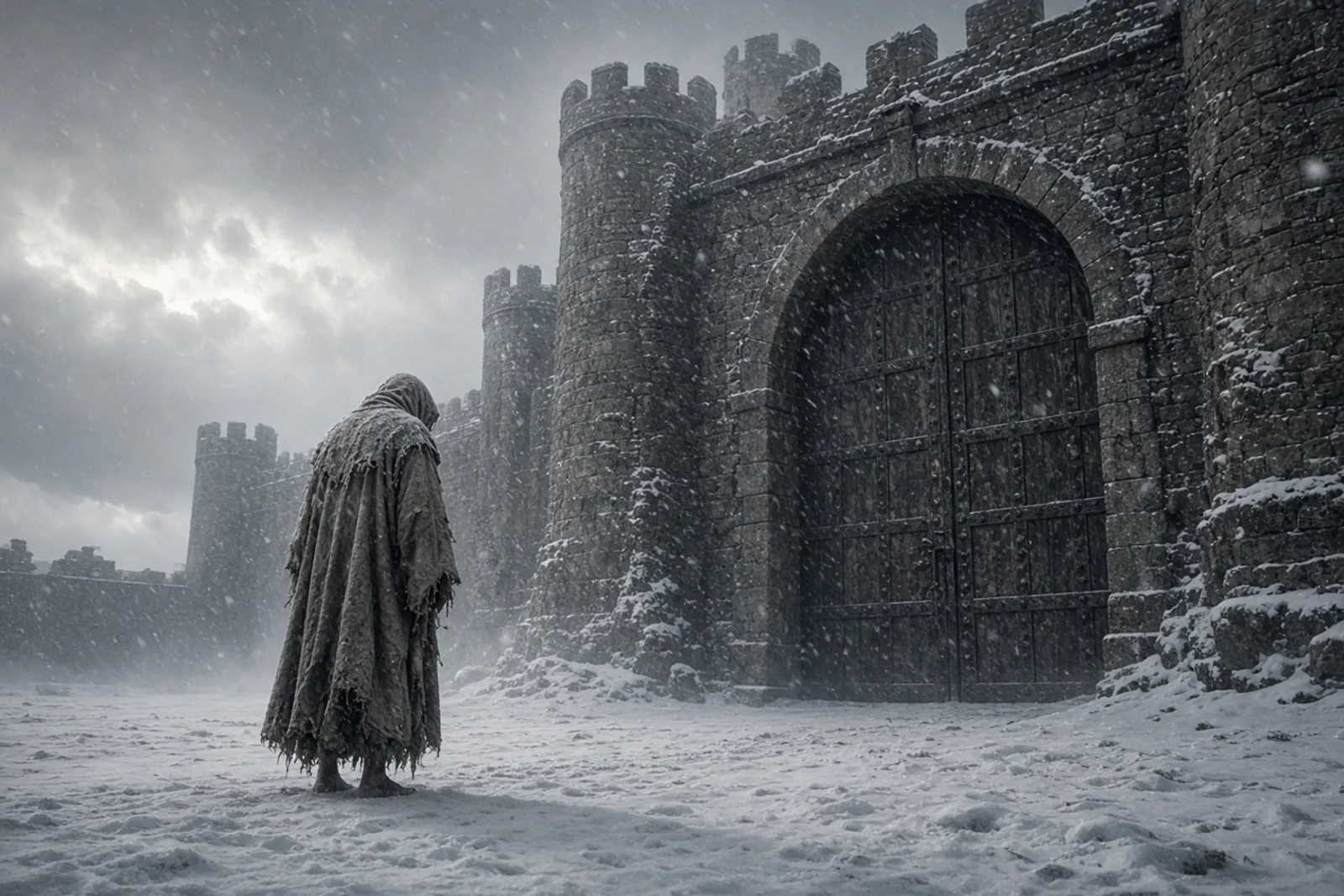
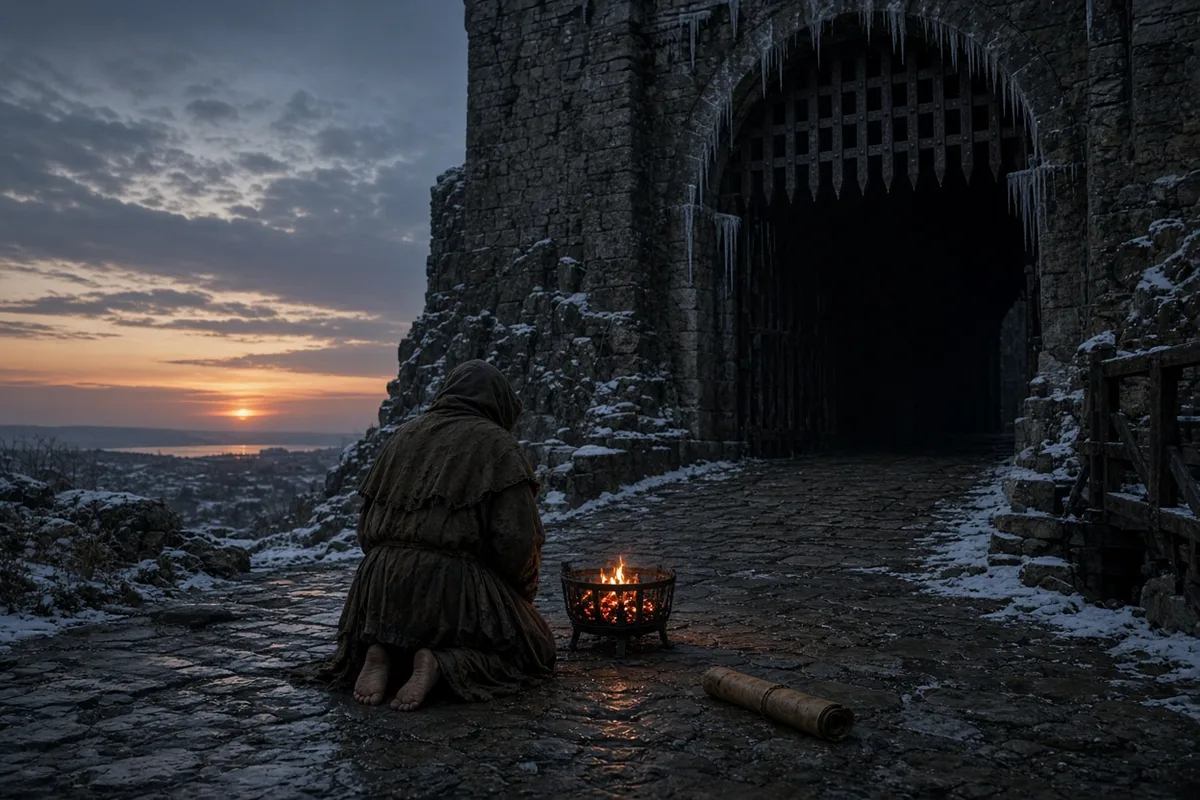
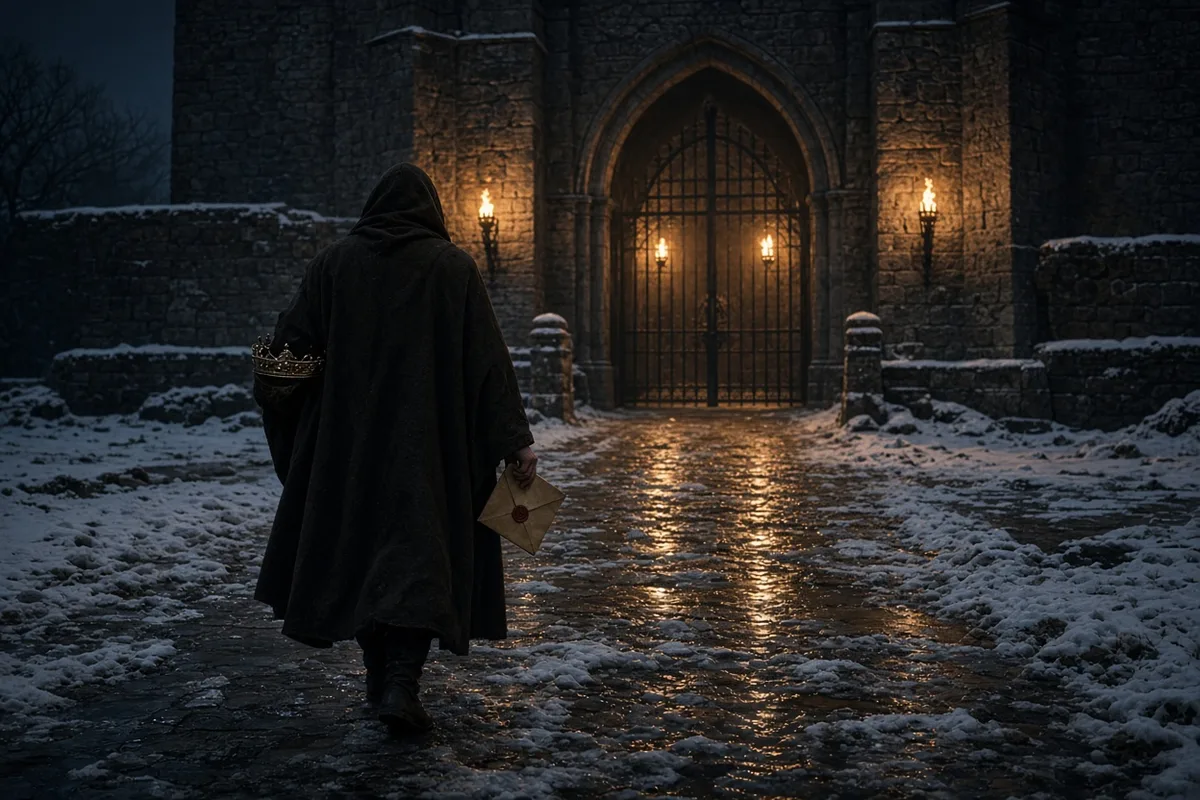
Word reached us that Henry had sent legates ahead promising full satisfaction. Gregory received the messages in the upper chamber and gave no answer for a day. We watched the road from the wall walk. The snow lay deeper than a man’s forearm and the cold bit through wool and leather alike. On the second morning a small group appeared below the castle, no banners, no horses draped in royal cloth. Henry walked at the front. He had set aside every mark of kingship and wore only a coarse wool tunic that reached his ankles. His feet were bare on the frozen track.
We counted the hours by the changing light on the mountains. He stood the first day without shelter, sometimes on one foot, sometimes on the other, shifting when the numbness grew too great. A few of his companions tried to bring him a cloak at dusk; he sent them back. The second day the wind rose and drove pellets of ice against the stones. From the parapet I could see the red marks the cold had raised on his skin. People inside the walls began to speak of it. Some said the king would not last another night. Others said Gregory would not open the gate even if he froze where he stood.

On the morning of the third day the snow fell again, light and steady. Henry remained at the outer gate. He had stopped calling out and now only bowed his head each time a figure passed on the wall above. The tears on his face froze before they reached his chin. Word spread through the courtyard that Matilda had gone to Gregory and asked for audience. Adelaide followed soon after. Abbot Hugh joined them in the chamber where the pope kept his letters. The three of them stayed inside for most of the morning.

I carried bread and ale to the men on the gate. They let me stand a while in the shelter of the arch. Through the narrow slit I watched Henry. He did not look up. His lips moved, but the wind took the sound. One of the guards muttered that no man should be made to do this for any crown. Another answered that the crown was no longer the question.
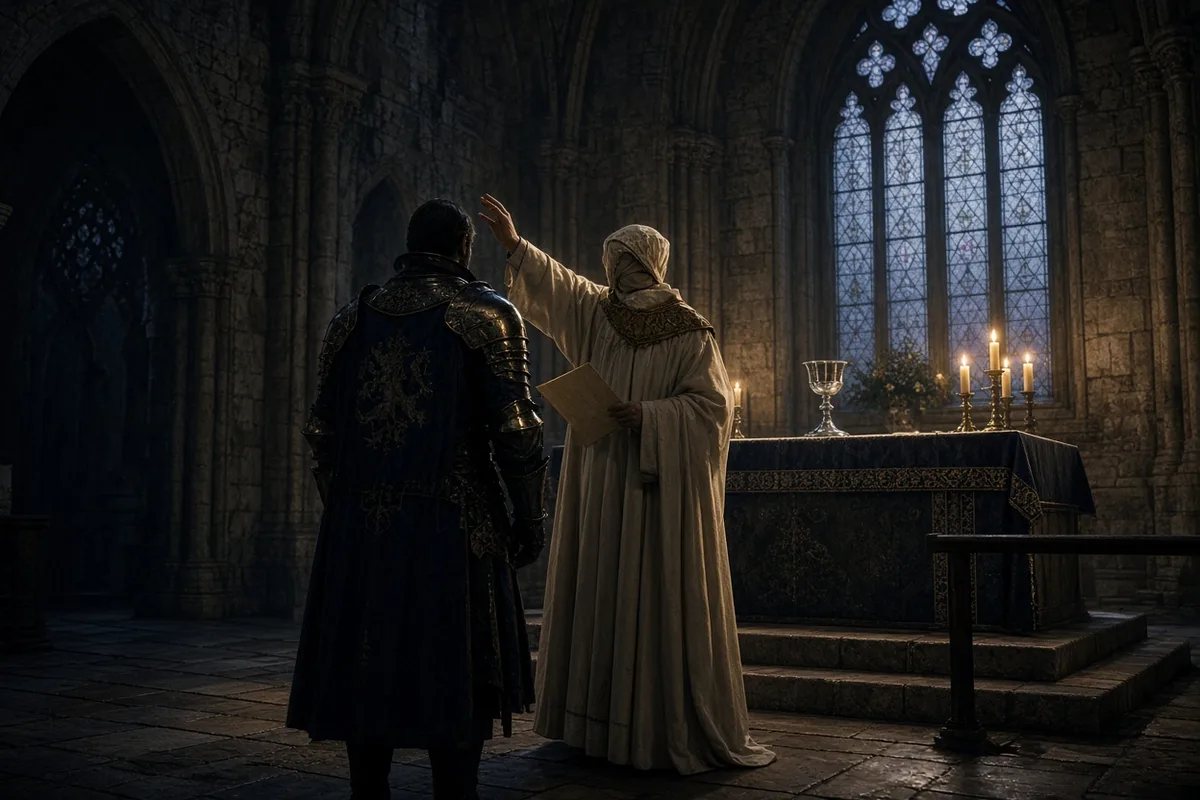
By midday the three intercessors came down the stairs together. Matilda walked first, her face set. She spoke to the porter and the bar was lifted. The gate opened only wide enough for a single man to pass. Henry entered alone. His feet left dark prints on the stone floor of the passage. He was brought to the chapel where Gregory waited. The absolution was given that afternoon. The chain of the anathema was declared loosed, and Henry received communion from the pope’s own hands.

Afterward the king remained inside the castle for several days. He ate at the common table and slept in a chamber without hangings. No one restored his royal garments. Gregory prepared letters to the German princes explaining what had been done. He named the sponsors who had stood for Henry: Matilda, Adelaide, Abbot Hugh, and certain bishops and lay lords present at Canossa. The letters were sealed and carried south by trusted riders.
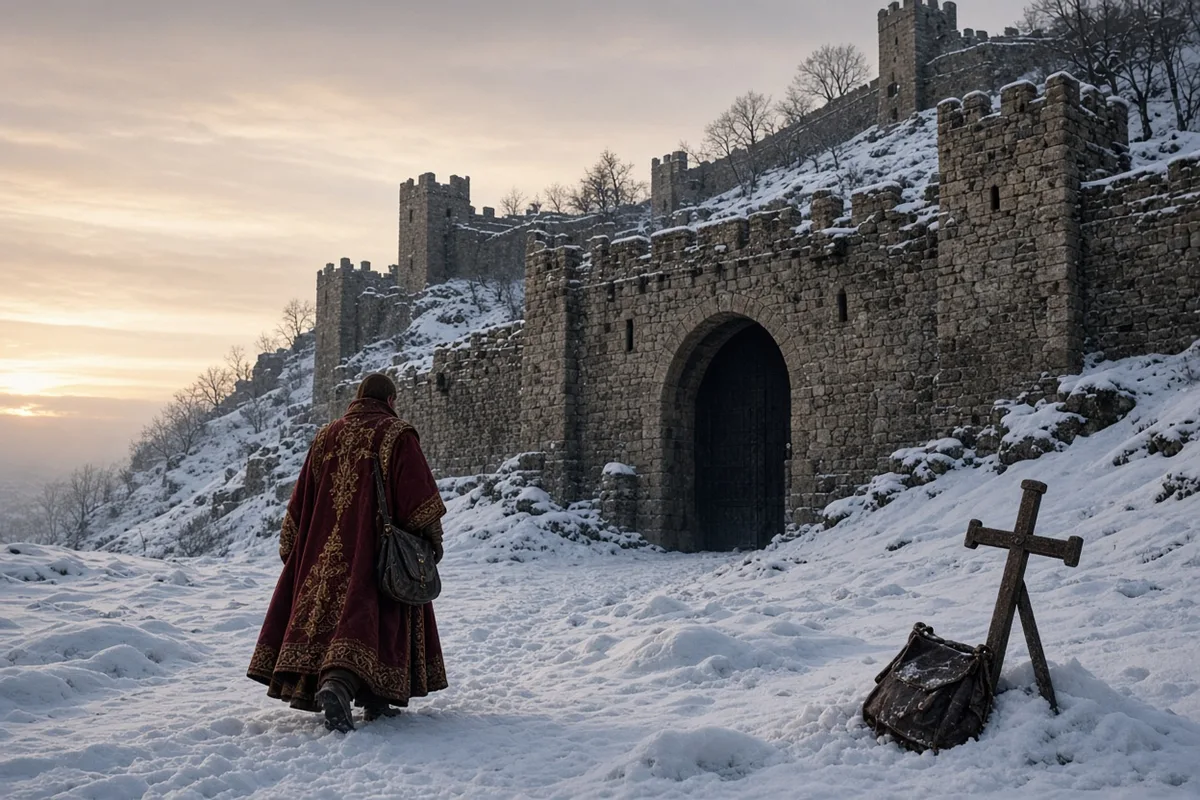
The snow did not stop. On the morning Henry left, the path down the mountain had been cleared only by the feet of those who had come up with him. He walked at the head once more, still without crown or mantle. From the wall I watched until the last figure disappeared behind the shoulder of the ridge. The gate was barred again. Inside the hall the fires were built higher, yet the cold that had settled during the three days stayed in the stones for weeks.
Matilda returned to her own lands soon after. Adelaide crossed the Alps with the pope’s party when spring allowed passage. Abbot Hugh went back to Cluny carrying copies of the letters. Gregory himself remained in Italy longer than he had planned, waiting for the escort that never arrived in full strength. The princes in Germany received the news of the absolution without uniting behind any single decision. Henry kept the peace he had sworn for a time, then the old disputes over bishops and appointments rose again.
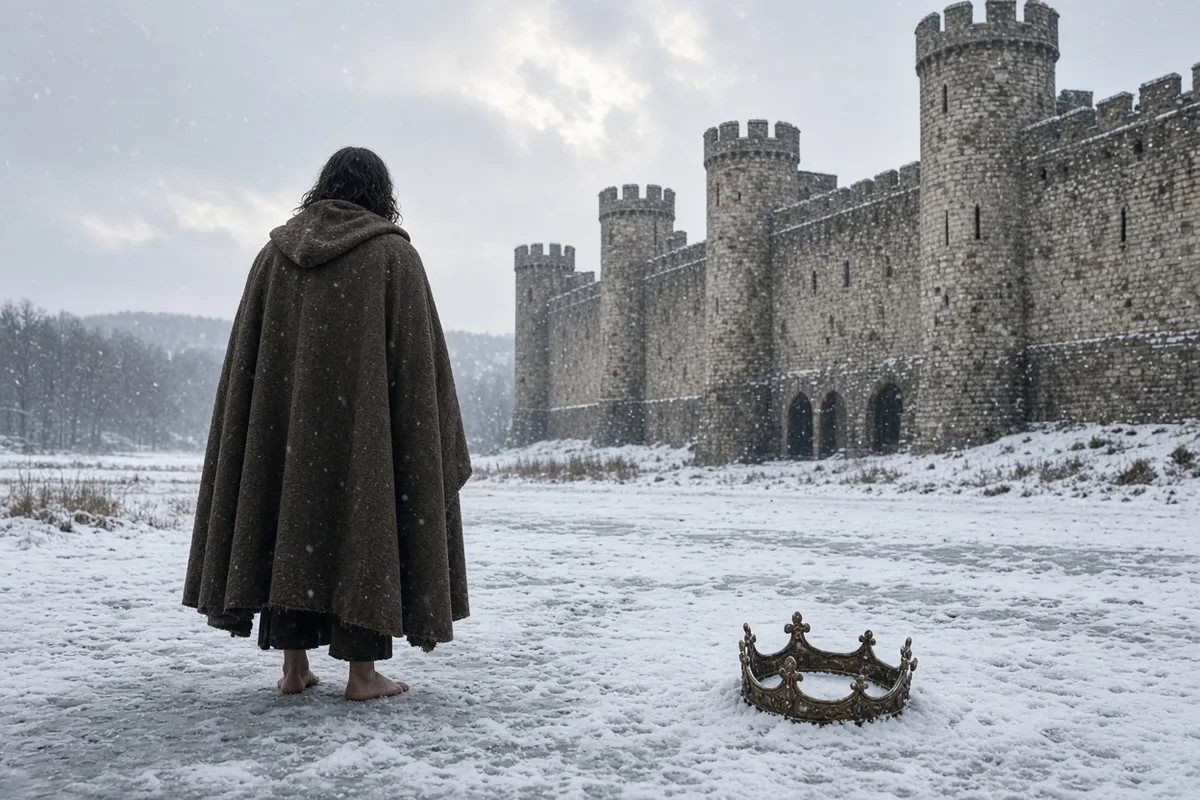
I stayed at Canossa through the next winter. The marks left by bare feet on the frozen ground outside the gate were gone by spring thaw, but the story of the three days traveled with every messenger who passed through the valley. No one who had stood on the wall during those mornings forgot the color of the sky or the sound the wind made against the wool tunic when the king would not move.
In the spring of 1078 a rider from Piacenza brought word that Henry had summoned a diet at Goslar where he restored the bishoprics of Augsburg and Speyer to their sees, naming Adalbero of Würzburg as his chancellor for Italian affairs and dispatching two hundred marks of silver to the abbey of Fulda as recompense for lands seized during the Saxon revolt. I heard the messenger read the letter aloud in the courtyard while the porter checked the seal against the one Gregory had left with us. The same day another letter arrived from Matilda’s castle at Bianello, dated the tenth of March, stating that she had granted the canons of Reggio the tithes of five villages along the Crostolo to secure their prayers for the peace sworn at Canossa. I copied the figures into the ledger Abbot Hugh had kept in the scriptorium before he departed: 120 hides of land, 14 mills, and the right to pasture 300 sheep on the common. By midsummer the road below the ridge carried more traffic than in any year I remembered, merchants from Parma hauling salt and Genoese wool, each stopping to ask whether the pope’s absolution still held.
News of the second excommunication reached us in the autumn of 1080 through a clerk who had ridden from Rome with letters dated the fifteenth of October. He read aloud the sentence Gregory pronounced at the Lateran synod: “We declare Henry, once called king, again bound by the chain of anathema for violating the oath taken before Matilda and Adelaide at Canossa.” The clerk added that Rudolf of Swabia had been crowned at Mainz on the twenty-fifth of March that year with the same crown Henry had left behind at Canossa. Two weeks later another messenger, this one from the court of Welf of Bavaria, reported that Henry’s forces had met Rudolf’s at Hohenburg on the Elster and that Rudolf had lost his right hand in the fighting before dying of the wound on the sixteenth of October. The man counted the dead on his fingers as he spoke: 2,000 on Rudolf’s side, 1,500 on Henry’s, the bodies left unburied until the snow covered them.
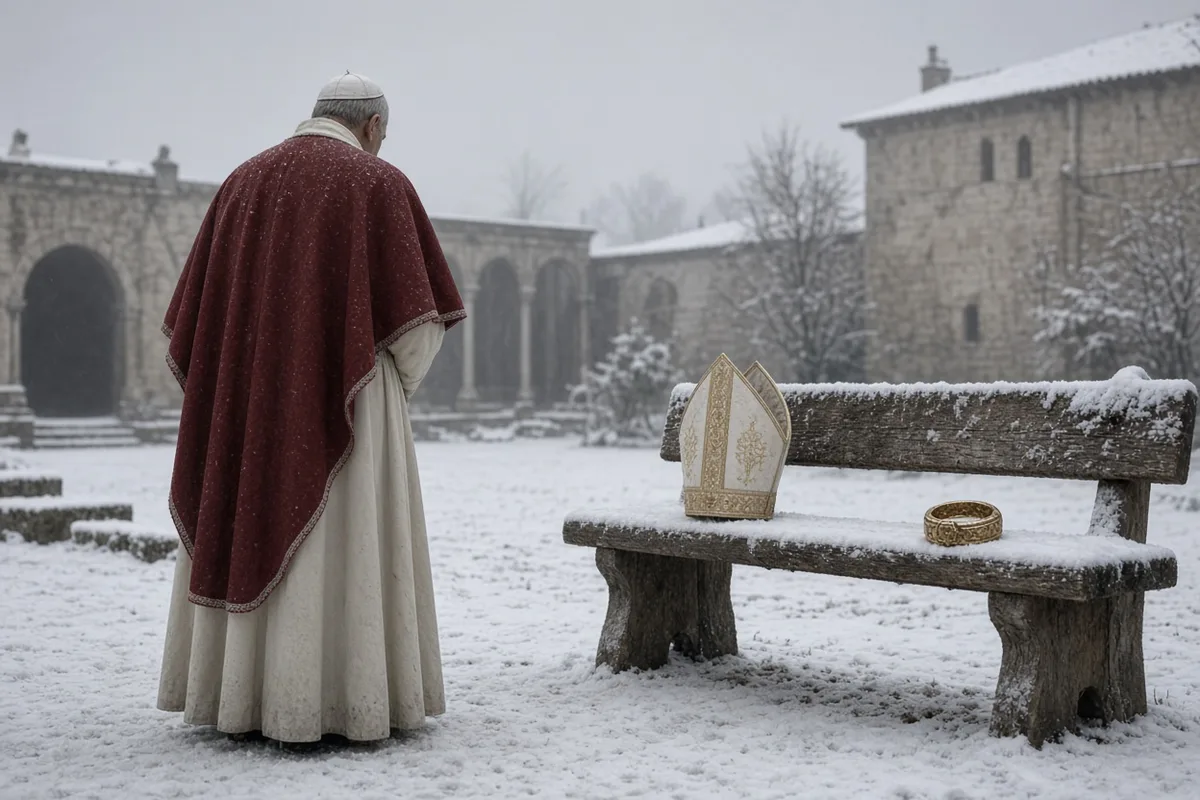
Matilda wrote again in the spring of 1081 from her camp near Mantua, where she had mustered 400 knights and 1,200 foot soldiers to block Henry’s passage south. Her letter, sealed with the same device she had used at Canossa, asked that any remaining copies of Gregory’s absolution letters be sent to her for safekeeping. I packed the parchments myself, counting twenty-three sheets including the one naming the sponsors. The porter who carried them south returned with word that Matilda had defeated Henry’s lieutenant at Sorbara on the eleventh of July, taking 300 prisoners and the baggage train that contained the crown Henry had reclaimed after Canossa. She sent back a single gold chalice from that train, which the chaplain placed on the altar of the chapel where the absolution had been given.
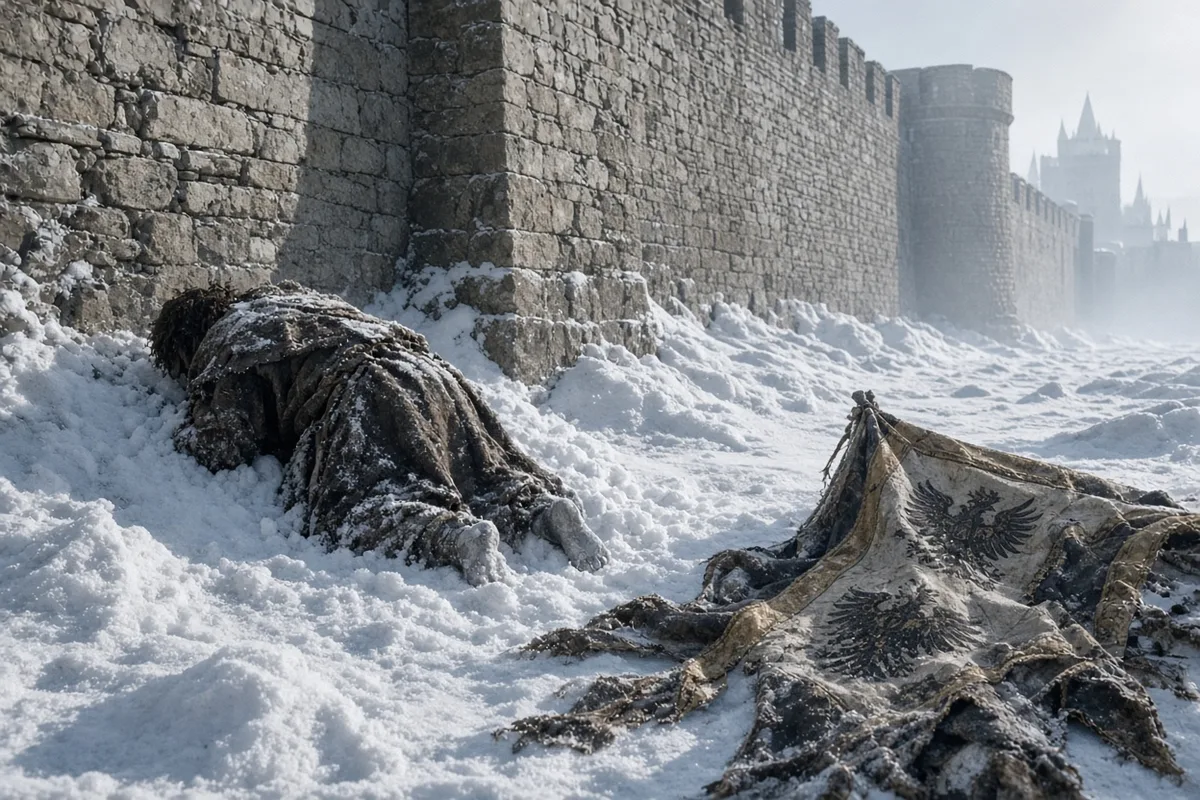
Gregory left Rome in June 1084 after the city fell to Henry’s troops and the antipope Clement III was installed in the Lateran. A monk from Monte Cassino who passed through Canossa the following spring told us the pope had died at Salerno on the twenty-fifth of May 1085, his last recorded words being the verse from the 44th Psalm that he had quoted when he first received Henry’s legates three years earlier. The monk carried a copy of the pope’s will, which left Matilda the fortress of Canossa itself along with the castles of Rossena and Golinella, a total of 17 strongholds listed by name. I entered the numbers in the margin of the old ledger and noted the date the document was witnessed: the twentieth of May, five days before Gregory’s death.
Henry’s son Conrad was crowned king of Italy at Monza on the twenty-ninth of January 1093 after the father and son quarreled over the government of Lombardy. A trader from Milan who stopped at the gate that summer counted 180 knights who had deserted Henry to follow Conrad, among them the same Adalbero who had been named chancellor after Canossa. The trader also carried a letter from Matilda dated the fourth of June 1095, in which she recorded that she had met Pope Urban II at Clermont and pledged 500 marks of silver and the service of 300 men for the expedition to Jerusalem. She added that the absolution given at Canossa had been read aloud again in the council chamber before the assembled bishops.
I left Canossa in the winter of 1102 when the last of the garrison was withdrawn to Reggio. The new castellan, a man named Bonifacio sent by Matilda, handed me a writ releasing me from service and a purse containing twelve silver pennies struck at Mantua in the year of the second excommunication. On the road south I met a pilgrim who had come from Speyer and who told me Henry had been forced to abdicate at Ingelheim on the thirty-first of December 1105, after which he lived under guard at the castle of Böckelheim until his death on the seventh of August 1106. The pilgrim recited the epitaph carved on the stone at Speyer: “Here lies Henry, fourth of that name, emperor by the grace of God, who walked barefoot to Canossa in the year 1077.”
Matilda died at Bondeno on the twenty-fourth of July 1115. Her body was carried to San Benedetto Polirone and buried beneath the high altar, the same church to which she had granted the Canossa charters in 1102. The castle itself stood empty for three years until Frederick Barbarossa ordered its walls slighted in 1168 during his fourth Italian campaign; the records of the imperial chancellery list 120 miners employed for twelve days to bring down the outer curtain. By 1250 only the chapel remained intact, its roof repaired each spring by the villagers of the valley who still kept the anniversary of the absolution with a procession to the ridge.
The last man I knew who had stood on the wall during those three days was a porter named Giovanni, who lived until the spring of 1147 in a hut below the ridge. On the day he died he asked to be carried to the place where the gate had once stood and there repeated the words Henry was said to have spoken when the bar was first lifted: “I have come as a penitent, not as a king.” Giovanni’s son placed the body in the ground at the foot of the remaining tower and marked the spot with a flat stone taken from the chapel floor, the same stone on which Gregory had stood when he pronounced the absolution seventy years earlier.