



Hierarchy was never civilization's inevitable price
In 60 seconds
- The equality-then-farming-then-hierarchy timeline was an Enlightenment rebuttal to Indigenous critics, not a reading of the dig sites.
- Many societies ran hierarchy one season and equality the next, so political form was chosen, not fixed by tech or population.
- Tripolye mega-sites held up to fifteen thousand people in near-identical houses with no palace, temple, or ruling elite.
- Farming was slow and reversible; Çatalhöyük farmed for centuries without chiefly residences or storage monopolies.
- Domination splits into violence, bureaucracy, and charisma; full states locking all three together were rare accidents.
- What stuck inequality in place was the loss of three freedoms: to leave, to disobey, and to reorganize society.
The big idea
Graeber and Wengrow contend inequality is not the necessary cost of cities, farming, or scale. Early humans ran political experiments—seasonal hierarchy, kingless cities, farming without elites—and the real puzzle is how some societies lost the freedoms that once let them walk away from domination.
The book in brief
Most of us inherited a clean story: free little bands, then farming, then surplus, then kings. Graeber and Wengrow open by calling that story a construction. Enlightenment thinkers absorbed sharp Indigenous critiques of European beggars, prisons, and servility, then neutralized them by shoving freer societies into humanity's childhood—an early stage everyone must outgrow. Once inequality looks developmental, you stop asking why any group chose it.
The record, read without stage theory, looks different. People did not live inside one fixed form. Arctic and Plains groups shifted structure with the seasons. Scale did not force rulers: Ukrainian mega-sites packed thousands into uniform houses with no palace. Farming was not a one-way trap; Fertile Crescent communities mixed wild and domestic plants for millennia, and Anatolian villages farmed without hereditary elites.
The authors then break 'the state' into three tools that need not travel together—control of violence, control of information, and personal prestige. Most early complex societies mastered only one. Property, they add, looks less like tradable surplus than like sacred ties binding objects to the dead. Self-rule at urban scale shows up as neighborhood assemblies, rotating office, consensus councils, and women's vetoes—deliberate design, not a missing king.
They close on a harder claim. Hierarchy was always available. What needs explaining is how people lost the everyday powers to leave, refuse orders, and rebuild their institutions. Once debt, war, and inheritance sealed those exits, temporary chiefs hardened into permanent kings. The book treats that lock-in as contingent, not destiny, and insists we still have more political options than the textbook allows.
Context
David Graeber and David Wengrow published this in 2021 as a direct assault on the assumption that inequality is the price of civilization. It draws on archaeology from Ukraine to Mexico to reopen what human freedom actually requires, and it targets readers who still treat history as fixed stages from simple bands to complex states.
The key ideas
1
The evolutionary myth
The equality-to-hierarchy timeline was an Enlightenment rebuttal to Indigenous critics, not a finding from the archaeological record.
The myth
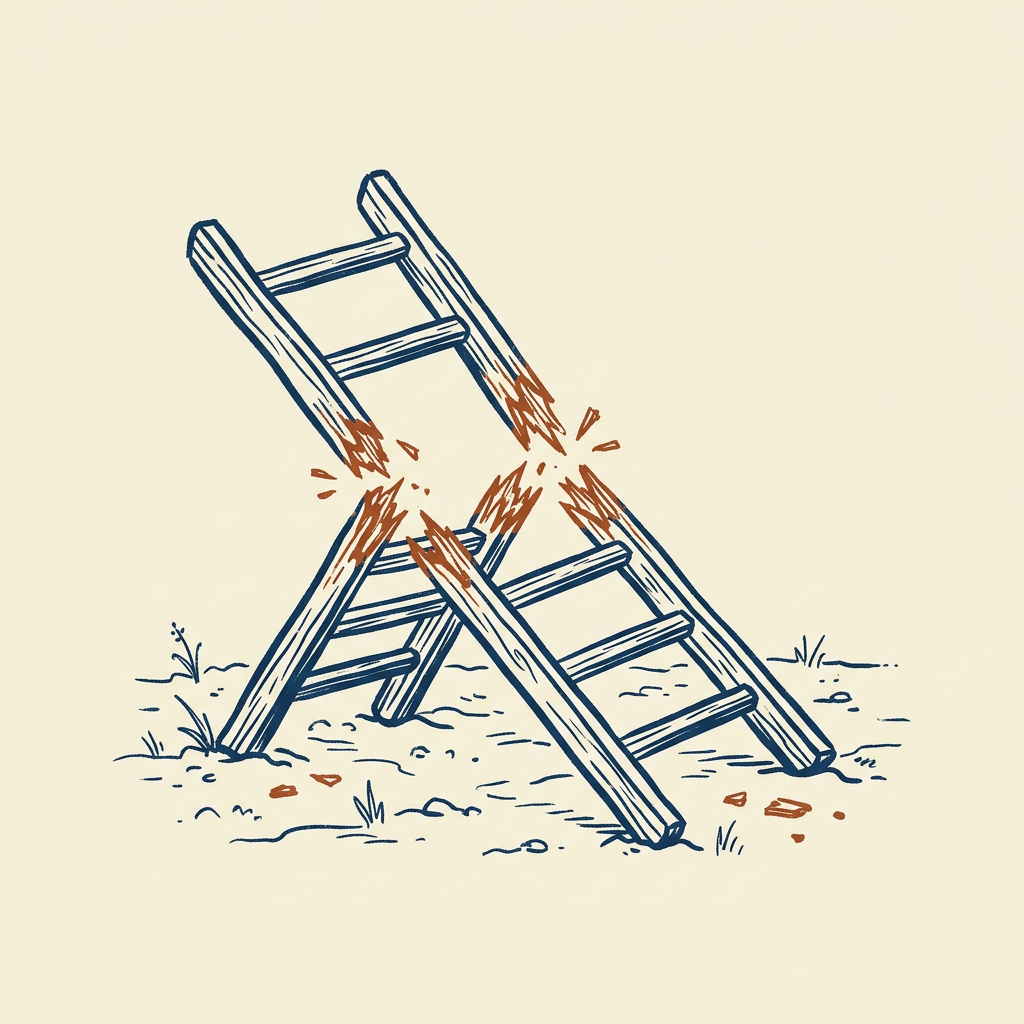
Free bands → farming surplus → property → kings and states as the price of complexity
The record
Monumental sites without kings, cities without rulers, farming that stayed egalitarian, foragers with nobles and slaves
Rousseau pictured natural equality ruined by property. Hobbes pictured brutal nature tamed by the state. Opposite politics, same bargain: once you get farming, cities, and crowds too big to know each other, you need kings and ranks. Graeber and Wengrow call this the evolutionary narrative and treat it as a late construction.
In the 1600s and 1700s, Jesuit missionaries recorded sophisticated arguments from Wendat leaders and others. Those speakers pointed out that European wealth produced beggars, prisons, and servility their own societies lacked. European philosophers absorbed the critique, then relocated egalitarian life to humanity's childhood—an early stage everyone must outgrow.
That move buried a real exchange under a self-serving timeline. Once inequality looks inevitable rather than chosen, you stop asking why particular societies picked hierarchy. Dig sites from every continent, read without the stage lens, show monumental architecture without kings, cities without rulers, farming that stayed flat for millennia, and foragers with slaves and hereditary nobility. If the record does not fit the story, the story is the problem.
In practice: Wendat statesman Kandiaronk and others told Jesuits that European wealth produced beggars and prisons their societies lacked; philosophers then buried freer life in humanity's 'childhood.'

2
Seasonal political costumes
Many societies ran hierarchy part of the year and equality the rest, so form was chosen rather than fixed by technology or size.
- 1Summer dispersalSmall patriarchal or autocratic hunting units
- 2Winter gatheringLarge communal settlements, flatter norms, ritual authority reversals
- 3Deliberate switchSame people choose the form the season requires
↻ and round again
The sharpest cases come from ethnographic and historical records of seasonal Inuit and sub-Arctic groups, with parallels among Indigenous societies of the Great Plains and Pacific Northwest. In summer some groups dispersed into small patriarchal or autocratic hunting units. In winter, gathered in large settlements, they reorganized into flatter communal arrangements with different leadership norms, sometimes with ritual reversals of ordinary authority.
Marcel Mauss and other early ethnographers documented the pattern. People were not trapped in a single social form dictated by tools or headcount. They tried hierarchy on like a costume for part of the year and took it off for the rest.
That reframes the origin of inequality as the wrong question. If the same people can live ranked in winter and equal in summer, inequality is not a one-way door that closes once agriculture or cities appear. It is a possibility societies can adopt, resist, or abandon by collective judgment. Early humans look like self-conscious political actors who structured institutions, argued about results, and changed course—not creatures pushed by population density or technological necessity.
In practice: Some Inuit and sub-Arctic groups ran patriarchal hunting bands in summer, then flattened into communal winter settlements with reversed authority norms.
3
Scale without rulers
Settlements of up to fifteen thousand people coordinated housing and resources with no palace, temple complex, or ruling elite.
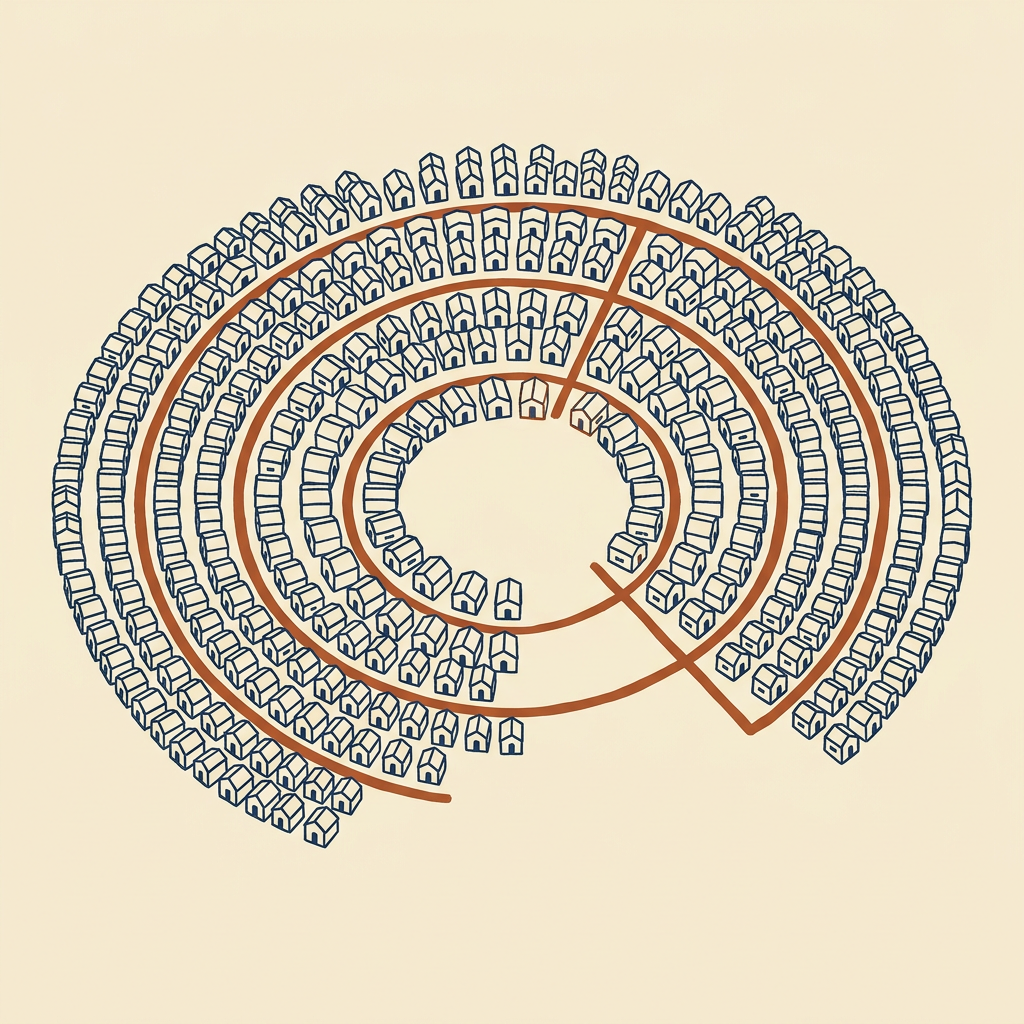
Standard theory holds that past a certain size you need administrators, tax collectors, and rulers or else chaos follows. The Tripolye mega-sites in present-day Ukraine and Moldova, dating roughly 4100–3300 BCE, contradict that directly. Populations estimated at up to fifteen thousand lived in concentric rings of near-identical houses. Excavations show no palace, no temple complex, no ruling elite quarter, no centralized grain storage, and no record-keeping apparatus of top-down control.
The layout points instead to neighborhood-level assemblies and rotating or distributed decision-making. Periodic ritual burning and rebuilding of houses may have blocked permanent wealth or status gaps between households.
A more contested parallel is Teotihuacan in central Mexico. After an early phase with pyramids and apparent rulers, the city shifted around 300 CE toward standardized apartment-style housing across the population—what some call its apartment-compound phase—suggesting a move away from monarchy toward collective governance. The authors do not call these places utopias; violence and coercion appear at points. They use them to break the assumed link between scale and centralized rule. If fifteen thousand people can run housing and communal life without kings, state hierarchy is not a functional necessity of complexity.
In practice: Tripolye settlements arranged thousands in concentric rings of near-identical houses, with periodic house-burning that blocked lasting household status gaps.

4
Play farming, not destiny
Agriculture was slow, reversible, and often partial; farming did not automatically create private land or hereditary elites.
The Neolithic Revolution is usually taught as a hinge: domesticate crops, population grows, surplus piles up, hierarchy follows as people fight for stored wealth. The actual timeline is messier. In the Fertile Crescent, communities cultivated wild and domesticated plants side by side for as long as three thousand years before fully committing, and some groups tried farming then abandoned it for foraging again.
The authors sometimes call this play farming. Early people understood domestication and chose how far to push it rather than being swept along by a technology they could not control. Even after agriculture took hold, private property in land was not automatic.
Çatalhöyük in Anatolia, occupied roughly 7400 to 6000 BCE, packed several thousand people into densely uniform houses entered through rooftops. Despite heavy reliance on farmed grain, digs show no clear chiefly residences, storage monopolies, or hereditary status markers. The real variable is not the presence of surplus but the social arrangements built around care, storage, and land access. Farming opened new routes to inequality; many farming societies built norms and rituals specifically to stop surplus from concentrating.
In practice: Çatalhöyük housed thousands on farmed grain in uniform rooftop-entry houses with no chiefly residences or storage monopolies.

5
Three separable powers
Sovereignty, bureaucracy, and charisma can stand alone; full states that lock all three together were rare historical accidents.
Graeber and Wengrow treat the state not as one package but as three distinct techniques. Sovereignty is control over the means of violence—the power to kill or imprison without consequence. Bureaucracy is control over information—record-keeping, tax schedules, standardized measurement. Charismatic authority is control drawn from personal prestige, persuasion, or heroic reputation.
Egypt and the Inca combined all three. That combination was historically uncommon and not forced by circumstance. Many early complex societies ran a strong version of just one. Olmec centers on Mexico's Gulf Coast concentrated charismatic authority in individual leaders, reflected in colossal carved heads, without elaborate bureaucratic administration. Mississippian Cahokia, around 1050–1200 CE, raised monuments and practiced ritual violence yet lacked durable bureaucratic institutions; the site was largely abandoned within a few centuries rather than consolidating into a lasting polity.
The framework explains why the archaeological record looks like a patchwork rather than a ladder. Societies could keep big chiefs without bureaucrats, or complex record-keeping without kings, indefinitely, without being forced to complete the set. The full modern state, with all three locked together, is a contingent outcome—not the natural endpoint of social complexity.
In practice: Cahokia raised monuments and used ritual violence around 1050–1200 CE yet lacked durable bureaucracy and was largely abandoned within centuries.
6
Property's ritual roots
Private property likely grew from inalienable grave goods bound to a person, not from surplus grain people could freely trade.
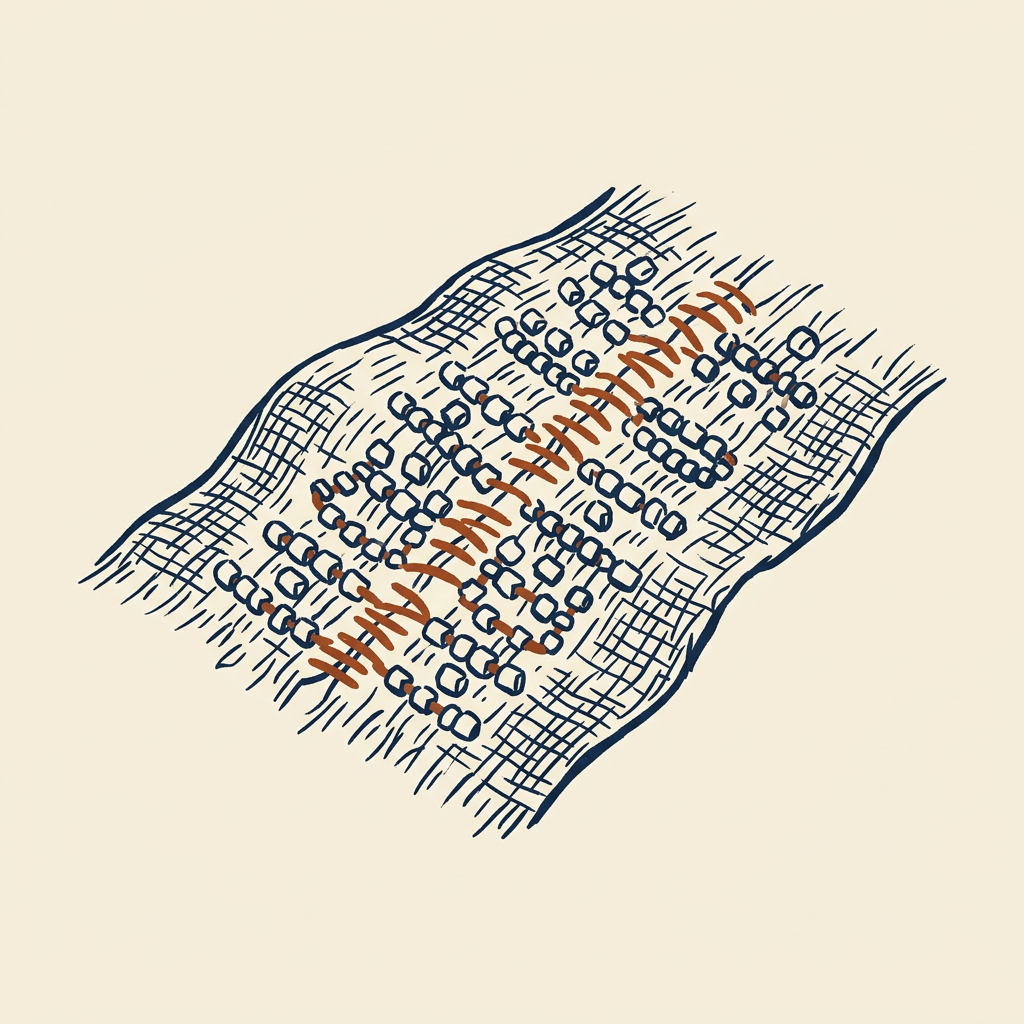
Rather than treating property as stuff you can swap, the authors trace early ownership ideas to practices around the dead and the sacred. Elaborate Upper Paleolithic burials—such as the roughly 25,000-year-old graves at Sungir in Russia, bodies covered with thousands of carved ivory beads—suggest possessions bound permanently to an individual, not general-purpose sellable wealth.
That is closer to what legal anthropologists call inalienable possession: objects that carry the owner's identity and cannot circulate freely. It is farther from the modern legal idea of property as something you may buy, sell, or destroy free of others' claims. Roman law's absolute owner rights were historically unusual and may partly derive from the legal category of slavery, where one person could be treated as an object under another's total control.
Property as absolute dominion and sovereignty as absolute control over life are structurally similar: one will subordinating another completely. Many societies kept the domains separate—certain goods individually owned, while land, food, and communal resources stayed under collective or negotiated stewardship, and human relationships stayed governed by reciprocity rather than ownership. Property becomes one cultural choice about extending ritual personhood into social organization, a choice other societies made differently.
In practice: Sungir graves from roughly 25,000 years ago held bodies adorned with thousands of painstakingly carved ivory beads bound to the dead.

7
Self-rule at city scale
Neighborhood councils, rotating office, women's assemblies, and consensus mechanisms let large populations govern without permanent rulers.
Absence of a palace is not enough; skeptics can call it missing evidence. The authors add positive traces of egalitarian design. Some Indus Valley cities, such as Mohenjo-daro flourishing roughly 2500–1900 BCE, show uniform housing, standardized weights, and public sanitation across the city yet no clear palace or monumental royal tomb—suggesting collective civic administration, though the undeciphered script keeps the reading debated among specialists.
They also draw on the well-documented Wendat confederacy of the Great Lakes. Governance ran through councils that required extensive persuasion and consensus rather than command. Women held substantial control over agricultural production and could veto decisions of male council members.
These are not primitive precursors to real government. They are alternative solutions to large-scale coordination—deliberation, rotation of office, and distributed authority instead of centralized command. By this point the book has shown cities without hierarchy, farming without property concentration, and complex societies with only one form of domination. Documented councils, veto powers, and consensus mechanisms supply the missing piece: deliberate self-governing institutions, not accidental absence of kings.
In practice: In the Wendat confederacy, councils ran on persuasion and consensus, and women who controlled farming could veto male council decisions.
8
The freedoms that locked
Domination stuck when people lost the freedom to leave, to disobey, and to reorganize—not when cities or farms appeared.
The authors name three freedoms they believe early humans generally held and later societies gradually lost: the freedom to move away from one's community, the freedom to ignore or disobey commands, and the freedom to shift between social structures or reimagine them altogether—the seasonal switching already described.
What made certain societies permanently stuck was not population size or farming but the loss of those specific exits. Debt obligations, land dependency, and coercive military structures made leaving, refusing, or restructuring practically impossible. Temporary chiefs became permanent kings; seasonal hierarchy became permanent inequality.
Early states such as Egypt or Mesopotamia look, on this reading, less like natural culminations than historical accidents in which all three forms of domination happened to combine and people lost the practical ability to opt out. The original question—how did inequality begin—treats inequality as a substance that accumulates. The authors' question is how people lost the tools to refuse, escape, or undo domination once it appeared. Inequality was always a possibility; what needs explaining is why some societies lost the means to reverse it, and why we so rarely ask that of our own arrangements.
In practice: Egypt and Mesopotamia become cases where violence, bureaucracy, and charisma combined while debt, warfare, and inherited status closed the exits.
Key terms
- evolutionary narrative The story that free egalitarian bands must give way to farming, surplus, hierarchy, and the state as complexity grows.
- play farming Long periods of partial, reversible cultivation mixed with foraging, treated as a deliberate choice rather than a one-way revolution.
- sovereignty Control over the means of violence—the power to kill or imprison without consequence.
- bureaucracy Control over information through records, taxes, schedules, and standardized measures.
- charismatic authority Power drawn from personal prestige, persuasion, or heroic reputation rather than office or force alone.
- inalienable possession Objects bound to a person's identity—especially grave goods—that cannot circulate as ordinary trade goods.
- three basic freedoms The capacities to leave a community, to disobey commands, and to reorganize social structures that once kept domination reversible.
What to do
- Question any explanation at work or in reading that treats an outcome as inevitable because complex systems just develop that way.
- Ask what specific choices, incentives, or constraints produced the outcome, and whether clear alternatives existed.
- When designing a team or project, build in a real exit option and a way to disagree without penalty.
- Before accepting a tidy origin story for any institution, check whether the story outruns the underlying evidence.
- Treat hierarchy in your own groups as a costume you can put on or take off, not a permanent rank.
Questions to think with
- Which of the three powers—violence, information, charisma—does your workplace or city actually run on?
- What exit options and refusal rights do your current arrangements still protect?
- If the same people can live ranked one season and equal the next, when do we choose hierarchy and why?
- How would you design housing and food storage so surplus cannot harden into hereditary status?
- Why do popular histories treat inequality as destiny rather than a lock-in that could have been refused?
The other side
The boldest claims often lean on single contested sites: no palace at Tripolye or Mohenjo-daro is not proof of deliberate egalitarian design, and critics such as Kristian Kristiansen note the slide from 'no evidence of a king' to 'evidence of no king.' The three-forms framework is flexible almost to the point of unfalsifiability; the book catalogs variation well but stays thin on why some societies lost exit options while neighbors did not; and much of the archaeology was already known to specialists, so the novelty is stronger for general readers than for the regional literature.
Who it's for
Readers who still picture history as fixed stages from simple bands to complex states, plus anyone working in anthropology, archaeology, or the origins of political power who wants the popular narrative stress-tested against the dig sites.