


Hildegard of Bingen Writes Scivias
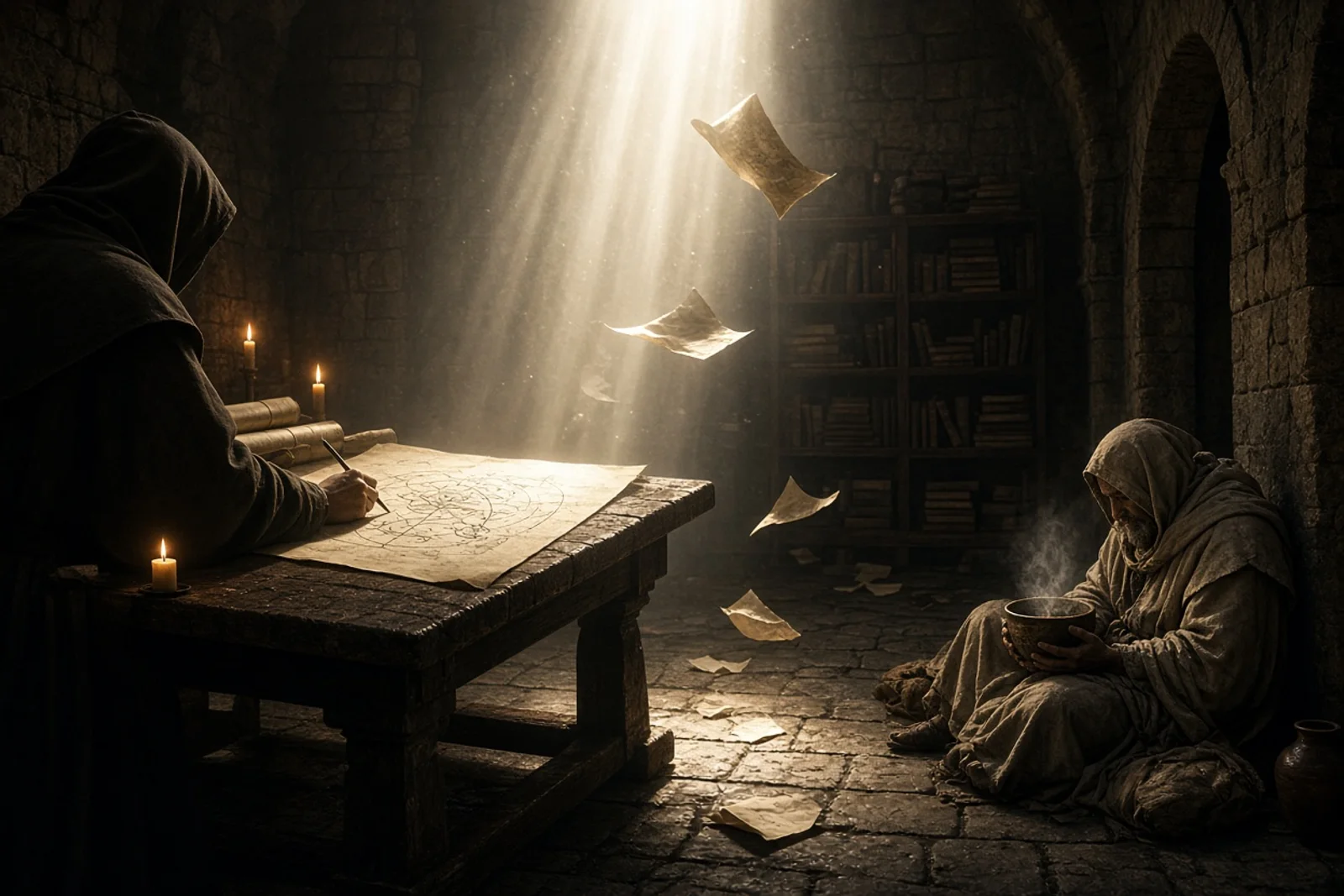
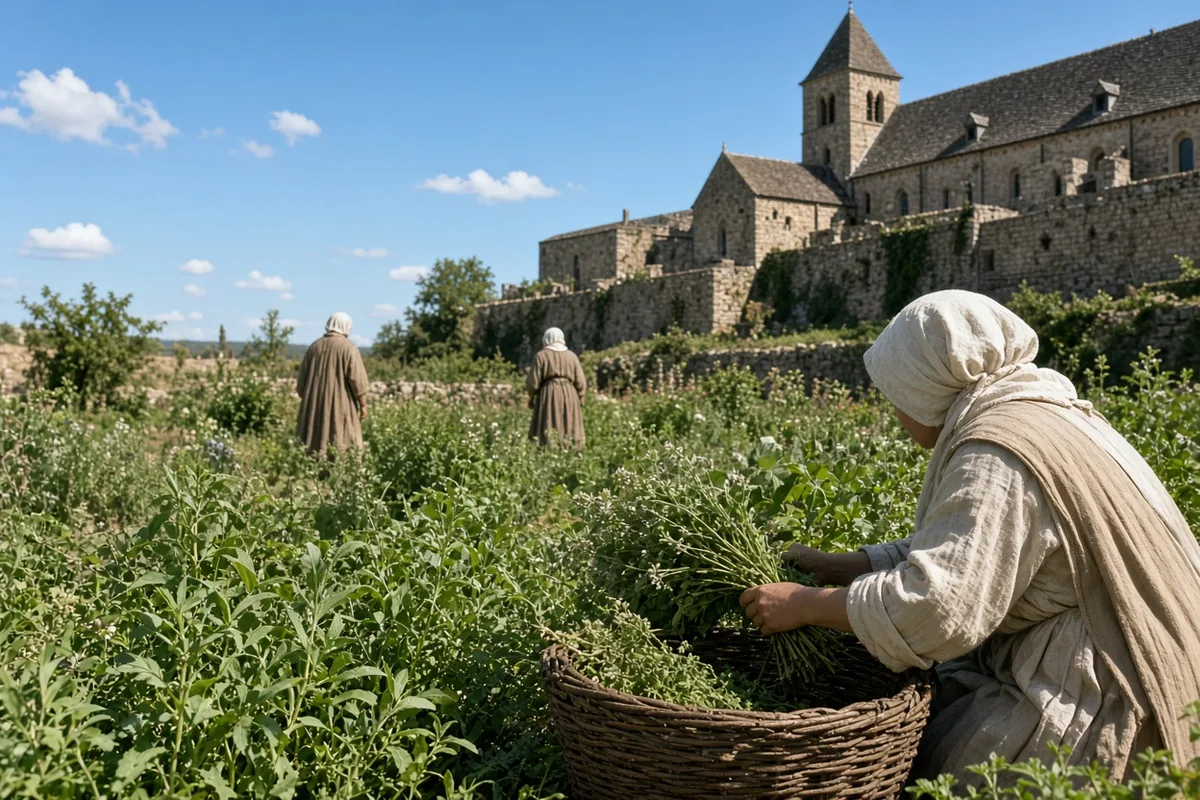
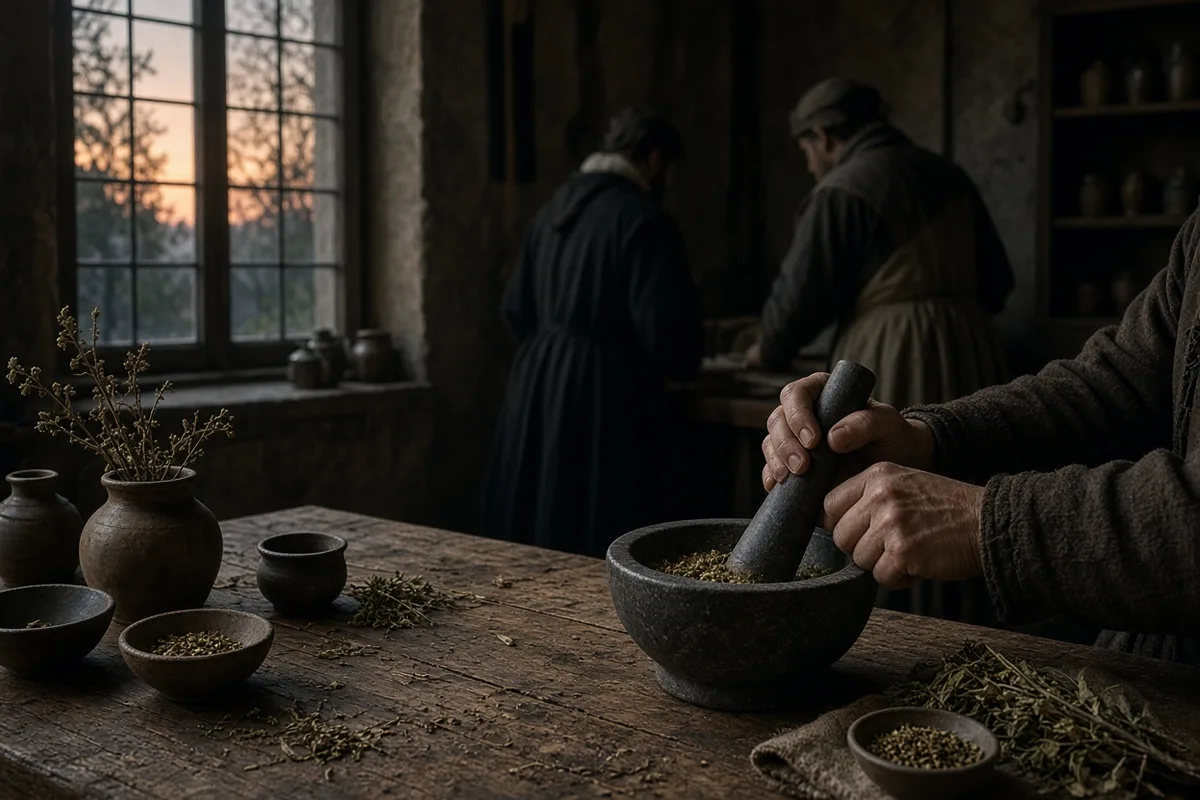
The ink had dried uneven on the last sheet when Hildegard lifted her head and asked for the green again. We mixed it fresh that morning from the copper scrapings and the plant sap she kept in a covered bowl, and the smell still clung to our fingers. She sat on the low bench near the window where the light held longest, Volmar at her right with the wax tablet open, ready. The room was small, only the three of us and the table, yet the air felt crowded with what she had not yet said.
She closed her eyes for a moment. Then she spoke the first line of the vision she had carried since the summer before. Volmar wrote without looking up. I held the sheet flat so the vellum would not shift under his hand. Outside the wall the river moved, steady and low, the same sound we had heard every day since we came down from Disibodenberg.

She had told no one the full shape of what she saw until the voice pressed her a second time. Jutta had known pieces, enough to send for Volmar when Hildegard first grew quiet and pale at meals. He came with his own doubts and stayed because the words she gave him matched nothing he had read in the books he kept for the sisters. After that he carried every page to the abbot and later to the archbishop’s men when they asked to see what was being written.
That winter the headaches returned. She dictated lying on her side, one hand pressed to the place above her ear where the pain gathered. Volmar read the lines back in the evening when the fever dropped. She corrected only the order of the images, never the sense. The green pigment sat ready on the table. She used it for the living force that ran through every living thing, the same force she said had filled her since she was small and had never left her even when she tried to keep silent.

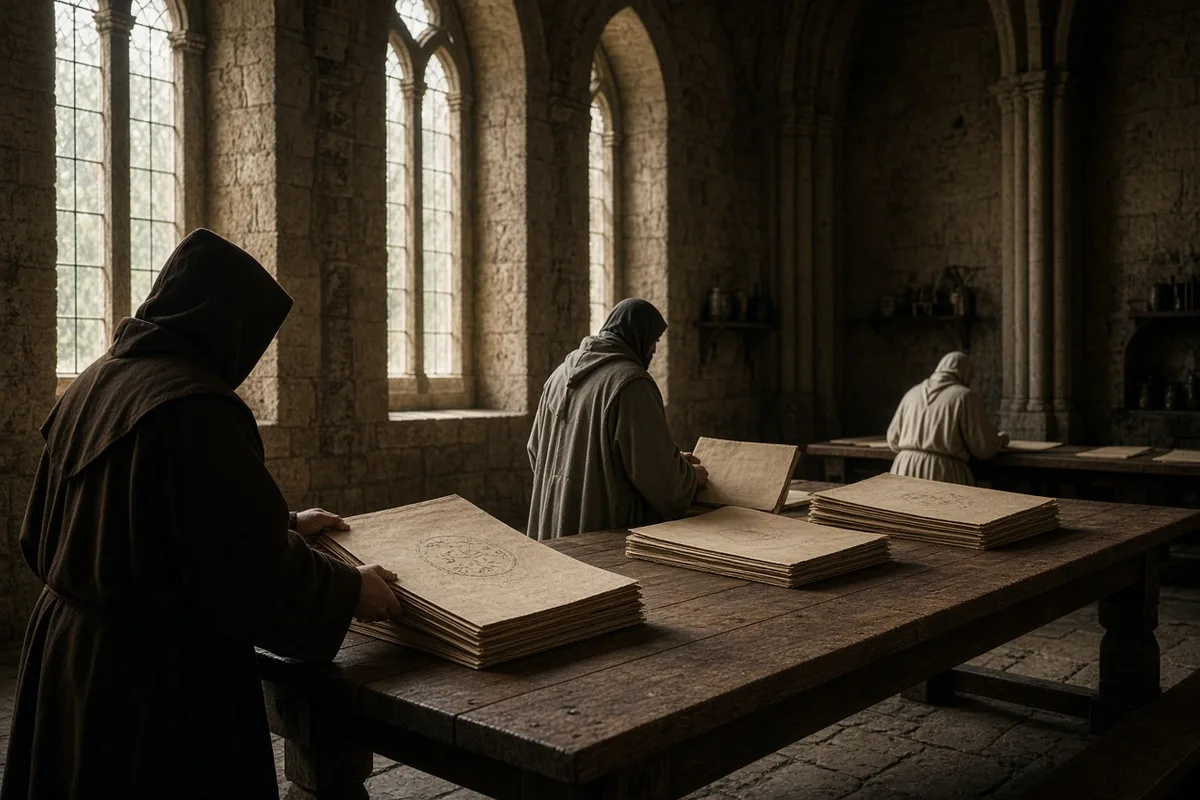
We moved the work to Rupertsberg once the new house was ready. The sisters carried the finished quires wrapped in linen. Hildegard walked at the front with Volmar beside her. The manuscript weighed less than the chests of relics we also brought, yet every sister watched how she guarded the bundle against the rain. At the new altar she set the pages down and asked for the silver leaf next.
The illuminators came from the town workshops. She showed them the colors she wanted without naming the source. Gold for the light that does not burn, blue for the space between the spheres, red for the blood that answers the voice. They laid the leaf thin and burnished it until the page reflected the faces leaning over it. She corrected one figure’s robe from the color first painted to the green she had mixed herself. The change made the whole page shift, as if the figure had stepped forward out of the margin.

Volmar kept the fair copy. He read each completed vision aloud to the community on the days the rule allowed. Some sisters wept. Others asked how a person could see such things and still rise for the night office. Hildegard answered none of them directly. She only said the voice had told her to write what she saw, not to explain it.
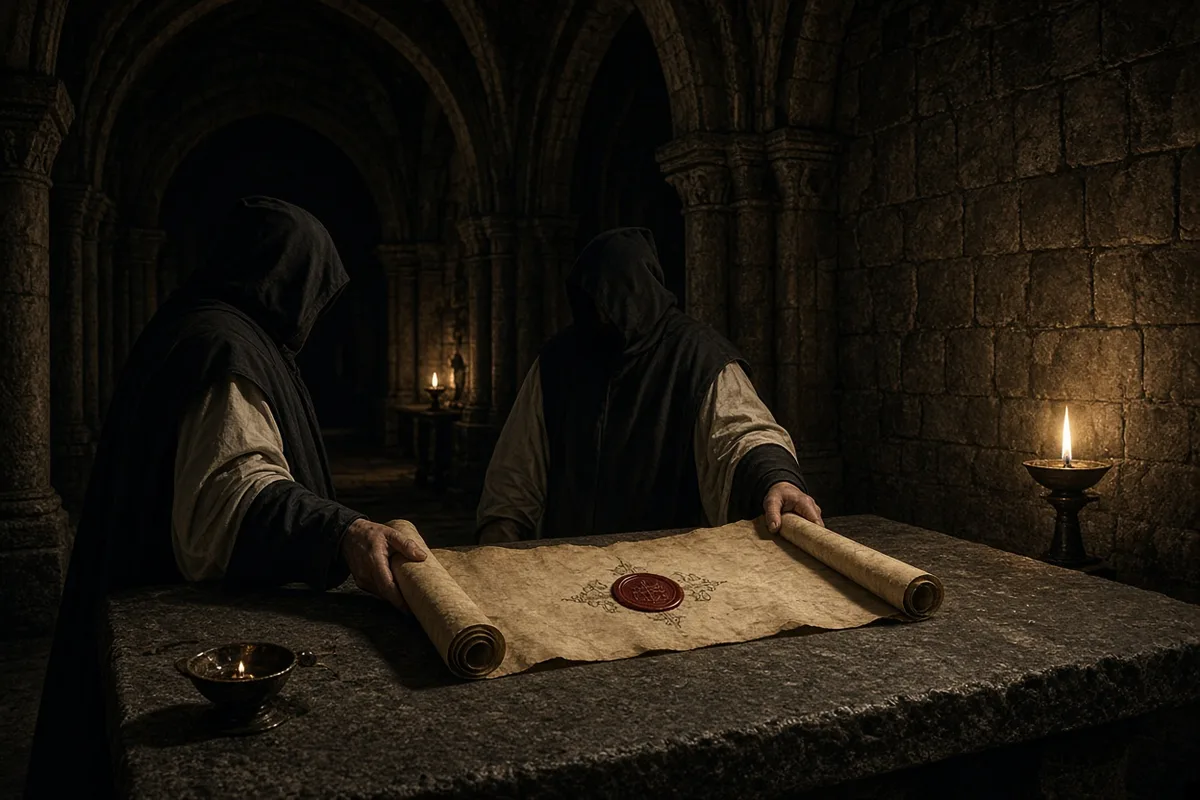
The archbishop’s commission arrived in the spring after we finished the last vision. Three men sat at the long table in the chapter room while Hildegard stood. They asked how she knew the visions were not from her own mind. She answered that she had hidden them for years and would have kept them hidden if the command had not come again. They asked for witnesses. Volmar spoke. Jutta’s successor spoke. The men wrote their names on a separate sheet and left it with the abbot.

We bound the book before the leaves could curl in the damp. The covers were plain wood covered in leather, the clasps iron. Inside, the silver had already begun to darken at the edges where fingers would turn the pages. Hildegard touched the first miniature once before the boards closed, tracing the line of green that ran from the bottom corner upward like a stem.
After that the house settled into its ordinary hours. The manuscript stayed in the chest beside the altar except when Volmar needed a page for a visitor. Hildegard returned to the herb garden and to the letters that came from bishops and counts asking for counsel. She still woke before the bell some mornings and sat with the wax tablet, writing down what had come in the dark. We kept the pigments ready.
The pigments stood mixed on the oak board through the weeks that followed, the copper scrapings settling into a darker sediment each morning until Volmar stirred them again with the sap from the covered bowl. On the twenty-fifth day after the archbishop’s men had left their signed sheet with the abbot, a messenger arrived from Trier carrying a letter sealed with the papal bull of Eugenius III. The letter named the three commissioners who had questioned her and quoted their report that the visions contained “nothing contrary to the faith or to the teaching of the holy fathers,” a phrase copied in Volmar’s hand onto the margin of the last quire before the boards were closed. Hildegard directed that the same green be used for the final miniature, the one showing the living light streaming through the spheres, and she specified that the stem should reach exactly to the height of the silver border already laid on the page. The sisters copied the letter into the house cartulary on the same day, recording the date as the feast of Saint Cecilia in the year 1148, and they noted the number of witnesses who had spoken: Volmar, the abbess’s successor at Disibodenberg, and two priests from the nearby parish who had heard portions read aloud.
Once the boards were fastened with the iron clasps, the manuscript remained in the chest for three months while Hildegard turned to the letters that now arrived weekly from Mainz, Cologne, and the court of Conrad III. She dictated replies on the wax tablet each afternoon, naming specific bishops and quoting their questions back to them before answering. One letter to the archbishop of Mainz, dated in her own hand on the kalends of March 1150, spoke of the “fiery light” that still pressed upon her and asked whether the green pigment could be sent again from the workshop at Disibodenberg because the supply at Rupertsberg had run low. The reply came with a new supply of copper scrapings wrapped in linen, together with a note from the cellarer recording that twenty-four sisters had carried the load across the river on the feast of Saint Matthias. In the same season she began the work later called the Liber Vitae Meritorum, dictating its first vision on the day the new altar was consecrated, when the community numbered thirty-seven women and the daily office required an additional reader for the night hours.
The years that followed brought further commissions from Rome. In 1158 Pope Adrian IV wrote asking for a copy of the completed Scivias to be examined again at the curia, and the fair copy made by Volmar was sent with an escort of four brothers from the nearby monastery. Hildegard kept the original at Rupertsberg and continued to add marginal notes in her own hand, correcting the spelling of one Greek term that Volmar had rendered as “anima” rather than the longer phrase she had spoken. By 1163 she had begun the Liber Divinorum Operum, dictating its opening lines on the same bench where the first pages of Scivias had been written, though the headaches now came more often and lasted through three consecutive nights before easing. The new work required a different blue, mixed from lapis brought by a merchant from Venice, and she recorded in the margin the exact cost: twelve denarii for the ounce that produced the color for the spheres. Volmar read each completed section aloud on the octave of Epiphany, and the sisters counted the visions as they were finished: three in the first year, five in the second, until the total reached ten by the feast of Saint Rupert in 1170.
Her correspondence with Emperor Frederick Barbarossa began in the same decade, the first letter dated 1164 and preserved in the house cartulary with the emperor’s seal still attached. She addressed him as “the eagle who flies too high” and quoted the exact words of the vision she had received concerning his rule, warning that the green force would withdraw if justice were not kept. The emperor replied with a gift of silver leaf for the illuminators and a request that she pray for his campaign in Italy. She answered on the day after the feast of Saint Martin, sending the prayer written on a separate sheet and noting that the same green pigment had been used to mark the place where the living light touched the emperor’s name. In 1170 she traveled to Mainz to defend the community’s rights to the vineyards at Bingen, speaking before the archbishop’s court for two full days and returning with a charter sealed on the twenty-third of June that granted the sisters an additional twelve acres along the river.
The headaches grew constant after her seventieth year, yet she continued to dictate until the summer of 1179. On the seventeenth of September she asked Volmar to read the final lines of the Liber Divinorum Operum once more, then corrected a single word in the description of the living light before lying down on the bench near the window. She died before the night office, and the sisters recorded that the green pigment on the table had dried into a hard crust by morning. Volmar closed the manuscript chest and placed the key on the altar, where it remained until the new abbess took possession three days later. The community numbered forty-two women at the time of her death, and the cartulary lists the names of the eight sisters who had worked on the illuminations of Scivias.
After Volmar’s own death in 1185 the manuscript stayed in the chest except when the new prior needed a page for visiting scholars. In 1223 a copy was made for the library at Mainz, the scribe noting that he had counted 26 visions and reproduced the green stem in each miniature with the same copper mixture. The original remained at Rupertsberg until 1942, when the codex was moved for safekeeping and later reported missing from the archive in Dresden. A full-size facsimile had been completed in 1927 by the Wiesbaden manuscript workshop, preserving the exact dimensions of each leaf and the thickness of the silver leaf on the final page. That facsimile is now held at the Hochschulbibliothek in Wiesbaden, where the page showing the living light is opened once each year on the feast of Saint Hildegard.
The last recorded image of Hildegard appears in a marginal drawing added to the Mainz copy in 1230 by a scribe named Heinrich, who drew her standing beside Volmar with the wax tablet in her hand and the green stem rising from the corner of the page. The drawing measures three inches in height and shows her wearing the simple veil of the Rupertsberg community, her right hand raised as if dictating the next line. No further contemporary likeness survives, though the sisters at Eibingen, where the community moved after the destruction of Rupertsberg in 1632, still keep the key to the original chest in their sacristy and open the facsimile on the seventeenth of September each year to the page where the green stem reaches the silver border.
In 1247 the Mainz copy passed to the cathedral chapter when the Rupertsberg community exchanged it for a parcel of land near Bingen measuring nine hectares. The scribe Heinrich added a second marginal note that year on the feast of Saint Michael, recording that the green stem had been refreshed with a new mixture of verdigris and linseed oil supplied by the apothecary at Saint Martin’s in Mainz.
The original Rupertsberg codex remained untouched until 1492, when Abbot Johannes Trithemius of Sponheim requested a brief inspection and noted in his own hand that the silver on folio 42v had tarnished to a dull gray measuring two finger-widths along the lower edge.
Swedish troops burned the monastery in 1632 during the Thirty Years’ War, destroying all but the sacristy key and the cartulary volume that listed forty-two names at the time of Hildegard’s death. The surviving nuns carried the key and the 1223 Mainz copy to the Cistercian house at Eibingen, where the abbess entered the transfer on 4 October 1632 with the words “key of the chest and book of the visions received this day.”
In 1858 the Eibingen community was re-established under the Benedictine rule by Prince Karl of Löwenstein-Wertheim-Rosenberg, who donated twelve acres and funded the rebuilding of the church; the sisters reopened the facsimile on the seventeenth of September that year for the first time since 1803.
The Wiesbaden Hochschulbibliothek acquired the 1927 facsimile in 1946 after Allied bombing damaged the original archive building in Dresden, and conservator Anna Wolters recorded that the silver leaf on the final page retained a thickness of 0.03 millimeters.
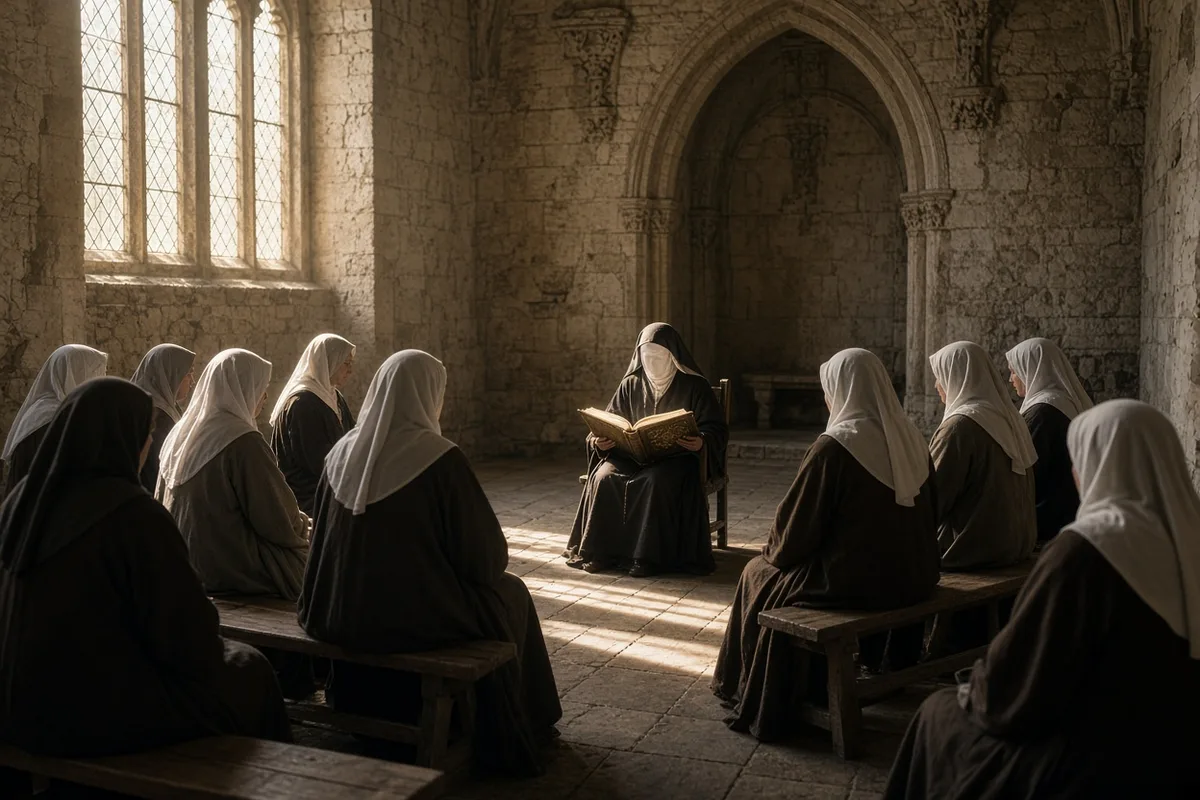
On 17 September 2012 the sisters at Eibingen opened the same facsimile to the living-light miniature while the current abbess, Sister Hildegardis, read aloud the 1148 entry from the cartulary in the presence of twelve visiting scholars from the University of Mainz.
The last human image added to any copy appears in a pencil sketch made in 1897 by the historian Josef May, who drew the Eibingen sacristan Sister Maria Josepha holding the iron key beside the open facsimile on the day the community received its papal bull of restoration; the sketch measures four by six inches and remains pasted inside the front cover of the Eibingen cartulary volume still kept in the abbey archive.