



Book traces how Enron turned projected deals into reported profits
In 60 seconds
- Enron’s fraud grew from Lay’s early bet that deregulation and political access could replace operational discipline.
- Mark-to-market accounting let executives book multi-year projections as instant profit long before cash arrived.
- A rank-and-yank culture fired the bottom tier and rewarded whoever claimed the largest paper values.
- Fastow’s off-balance-sheet partnerships hid debt and losses while he personally took large fees on both sides of the deals.
- Once stock price and credit rating cracked in late 2001, clauses forced repayment the firm could not make, and bankruptcy followed within weeks.
- Board waivers, Andersen’s dual role, and slow rating agencies enabled the scheme; later convictions and Sarbanes-Oxley closed the legal chapter but left core incentives largely intact.
The big idea
McLean and Elkind argue the collapse was not one rogue act but a culture of arrogance, aggressive accounting, and willful blindness that let a small circle manufacture profits that never existed. Fraud on this scale, they conclude, rarely needs evil masterminds—only ordinary incentives, weak skepticism, and gatekeepers who gain more from silence than from hard questions.
The book in brief
Enron formed in 1985 from a debt-heavy pipeline merger. Ken Lay pushed deregulation and political access so the firm could trade gas as a commodity rather than merely move it. He hired Jeffrey Skilling to build a trading culture judged on contracts and ideas, not physical assets.
SEC approval of mark-to-market accounting let Enron book the full estimated value of long-term deals in the quarter they were signed. That method spread from gas into broadband, water, weather, and overseas plants, creating a permanent need for new deals to keep reported earnings rising while real cash lagged.
Internal rank-and-yank reviews made optimistic booking a survival skill. CFO Andrew Fastow then built partnerships that bought troubled assets off the books, hid obligations, and paid him personally even as the board waived its own ethics rules. Traders later gamed California’s flawed power market with named strategies that worsened blackouts.
By early 2001 analysts, a Fortune article, Skilling’s abrupt resignation, and Sherron Watkins’s memo to Lay exposed unanswered questions about cash and debt. Restatements, a junk downgrade, and a failed Dynegy rescue forced Chapter 11 in December. Arthur Andersen’s dual auditor-consultant role and document shredding destroyed the firm as a business. Fastow cooperated; Lay and Skilling were convicted; Sarbanes-Oxley followed. The authors close that the structural pressures that produced Enron remained common across corporate America.
Context
McLean and Elkind, drawing on internal documents, court records, and employee interviews, turned the scandal into a case study of how smart people convince themselves the rules do not apply. Published in 2003 before the criminal trial ended, the book fixed Enron in public memory as the model of culture-driven fraud rather than a one-off crime.
The key ideas

1
Deregulation over pipes
Lay’s founding strategy made political favor and financial cleverness substitutes for reliable, profitable energy delivery.
- 1985Houston Natural Gas merges with InterNorth; debt-heavy pipelines
- 1990Lay hires Skilling to run Enron Finance trading unit
- 1992SEC allows mark-to-market on long-term energy contracts
The 1985 merger left a mediocre pipeline business buried in debt. Lay, an economist skilled at cultivating politicians, saw deregulated gas markets as the real prize and lobbied hard in Washington and state capitals.
Enron began wearing the costume of an energy company while acting as a trading and financial firm. Early gains came from genuine regulatory arbitrage, yet the pattern was set: fortunes would hinge on access and engineering as much as on moving molecules.
Hiring Skilling in 1990 to run a new finance unit locked in the trader’s mindset. Physical assets would no longer define success; the value of contracts and ideas would. The later fraud, the authors show, was an extension of that founding bet rather than a sudden break from a sound business.
In practice: Lay’s friendships that reached the Bush family and his image-making as a free-market innovator gave Enron cover while it shifted from pipes to paper profits.

2
Booking the future now
Mark-to-market turned the income statement into management’s estimate of future prices and volumes instead of cash received.
Cash accounting
Revenue recognized only as money arrives over the contract life
Enron mark-to-market
Entire multi-year estimate booked as profit in the signing quarter
Once approved, the method let Enron recognize an entire multi-year contract’s projected value in the signing quarter. On a trading desk the logic resembled Wall Street derivatives math; in practice executives held wide discretion to choose flattering assumptions.
Skilling pushed the technique into broadband capacity, water utilities, weather derivatives, and international plants. One signed deal could create years of reported profit whether or not the underlying project ever paid cash.
The structural result was a treadmill: new deals had to be booked continually because actual cash always trailed the earnings number Wall Street expected. Profit became an estimate serving executives rather than a fact serving shareholders.
In practice: The Dabhol plant in India stayed on the books as a profitable asset for years while it struggled, faced local opposition, and was eventually mothballed with unpaid bills.

3
Rank and yank machine
Twice-yearly forced ranking made claiming credit for projected deal value a rational career strategy and skepticism a firing risk.
Skilling’s Performance Review Committee graded everyone on a curve. The lowest tier was routinely dismissed even when the company as a whole looked healthy, so cooperation across units withered.
Bonuses and promotions flowed to whoever could book the largest optimistic projections under mark-to-market rules. Raising doubts about real cash value marked an employee as not smart enough to see the opportunity.
Heavy hiring from elite MBA programs reinforced the belief that Enron people were simply smarter than regulators and rivals. Outsider skepticism was dismissed as confusion. By the late 1990s the workforce had self-sorted into aggressive risk-takers; internal objectors had already left or been pushed out.
In practice: Traders who booked large paper profits became stars paid enormous bonuses while colleagues who questioned a deal’s substance risked the bottom tier.
4
Fastow’s hidden web
The partnerships were a deliberate scheme to park debt and losses off the balance sheet while the CFO enriched himself on both sides.
- 1Book optimistic profitMark-to-market creates earnings without cash
- 2Park the problemSPE buys troubled asset; debt stays off Enron’s statements
- 3Pledge Enron stockGuarantee keeps real risk inside the firm
- 4Need higher stockCollateral and confidence require the price to keep rising
↻ and round again
Pressure to grow earnings and hide leverage produced LJM, LJM2, Chewco, and the Raptors. On paper they were independent buyers of troubled Enron assets; in reality Fastow ran and profited from them, and Enron often guaranteed their obligations with its own stock so risk never left.
The board formally waived its ethics code twice so Fastow could sit on both sides of the trades. Auditors and directors accepted the arrangement with little scrutiny even though he negotiated sales from Enron to entities that paid him fees.
The Raptors used Enron’s rising share price as collateral to conceal losses on ventures such as broadband. Accounting integrity therefore depended on the stock never falling—a circular bet that could not last.
In practice: Fastow took tens of millions in fees from LJM while simultaneously negotiating the asset transfers from Enron into those same partnerships.

5
Gaming California’s grid
Traders treated the 2000-2001 power crisis as a loophole to exploit, showing the same rule-bending mindset that drove the accounting fraud.
California capped retail prices while leaving wholesale prices largely free, creating perfect conditions for manipulation. Enron desks used strategies that created artificial congestion and scheduled phantom transfers to profit from regional price gaps.
Recorded calls later captured traders joking about blackouts and treating overcharges as good business. The tactics were legal in the narrow sense that no rule explicitly banned them, yet they raised bills and worsened rolling outages for millions.
The episode mattered because it proved the culture’s contempt for boundaries extended beyond the balance sheet into public harm, and it drew the first sustained national scrutiny that later made outsiders willing to question Enron’s numbers.
In practice: Strategies internally nicknamed Death Star, Fat Boy, and Get Shorty manufactured congestion and phantom power moves that amplified shortages.

6
Questions that would not die
Collapse began with small, accumulating doubts from analysts, a journalist, a crude earnings-call insult, a sudden CEO exit, and one internal memo.
- Mar 2001Fortune article questions whether Enron is overpriced
- Apr 2001Skilling insults analyst on earnings call
- Aug 2001Skilling resigns; Watkins memo warns Lay about Raptors
- Fall 2001Stock slides as doubts spread
By early 2001 a few analysts and short sellers wondered why soaring reported profits produced so little cash and why debt structures were nearly unreadable in the filings. McLean’s March Fortune piece asked aloud whether the stock was overpriced, voicing doubts Wall Street had soft-pedaled.
On an April earnings call Skilling answered a basic numbers question with a crude insult—behavior the authors read as the opposite of confidence. In August he resigned as CEO after only six months, citing vague personal reasons that satisfied no one.
That same month Watkins wrote Lay that the Raptors could bring the company down in accounting scandal. Lay met her but did not press the warnings; he kept reassuring staff and investors while the share price slid through the fall. Ordinary scrutiny, not a single dramatic discovery, peeled the story apart.
In practice: Watkins’s memo specifically flagged the Raptor entities; Lay’s response was reassurance outward rather than aggressive internal investigation.

7
Confidence as the only asset
Complex financing required a high share price and investment-grade rating, so once trust cracked the firm had no cash buffer and failed in weeks.
October and November restatements erased hundreds of millions in prior profit and showed the partnerships had concealed more than a billion dollars of debt. Rating agencies that had been slow to act finally cut Enron to junk, tripping immediate-repayment clauses on billions the company did not hold.
A proposed merger with Dynegy collapsed when due diligence exposed the hidden obligations. With no buyer and no cash, Enron filed Chapter 11 on December 2, 2001—then the largest U.S. corporate bankruptcy.
Employees lost jobs overnight and much of their retirement savings because the 401(k) was heavy in company stock and sales were restricted during the plunge, even as some executives had already cashed large holdings. Financial engineering that inflated success also guaranteed a catastrophic, confidence-only failure.
In practice: Shares that had traded above ninety dollars in 2000 and still above eighty early in 2001 were worthless to most workers by the December filing.

8
Auditor as enabler
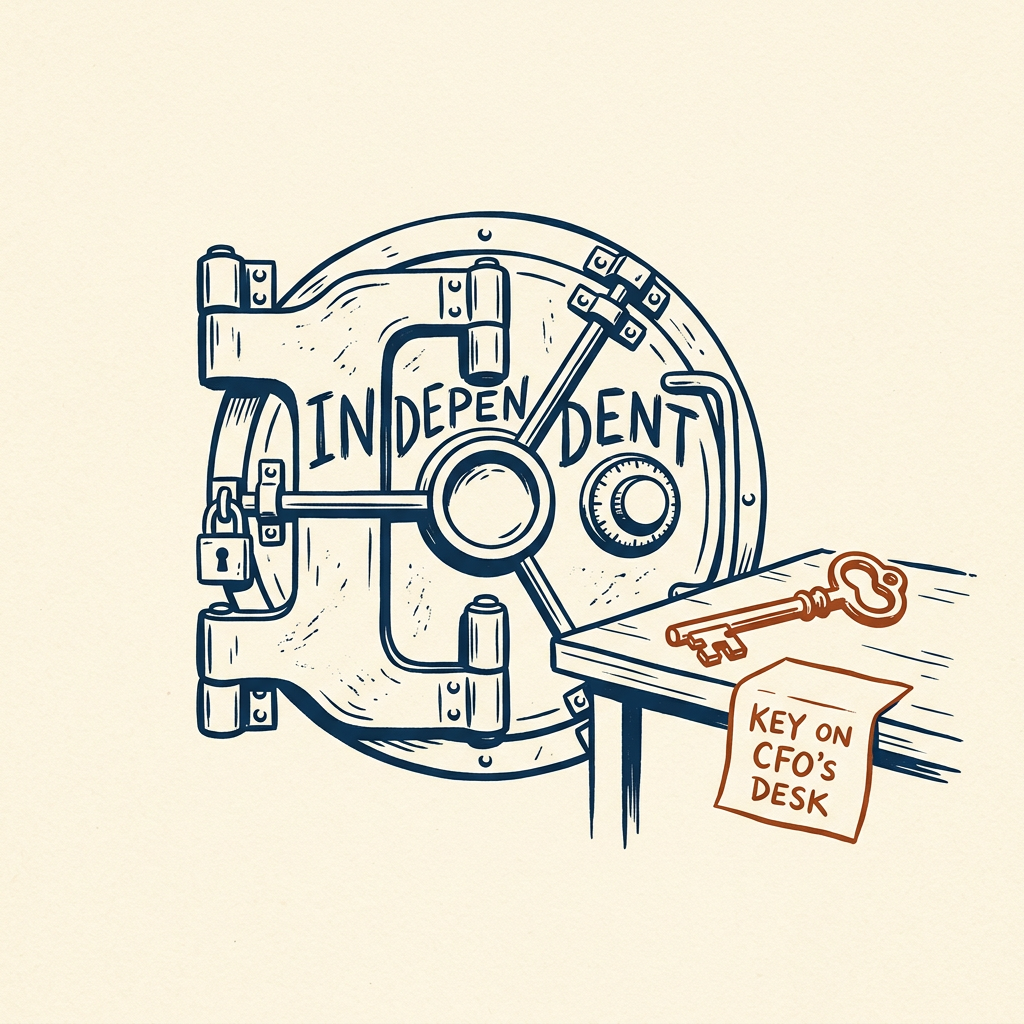
Andersen did not just miss the fraud; it approved aggressive treatments, collected consulting fees, then shredded documents when investigations began.
Gatekeeper role
Independent audit meant to challenge aggressive accounting and protect investors
What happened
Dual consulting fees, signed-off SPEs, then document shredding as probes started
One of the world’s five largest accounting firms served as both external auditor and highly paid consultant, creating a clear incentive to protect the relationship. Partners had signed off on mark-to-market practices and the off-balance-sheet structures.
After problems became public, Houston staff shredded Enron-related papers, supplying the basis for a federal obstruction charge. A 2002 conviction stood until the Supreme Court overturned it in 2005 on jury-instruction grounds, yet clients and staff had already fled; the firm collapsed and tens of thousands of unrelated employees lost jobs.
The authors widen the lens: board, auditor, and rating agencies failed together, often because they were financially tied to the company they were meant to police. Gatekeepers became complicit.
In practice: Andersen collected tens of millions a year in consulting fees on top of audit fees, then began shredding once the scandal broke in October 2001.

9
Prison and unfinished incentives
Convictions closed the legal file but left open how much individual villainy versus everyday corporate incentives produced the fraud.
- 2002Sarbanes-Oxley passes; Andersen convicted (later overturned)
- 2004Fastow pleads guilty, cooperates
- 2006Lay and Skilling convicted; Lay dies, conviction vacated
- 2019Skilling released after sentence reduction
Fastow pleaded guilty in 2004, cooperated, and received a reduced six-year sentence. Lay and Skilling were tried together in 2006 and convicted on fraud and conspiracy counts; Lay died of a heart attack before sentencing, vacating his conviction on appeal rules, while Skilling’s twenty-four-year term was later cut to fourteen and he left prison in 2019.
The scandal helped pass Sarbanes-Oxley in 2002, adding reporting rules, auditor independence standards, and executive certification. McLean and Elkind still end on structure, not just villains: stock-based pay, quarterly earnings pressure, and a market that loved growth stories over verifiable numbers were widespread.
Enron’s specific crimes brought sentences; the conditions that made deception the path of least resistance for ambitious people were not fully dismantled.
In practice: Prosecutors showed Lay and Skilling lied to employees, investors, and analysts to keep the share price propped up even as the real health of the firm deteriorated.
Key terms
- Mark-to-market accounting Booking the full estimated value of a long-term contract as profit in the quarter it is signed, not as cash arrives.
- Rank and yank Enron’s forced curve ranking that regularly fired the bottom slice of employees and rewarded paper-deal claimers.
- Special purpose entities Off-balance-sheet partnerships (LJM, Chewco, Raptors) that appeared independent but were used to hide Enron debt and losses.
- Raptors 2000 entities that used Enron’s own rising stock as collateral to conceal investment losses.
- Death Star / Fat Boy / Get Shorty Trader tactics that created artificial congestion or phantom transfers to exploit California’s power market.
- Performance Review Committee The formal body that ran the twice-yearly forced ranking employees nicknamed rank and yank.
- Sarbanes-Oxley 2002 law that tightened financial reporting, auditor independence, and executive certification after the scandal.
What to do
- Check whether a company’s earnings recognize profit on cash received or on management’s future projections before you trust the number.
- Refuse any request to waive conflict-of-interest rules for a deal-maker who sits on both sides, and ask who pockets fees first.
- Audit your own team incentives this week: if they reward confident future claims over verified delivery, redesign them.
- Read the footnotes and off-balance-sheet notes in filings, not only the summary earnings line.
- Treat dual auditor-consultant relationships and ethics-code waivers as automatic red flags in any company you follow.
Questions to think with
- Where in your organization does projected future value already count more than cash in the door?
- If a board waives its own ethics code ‘just once’ for a star rainmaker, what real check remains?
- How would an outsider distinguish genuine trading innovation from a treadmill that needs ever-larger paper deals?
- Which gatekeepers in today’s markets still earn more from keeping a client than from challenging its numbers?
- After Sarbanes-Oxley, which Enron-style incentives still feel ordinary rather than reformed?
The other side
The book is vivid journalism, not scholarship: heavy reliance on anonymous interviews and psychological inference (especially about Skilling’s insecurity) asks for more trust than documents alone can verify; it went to press before the 2006 trial and Fastow’s full cooperation, so later accounts such as Eichenwald’s supply missing procedural detail; the hubris-and-bad-actors frame underplays banks that structured the deals, slow rating agencies, and the deregulatory environment, and it gives scant space to ordinary employees and retirees whose pensions vanished—leaving open the blunter possibility that everyday incentives, not extraordinary cleverness, were enough and largely survived.
Who it's for
Investors and analysts who must spot earnings that look too smooth, business students of governance and accounting failures, and general readers who want a clear narrative of how a celebrated Fortune 500 firm disappeared in months.